by in News

Šahmanović: Second submarine cable line with Italy to be installed by 2031

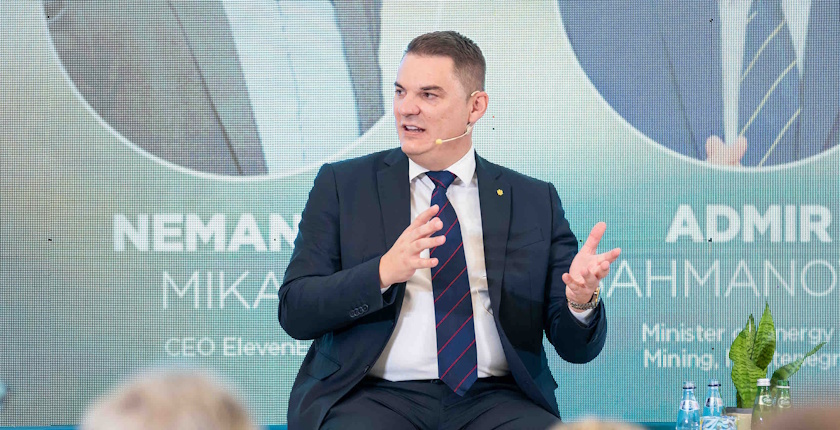
The second line of the submarine cable connecting Montenegro and Italy is expected to be completed by 2031, Montenegro’s Minister of Energy and Mining Admir Šahmanović said at the European Union – Montenegro Investment Conference.

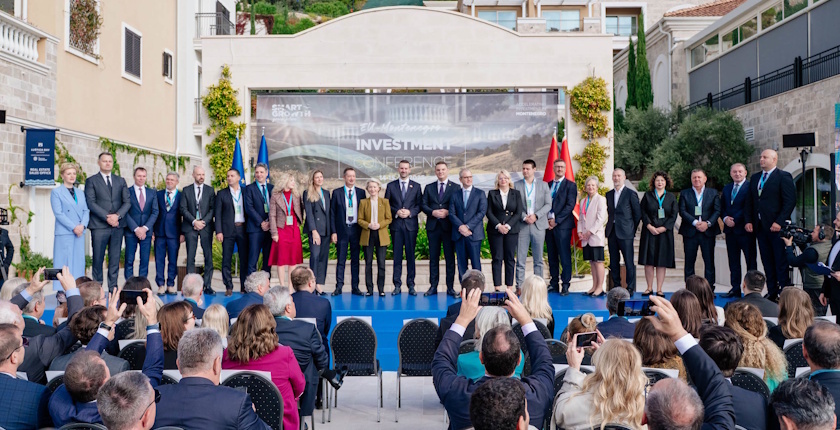
The two-day conference, titled Smart Growth, Green Future: Accelerating Investment in Montenegro, was opened yesterday in Luštica, near Tivat, by European Commission President Ursula von der Leyen and Prime Minister of Montenegro Milojko Spajić.

Fourteen cooperation projects between Montenegrin and European companies have been initiated at the conference, including investments in wind farms, solar parks, energy storage, and grids. It shows the great significance of the energy sector for investments.

A panel called Renewables: Scaling Montenegro’s Energy Transition examined the possibilities for accelerating the country’s energy transition and enhancing the sector’s attractiveness for investment in renewables.

Šahmanović: Montenegro strives to position green energy as an export product

Prominent international experts and investors took part in the discussion. Representing the Government of Montenegro, Minister of Energy and Mining Admir Šahmanović outlined the country’s renewable energy priorities and highlighted Montenegro’s role as a regional leader in clean energy.

Montenegro has fully harmonized its legislation with EU standards, creating a stable and predictable investment environment, in his words. Šahmanović highlighted the launch of the first solar power auction as a significant step forward in the development of renewables.

Photo: Đorđe Cmiljanić/Government of Montenegro

“The government invests in battery energy storage systems (BESS), ensuring the flexibility and stability of the grid. Montenegro strives to position green energy as a recognizable export product, thereby strengthening the country’s economic sustainability,” Šahmanović stated.

He revealed that Montenegro is about to sign a memorandum of understanding with Italy that would additionally position Montenegro as an energy bridge between the Western Balkans and the EU.

Montenegro is looking for strategic partners and investors ready to jointly implement capital projects in the energy sector

The government is wrapping up the work concerning the oil and gas sector to close chapter 15 in its accession negotiations with the EU, further strengthening investor trust, Šahmanović said.

“The implementation of the project for the construction of the second phase of the subsea cable link with Italy is expected by 2031, which will further strengthen Montenegro’s role in regional and European energy connectivity. Montenegro is looking for strategic partners and investors ready to jointly materialize capital projects in energy and contribute to regional energy stability,” the minister underlined. The investment is estimated at EUR 500 million, he asserted.

In a message to investors, Šahmanović said Montenegro is open for investments and added: “Now is the time for you to invest. We will be your service 24 hours a day, seven days a week.”

Participants at the panel included Daniel Calderon, Alcazar Energy Co-Founder and Managing Partner, Yann Guinard, EDF Director of Development for Europe, Louis Blanchard, Qair Energy President, and Nemanja Mikać, ElevenEs CEO.

Memorandum with EDF

Admir Šahmanović and Yann Guinard (photo: Ministry of Energy and Mining)

Within the conference, the Ministry of Energy and Mining of Montenegro and EDF International Networks signed a memorandum of understanding. It establishes a framework for future cooperation on modernizing the distribution network, digitizing smart grids, and integrating renewable energy sources, according to the ministry.

The memorandum foresees the implementation of pilot projects and feasibility studies that will contribute to the acceleration of the energy transition of Montenegro.

Admir Šahmanović said the deal is an important step towards strengthening green and innovative energy projects. Cooperation with EDF confirms the position of Montenegro as a country with a clear vision and open opportunities for investors, he underscored.

“EDF International Networks, as part of the global EDF Group, brings international expertise in the sector of power distribution, grid upgrade and digital transformation, which opens up space for new strategic partnerships and capital infrastructure projects,” the minister pointed out.

The memorandum confirmed the joint commitment to sustainability, integrity and energy security, with a clear focus on the well-being of citizens and the economy of Montenegro, the ministry said.
by in News

Alcazar Energy plans to boost its Montenegro investments to USD 500 million

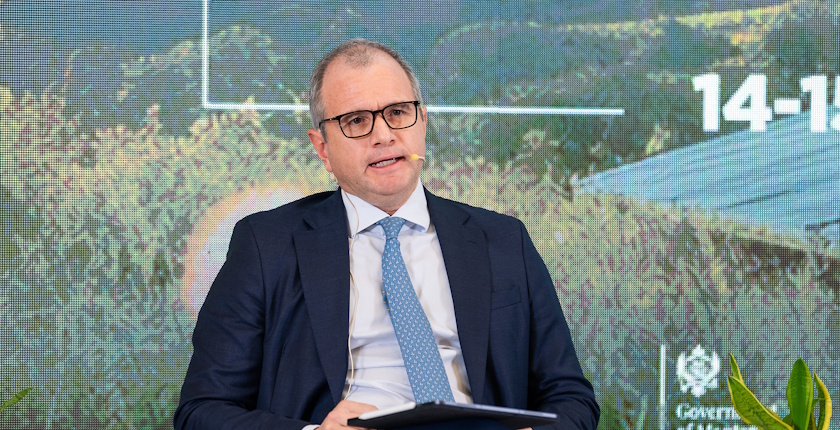
Alcazar Energy intends to increase its investments in Montenegro from USD 200 million to USD 500 million, according to Co-Founder and Managing Partner Daniel Calderon.

Alcazar Energy is one of the companies with which Montenegro has signed memoranda of understanding on projects in the energy sector. It was done today at the EU-Montenegro Investment Conference in Luštica. The company recently began construction on the largest wind farm in the Western Balkans, located in North Macedonia.

Daniel Calderon, Alcazar Energy’s Co-Founder and Managing Partner, told Balkan Green Energy News that the construction of the Bijela wind farm is scheduled to begin in the first quarter of 2026.

The investment in the 118.8 MW wind farm is estimated at USD 200 million, he added.

Alcazar is currently preparing the land and conducting procurement for this major project, which represents the first part of its investment in Montenegro.

The investment in the Bijela wind farm is valued at USD 200 million

Alcazar has now signed a memorandum of understanding with the Government of Montenegro to increase investments from USD 200 million to USD 500 million.

The country’s leadership is creating a good and consistent climate for foreign investments, Calderon stressed.

The company, in his words, sees the potential for its investments to increase to USD 500 million over the next five years.

Alcazar estimates that investments in renewables in Montenegro could reach USD 4-5 billion by 2040, and would like to be a part of it. Its investments would be around 10% of that amount, representing the first investments in this large endeavour, Calderon underlined.

Several projects in Montenegro are being considered

When asked to elaborate on these new projects, he replied that the company is considering several projects, but that he cannot disclose any details at this time.

Today, Calderon was one of the speakers at a panel titled Renewables: Scaling Montenegro’s energy transition.

At the EU-Montenegro Investment Conference, a total of 14 joint projects between Montenegrin and European companies have been initiated, including investments in wind farms, solar parks, energy storage, and power grids.

Alcazar plays a significant role in the development of the renewable energy sector in MENAT (Middle East, North Africa, and Turkey) and the Balkans, including through projects in Montenegro, Serbia, and North Macedonia.

by in News

EU-Montenegro Investment Conference: 14 partnerships, MoUs signed for energy, sustainable projects

A total of 14 cooperation projects between Montenegrin and European companies have been initiated at the ongoing European Union-Montenegro Investment Conference, including investments in wind farms, solar parks, energy storage, and grids.

The two-day conference, titled Smart Growth, Green Future: Accelerating Investment in Montenegro, was opened today in Luštica, near Tivat, by the President of the European Commission, Ursula von der Leyen, and the Prime Minister of Montenegro, Milojko Spajić.

Montenegro’s growing potential for strategic, green, and sustainable investments was presented through new partnerships between leading Montenegrin and European companies, according to a press release by the Government of Montenegro.

The Conference was jointly organized by the government and the European Commission, with the support of the Montenegro Investment Agency (MIA).

State power utility EPCG has signed three memoranda of understanding

State-owned power utility Elektroprivreda Crne Gore (EPCG) has signed three memoranda of understanding (MoUs). One was signed with Akuo for the development of several renewable energy projects, including floating solar, a photovoltaic plant, and energy storage.

The second MoU, signed with SS&A Power Group, envisages the development, manufacture, and installation of thermal energy storage, while the third, with Wind Fisher, concerns a new technology for high-altitude wind power generation.

Alcazar Energy signed a memorandum with the government’s project management office for the development and financing of renewable energy projects. CWP Europe and the Montenegrin Investment Agency (MIA) signed a memorandum on the development of the Montečevo solar farm project with battery storage. The company signed a similar agreement for its project in Albania yesterday.

A memorandum was also signed between Čevo Solar and Grawert Jenny & Partner on battery energy storage systems (BESS). A 20 MW/60 MWh battery is being considered.

Four sustainable investment partnerships were also signed

The Ministry of Energy and Mining and EDF will further discuss the issue of modernizing Montenegro’s power distribution network.

Among the signed documents is an MoU on collaboration between the European Bank for Reconstruction and Development (EBRD) and Erste on a Regional Energy Efficiency Program (REEP), as well as cooperation in the field of wastewater management between Suez and MIA.

In addition, four sustainable investment partnerships were also signed: Farm2Fork Montenegro, Station M, Green Logistics Hub, and Northern Investments Compact for Ecology & Resilience (NICER). Green Logistics Hub refers to the Port of Bar, which aims to become the first net-zero port on the Adriatic. NICER concerns the just transition and is led by the Pljevlja Coal Mine.

Von der Leyen: Do not wait for accession to invest in Montenegro

Photo: Bojan Gnjidić/Vlada Crne Gore

The event brought together senior representatives of the Government of Montenegro, the European Union, international financial institutions, as well as prominent European and Montenegrin investors.

“My message is very clear: do not wait for accession to invest in Montenegro, because by then you may miss the opportunities that others will seize,” Ursula von der Leyen noted.

She stressed that by continuing its European journey with determination and speed, Montenegro is making its goal of EU accession attainable.

“Today, we are opening a new chapter of development—we are beginning a major investment cycle, strengthening our ties with the European market even before formally joining the European family. Today, we are bringing our vision of green and smart growth to life. We are doing this together with our most important strategic partner—the European Union, which is also the largest investor in our country,” Prime Minister Milojko Spajić said.

He recalled that the country plans to close all negotiating chapters with the EU by the end of 2026 and become its 28th member state in 2028.

Photo: Bojan Gnjidić/Vlada Crne Gore
by in News

TAP receives around 95% of total pipes needed for construction

By Leman Zeynalova:

Approximately 95 percent of the total 55,000 pipes to be used for the construction of the Trans Adriatic Pipeline (TAP) have been received in Greece, Albania and Italy, said the message from TAP AG.

The last shipment of offshore line pipes has been offloaded in Brindisi, Italy, between 3 and 6 September 2017.

TAP’s contractors have cleared approximately 70 percent of the project route in Greece and Albania (539km out of 765km). Also, over 45 percent of welded steel pipes are already in the ground (backfilled).

“We are pleased that TAP continues to progress on time and on budget. We therefore remain on track to deliver the first Shah Deniz II gas in 2020, bringing a much-needed new source of energy into the European energy network,” said TAP Managing Director Luca Schieppati.

“I want to underline that our project is built with the utmost care for the environment. Our teams are working very carefully along our route to ensure that the land on which construction has been completed is returned to the owners or users in its original condition or better. We are also collaborating with local authorities and local stakeholders to ensure that the benefits of our project are tangible across all those communities crossed by the pipeline,” Schieppati added.

Nearly 2,500 tie-ins have been completed as part of the implementation of TAP project in Greece and Albania, TAP AG consortium said in a message on its Twitter page.

“This is the construction step where 2 pipe strings (~1km) are welded together inside the trench,” said the message.

TAP is a part of the Southern Gas Corridor, which is one of the priority energy projects for the European Union. The project envisages transportation of gas from Azerbaijan’s Shah Deniz Stage 2 to the EU countries.

The pipeline will connect to the Trans Anatolian Natural Gas Pipeline (TANAP) on the Turkish-Greek border, run through Greece, Albania and the Adriatic Sea, before coming ashore in Italy’s south.

TAP will be 878 kilometers in length (Greece 550 kilometers, Albania 215 kilometers, Adriatic Sea 105 kilometers, and Italy 8 kilometers).

TAP’s shareholding is comprised of BP (20 percent), SOCAR (20 percent), Snam S.p.A. (20 percent), Fluxys (19 percent), Enagás (16 percent) and Axpo (5 percent).

Source : Trend

by in News

Albania, Montenegro Eye EU Funding for Gas Pipeline

Albania’s Energy Ministry on Friday presented a feasibility study for a 618-million-euros gas corridor between Albania, Bosnia and Croatia, which it hopes the EU and US will support.

Albania’s Ministry of Energy on Friday in Tirana unveiled a preliminary feasibility study for a proposed Ionian-Adriatic gas pipeline, hoping the EU may fund construction of the section of the pipeline between Albania and Montenegro.

Damian Gjiknuri, Minister of Energy and Infrastructure, said Albania had a strong interest in the pipeline project, which could help gasify the country. “We hope for support from the EU and the US [for the project],” he said.

The 511-km-long pipeline, expected to cost up to 618 million euros, aims to link the Trans-Adriatic Pipeline with Montenegro, Bosnia and Croatia.

The feasibility study calls for a new pipeline with a capacity of 5 billion cubic meters per year, BCM, from which Albania and Bosnia hope to consume 1 BCM each, Montenegro 0.5 BCM while Croatia, the biggest and the strongest economy in the Western Balkans, is expected to consume 2.5 BCM per year.

The US Ambassador to Tirana, Donald Lu, expressed America’s support for the project, as a way to obtain a new source of energy that is not dependent on Russia, and as a means to strengthen regional energy collaboration.

The Albanian Energy Ministry said that, in collaboration with the European Commission, its Directory for Energy and the Ministry of Economy of Montenegro had presented a proposal to the Western Balkans Investment Framework, hoping it will finance the development of the project for the sections in Albania and Montenegro.

The Trans-Adriatic Pipeline is currently under construction. It is expected to ship gas from Azerbaijan to Italy through existing pipelines in Turkey and Greece and through a new pipeline running from Greece to Italy through Albania and under the Adriatic Sea.

The pipeline will have an exit point near Fieri, in Albania, which creates hopes of getting new energy supplies for all Western Balkan countries.

They all have large energy deficits and are heavily dependent on coal to generate electricity. Albania and Montenegro have large hydropower capacities but they are not sufficient to cover all their energy needs.

A gas network could help both countries to produce electricity by burning gas and substitute the use of electricity in some functions like heating, thus limiting the need to use coal and protecting the environment at the same time.

Source: Balkaninsight

by in News

IAP project counts on EU, US support

The countries involved in the construction of the Ionian-Adriatic Pipeline (IAP), Albania, Montenegro, Bosnia and Herzegovina and Croatia count on the support of the European Union and the United States.

The remarks were made during the meeting of the Project Management Unit for IAP project held in Tirana.

Addressing the event, Albania’s Energy Minister Damian Gjiknuri stated that his country has completed the drafting of the Gas Master Plan and has built a fruitful cooperation with Montenegro, Bosnia and Herzegovina, Croatia and the Energy Community for the implementation of the IAP project.

He expressed confidence that this project will be supported by both the United States and the European Union, said the message posted on the website of Albanian energy ministry.

Of course, the Trans Adriatic Pipeline (TAP) project is really the main pillar to support the development of the gas sector in Albania, but IAP pipeline will also play a primary role, said Gjiknuri.

IAP is not just a natural extension of TAP, said the minister, adding that it will also ensure energy security in the region and bring economic progress to the countries through which it passes.

“We point out that three of the IAP countries are NATO member countries and this makes the IAP project even more necessary in terms of strategic interests in the region,” said Gjiknuri.

IAP is a proposed natural gas pipeline in Southeastern Europe (SEE) that will stretch from Albania through Montenegro, and Bosnia and Herzegovina, to Split in Croatia. It will be connected with the Trans Adriatic Pipeline (TAP).

IAP will provide deliveries of Azerbaijani gas to several countries of South-Eastern Europe. The capacity of the pipeline will amount to five billion cubic meters of gas per year.

TAP is a part of the Southern Gas Corridor, which is one of the priority energy projects for the European Union. The project envisages transportation of gas from Azerbaijan’s Shah Deniz Stage 2 to the EU countries.

The pipeline will connect to the Trans Anatolian Natural Gas Pipeline (TANAP) on the Turkish-Greek border, run through Greece, Albania and the Adriatic Sea, before coming ashore in Italy’s south.

TAP will be 878 kilometers in length (Greece 550 kilometers, Albania 215 kilometers, Adriatic Sea 105 kilometers, and Italy 8 kilometers).

TAP’s shareholding is comprised of BP (20 percent), SOCAR (20 percent), Snam S.p.A. (20 percent), Fluxys (19 percent), Enagás (16 percent) and Axpo (5 percent).

by in News

New Power Line to Link Albania to Macedonia

eulineA German bank loan of 50 million euros opens the way for the construction of 126km high voltage 400kV line from Elbasan in Albania to Bitola in Macedonia, designed to integrate the energy trade in the region. 

Albania’s government on Tuesday will sign an agreement for a loan of 50 million euros with the German state-owned development bank KfW, that will open the way for the construction of a high-voltage 400kV interconnection line with Macedonia.

The project that in Albania will start in Elbasan and will end in Bitola in Macedonia has been mulled for a long time between the two governments.

The total cost is estimated at 70 million euros. Besides the loan from KfW, funds will come from the Albanian Transmission System Operator, OST, and from the EU.

Once financial cover for the project is arranged, work in the field is expected to start at the beginning of 2017 and finish in 2018.

The new energy line with Macedonia comes after Kosovo and Albanbia finished another high-voltage 400kV power line that will enable higher levels of energy exchange between mostly lignite-powered generation capacities in Kosovo and the hydro-generation capacities of Albania.

Pajtim Bello, chairman of the Supervisory Board of OST, told BIRN that the construction of the line with Macedonia will complete Albania’s plan to connect itself with its neighbours by land.

“After the high inter-connection voltage lines that we built with Montenegro, Greece, and Kosovo, Macedonia is the last one. After that, Albania will finally able to transmit and receive energy from all over the region,” he stated.

Bello said the the project was important in terms of integrating regional systems of electricity, increasing energy security and enabling Albania and Macedonia to develop an energy market.

The project also creates new energy opportunities for the south of Albania. “We aim to stimulate the Fieri region – a big local energy consuming area – to returning to an energy production region. The interconnection line will enable access for energy production through gas, wind, and sun,” he said.

In December 2015, when the project was first floated at a roundtable of officials of the two countries, the Albanian Energy Minister, Damian Gjiknuri, said the high-voltage line with Macedonia would not only connect up the regional energy market but create opportunities for energy transmission to Italy as well.

“The line will open up an opportunity for a connection by an underwater cable with Italy and the European Union,” he stated.