by in News

EU’s amendments to CBAM: possibility of relief, but January 1 brought market uncertainty

Long-awaited implementing acts and amendments to the CBAM Regulation brought only a minor relief for the Western Balkans, investors in renewables, and electricity traders. The documents has been analyzed that the European Commission published in December 2025, and the impact of the proposed measures on Energy Community contracting parties – Albania, BiH, Kosovo*, Montenegro, North Macedonia and Serbia.

From January 1, European firms importing aluminum, cement, electricity, iron and steel, hydrogen and fertilizers are obliged to pay a carbon price within the European Union’s Carbon Border Adjustment Mechanism (CBAM).

Last year, the CBAM Regulation was criticized by experts from the Western Balkans (Ljubo Maćić, Zoran Gjorgjievski), European think-tanks (Bruegel), and organizations (Energy Traders Europe). Even the European Network of Transmission System Operators for Electricity (ENTSO-E) requested that the transitional period be prolonged.

They said charging the tax, which started on January 1 as scheduled, would harm countries outside the EU, but also EU member states, market coupling of Western Balkan countries, and electricity trade.

Uncertainty surrounding electricity transit and trade remains high

The analysis showed that the European Commission is proposing changes to the CBAM regulation that would introduce a more favorable method for calculating the national emissions factor and actual emissions values. This benefits non-EU countries that export electricity to the EU, owners of operational renewable energy power plants in these countries, and future green energy investments.

The proposal foresees amendments to the procedure for market coupling, but it is unclear whether these will bring any concrete changes. The commission didn’t propose changes regarding transit, and consequently, electricity trading.

Provided that the proposal is accepted as proposed, it will bring the said positive changes in calculating the national emissions factor and actual emissions values only by the end of the year, meaning that uncertainty in the market will persist until then.

Uncertainty surrounding electricity transit and trade remains high. The impact on the Western Balkans, as well as on the EU member states Bulgaria, Croatia, Greece, Hungary, Romania, and Slovenia, will become clear in the coming weeks and months.

There are two legislative streams

There are two relevant streams currently ongoing in EU legislation for CBAM for electricity. The first are the so-called implementing acts, which are similar to secondary legislation in national law. They further define the technical details of the CBAM regulation.

The other part is the commission’s proposal to amend the CBAM Regulation itself. It will become part of the law when the other co-legislators in the EU – the Council of the EU, which includes the member states, and the European Parliament – together agree on it.

Nobody can say exactly when that process will be finished, but most likely not before the autumn.

National emissions factors, actual emission values: improvement
eu western balkans cbam electricity market coupling amendments
Photo: iStock

There is a proposal to change the way the national emission factors are calculated in the main CBAM Regulation. Currently it only includes the part of the electricity mix based on fossil fuels, regardless of their share in the country’s power generation mix.

For example, for Serbia, a contracting party of the Energy Community, this factor is 1.04. If the national power mix is taken into account, it would go down to 0.7, making the cost of CBAM about 40% lower.

The commission proposed to replace the electricity mix based on fossil fuels, in its accounting system, with one encompassing all energy sources.

The commission also intends to change the requirements for switching to actual emission values

The commission also intends to change the requirements for switching to actual emission values. These are relevant for the producers of renewable energy in non-EU countries. Current conditions are very strict and, to some stakeholders, not achievable.

For example, if a wind farm in the Western Balkans, owned by a domestic or foreign investor, cannot meet these conditions the CBAM payments for the electricity from the facility exported to the neighboring Croatia would be calculated based on the national emissions factor.

The commission suggested that an importer shouldn’t need to have a power purchase agreement (PPA) with a producer directly, which is one of the conditions, but that it could be done through intermediaries. It also proposed the removal of the requirements related to congestion.

These proposals could remove negative impacts on renewable electricity exports and development in non-EU countries, including contracting parties.

Transit: nothing new

The issue of transit hasn’t been addressed in the acts and amendments.

Under the CBAM Regulation, it is unclear how electricity transit costs would be calculated. For example, from Bulgaria to Hungary via Serbia, and who would be required to cover them.

The commission clarified several times that transit isn’t subject to CBAM. However, the physical, practical implementation is the problem.

For example, a trader buys electricity from Greece, transits it through North Macedonia, and puts it on the Serbian SEEPEX power exchange. Somebody else buys it and sells it in Hungary.

It would be very difficult or impossible to say that electricity from Greece was sold into Hungary.

This is why stakeholders take a conservative approach and say that they cannot prove. So, most likely they wouldn’t opt for these countries – non-EU countries, like contracting parties – for transit.

Retroactivity: possibility for improvement

eu western balkans electricity market cbam amendments
Photo: iStock

One of the provisions in the commission’s proposal to amend the CBAM Regulation is that the changes in the electricity sector could apply retroactively, starting from January 2026.

Just as a reminder, EU firms are obliged since the start of this month to pay a CBAM fee for importing designated goods and raw materials and electricity via purchasing so-called CBAM certificates.

Obviously, an importer will try to pass on this cost partly or fully to its counterparts in the third countries. But, importantly, EU firms won’t be able to purchase CBAM certificates yet this year, but only from February 1, 2027.

If the amendment on national emissions factor is adopted, for example in October, this could mean lower CBAM costs for EU importers of electricity from non-EU countries.

Without details on the path forward, market participants lack certainty about the level of CBAM costs

The commission intended to remedy some of the negative impacts on the electricity markets with amendments with retroactive effect. But without details on the path forward, market participants lack certainty about the level of CBAM costs to be paid for 2026.

Based on the current rules, CBAM costs for countries which have lignite in their generation mix could be EUR 70 per MWh to EUR 80 per MWh if the EU ETS price is around 80 EUR per ton of CO2. In some cases, the fee is almost 100% above the electricity price itself.

It is clear that it would rarely make sense to import electricity to the EU from third countries. The price difference, let’s say between Hungary and Serbia, would need to be more than EUR 70 per MWh to EUR 80 per MWh to make the business case.

Market coupling: nothing new or possibility for improvement
eu cbam western balkans electricity market amendments
Photo: Sergio Cerrato – Italia from Pixabay

There are several references to market coupling in the proposal. Energy Community contracting parties are in different phases of market coupling with EU countries.

The commission has proposed signing memoranda of understanding with third countries. It would set out the timeline and conditions for an exemption from CBAM on electricity.

This could be done after the commission approves the so-called verification process of a contracting party’s transposition of the Electricity Integration Package (EIP). It would be a green light for the next stage, which entails the technical tests, leading up to the completion of market coupling.

The current wording in the proposal leaves room for various interpretations

The current wording in the proposal leaves room for various interpretations, one being that the MoU may open the door for an exemption already when the “point of no return” is reached. It is when the contracting party has done all its homework and only the technical tests remain.

However, the commission didn’t propose the other conditions for CBAM exemption to be changed, such as the development of a roadmap on the introduction of a CO2 price that would be equivalent to the level in the EU’s Emissions Trading System (EU ETS).

The question is what the MoU would exactly be about, and if “equivalent” could be defined more precisely.

Why is this important?

No contracting party has yet met the conditions to receive a CBAM exemption in the electricity sector. A critical requirement is to agree to charge an emissions price from 2030 equivalent to the EU ETS.

The CBAM regulation says that the tax cannot technically be implemented on a market which is coupled with the EU internal energy market

If equivalent means the same price, here is the outcome for Serbia, for example: The current CO2 price in the EU is EUR 80 per ton of CO2 equivalent, but is expected to rise to above EUR 100 by 2030, or even reach EUR 150. It would raise prices to consumers by about EUR 75 per MWh and EUR 110, respectively.

The CBAM regulation says that the tax cannot technically be implemented on a market which is coupled with the EU internal energy market. This is why there is a possibility for an exemption for electricity for imports from those countries which are coupled until a technical solution is found how to implement CBAM.

Starting from January 1, any country that is ready to be coupled would in parallel also need to qualify for and receive an exemption from CBAM for electricity. If you fulfil the conditions, you get coupled and get an exemption and CBAM will disappear.

What next?

It could be said that CBAM implementation as of January 1 will certainly affect market integration in the sense that people, businesses would react to market uncertainty.

Trade will be impacted; imports from contracting parties to the EU will be expected to disappear. Of course, contracting parties will continue to import electricity from the EU member states.

The weeks and months ahead will show to what extent the prices and liquidity would be affected in the contracting parties and neighboring EU member states Bulgaria, Croatia, Greece, Hungary, Romania, Slovenia.

For example, Greece would have only the Bulgaria-Romania route to export electricity, and it is already congested. Greece could face curtailments in renewable electricity.

We will also see what the effect on the renewables deployment in contracting parties will be. Are investors going to postpone investments until they see if the changes proposed by the commission are adopted, or are they going to leave for other markets?


Pozsgai: Amendments point in the right direction

Péter Pozsgai, Lead of the EU Carbon Border Adjustment Mechanism Readiness Task Force in the Energy Community Secretariat:

“The European Commission’s proposed amendments point in the right direction, reflecting a consideration of the progress of contracting parties in electricity market coupling, and better outlining the operational details of an exemption via an MoU. The refinement of the rules on national emission factors and the conditions for using actual emission values also demonstrate the intention to minimize the unintended impacts of CBAM on renewable development in contracting parties”.
by in News

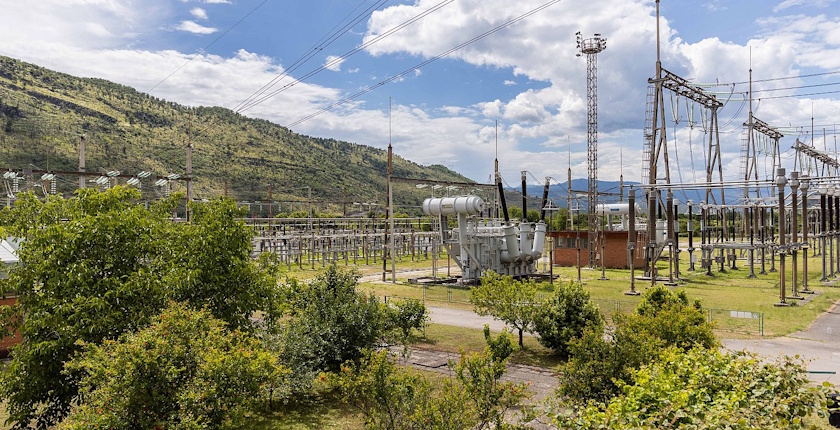
Montenegro’s TSO CGES to invest EUR 200 million

Montenegrin transmission system operator Crnogorski Elektroprenosni Sistem plans to invest EUR 200 million over the next five years, according to Ranko Redžić, manager of the company’s national dispatching center.

CGES is constantly improving and modernizing the system, as well as training employees, MINA reported.

According to Ranko Redžić, this yields results. One of them is a very low transmission system loss rate, which ranges from 1.6% to 1.7%, in line with the most efficient European systems, he added.

The most significant capital projects the company completed last year include the reconstruction of the Pljevlja 1 substation and the construction of the 150-kilometer Lastva-Pljevlja transmission line, which is expected to become operational soon.

The power line completes a 400 kV ring that will significantly improve the operational security of both the Montenegrin and neighboring transmission systems, Redžić stressed.

The completion of two 110 kV transmission lines in the north – Brezna-Žabljak and Žabljak-Pljevlja – is also planned

The completion of the project also creates conditions for connecting a significant number of renewable energy power plants, he explained.

Among the major projects is the upgrade of Lastva substation, which resolves the problem of excessively high voltages in the Montenegrin system. The issue is evident throughout the region.

The upgraded substation is expected to be put into operation by the end of January.

Redžić estimated that the total value of investments over the next five years will exceed EUR 200 million.

Among the upcoming projects, there is the completion of two 110 kV transmission lines in the north – Brezna-Žabljak and Žabljak-Pljevlja. CGES also intends to install the 400 kV Brezna substation, which would also enable the connection of significant renewable energy capacity.

The 400 kV link with Serbia would complete the Trans-Balkan Corridor

The reconstruction of the 220 kV transmission line from Bosnia and Herzegovina through Montenegro to Albania is also planned, along with the reconstruction of the substation at the Perućica hydropower plant and the replacement of transformers at Pljevlja 2 substation.

The upcoming construction of a 400 kV interconnection with Serbia, completing the Trans-Balkan Corridor, would create the conditions for a second line of the submarine cable between Montenegro and Italy, Redžić underscored.

The onshore transmission line would allow the installation of a number of new substations, enabling the connection of additional consumers and renewable electricity plants to the distribution network.

Redžić stressed that the expected date for coupling the Montenegrin and Italian electricity markets is the beginning of 2028.

by in News

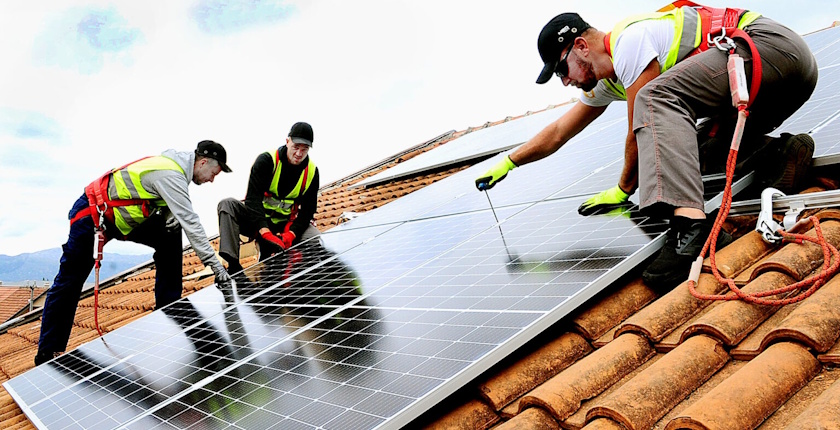
EPCG Solar Gradnja installs 36 MW of solar power in 2025

So far this year, EPCG Solar Gradnja has installed solar power plants with an overall capacity of 36 MW.

EPCG Solar Gradnja, a subsidiary of state-owned power utility Elektroprivreda Crne Gore (EPCG), specializes in the procurement, design, installation, and maintenance of photovoltaic systems.

Its main role is the installation of solar panels within the programs Solari 3,000+, Solari 500+, and Solari 5,000+.

The programs were launched by EPCG to enable households and businesses to install solar panels under favorable conditions and become prosumers.

EPCG Solar Gradnja pointed out that the results it achieved by December 1 have exceeded the plan for 2025.

The plan for 2025 was 30 MW

“Instead of the planned 30 MW, a total of 36 MW of photovoltaic systems was installed in the first 11 months,” the Board of Directors said after its sixth regular meeting.

The management added that it expects to end the year with a positive financial result.

Of note, EPCG said that since the establishment of EPCG Solar Gradnja in late 2021, the firm installed a total of 75 MW of solar power capacity by August this year. Montenegro currently doesn’t have any large PV plants, so the vast majority of the capacity is in very small PV systems.

The Board of Directors has reappointed Sanja Žugić as acting CEO for a period of six months, or until a competition or the selection of a CEO. The management highlighted good results as the main reason for its decision.

The priority is the implementation of large ground-mounted solar power plants

Due to the increased volume of work and further project development, the board adopted a new rulebook on the organization and the classification of jobs. It brings adjustments to the organization and redistribution of work tasks, EPCG Solar Gradnja said.

In the coming months, the firm’s priority will be the implementation of ground-mounted solar power plants. Two units of 40 MW each are in the pipeline, together with the installation of rooftop solar on an even larger scale, it added.

So far, EPCG Solar Gradnja has installed PV plants on nearly 9,000 roofs.

The board’s meeting was attended by the representatives of the unions. Procedures recommended by the Montenegro State Audit Institution were adopted at the meeting.

by in News

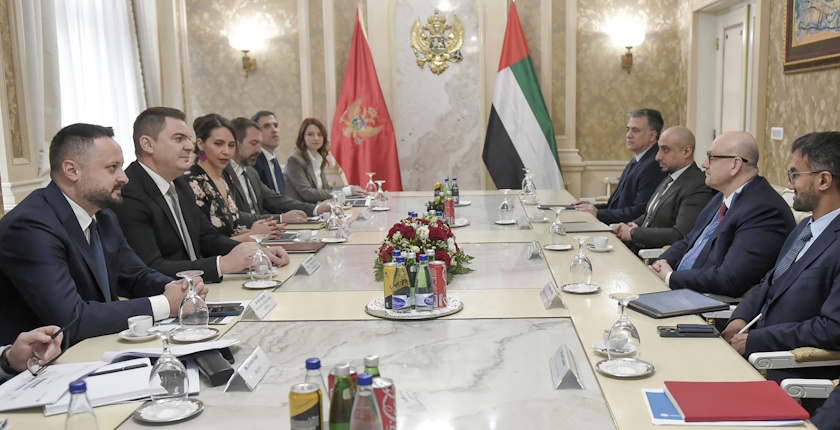
New round of talks between Montenegro and Masdar on strategic partnership

Representatives of the Government of Montenegro and Masdar discussed potential joint projects in the energy sector. The focus of the meeting was on solar energy, energy storage, and hydropower.

Minister of Energy and Mining of Montenegro Admir Šahmanović and the Minister of Public Works Majda Adžović met today at Villa Gorica in Montenegro’s capital Podgorica with Masdar CEO Mohamed Jameel Al Ramahi and his team.

It was the second meeting between Al Ramahi and Šahmanović in a short period. They met in early September.

The discussions now continued on top priority projects for the Government of Montenegro, ones that could be of mutual interest, according to the Ministry of Energy and Mining.

Priority should be given to projects that are the most technically advanced

Discussions will be intensified to define collaboration models, potential investments, and the selection of first projects to be implemented, the update reads.

Solar projects, including for floating solar power plants, alongside battery energy storage systems (BESS) and hydropower plants, have been identified as segments of special interest. These are also the areas where Masdar has significant engineering and technical experience, the ministry said.

montenegro masdar sahmanovic
Al Ramahi and Šahmanović (photo: Government of Montenegro/Saša Matić)

The two sides agreed to focus on projects that are the most technically advanced, environmentally sustainable, and aligned with the development of the power grid, to ensure their sustainable and efficient implementation.

Šahmanović: Montenegro’s strategic and long-term goal is to establish itself as a reliable and competitive player in the European energy market

Minister Šahmanović pointed out that the country’s strategic and long-term goal is to establish itself as a reliable and competitive player in the European energy market. He underscored that the development of energy infrastructure and renewable energy sources are among the government’s key priorities.

Officials participating in the meeting praised the planned construction of a second submarine cable line with Italy. It is an extremely wise and strategic investment that ensures Montenegro a stronger and more stable position in the European electricity market, they added.
Montenegro’s vision as an energy hub is fully aligned with the government’s development plans, Šahmanović stressed.

Minister of Public Works Majda Adžović highlighted the extensive experience of the United Arab Emirates in energy and infrastructure development in the public sector. It is of great importance for Montenegro’s activities in increasing renewable energy capacities, she added.

Masdar’s expert teams will continue technical talks with the management of EPCG and CGES

Masdar’s representatives have expressed readiness to continue technical discussions with the management of power utility Elektroprivreda Crne Gore (EPCG) and transmission system operator (TSO) Crnogorski Elektroprenosni Sistem (CGES).

The company’s expert teams will aim to identify priority and mature projects for joint implementation, the ministry said.

EPCG’s CEO Zdravko Dragaš and Ivan Mrvaljević, Executive Officer of EPCG’s Directorate for Development and Engineering, pointed out that the development of green energy is the company’s top priority.

A total of 200 MW in renewable energy projects are currently in development, they added.

Ivan Asanović, CEO of CGES, presented projects that are in the final stages of implementation.

by in News

Montenegro adopts National Energy and Climate Plan

The Government of Montenegro has adopted the National Energy and Climate Plan, along with a bill on cross-border electricity and natural gas exchange.

The National Energy and Climate Plan (NECP) of Montenegro is the overarching strategy that clearly defines what the country should achieve by 2030: a 55% reduction in emissions, a renewable energy share of at least 50%, and substantial progress in energy efficiency, according to the Ministry of Energy and Mining.

“Over the past eight months, we have made a tremendous effort to finalize two key documents that have been awaited for years and are crucial for our European commitments,” Minister Admir Šahmanović stressed.

This is a plan that enables new investments, new renewable energy power plants, modern grid infrastructure, and a secure transition for the Pljevlja coal region, he explained.

Šahmanović: The latest European Commission report confirms Montenegro’s progress

The ministry noted that the bill on cross-border electricity and natural gas exchange is among the most important energy laws proposed by this government. Šahmanović recalled that this is not merely a technical issue.

The bill, in his words, opens the door to the single European market, directly impacts the closure of Chapter 15 of the accession negotiations with the EU, and gives full meaning to the electricity interconnection with Italy and the EU market.

It would provide greater energy security, better competition, more stable prices, and a stronger position for the country’s economy, he added.

“The latest report from the European Commission confirms that we have made progress. Today’s decisions by the government are the best confirmation of this. These are the foundations for a more energy-secure, modern, and European Montenegro, and we have reason to be satisfied with the progress we have achieved,” Šahmanović underscored.

The bill represents the most extensive reform of energy legislation in the past decade

According to the ministry, by adopting these two strategic documents, Montenegro has taken a significant step forward in aligning with EU energy rules.

The NECP integrates energy, climate, and development policies into a single framework for the first time, sets clear and measurable goals, and lays the foundation for Montenegro’s long-term energy transition.

The law on cross-border electricity and natural gas exchange represents the most extensive reform of energy legislation in the past decade, transitioning from a basic regulatory framework to a full European system of market, technical, and security rules.

Together, these two documents represent the most important reform package in the energy sector in recent years, fully aligned with European legislation and the EU’s strategic priorities, the ministry concluded.

by in News

Montenegro launches second BESS tender but for drastically smaller capacity

Power utility Elektroprivreda Crne Gore has launched its second battery energy storage system procurement tender. The required capacity is drastically lower than in the first call.

The initial public procurement was canceled because state-owned energy company Elektroprivreda Crne Gore (EPCG) didn’t obtain approval from the Government of Montenegro to take a loan for a EUR 58 million project.

The new tender envisages the procurement of a battery between 100 kW and 130 kW, with 200 kWh to 260 kWh in capacity. This is a pilot project, and the procurement is valued at EUR 75,000.

The canceled purchase was for two battery energy storage systems (BESS), at 30 MW and 120 MWh each.

The battery will be used on the distribution network

Potential locations include hydropower plant (HPP) Perućica, EPCG’s steel mill Željezara Nikšić, and the Pljevlja thermal power plant.

In the new call, the winning bidder will be obliged to secure a location for installing and testing the pilot BESS, according to the documentation.

EPCG explained that over the previous three years, its projects Solari 3000+, 500+, and 5000+ enabled a strong pace of the addition of prosumer solar power plants to the low-voltage, distribution network in Montenegro.

Although distributed generation has clear financial and ecological benefits, its rapid growth simultaneously brings a string of technical challenges for the distribution network, which was historically developed solely for supplying consumers and for unidirectional energy flow, according to the tender’s documentation.

EPCG sees the installation of batteries in substations as a solution to technical challenges caused by prosumers

The company sees the installation of BESS units within 10/0.4 kV substations as the solution for these challenges.

These batteries would be charged during the hours when photovoltaic facilities have high output in order to reduce and prevent reverse power flow. The idea is to discharge BESS units during hours of peak consumption and low voltage.

The main goal is to minimize voltage deviations in areas that the substations cover, during periods of production and consumption fluctuations. It would increase the hosting capacity for new prosumers, and enhance the stability of the distribution grid under an increased PV plant integration.

Scalability of the battery is one of the conditions for the bidders set by EPCG.

by in News

Šahmanović: Montenegro is facing its most challenging year for energy sector

Montenegro is facing its most challenging year for the energy sector, Minister of Energy and Mining Admir Šahmanović stressed.

State-owned power utility Elektroprivreda Crne Gore (EPCG) will suffer a loss of around EUR 80 million given that the Pljevlja coal power plant is offline, while electricity consumption is rising amid increases in prices of other energy sources, Admir Šahmanović told TV Vijesti.

He explained that development is focusing on the reconstruction of the thermal power plant, addressing delays in connecting solar power plants to the grid, and plans for projects including within cooperation with the UAE and an agreement with Italy on a second subsea cable.

Šahmanović: We entered this year quite wounded

The priority will be price stability and increasing the use of renewable sources, along with strengthening Montenegro’s position as an energy hub between the region and the European Union, he added.

“I can freely say that, regarding this year, it is perhaps the most challenging year in the modern history of Montenegro, exactly for the energy sector. We entered this year quite wounded given the fact that last year the hydrological conditions were the worst in the country’s history,” he asserted.

Šahmanović added the electricity demand in Montenegro has jumped 6%.

Climate change is playing its part

One of the reasons is the increase in the price of energy sources such as wood and coal, according to the minister.

He pointed to climate change as another factor. There is a growing need to install air conditioning units even in northern Montenegro, where there was previously no need for it, he added.

Therefore, in the minister’s words, the construction of other production facilities is inevitable.

Of note, EPCG’s executive manager of supply Jovan Kasalica said in April that electricity consumption in Montenegro has risen by 25% over the previous four years.

by in News

Elektroprivreda Crne Gore appoints new CEO

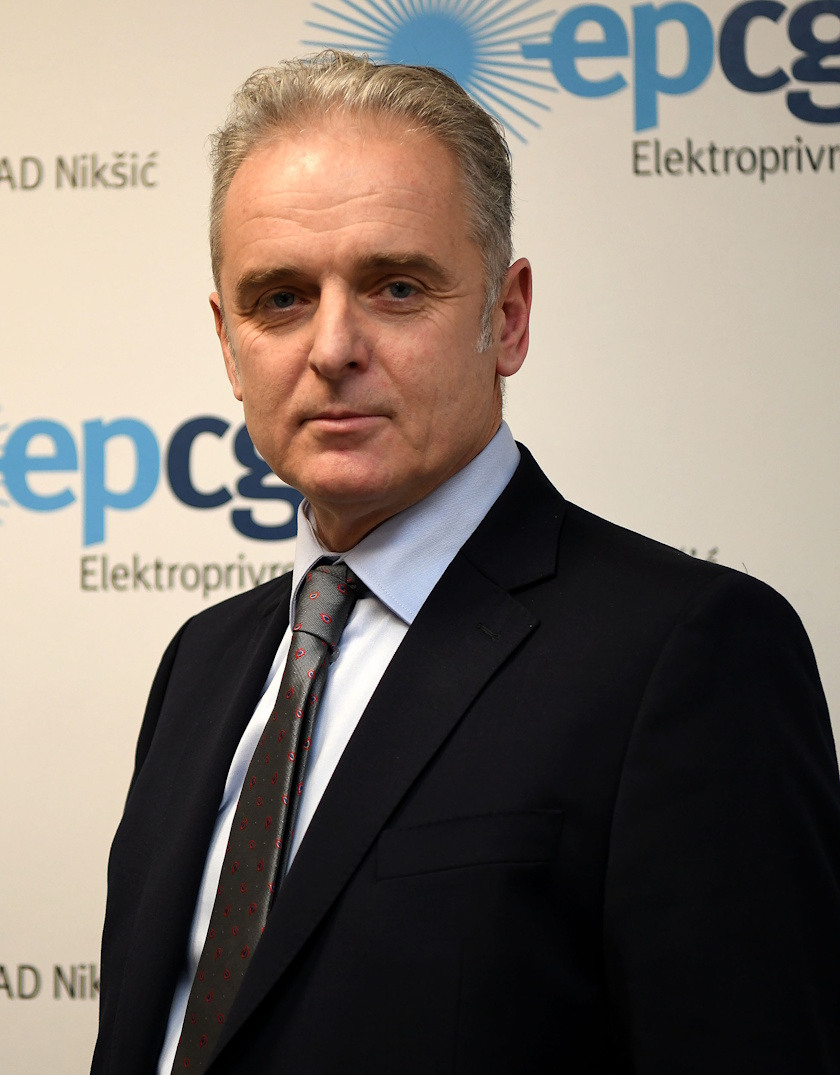
Zdravko Dragaš is the new CEO of Montenegro’s state-owned power utility Elektroprivreda Crne Gore.

The Board of Directors of Elektroprivreda Crne Gore (EPCG) appointed Zdravko Dragaš today as the company’s CEO, at its 41st regular session.

A month and a half ago, the Board of Directors relieved the previous CEO Ivan Bulatović of his duties and appointed Bojan Đordan as the acting chief executive.

Dragaš was selected through a contest, in a procedure that included a professional commission reviewing and processing applications, as well as interviews conducted by the appointment commission, EPCG said.

Dragaš is a graduate electrical engineer

According to the company, the process prioritized the development and business improvement plans set forth for the upcoming term.

EPCG published the new CEO’s biography.

Zdravko Dragaš was born in 1972 in Podgorica. A graduate electrical engineer and member of the Engineering Chamber of Montenegro, he has more than twenty years of experience in the energy sector.

He began his professional career in 2000 as a project manager and executive director at several companies.montenegro epcg zdravko dragas ceo board

He is the founder and owner of Cema, a company based in Podgorica, Montenegro’s capital. The firm provides design, execution, and supervision services for construction and installation projects.

Board: Dragaš fully meets the high standards required to lead one of the most important state-owned companies

According to the Board of Directors, Dragaš’s expert knowledge, many years of experience in the private sector, and managerial competencies, fully meet the high standards required to lead one of the most important state-owned companies.

Upon taking office, the new CEO, together with his team, will work dedicatedly to achieve the strategic goals, including the stability of the power system, the development of new energy projects, and the continuous improvement of operational efficiency, EPCG underlined.

by in News

Montenegro drafts green hydrogen development program with 2026-2028 action plan

Montenegro has drafted a program for the development of green hydrogen with an action plan for the period 2026-2028 and a strategic environmental impact assessment report.

The public discussion is underway about the draft green hydrogen development program with an action plan for the period 2026-2028 and strategic environmental assessment report. It lasts 20 days from the publication of the public call – November 25.

Green hydrogen is a strategic priority for Montenegro by 2030 as a key energy fuel for transition, decarbonization, and security, the document reads.

The program defines four operational goals

Its use is planned in the energy, transportation, and industry sectors, with production based on excess electricity from wind and solar power plants and the development of grid balancing activity and charging infrastructure in line with the EU regulations, the draft underlines.

The document defines four operational goals.

The first is the establishment of an institutional, regulatory, and standardisation framework for the development of the hydrogen economy. It would include a national hydrogen council.

The plan is to produce a feasibility study with a financial assessment for a green hydrogen pilot project

Strengthening administrative capacity is the second goal. The activities include staff training and the adoption of guidelines and regulatory adjustments by the local authorities in line with the national green hydrogen policy.

The third objective is to plan and develop infrastructure for the integration of green hydrogen. The program envisages the creation and adoption of a national hydrogen infrastructure map, as well as a feasibility study with a financial assessment for a pilot project for the production of green hydrogen.

The final goal is to develop science, innovation, education, and promotion in the field of green hydrogen, for which educational programs at the high school and university levels would be developed.

NECP examined two scenarios for hydrogen

The program aims to increase the competitiveness of the Montenegrin economy and achieve carbon neutrality in line with the Paris Agreement, as well as other EU strategic documents, including the European Green Deal and the New Industrial Strategy for Europe.

The country’s National Energy and Climate Plan (NECP) has outlined two hydrogen scenarios – a moderate one (MH2E) and an ambitious one (AH2E).

Pilot projects are planned by 2030, while investments are estimated at EUR 127 million to EUR 212 million by 2050, according to the NECP.

by in News

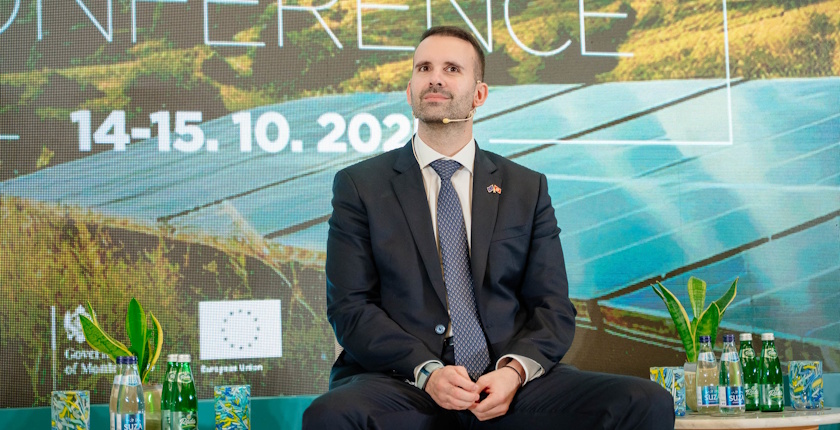
Spajić: Montenegro wants to be country of green data centers

Montenegro plans to become a country of green data centers, according to Prime Minister Milojko Spajić.

Milojko Spajić was one of the speakers at the keynote panel Accelerating the Western Balkans’ Green and Smart Growth, within the European Union – Montenegro Investment Conference in Luštica, near Tivat.

Earlier, European Commission President Ursula von der Leyen and the prime minister of Montenegro opened the two-day event, titled Smart Growth, Green Future: Accelerating Investment in Montenegro.

Spajić said energy is a cornerstone of the country’s strategy for connecting the region but also something in which Montenegro could be very competitive, helping the EU become even more competitive on the global stage.

Spajić: We can offer to Europe a possibility to get inexpensive electricity and stable supply

“We have dozens of amazing projects for hydro, wind, solar energy at very competitive rates. We can offer to Europe a possibility to get inexpensive electricity and stable supply. Baseload energy as well. For example, hydro is baseload energy,” he stated.

Photo: Bojan Gnjidić / Government of Montenegro

The prime minister recalled that his country is interconnected with Italy and that the project for the installation of the second line of the subsea cable is in the pipeline. But he also highlighted the significance of digital connections with Italy, where Milan is one of the biggest data center hubs in the EU, providing connections to Frankfurt and London.

Montenegro, in Spajić’s words, intends to be a part of the data highway. Data centers are basically the hardware for artificial intelligence, he explained and added that AI is going to be strong in big markets, not in small ones.

Partners from the US, UAE, and other countries, are interested in the development of the data centers

“But where we can actually be involved as a small country are data centers providing infrastructure for the EU’s AI to be strong and competitive,” Spajić underlined.

Therefore the country intends to focus on providing a very good environment for global data center operators, to come from all around the world. Spajić revealed that partners from the United States, United Arab Emirates, and other countries are interested in joining the opportunities for the development of the data centers.

“We want Montenegro to be the country of green data centers. We have water for hydropower. We have a lot of solar potential and a lot of wind. We are very fortunate to have such diversity,” Spajić said.

He invited investors to come to Montenegro: “Don’t waste your time, come as soon as possible.”

Participants at the panel included the Director of Enlargement Coordination, Strategy and Investments at the EU’s Directorate-General for Enlargement and Eastern Neighbourhood, Mathieu Bousquet, WizzAir CEO József Váradi, Akuo President Eric Scotto, and Charlotte Ruhe, Managing Director for Central and South-Eastern Europe in the European Bank for Reconstruction and Development (EBRD).

Of note, fourteen cooperation projects between Montenegrin and European companies have been initiated at the conference. Some of them involve investments in wind farms, solar parks, energy storage, and grids.