by in News

EPCG Expands Generation and Storage Portfolio with 639 MW of New Projects

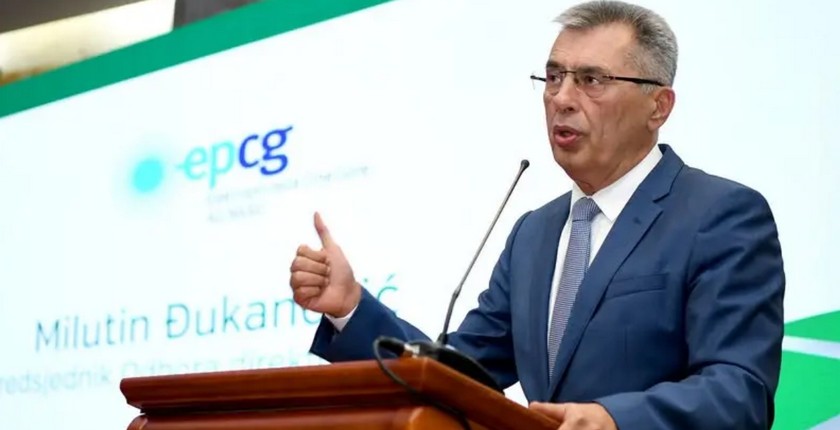
Montenegro’s state-owned utility Elektroprivreda Crne Gore (EPCG) is advancing a broad portfolio of solar, wind, battery storage, and hydropower projects with a combined capacity of 639 MW, and an expected annual electricity output of more than 1 TWh, according to Milutin Đukanović, President of EPCG’s Board of Directors.

In an opinion piece, Đukanović said the company has already completed part of a major investment cycle, including rooftop solar projects, the Gvozd 1 wind farm, the ecological reconstruction of the Pljevlja thermal power plant, and part of the modernization works at the Piva and Perućica hydropower plants. He added that new generation capacities, battery storage systems, hydropower upgrades, rooftop solar, wind projects, and strategic partnerships are EPCG’s response to the operational and market challenges it faced in 2025.

EPCG’s direct project pipeline amounts to around 639 MW/MWp, with estimated investments of approximately EUR 646.5 million and an expected annual output of about 1,024 GWh. Đukanović noted that the investment framework also includes reconstruction and upgrade projects that cannot always be expressed in megawatts.

When strategic and potential private partners are included, the company’s total portfolio rises above 4,636 MW/MWp, with a potential annual electricity generation of more than 8,176 GWh. Đukanović said EPCG is positioning itself for a larger role in Montenegro’s energy transition and in the broader regional power market.

The portfolio includes EPCG-owned solar power plants with a combined capacity of 221.1 MW and projected annual production of 299 GWh, rooftop solar systems for prosumers totaling 209.1 MW and 245 GWh in annual generation, the Gvozd 1 and Gvozd 2 wind farms with a combined capacity of 75.6 MW and expected output of 227 GWh, hydropower projects totaling 71.7 MW and 135 GWh annually, and battery energy storage facilities with an operating power of 60 MW.

A battery energy storage system is also planned at EPCG’s steel plant Željezara Nikšić. The project is estimated at around EUR 48 million and is designed as a 60 MW / 240 MWh system, with an expected annual electricity output of about 118.3 GWh, Đukanović said.

Among the completed investments, EPCG has already added 143.66 MW of new generation capacity, corresponding to around 268 GWh of annual electricity production. The value of these completed projects stands at approximately EUR 258.87 million.

These include rooftop solar systems installed under the Solari 3000+ and Solari 500+ programs, with a total peak capacity of 34.34 MW and expected annual generation of 40.18 GWh, as well as the completed portion of the Solari 5000+ project, which has a total peak capacity of 54.72 MW and expected annual output of 64.02 GWh. A further 20 MW of rooftop solar remains to be installed under the same program.

The 54.6 MW Gvozd 1 wind farm has also been completed, with an investment of EUR 82 million and projected annual output of 163.8 GWh. Together with the second phase, Gvozd 2, the project will raise total wind capacity by about 75.6 MW.

Additional completed investments include the ecological reconstruction of the Pljevlja thermal power plant, valued at EUR 75 million, along with the second phase of reconstruction and modernization works at the Piva hydropower plant, worth EUR 10.83 million, and the second phase at the Perućica hydropower plant, worth EUR 33 million.

Đukanović also noted that the Pljevlja coal mine carried out the diversion of the Ćehotina River during the power plant reconstruction, in a project worth EUR 20 million. The intervention was necessary to secure continued coal mining operations, as available reserves were close to exhaustion.

He said the main reasons for EPCG’s EUR 92.1 million loss in 2025 were the eight-month outage at the Pljevlja thermal power plant due to ecological reconstruction, as well as unfavorable hydrological conditions.

According to Đukanović, once production at Pljevlja resumed, EPCG’s energy balance returned to positive territory. The company then posted a profit of EUR 36.47 million in the first quarter of this year.

by in News

The Green Backbone: Albania and Western Balkan Partners Unveil Strategic Energy Projects for 2026 EU Funding

The Energy Community has officially opened the public consultation for the 2026 list of Projects of Energy Community Interest (PECI), marking a pivotal moment for the Western Balkans’ energy infrastructure. Running from March 16 to April 17, 2026, the consultation evaluates eight critical projects designed to dismantle cross-border bottlenecks and pave the way for a massive influx of renewable energy.

For Albania and its neighbours, Kosovo, North Macedonia, Montenegro, and Bosnia and Herzegovina the selected projects represent a shift from traditional hydroelectric production to a sophisticated, integrated system of large-scale storage and high-voltage transmission corridors. These projects are now positioned to seek diverse financing, including EU grants, Western Balkans Investment Framework (WBIF) funds, and favourable loans from international financial institutions.

Below is a detailed technical and strategic breakdown of the flagship projects currently in the PECI selection pipeline.

1. Project E12: Moglice Pumped-Storage – The Balkans’ “Giant Battery”

At the heart of Albania’s green transition is the Moglice Extension Pumped-Storage Hydropower Plant (PSH). Developed by Devoll Hydropower Sh.A. (part of the Statkraft Group), this project is set to become one of the largest flexibility assets in the region.

  • Technical Parameters:

    • Maximum Power (Pmax): 1,620 MW (with a dynamic operational range of -1,620 MW to +1,620 MW).

    • Storage Capacity: 30,000 MWh (approx. 30 GWh).

    • Voltage: 400 kV.

    • Efficiency: 77% roundtrip efficiency.

  • Strategic Role: The plant will function as a “green battery,” utilizing the existing Moglice reservoir (380 million m³) and a new upper reservoir (25 million m³). It is designed to store surplus energy during periods of high production and release it during peak demand, providing critical balancing services to Albania and neighboring EU markets like Greece and Italy.

  • Timeline: Currently in the economic feasibility stage, with the earliest commissioning targeted for 2033.

2. Project E04: The 220 kV Balkan Triangle Rehabilitation

To ensure the reliability of the “Balkan Triangle” (Albania, Montenegro, and Bosnia & Herzegovina), the rehabilitation of the aging 220 kV Trebinje–Vau i Dejës corridor has been prioritized. This line is a vital artery that has recently struggled with congestion due to new solar and hydro capacities.

  • Technical Parameters:

    • Voltage: 220 kV.

    • Length: 162.92 km.

    • Transmission Power: Upgraded to carry 1,500 A using specialized high-capacity conductors.

    • Promoters: NOS BiH, Elektroprijenos-Elektroprenos BiH, and CGES (Montenegro).

  • Strategic Role: The project addresses severe climatic challenges and infrastructure depreciation. By replacing OPGW, insulation, and conductors on existing poles without increasing mechanical load, the project will increase Net Transfer Capacity (NTC) and resolve long-standing congestions between BA–ME, ME–AL, and AL–BA.

  • Timeline: Currently in the Detail Design Study phase, with an expected commissioning date of 2030.

3. Project E05 & Regional Corridors: Integrating Wind and Strengthening East-West Links

The expansion of the 400 kV network is a two-pronged strategy: strengthening regional East-West ties and unlocking wind potential in Northeast Albania.

A. The East-West Western Section (Project E05)

Connecting Kosovo and North Macedonia, this 103 km interconnector is a key link in the regional transmission “rings.”

  • Technical Parameters: 400 kV; 1330 MW Pmax.

  • Objective: Connecting the upgraded Prizren (XK) substation to a new substation in Tetovo (MK). This project enhances the security of supply and supports the large-scale integration of Renewable Energy Sources (RES) across the corridor.

  • Timeline: Expected commissioning by 2035.

B. The Albania–Kosovo Interconnection (Strategic Link)

As highlighted by recent strategic filings, Albania is pushing for a new 400 kV interconnection between Fierza (AL) and Prizren (XK).

  • Strategic Role: This link is deemed essential to facilitate the integration of over 1 GW of planned wind energy capacity in Northeast Albania. It will alleviate existing 220 kV grid overloads and significantly boost regional energy trading.

Financing the Future

These PECI projects are governed by the revised EU TEN-E Regulation, which streamlines the path toward final approval in December 2026. Because these projects provide cross-border benefits, they are eligible for a “blended” financing model. This includes state budget allocations, private investment from promoters like Statkraft and KOSTT, and significant support from European Union grants and loans.

As the Western Balkans move away from coal and toward a renewable-heavy mix, these projects—Moglice’s storage, the 220 kV rehabilitation, and the 400 kV corridors—form the essential hardware of a modernized, secure, and decarbonized European energy market.

by in News

CGES Secures €15 Million Investment to Upgrade Tri-Nation Power Infrastructure in the Western Balkans

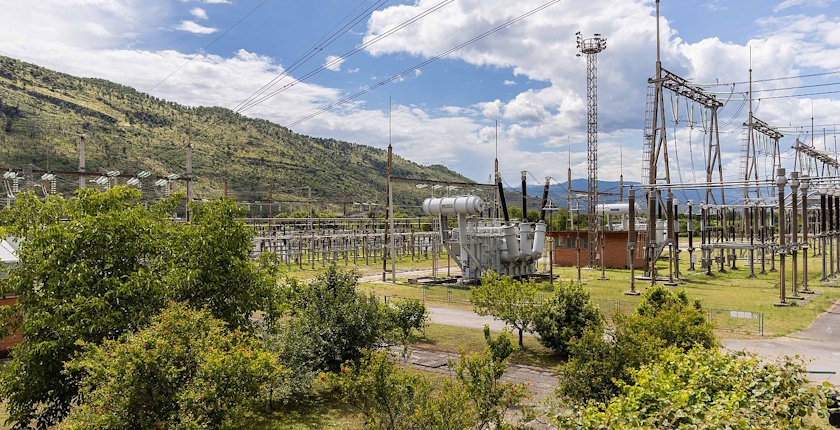
Crnogorski Elektroprenosni Sistem (CGES), Montenegro’s national transmission system operator, has successfully secured a €15 million loan to finance the modernization of the 220-kilovolt (kV) power line connecting Montenegro, Bosnia and Herzegovina, and Albania.

This strategic initiative is designed to enhance the efficiency and reliability of Montenegro’s domestic electricity transmission network while simultaneously fortifying cross-border energy connectivity throughout the Western Balkans. According to CGES, the project represents a critical step toward the broader regional integration of power systems.

The financial agreement was formally signed by CGES Chief Executive Officer Ivan Asanović, European Bank for Reconstruction and Development (EBRD) Vice President Mark Bowman, and Montenegrin Minister of Finance Novica Vuković. The Ministry of Finance backed the initiative by issuing a state guarantee, underscoring the government’s steadfast commitment to supporting strategic investments that bolster both national infrastructure and regional connectivity.

Detailing the technical improvements, CEO Ivan Asanović noted that the modernization project will effectively double the transmission line’s current capacity from 300 megawatts (MW) to approximately 600 MW. He characterized the upgrade as a foundational investment in a secure, stable, and integrated energy future for the region, resulting in a more resilient grid capable of meeting increasing systemic demands and facilitating deeper regional cooperation.

EBRD Vice President Mark Bowman echoed these sentiments, emphasizing that reinforcing transmission networks is essential for securing long-term energy security and regional integration in the Western Balkans. Bowman noted that the project will overhaul vital infrastructure in Montenegro, aligning with the EBRD’s mandate to foster sustainable and resilient infrastructural development.

Looking forward, this project falls under a broader capital expenditure strategy for CGES, which plans to invest a total of €200 million into transmission infrastructure over the next five years.

by in News

Montenegro Achieves Regulatory Milestone: Full Alignment with EU Electricity Integration Package

In a significant leap toward European energy integration, Montenegro has officially completed the transposition of the European Union’s Electricity Integration Package (EIP). According to the Energy Community Secretariat, this regulatory alignment positions Montenegro alongside Moldova and Serbia as frontrunners in the Western Balkans’ effort to merge with the European single electricity market.

The move is designed to catalyze Montenegro’s energy transition by enhancing market competitiveness and ensuring the country can participate in regional power exchanges even before formal EU accession.

The Gateway to Market Coupling: SDAC and SIDC

The primary objective of transposing the EIP is to enable Market Coupling. By harmonizing its domestic laws with EU standards, Montenegro is preparing to join two critical pillars of the European energy infrastructure:

  • Single Day-Ahead Coupling (SDAC): A mechanism that optimizes electricity prices and cross-border flows across Europe for the following day.

  • Single Intraday Coupling (SIDC): A continuous trading environment that allows market participants to adjust their positions as close to real-time as possible.

This integration is expected to lower costs for consumers, provide clearer signals for renewable energy investors, and significantly bolster the security of the national supply.

The Legislative Roadmap

The finalization of this process occurred on February 15, 2026, when the Montenegrin government adopted two pivotal decrees governing:

  1. System Operation: Establishing technical rules for grid stability.

  2. Emergency and Restoration: Outlining protocols for grid recovery during unforeseen outages.

These decrees complement existing legislation, including the Law on Energy and the Law on Cross-Border Exchanges in Electricity and Natural Gas. Together, these legal frameworks form the “four pillars” identified by the Secretariat as essential for a cost-efficient clean energy transition:

  • Clear investment signals.

  • Strengthened regional cooperation.

  • Reinforced fair competition.

  • Enhanced security of supply.

The Path to Verification

While the legislative work is complete, Montenegro now enters the Verification Phase. This process involves a rigorous audit by the Energy Community Secretariat and the European Commission to ensure that the laws on paper translate into functional market practices.

Country Status of EIP Transposition Verification Phase
Serbia Completed In Progress (Started Oct 2025)
Moldova Completed Initiating
Montenegro Completed Pending Request
North Macedonia Partial Pending Legislation

“Montenegro is now stepping up efforts to submit a formal request initiating the verification process,” the Secretariat noted, echoing recent sentiments from Director Artur Lorkowski regarding the rapid progress of the “Vienna Group” of energy reformers.

Expert Analysis: What This Means for the Region

For a small economy like Montenegro, market coupling is a “force multiplier.” By removing the barriers to cross-border electricity trade, the country can better manage the intermittency of new wind and solar projects. This regulatory bridge to the EU not only modernizes the grid but also makes Montenegro a more attractive destination for “green” capital, as energy produced domestically can now be more easily sold into the massive European market.

by in News

Montenegro Approves EIA for 118.8 MW Bijela Wind Farm and 110 kV Line

Montenegro’s Environmental Protection Agency has approved the environmental impact assessment (EIA) study for the construction of the Bijela wind farm, including a 110 kV transmission line. The project is planned at 118.8 MW, with Alcazar Energy Partners listed as the investor.

The Bijela wind project is located near the town of Šavnik in northern Montenegro. It envisages 17 wind turbines installed on hilly terrain across a mountain plateau, with total capacity reaching 118.8 MW.

Study sets mitigation measures for construction and operation

The approved EIA outlines protection and mitigation measures for environmental impacts that could arise during both construction and operation of the wind farm and the associated transmission line. The measures cover impacts on air quality, soil, and biodiversity, as well as noise and visual effects.

Grid and offtake steps already underway

Alcazar Energy signed a grid connection agreement with Montenegro’s transmission system operator CGES in September 2024. The company took over the Bijela project a year earlier, with total investment in the wind farm valued at $200 million.

On the commercial side, Alcazar Energy signed a memorandum of understanding in January 2025 with Montenegro’s state power utility Elektroprivreda Crne Gore (EPCG), launching negotiations on a power purchase agreement (PPA) for electricity from the Bijela project.

Wider expansion plans across the Western Balkans

In October 2025, Alcazar Energy said it would increase its investment in Montenegro from $200 million to $500 million. The plan was presented at the EU–Montenegro Investment Conference by the company’s Co-Founder and Managing Partner, Daniel Calderon.

Alcazar Energy’s Western Balkans portfolio also includes projects in North Macedonia and Serbia. In North Macedonia, the company is building what it describes as the region’s largest wind farm, a 400 MW project backed by a $500 million investment. In Serbia, Alcazar Energy is developing the 200 MW Celzijus 1 wind farm east of Belgrade.

by in News

Montenegro’s EPCG signs contract for Otilovići small hydropower plant

Montenegro’s Elektroprivreda Crne Gore signed a contract today with Vigoris Ecotech for the construction of the Otilovići small hydropower plant near Pljevlja, in the northern part of the country.

The agreement between state-owned power utility Elektroprivreda Crne Gore (EPCG) and Vigoris Ecotech is for project design, construction, the delivery and installation of electro-mechanical equipment, testing, and commissioning, on a turnkey basis.

The contract, worth EUR 6.8 million excluding VAT, was concluded following an open tender, according to the update. The project involves the installation of two units with horizontal Francis turbines, with a total installed capacity of 3.2 MW. The planned annual production is 11 GWh.

The Otilovići SHPP is a priority in hydropower development

In July 2023, EPCG obtained urban planning and technical requirements for the project. At the time, the company said it worked two years on the documentation and announced that it would soon launch a tender.

montenegro epcg vigoris shpp otilovici dragas visnjic dam
Photo: EPCG

The small hydropower plant (SHPP) will utilize surplus water from an existing reservoir on the Ćehotina river. The facility is used for the needs of the Pljevlja thermal power plant and to supply drinking water to Pljevlja.

EPCG said Otilovići has been recognized as a priority hydropower project within the strategic plans of both the company and Montenegro.

Dragaš: Strengthening production stability and flexibility

EPCG CEO Zdravko Dragaš stressed that SHPP Otilovići represents another step in the company’s investment plan and the strengthening of domestic production capacities.

The contract confirms EPCG’s development orientation toward investing in reliable, sustainable, and domestic energy sources, with the full application of modern standards and procedures, he added.

“The Otilovići SHPP is a project that adds new value to Montenegro’s energy system and strengthens our overall production stability and flexibility,” Dragaš underscored.

Višnjić: We aim to deliver a solution that justifies trust

According to Vigoris Ecotech CEO Siniša Višnjić, the project’s implementation will be guided by high standards of quality and safety, with strictly defined deadlines and obligations.

“Our goal is to deliver a solution that justifies EPCG’s trust, from the main design to the final testing and commissioning,” Višnjić stressed.

by in News

EPCG, Masdar sign cooperation agreement

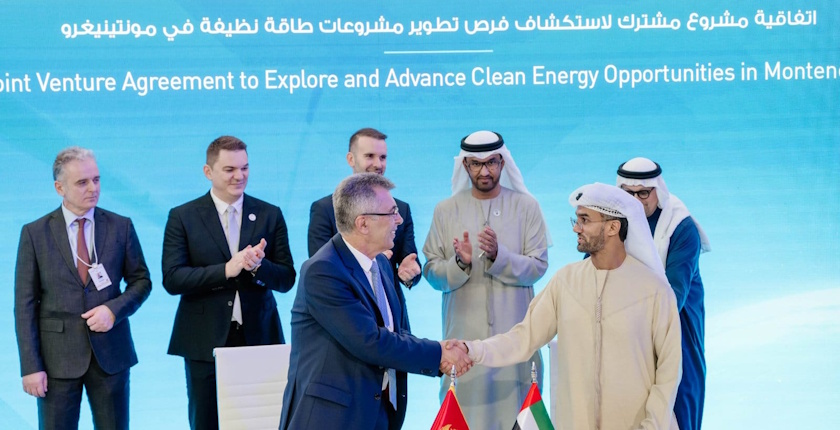
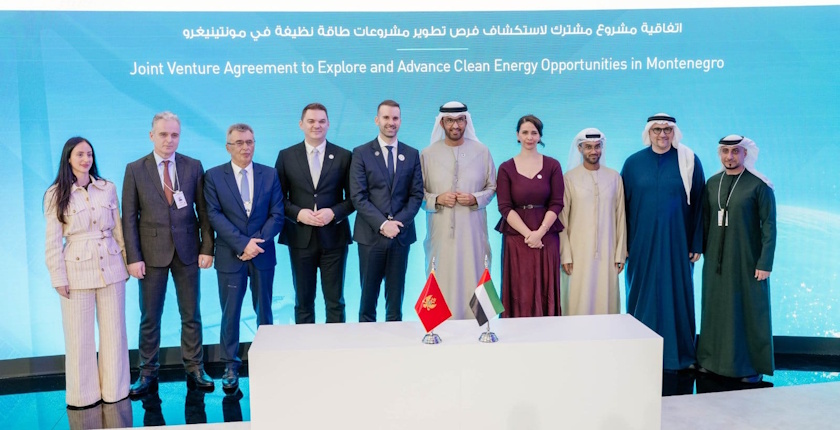
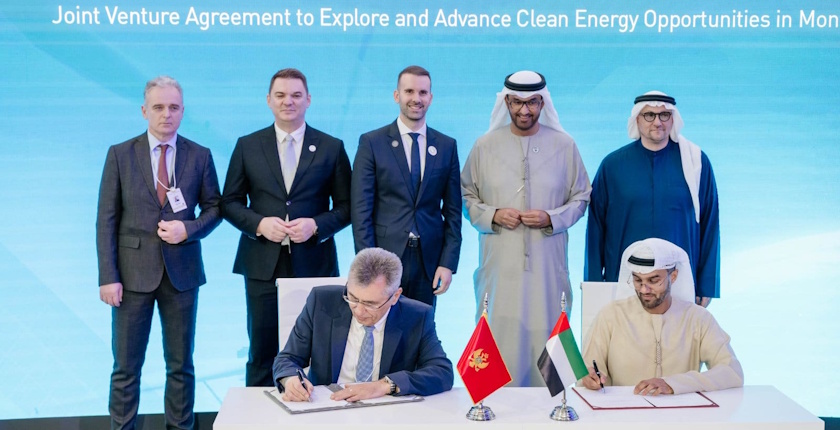
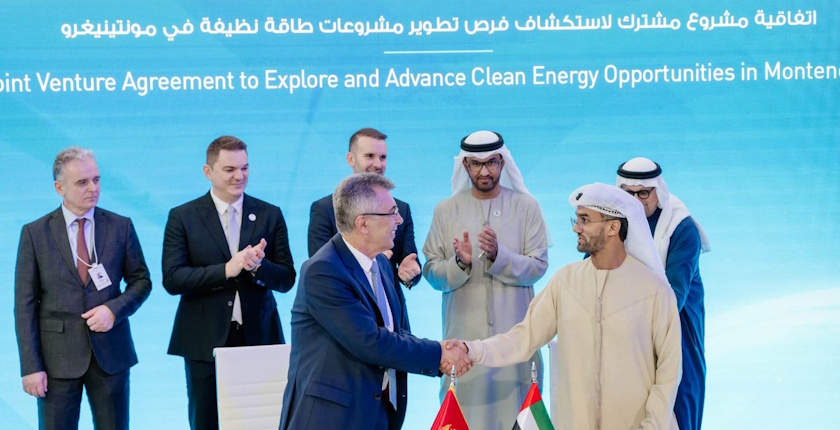
Montenegro’s power utility Elektroprivreda Crne Gore and UAE-based Masdar today signed a cooperation agreement on the sidelines of Abu Dhabi Sustainability Week.

Elektroprivreda Crne Gore (EPCG) said its agreement with Masdar sets the framework for future cooperation in the development of solar and wind projects, as well as other sustainable energy solutions, including the exchange of knowledge and experience and opportunities for joint investments.

The agreement further confirms EPCG’s strategic commitment to actively contribute to the energy transition, strengthen energy security, and support the sustainable economic development of Montenegro through partnerships with global leaders, the update reads.

Abu Dhabi Sustainability Week (ADSW) is a global forum dedicated to the energy transition, climate solutions, and sustainable development.

The agreement was signed during an official visit of the Montenegrin delegation to the United Arab Emirates, led by Prime Minister Milojko Spajić.

Đukanović: Historic agreement

Milutin Đukanović, President of EPCG’s Board of Directors, praised the agreement as historic and its strategic significance for the long-term development of Montenegro’s energy sector.

He stressed that partnering with a renowned company represents a strategic positioning of Montenegro in the modern energy environment and an important step in diversifying energy sources.

montenegro epcg masdar agreement adsw spajic djukanovic
Photo: EPCG

“In the context of the introduction of the CBAM mechanism, it is necessary to accelerate investments in energy, because along with strong development of domestic projects, cooperation with leading international partners is key to faster sector development and greater national competitiveness. Energy development represents a historic opportunity for Montenegro that we must not miss,” Đukanović stressed.

According to EPCG CEO Zdravko Dragaš, the signing of the agreement represents an important advancement in the development of Montenegro’s energy sector and a strong signal of the trust of a renowned global partner in Montenegro’s potential.

Dragaš: Montenegro to become a reliable exporter of green energy

“Our common goal is for Montenegro, in addition to meeting its own consumption, to become a reliable exporter of green energy to the region and beyond, utilizing the existing infrastructure and the country’s strategic position,” Dragaš underscored.

Montenegro and the UAE signed an agreement in November 2025 on cooperation in the energy sector.

Lately, the two countries have had a dynamic relationship in the energy sector. In December of last year, Montenegrin officials and Masdar’s management discussed potential joint projects.

montenegro epcg masdar agreement abu dhabi spajic djukanovic
Photo: EPCG
by in News

EPCG, Masdar sign cooperation agreement

Montenegro’s power utility Elektroprivreda Crne Gore and UAE-based Masdar today signed a cooperation agreement on the sidelines of Abu Dhabi Sustainability Week.

Elektroprivreda Crne Gore (EPCG) said its agreement with Masdar sets the framework for future cooperation in the development of solar and wind projects, as well as other sustainable energy solutions, including the exchange of knowledge and experience and opportunities for joint investments.

The agreement further confirms EPCG’s strategic commitment to actively contribute to the energy transition, strengthen energy security, and support the sustainable economic development of Montenegro through partnerships with global leaders, the update reads.

Abu Dhabi Sustainability Week (ADSW) is a global forum dedicated to the energy transition, climate solutions, and sustainable development.

The agreement was signed during an official visit of the Montenegrin delegation to the United Arab Emirates, led by Prime Minister Milojko Spajić.

Đukanović: Historic agreement

Milutin Đukanović, President of EPCG’s Board of Directors, praised the agreement as historic and its strategic significance for the long-term development of Montenegro’s energy sector.

He stressed that partnering with a renowned company represents a strategic positioning of Montenegro in the modern energy environment and an important step in diversifying energy sources.

montenegro epcg masdar agreement adsw spajic djukanovic
Photo: EPCG

“In the context of the introduction of the CBAM mechanism, it is necessary to accelerate investments in energy, because along with strong development of domestic projects, cooperation with leading international partners is key to faster sector development and greater national competitiveness. Energy development represents a historic opportunity for Montenegro that we must not miss,” Đukanović stressed.

According to EPCG CEO Zdravko Dragaš, the signing of the agreement represents an important advancement in the development of Montenegro’s energy sector and a strong signal of the trust of a renowned global partner in Montenegro’s potential.

Dragaš: Montenegro to become a reliable exporter of green energy

“Our common goal is for Montenegro, in addition to meeting its own consumption, to become a reliable exporter of green energy to the region and beyond, utilizing the existing infrastructure and the country’s strategic position,” Dragaš underscored.

Montenegro and the UAE signed an agreement in November 2025 on cooperation in the energy sector.

Lately, the two countries have had a dynamic relationship in the energy sector. In December of last year, Montenegrin officials and Masdar’s management discussed potential joint projects.

montenegro epcg masdar agreement abu dhabi spajic djukanovic
Photo: EPCG
by in News

Montenegro’s TSO CGES to invest EUR 200 million

Montenegrin transmission system operator Crnogorski Elektroprenosni Sistem plans to invest EUR 200 million over the next five years, according to Ranko Redžić, manager of the company’s national dispatching center.

CGES is constantly improving and modernizing the system, as well as training employees, MINA reported.

According to Ranko Redžić, this yields results. One of them is a very low transmission system loss rate, which ranges from 1.6% to 1.7%, in line with the most efficient European systems, he added.

The most significant capital projects the company completed last year include the reconstruction of the Pljevlja 1 substation and the construction of the 150-kilometer Lastva-Pljevlja transmission line, which is expected to become operational soon.

The power line completes a 400 kV ring that will significantly improve the operational security of both the Montenegrin and neighboring transmission systems, Redžić stressed.

The completion of two 110 kV transmission lines in the north – Brezna-Žabljak and Žabljak-Pljevlja – is also planned

The completion of the project also creates conditions for connecting a significant number of renewable energy power plants, he explained.

Among the major projects is the upgrade of Lastva substation, which resolves the problem of excessively high voltages in the Montenegrin system. The issue is evident throughout the region.

The upgraded substation is expected to be put into operation by the end of January.

Redžić estimated that the total value of investments over the next five years will exceed EUR 200 million.

Among the upcoming projects, there is the completion of two 110 kV transmission lines in the north – Brezna-Žabljak and Žabljak-Pljevlja. CGES also intends to install the 400 kV Brezna substation, which would also enable the connection of significant renewable energy capacity.

The 400 kV link with Serbia would complete the Trans-Balkan Corridor

The reconstruction of the 220 kV transmission line from Bosnia and Herzegovina through Montenegro to Albania is also planned, along with the reconstruction of the substation at the Perućica hydropower plant and the replacement of transformers at Pljevlja 2 substation.

The upcoming construction of a 400 kV interconnection with Serbia, completing the Trans-Balkan Corridor, would create the conditions for a second line of the submarine cable between Montenegro and Italy, Redžić underscored.

The onshore transmission line would allow the installation of a number of new substations, enabling the connection of additional consumers and renewable electricity plants to the distribution network.

Redžić stressed that the expected date for coupling the Montenegrin and Italian electricity markets is the beginning of 2028.

by in News

EU’s amendments to CBAM: possibility of relief, but January 1 brought market uncertainty

Long-awaited implementing acts and amendments to the CBAM Regulation brought only a minor relief for the Western Balkans, investors in renewables, and electricity traders. Balkan Green Energy News has analyzed the documents that the European Commission published in December 2025, and the impact of the proposed measures on Energy Community contracting parties – Albania, BiH, Kosovo*, Montenegro, North Macedonia and Serbia.

From January 1, European firms importing aluminum, cement, electricity, iron and steel, hydrogen and fertilizers are obliged to pay a carbon price within the European Union’s Carbon Border Adjustment Mechanism (CBAM).

Last year, the CBAM Regulation was criticized by experts from the Western Balkans (Ljubo Maćić, Zoran Gjorgjievski), European think-tanks (Bruegel), and organizations (Energy Traders Europe). Even the European Network of Transmission System Operators for Electricity (ENTSO-E) requested that the transitional period be prolonged.

They said charging the tax, which started on January 1 as scheduled, would harm countries outside the EU, but also EU member states, market coupling of Western Balkan countries, and electricity trade.

Uncertainty surrounding electricity transit and trade remains high

The analysis showed that the European Commission is proposing changes to the CBAM regulation that would introduce a more favorable method for calculating the national emissions factor and actual emissions values. This benefits non-EU countries that export electricity to the EU, owners of operational renewable energy power plants in these countries, and future green energy investments.

The proposal foresees amendments to the procedure for market coupling, but it is unclear whether these will bring any concrete changes. The commission didn’t propose changes regarding transit, and consequently, electricity trading.

Provided that the proposal is accepted as proposed, it will bring the said positive changes in calculating the national emissions factor and actual emissions values only by the end of the year, meaning that uncertainty in the market will persist until then.

Uncertainty surrounding electricity transit and trade remains high. The impact on the Western Balkans, as well as on the EU member states Bulgaria, Croatia, Greece, Hungary, Romania, and Slovenia, will become clear in the coming weeks and months.

There are two legislative streams

There are two relevant streams currently ongoing in EU legislation for CBAM for electricity. The first are the so-called implementing acts, which are similar to secondary legislation in national law. They further define the technical details of the CBAM regulation.

The other part is the commission’s proposal to amend the CBAM Regulation itself. It will become part of the law when the other co-legislators in the EU – the Council of the EU, which includes the member states, and the European Parliament – together agree on it.

Nobody can say exactly when that process will be finished, but most likely not before the autumn.

National emissions factors, actual emission values: improvement

eu western balkans cbam electricity market coupling amendments
Photo: iStock

There is a proposal to change the way the national emission factors are calculated in the main CBAM Regulation. Currently it only includes the part of the electricity mix based on fossil fuels, regardless of their share in the country’s power generation mix.

For example, for Serbia, a contracting party of the Energy Community, this factor is 1.04. If the national power mix is taken into account, it would go down to 0.7, making the cost of CBAM about 40% lower.

The commission proposed to replace the electricity mix based on fossil fuels, in its accounting system, with one encompassing all energy sources.

The commission also intends to change the requirements for switching to actual emission values

The commission also intends to change the requirements for switching to actual emission values. These are relevant for the producers of renewable energy in non-EU countries. Current conditions are very strict and, to some stakeholders, not achievable.

For example, if a wind farm in the Western Balkans, owned by a domestic or foreign investor, cannot meet these conditions the CBAM payments for the electricity from the facility exported to the neighboring Croatia would be calculated based on the national emissions factor.

The commission suggested that an importer shouldn’t need to have a power purchase agreement (PPA) with a producer directly, which is one of the conditions, but that it could be done through intermediaries. It also proposed the removal of the requirements related to congestion.

These proposals could remove negative impacts on renewable electricity exports and development in non-EU countries, including contracting parties.

Transit: nothing new

The issue of transit hasn’t been addressed in the acts and amendments.

Under the CBAM Regulation, it is unclear how electricity transit costs would be calculated. For example, from Bulgaria to Hungary via Serbia, and who would be required to cover them.

The commission clarified several times that transit isn’t subject to CBAM. However, the physical, practical implementation is the problem.

For example, a trader buys electricity from Greece, transits it through North Macedonia, and puts it on the Serbian SEEPEX power exchange. Somebody else buys it and sells it in Hungary.

It would be very difficult or impossible to say that electricity from Greece was sold into Hungary.

This is why stakeholders take a conservative approach and say that they cannot prove. So, most likely they wouldn’t opt for these countries – non-EU countries, like contracting parties – for transit.

Retroactivity: possibility for improvement

eu western balkans electricity market cbam amendments
Photo: iStock

One of the provisions in the commission’s proposal to amend the CBAM Regulation is that the changes in the electricity sector could apply retroactively, starting from January 2026.

Just as a reminder, EU firms are obliged since the start of this month to pay a CBAM fee for importing designated goods and raw materials and electricity via purchasing so-called CBAM certificates.

Obviously, an importer will try to pass on this cost partly or fully to its counterparts in the third countries. But, importantly, EU firms won’t be able to purchase CBAM certificates yet this year, but only from February 1, 2027.

If the amendment on national emissions factor is adopted, for example in October, this could mean lower CBAM costs for EU importers of electricity from non-EU countries.

Without details on the path forward, market participants lack certainty about the level of CBAM costs

The commission intended to remedy some of the negative impacts on the electricity markets with amendments with retroactive effect. But without details on the path forward, market participants lack certainty about the level of CBAM costs to be paid for 2026.

Based on the current rules, CBAM costs for countries which have lignite in their generation mix could be EUR 70 per MWh to EUR 80 per MWh if the EU ETS price is around 80 EUR per ton of CO2. In some cases, the fee is almost 100% above the electricity price itself.

It is clear that it would rarely make sense to import electricity to the EU from third countries. The price difference, let’s say between Hungary and Serbia, would need to be more than EUR 70 per MWh to EUR 80 per MWh to make the business case.

Market coupling: nothing new or possibility for improvement

eu cbam western balkans electricity market amendments
Photo: Sergio Cerrato – Italia from Pixabay

There are several references to market coupling in the proposal. Energy Community contracting parties are in different phases of market coupling with EU countries.

The commission has proposed signing memoranda of understanding with third countries. It would set out the timeline and conditions for an exemption from CBAM on electricity.

This could be done after the commission approves the so-called verification process of a contracting party’s transposition of the Electricity Integration Package (EIP). It would be a green light for the next stage, which entails the technical tests, leading up to the completion of market coupling.

The current wording in the proposal leaves room for various interpretations

The current wording in the proposal leaves room for various interpretations, one being that the MoU may open the door for an exemption already when the “point of no return” is reached. It is when the contracting party has done all its homework and only the technical tests remain.

However, the commission didn’t propose the other conditions for CBAM exemption to be changed, such as the development of a roadmap on the introduction of a CO2 price that would be equivalent to the level in the EU’s Emissions Trading System (EU ETS).

The question is what the MoU would exactly be about, and if “equivalent” could be defined more precisely.

Why is this important?

No contracting party has yet met the conditions to receive a CBAM exemption in the electricity sector. A critical requirement is to agree to charge an emissions price from 2030 equivalent to the EU ETS.

The CBAM regulation says that the tax cannot technically be implemented on a market which is coupled with the EU internal energy market

If equivalent means the same price, here is the outcome for Serbia, for example: The current CO2 price in the EU is EUR 80 per ton of CO2 equivalent, but is expected to rise to above EUR 100 by 2030, or even reach EUR 150. It would raise prices to consumers by about EUR 75 per MWh and EUR 110, respectively.

The CBAM regulation says that the tax cannot technically be implemented on a market which is coupled with the EU internal energy market. This is why there is a possibility for an exemption for electricity for imports from those countries which are coupled until a technical solution is found how to implement CBAM.

Starting from January 1, any country that is ready to be coupled would in parallel also need to qualify for and receive an exemption from CBAM for electricity. If you fulfil the conditions, you get coupled and get an exemption and CBAM will disappear.

What next?

It could be said that CBAM implementation as of January 1 will certainly affect market integration in the sense that people, businesses would react to market uncertainty.

Trade will be impacted; imports from contracting parties to the EU will be expected to disappear. Of course, contracting parties will continue to import electricity from the EU member states.

The weeks and months ahead will show to what extent the prices and liquidity would be affected in the contracting parties and neighboring EU member states Bulgaria, Croatia, Greece, Hungary, Romania, Slovenia.

For example, Greece would have only the Bulgaria-Romania route to export electricity, and it is already congested. Greece could face curtailments in renewable electricity.

We will also see what the effect on the renewables deployment in contracting parties will be. Are investors going to postpone investments until they see if the changes proposed by the commission are adopted, or are they going to leave for other markets?


Pozsgai: Amendments point in the right direction

Péter Pozsgai, Lead of the EU Carbon Border Adjustment Mechanism Readiness Task Force in the Energy Community Secretariat:

“The European Commission’s proposed amendments point in the right direction, reflecting a consideration of the progress of contracting parties in electricity market coupling, and better outlining the operational details of an exemption via an MoU. The refinement of the rules on national emission factors and the conditions for using actual emission values also demonstrate the intention to minimize the unintended impacts of CBAM on renewable development in contracting parties”.