by in News

Two large photovoltaic parks commissioned in Albania in 2025

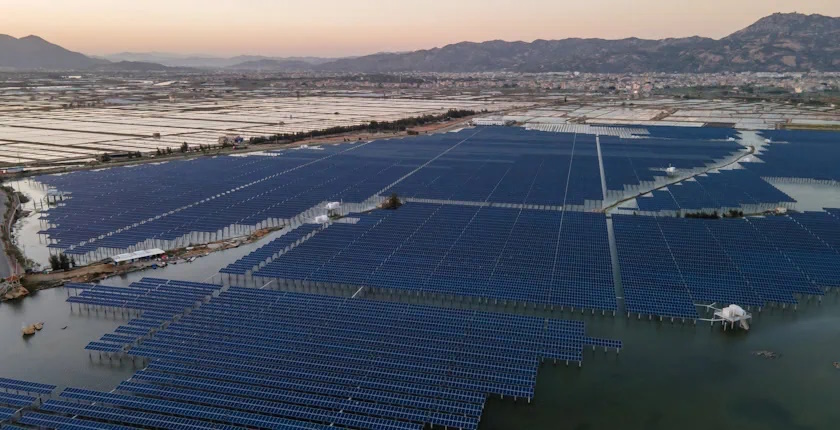
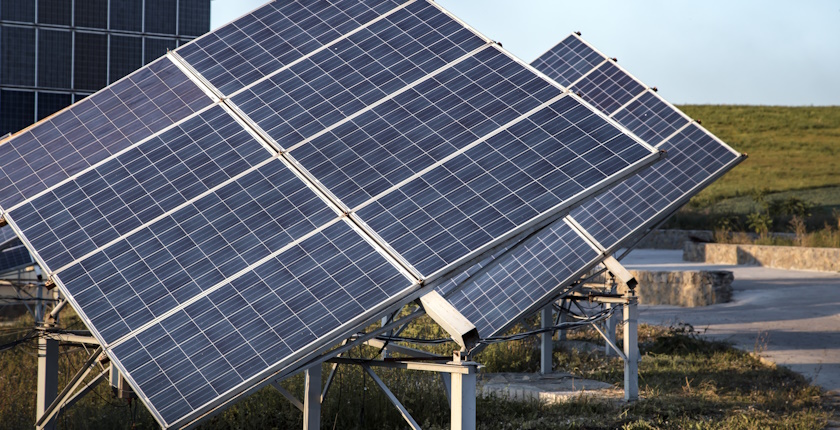
In the first eight months of this year, Albania added two solar power plants of an overall 150 MW and a hydropower facility of 48.9 MW to its transmission grid.

Hydropower plants account for almost all electricity production in Albania, but the share of photovoltaics is gradually growing. Several major solar parks already online – the Karavasta facility is the biggest in the Western Balkans. Conversely, there is not a single wind turbine in operation in the country.

According to the Energy Regulatory Authority (ERE), renewable electricity plants of 225 MW in total capacity have been put into operation in the first eight months of this year.

Project Blue completed

Five solar parks came online, with 156 MW altogether. The largest one is Sunny Side Solar (100 MW). The domestic Kastrati Group, which is active in construction and the oil business, built the facility in the Fier area in western Albania.

The Spv Blue 2 solar power plant has 50 MW. It is a joint project of Blessed Investment and Matrix Konstruksion. The location is in Sheq Marinas in Fier. Their Blue 1 PV park, in the same area, is the first fully privately financed solar park in Albania. The two companies commissioned it last year.

Sunny Side Solar and Blue 2 both began operating in August, as did one of the three remaining new units, of 2 MW each. The other two started generating electricity in April and June.

Gostimat hydropower complex launches production

Of the overall 69.2 MW in new hydropower plants, the Gostimat facility has 48.9 MW. Notably, ERE’s earlier updates show the project was for a complex of seven units on the river Gostima in the Shkumbin basin. The operator is Egnatia Hydropower.

MC Inerte’s project firm M.C. Energji Gojan built its 15 MW hydropower plant Gojan in the Puka area in northern Albania.

In addition, the regulatory body said nine hydropower plants of 26.4 MW in combined capacity have switched to the free market.

The country’s total electricity generation capacity was 3.2 GW at the end of last year.
by in News

Serbia’s hydropower output drops to all-time low amid drought

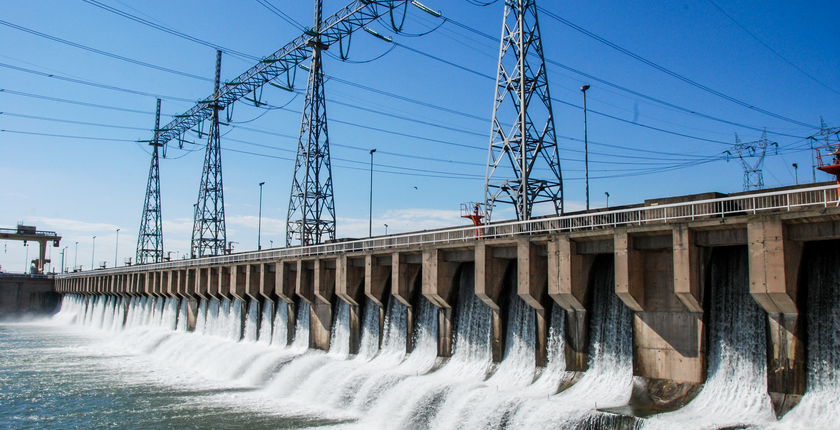
Electricity production at state-owned power utility Elektroprivreda Srbije’s (EPS) hydropower plants is set to hit a historic low this year due to unfavorable hydrological conditions, caused by exceptionally low precipitation in the Drina and Danube river basins over the past 18 months.

The year-end figure will depend on whether and how well the hydrological situation improves in the coming months, EPS said. However, it is already clear that production will be about 25% lower than in 2024 and as much as 40% lower than in 2023, when EPS’ hydropower capacities generated 12.66 terawatt-hours (TWh), according to the statement.

The hydropower plants’ output will be 25% lower than last year

The projected hydropower output for this year is around 8 TWh, less than the all-time low of 8.3 TWh, recorded 36 years ago, EPS added. Since the beginning of 2025, hydropower capacities have generated about 6.5 TWh of electricity.

The average annual production at hydropower plants in the 2010-2024 period was 10.6 TWh, accounting for about 31% of EPS’s total. The total installed hydropower capacity is about 3 GW, according to the state power utility’s website.

Water levels in the Drina and Danube, where EPS’s largest hydropower plants are located, are low due to weak precipitation – both snow and rain – in Germany, Austria, Slovenia, Bosnia and Herzegovina, and Montenegro. At the same time, occasional rainy periods in Serbia this year, as well as recent rainfall, have not significantly affected water inflow to domestic hydropower plants.

The situation has not improved despite occasional rainfall and upgrades to hydropower plants

The revitalizations at the Đerdap 1, Bajina Bašta, and Zvornik hydropower plants have not helped either, even though the reconstructed units are now operating at exceptionally high efficiency, “turning every drop of water into energy.”

EPS also explained that output always depends on river inflows and that they have been far below average on both the Drina and the Danube throughout the year, so much so that there have even been periods when the Danube was not navigable.

On the other hand, the utility claims it is carefully and systematically managing water reserves in reservoirs to preserve them for the upcoming winter season.

by in News

Google secures 50 MW of nuclear power for data centers

Google has secured a new source of clean energy for its data centers in the US states of Tennessee and Alabama through collaboration with nuclear technology company Kairos Power and public power utility Tennessee Valley Authority (TVA). The deal involves a 50 MW advanced nuclear reactor to feed TVA’s grid, which supplies the tech giant’s data centers.

Kairos Power’s advanced nuclear facility Hermes 2, which is set to go online in 2030, will supply electricity to the grid under a power purchase agreement (PPA) with TVA. It is the first-ever offtake agreement in the United States for a generation IV reactor.

Hermes 2, located in Oak Ridge, is the first facility under Kairos Power’s broader deal with Google to enable 500 MW of new, advanced nuclear capacity to come online by 2035, aimed at supporting Google’s growing energy needs. The long-term agreement, signed in October 2024, involves the deployment of multiple small modular reactors (SMRs), Google recalled.

Google’s long-term deal with Kairos involves deploying 500 MW of nuclear capacity by 2035

Amanda Peterson Corio, Google’s Global Head of Data Center Energy, said the collaboration would speed up the deployment of innovative nuclear technologies and help support the needs of the growing digital economy while also bringing firm carbon-free energy to the electricity system.

As part of efforts to meet its growing energy needs, Google recently signed the world’s largest corporate PPA for hydropower. The agreement, signed with global investment firm Brookfield, involves developing 3 GW of hydropower capacity in the United States.

Google has signed similar deals for hydropower, geothermal, and fusion energy

Google has also signed similar agreements for next-generation geothermal energy as well as for fusion energy. The company recently revealed plans to invest over USD 25 billion in data center and AI infrastructure in the next two years.

Rapid AI development and digitalization are making power supply crucial for tech companies. Goldman Sachs Research forecasts that global power demand from data centers will increase by 165% by 2030 from the 2023 level.

by in News

Two small hydropower turbines to be integrated into Sofia water supply lines

Veolia received a green light from Bulgaria’s capital city to install two hydropower generators within the city’s major water supply lines. The system is envisaged to generate 12 GWh of electricity per year.

Mostly owned by local authorities and underfunded, water and sewerage utilities in Southeastern Europe are struggling to provide enough drinking water and even to remain financially stable. They are under pressure from the effects of global warming and volatile electricity costs. After a water supply firm in Bansko in southwestern Bulgaria installed a miniature in-pipe hydropower generator, the solution sparked interest throughout the country.

Sofiyska voda, Veolia’s subsidiary that produces drinking water and manages wastewater for the capital city, is about to deploy the technology. In-pipe hydropower systems could play a part in decarbonization and energy efficiency as they are simple and don’t harm the environment. Such devices utilize the flowing water’s kinetic and potential energy and excess pressure – otherwise it would be released in the form of heat through a valve and wasted.

Making Sofia sustainable, energy-efficient, modern European city

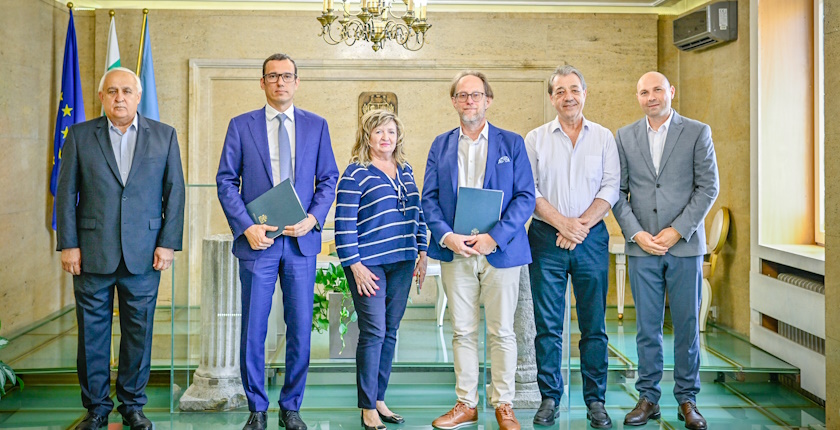
Sofia Mayor Vasil Terziev and Country Director of Veolia for Bulgaria, Greece and Albania Francois Debergh signed a memorandum of cooperation for the construction of two small hydropower plants along the city’s trunk water mains.

Earlier, the Sofia Municipal Council approved the findings of a joint working group that explored the possibilities for the investment.

“Our goal is to work consistently for making Sofia a sustainable, energy-efficient and modern European city. One of the key priorities in our vision for development is the use of renewable energy sources. Therefore, among the important fields in which we are working is the construction of small hydropower plants that will allow our city to generate clean electricity locally – with care for nature,” said Mayor Vasil Terziev.

Sofia has been planning in-pipe hydroelectric systems for more than two decades

Such facilities will help reduce the carbon footprint of the capital city and improve the management of water resources, according to the company and the Sofia Municipality, also known as Stolichna (capital) Municipality. They added that renewable energy investments are contributing to the city’s efforts toward energy independence and climate neutrality.

“The project is an example of how the existing infrastructure can be best utilized for clean energy production. After commissioning, the plants will produce approximately 12 GWh of renewable energy per year, which will account for additional annual savings of over 8,000 tonnes of CO2 emissions. The memorandum is fully aligned with Sofia’s commitments to climate neutrality and Veolia’s participation in the NetZeroCities initiative,” Debergh stated.

Sofiyska voda utility striving for energy independence

Sofiyska voda’s wastewater treatment plant in Kubratovo has been energy independent since 2015. It produces biogas from the sludge separated in the process. The parent company stressed that a pending solar power project would make Sofiyska voda the first energy-neutral water supply and sewerage operator in the region, among only a few on the global scale.

The local authority in Sofia recalled there was an idea already in 2003 for eight hydropower facilities on the water supply lines.

Another alternative hydroelectric project was recently unveiled in northwestern Bulgaria. With the ambition to build several hydroelectric plants on pontoons on the Danube river, a local company intends to install a 20 kW pilot facility in Vidin.

by in News

Google signs world’s largest corporate power purchase agreement for hydropower

Global investment firm Brookfield and tech giant Google signed an agreement to deliver up to 3,000 MW of carbon-free hydropower capacity in the United States.

Brookfield said the Hydro Framework Agreement (HFA) is the first of its kind and “the world’s largest corporate clean power deal for hydroelectricity.”

Brookfield Asset Management, together with Brookfield Renewable, and Google said the deal is for 3,000 MW of carbon-free hydroelectric capacity across the US.

Fast development of AI and digitalization is making power supply crucial for tech companies. Goldman Sachs Research forecasted that global power demand from data centers would increase 165% by 2030 from the 2023 level.

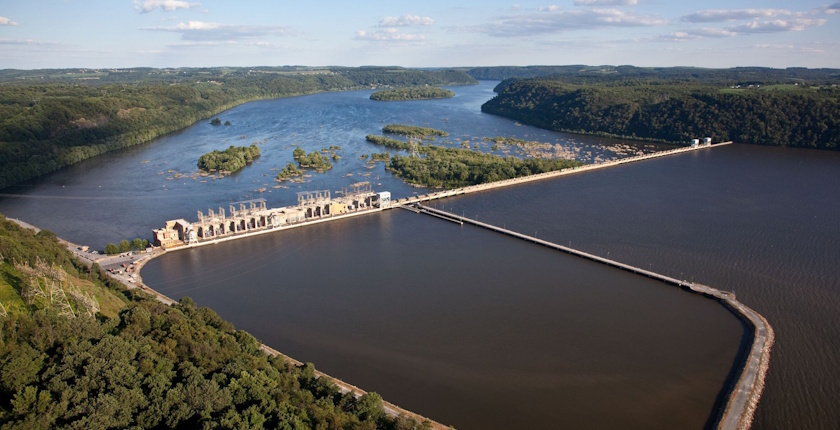
The first contracts include Brookfield’s Holtwood and Safe Harbor hydropower plants in Pennsylvania

Google has recently signed similar first-of-kind agreements for advanced nuclear and next-generation geothermal energy as well as for fusion energy.

Under HFA, the first contracts are for Brookfield’s Holtwood and Safe Harbor hydropower plants in Pennsylvania, representing more than USD 3 billion of power and 670 MW of capacity.

The 20-year power purchase agreements (PPAs) for the two facilities will support Google’s operations across PJM. The transaction structure allows Brookfield to maintain existing commitments to power consumers, such as Amtrak, from the Safe Harbor facility.

Brookfield said HFA is a significant step forward in its strategy to deliver flexible, dispatchable clean energy solutions to the technology sector and that the deal supports Google’s ambition to power its operations with 24/7 carbon-free energy.

Google can procure carbon-free electricity from up to 3,000 MW of HPPs

According to Brookfield, under the HFA, Google can procure electricity from up to 3,000 MW of hydropower assets that will be relicensed, overhauled, or upgraded to extend their useful life and continue adding power to the grid.

Amanda Peterson Corio, Google’s Head of Data Center Energy, said the collaboration with Brookfield is a significant step forward, ensuring clean energy supply in the PJM region (parts of 13 states and the District of Columbia) where her company operates. Hydropower is a proven low-cost technology, offering dependable, homegrown, carbon-free electricity that creates jobs and builds a stronger grid for all, she added.

According to Connor Teskey, President of Brookfield Asset Management, the partnership with Google demonstrates the critical role that hydropower can play in helping hyperscale customers meet their energy goals.

Delivering power at scale and from a range of sources will be required to meet the growing electricity demands from digitalization and artificial intelligence, he pointed out.

Of note, Brookfield owns power plants with a combined capacity of almost 46,000 MW.

Google to invest over USD 25 billion in data center and AI infrastructure

The deal is part of Google’s planned investments in the area in data center and artificial intelligence (AI) infrastructure. At the Pennsylvania Energy & Innovation Summit in Pittsburgh, the company revealed that it earmarked more than USD 25 billion for the next two years.

President and Chief Investment Officer of Alphabet and Google Ruth Porat joined President Donald Trump, Senator Dave McCormick and government and business leaders at the summit.

To support the investment, Google is expanding energy capacity and innovation in three ways, the company said.

by in News

Hidroelectrica to begin construction of its pilot floating photovoltaic plant

Romanian state-owned hydropower plant operator Hidroelectrica picked the contractor for a 10 MW floating solar power plant, its first, on the reservoir of the Ipotești hydroelectric plant.

Hidroelectrica awarded the contract for the construction of the Proiect Pilot Nufărul floating photovoltaic system.

The pilot project could open the way for the installation of a group of such facilities, also on the Olt river and in a joint venture with Abu Dhabi Future Energy Co. (Masdar).

Pilot floating plant is part of wider push for synergy of photovoltaic technology with hydropower

Notably, Hidroelectrica picked the contractor last month for setting up solar panels on the roofs of its 20 hydroelectric plants. They are on the middle and downstream parts of the Olt river as well.

The site for the 10 MW pilot project is the reservoir of the 57 MW Ipotești hydropower plant. Hidroelectrica conducted the procurement through a tender, which it valued at EUR 9.3 million excluding value-added tax. The utility awarded the deal to Waldevar Energy, which won with a bid of EUR 7.7 million excluding VAT.

The firm’s subcontractors are Marine Research, S.C. DHI-SW Project, and Makor Energy Solutions.

Project implementation is limited to 14 months, of which the works would last ten months.

Hidroelectrica to learn from new investment to replicate it

The floating power plant will consist of bifacial photovoltaic panels of 620 W, inverters of 100 kW, energy optimizers and four transformer stations, the documentation reveals. Annual output is estimated at 13.4 GWh. The floaters would be made of high-density polyethylene (HDPE).

The facility would be connected to the grid via the Ipotești hydropower plant.

Hidroelectrica pointed out that it aims to diversify the production portfolio and capitalize on synergy between solar and hydropower. The state-owned hydropower operator intends to obtain know-how from the construction and exploitation of the pilot system and replicate the concept elsewhere.

The turnkey contract includes design, purchases, assembly, installation, testing and commissioning.

Hidroelectrica operates 188 plants with a capacity of 6.4 GW overall. It has one wind farm, Crucea Nord, of 108 MW.

by in News

Đukanović: EPCG is implementing three key strategic policies

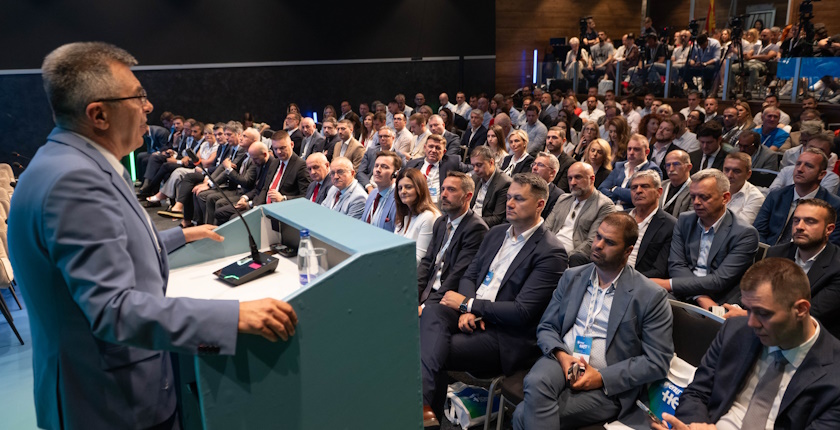
State-owned power company Elektroprivreda Crne Gore is currently implementing three key strategic policies: producing energy at the point of consumption, utilizing existing hydropower infrastructure to connect solar power plants, and developing battery energy storage systems, the President of EPCG’s Board of Directors, Milutin Đukanović, said at the EPCG NET conference.

EPCG NET is organized by Elektroprivreda Crne Gore (EPCG) and its partners. At the event’s opening in Budva, Milutin Đukanović announced the start of trial operations at the Gvozd wind farm and the launch of tendering to install battery energy storage systems (BESS).

“Our ‘produce where you consume’ policy is, in our view, the winner of the energy transition. At the same time, hydropower infrastructure provides technical and meteorological compatibility for connecting solar power plants. However, these activities will have their full impact only with the development of BESS,” Đukanović noted.

The 10,000+ solar project is expected to begin in mid-2026

He also said that numerous investments are underway. By the end of the year, the 55 MW Gvozd wind farm, an EUR 82 million investment backed by KfW, will enter trial operation. Early next year, the company expects to start construction on the second phase of the project – Gvozd 2, with a capacity of 21–22 MW.

A few days ago, tendering was completed for the installation of the eighth unit at the Perućica hydropower plant, with a capacity of 58 MW. The new unit is expected to be online in 2027.

Đukanović recalled that the 3000+ project, featuring 35 MW of solar capacity across 3,500 facilities, has been completed, while the 5000+ project is halfway through, with 40 MW and over 4,000 consumers involved. The 10,000+ project is expected to start in mid-2026, he added.

Preparations are ongoing for the construction of several solar power plants: Krupac (50 MW), Štedim (150 MW), four plants at Kapino Polje (totaling 50 MW), as well as facilities in the Željezara Nikšić industrial complex, where 10 MW of the planned 30 MW has already been installed.

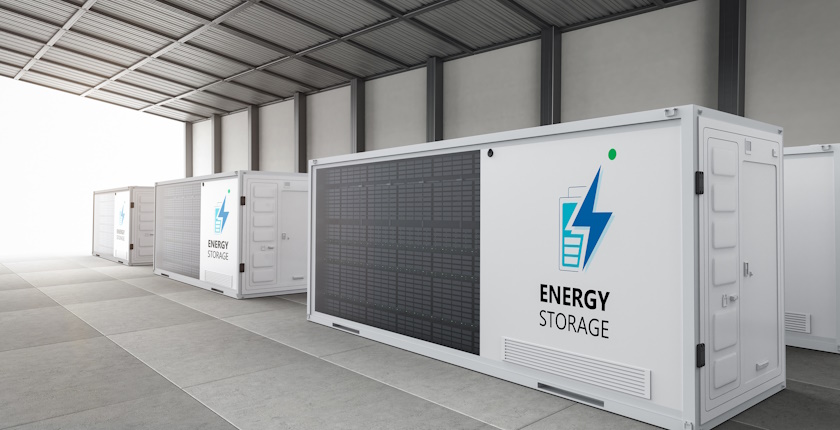
The first tendering for procuring BESS will be launched soon, covering two systems with a capacity of 30 MW each (120 MWh). By the end of 2027, EPCG plans five such systems, with a combined capacity of 600 MWh.

The energy transition is a great opportunity for progress

Đukanović also announced an upcoming call for bids for the construction of a tunnel that will connect the Krupac and Slano reservoirs, valued at EUR 12 million, as part of a broader plan to enhance the utilization of the water resources of Nikšićko polje, Montenegro’s largest karst field. Additionally, plans are underway to develop Lake Liverovići and underground waters in the Nikšićko polje, with total investments potentially exceeding EUR 1 billion and a projected capacity reaching 700 MW, he added.

“The energy transition is a great opportunity for progress, but also a serious threat if risks are overlooked. Time is of the essence – we must act immediately,” Đukanović urged, calling on forum participants to focus their discussions on concrete solutions and offer ideas for improving existing policies.

The two-day forum has brought together numerous experts, investors, and representatives of institutions from the energy sector across the region and Europe.

by in News

BESS factory of 1.5 GWh per year opening near Sofia in Bulgaria

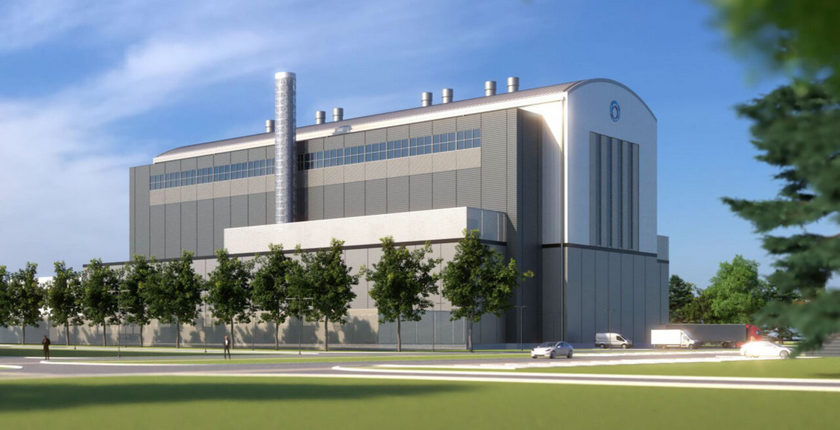
International Power Supply (IPS), a Bulgarian manufacturer of battery energy storage systems, is about to launch operations at its new facility near Sofia. Its latest model has 8.2 MWh and fits into a standard container. The company plans to double the factory’s annual capacity to 3 GWh already by the end of the year.

IPS, headquartered in Sofia, is automating and scaling its production of battery energy storage systems (BESS). It is counting on growing demand in Europe, including the domestic market. The company already has orders for 7 GWh for the next three years, Chief Executive Officer Alexander Rangelov told the Kapital news website.

The systems in the new X-BESS line have 8.2 MWh in capacity, fitting into a standard TEU container of 20 feet (6.1 meters). Each consists of seven liquid-cooled modules of 1.17 MWh. The model has inverters of 4 MW, translating to a two-hour duration.

Serial production is about to begin in the Hemus high-tech industrial park near Bulgaria’s capital city. Initially, the annual capacity would be 1.5 GWh, but IPS aims to double it already by the end of the year.

IPS plans another, fully robotic factory

X-BESS started three years ago with a 6.5 MWh version. IPS is currently fulfilling contracts for 670 MWh for projects funded through the country’s National Recovery and Resilience Plan (NRRP or, in Bulgarian, PVU). The company also applied for EUR 150 million from the European Union’s Innovation Fund, for a fully robotic 5 GWh factory.

The majority owner of IPS, with 65.5%, is Power Technology Investment Group. It is controlled by the family of the founder Stoil Rangelov Trifonov. SIL Energy Invest has 31.5%. The Capital Investments Fund (CIFund) of the Bulgarian Development Bank holds the remaining 3%.

X-BESS includes a battery management system developed by IPS

The company mainly uses European parts and the lithium-iron-phosphate (LFP) battery cells are from China. The battery management system (BMS) is proprietary. The project pipeline includes a 5 MW rooftop solar power plant for the new factory, combined with own batteries.

IPS is looking for a strategic partner for further expansion.

Just ten days ago, a BESS facility of 124.1 MW – 496.4 MWh was inaugurated in Lovech in Bulgaria. The Ministry of Energy said it is the biggest in the European Union.

Deal with NEK for BESS at Vacha 1 hydroelectric plant

In consortium with GBS Energy Solutions, IPS recently won a tender for equipping the Vacha 1 hydropower plant with BESS. It is a pilot project of state-owned National Electricity Co. (NEK), which has several such investments underway.

The deal is for a system of at least 5 MW in capability and 10 MWh in capacity. The minimum round-trip efficiency is 85%. At 365 cycles per year, the contractors guarantee at least 60 GWh within the duration the 15-year arrangement. They won the job, which includes maintenance, with a bid of EUR 3.4 million.

NEK is also planning another pumped storage hydropower plant at the Vacha dam

Notably, Minister of Energy Zhecho Stankov said last week that NEK sent applications to the European Commission for four pumped storage hydropower projects. Initially, two facilities were planned, at the Batak and Dospat sites. Stankov revealed there would be two systems at Dospat.

The fourth new pumped storage hydroelectric plant is planned near Ravnogor, he said. The village is right next to Vacha 1 and the existing Orphey pumped storage system. The proposed facility would have some 800 MW in capacity, similar to Chaira, according to Stankov. The three existing pumped storage hydropower plants and the sites for the four projects are all in the Rhodope mountains in the south.

by in News

US interested in pumped storage hydropower projects in Romania, Bulgaria

Minister of Energy of Romania Sebastian Burduja and Minister of Energy of Bulgaria Zhecho Stankov both met with United States Secretary of Energy Chris Wright and discussed bilateral cooperation in projects in their countries including for pumped storage hydropower plants and nuclear power plants. Burduja said studies would be conducted with American support for a string of pumped storage hydroelectric facilities throughout the Carpathians.

At the sidelines of the 2025 Three Seas Business Forum in Warsaw, Minister of Energy Sebastian Burduja held a meeting with US Secretary of Energy Chris Wright about ongoing strategic projects in which American companies are involved. He revealed that state-owned power utility Hidroelectrica has signed a memorandum with the National Renewable Energy Laboratory (NREL) of the United States on cooperation in pumped storage hydropower projects.

The initiative will put Romania “at the forefront of Europe” as it will store green energy throughout the Carpathian mountain range, according to Burduja. Prefeasibility and feasibility studies will be developed with American support, he added.

“In this era of energy transition, we need pragmatic and effective solutions that ensure secure, affordable, and clean energy – in that order of priorities. Romania and the United States share a vision for a common energy future, and our collaboration will significantly contribute to achieving this goal,” the minister stated.

Significant involvement of US companies in strategic energy projects in Romania

Burduja highlighted NuScale’s project for small modular reactors (SMRs) in Doicești and the contract signed with Fluor and Sargent and Lundy for units 3 and 4 at the Cernavodă nuclear power plant. Fluor is also participating in a project for a high-voltage direct current interconnector (HVDC), he pointed out.

The lack of interconnections is bolstering energy prices

The minister noted that American partners are involved in a project for mapping and utilizing geothermal sources for district heating in Bucharest, with support from the European Union’s Modernisation Fund. Namely, Electrocentrale Bucharest (ELCEN) has established cooperation with US-based SAGE Geosystems

Burduja recalled that American platform Transocean Barents is drilling for gas in the Neptun Deep project in the Black Sea.

The Romanian ministry said the two officials discussed the rise of energy prices, attributing it to the lack of interconnections and the challenge of closing coal-fired power plants without viable alternatives. They also touched upon the costs of carbon dioxide certificates and how they affect competitiveness, the announcement reads.

Stankov, Wright discuss possibility of building AI ‘gigafactories’

Bulgarian Minister of Energy Zhecho Stankov separately met with US Secretary of Energy Chris Wright. Bulgaria will be the first in Europe to deploy the American AP1000 technology, Stankov claimed.

The country is preparing to build two more units at the Kozloduy nuclear power plant, in a deal with Westinghouse Electric. State-owned Bulgarian Energy Holding is controlling the project.

The two officials discussed the possibility of building “artificial intelligence gigafactories” to complement the nuclear infrastructure and promote innovation and employment, the ministry said. In addition, Stankov and Wright spoke about projects for new pumped storage hydropower and the exploration of oil and natural gas in the Black Sea.

by in News

Increasing interest for photovoltaic parks: Hydro Valbona wants to build one in Tropoja

There is an increasing interest of Albanian enterprises for building photovoltaic parks throughout the country.

Solar energy has received a lot of attention as the government decided to target energy production from alternative sources in order to reduce Albania’s dependence on hydropower, which currently accounts for almost 100% of its production.

The Ministry of Energy and Industry reports that the company Hidro Valbona has expressed interest for the construction of a 2 MW photovoltaic park in the western part of the village of Topoje, Fier.

The company with experience in the field of electricity generation and sale mainly from hydro power plants is seeking to invest an estimated 2.4 million euros.

The project will be extended to a total area of ​​20,000 square meters in the vicinity of the village of Topoja.

In case of approval of the project, the construction and operation of this photovoltaic park will be entirely at the expense of the interested company, while the Albanian state will support this initiative by setting a minimum price for the purchase of energy.

According to research findings on the creation of support for solar and wind energy, this price for 2017 would be 100 euros per MWh, and would drop to 50 euros per MWh by 2050.

Only after the adoption of this scheme, at least MEI have achieved at least 6 expressions of interest to build photovoltaic parks, as they are even more appropriate than wind power generation in the case of our country.