by in News

Croatia’s Pag island to produce green hydrogen using wave energy

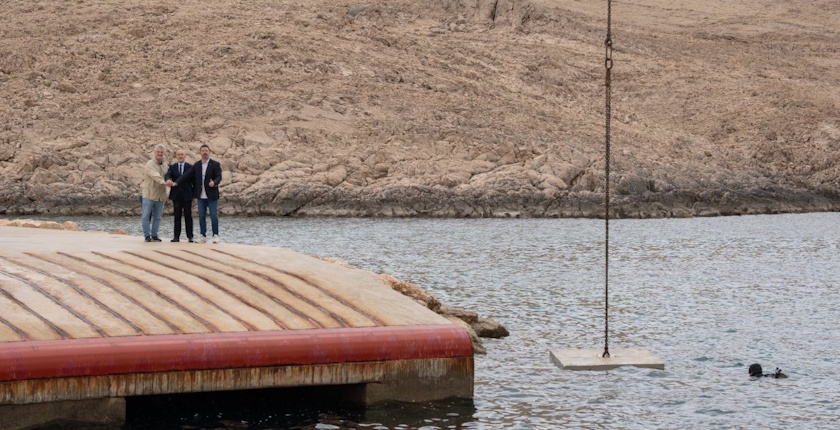
The island town of Novalja could become one of the first in Croatia to begin the production of green hydrogen, and a rare example in the region. Moreover, the local authority would utilize innovative technology.

Croatia adopted its national strategy for hydrogen until 2050 in March 2022. The first hydrogen production facility could be installed in Križevci, according to a report from last year.

The local authority in Novalja on the island of Pag said it started its ambitious and innovative Zero Emission Corridor (ZEC) H2 project with the goal of establishing the production and distribution of green hydrogen – using only renewable energy.

The project represents a key step in the small town’s transition towards sustainable development and energy independence.

The construction of a pilot facility in the Žigljen port has already started

The preparations for the project included an analysis of suitable locations, including the ports of Novalja, Žigljen, and Tovarnele. As the first concrete step, the local authorities initiated the construction of a pilot plant in the port of Žigljen.

The facility would use innovative domestic technology for the generation of electricity from sea waves, the announcement reads. It would be used to power water electrolysis for the production of green hydrogen.

The facility is expected to become fully operational by 2027.

The ZEC H2 project would make Novalja an energy independent, emission-free town by 2030. The project’s main goals are to significantly reduce greenhouse gas emissions, increase energy efficiency, and encourage the use of renewables.

The construction of the pilot plant is financed through an EU program

The green hydrogen and excess energy would be used to power electric chargers, public transport and utility vehicles, public lighting, and city buildings.

The construction of the pilot plant is financed through the European Union’s Interregional Innovation Investments (I3) Instrument while substantial grants were secured from EU funds.

The ZEC H2 project confirms Novalja’s commitment to sustainable development, environmental protection, and the development of innovations in the green energy sector, the town’s leadership said.

According to data from August last year, there were 32 green hydrogen projects in Croatia. One of them was for the production of hydrogen using sewage sludge.
by in News

OMV opens Austria’s largest green hydrogen plant

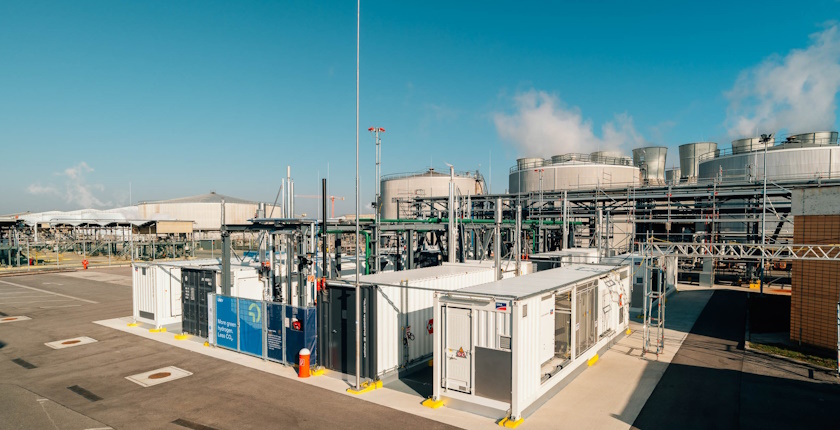
OMV put into operation its green hydrogen plant in Schwechat near Vienna. The facility can produce 1,500 tons per year.

OMV is producing green hydrogen on a commercial scale for the first time. The Vienna-based fossil fuel and petrochemicals producer started up a 10 MW plant at its Schwechat refinery near Austria’s capital. It is the largest in the country.

The investment amounts to EUR 25 million. The electrolyzer system can produce up to 1,500 tons per annum. OMV said the green hydrogen would be used to make more sustainable fuels and chemicals including sustainable aviation fuel (SAF) and renewable diesel (HVO).

PEM electrolyzer uses wind power, hydropower, photovoltaics

The new 10 MW polymer electrolyte membrane (PEM, also called proton exchange membrane) electrolyzer is powered entirely by renewable electricity. It is generated by wind power, hydropower plants and photovoltaics.

The innovation enables annual savings of up to 15,000 metric tons of carbon dioxide emissions, according to the comparator from the European Union’s Renewable Energy Directive. It is equivalent to 2,000 persons per year, based on the EU’s 2024 average of 7.5 tons of CO2 equivalent per capita.

“With the start-up of Austria’s largest electrolysis plant, we are re-inventing how essentials we use in everyday life are produced sustainably. Green hydrogen is at the heart of this transformation, serving as a critical component in producing fuels and chemicals while advancing the decarbonization of our Schwechat site,” said board member Martijn van Koten, responsible for fuels, feedstock and chemicals.

Green hydrogen project is step toward making OMV carbon neutral

The majority owner of Romanian OMV Petrom aims to cut its net emissions to zero by 2050. Its transformation is based on projects including for geothermal energy and chemical recycling. Green hydrogen can be utilized in the production process in refineries.

The green hydrogen plant is certified for producing renewable fuels of non-biological origin (RFNBOs).

Making green hydrogen through PEM electrolysis involves splitting water into hydrogen and oxygen using renewable electricity. At the anode, oxygen and positively charged hydrogen protons are generated. The protons pass through the PEM, and at the cathode, they combine with electrons to form hydrogen gas.

by in News

Turkey to manufacture green hydrogen, nuclear, CCS equipment

The 2030 Industry and Technology Strategy includes setting up industrial facilities in Turkey for nuclear energy, green hydrogen, battery storage and carbon capture and storage (CCS). The country is planning to establish a value chain for critical raw materials. The government vowed to support the development of semiconductor technology, autonomous and flying vehicles and cybersecurity solutions, alongside innovations for electric vehicles and solar and wind power.

With its recently unveiled 2030 Industry and Technology Strategy, Turkey announced the ambition to upgrade its industrial production to one of the most advanced in the world. As Russia’s Rosatom is completing the country’s first nuclear reactor in Akkuyu, the government is planning to develop its own technology in the segment.

The strategy involves setting up industrial clusters for equipment and infrastructure. Among the possible technologies are molten salt reactors. The Scientific and Technological Research Council of Türkiye (TÜBİTAK), Turkish Energy, Nuclear and Mineral Research Agency (TENMAK) and Istanbul Technical University (İTÜ) are tasked with establishing a nuclear tech park.

Green hydrogen mostly needed for decarbonizing hard-to-abate industrial production

TÜBİTAK is responsible for developing domestic electrolyzers as well. The national hydrogen program is set to bring support for integrating the production of green hydrogen, storage, transportation and consumption. The last of the four is especially focused on energy-intensive industries such as steel, petrochemicals and fertilizers.

Another segment that would get incentives is the use of hydrogen in fuel cell vehicles including heavy vehicles. The strategy envisages setting up pilot zones for green hydrogen production, with electrolyzers powered by wind and solar energy.

Turkey has high ambitions for high-tech exports

Turkey has revealed the goal of tripling its high-tech exports to USD 30 billion by the end of the decade. It is part of an ambition to lift industrial exports to USD 400 billion from last year’s USD 247 billion. At the same time, the government’s target for the overall valuation of domestic tech startups is USD 100 billion.

The 2030 Industry and Technology Strategy has other chapters, too, like carbon capture, utilization and storage (CCUS or just CCS), access to critical raw materials, semiconductor and battery manufacturing and cybersecurity. Officials vowed to continue prioritizing domestic electric vehicles, but with investments in autonomous operation systems and even flying cars.

Cybersecurity solar and wind turbine technologies. Turkey apparently remains dedicated to expanding the industrial base for solar panels and wind turbines as well.

by in News

Aurora forecasts Western Balkans power capacity growth of 20 GW by 2040

The Western Balkans could see a 20 GW increase in installed capacity by 2040, with nearly 65% coming from renewables, Aurora Energy Research found. Short-term volatility and increased costs of commodities are expected to keep electricity prices near or over EUR 100 per MWh until 2030.

Aurora Energy Research issued its first forecast for the Western Balkans, eyeing investor movement. The firm expanded its market forecasting services, now offering full granularity modeling for Albania, Kosovo*, North Macedonia, Montenegro and Bosnia and Herzegovina, available in its Western Balkans Power and Renewables Market Forecast.

The announcement follows the conclusion of a multiclient study comprising three workshops, the results of which reveal increased investor interest in the region.

Photovoltaics have the fastest growth rate and biggest capacity in the forecast

The combined installed capacity in the Western Balkans excluding Serbia is expected to grow by 20 GW by 2040 and by as much as 35 GW by 2060 from the current levels, leading to tens of billions in investments, Aurora said. Renewables account for the lion’s share with nearly 65% while battery energy storage systems (BESS), interconnectors and hydrogen-fired combined-cycle gas turbines (CCGT) make up the remaining capacity additions.

Solar power shows the fastest rate of growth and absolute capacity value, according to the global power market analytics provider.

Electricity market prices returning below EUR 100 per MWh only after 2030

Looking into wholesale prices, the analysis expects the Western Balkans to follow similar trends as other SEE markets but with regional nuances, based on the local energy system evolution. Short-term volatility and increased commodities are foreseen to keep prices near or over the EUR 100 per MWh mark until 2030 while long-term baseload prices under Aurora’s central scenario are expected at between EUR 70 per MWh and EUR 80 per MWh, driven by high commodity prices, while an increasing renewables’ penetration acts in the opposite direction.

Early movers have an advantage as cannibalization looms

Renewable energy assets capture prices will benefit from lower cannibalization levels in the early years compared to other SEE countries, as there is less capacity in the system, giving early movers an advantage, the analysis reads. Over time, the momentum for storage seen in SEE likely spreads to the Western Balkans.

Coal phaseout seen by 2045

The speed of decarbonization in the region largely depends on the implementation of the European Union’s Carbon Border Adjustment Mechanism (CBAM) or alignment with the EU Emissions Trading System (EU ETS). The shift away from lignite could take time, Aurora’s experts say, with a full exit expected by 2045, but its share in the power system is expected to decrease significantly in the next decade due to pressure from CBAM and carbon taxes.

“The Western Balkans are Europe’s most rapidly changing power markets. Ageing thermal fleets, liberalisation of markets, policy support schemes, and strong fundamental economics are poised to bring the Western Balkans at the forefront of developers’ agendas,” said Panos Kefalas, Research Lead at Aurora Energy Research.

The Western Balkans Power and Renewables Market Forecast provides in-depth insights, detailed market analysis, and data-driven projections for investors, developers, and stakeholders.

Established in 2013, Aurora Energy Research provides power market forecasting and analytics for investment and financing decisions. Headquartered in Oxford, it operates out of 16 offices worldwide covering Europe, North and South America, Asia, and Australia. The firm’s services include market outlook for energy industry participants, advisory support, and software solutions.

* This designation is without prejudice to positions onstatus and is in line with UNSCR 1244/99 and the ICJ Opinion on the Kosovo declaration of independence.
by in News

Europe must finance its clean future now

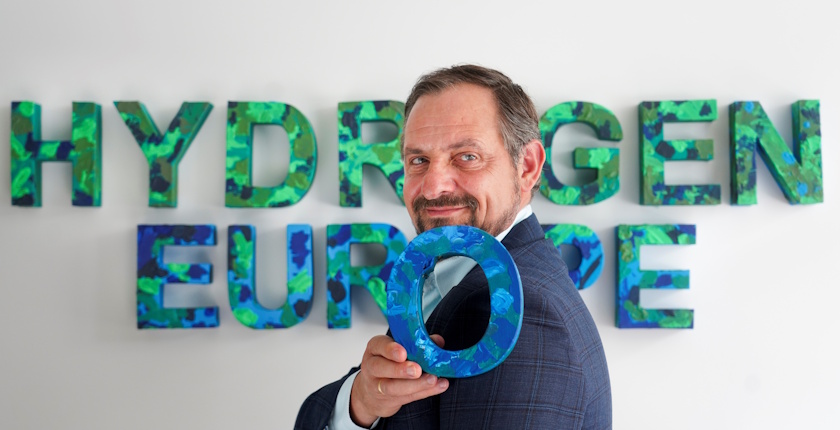
Author: Jorgo Chatzimarkakis, CEO of Hydrogen Europe, EUSEW’s partner organisation.

‘The best time to plant a tree was 20 years ago. The second-best time is now.’ In a world of short-term thinking and instant gratification, this old adage continues to hold true. In the context of the energy transition, and the race against time to offset the worst effects of climate change, it is even more relevant.

In fact, we in Europe can say that we did start investing properly in wind and solar power 20 years ago (although we would be in a much stronger position had we started 20 years before that, immediately after Professor James Hansen’s landmark testimony to the US Senate committee on energy in 1988).

But rather than look back in disappointment or despair at humanity’s delayed climate action, we can resolve not to make the same mistakes again. Hydrogen, one of the enablers of the energy transition, offers us a new solution with which to decarbonise.

Clean hydrogen is a versatile energy carrier with multiple applications across our society. You can use it to sustainably produce steel, fertilisers, and chemicals – hard-to-abate sectors which cannot be easily electrified – or fuels for road, maritime, or aviation mobility systems, where smaller size and longer ranges compared with batteries make fuel cell propulsion systems more desirable for long-haul journeys. You can also use it for long-term energy storage, grid balancing, and flexibility, which will grow in importance as we move to a fully renewable electricity grid. This is just a short summary of the vast potential held within this clean molecule.

Hydrogen is a helpful addition to electricity

Hydrogen is thus a complementary tool to electrification, reaching where electrons cannot. Already several projects around Europe are showing how. In Sweden, H2 Green Steel – Europe’s first greenfield steel mill in 50 years – replaced coal with green hydrogen to power the steelmaking process, cutting CO2 emissions by up to 95% compared to traditional steelmaking. In France, Lhyfe produces renewable hydrogen from wind energy and sells it to industrial end-users, as well as zero emission bus and freight fleets. In Italy, one of the world’s largest shipbuilders, Fincantieri, is designing hydrogen-based cruise and cargo ships.

These success stories can be built upon, and Europe could lead a global market based on the production, transport, and use of renewable hydrogen. But there is a risk that moving too slowly will see Europe lose out to global competitors, as seen in the solar and battery industries, where decades of European-led research and development could not prevent profits from going elsewhere once the technologies came to market.

Despite a substantial pipeline of projects up and down the hydrogen value chain, Final Investment Decisions (FID) have been comparatively rare – only 4% of global hydrogen projects reached FID last year, and most of those were in China. This is due in large part to the cost of producing renewable hydrogen in Europe still exceeding that of fossil fuel-based hydrogen. With a strong support system, we can make clean hydrogen a viable option for all those businesses looking to achieve emissions reduction.

We need to think more pragmatically. China has achieved massive success through state-led innovation and the development of clean technologies to the point that it is now a global market leader in most subsectors. And climate change means we do not have the time to simply wait for the economics to work out. These two facts show us that it is not only desirable but necessary, to spend in the short-term in order to reap the benefits in the long term. Sow the seeds. Plant the tree now.

More effort required to accelerate hydrogen market development in Europe

This is not to say that Europe has not already taken important steps to close the financing gap. The European Hydrogen Bank auctions, under the Innovation Fund call, are and will continue to be a successful endeavor to provide key support to hydrogen production projects. The Important Projects of Common European Interest (IPCEI) program has already awarded support to more than 120 projects involving nearly 100 European companies and should raise over €43 billion from a blend of public and private funds. This is positive, but more is needed both at the European and national level if we are to seriously get the hydrogen market moving here before it is too late to compete.

In the latest draft of the European Commission’s ‘Clean Industrial Deal’ regulatory package, the state aid framework introduces relevant capital expenditure (CAPEX) support, with aid intensities of up to 50% for hydrogen use in industry and 45% for renewable energy rollout, creating a strong foundation for hydrogen deployment. Europe wants to stake its claim as a clean technology leader, but to do so we must stop pulling the rug out from under our own feet.

Europe has repeatedly and publicly professed its support for hydrogen, and as a result, hundreds of companies have invested time and money into building up the sector. We have some existing, successful funding schemes in place and a mammoth pipeline of projects. But we must go further, for example by encouraging national governments to accelerate the transposition of EU legislation and to consider implementing their own funding mechanisms for hydrogen projects. By planting these trees now, we will be able to sit in the shade of a robust, competitive hydrogen market for years to come – with all the new jobs, decarbonization potential, added resilience, and global competitiveness that it will bring.

This opinion editorial is produced in co-operation with the European Sustainable Energy Week 2025. See ec.europa.eu/eusew for more details.

by in News

Two thirds of industrial gas consumers in Slovenia eye hydrogen use

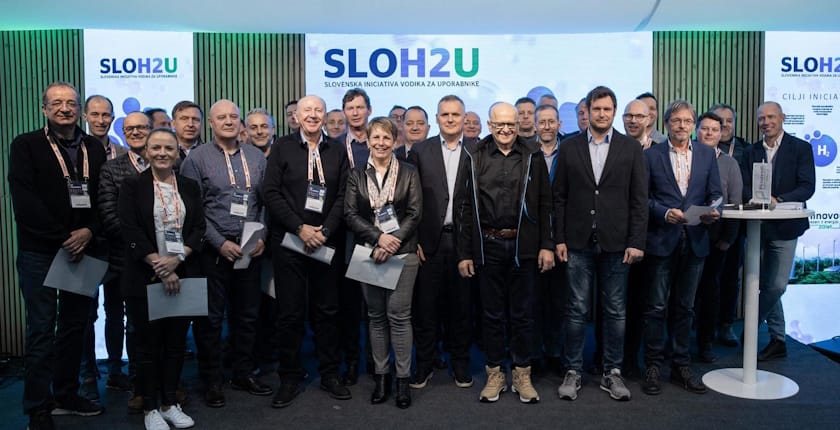
Slovenia’s natural gas transmission system operator Plinovodi and more than 50 industrial companies have signed an agreement on the establishment of the Hydrogen for Users consortium – SloH2U.

The SloH2U consortium represents a systemic response by Slovenian industrial consumers to the need for restructuring the use of hydrogen and renewable gases, according to Plinovodi.

The inclusion of more than two thirds of industrial gas consumers clearly demonstrates that Slovenia is well prepared to meet European decarbonization goals, the company said.

Marjan Eberlinc, the general manager of Plinovodi, underscored that the establishment of the SloH2U consortium is a major Slovenian hydrogen initiative connecting key stakeholders in industry, energy, and government. The aim is to achieve a coordinated, technically feasible, and timely transition to a decarbonized future, he added.

Kumer: We need an industry that is ready to invest, experiment, and collaborate

According to Minister of Environment, Climate, and Energy Bojan Kumer, infrastructure projects alone are not enough for a successful transition to low-carbon energy. “We need an industry that is ready to invest, experiment, and collaborate,” he asserted.

Matija Bitenc, a member of the executive board and deputy general manager of Plinovodi, explained that the platform was established after discussions with the industry about its needs and the technological, financial, geopolitical, and regulatory challenges.

In his words, SloH2U isn’t an ideological declaration, but a concrete foundation for the development of user infrastructure, specific pilot projects, and integration into the European hydrogen ecosystem.

Čas: It is crucial to ensure the transition doesn’t happen too late or that it isn’t too slow

“For the industry, the question is no longer whether, but how to decarbonize processes,” Steklarna Hrastnik CEO Peter Čas stressed.

Collaboration with infrastructure partners like Plinovodi is crucial to ensure the transition doesn’t happen too late or that it isn’t too slow, according to Čas.

In November last year, Slovenia joined the European Union’s Clean Hydrogen Partnership. Six months earlier the country established a consortium of 18 companies, organizations, and municipalities for an ecosystem for hydrogen from low-carbon sources.

by in News

PPC plans EUR 5.8 billion makeover of Western Macedonia coal region, including data centers

Public Power Corp. (PPC) presented a EUR 5.8 billion investment plan for the coal region of Western Macedonia in northern Greece. It held the ceremony in the retired Kardia 2 lignite-fired power plant.

According to PPC’s chairman and CEO George Stassis, the endeavor consists of the decommissioning of old assets and the rollout of new energy technologies.

Stassis: Western Macedonia can reinvent itself

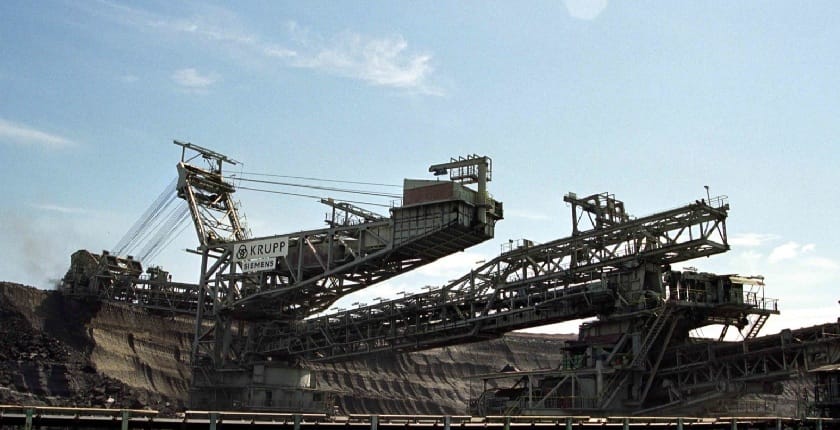
PPC, or DEI in Greek, said it would return to the government 8,000 hectares of coal land that it no longer needs, after completely restoring it. All equipment, such as 400 kilometers of lignite conveyor belts, cooling towers and excavators, are planned to be recycled up to 95%.

According to the decarbonization timeframe, Ptolemaida 5 will be the last coal plant in the country, continuing to operate until the end of 2026. It is set to be converted to a gas power plant with a capacity of 350 MW. PPC is also open to upgrading it to 500 MW or even 1 GW.

New photovoltaics, storage underway

“Western Macedonia can reinvent itself using new technology,” said the CEO.

The group aims to install a total of 2.1 GW in photovoltaics across the region. A 550 MW solar power plant in the former lignite mine of Ptolemaida is almost complete. It will be the biggest in the Balkans. Separately, a group of clusters of 940 MW is under construction within the Meton joint venture with German RWE.

Energy storage is another major segment in PPC’s investment plan. Within the next three years, it aims to funnel EUR 940 million for a total capacity of 860 MW. It includes two pumped storage hydropower projects. The one in Kardia is for 320 MW and an eight-hour storage duration, and the other in the South Lignite Field – 240 MW and a 12-hour duration. The projects are worth EUR 430 million and EUR 310 million, respectively.

Equally important, battery storage units of 300 MW altogether would be installed in Amyndaio, Akrini, Meliti and Kardia in the country’s main coal region. The other one is Megalopolis in the Peloponnese.

PPC plans a 50 MW hydrogen production facility together with Motor Oil, as Hellenic Hydrogen, and a cogeneration plant to cover district heating needs from the end of 2026.

Large 300 MW data center

Last but not least, the Greek group aims to create a 300 MW data center, as part of an investment of EUR 2.3 billion. A subsidiary in fiber optic cables would upgrade the telecommunication links with Thessaloniki and Igoumenitsa to improve data flow in Greece and abroad.

If conditions are favorable, PPC would further upgrade the data center to 1 GW, increasing its investment by EUR 5.4 billion.

Greek Prime Minister Kyriakos Mitsotakis said at the event that existing infrastructure in Western Macedonia is a great advantage.