by in News

China-based Envision opens world’s largest green hydrogen, ammonia plant

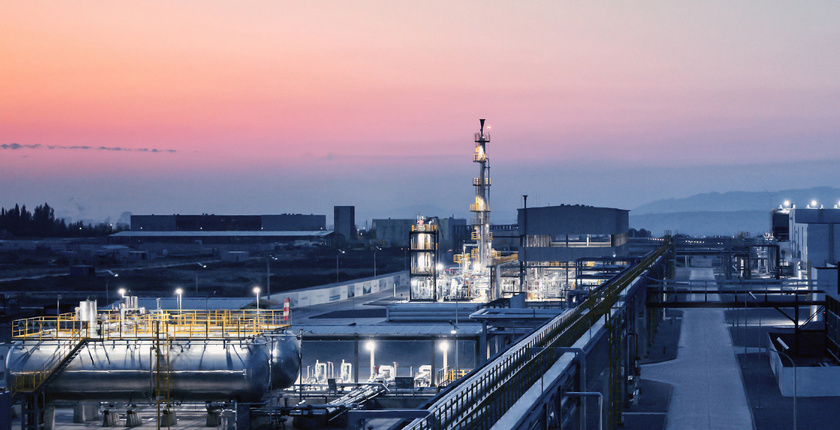
Green technology developer Envision Energy has commissioned the world’s largest and most advanced green hydrogen and ammonia plant. The Shanghai-based company said the production facility, developed in its hydrogen park in Chifeng, China, is also the first in the world delivering green ammonia at industrial scale and the first of its kind to be fully AI-enabled.

The plant can deliver 320,000 tons of green ammonia annually, with exports set to begin in the fourth quarter of this year, Envision said, adding that the facility represents a major leap forward in industrial decarbonization. By 2028, the output is projected to rise to 1.5 million tons a year.

Green ammonia output is expected to rise to 1.5 million tons a year by 2028

The project, powered by Envision’s proprietary off-grid renewable energy system, applies innovative energy storage and load flexibility. Surplus green power is stored in the form of liquid nitrogen, and electrolyzers intelligently respond to renewable power swings, dynamically optimizing energy absorption and ammonia production.

By leveraging green ammonia as a stable transportation and storage medium, Envision has unlocked a practical path to scaling hydrogen across heavy industries, reads the press release.

Zhang Lei, Envision’s founder and CEO, noted that scalable, green alternatives are now real and operational, adding that the world cannot reach net zero without green hydrogen.

The first offtake deal is accelerating green ammonia adoption in fertilizer production, chemicals, and shipping

Envision’s project has already concluded a long-term offtake agreement with Marubeni Corporation, one of Japan’s largest trading houses, which will accelerate green ammonia adoption in sectors including fertilizers, chemicals, and shipping.

The company announced that its Chifeng Hydrogen Net Zero Industrial Park is officially the world’s first green ammonia facility to receive the ISCC PLUS certification for green ammonia with a verified greenhouse gas footprint. Envision also noted that its plant has a replicable design that can be quickly deployed globally.
by in News

Ex-Yugoslav hydrogen scientists call for funding research with real-world applications

A team of scientists from Slovenia, Serbia, and Bosnia and Herzegovina is working on a hydrogen project based on seawater electrolysis. Dalibor Karačić, Nejc Hodnik, Igor Pašti, and Sanjin Gutić believe their research can deliver a solution fit for commercial use, unlike many hydrogen technologies in development around the world. To unlock the sector’s potential, hydrogen funding schemes must shift the focus from complex and “elegant” solutions to those that can be applied outside the lab, according to the scientists.

Investment in hydrogen technologies worldwide exceeded USD 200 billion in 2023, but most of the research might never produce scalable solutions due to over-complexity and impracticability, according to the four scientists.

Investment in hydrogen research exceeded USD 200 billion in 2023

Karačić, Hodnik, Pašti, and Gutić are working on a NATO-funded project that integrates membrane technology with seawater electrolysis. They claim they are not chasing novelty but “building something that can leave the lab.”

In theory, producing one kilogram of hydrogen requires nine liters of water, and even more in fossil-based hydrogen extraction. On the other hand, their research is based on the assumption that electrolysis from seawater and even wastewater could deliver hydrogen with lower water intensity and without ultrapure inputs, offering significant infrastructure savings.

This is especially relevant for countries like Bosnia and Herzegovina and Serbia, which lack industrial hydrogen infrastructure but possess abundant natural water sources and technical talent, they claim.

Karačić: Balkan countries lack the political will to implement hydrogen solutions

Dalibor Karačić, lead researcher for energy conversion and storage systems at Sarajevo’s Center for Advanced Technologies (CNT), believes that the group’s project can deliver, but warns the region lacks the political will to implement the solution.

“We can deliver, but I don’t know who’s willing to receive it. Political will is lagging behind technical capability,” Karačić said in an interview with Energy News.

Some hydrogen uses do not require expensive high-pressure storage

When it comes to the issue of storage, Igor Pašti, Professor of Electrochemistry at the Faculty of Physical Chemistry of the University of Belgrade, claims that some industrial applications of hydrogen, such as ammonia production or steel processing, do not require expensive high-pressure storage. Tanks at 200 bars can hold hydrogen safely for two years, he explains.

One of the most cited barriers to turning lab success into industrial viability is the fact that many catalyst systems used in lab settings rely on rare metals or unrealistic environmental conditions. According to Nejc Hodnik, Head of Laboratory for Electrocatalysis at the National Institute of Chemistry in Ljubljana, Slovenia, 99% of existing research cannot be scaled because either the material is too unstable or the process cannot work outside the laboratory.

by in News

Open call for green hydrogen high-efficiency CHP pilot plant in northern Greece

Greece’s Alternate Minister of Economy and Finance Nikos Papathanasis has launched an open call for the installation and operation of a high-efficiency combined heat and power (CHP) unit using fuel cells powered by green hydrogen. The site for the pilot project is in the Western Macedonia coal region in the country’s north. It is part of the government’s Just Development Transition Programme 2021–2027.

Western Macedonia is Greece’s main coal region, and the other one is Megalopolis in the Peloponnese. The country is transforming the economies of the two areas toward clean and smart technologies, largely with funding from the European Union and aiming at a just transition.

The open call signed by Alternate Minister Nikos Papathanasis for the installation and operation of a pilot unit for high-efficiency combined heat and power (CHP) facility, running on fuel cells, has a total budget of EUR 7.87 million. The facility would utilize green hydrogen produced in electrolyzers powered by renewable electricity.

The energy would be used to provide 24/7 power and heat to the Bodosakeio General Hospital of Ptolemaida, the Chemical Process & Energy Resources Institute (CPERI) in the same city and the Daycare Center for People with Disabilities in the municipality of Eordaia.

The deadline for proposal submission is October 31

The deadline for the submission of proposals is October 31, with immediate evaluation of applications.

The project is for the construction of a pilot CHP unit and a photovoltaic park on municipal land in Eordaia.

According to the announcement from the Ministry of Economy and Finance, the flagship initiative aims to showcase and implement cutting-edge energy and environmental technologies, contributing to the region’s energy transition and decarbonization efforts.

In April, Public Power Corp. (PPC) announced a EUR 5.8 billion investment plan to support the transition of Western Macedonia. The endeavor consists of the decommissioning of old assets and the rollout of new energy technologies.

According to the decarbonization timeframe, Ptolemaida 5 will be the last coal plant in the country, continuing to operate until the end of 2026. It is set to be converted to a gas power plant with a capacity of 350 MW. PPC is also open to upgrading it to 500 MW or even 1 GW.

The plan also includes: 2.1 GW of solar PV capacity, with one 550 MW project nearing completion in a former lignite mine, 860 MW of energy storage, including pumped hydro and battery systems, and a 300 MW data center, planned to be scaled up to 1 GW.

by in News

Serbia plans hydrogen transport through gas pipelines

Serbia’s natural gas transmission system operator, Transportgas Srbija, has invited bids for the preparation of a study on the technical feasibility of transporting hydrogen through the gas network. The study should assess the quantities of hydrogen that can be transported, as well as the impact of blending hydrogen with natural gas on the transmission system and key consumers. The goal is to determine the technical, investment, and regulatory measures necessary for integrating hydrogen into Serbia’s gas infrastructure.

Transportgas notes that hydrogen, as an alternative fuel, is becoming increasingly important in the context of decarbonization and energy security. It also recalls that the Energy Community has set goals for defining natural gas quality for all transmission system operators in Southeast Europe, with special emphasis on the introduction and application of hydrogen.

Serbia would transport hydrogen by blending it with natural gas. Transportgas recalled that gas pipelines built in recent years or currently under construction in Europe are capable of transporting 100% pure hydrogen.

Transportgas: New gas pipelines in Europe can transport pure hydrogen

The study should, among other things, determine the maximum percentage of hydrogen that can be blended with natural gas, as well as the impact on equipment and transmission system losses.

The selected consultant will also be required to determine the chemical composition of the hydrogen-natural gas blend, define the blending procedure, and identify the optimal blending points within the transmission system, as well as suitable sites for hydrogen production and storage in Serbia.

The study should also assess how much hydrogen blended with natural gas can be transported through existing gas pipelines, taking into account the varying qualities of natural gas from different supply routes. The construction of the Balkan Stream gas pipeline and the interconnector with Bulgaria near Dimitrovgrad has enabled Serbia to diversify its gas supplies, Transportgas pointed out.

The study should also identify suitable sites for hydrogen production and storage in Serbia

The study must include an assessment of the impact of the chemical composition and quality of the hydrogen-natural gas blend on major gas consumers in Serbia – steelworks Železara Smederevo, asphalt plants, compressed natural gas (CNG) filling stations, oil refinery Rafinerija nafte Pančevo, cogeneration plants TE-TO Pančevo and TE-TO Novi Sad, petrochemical plant HIP-Petrohemija Pančevo, methanol producer MSK Kikinda, and district heating plants in Belgrade and Zrenjanin.

The consultant will be required to recommend investments needed to introduce hydrogen, such as installing gas analyzers, building new gas pipelines, and upgrading existing infrastructure.

The consultant will be expected to recommend necessary regulatory changes

The consultant’s obligation will also be to propose regulatory changes to enable the introduction of hydrogen into the gas infrastructure, the invitation states, noting that the regulations in question include the Law on Energy and the government decree on terms of natural gas delivery and supply.

The deadline to submit bids is July 23, and the selected consultant will have 180 days to complete the work.

by in News

Greece to rely on carbon price, renewables potential in green hydrogen development

Despite early efforts to develop green hydrogen and its first regulatory framework, Greece finds itself on a steep curve.

The government has presented the first law on hydrogen and renewable gases in parliament. At the same time, refineries and other industries are working on projects that will determine green hydrogen’s cost-effectiveness.

However, a significant obstacle is the government’s unwillingness to support the new technology, either through subsidies or other financial instruments. The Ministry of Environment and Energy has specified that no upcoming technology would benefit from public funds. The goal is to maintain a low cost for the consumer during the energy transition.

According to Professor Pantelis Kapros from the National Technical University of Athens (NTUA), it means hydrogen will have to rely almost exclusively on the price of carbon. As the European Union’s European Trading System (EU ETS) is about to enter its second phase in 2026, the price of carbon allowances is projected to rise steeply.

Even so, market participants estimate that a ton of carbon dioxide equivalent would need to cost EUR 140, two times more than today, to make green hydrogen competitive against grey hydrogen, which is produced from natural gas.

Exports and power prices added to the equation

Regardless, Greece sees an opportunity to produce and export green hydrogen. The reason is its high renewables potential and production. The ever-increasing photovoltaic capacity has caused an overabundance of energy during the day. More demand is needed to balance the system and hydrogen can provide a way out.

Tsafos: We want to become a supplier

The hope is that the low renewable energy cost, combined with potential interest in shipping hydrogen abroad, will justify long-term investments.

“Our view is that as long as the market is interested, we want to become a supplier,” Deputy Minister of Environment and Energy Nikos Tsafos said at the Hydrogen & Green Gases Forum in Athens.

A potential problem is that green hydrogen plants are not expected to be viable if they only produce during the day, when renewable energy prices are usually lower. “Ten hours of operation are not enough to support producers and there are also technical issues to solve,” said Dimitris Kardomateas, head of the Center for Renewable Energy Sources and Saving (CRES).

He also pointed to the average daily wholesale power price, as it is higher in Greece than in most other European markets. It should be noted that electricity makes up about 70% of the total operating cost of electrolyzers.

Biomethane considered more mature

On the other hand, biomethane is considered much easier to develop.  The technology depends less on power prices and also faces fewer technical hurdles. “Biomethane has a clear role, especially through its ability to enter the gas network, and we want to utilize it”, said Tsafos.

Gas distribution company Enaon EDA emphasized its readiness to include biomethane in its network. Its CEO Barbara Morgante noted that a study is underway to pinpoint the various existing and planned biomethane production plants around the country, as well as their proximity to Enaon’s network.

Biomethane is usually obtained by processing biogas to get methane of the same purity as in fossil gas. The renewable fuel can also be produced from clean hydrogen and CO2.

by in News

Slovenia preparing hydrogen action plan until 2030

The Slovenian Ministry of the Environment, Climate and Energy has invited bids for preparing a draft action plan to achieve the hydrogen targets from the National Energy and Climate Plan (NECP). The document is intended to guide the development of hydrogen technologies in Slovenia until 2030, with an outlook to 2040.

Hydrogen is expected to help decarbonize sectors such as industrial production, transportation, and energy. The action plan must clearly define strategic goals, measures, and projects for introducing hydrogen, including cross-sectoral integration (power-to-X solutions), according to the public call.

Hydrogen is expected to help Slovenia decarbonize industrial production, transportation, and energy

The drafting of the action plan is partly financed by the European Union as part of the North Adriatic Hydrogen Valley (NAHV) project, a joint effort by partners from Slovenia, Croatia, and Italy, the ministry said. The NAHV is expected to start producing hydrogen by the end of 2026.

The document is co-financed by the EU under the North Adriatic Hydrogen Valley project

The document is intended to provide guidelines for the development of infrastructure, support policies, and incentive measures that would enable the gradual development of the hydrogen ecosystem in Slovenia. It must also define a timeline and provide cost estimates. Its purpose is to define a comprehensive, coordinated, and feasible set of measures, the ministry said.

The action plan must provide a timeline, cost estimates, and a feasible set of measures

The plan should also include an analysis of existing hydrogen strategies in the EU; an overview of existing hydrogen initiatives and projects in Slovenia; recommendations for technical, political, financial, legal, and regulatory feasibility; and an analysis of environmental and socio-economic impacts.

Bids are accepted until July 17, while the deadline for completing the job is 10 months from signing the contract, according to the public call.

by in News

EU institutions reach deal on CBAM simplification

The Council of the European Union struck a provisional agreement with negotiators from the European Parliament regarding the European Commission’s proposal to simplify the CBAM carbon border tax. The initial levy, which would be gradually increased year by year until it matches the EU ETS price, is coming into force on January 1. The administration in Brussels doesn’t seem willing to consider delaying the date, even though neighboring third countries and their exporters to the EU are struggling to adjust to the new system, especially in the electricity sector.

The Polish presidency of the Council of the EU and European Parliament’s negotiators reached a provisional agreement on one of the proposals of the so-called Omnibus 1 legislative package: a regulation that would simplify and strengthen the Carbon Border Adjustment Mechanism (CBAM).

The proposal seeks to ease compliance without compromising the scheme’s climate goals. The colegislators said it would reduce the regulatory and administrative burden, as well as costs for EU companies, especially small and medium-sized enterprises (SMEs).

CBAM is a tool to equalize the price of carbon paid for EU products operating under the EU Emissions Trading System (EU ETS) with that of imported goods, and to encourage greater climate ambition in non-EU countries.

No relief in scope so far for EU’s neighboring countries

Notably, third countries including the Western Balkans and Turkey and the companies there that export cement, iron and steel, aluminum, fertilizers, electricity and hydrogen to the EU are running out of time before charges are introduced on January 1 next year. Primarily, the governments need to introduce carbon pricing systems to be exempted.

ENTSO-E asked for a one-year delay of the initial CBAM charges for electricity

Earlier this month, the European Network of Transmission System Operators for Electricity (ENTSO-E) highlighted several contradictions in CBAM in its sector. It suggested to the European Commission to prolong the transitional period by one year. The latest update doesn’t indicate any willingness to suspend the levy.

Moreover, the European Commission needs to assess in early 2026 whether to extend the scope to other ETS sectors and how to help exporters of CBAM products at risk of carbon leakage. The EU is set to increase the tariffs every year until they match the EU ETS at the start of 2034.

Boosting EU competitiveness

The European Commission said in February that the measures it proposed would save EUR 6.3 billion.

“Simplification is a top priority for the Polish presidency. Today’s provisional agreement with the parliament is yet another step towards reducing administrative burden for our companies and further boosting EU competitiveness,” Minister for the European Union of Poland Adam Szłapka said about the deal with lawmakers.

The colegislators retained the key components of the commission’s proposal to simplify CBAM rules, according to the Council of the EU. There would be a broader de minimis exemption from obligations applicable to importers that do not exceed a single mass-based threshold set at a level of 50 tons per year. The revised regulation would also permit them to avoid any initial disruptions as they will be able to continue importing while awaiting CBAM registration.

Both institutions must formally adopt the measures before they enter into force, which is expected by September, the Council of the EU said.

According to the European Parliament, 90% of importers would be exempted and 99% of CO2 emissions from iron, steel, aluminium and cement imports are still covered.

by in News

Serbia preparing nuclear, hydrogen deal with South Korea’s KHNP

After contacts with Russia, Slovenia and China regarding nuclear energy, and the start of cooperation with France, Serbia is expecting to sign an agreement with South Korean state-owned power utility KHNP, involving hydrogen as well. Among the other options are joint activities in the segment of small modular reactors.

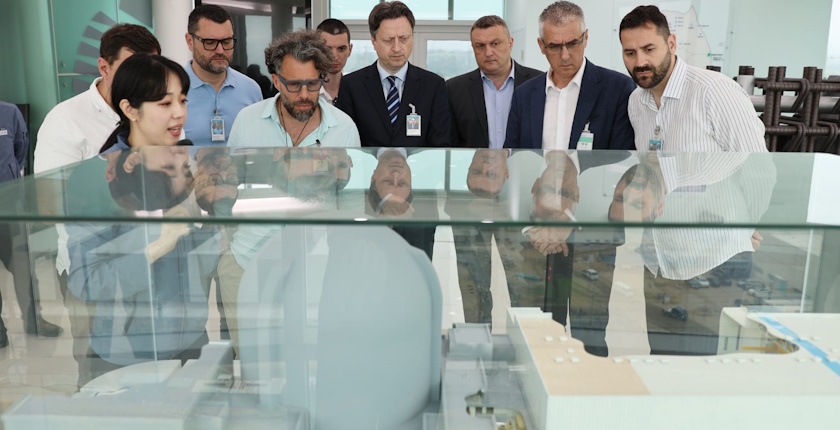
Like many countries in the Balkans, Europe and beyond that want to build their first or additional nuclear power plants, Serbia is considering the possibilities for such projects. Assistant Minister of Mining and Energy Radoš Popadić, responsible for electricity, visited the biggest nuclear power complex in the world. It is located in Ulsan in South Korea and owned by Korea Hydro and Nuclear Power (KHNP).

The Serbian official got acquainted with the technological and safety standards there, according to the announcement.

An agreement with KHNP on the exchange of knowledge and experiences concerning nuclear energy and hydrogen is expected to be finalized soon, Popadić revealed.

“The Ministry of Mining and Energy has been in contact for some time now with the representatives of KHNP and we are expecting an agreement with prestigious South Korean company KHNP to be finalized soon, regarding the exchange of knowledge and experiences in the nuclear energy segment and hydrogen, having in mind that we actually see nuclear energy as one of the key solutions for Serbia’s secure, stable and low-carbon future. Hydrogen is an energy product of the future and its use is also envisaged in our strategic documents and it is important to exchange knowledge on the application of this technology,” Popadić stated.

The assistant minister stressed that South Korean companies have proven results in the construction of nuclear facilities abroad. He highlighted the Barakah project in the United Arab Emirates, which is led by state-owned KHNP’s parent company Korea Electric Power Corp. (KEPCO). Of note, the first of four reactors entered regular operation in September.

The ministry added that Popadić also spoke to his hosts about the possibilities of cooperation regarding projects for small modular reactors (SMRs).

Serbia amended its Law on Energy in November, abolishing a moratorium on the construction of nuclear plants, imposed in 1989.

Nuclear plants are among solutions for price, grid stability, supply security

Participants in the energy markets generally anticipate strong growth in power demand due to the electrification of transport and heating and cooling as well as for future data centers and the needs for artificial intelligence.

The other major factors making the case for nuclear energy are the efforts to make prices affordable, maintain the security of supply and replace baseload energy sources. Namely, coal power plants in Europe are shutting down on a massive scale and the long-term status of fossil gas is still uncertain.

At the same time, there is the meteoric rise in wind and solar power capacity – the operation of such facilities depends on meteorological conditions, so unpredicted variations are frequent. Batteries and other balancing and flexibility solutions mitigate such disturbances affecting the grid, but the pace of their deployment is lagging.

Serbia working on national program for peaceful use of nuclear energy

Serbian President Aleksandar Vučić met in 2021 with Director General of Russia’s State Atomic Energy Corp. Rosatom, Alexey Likhachev. They discussed the possibility of building a nuclear power plant.

Likhachev visited Serbia four months ago, too. He offered help with projects, Rosatom said after he met with Vučić and other state officials. “What we can offer already today is lower than the current prices, and in the long term it will be even more appealing,” the director general stated.

Serbia established cooperation last year with France’s government-owned energy utility EDF. Together with Egis Industries, the company was then selected for the development of a technical study on the peaceful use of nuclear energy.

Minister of Mining and Energy Dubravka Đedović Handanović spoke in February with Ambassador of Slovenia Damjan Bergant about the possibilities for bilateral cooperation. The following month, state-owned public enterprise Nuclear Facilities of Serbia signed a memorandum of understanding with the China Institute of Atomic Energy (CIAE).

by in News

Investment risk highest for nuclear power, lowest for solar

Nuclear power plants have the highest construction cost overrun and the longest time delays of all energy projects. In the clean energy sector, the worst marks for violation of set construction cost and timelines go to hydrogen, carbon capture and storage as well as gas power plants, according to a study by the Boston University Institute for Global Sustainability.

The average project costs 40% more than expected for construction and takes almost two years longer than planned, the Boston University Institute for Global Sustainability (IGS) said.

Its researchers used an original dataset 50% larger than the ones in previous literature. They examined cost overrun risks for 662 energy infrastructure projects across 83 countries built between 1936 and 2024, covering USD 1.358 trillion in investment and a total capacity of more than 400 GW.

In total, the study evaluated ten types of projects: coal-, oil-, and natural gas–fueled power plants; nuclear reactors; hydropower plants; utility-scale wind farms; utility-scale solar photovoltaic and concentrated solar power (CSP) facilities; high-voltage transmission lines; bioenergy and geothermal power plants; hydrogen production units; and carbon capture and storage (CCS) facilities.

Both hydrogen and CCS projects exhibited significant time and cost overruns

“We found that more than three fifths of the projects experienced cost overruns, with these overruns being particularly prominent in projects exceeding 1,561 MW in capacity. Positively, the escalation rate in cost overruns has been declining since 1976,” reads the study, published in the Energy Research & Social Science journal.

However, the findings show patterns of cost overruns varied by fuel source. Nuclear and fossil thermal projects exhibited higher cost escalation rates over time, whereas solar power projects showed a decline.

Critically, both hydrogen and CCS projects exhibited significant time and cost overruns, casting doubt on their ability to be rapidly scaled up, to address climate change or meet energy and climate policy priorities, the authors underlined.

The average nuclear power plant has a construction cost overrun of 102.5% and ends up costing USD 1.56 billion more than expected, IGS said.

Red flag for efforts to substantially push forward a hydrogen economy

“Worryingly, these findings raise a legitimate red flag concerning efforts to substantially push forward a hydrogen economy,” said Benjamin Sovacool, lead and first author of the study, director of IGS, and professor at Boston University’s Department of Earth and Environment.

In the results, solar energy and electricity grid transmission projects have the best construction track record and that they are often completed ahead of schedule or below expected cost.

Wind farms also performed favorably in the financial risk assessment, according to the study, called ‘Beyond economies of scale: Learning from construction cost overrun risks and time delays in global energy infrastructure projects’.

“Low-carbon sources of energy such as wind and solar not only have huge climatic and energy security benefits, but also financial advantages related to less construction risk and less chance of delays,” Sovacool stated.

For him, it’s further evidence that such technologies have an array of underrated and underappreciated social and economic value.

by in News

Works beginning on North Macedonian side of gas interconnector with Greece

The North Macedonian section of the gas interconnector with Greece is expected to be completed by early 2027. The construction contract was signed by the Ministry of Energy, Mining and Mineral Resources, domestic contractor Rapid Build and the country’s gas transmission system operator Nomagas.

The construction of the gas pipeline connecting North Macedonia with Greece is set to begin in a month, according to officials. Land expropriation is 90% complete. The initial capacity of the interconnector would be 1.5 billion cubic meters per year, with a potential to double it. The works are expected to be completed within 22 months.

„With the signing of the contract for the construction of the Macedonian section of the gas interconnector with Greece, we are marking the beginning of the largest energy investment in North Macedonia in the last ten years. The interconnector is proof that when there is political will, regional trust, and professional dedication – the results are real and tangible,” said Minister of Energy, Mining and Mineral Resources Sanja Božinovska.

The contract was signed by the ministry, contractor Rapid bild, based in Kumanovo in North Macedonia, and the country’s gas transmission system operator Nomagas. The future pipeline would be able to carry both natural gas and hydrogen.

Repeated tender slashes price by EUR 12 million

The winning bid was EUR 59.9 million or EUR 12 million less than in the initial tender, which was annulled.

The project is worth over MKD 5.1 billion (EUR 82.9 million). It is financed by the European Investment Bank (EIB) and the European Bank for Reconstruction and Development (EBRD). It includes grants of EUR 2.5 million for technical assistance and another EUR 9.9 million via the Western Balkans Investment Framework (WBIF).

The project is financed by the EIB and EBRD

„This contract ensures diversification and access to a greater number of natural gas sources, enables economic development, progress and environmental protection, and contributes to the security of energy supply,” said Executive Director of Nomagas Muhamet Elmazi.

Gasification would significantly improve air quality, especially in areas where wood and fuel oil are currently used for heating.

Greek section of interconnector under construction since February

On the North Macedonian side, the interconnector route is 68 kilometers long, out of a total of 123 kilometers. It will run from Nea Mesimvria in Greece through Evzoni (Mačukovo) and Gevgelija at the border, to Negotino. The next phase involves building gas links from Gostivar to Kičevo (34 kilometers) and from Sveti Nikole to Veles (28 kilometers).

Greek company Terna began constructing its country’s section of the pipeline in February.

Nomagas and Greece’s National Natural Gas System Operator (DESFA) made their final investment decision a year and a half ago.

The companies leaned the investment on the project for the Alexandroupolis LNG Terminal. The liquefied natural gas facility in northeastern Greece was opened on October 1. However, due to a malfunction, it has been out of operation for more than three months. According to the latest update, gradual reactivation is expected to begin by the end of May.