by in News

Serbia, North Macedonia working on gas interconnector project

Serbia’s state gas company Srbijagas and North Macedonia’s gas transmission system operator Nomagas signed a memorandum of understanding expressing their intention to soon build a gas interconnector between the two countries. Srbijagas is also expected to present a plan for a gas interconnection with Romania.

The memorandum, signed by Srbijagas General Manager Dušan Bajatović and Nomagas Executive Director Muhamet Elmazi, confirms the pipeline’s border crossing point, an important step in preparing technical documentation and project implementation, according to a press release from Srbijagas.

The interconnector’s planned two-way capacity is 1.5 billion cubic meters of natural gas per year. The feasibility study, financed through the Western Balkans Investment Framework (WBIF), is expected to be completed soon, according to a statement by Nomagas.

The interconnector’s planned capacity is 1.5 billion cubic meters

In North Macedonia, the interconnector would be connected to the existing Klečovce gas pipeline, and in Serbia, to a pipeline in Vranje that has already been built. Its total length would be approximately 70 kilometers – about 47 kilometers in Serbia and 23 kilometers in North Macedonia.

The memorandum reaffirms the political will expressed in a memorandum signed by the two countries’ relevant ministries in October 2024, particularly the importance of interconnecting energy markets, strengthening the security of gas supply, and diversifying supply routes, according to Srbijagas.

With this document, the two sides also declare their support for increased cooperation between Southeast European countries and the establishment of a regional energy market as part of the European Union’s internal energy market.

Serbia-Romania interconnector project to be presented in September

Srbijagas has also signed a memorandum of understanding with Romania’s national gas transmission system operator SNTGN Transgaz. On the sidelines of a meeting in Bucharest, the two companies’ top executives agreed to present a joint plan in September for a gas interconnection.

The project involves the construction of a new natural gas pipeline to link the BRUA pipeline in Romania with the Mokrin hub in Serbia. The plan is also expected to include the construction of a gas pipeline between Južni Mokrin and Belgrade, via the Banatski Dvor underground gas storage facility and the city of Pančevo, according to a press release from Srbijagas.

The Serbia-Bulgaria gas interconnector was put into trial operation at the end of 2023.
by in News

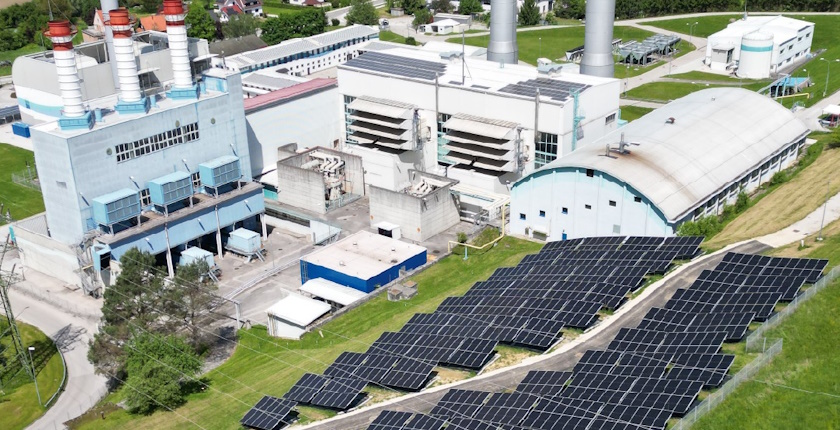
Gas power plant Brestanica in Slovenia adds photovoltaic unit

A ground-mounted solar power plant of 466 kW started generating electricity on a regular basis at Slovenian state-owned gas power plant Termoelektrarna Brestanica (TEB).

GEN-I’s subsidiary GEN-I Sonce installed a photovoltaic system, as the contractor, at the gas power plant run by fellow GEN Group member Termoelektrarna Brestanica (TEB). The 466 kW ground-mounted solar power plant entered regular operation, Naš stik reported.

The new facility in Brestanica in the municipality of Krško near Slovenia’s border with Croatia consists of 810 modules. The project was backed by the government’s renewable energy grant program. It covered 20% of the cost, which amounted to just under EUR 600,000.

MFE TEB4, the new unit, entered test operation in February. It is the fourth PV system at the Brestanica gas power plant. Two are on roofs and one is a solar canopy on the parking lot. Commissioned in 2009 and 2010, they have 170 kW in combined peak capacity.

The estimated annual production of the fourth solar power system can meet the electricity needs of more than one hundred Slovenian households.

Almost a third of the project budget was invested in the installation of a transformer. It enables more renewable electricity capacity to be connected to the grid around TEB, the article reveals.

GEN Group’s state-owned parent company GEN energija operates the Krško nuclear power plant, also known by the acronym NEK and, in Slovenian, JEK.

by in News

Brussels to Croatia: Boost renewables, flexibility for cheaper industrial electricity

The European Commission advised Croatia to speed up the installation of renewable energy capacities and add non-fossil flexibility solutions, to reduce electricity prices for businesses.

Electricity prices for the corporate sector in Croatia in the first half of 2024 were the third-highest in the European Union, according to the European Commission.

At about EUR 0.244 per kWh, only Cyprus and Ireland had higher prices – EUR 0.2578 per kWh and EUR 0.256 per kWh, respectively.

“In the first half of 2024, Croatia had the third-highest electricity price in the EU for business/industrial consumers. This continues to hold back the cost competitiveness of Croatian companies,” the commission said in its Country Specific Recommendations under the 2025 European Semester: Spring Package.

Despite a record increase in solar capacity in 2024, by 397 MW, its share in electricity generation remains low, at less than 6%.

An increase in the uptake of large-scale renewables, including solar, is hampered by an uncertain regulatory framework

Against this background, faster roll-out of new renewable energy capacity, especially solar, and non-fossil flexibility solutions could help reduce price levels, the update reads.

The commission said an increase in the uptake of large-scale renewables, including solar, is hampered by an uncertain regulatory framework as the national energy regulator HERA is yet to adopt updated grid connection fees. The situation creates uncertainty for potential investors and has effectively prevented projects from securing financing, the European Union’s executive arm stressed.

Increased investment in the electricity grid, beyond what’s in Croatia’s National Recovery and Resilience Plan (NRRP), would be crucial for an uptake of renewable energy, according to the commission. In the short term, it would imply incentives for hybrid storage and renewable energy projects, the document reads.

Speed up rollout of smart meters

In 2023, only 24% of household consumers had smart meters installed, which is significantly less than the EU target of 80%.

To be able to fully capitalize on an increased uptake of renewable energy, significant funding for the rollout of smart meters – beyond the measures in the NRRP – and dynamic contracts will be needed to empower consumers and foster demand response, the commission noted.

It advised Croatia to review and simplify administrative procedures for installing renewable energy facilities, including in multi-apartment buildings, and for setting up energy communities.

The measures would help reduce the reliance on fossil fuels and increase the low number of registered energy communities, according to the commission.

by in News

Works beginning on North Macedonian side of gas interconnector with Greece

The North Macedonian section of the gas interconnector with Greece is expected to be completed by early 2027. The construction contract was signed by the Ministry of Energy, Mining and Mineral Resources, domestic contractor Rapid Build and the country’s gas transmission system operator Nomagas.

The construction of the gas pipeline connecting North Macedonia with Greece is set to begin in a month, according to officials. Land expropriation is 90% complete. The initial capacity of the interconnector would be 1.5 billion cubic meters per year, with a potential to double it. The works are expected to be completed within 22 months.

„With the signing of the contract for the construction of the Macedonian section of the gas interconnector with Greece, we are marking the beginning of the largest energy investment in North Macedonia in the last ten years. The interconnector is proof that when there is political will, regional trust, and professional dedication – the results are real and tangible,” said Minister of Energy, Mining and Mineral Resources Sanja Božinovska.

The contract was signed by the ministry, contractor Rapid bild, based in Kumanovo in North Macedonia, and the country’s gas transmission system operator Nomagas. The future pipeline would be able to carry both natural gas and hydrogen.

Repeated tender slashes price by EUR 12 million

The winning bid was EUR 59.9 million or EUR 12 million less than in the initial tender, which was annulled.

The project is worth over MKD 5.1 billion (EUR 82.9 million). It is financed by the European Investment Bank (EIB) and the European Bank for Reconstruction and Development (EBRD). It includes grants of EUR 2.5 million for technical assistance and another EUR 9.9 million via the Western Balkans Investment Framework (WBIF).

The project is financed by the EIB and EBRD

„This contract ensures diversification and access to a greater number of natural gas sources, enables economic development, progress and environmental protection, and contributes to the security of energy supply,” said Executive Director of Nomagas Muhamet Elmazi.

Gasification would significantly improve air quality, especially in areas where wood and fuel oil are currently used for heating.

Greek section of interconnector under construction since February

On the North Macedonian side, the interconnector route is 68 kilometers long, out of a total of 123 kilometers. It will run from Nea Mesimvria in Greece through Evzoni (Mačukovo) and Gevgelija at the border, to Negotino. The next phase involves building gas links from Gostivar to Kičevo (34 kilometers) and from Sveti Nikole to Veles (28 kilometers).

Greek company Terna began constructing its country’s section of the pipeline in February.

Nomagas and Greece’s National Natural Gas System Operator (DESFA) made their final investment decision a year and a half ago.

The companies leaned the investment on the project for the Alexandroupolis LNG Terminal. The liquefied natural gas facility in northeastern Greece was opened on October 1. However, due to a malfunction, it has been out of operation for more than three months. According to the latest update, gradual reactivation is expected to begin by the end of May.

by in News

EU outlines measures to end Russian gas, oil imports by end-2027

The European Commission set out a plan to phase out by the end of 2027 the purchases of Russian natural gas, including in the form of LNG, and oil. The package includes proposals aiming to replace Russian nuclear fuel and materials as well.

The European Union will end its dependency on Russian energy by stopping the import of Russian gas and oil and phasing out Russian nuclear energy, while ensuring stable energy supplies and prices, the European Commission said. Its new REPowerEU Roadmap targets full energy independence from Russia.

Since Russia’s invasion of Ukraine in 2022, the EU was lowering the share of Russian fossil fuels under the REPowerEU plan and via sanctions. However, Russian gas imports rebounded last year by 18%, led by Italy, Czechia and France. The commissioners argued that the “overdependency on Russian energy imports is a security threat” and called for new coordinated actions.

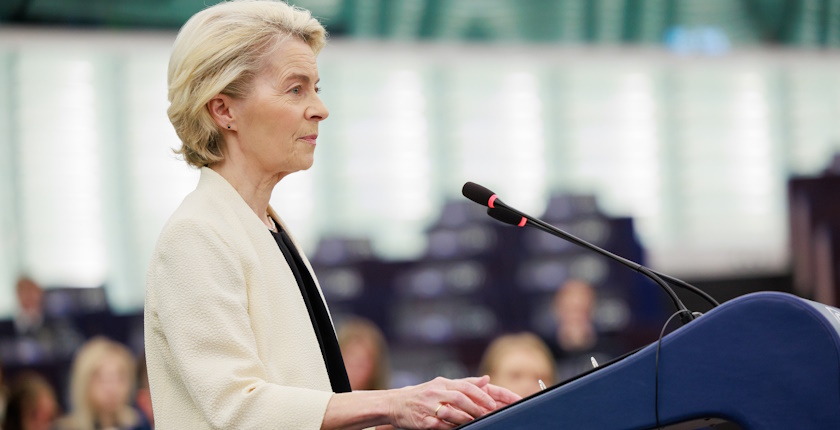
Von der Leyen: It is now time for Europe to completely cut off its energy ties with an unreliable supplier

“The war in Ukraine has brutally exposed the risks of blackmail, economic coercion and price shocks. With REPowerEU, we have diversified our energy supply and drastically reduced Europe’s former dependency on Russian fossil fuels. It is now time for Europe to completely cut off its energy ties with an unreliable supplier. And energy that comes to our continent should not pay for a war of aggression against Ukraine. We owe this to our citizens, to our companies and to our brave Ukrainian friends,” European Commission President Ursula von der Leyen stated.

The volumes of imported Russian gas fell to last year’s 52 billion cubic meters from 150 billion in 2021. The share of Russian gas imports dropped from 45% to 19%. All imports of the country’s coal have been banned by sanctions. Russian oil imports have shrunk from 27% at the beginning of 2022 to the current 3%.

Member states need to roll out national plans by end-2025

The new measures have been designed to preserve the security of energy supply while limiting any impact on prices and markets. They would be applied in parallel to advancing the energy transition.

“Last year we in the EU paid EUR 23 billion to Russia for our energy imports. That is EUR 1.8 billion per month. This needs to stop,” European Commissioner for Energy Dan Jørgensen stressed.

The administration in Brussels expects to replace up to 100 billion cubic meters of natural gas by 2030, which means a decrease in demand by 40-50 billion by 2027. It sees an increase in liquefied natural gas (LNG) capacities by 200 billion cubic meters by 2028, which is five times more than current EU imports of Russian gas. The EU still hasn’t imposed sanctions on Russian LNG.

Member states will be asked to prepare national plans by the end of this year, the announcement reveals. All the measures will be accompanied by continuous efforts to accelerate the energy transition and diversify energy supplies, including via the aggregation of gas demand and a better use of infrastructure, according to the document.

Administration in Brussels intends to tackle Russian shadow tanker fleet carrying oil

The European Commission said the proposed measures would improve the transparency, monitoring and traceability of Russian gas.

“Crucially, new contracts with suppliers of Russian gas (pipeline and LNG) will be prevented, and existing spot contracts will be stopped by the end of 2025. This measure will ensure that already by the end of this year, the EU will have slashed by one third remaining supplies of Russian gas. The commission will further propose to stop all remaining imports of Russian gas by the end of 2027,” the plan reads.

Under the roadmap, the commission will put forward new actions to address Russia’s shadow fleet transporting oil. It said the vessels are circumventing sanctions and the international oil price cap.

EU depends on Russia for quarter of its uranium conversion, enrichment needs

As regards nuclear, the proposals coming next month cover enriched uranium and supply contracts co-signed by the Euratom Supply Agency (ESA) for uranium, enriched uranium and other nuclear materials. The EU intends to increase its production of medical radioisotopes.

“While diversification efforts might create uranium and fuel price volatility over access to uranium supply on global markets, major impacts on electricity prices are unlikely as the price of nuclear fuel and related services represent only a small portion of the final cost of electricity from nuclear power plants,” the plan adds.

The EU intends to increase its production of medical radioisotopes

More than 14% of uranium was sourced in the EU from Russia in 2024. The commissioners highlighted the concentration of uranium conversion and enrichment services – needed to transform processed uranium into the material for nuclear fuel manufacturing – in a limited number of companies.

In 2024, around 23% of the whole EU demand for uranium conversion services and almost 24% of enrichment was covered by Russia.

While more than 85% of uranium is produced in Kazakhstan, Canada, Australia, Namibia, Niger and Russia, uranium mines currently operate in many countries and unmined deposits exist in some EU member states.

It will take years to make use of domestic, other Western resources

European enrichment companies have expansion plans but the first new enrichment installation is not expected earlier than 2027.

“Moreover, the global uranium conversion industry is facing obstacles in ramping up production due to technological complexity and market uncertainties, and new conversion capacities are currently announced only for early 2030s. The EU’s nuclear sector also continues to rely on Russia for some spare parts and maintenance services,” the European Commission said.

EEB: Replacing Russian gas with US gas is senselless

The European Environmental Bureau (EEB) noted that imports of Russian gas including LNG rose 18% in 2024 despite no growth in demand.

Numbers of shadow LNG tankers from Russia have also increased, as have indirect imports of Russian energy via third countries, it added. Plans to tackle the shadow fleet are vague, the organization claimed. It went on to label the United States a clearly unreliable trade partner.

“Phasing out Russian coal and gas only to replace it with a dependence on US fracking gas is not in the EU’s security or financial interests. EU countries should instead focus on accelerating their deployment of wind and solar energies. The technologies to move to 100% renewable energy are available,” EEB’s Policy Manager for Climate and Energy Luke Haywood underscored.

by in News

Kosovo* launches reconstruction of coal power plant unit

Kosovo Energy Corp. (KEK) began the reconstruction and modernization of one of the two units in its Kosovo B coal power plant. The works are part of a EUR 56.5 million project for the entire facility.

Kosovo* relies almost entirely on lignite in domestic electricity production, with a 92% share, the highest in the world. The failure of a gas pipeline project in 2021 and the sluggish development of wind and solar power projects have prompted the reconstruction of both old coal plants.

The works have officially started at last at Kosovo B, two years after government-owned power utility KEK signed a contract with General Electric. The entire project is worth EUR 56.5 million. Acting Prime Minister Albin Kurti said the company is financing the investment on its own.

The B2 unit, commissioned in 1984, is undergoing modernization and B1 is supposed to be next. It is one year older.

Investment cutting pollutant emmissions by 60%

The government said the project would increase annual output at Kosovo B by more than 600 GWh. According to the energy strategy through 2031, the two units had 260 MW each in effective capacity in 2022. It compares to 339 MW from when they were built.

Acting Minister of Economy Artane Rizvanolli said the coal plant’s operating life would be extended by 20 years. The plan is to cut the emissions of particulate matter and nitrogen oxides by 60%.

Capital repairs will be required once every ten years instead of every five years now, she underscored. Rizvanolli claimed the investment would cut power imports by EUR 23 million per year and boost exports by a minimum of EUR 20 million.

Budget much higher for reconstruction of one unit in Kosovo A coal plant

In February, KEK issued a call for the reconstruction of the Kosovo A3. The coal plant unit is 55 years old. The project is worth EUR 137.3 million.

The capacity would be raised to 215 MW from the current range of 120 MW to 140 MW. A3 originally had 200 MW.

* This designation is without prejudice to positions onstatus and is in line with UNSCR 1244/99 and the ICJ Opinion on the Kosovo declaration of independence.
by in News

Hungary’s MVM inks deal with Çalık Holding, Ansaldo Energia for combined cycle gas turbine power plant

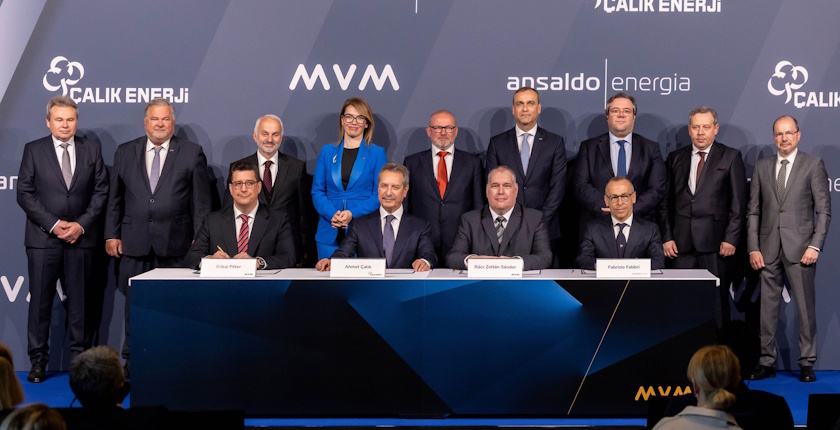
Hungarian power utility MVM signed an agreement with a consortium of Turkey-based conglomerate Çalık Holding and Italian company Ansaldo Energia, which are tasked with building a 1,000 MW combined cycle gas turbine power plant at the Tiszaújváros site in northeast Hungary.

It is the second time this year that MVM contracted the construction of gas-fueled and hydrogen-ready facilities at sites of former power plants running on fossil fuels. Two months ago, the company signed a deal with domestic firms Status KPRIA and West Hungária Bau, and Egypt-based Elsewedy Electric for a 650 MW power combined cycle gas turbine (CCGT) at the Mátra Power Plant.

Now the contract for the development of a modern CCGT power plant was signed by MVM Tisza Power Plant Ltd. of the MVM Group, Çalık Holding, the consortium lead, and Ansaldo Energia.

The agreement marks the beginning of turnkey execution planning, procurement, and construction of what is expected to be Hungary’s most efficient large-scale power plant, the companies said.

Lantos: No new baseload power plant has been built in Hungary in more than 15 years.

The power plant is expected to supply an average of 7,500 GWh of electricity annually. It will also be prepared to use hydrogen.

The two-member consortium was awarded the construction and long-term maintenance of the gas turbines at the public procurement tender.

After the signing, Hungarian Minister of Energy Csaba Lantos lauded the deal as historic, noting that no new baseload power plant has been built in Hungary in more than 15 years.

“The new facility will play an important role in balancing renewable electricity production, thereby supporting the successful energy transition,” he added.

Mátrai: A modern, flexible generation capacity

Károly Mátrai, MVM Group CEO, said a modern, flexible generation capacity would replace the previously decommissioned traditional power plant. Of note, it was a gas power plant.

The facility to be built at the Tiszaújváros site will leverage existing electricity grid connections, a cooling water system, and access to natural gas at a nearby point, Mátrai underscored.

According to Fabrizio Fabbri, Ansaldo Energia CEO, the MVM Tisza power plant will be the country’s most efficient, ready to meet Hungary’s growth and increasing energy needs. He said his company would bring its most advanced gas turbine technology, suitable for hydrogen use.

Ahmet Çalik, President of Calik Enerji Swiss, said the company is honored to contribute to Hungary’s energy supply and enhance its energy security.

by in News

OMV opens Austria’s largest green hydrogen plant

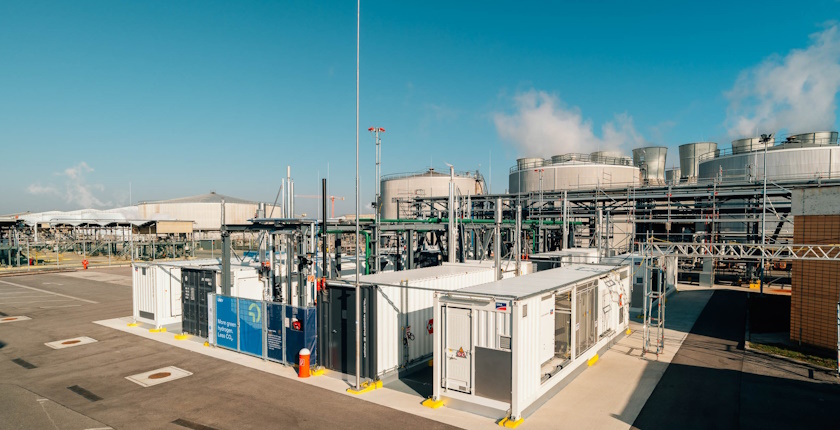
OMV put into operation its green hydrogen plant in Schwechat near Vienna. The facility can produce 1,500 tons per year.

OMV is producing green hydrogen on a commercial scale for the first time. The Vienna-based fossil fuel and petrochemicals producer started up a 10 MW plant at its Schwechat refinery near Austria’s capital. It is the largest in the country.

The investment amounts to EUR 25 million. The electrolyzer system can produce up to 1,500 tons per annum. OMV said the green hydrogen would be used to make more sustainable fuels and chemicals including sustainable aviation fuel (SAF) and renewable diesel (HVO).

PEM electrolyzer uses wind power, hydropower, photovoltaics

The new 10 MW polymer electrolyte membrane (PEM, also called proton exchange membrane) electrolyzer is powered entirely by renewable electricity. It is generated by wind power, hydropower plants and photovoltaics.

The innovation enables annual savings of up to 15,000 metric tons of carbon dioxide emissions, according to the comparator from the European Union’s Renewable Energy Directive. It is equivalent to 2,000 persons per year, based on the EU’s 2024 average of 7.5 tons of CO2 equivalent per capita.

“With the start-up of Austria’s largest electrolysis plant, we are re-inventing how essentials we use in everyday life are produced sustainably. Green hydrogen is at the heart of this transformation, serving as a critical component in producing fuels and chemicals while advancing the decarbonization of our Schwechat site,” said board member Martijn van Koten, responsible for fuels, feedstock and chemicals.

Green hydrogen project is step toward making OMV carbon neutral

The majority owner of Romanian OMV Petrom aims to cut its net emissions to zero by 2050. Its transformation is based on projects including for geothermal energy and chemical recycling. Green hydrogen can be utilized in the production process in refineries.

The green hydrogen plant is certified for producing renewable fuels of non-biological origin (RFNBOs).

Making green hydrogen through PEM electrolysis involves splitting water into hydrogen and oxygen using renewable electricity. At the anode, oxygen and positively charged hydrogen protons are generated. The protons pass through the PEM, and at the cathode, they combine with electrons to form hydrogen gas.

by in News

Project for first gas power plant in Albania enters next stage

In partnership with domestic company Gener 2, Greece-based GEK Terna and DEPA Commercial are preparing to build the first gas power plant in Albania. The current phase involves seeking financing. Separately, Azerbaijan’s SOCAR is expected to start installing the first gas distribution network in Albania, in the city of Korça.

Albania is almost 100% dependent on hydropower plants in domestic electricity production. Efforts are underway to diversify the mix with solar and wind energy and introduce storage capacities. Actually, not a single wind turbine has been built yet, but there is another opportunity for strengthening the energy supply: with gas from the Trans Adriatic Pipeline – TAP. Greek conglomerate GEK Terna and state-owned gas supplier, importer and trader DEPA Commercial intend to build the first gas power plant in Albania, with a local partner.

Late last year, the Council of Ministers, the country’s government, approved the project and determined a three-year deadline for completion. The site for the gas plant is in the municipality of Roskovec in Fier in western Albania. Notably, the county attracts most solar power projects in the country.

Gas facility in western Albania reportedly to have 147 MW in capacity

In the current project development phase, Fier Thermoelectric, the joint venture, is seeking financing, Insider.gr reported. The facility is envisaged to have 147 MW in capacity, according to the article. The government’s decision was for 170 MW.

DEPA Commercial, also known as DEPA Emporias (in Greek), DEPA Commerce and DEPA Trading, entered the project in 2023. It took over a 35% stake from GEK Terna and signed a seven-year gas supply contract for the proposed facility.

They have equal ownership, while Albanian company Gener 2 holds the remaining 30%. It is active in construction, infrastructure, civil works, energy, real estate development, telecommunications and retail in Albania and the broader region.

Both GEK Terna and Gener 2 have solar power projects in Albania as well

Gener 2 has submitted a 50 MW solar power project to the government a year ago. The location is in Bistrica in Finiq municipality, Vlora district.

The government’s approval is not for a concession, but the operator is obligated to either deliver 2% of electricity it produces, as royalty – royal right, or give an equivalent sum for the state budget. The permit is for 49 years since the entry of the decision into force. The firm also needs to sell a share of output to the public power supplier, in accordance with the country’s law.

A group of residents of surrounding villages has repeatedly protested against the investment, arguing that they weren’t consulted. The locals even filed a criminal complaint against Roskovec Mayor Majlinda Bufi.

They claim that the gas facility would pollute the area and jeopardize public health while exporting 90% of the produced electricity.

GEK Terna to benefit from synergies with its gas power plants in Greece

GEK Terna has three gas-fired power plants in Greece. The group’s other energy investment in Albania, through its subsidiary Heron, isn’t without controversy either.

The project is for a 93 MW photovoltaic plant in Libohova, near the Greek border, in Gjirokastër county. Project firm Faethon won approval from the Council of Ministers in Tirana in early 2024. It would be valid for up to 49 years.

GEK Terna’s solar power plant project in Gjirokastër was disrupted last year over fake documentation

Local press wrote last summer that some land documentation for the 122-hectare area was forged, prompting a raid and arrests in the cadastral office in Gjirokastër. The operator of the Libohova plant is obligated to deliver 2% of its electricity for free, too.

First gas distribution network in Albania about to be built in Korça

Albania aims to become a net electricity exporter before the end of the decade. There is also a project for a liquefied natural gas (LNG) terminal in the port city of Vlora, where a gas-fired power plant is planned to be built.

A long-awaited project called Nur, for the gasification of Korça, was presented last week. It would be the first city in Albania with gas.

The final investment decision is expected this year. State Oil Company of Azerbaijan (SOCAR) would be tasked with implementation, with financing from its government. The estimated cost is EUR 21 million. The idea is to then expand the local gas distribution network to nearby Pogradec and Erseka.

Fier and Elbasan are next on the schedule. Azerbaijan and its company are also interested in the project for the LNG terminal in Vlora and to connect the facility with TAP.

by in News

Italy mulls keeping its last coal plants on standby

After retiring the two remaining mainland coal power plants, scheduled for this year, Italy’s government intends to switch the facilities to standby instead of dismantling them. Two others are on the island of Sardinia, which is waiting for another subsea interconnection to complete the coal phaseout.

Italy has 4.7 GW in coal power capacity left, following the recent retirement of A2A’s plant in Monfalcone, on the border with Slovenia. The two facilities that remained on the mainland are only marginally active and they are officially set to be closed this year. However, Minister of the Environment and Energy Security Gilberto Pichetto Fratin expressed the belief that they should be kept on standby.

“Therefore, not producing, because it is not economically suitable. But the geopolitics are still in a state where no one can guarantee us that gas will not reach EUR 70 per MWh or that there will be no malfunctions in the pipelines that supply us,” he argued. The said facilities, already dormant as they are not cost-effective, should be kept just in case, in the view of the minister. He didn’t address the pollution issue.

Provisional data showed that coal power output nosedived 71% in 2024 to 3.5 TWh. It translated to a share of 1.3% in electricity production and 1.1% in consumption.

On the one hand, the capacities would be valuable in case of gas and power supply disturbances. But it comes at the cost of maintaining a complex system idle.

Sardinia may remain dependent on coal by 2029

The two mainland coal plants are Enel’s Torrevaldaliga Nord in Civitavecchia and Brindisi Sud.

There are two more, in Sardinia, scheduled to be phased out by January 2029. By then, the island’s interconnection with the main grid should be strengthened with the proposed Tyrrhenian Link. The Sulcis coal plant is also Enel’s, and the other one is EP Produzione’s Fiume Santo power plant. Together, they have 1.1 GW in nominal capacity.

Speaking at the same event, Chief Executive Officer of Enel Flavio Cattaneo warned of the expected surge in power consumption, suggesting the coal exit be reconsidered. The “perfectly functioning” plants, which “saved” Italy during the gas crisis, will be closed by August, he stressed. The company is open to selling its coal assets, Cattaneo said and hinted at the possibility that the government buys them.

AI, data centers bolstering demand for nuclear energy, gas, coal

Eni’s CEO Claudio Descalzi said it was “pure madness” to close coal-fired power plants “in a situation of high costs or low energy availability.” He cited the rise of artificial intelligence and data centers, boosting energy demand, and the need to keep costs low. “It is only possible with nuclear, gas and coal,” Descalzi claimed.

Closing coal plants is not in the country’s interest, said Deputy Prime Minister of Italy and Minister of Infrastructure and Transport Matteo Salvini.

A group of environmental organizations called it unacceptable in 2025 to propose coal to be part of the energy mix.

Italy is no longer buying Russian gas

Minister Pichetto Fratin also said Italy has stopped buying gas from Russia at the end of last year. It turned to alternatives like liquefied natural gas (LNG) from the United States, he added.

The country needs to rapidly deploy renewables, in his view, and decouple the prices of electricity and gas. Pichetto Fratin said gas accounts for 40% of power but that it determines 70% of the final price, and criticized the pricing system based on the Netherlands’ TTF benchmark.

The government is considering support for long-term power purchase agreements (PPAs) and contracts for difference (CfD), to stabilize prices and become competitive with Germany. It is also the European Union’s policy, under the latest electricity market redesign.