by in News

European Commission proposes easing 2035 car emissions rules

The European Commission has proposed a new Automotive Package that aims to give carmakers greater flexibility in meeting emissions reduction requirements. The new rules would lower the emissions cut target from 100% to 90%, allowing the sale of hybrid and internal combustion vehicles after 2035.

From 2035 onwards, carmakers will need to comply with a 90% emissions reduction target, while the remaining 10% emissions will need to be compensated through the use of low-carbon steel produced in the European Union, or from e-fuels and biofuels, according to a press release from the commission.

“This will allow for plug-in hybrids (PHEV), range extenders, mild hybrids, and internal combustion engine vehicles to still play a role beyond 2035, in addition to full electric (EVs) and hydrogen vehicles,” reads the announcement.

Carmakers will be incentivized to produce affordable EVs

The commission is also proposing “super credits” to incentivize carmakers to produce small, affordable electric cars made in the European Union. This measure would be in place until 2035.

Hoekstra: The EU is staying the course towards zero-emissions mobility

European Climate Action Commissioner Wopke Hoekstra has said the EU is staying the course towards zero-emissions mobility, but introducing some flexibilities for manufacturers to meet their CO2 targets in the most cost-efficient way.

The move comes amid pressure from car manufacturers, who claim their business is threatened by competition from China and the United States, according to reports.

The move comes amid pressure from European carmakers

Several EU member states – Germany, Italy, Bulgaria, the Czech Republic, Hungary, Poland, and Slovakia – say their automakers are struggling with high energy prices, a shortage of components, including batteries, and weak demand for electric vehicles.

The proposal includes a EUR 1.8 billion package to help develop a fully EU-made battery value chain and tackle competition from outside the bloc. As part of the accompanying Battery Booster package, EUR 1.5 billion will be disbursed in interest-free loans to European battery manufacturers, according to the press release.

by in News

Fearful about oil sanctions, Serbia’s Vučić seeks support from EU leaders

Facing an imminent halt of the Gazprom-owned Serbian oil company NIS due to US sanctions, President Aleksandar Vučić met with EU leaders António Costa and Ursula von der Leyen in Brussels. “I don’t have such a strong fear regarding gas as I do about oil,” he revealed and said they spoke about the possibilities for importing derivatives from Romania, Bulgaria and other countries in the region. Costa and Von der Leyen urged Serbia to further align with the EU’s foreign and security policy.

Serbia hasn’t received a single drop of crude oil for two months, President Aleksandar Vučić noted as he addressed the press in Brussels after meeting European Council President António Costa and European Commission President Ursula von der Leyen. The country’s only refinery is run by NIS (Naftna industrija Srbije), which Russian state-owned Gazprom controls through its subsidiaries. Entirely stripped of oil supply since United States sanctions against the Serbian company kicked in, the facility recently ground to a halt.

There is apparently no progress in talks about the sale of Gazprom’s share. The authorities expect that Serbia will have to freeze NIS completely in the next few days, for its financial system to avoid secondary sanctions.

NIS and Lukoil together hold over one quarter of fuel stations in Serbia

The company, which is also present in some neighboring countries, supplied 80% of derivatives in the domestic market. Moreover, one in five fuel stations in Serbia is branded NIS or Gazprom. They account for more than a quarter together with Russia-based Lukoil. It is also under US sanctions, though able to operate almost until the end of April.

Vučić: It will only get harder each coming day

Vučić said he and Costa and Von der Leyen spoke about the key energy concerns that Serbia is facing. “It’s not easy for us already today, and it will only get harder each coming day… I don’t have such a strong fear regarding gas as I do about oil. Of course I am fearful, as a responsible man. I am always fearful, but we sought solutions and worked on it and I hope we will have EU’s support in these very important matters,” he stated.

Namely, Serbia is dependent on Russian gas and its transit through Bulgaria. The fuel comes via the Balkan Stream pipeline, an extension of TurkStream. If NIS is nationalized, the Kremlin could slash or even end the supply in case. Serbia is buying gas under short-term arrangements since May. The EU has launched measures to end most of the remaining supply from Russia next year.

According to the president, possibilities were discussed at the meeting of importing oil derivatives from Romania, Bulgaria and other countries in the region.

There was also word about where Serbia would build gas and oil pipelines, Vučić added and hinted at projects for liquid fuel pipelines as well. He mentioned the possibility of transporting diesel that way from Constanța, Romania’s Black Sea port city. Near it is the Petromidia refinery, owned by Rompetrol, a 100% subsidiary of Kazakhstan’s state-owned KazMunayGas (KMG).

Vučić said he spoke with the two top officials about the plan for a gas interconnector with North Macedonia.

Europe has consistently shown solidarity with Serbia, according to both top officials

Costa and Von der Leyen issued short and essentially identical messages after the meeting with the Serbian president. They highlighted the importance of accelerating reforms in the country, particularly with regard to the rule of law and media freedom.

“We stressed that enlargement is a geostrategic imperative and the need for Serbia to further align with the EU’s foreign and security policy. We also welcomed Serbia’s steps to diversify its energy sources and routes and to reduce dependency on Russia, whose unreliability has been repeatedly demonstrated. Europe has consistently shown solidarity with Serbia through major investments in energy infrastructure and support to vulnerable households,” they wrote on social media.

Two months ago, Von der Leyen said the EU is a guarantee that Serbian families would be safe and warm in winter and that the country can enter its joint gas procurement mechanism.

by in News

MOL in talks about possibility of purchasing stake in Serbian NIS

Hungary acknowledged that state-controlled oil and gas company MOL is in discussions aimed at exploring the possibility of acquiring a stake in NIS. Based in neighboring Serbia, the oil refiner and service station chain operator is under sanctions that the United States imposed on its owner, Russian Gazprom Neft.

Gergely Gulyás, chief of staff of Hungarian Prime Minister Viktor Orbán, revealed today that integrated oil and gas company MOL, headquartered in Budapest, is conducting talks about the possibility of taking over an ownership stake in NIS – Naftna industrija Srbije. Speaking at a media briefing, he added that it is in the Serbian company’s interest to end Russian ownership, pointing out that US sanctions are jeopardizing its operations.

NIS, which runs the only refinery in the country and a service station chain, hasn’t received any oil in a month and a half. The facility, located in Pančevo near Belgrade, is about to halt its operations. NIS came under sanctions because it was majority-owned by Gazprom Neft.

Its parent company Gazprom later reduced Gazprom Neft’s stake to 44.5% and switched the remainder to another subsidiary. The US apparently demands a complete Russian exit.

MOL, not Hungarian government, is in discussions concerning NIS

Gulyás clarified that MOL, a public company, is the one in discussions about a potential stake purchase – not the government. Notably, Hungary controls the company indirectly, through several entities.

The government is ready to help neighboring Serbia with regard to a deal with MOL, the official stressed. Gulyás didn’t confirm or deny speculation that his prime minister would travel to Moscow tomorrow to meet with Vladimir Putin.

Orbán visited Serbia and met with President Aleksandar Vučić today. The Hungarian leader, who managed to get an exemption earlier from the US sanctions on Russian oil and gas, said he would engage in negotiations “in the coming days or tomorrow” to secure the actual supply and “not just papers and permits.”

Russian oil and gas will continue to flow to Hungary, so Serbia will be getting it, too, Orbán claimed.

Gulyás: Fuel export boost to Serbia not to disturb domestic supply

According to earlier media reports, Abu Dhabi National Oil Co. (ADNOC) from the United Arab Emirates is among the suitors for NIS.

Serbia has asked the US to suspend sanctions for 50 days. Vučić said the government would take over NIS if a buyer isn’t found.

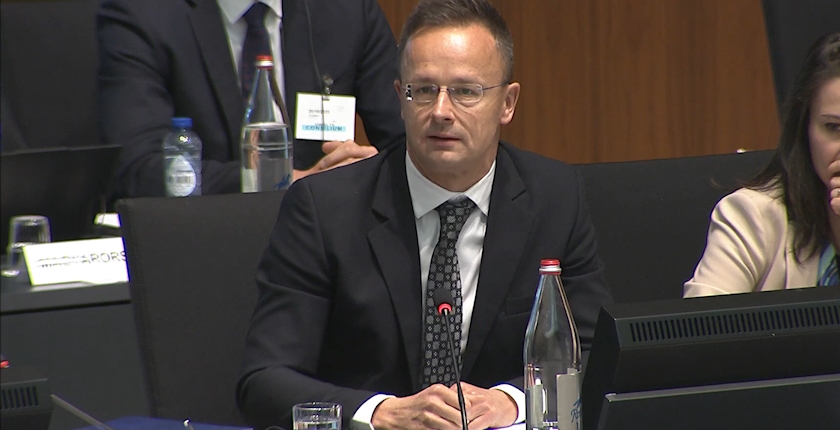
Hungarian Minister of Foreign Affairs and Trade Péter Szijjártó said yesterday that MOL’s fuel deliveries to Serbia have been doubled and that they would be 2.5 higher in December on an annual scale.

Gulyás denied that the increase in exports to the neighboring country would disturb domestic supply.

by in News

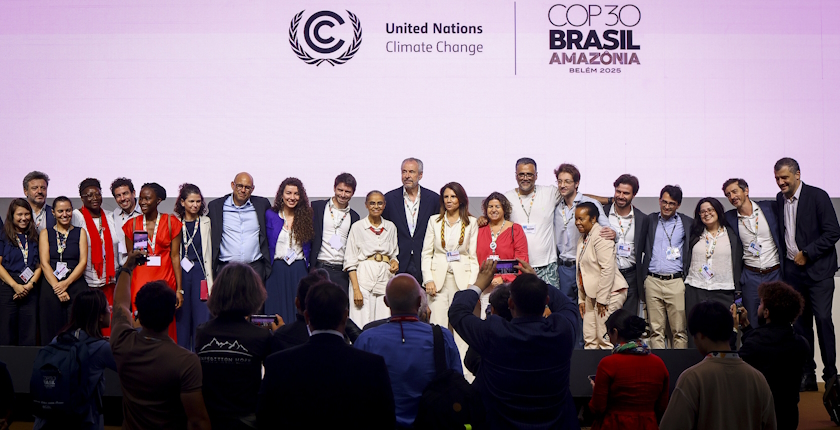
Brazil’s COP of Truth leaves out fossil fuels, deforestation from final deal

The United Nations Climate Change Conference COP30 was concluded with a deal to keep the world’s ambitions similar, after modest progress on some issues. In a last-minute compromise between the delegates of the wealthy, the poor and the countries most in jeopardy, the declaration from the so-called COP of Truth contains no explicit reference to fossil fuels and deforestation.

Participants at the Conference of the Parties of the UN Framework Convention on Climate Change (UNFCCC) in Belém, Brazil, acknowledged that the world is heading for a temporary overshoot above 1.5 degrees Celsius in warming, according to UN Secretary-General António Guterres.

“I cannot pretend that COP30 has delivered everything that is needed. The gap between where we are and what science demands remains dangerously wide. I understand many may feel disappointed – especially young people, indigenous peoples and those living through climate chaos. The reality of overshoot is a stark warning: we are approaching dangerous and irreversible tipping points,” he stated.

It’s difficult to reach a consensus in a period of deep geopolitical divide, Guterres pointed out. Nevertheless, he praised the final agreement for “delivering progress and showing that multilateralism works.”

Global Mutirão

The hosts nicknamed COP30, this year’s UN Climate Change Conference, the COP of Truth. Ironically, due to a last-minute compromise, or maybe consensus, the declaration contains no explicit reference to a fossil fuel phaseout and halting and reversing deforestation. They were left for separate roadmaps.

In the document, the signatories only refer to the COP28 decision, also known as the UAE Consensus, which called for transitioning away from fossil fuels.

The headline of the overarching deal adopted in Belém is Global Mutirão: Uniting humanity in a global mobilization against climate change. The Portuguese word mutirão originates from the indigenous Tupi-Guarani language and roughly means collective effort.

UN’s Stiell vows to keep up climate fight

All in all, delegates from all over the world, except the United States, left the desired decarbonization trajectory little changed. The countries most at risk of the climate disaster are generally poor. They depend on mitigation aid and investments from the wealthy part of the world.

“We knew this COP would take place in stormy political waters. Denial, division and geopolitics has dealt international cooperation some heavy blows this year,” UN Climate Change Executive Secretary Simon Stiell said at the closing.

Denial, division and geopolitics has dealt international cooperation some heavy blows this year, UN Climate Change Executive Secretary Simon Stiell said

In his view, nations chose solidarity, science, and economic common sense.

“COP30 showed that climate cooperation is alive and kicking, keeping humanity in the fight for a livable planet, with a firm resolve to keep 1.5 Celsius within reach. I’m not saying we’re winning the climate fight. But we are undeniably still in it, and we are fighting back,” Stiell stated.

The world’s top climate official noted that, for the first time, 194 countries agreed that the global transition to low greenhouse gas emissions and climate resilience is irreversible and the trend of the future, referring to a line from the deal.

COP30 pledges to triple adaptation funds by 2035

In the decision, the signatories kept the target USD 1.3 trillion per year that needs to be mobilized for climate action by 2035. USD 300 billion would be mostly grants and subsidized loans, while private financing and climate taxation dominate the rest.

The parties voted for a goal to provide three times more per year for climate adaptation from the smaller pot by 2035, instead of the initially proposed 2030 deadline. They failed to determine a figure, but it is mostly estimated at USD 120 billion per year.

One of the novelties is a pledge to promote information integrity regarding climate, which would also imply countering disinformation.

by in News

Bruegel: Without refining or delaying CBAM for electricity, EU risks market integration, security of supply

Unless the rules are refined for the electricity sector, the Carbon Border Adjustment Mechanism (CBAM) risks undermining the European electricity market integration and security of supply, Brussels-based think tank Bruegel warned.

Bruegel has analyzed the impacts of the application of CBAM, set for January 1, 2026. The tax will apply to steel, cement, iron, aluminium, fertilizers, hydrogen, electricity, and also to the cross-border trade in electricity.

The think tank proposes the application of CBAM in the electricity sector to be reconsidered, or at least for it to be postponed until 2028.

“Including electricity from January 2026 risks undermining European electricity market integration and security of energy supply, while the climate benefits are unclear. A delay could form part of a constructive compromise in an ongoing CBAM revision,” Ben McWilliams, Rouven Stubbe and Georg Zachmann wrote.

Ukraine and the Western Balkans will face implied export penalties of EUR 70-80 per MWh

The trading partners affected by CBAM on electricity are the United Kingdom, Morocco, the Western Balkans – Albania, BiH, Kosovo*, Montenegro, North Macedonia, and Serbia – Ukraine, Moldova and Turkey.

According to the analysis, Ukraine and the Western Balkans will face implied export penalties of EUR 70 per MWh to EUR 80 per MWh. It will significantly reduce trade with the EU, the authors stressed.

Ukraine’s electricity exports to the EU are expected to drop more than 60% from the level in a scenario without CBAM – from 6 TWh to 2.5 TWh, they added.

Additional trade barriers on the EU’s eastern borders would slow electricity market integration.

The export of solar power from Greece to other EU countries could also be affected by CBAM

“Falling average electricity prices, lower market values for renewables and increased price volatility would also reduce incentives to invest in renewable assets in these countries. Moreover, the Western Balkans is an important transit region for intra-European electricity trading. The export of solar power from Greece to other EU countries, for example, could also be affected by CBAM,” the analysis reads.

The authors said the policy goal of integrating Energy Community countries into the EU’s internal energy market is strategically more important than addressing carbon leakage and argued that, in the long run, it is more important from a climate perspective, too.

Not clear whether the application of CBAM to the electricity trade will deliver

They recalled that the purpose of CBAM is to reduce the risk of so-called carbon leakage, as well as to encourage third countries to implement domestic carbon pricing.

“However, it is not clear that the application of CBAM, as currently designed, to the electricity trade will deliver on either front,” the authors said. They named two reasons why carbon leakage in the electricity sector is problematic. The free allowances issued to electricity producers under the ETS were already phased out in 2013 – implying that electricity is not considered by the European Commission to be a sector at serious risk of carbon leakage.

The current CBAM legislation is not clear enough

Secondly, the current CBAM legislation is not clear enough. Unless hard-to-fulfil conditions apply, the Regulation (EU) 2023/956, which established CBAM, proposes that default carbon emission values be applied.

The outcome is that the values in question are calculated according to the last five-year average CO2 intensity of electricity produced from fossil fuels. It is problematic because electricity is exported when prices in one grid are lower than in another, which typically happens when renewables output is high, the think tank underlined in its analysis.

It is also unfair because power systems are evolving – production from fossil fuels is decreasing and renewables generation is increasing.

The coupling of the electricity markets of Energy Community countries is unlikely before 2028

Regarding CBAM’s intention to push third countries to introduce carbon pricing, the authors said that the first developments indicate some results.

However, they explained that an exemption for the electricity sectors of third countries is available under certain conditions, including electricity market coupling and the introduction of an ETS with an equivalent price to the EU ETS by 2030.

The CBAM charge sets off in January 2026, and the coupling of the electricity markets of Energy Community countries is unlikely before 2028, which means that an exemption for electricity cannot be secured before that date under current rules, the analysis underlined.

The solution

The authors pointed out that the potential gains from including electricity in CBAM are limited, compared to the frictions it will create. They suggested to the EU to follow the lead of the UK, which doesn’t plan to include electricity in its own CBAM, and thus to drop electricity from its sectoral coverage.

Otherwise, the authors proposed a revision of the calculation of default carbon emissions, and application delay until 2028 with additional analysis on the risk of carbon leakage in the electricity sector.

Regarding the default carbon emissions, five-year average CO2 intensity should be substituted for average grid emission factors calculated on an hourly or 15-minute basis, administered by the European Network of Transmission System Operators for Electricity (ENTSO-E) and national transmission system operators.

The application of CBAM to electricity should be delayed until 2028 to avoid disruption to the electricity trade and to give more time for the introduction of domestic carbon pricing and the coupling of electricity markets, the authors of the analysis concluded.

* This designation is without prejudice to positions onstatus and is in line with UNSCR 1244/99 and the ICJ Opinion on the Kosovo declaration of independence.
by in News

Serbia plans to stop using coal, fuel oil in district heating by 2040

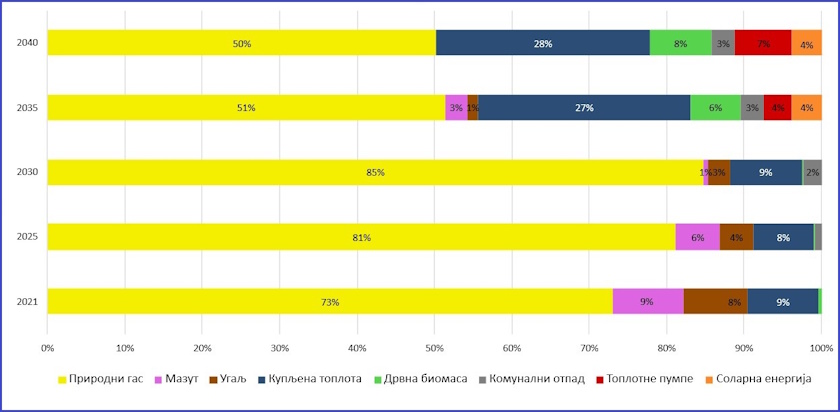
By 2040, Serbia intends to replace fuel oil and coal in district heating plants with solar, wood biomass, heat pumps, municipal waste and geothermal energy.

Maja Vukadinović, acting Assistant Minister of Mining and Energy for Energy Efficiency and Climate Change, has said that the goal for the district heating sector is to phase out fuel oil and coal by 2040.

She explained that the idea is to replace fossil fuels with solar energy, wood biomass, heat pumps, municipal waste and geothermal energy.

“The list of programs and projects until 2028 is defined in the draft Program for the Implementation of the Energy Development Strategy of the Republic of Serbia until 2040 with projections to 2050, for the period from 2026 to 2028,” Vukadinović told Balkan Green Energy News.

The share of renewables should increase from 2.4% to 5.5%

According to the draft, implementation of decarbonization projects in district heating systems by 2028 should lift the share of renewable energy sources in heat production from 2.4% to 5.5%.

The fuel mix in 2023 was 75% natural gas, 8% petroleum products, 2% coal, 2% wood biomass, and 13% purchased heat. The structure of purchased heat production is 46.8% natural gas, 48.8% coal, 3.3% wood biomass, and 1.1% fuel oil.

serbia decarbonization district heating mix 2040

Natural gas will remain the dominant source of thermal energy, as it is today, although its share is expected to decrease from 73% to 50% by 2040, according to Vukadinović.

The decarbonization of the district heating system would reduce air pollution in cities, especially where coal or fuel oil is currently used, the ministry added.

A strategic plan for the district heating decarbonization policy is being prepared

“It’s very important that the fuels conversion is carried out in parallel with energy renovation of buildings and a reduction of the energy consumption for heating. It would significantly improve living conditions,” Vukadinović underlined.

Decarbonization would also have to lead to the improvement of the overall operation of the heating plants, as well as a reduction in network losses, the modernization of substations, and the introduction of daily and seasonal thermal energy storage, in her opinion. The operation of the district heating systems should depend less on the price volatility of imported fuels, Vukadinović stressed.

Serbia is preparing a strategic plan for the district heating decarbonization policy. The document is under development in cooperation with the European Bank for Reconstruction and Development (EBRD) and the business association of Serbian heating plants, Toplane Srbije.

The document, she explained, will outline steps to improve the district heating system, including the rollout of thermal energy storage, heat pumps, and heat production from waste, as well as the development of the country’s first district cooling systems.

by in News

Romania to take control of Lukoil’s assets

Romania wants to take control of Lukoil’s operations to prevent an imminent freeze from the sanctions imposed by the United States. Bulgaria is already putting the Russian company’s refinery, the largest in the Balkans, under a trusteeship. Serbia announced that similar measures have been proposed to exempt Gazprom-owned NIS and its refinery, the only one in the country, from the sanctions.

Minister of Energy of Romania Bogdan Ivan seems to have endorsed neighboring Bulgaria’s approach to the issue of US sanctions against Lukoil. He said the government has to take control of the Russian company’s operations, Profit.ro reported.

The minister didn’t clarify whether it would be a temporary trusteeship. But President Nicușor Dan, who took the helm half a year ago, said there is an option for Romania to assume control for a limited period.

“We protect Romania’s energy security and firmly enforce international sanctions targeting Lukoil. My colleagues in the Ministry of Energy continue to work, together with all relevant authorities, on creating legislation that will ensure, on the one hand, full compliance with the sanctions regime established by the United States, and on the other hand, the continuity of Petrotel Ploiești’s refining activities, as well as the placement of petroleum products, without jeopardizing the supply of the national fuel market,” Ivan stated.

Minister Ivan turns more hawkish regarding sanctions against Russia

The minister claimed he would not request an extension of the November 21 deadline from the US. “Moreover, I will support the replication and uniform application of the sanctions initiated by the US throughout the European Union,” he stressed.

It marks a shift from the stance that the ministry expressed late last month, saying that the EU needs to adopt a position before Romania decides to move. Notably, Ivan held talks on November 8 in Washington with senior US officials, the article notes.

Ivan held talks on November 8 in Washington with senior US officials

“Romania must take control of the company to guarantee the full implementation of international measures, to protect the jobs of the 5,000 employees and to ensure the stability and security of the national energy system,” Ivan said.

However, the Petrotel Lukoil refinery had 542 employees on average in 2023 and another 203 worked at the company’s gas stations. Altogether, its six firms have a total payroll of under nine hundred, the article notes.

Germany placed Rosneft under state administration in 2022.

Bulgaria, Serbia struggling to keep Russian-owned refineries in operation

Nationalization could backfire because of property rights, though imposing state management is also a complicated matter. Romania earlier signaled that nationalization would be the last option.

Bulgaria has urgently adopted a law facilitating a takeover of Lukoil’s refinery in Burgas, the largest in the region. The state administrator would be authorized to sell it. It is unclear whether the measure could postpone or prevent the sanctions.

President Rumen Radev refused to sign the law and returned it to the National Assembly. It would “undermine the legal order” through “indirect nationalization” and expose public finances to a high risk, he warned.

Oil refiner and service stations operator NIS in Serbia is already under US sanctions. Russian state-owned Gazprom holds a majority stake in the company through two subsidiaries.

Serbian Minister of Mining and Energy Dubravka Đedović Handanović said yesterday that the “Russian owners” sent a request to the US Office of Foreign Assets Control (OFAC) to renew the company’s license due to “negotiations with a third party.”

The government in Belgrade has supported the request, she added. The Russian side is prepared to cede control and influence over NIS to a third party, Đedović Handanović revealed.

According to media speculations, one of the candidates is Hungary-based MOL, given that the country managed to obtain a one-year exemption from the US for Russian oil and gas.

Lukoil is operating in Serbia as well, where it has a chain of fuel stations.

by in News

Project pipeline in Greece for CO2 capture, storage nearing EUR 4 billion

Carbon capture and storage projects worth as much as EUR 3.6 billion are under development in Greece. Energean’s subsidiary EnEarth has launched a tender for drilling two wells for the Prinos site under the Aegean Sea, while DESFA won a EUR 169 million EU grant for a carbon dioxide liquefaction unit.

Investors in Greece are counting on demand from the domestic industry for carbon capture and storage (CCS), so that it can remain competitive with regard to carbon dioxide emission costs. Euro2day calculated that the project pipeline is worth up to EUR 3.6 billion as the endeavors are clearing major milestones.

The time for drilling in Prinos is approaching. EnEarth, a subsidiary of Energean, is working on the establishment of the storage facility offshore Kavala. Earlier this month it launched a tender for drilling two wells.

The Prinos project is valued at EUR 1.2 billion

Works are scheduled to begin in the first half of next year. The project is worth EUR 1.2 billion, of which the firm secured EUR 270 million in funding from the European Union. It is waiting for environmental terms (AEPO) from the Ministry of Environment and Energy, as well as for the storage permit.

Notably, a draft law covering the sector is reportedly complete.

DESFA seeks contractor to drill two wells in Prinos

Another step ahead was achieved with a project for a pipeline that would transport CO2 from energy-intensive industrial facilities to a liquefaction system in Revithoussa. The endeavor is called ApolloCO2. Greece’s National Natural Gas System Operator (DESFA) won EUR 169.3 million through the European Union’s Innovation Fund for the terminal.

The system would include temporary storage and transport by ships to permanent storage. The budget amounts to EUR 700 million in the first phase, with another EUR 60 million envisaged for an expansion.

ApolloCO2 is in a group of 61 projects in the Innovation Fund’s latest round for net zero technology, worth EUR 2.9 billion in total.

DESFA is working on the investment with Ecolog, a subsidiary of GasLog.

EU funding three major carbon capture projects that would be connected with Prinos storage site

AppoloCO2 would bring CO2 from three capture facilities also funded by the EU. There is a possibility to involve overseas customers as well.

Cement maker Heracles, part of Holcim Group, is developing the Olympus project worth EUR 400 million in Milaki, Aliveri. Its competitor Titan has a EUR 584 million endeavor underway in Kamari, Boeotia (Viotia). It is called Ifestos.

DESFA has applied for EUR 30 million from Connecting Europe Facility for the CO2 pipeline

Motor Oil Hellas aims to install a unit in its Agioi Theodoroi oil refinery costing EUR 300 million to EUR 400 million. The project is called IRIS – Innovative low caRbon hydrogen and methanol productIon by large Scale carbon capture. It is for the construction and operation of a CCUS and e-methanol production system that would cut the refinery’s CO2 emissions by a quarter. CCUS stands for carbon capture, utilization and storage.

DESFA is seeking EUR 30 million from the EU’s Connecting Europe Facility (CEF) for a 35-kilometer CO2 pipeline. The first part would go from Ifestos and branch out to HELLENiQ Energy’s oil refinery in Elefsina (Eleusis). In subsequent phases, pipelines would reach Heracles’ Olympus, Metlen’s aluminum complex in Aspra Spitia, Thisvi in Boeotia (for GEK Terna’s Heron and HELLENiQ’s subsidiary Elpedison), and eventually Motor Oil’s IRIS.

As capacities grow, larger ships would be required to lower transportation costs. According to the article, three such vessels would cost EUR 240 million overall.

by in News

US torpedoes Lukoil’s deal to sell its overseas business to Gunvor

The United States Department of the Treasury said it wouldn’t allow Gunvor to “operate and profit,” calling it “the Kremlin’s puppet.” The energy trader responded that the statement is “fundamentally misinformed and false,” but it withdrew its proposal for Lukoil’s international assets.

For a minute it seemed that a potential fuel crisis in Europe – especially in the southeast – was going to be prevented. Russian oil company Lukoil, which came under US sanctions, agreed late last month to sell its foreign assets to Gunvor Group. The proposed transaction could have become a model for the resolution of sanctions against Serbia-based NIS, which operates the country’s only refinery and the largest chain of service stations.

A comprehensive reshuffling of Russian energy business in Europe apparently depends on peace negotiations for Ukraine with the administration of President Donald Trump. Amid a lack of progress, it scuttled the acquisition.

“President Trump has been clear that the war must end immediately. As long as Putin continues the senseless killings, the Kremlin’s puppet, Gunvor, will never get a license to operate and profit,” the Treasury Department said.

Gunvor scraps Lukoil deal after US threat

Gunvor, one of the largest energy traders in the world, is registered in Cyprus. The company, which operates out of Geneva and several other offices, gave up on the deal.

“The Treasury Department statement about Gunvor is fundamentally misinformed and false. Gunvor is and has always been open and transparent about its ownership and business, and has for more than a decade actively distanced itself from Russia, stopped trading in line with sanctions, sold off Russian assets, and publicly condemned the war in Ukraine. We welcome the opportunity to ensure this clear misunderstanding is corrected. In the meantime, Gunvor withdraws its proposal for Lukoil’s international assets,” the firm said.

Swedish billionaire Torbjörn Törnqvist, Gunvor’s CEO, owns a 85% share

Chief executive officer Torbjörn Törnqvist, a Swedish billionaire, owns 85% of the company. He co-founded it in 2000 with Russian businessman Gennady Timchenko, who sold his stake to his partner in 2014 after coming under US sanctions himself.

Russia reacted to the US Treasury Department’s new accusations by calling the trade restrictions illegal.

Refinery in Romania not attractive for purchase

Lukoil’s facilities up for sale include the largest oil refinery in the Balkans – Lukoil Neftohim Burgas in Bulgaria, as well as the Petrotel-Lukoil refinery in Romania. The Russian company also has fuel retail networks in Romania, Bulgaria, Turkey, North Macedonia, Croatia, Serbia, and Montenegro.

Notably, the refinery in Romania doesn’t seem to be attractive for possible buyers, Profit.ro reported. It is designed for processing the Russian Ural type of oil, rich in sulfur. Adaptation to sweeter crude would require major investments, maybe bigger than for an entirely new refinery, according to the article.

A crucial factor as well is that Lukoil’s businesses abroad were worth an estimated USD 22 billion in 2023, over three times more than Gunvor.

by in News

Several EU member states face uncertainty amid looming Russian gas ban

The European Union’s proposed measures to phase out imports of Russian oil and gas would destroy Hungary’s security of supply, according to Minister of Foreign Affairs and Trade Péter Szijjártó, who spoke at the meeting of energy ministers in Luxembourg. Slovakia is in a similar situation, while Romania pointed to the difficulty of proving the origin of foreign gas.

The draft regulation that the Council of the EU adopted doesn’t explicitly call for a ban on the transit of gas to third countries, while it foresees a temporary suspension for member states in case of supply disruption. The proposal also allows the possibility of importing non-Russian gas through the TurkStream pipeline.

The meeting of the so-called Energy Council highlighted several issues and concerns among EU member states about the proposed ban on Russian natural gas, including liquefied natural gas (LNG). Energy ministers in the Council of the EU adopted their position ahead of negotiations with the European Parliament on measures that they plan to introduce on January 1.

There would be a transition period for existing contracts for Russian fossil gas. Short-term ones concluded before June 17 this year would remain in force until June 17, 2026. Long-term contracts may run until January 1, 2028. It is also the targeted date for ending imports of Russian oil.

Szijjártó: The remaining infrastructure, physically and capacity-wise, is not able to supply Hungary

“The real impact of this regulation is that our safe supply of energy in Hungary is gonna be killed,” the country’s Minister of Foreign Affairs and Trade Péter Szijjártó stressed at the meeting.

He clarified that he wasn’t speaking about prices, and warned of damage from the proposed regulation – in the name of diversification.

“As now we are phasing out supply routes towards Hungary, the remaining infrastructure, physically and capacity-wise, is not able to supply the country. This has nothing to do with politics. This has nothing to do with Russia. This has nothing to do with the war in Ukraine. This is mathematics and physics,” Szijjártó stressed.

He also reiterated that his country would be left dependent on one oil supply route, via Croatia. It would leave Hungary “totally defenseless to a monopoly” as the transit fee doubled since the start of the war and it is five times higher than the current European benchmark, the minister underscored.

Bulgaria asks for protection from arbitration for gas TSOs

Slovak Deputy Prime Minister and Minister of Economy Denisa Saková said the supply of gas to her country is limited. There are interconnections with all neighbors, but external capacity bottlenecks remain, she argued. Bulgaria asked for provisions protecting gas transmission system operators (TSOs) from arbitration and financial penalties.

Romania voted for the draft regulation, but warned that identifying the origin of imported gas would be difficult

Secretary of State in Romania’s Ministry of Energy Cristian Bușoi urged for a workable and harmonized verification system and for the development of clear guidelines.

“This is not a matter of energy policy, but of strategic autonomy and European solidarity. At the same time, as we move from political vision to implementation, we believe it is important that the new authorization and verification system remains practical, transparent and proportionate. The additional requirements to demonstrate the exact country of production represent a new level of responsibility that, while understandable, and we support this in principle, may be difficult to fulfill in practice, particularly for pipeline [and] natural gas traded on hubs, and shipments transport, including LNG cargos that involve multiple sources and blending,” Bușoi told the ministers.

Council of EU proposes suspension clause

Notably, the Energy Council’s position, part of the REPowerEU plan and sanctions against Russia, is that the regulation should contain a suspension clause. The European Commission could temporarily lift the ban on Russian gas and LNG in case of significant disruptions of supply.

Another important element is the possibility of importing non-Russian gas through the TurkStream pipeline if the fuel’s origin is proven.

Gas transit through EU not subject to prohibition

Energy ministers said the EU should ensure that natural gas which crosses the 27-member bloc under a transit procedure is not ultimately entering into free circulation in the union.

It would imply that Serbia, Bosnia and Herzegovina and North Macedonia, non-EU countries, could continue to buy Russian gas that is delivered through Balkan Stream. It is the extension of TurkStream running through Bulgaria and Serbia to Hungary.

“Any gas which, before its import into the EU, was exported from the Russian Federation, either via direct export from Russia to the EU or via indirect export through a third country, should, except in case of transit, be subject to the prohibition”, the document reads.

Serbia still hasn’t signed a long-term gas supply contract with the Russian side, and the previous one expired in May. Moreover, the United States have imposed sanctions on Gazprom-controlled NIS, Serbia’s national oil importer, refiner and operator of a chain of service stations.

On top of it all, hydropower output is at a record low due to chronic drought, while coal is being imported as domestic mines don’t produce enough lignite.