by in News

U.S. Energy Secretary Warns IEA: Prioritize Energy Security or Face U.S. Exit

Chris Wright urged the International Energy Agency to prioritize energy security over advocacy for the deployment of renewables, and warned that the United States could withdraw from the body if it does not change course. The remarks, delivered at a conference in Paris, accused the agency of acting like a “climate advocacy organization” and dismissed the value of a global net-zero scenario as unrealistic.

The intervention, which Politico reported as signalling growing tension between Washington and the IEA, frames a broader disagreement between the agency’s modelling of low-carbon transitions and the current U.S. administration’s pro-fossil-fuel orientation. Politico covered Wright’s comments and the administration’s stance.

Chris Wright

Chris Wright

Wright argued that when international data and analysis bodies devote resources to what he characterised as “leftist fantasies,” they risk undermining their core mission of delivering objective analysis for energy security and market stability. He warned that continued emphasis on net-zero scenarios could prompt a reevaluation of U.S. membership in the IEA.

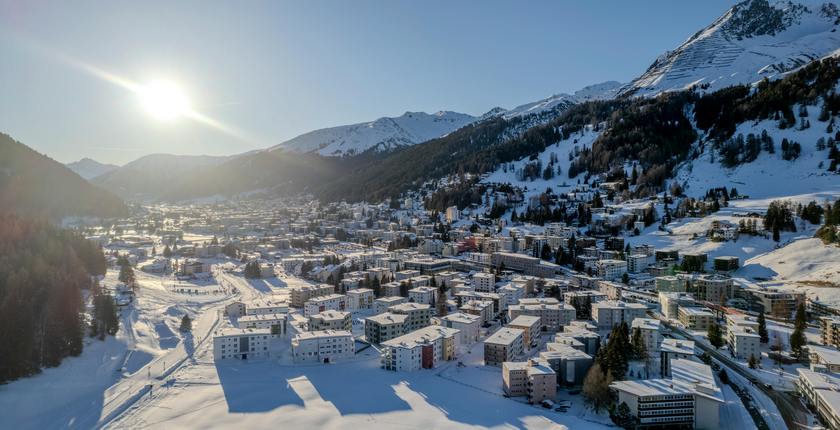
Those remarks echo positions voiced by other senior U.S. officials. At the World Economic Forum in Davos, Howard Lutnick criticised European solar and wind deployment and questioned the desirability of pursuing net-zero policies, urging instead greater reliance on oil, gas and even coal. World Economic Forum meetings in Davos gathered these high-profile exchanges.

Observers note that the rhetoric follows a wider shift in U.S. climate and energy policy since the current administration’s decision to withdraw from the Paris climate accord earlier this year, a move that has intensified transatlantic debate over the pace and direction of the energy transition. Donald Trump has publicly criticised Europe’s renewables push and framed the U.S. approach as a deliberate return to fossil-fuel development.

The clash poses a practical challenge for the IEA, whose forward-looking scenarios and data are widely used by governments and markets. How the agency responds — whether by adjusting emphasis, defending its analytical frameworks, or engaging in political dialogue with member states — will shape its role in an era of sharply divergent energy strategies.
by in News

Davos: China reaffirms green agenda as US slams EU’s net-zero goal

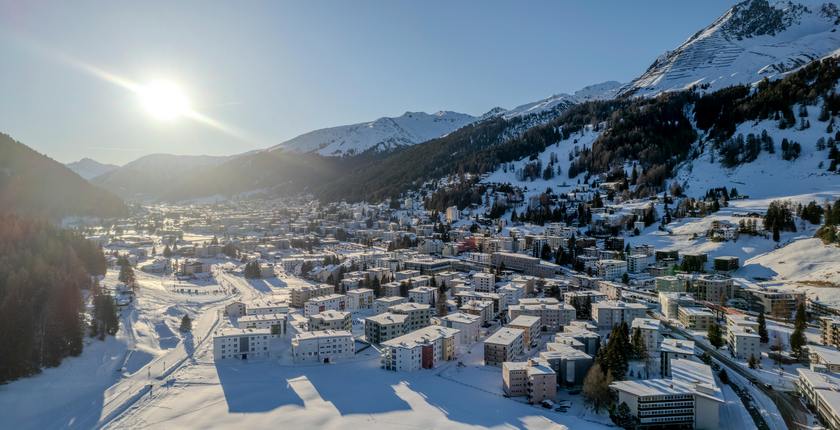
At the World Economic Forum (WEF) in Davos, China reiterated its commitment to green development, in contrast to the United States, whose secretary of commerce said America should rely on oil and gas instead of pursuing a green transition and criticized the European Union’s (EU) net-zero target. US President Donald Trump, for his part, described the energy transition as a “scam” that caused an energy collapse in Europe.

Speaking at the WEF Annual Meeting 2026 in Davos, Switzerland, Chinese Vice Premier He Lifeng emphasized China’s resolve to reduce its greenhouse gas emissions, adding that the country’s upcoming five-year plan would keep the focus on green growth fueled by solar, batteries, and electric vehicles (EVs).

China’s Vice Premier urged other countries to help combat emissions

He also urged other nations and foreign companies to collaborate with China on creating “a green and prosperous future.”

“We invite enterprises from all over the world to embrace the opportunities from the green and low-carbon transition, and work closely with China in such areas as green infrastructure, green energy, green minerals, and green finance,” He said in a speech at Davos.

In contrast, US Commerce Secretary Howard Lutnick criticized the EU’s solar and wind development, as well as its net-zero goal, adding that the green transition is not something the US should pursue. Lutnick also said that the world should focus on coal as an energy source rather than renewables, according to reports.

In January 2025, President Donald Trump signed executive orders reversing much of the previous administration’s climate policy and withdrawing the US from the Paris Agreement once again.

US Commerce Secretary claims seeking net zero without battery production would make the EU subservient to China

“Why are you going to do solar and wind? Why would Europe agree to be net zero in 2030 when they don’t make a battery? So, if they go 2030, they are deciding to be subservient to China, who makes the batteries,” Lutnick said.

“Why would the US, which has oil and natural gas, try to convert to all-electricity? China does not have oil and natural gas – electricity and electric cars make perfect sense to them,” Lutnick said at a WEF panel.

According to news agencies, Lutnick’s harsh criticism of Europe at a VIP dinner on Tuesday made European Central Bank President Christine Lagarde walk out of the event.

Trump slams “the green new scam” and claims China sells wind turbines to others, but does not build its own wind farms

For his part, Trump also criticized the EU’s transition to renewables, claiming that the US had avoided “the catastrophic energy collapse which befell every European nation that pursued the green new scam.” He also described the green transition as “perhaps the greatest hoax in history.”

In his speech in Davos, the US president claimed that wind farms “lose money” and that China only sells wind turbines without building any wind farms itself.

“They sell them to the stupid people that buy them. They don’t use them themselves,” Trump said, adding that China has only built a “couple of wind farms” in order to “show people what they could look like.”

According to available data, China has the largest wind power capacity in the world, at around 600 GW.

by in News

Davos: China reaffirms green agenda as US slams EU’s net-zero goal

At the World Economic Forum (WEF) in Davos, China reiterated its commitment to green development, in contrast to the United States, whose secretary of commerce said America should rely on oil and gas instead of pursuing a green transition and criticized the European Union’s (EU) net-zero target. US President Donald Trump, for his part, described the energy transition as a “scam” that caused an energy collapse in Europe.

Speaking at the WEF Annual Meeting 2026 in Davos, Switzerland, Chinese Vice Premier He Lifeng emphasized China’s resolve to reduce its greenhouse gas emissions, adding that the country’s upcoming five-year plan would keep the focus on green growth fueled by solar, batteries, and electric vehicles (EVs).

China’s Vice Premier urged other countries to help combat emissions

He also urged other nations and foreign companies to collaborate with China on creating “a green and prosperous future.”

“We invite enterprises from all over the world to embrace the opportunities from the green and low-carbon transition, and work closely with China in such areas as green infrastructure, green energy, green minerals, and green finance,” He said in a speech at Davos.

In contrast, US Commerce Secretary Howard Lutnick criticized the EU’s solar and wind development, as well as its net-zero goal, adding that the green transition is not something the US should pursue. Lutnick also said that the world should focus on coal as an energy source rather than renewables, according to reports.

In January 2025, President Donald Trump signed executive orders reversing much of the previous administration’s climate policy and withdrawing the US from the Paris Agreement once again.

US Commerce Secretary claims seeking net zero without battery production would make the EU subservient to China

“Why are you going to do solar and wind? Why would Europe agree to be net zero in 2030 when they don’t make a battery? So, if they go 2030, they are deciding to be subservient to China, who makes the batteries,” Lutnick said.

“Why would the US, which has oil and natural gas, try to convert to all-electricity? China does not have oil and natural gas – electricity and electric cars make perfect sense to them,” Lutnick said at a WEF panel.

According to news agencies, Lutnick’s harsh criticism of Europe at a VIP dinner on Tuesday made European Central Bank President Christine Lagarde walk out of the event.

Trump slams “the green new scam” and claims China sells wind turbines to others, but does not build its own wind farms

For his part, Trump also criticized the EU’s transition to renewables, claiming that the US had avoided “the catastrophic energy collapse which befell every European nation that pursued the green new scam.” He also described the green transition as “perhaps the greatest hoax in history.”

In his speech in Davos, the US president claimed that wind farms “lose money” and that China only sells wind turbines without building any wind farms itself.

“They sell them to the stupid people that buy them. They don’t use them themselves,” Trump said, adding that China has only built a “couple of wind farms” in order to “show people what they could look like.”

According to available data, China has the largest wind power capacity in the world, at around 600 GW.

by in News

Serbia to put mining strategy to parliament vote

The government passed the draft Strategy for the Management of Mineral and Other Geological Resources of the Republic of Serbia for the period from 2025 to 2040, with projections until 2050, so the National Assembly is required to put it to vote. With full appreciation of economic, environmental and social aspects, the implementation needs to contribute to improving the legal framework, establishing a balance between economic growth and environmental protection, remediation of abandoned mining facilities and securing a stable supply of critical and strategic raw materials, Minister of Mining and Energy Dubravka Đedović Handanović stressed.

After a turbulent public discussion process, the Government of Serbia adopted the draft Strategy for the Management of Mineral and Other Geological Resources of the Republic of Serbia for the period from 2025 to 2040, with projections until 2050. Several dozen objections and suggestions were accepted or partly accepted. However, the text of the strategy that will be passed on to the National Assembly for a vote hasn’t been published yet.

A special emphasis is on the development of risk management mechanisms, climate neutrality and the application of energy-efficient and low-carbon technologies, the government pointed out.

The strategy is based on the principles of sustainable utilization of natural wealth, biodiversity protection, climate resilience and the reduction of negative effects of mining activities, the announcement reads.

According to the report on the environmental impact of the strategy’s implementation, Serbia hosts many deposits of metallic, non-metallic and energy raw materials, groundwaters and geothermal energy. The authors of the accompanying document acknowledged that the exploitation of mineral raw materials in Serbia caused air, water and land pollution. Metals mining hub of Bor and Majdanpek and the Kolubara and Kostolac lignite basins are the most affected.

Another challenge highlighted in the environmental impact report are the abandoned mines, tailings dumps and mining facilities that require remediation and rehabilitation.

Strengthening state’s role in planning, oversight

The document sets a long-term framework for the responsible management of mineral resources and the strengthening the role of the state in planning, oversight and the improvement of the sector of mining and geology, in the interest of citizens and a sustainable development of local communities, the Ministry of Mining and Energy said.

A special emphasis is on critical and strategic raw materials, geothermal energy and rational utilization of natural resources

Minister Dubravka Đedović Handanović said the strategy defines programs and measures directed toward a secure supply of domestic companies and the energy system with mineral raw materials, job creation and a greater participation of the domestic industry in the value chain, as well as for reducing import dependency and strengthening the country’s economic stability.

She explained that the focus is particularly on critical and strategic raw materials, geothermal energy and rational utilization of natural resources, alongside the implementation of high environmental and security standards. This is the way, in her words, to protect the environment, improve work safeety and lower the risks for people’s health and the quality of life in local communities.

Treating protected areas responsibly

Dubravka Đedović Handanović added that the strategy clearly defines a responsible treatment of protected areas and the spaces of special natural value, through a principle of prevention and respect toward the protection regime, as well as the transparency in the processes of planning and decision making, so that the citizens would be informed timely and included in dialogue.

With full appreciation of economic, environmental and social aspects, the implementation needs to contribute to improving the legal framework, establishing a balance between economic growth and environmental protection, remediation of abandoned mining facilities and securing a stable supply of critical and strategic raw materials, the minister underscored. She said that in the long term it meant greater safety, a better quality of life and responsible development.

by in News

Serbia to put mining strategy to parliament vote

The government passed the draft Strategy for the Management of Mineral and Other Geological Resources of the Republic of Serbia for the period from 2025 to 2040, with projections until 2050, so the National Assembly is required to put it to vote. With full appreciation of economic, environmental and social aspects, the implementation needs to contribute to improving the legal framework, establishing a balance between economic growth and environmental protection, remediation of abandoned mining facilities and securing a stable supply of critical and strategic raw materials, Minister of Mining and Energy Dubravka Đedović Handanović stressed.

After a turbulent public discussion process, the Government of Serbia adopted the draft Strategy for the Management of Mineral and Other Geological Resources of the Republic of Serbia for the period from 2025 to 2040, with projections until 2050. Several dozen objections and suggestions were accepted or partly accepted. However, the text of the strategy that will be passed on to the National Assembly for a vote hasn’t been published yet.

A special emphasis is on the development of risk management mechanisms, climate neutrality and the application of energy-efficient and low-carbon technologies, the government pointed out.

The strategy is based on the principles of sustainable utilization of natural wealth, biodiversity protection, climate resilience and the reduction of negative effects of mining activities, the announcement reads.

According to the report on the environmental impact of the strategy’s implementation, Serbia hosts many deposits of metallic, non-metallic and energy raw materials, groundwaters and geothermal energy. The authors of the accompanying document acknowledged that the exploitation of mineral raw materials in Serbia caused air, water and land pollution. Metals mining hub of Bor and Majdanpek and the Kolubara and Kostolac lignite basins are the most affected.

Another challenge highlighted in the environmental impact report are the abandoned mines, tailings dumps and mining facilities that require remediation and rehabilitation.

Strengthening state’s role in planning, oversight

The document sets a long-term framework for the responsible management of mineral resources and the strengthening the role of the state in planning, oversight and the improvement of the sector of mining and geology, in the interest of citizens and a sustainable development of local communities, the Ministry of Mining and Energy said.

A special emphasis is on critical and strategic raw materials, geothermal energy and rational utilization of natural resources

Minister Dubravka Đedović Handanović said the strategy defines programs and measures directed toward a secure supply of domestic companies and the energy system with mineral raw materials, job creation and a greater participation of the domestic industry in the value chain, as well as for reducing import dependency and strengthening the country’s economic stability.

She explained that the focus is particularly on critical and strategic raw materials, geothermal energy and rational utilization of natural resources, alongside the implementation of high environmental and security standards. This is the way, in her words, to protect the environment, improve work safeety and lower the risks for people’s health and the quality of life in local communities.

Treating protected areas responsibly

Dubravka Đedović Handanović added that the strategy clearly defines a responsible treatment of protected areas and the spaces of special natural value, through a principle of prevention and respect toward the protection regime, as well as the transparency in the processes of planning and decision making, so that the citizens would be informed timely and included in dialogue.

With full appreciation of economic, environmental and social aspects, the implementation needs to contribute to improving the legal framework, establishing a balance between economic growth and environmental protection, remediation of abandoned mining facilities and securing a stable supply of critical and strategic raw materials, the minister underscored. She said that in the long term it meant greater safety, a better quality of life and responsible development.

by in News

Gazprom’s NIS can restart Serbian refinery as US suspends sanctions

Croatian oil pipeline operator JANAF said it received a license from the United States and that it is prepared to resume supply to NIS. The Serbian company, controlled by Russian state-owned Gazprom, came under American sanctions and ceased fuel production a month ago.

Serbian officials announced that the Office of Foreign Assets Control of the US Treasury Department has issued a license to NIS – Naftna industrija Srbije – to restart operations at its refinery. They said the approval lasts until January 23. It means the country’s only refinery can work again after almost three months since oil deliveries ceased.

The Serbian company, controlled by Russian state-owned Gazprom, came under US sanctions in January. After several postponements, the punitive measures came into force in early October. The oil refiner and fuel station chain operator halted production a month ago.

Croatian state-owned oil pipeline operator Jadranski naftovod (JANAF) said it has obtained a US license, valid also until January 23, in cooperation with the Government of Croatia. The company is “fully prepared to immediately ensure uninterrupted transport and supply of crude oil to the Pančevo refinery,” the announcement reads.

Serbian public broadcaster RTS learned from unnamed sources familiar with the matter that President Aleksandar Vučić earlier spoke to OFAC and the US Department of State, as well as with Hungarian Prime Minister Viktor Orbán. The negotiations between Gazprom and Hungarian MOL about the sale of the entire Russian majority stake could be completed before the license expires, according to the report.

Notably, it could take several weeks to restart the refinery, located near Belgrade.

by in News

Serbia developing legal framework for CO2 storage

The draft law on hydrocarbon exploration and exploitation will include permanent disposal of carbon dioxide in geological formations of depleted deposits, the Ministry of Mining and Energy of Serbia said.

Serbia has begun work on a draft bill on hydrocarbon exploration and exploitation and the basic principles for the law. The Ministry of Mining and Energy invited interested individuals, expert institutions, representatives of companies and scientific and academic bodies as well as civil society organizations to submit proposals and suggestions via the email address [email protected].

The deadline is January 18. Under development is one of the key regulatory frameworks for mining, given that it entails exploration, exploitation, preparation and transport of hydrocarbons within the process of exploration and exploitation ‒ in particular, oil, natural gas, condensates and other hydrocarbon resources.

In Serbia, the sector is regulated by the Law on Mining and Geological Explorations. It treats hydrocarbons as mineral raw materials for energy. The aim of the forthcoming law is to establish a unique legal and institutional framework for hydrocarbon exploration and exploitation as well as for the exploration of geological structures suitable for underground storage of natural gas and permanent disposal of CO2 in geological formations of depleted deposits in exploitation zones, in line with the highest security and environmental standards.

The forthcoming law needs to facilitate incentives for exploration and the use of geological structures for storing gas and carbon dioxide

The ministry explained that the regulatory framework needs improvement as regards the process of approving exploration and exploitation rights, including alignment with European regulations. It especially concerns directive 94/22/EC on the conditions for granting and using authorizations for the prospection, exploration and production of hydrocarbons, directive 2009/31/EC on the geological storage of carbon dioxide and directive 2013/30/EU on safety of offshore oil and gas operations.

Among the specific goals is the introduction of environmental standards and environmental protection measures in all phases of the process. In the law, the ministry also intends to define investors’ obligations when it comes to remediation, rehabilitation and monitoring. As for gas and CO2 storage, the new framework needs to facilitate incentives for exploration and the use of geological structures for the purpose, within the strategy to lower greenhouse gas emissions.

by in News

After adding PV unit, Slovenian gas power plant TEB launches battery project

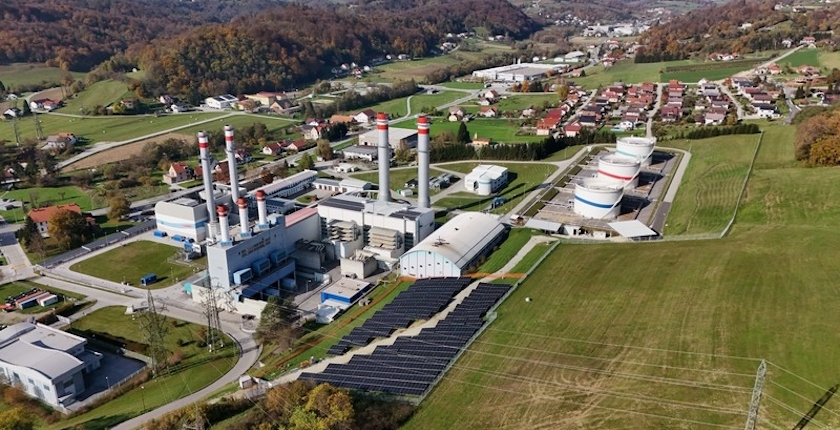
The management of the Brestanica gas power plant in Slovenia has decided to diversify its activities by installing a battery energy storage system (BESS) of 40 MW in operating power and 80 MWh in capacity. The project follows the construction of a ground-mounted solar power plant on the facility’s premises and photovoltaic units on roofs and a parking canopy.

Brestanica Thermal Power Plant – Termoelektrarna Brestanica (TEB) is contributing to the flexibility of Slovenia’s energy system with its investments, Naš stik reported. Due to preventive maintenance and rapid response, electricity output reached 35 GWh in 2025, compared to the planned 25 GWh, the report adds.

The firm issued its development strategy for 2025 to 2030 last year and, based on it, decided to launch a project for a two-hour 40 MW battery energy storage system. It translates to 80 MWh in capacity.

The project will strengthen the flexibility of the energy system, enable more efficient integration of renewable sources and confirm TEB’s focus on modern and sustainable solutions, the article adds. “With the investment in the battery storage facility, we are laying the foundations for a reliable and flexible energy future,” Brestanica Thermal Power Plant said.

Among the other priorities for this year are corporate and cybersecurity.

Brestanica Thermal Power Plant is part of state-owned GEN Group. GEN energija, their parent company, operates the Krško nuclear power plant, also known by the acronym NEK and, in Slovenian, JEK. The gas power plant is also in the municipality of Krško, near Slovenia’s border with Croatia.

TEB put into operation a ground-mounted 466 kW solar power plant on its premises last year. Before that, in 2009 and 2010, the gas plant’s operator built two rooftop PV units and one on a parking canopy. They have 170 kW in combined peak capacity.

by in News

After adding PV unit, Slovenian gas power plant TEB launches battery project

The management of the Brestanica gas power plant in Slovenia has decided to diversify its activities by installing a battery energy storage system (BESS) of 40 MW in operating power and 80 MWh in capacity. The project follows the construction of a ground-mounted solar power plant on the facility’s premises and photovoltaic units on roofs and a parking canopy.

Brestanica Thermal Power Plant – Termoelektrarna Brestanica (TEB) is contributing to the flexibility of Slovenia’s energy system with its investments, Naš stik reported. Due to preventive maintenance and rapid response, electricity output reached 35 GWh in 2025, compared to the planned 25 GWh, the report adds.

The firm issued its development strategy for 2025 to 2030 last year and, based on it, decided to launch a project for a two-hour 40 MW battery energy storage system. It translates to 80 MWh in capacity.

The project will strengthen the flexibility of the energy system, enable more efficient integration of renewable sources and confirm TEB’s focus on modern and sustainable solutions, the article adds. “With the investment in the battery storage facility, we are laying the foundations for a reliable and flexible energy future,” Brestanica Thermal Power Plant said.

Among the other priorities for this year are corporate and cybersecurity.

Brestanica Thermal Power Plant is part of state-owned GEN Group. GEN energija, their parent company, operates the Krško nuclear power plant, also known by the acronym NEK and, in Slovenian, JEK. The gas power plant is also in the municipality of Krško, near Slovenia’s border with Croatia.

TEB put into operation a ground-mounted 466 kW solar power plant on its premises last year. Before that, in 2009 and 2010, the gas plant’s operator built two rooftop PV units and one on a parking canopy. They have 170 kW in combined peak capacity.

by in News

Israel, Greece, Cyprus reaffirm commitment to joint energy projects

Amid chronic delays in the projects for offshore gas and the Great Sea Interconnector and Turkey’s warnings, the leaders of Israel, Greece and Cyprus said after a trilateral summit that they would safeguard their sea lanes and critical infrastructure against emerging threats.

Prime Minister of Israel Benjamin Netanyahu, Prime Minister of Greece Kyriakos Mitsotakis and President of Cyprus Nikos Christodoulides agreed to reinforce trilateral cooperation on security, defense and military matters. In a declaration from their summit in Jerusalem, they reaffirmed the importance of the dialogue in a 3+1 format with the United States.

The joint statement came amid chronic delays in the projects for offshore gas and the Great Sea Interconnector. The latter, an undersea electricity link, is planned to run from the island of Crete in Greece to Cyprus and, from there, to Israel.

Turkey has been openly opposing such projects and even sending its navy to disturb research and exploration. Countering the Great Sea Interconnector, the government in Ankara is apparently planning to establish a power link with the northern Cypriot Turkish-dominated entity.

Netanyahu, Mitsotakis and Christodoulides particularly emphasized the importance of the Great Sea Interconnector project

“Today’s trilateral summit reaffirms our unwavering commitment to strengthen our cooperation, enhancing the security and resilience of our nations for generations to come… We reaffirm our determination to advance joint energy projects, including natural gas development, electricity interconnectors, and renewable energy initiatives, as a solid foundation for cooperation in the region, based on international law, including the law of the sea and the respect of all states to exercise their rights in their respective EEZ / continental shelf,” the document reads.

EEZ is exclusive economic zone, a maritime area in which a country claims exclusive rights. Netanyahu, Mitsotakis and Christodoulides particularly emphasized the importance of the Great Sea Interconnector project.

“We underscore the importance of maritime security and pledge to deepen collaboration in safeguarding sea lanes and critical infrastructure against emerging threats,” they said. The three leaders added they would collaborate regional interconnectivity projects within the so-called India – Middle East – Europe Economic Corridor (IMEC).