by in News

Three cities reviving protests against Rio Tinto’s lithium project in Serbia

Opponents of Rio Tinto’s plan to mine and process a lithium and boron ore called jadarite in western Serbia held a protest in Loznica. Representatives of local activist group Ne damo Jadar announced that such gatherings would be organized in the nearby cities of Valjevo and Šabac as well.

Several thousand people demonstrated in the western Serbian city of Loznica against Rio Tinto’s project Jadar, marking what could be the start of another in a string of protests, which began in 2021. Activists from the area said rallies would be held in neighboring cities, too, with a possibility of expansion throughout the country.

Marijana Petković from the Ne damo Jadar group accused the authorities of breaking the law by approving new infrastructure to be built for the planned lithium and boron mining operation and a processing facility. Rio Tinto filed in February for connecting a future 110 kV transformer station to the grid. The activists are also upset because of indications that the company expects to get approval for an exploitation field. It would imply priority in mining the unique lithium and boron ore, called jadarite.

The Lotel television station in Loznica never came to the Gornje Nedeljice village nor has it given the opportunity to the opponents of the Jadar project to speak, said Nebojša Petković from local group Ne damo Jadar

At the protest, the building of local media outlet Lotel was spray-painted and a poster saying “disturbing content” was glued onto it.

“They don’t have any big influence, but they do on a part of the population in Loznica. And they never came to Nedeljice to film what we have, those houses of ours that are whole, nor to film the demolished houses. They never produced a single report. They never gave the opportunity to us or to experts, not a single opponent of the Jadar project, to come to their television studio,” Nebojša Petković from Ne damo Jadar told N1 TV.

The village of Gornje Nedeljice, where the activist group is based, is the site of the proposed mine and processing plant.

Nebojša Petković pointed out that national TV stations of France, Italy and Sweden and other countries and even one from Japan have reported about the Jadar project.

Next protest scheduled for July 24 in Valjevo

The next protest is scheduled for July 24 in Valjevo, and one will probably be held in Šabac, according to Nebojša Petković. He stressed that further activities in the three cities would be coordinated. Exploratory drilling has been conducted around Valjevo and Šabac, too, prompting numerous protests.

Petković jokingly called the three cities the Serbian Bermuda triangle and expressed hope that other areas in Serbia would join the resistance.

The planned investment has been countered by some of the biggest and most widespread protests ever held in the country, in several waves. The European Commission approved a strategic status in early June to the Jadar project.

Balkan Green Energy News has a chronological overview of the key events since 2001.

Nearby lithium project across the river Drina, in BiH, also faces resistance

Notably, in a repeated vote held recently in the National Assembly of the Republic of Srpska, a civic initiative to declare Majevica a natural park failed to receive sufficient support from lawmakers. The mountain is near Jadar, on the other side of the Drina river, in Bosnia and Herzegovina. The Republic of Srpska is one of the two political entities making up Serbia’s neigboring country, and the other one is called the Federation of BiH.

Activists are also demanding an urgent moratorium on the approval of concessions for exploration and exploitation of ores and other resources.

Citizens in the area have held multiple rallies against the local lithium mining project, supported by local authorities.
by in News

Turkish renewables firm to drill for geothermal lithium

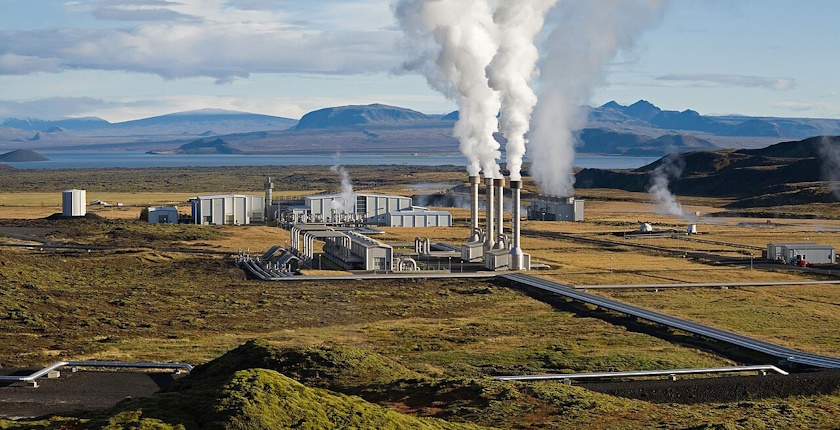
Margün Energy intends to search for lithium in geothermal waters in Seferihisar in western Turkey, where it took over a 12 MW geothermal power plant. It also launched a project to add a photovoltaic unit of 5.4 MW to the existing facility and create a hybrid power plant.

Turkey, the fourth in the world in geothermal power capacity, also has significant potential for lithium extraction. The production of the mineral used in batteries can increase the cost-effectiveness of geothermal energy projects. Margün Energy, listed at the Istanbul Stock Exchange since 2021, said it would conduct exploration works on 3,125 hectares in Izmir province.

The company recently bought a geothermal power plant in the area for USD 16 million from RSC Elektrik. The 12 MW facility is in Kavakdere in Seferihisar district. Margün Energy denied speculation that it would mine lithium.

If it finds a valuable amount of the mineral in geothermal water, it will build an extraction plant, according to the update. Margün Energy issued the statement after local residents expressed concern over potential environmental damage from lithium mining.

“We have not obtained any mining permits. Furthermore, Margün Energy is not a mining company… Mining lithium, which is used in battery production, and extracting lithium from geothermal fluid by separating it are very different things,” the announcement reads.

Margün Energy to look for precious metals as well

The company said it would continue its investments in geothermal energy such as electricity production and greenhouse farming, arguing it would create jobs for locals. It suggested it could extract carbon dioxide for commercial use as well.

Margün Energy added it would explore the presence of precious metals in geothermal fluids.

Planned PV unit to generate 10 GWh per year

In addition, it submitted a proposal to the country’s Energy Market Regulatory Authority (EMRA or EPDK) for the installation of a photovoltaic unit with 5.4 MW in peak capacity. It would be added to the existing facility, creating a hybrid power plant. The solar power system would generate 10 GWh per year and increase revenue by USD 1.05 million, the company estimated.

The PV plant would lift Margün Energy’s total capacity to 135.4 MW. The company mostly operates solar power plants and works as a contractor for engineering, procurement and construction (EPC) and operations and maintenance.

Notably, it owns the largest stake in Enda Energy Holding. The affiliate operates four hydropower plants, five wind power plants, one geothermal power plant and three solar power plants of 200 MW altogether.

Margün Energy rallied 109% since the beginning of the year.

by in News

Germany supports Serbia in clean energy supply, environmental protection

The Republic of Serbia and Germany’s KfW Development Bank signed a loan agreement on July 18 for EUR 135 million for the second phase of the credit program Green Transition Development Policy Operation (DPO II).

The signatures underscore the joint activities by Germany and Serbia aimed at a climate-compliant and socially just energy transition, said Chargés d’Affaires ad interim Carsten Meyer-Wiefhausen from the Embassy of the Federal Republic of Germany in Serbia. “We will continue to be with Serbia on this path and support its reform efforts,” he stressed.

Within the financing for the reforms, the World Bank, French Development Agency (AFD) and the German KfW Development Bank are supporting the Republic of Serbia in conducting its ambitious reform agenda. The goal is to accelerate the transition to energy from clean sources and align with EU standards in environmental protection and climate.

Series of reforms through DPO II

Several successful reforms have been materialized within DPO II, among which:

  1. Promoting investments that are acceptable in environmental and climate terms: Public investments are graded under environmental criteria and with regard to the risk of natural disasters, and with models developed solely for the purpose. The citizens of Serbia benefit from the government’s more sustainable investment decisions.
  2. Enhanced transparency in the public budget: The Government of the Republic of Serbia has committed to publishing information on the execution of the public budget, not only at the end of the fiscal year, but also during the year. It improves the transparency of public expenditures, primarily concerning investments in environmental and climate protection.
  3. Affordable energy prices: The Government of the Republic of Serbia has rolled out temporary targeted subsidies for households with low income, like citizens with low pensions. The share of households receiving such aid has grown from 2.7%, registered in 2021, to last year’s 8%.
  4. Improvement in waste disposal: Aligning with EU standards brings a better approach to sanitary landfills, namely from 42% (2021) to last year’s 50%. The citizens of Serbia benefit from improved waste disposal and a cleaner environment.
  5. Prepared for CBAM: Since this year, large industrial facilities and power plants report their CO2 emissions in line with EU standards. That way Serbia is more prepared for the upcoming full implementation of the European Carbon Border Adjustment Mechanism (CBAM) for carbon prices. For instance, the country would be able to price CO2 emissions and charge them.

Financing reforms within climate partnership

Germany’s contribution to financing reforms is an integral part of Germany’s climate partnership with Serbia and the entire Western Balkans. The purpose of the partnership is to support Serbia’s work on achieving its national climate goals and adapting to climate change. The key goal of the partnerships is for the transformation that is necessary to meet climate goals, in the interest of Serbian citizens, to be socially just, a just transition.

This year, Serbia and Germany are celebrating the 25th anniversary of their development cooperation. In the meantime, KfW financed projects worth EUR 2.5 billion in Serbia.

by in News

Ireland ends coal use – Spain, Italy, Greece set to follow

The Moneypoint power plant stopped burning coal, marking the end of Ireland’s coal era. The last such facilities in several other countries in the European Union are operating only barely or occasionally.

Ireland has ended coal power generation. It is the eleventh coal-free country in the European Union and the 15th in Europe overall. Notably, nine countries in total never hosted coal power plants, according to the Beyond Fossil Fuels database.

Slovakia and Spain officially intend to exit coal this year, followed by Greece (2026), France and Hungary (2027) and Denmark (2028). However, the dates could be pushed forward and there is a possibility that more countries will join the group in the meantime. Several of their remaining facilities are active just sporadically – in islands or to cover winter peaks or only until the district heating systems that they supply switch to cleaner sources.

For instance, the share of coal power in Finland is minuscule.

Coal power is already uncompetitive most of the time. Moreover, when such facilities are idle, their costs rise further because of salaries and the complex logistics.

Moneypoint plant switches to backup with heavy fuel oil

The Moneypoint plant in Ireland ceased burning coal last week earlier than planned. Its operator ESB is turning the site into a renewable energy hub.

At the turn of the millennium, wind supplied just 1% of the country’s electricity. Today, it generates more than a third.

“The government’s priority now must be building a power system fit for a renewable future; one with the storage, flexibility, and grid infrastructure needed to run fully on clean, domestic renewable electricity,” said Alexandru Mustață, campaigner on coal and gas at Beyond Fossil Fuels.

Moneypoint will serve a limited backup role until 2029, burning heavy fuel oil under emergency instruction from transmission system operator EirGrid.

Subsea interconnections to enable coal phaseout completion in Spain, Italy

Spain and Italy are set to follow suit, excluding the Balearic Islands and Sardinia, respectively.

Brindisi Sud (2 GW) and Torrevaldaliga Nord (2 GW) are expected to cease regular operations in mid-2025 and are set to be placed into a strategic reserve, pending full decommissioning. Italy’s remaining coal plants, Sulcis (590 MW) and Fiume Santo (640 MW) in Sardinia, are expected to remain online until a second undersea grid cable to the mainland is completed.

Aboño (916 MW) in Spain is being converted from coal to fossil gas. Soto de Ribera (350 MW) and Los Barrios (589 MW), are barely operating. The Alcúdia plant in the island of Mallorca has two coal units of 130 MW each. Its closure depends on the construction of the archipelago’s second interconnection with the mainland.

Slovakia’s coal phaseout was extended for a short while as a smaller unit kept using what it had left in stock

Slovakian energy company Slovenské elektrárne ended production at its combined heat and power (CHP) plant Vojany (220 MW) in March of last year, which was supposed to mark the country’s coal exit. However, the Teko facility of 121 MW continued to operate with its remaining stockpiles to cover the winter season.

The Cordemais coal plant (1.2 GW) in France is designated for closure in 2027. Émile-Huchet (600 MW), the other remaining facility in the country, should be converted to gas by then.

Turkey, Germany, Poland, Slovenia, the Czech Republic, Serbia, Montenegro, Bosnia and Herzegovina and Kosovo* have the largest shares of coal in power production in the European Union and Southeastern Europe.

* This designation is without prejudice to positions onstatus and is in line with UNSCR 1244/99 and the ICJ Opinion on the Kosovo declaration of independence.
by in News

Western Balkan coal plants cut harmful emissions in 2024 but breaches remain extreme

In 2024, Western Balkan governments’ chronic law enforcement failures allowed sulphur dioxide (SO2) pollution from the region’s antiquated coal power plants to exceed legal limits by six times, according to the Comply or Close report. The overall particulate matter (PM or dust) and nitrogen oxides (NOx) pollution from coal plants continued to exceed legal limits.

Emissions of the three pollutants were actually the lowest since at least 2018, altogether, but the legal upper limits were reduced as well. Serbian coal plants released almost a third less SO2 than in 2023 thanks to desulfurization units. The drop was greater than the total decrease in the region.

Seven years since pollution control rules came into force under the Energy Community Treaty, SO2 emissions from coal plants included in the national emission reduction plans (NERPs) of Bosnia and Herzegovina, Kosovo*, North Macedonia and Serbia were still collectively six times as high as allowed, Bankwatch said in its Comply or Close annual report.

Region-wide, SO2 emissions decreased 12.1% year over year, to 518,248 tons, but it’s only 14.5% down from 2018. The limits were more stringent in 2024 than in previous years, as is the case with PM pollution and NOx, which widened the compliance gap.

BiH becomes biggest SO2 polluter in Western Balkans

For the first time, Bosnia and Herzegovina’s NERP coal plants were the highest SO2 emitters, with 212,840 tons altogether – an increase of 17.1% from the previous year – and 11.3 times as high as allowed. The group excludes the Stanari facility, built in 2016. It has complied with the European Union’s Large Combustion Plants Directive since the start.

Serbia followed, with 205,925 tons, or 4.6 times as high as allowed. The total amount of SO2 emissions fell 30.1% on an annual basis, landing at the lowest level since at least 2018. The decrease in the country was higher than in the whole region. Of note, Serbia has a new coal plant, too – Kostolac B3.

The Kostolac B coal plant has a desulfurization unit, but its SO2 emissions in 2024 were 2.3 times more than allowed

The (insufficient) drop in SO2 emissions from the NERP facilities in the country is due to desulfurization units. Some of the other improvements in the region regarding air pollution came from a decrease in production.

Kostolac B finally started to decrease its emissions in 2024 with its desulfurization system, but it still emitted 2.3 times as much as allowed.

In April 2024, the EUR 215 million desulfurisation system at Termoelektrane Nikola Tesla (TENT) A3-A6 was commissioned. It was 13 years after securing funding. The units still emitted more than twice as much sulphur dioxide as allowed in 2024. Another desulfurization facility, at TENT B, was 91% complete at the end of the year.

Ugljevik accounts for over one fifth of SO2 emissions in region as desulfurization unit is idle

For the fifth time since 2018, the biggest individual SO2 polluter in the Western Balkans was Ugljevik in BiH, with 112,943 tons – more than the previous year. It includes a desulfurization unit since 2020, but it hasn’t been working as the operator considers it an “economic burden.”

In 2024, the only potentially significant development regarding pollution control in the region was the signing of a contract for the construction of a desulfurisation unit at Kakanj 6 and 7, the report notes. It is projected to cost just under EUR 63 million. But the authors of Comply and Close pointed to the slow progress in the reconstruction of the Pljevlja coal power plant in Montenegro, which is also conducted by a consortium of China-based Dongfang.

Five coal units operating illegally

Pljevlja is the only coal plant in Montenegro. The facility isn’t under NERP rules, but under a so-called opt-out mechanism. The deadlines have expired for closing the smallest and oldest plants under the opt-out limited lifetime derogation.

Pljevlja has been running illegally since late 2020, and in 2022 was joined by Tuzla 4 and Kakanj 5 in Bosnia and Herzegovina and Morava in Serbia. The Kolubara A plant, also in Serbia, failed to stop operating at the end of 2023.

The Energy Community Secretariat has opened several infringement-type cases against the three countries, but not a single government has imposed penalties on the coal plants in question. Nor do they have clear, updated and realistic plans for compliance or closure.

Montenegro, Serbia and BiH have no clear plans for the coal plants that operate after ther their opt-out deadlines expired

“In six months, the EU’s Carbon Border Adjustment Mechanism (CBAM) will finally limit exports of Western Balkan countries’ carbon-intensive electricity by imposing fees on imports to the EU. This will make their ageing, inefficient coal plants even less economic. But the Balkan governments and utilities seem oblivious, as if they have all the time in the world. Clear, workable plans are urgently needed,” said Balkan Energy Coordinator at Bankwatch Davor Pehchevski.

Six units exceeded their individual ceilings for sulfur dioxide emissions by more than ten times – Ugljevik, Gacko, Tuzla 6 and Kakanj 7 in Bosnia and Herzegovina; Kostolac A2 in Serbia; and Bitola B1 and B2 in North Macedonia.

In 2024, Pljevlja’s SO2 emissions dropped 11.1% to 39,140 tons, the lowest level since at least 2018. Dust emissions decreased to 793 tons from a record high of 1,130 tons, but this was still higher than any other year since the beginning of the period. NOx emissions – 3,682 tons, the second-lowest result, compare to 3,982 tons registered in 2023.

Gacko coal plant tops chart in particulate matter emissions

Dust pollution from NERP coal plants in the region was 1.9 times higher than allowed last year. It dropped slightly from 2023 but remained similar to 2018 levels.

The highest emitter was Gacko in Bosnia and Herzegovina. It emitted 3,339 tons – 13.7 times above the limit. After protests by local people, improvements were announced in autumn 2023, however the plant’s pollution grew last year. Overall, dust in BiH decreased for the third time in a row, landing at 4,146 tons. The emissions in the segment peaked in 2021 at 6,040 tons.

Serbia is the only country in the region with emissions of PM particles within legal limits

Nitrogen oxides pollution in the region totaled 1.4 times above the limit, after 1.3 times more than allowed in 2023. BiH, Kosovo* and Serbia all continued to breach their NOx limits, with TENT B in Serbia emitting the most – 12,418 tons.

Kosovo* had the highest exceedance – 3.1 times as high as its ceiling. The reconstruction and modernization of one of the two units in the Kosovo B coal power plant started recently.

North Macedonia is the only country complying with the rule on nitrogen oxides. Serbia is the only one below the limit for PM particles.

“EU enlargement is back on the agenda, but the harsh reality is that Western Balkan governments are showing no interest in people’s health or the environment. Instead of a robust response to these chronic breaches, the European Commission recently prioritised the Jadar lithium mine in Serbia as strategic, rewarding the regime’s failure to uphold the rule of law. This has to change, and fast,” said Bankwatch’s Southeast Europe Energy Policy Officer Pippa Gallop.

* This designation is without prejudice to positions onstatus and is in line with UNSCR 1244/99 and the ICJ Opinion on the Kosovo declaration of independence.
by in News

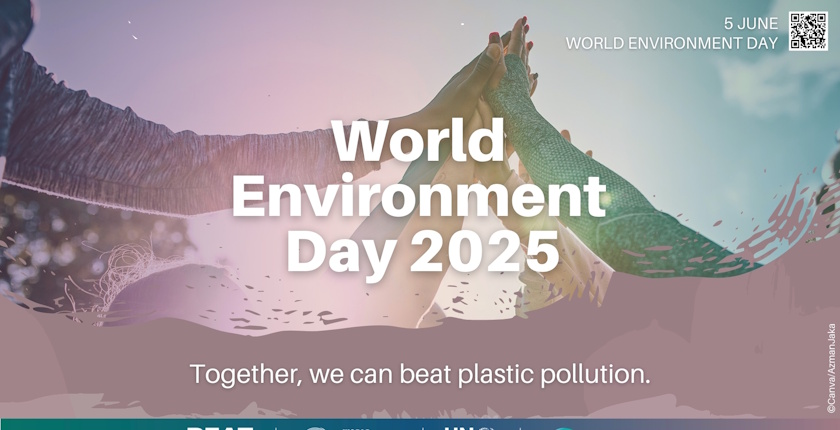
World Environment Day 2025: Beat Plastic Pollution

World Environment Day, celebrated on June 5, was established by the United Nations in 1973. This year’s host country is South Korea and the main messages are focused on fighting plastic pollution.

The theme of this year’s World Environment Day calls for action to address plastic pollution. The hashtag #BeatPlasticPollution is part of the global campaign, led by the United Nations Environment Programme (UNEP), aiming to mobilize communities worldwide to implement solutions. It builds on growing scientific evidence of the impact of plastic pollution and calls for reducing plastic use, reusing it, recycling it, and rethinking our consumption habits.

Plastics are part of everyday life, used in everything from kitchenware to medical devices. It’s estimated that humanity has produced about 9.2 billion tonnes of plastic since the mid-20th century, of which seven billion tonnes have become waste. In addition, plastic production is a major contributor to the climate crisis. It is among the most energy-intensive industrial processes, accounting for approximately 6% of global oil consumption.

Each year, some 11 million tonnes of plastic waste end up in rivers, lakes, seas, and finally, oceans. Plastic breaks down into microplastics—tiny fragments measuring between one nanometer and five millimeters. Such particles have been found in the deepest part of the ocean, the Mariana Trench, as well as on the highest point on Earth – Mount Everest.

An individual consumes over 50,000 plastic particles per year on average

Plastic enters the bodies of humans and animals through breathing and ingestion. It is estimated that each person on the planet consumes more than 50,000 plastic particles annually, and much more when inhalation is taken into account. Some studies suggest that nanoplastics smaller than one micrometer can even pass through the skin.

Microplastics also accumulate in soil through sewage, landfills, and the use of plastic in agriculture. One study found that microplastics disrupt photosynthesis, which may threaten food production.

The annual social and environmental cost of plastic pollution is estimated to be between USD 300 billion and USD 600 billion.

[wpcc-iframe title=”Together, we can #beatplasticpollution” width=”500″ height=”281″ src=”https://www.youtube.com/embed/eqapZ8obCGs?feature=oembed” frameborder=”0″ allow=”accelerometer; autoplay; clipboard-write; encrypted-media; gyroscope; picture-in-picture; web-share” referrerpolicy=”strict-origin-when-cross-origin” allowfullscreen=””]

Circular economy as a solution

The key to reducing plastic waste lies in shifting to the principles of a circular economy. It involves rethinking how plastic products are designed, produced, and used. Current estimates show that only 21% of plastic is economically recyclable, meaning the value of the recycled material is high enough to cover the cost of collection, sorting, and processing. In reality, only around 9% of the plastic produced is recycled.

Plastic products should be designed to be reusable, and recyclable at the end of their life cycle. Additionally, companies should stop adding unnecessary microplastics to their products.

Strengthening waste collection and recycling systems would help prevent plastic products from entering the environment, where they break down into microplastics.

South Korea is among the trailblazers in tackling plastic waste

This year’s host of World Environment Day is the Jeju province in South Korea, which is among the countries leading the efforts to tackle plastic waste. It relies on decades of its experience engaging businesses through extended producer responsibility.

South Korea’s plastics strategy addresses the entire life cycle – from production and design to use, reuse, and recycling. Through collaboration between the government, industry, and citizens, the country is building a circular economy and reducing waste at the source.

In 2022, Jeju, an island and archipelago, set the goal to become free of plastic pollution by 2040. It is the only province in South Korea where residents are required to dispose of waste at specialized recycling centers, encouraging better waste separation and higher recycling rates. Jeju was also the first to introduce a deposit-refund system for single-use cups.

by in News

EU’s strategic status for Rio Tinto’s lithium project risks fueling tensions in Serbia

After the European Commission declared Rio Tinto’s project Jadar a strategic raw materials project, the company and Serbian officials claimed it implies the strictest environmental protection standards and that it would enable the creation of up to 20,000 highly qualified jobs. The opposition and local and environmentalist activists vowed to continue to resist the plan to launch a lithium mine and processing facility, and accused the European Union of colonialism.

The addition of the planned lithium mine near the city of Loznica in Serbia to the EU’s strategic projects for essential raw materials has again stirred up public controversy in the country, after several waves of social unrest. Rio Tinto stressed that it remains committed to dialogue with all stakeholders.

Brnabić: It’s not true that Serbia is a European mining colony

Both the global mining giant and Serbia’s National Assembly Speaker Ana Brnabić claim that project Jadar would enable the creation of up to 20,000 jobs. The environmental standards for similar projects in the EU will need to be completely replicated, she asserted. It also shows that it’s not true that Serbia is a European mining colony, like what certain people said, Brnabić added.

“We won’t be exporting our lithium, but use it for improving the standard of living,” she stated.

Of note, the European Union only endorsed the mining segment of the project as strategic, while Rio Tinto has also published plans for a processing facility for jadarite, a lithium and boron mineral.

Ecological Uprising’s leader Aleksandar Jovanović Ćuta says decision is death sentence

Member of parliament Aleksandar Jovanović Ćuta called on citizens, students and environmentalist organizations to an “all-out mobilization” and added that they wouldn’t allow lithium to be mined. He is the most prominent figure in the Ekološki ustanak (Ecological Uprising) movement. “A death sentence has been signed for everything in the Jadar valley that breathes, lives, moves and flows,” and the population in the affected area in western Serbia was “designated the destiny of becoming environmental refugees,” in his opinion.

“Anyone who includes such projects in their agendas, whether it is the European Union or Russia – such people don’t want anything good for us,” Jovanović said.

The opponents of project Jadar are accusing the EU and Serbian authorities of colonialist relations

The Kreni-promeni (Go-Change) movement, which has representatives in local parliaments in the largest cities, recalled that the Government of Serbia abolished the Jadar project in early 2022, following large environmental protests and blockades. “The latest attempts to revive the project were preceded by the controversial ruling of the Constitutional Court, which Kreni-promeni deems synchronized and contrary to the principles of the rule of law and the constitutional separation of powers,” its statement adds.

The country’s parliament never voted on a people’s initiative, signed by over 38,000 citizens, even though it was legally obligated to.

Assigning the strategic status is a new proof of colonial policy toward Serbia, which is supposed to secure raw materials for the stumbling automotive industry in the EU, according to Novi DSS, a right-wing parliamentary opposition party. There can be no jadarite mining, it stressed in its reaction.

Not enough transparency or local population’s participation in decision making

The EU’s strategic projects lack proper safeguards, transparency, and local involvement – putting human rights, indigenous rights, and environmental protection at serious risk, the EU Raw Materials Coalition (EURMC) said in a statement published by the European Environmental Bureau (EEB), a network of environmentalist groups.

It risks repeating colonial patterns of resource extraction, they warned. Several selected projects from the new list are in countries outside of the EU with weak industrial governance systems, nongovernmental organizations underscored.

Matković: The EU just added fuel to the fire

Endorsing project Jadar despite unresolved legal, environmental, and social issues suggests a troubling disregard for public opposition and due process, EEB said. The move risks reigniting tensions on the ground, it warned.

“The EU just added fuel to fire. It backed an authoritarian regime and a corporation against whom 63% of the population now stand to fight at a time when the entire country is under blockade and violence. The EU will thus lose support in Serbia and the region and probably cause further social unrest. The fact that the Serbian President Aleksandar Vučić announced the board’s decision more than a week before it was public, also raises questions of legitimacy behind the decision,” said Aleksandar Matković, a research associate from the Institute of Economic Sciences in Belgrade, Serbia.

EU fueling euroscepticism

Berlin-based Heinrich Böll Stiftung – Foundation argued that with its new move, the EU ignored the lack of rule of law in Serbia and intense domestic opposition to Rio Tinto’s investment in Serbia.

“Activists and students involved in the pro-democracy movement argue that the EU’s endorsement undermines democratic voices and risks fueling Euroscepticism in the region. With Serbia’s government under pressure from ongoing protests and corruption allegations, the EU’s move is seen as politically damaging and potentially destabilizing,” it said.

The foundation is in close relations with German opposition party Alliance 90/The Greens.

Balkan Green Energy News has published a chronological overview of the key events since 2001, when Rio Tinto arrived in Serbia.

by in News

European Commission declares Jadar project in Serbia one of its strategic projects for critical raw materials

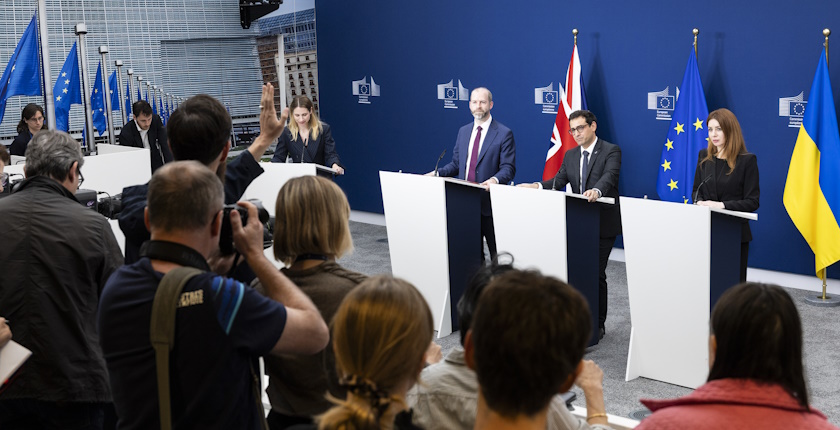
The European Commission published the list of the first 13 strategic projects for raw materials outside of the European Union. One of them is project Jadar in Serbia. It is the only one for lithium and boron. Notably, it got the strategic status only for extraction, even though Rio Tinto said it would also build a processing plant.

After adopting 47 strategic projects in line with the Critical Raw Materials Act (CRMA) in March, today the European Commission added another 13, for locations outside of the EU’s borders. They include Rio Tinto’s controversial project Jadar in Serbia, for lithium and boron. The aim is to diversify the sources of supply and increase economic security, but alongside strengthening value creation in third countries, according to the update.

“Europe needs raw materials to succeed in our industrial and climate ambitions. The EU requires stable, secure and diversified supply chains,” said the European Commission’s Executive Vice-President for Prosperity and Industrial Strategy Stéphane Séjourné.

Photo: European Commission

Strategic projects across globe

The first 13 strategic projects outside of the EU are in Canada, Greenland, Kazakhstan, Norway, Serbia, Ukraine, Zambia, New Caledonia, Brazil, Madagascar, Malawi, South Africa and the United Kingdom. They require EUR 5.5 billion in total capital investment to start operations, the European Commission said.

Séjourné revealed that investors filed 49 applications.

Project Jadar in western Serbia, near the city of Loznica, is the only one for lithium and boron. Interestingly, the European Commission only endorsed the extraction segment, even though Rio Tinto has said it would build a processing facility as well. According to today’s announcement, the investment aims to contribute to the supply of lithium – battery grade, and boron for metallurgy.

Several waves of mass rallies against project Jadar have been held throughout Serbia

The local population in the Jadar valley, environmentalist organizations and a number of experts have been opposing Rio Tinto for several years now, citing the lack of transparency and the risks for health, nature and agriculture, and especially the potential pollution of water sources. They held several waves of large countrywide protests.

Balkan Green Energy News has published a chronological overview of the key events since 2001, when Rio Tinto arrived in Serbia.

The mining giant is conducting project Jadar through its Serbian subsidiary Rio Sava Exploration.

Most projects are for graphite, cobalt, nickel

Most of the other endeavors entail the extraction and processing of graphite, cobalt and nickel. The remaining ones are for mining tungsten, rare earth elements, manganese and copper. A project conducted both in Greenland and Norway is for the extraction and processing of graphite.

Rare earth elements have a key role in producing high-performance magnets used in wind turbines or electric motors for renewable energy technologies and electromobility. Boron is used in the automotive, renewable energy, aerospace and defence sectors.

Lithium ion batteries are currently the dominant technology in the electricity storage segment, excluding pumped storage hydropower plants. The alkali metal has a range of applications: from consumer electronics and electric vehicles to stationary facilities within renewable power plants or for grid balancing.

The selected projects meet the environmental, social and governance standards stipulated in CRMA, together with technical feasibility, the EU executive said. They are eligible for support by the European Commission, member states and financial institutions, including “contacts with relevant offtakers,” it added.

Kokanović: We continue resistance

Local activist from the Ne damo Jadar group Zlatko Kokanović said the academic community and the Serbian Academy of Sciences and Arts (SANU) have clearly rejected Rio Tinto’s lithium project. He also claimed that 63.5% of citizens also oppose it, apparently citing results of a recent survey.

The European Commission’s decision doesn’t guarantee environmental standards, Kokanović told Beta news agency. “It is quite hypocritical from a Europe promoting the rule of law, democracy, freedom of speech, a healthy environment and clean air, water and soil. To the detriment of our health and the health of our children, they want to take our lithium and turn us into a waste dump so that they live healthy,” he stated.

There isn’t any such mining project in a densely populated area and on fertile land anywhere in the world, the activist argued. “It is essentially an experimental facility. They don’t have answers to all questions and their main slogan is: ‘We will try to reduce risks’. We now live without risks, we don’t need to reduce them. If an incident happens, they will say that they are acknowledging the mistake, that they will try not to repeat it, and they will apologize. We don’t have anything from it,” Kokanović underscored.

Separately today, he vowed to continue the resistance with all allowed and forbidden and available means. Kokanović resides in the village of Gornje Nedeljice, the site of the proposed mine.

by in News

Photovoltaics recycling gains traction in Greece with new facilities

Two recycling facilities for solar panels are complete in Greece, while another one is expected to follow soon.

The business case behind the investments in recycling is solid, as more and more older solar farms will reach the end of their operational life, which is 20-25 years. European and national laws stipulate that such equipment must be recycled to reduce pollution and reuse critical minerals as much as possible.

However, owners who prefer to replace their equipment even before the end date is reached are also interested in recycling. The reason is the much higher efficiency of modern photovoltaics.

The factor is gaining in importance as solar panel prices have dropped, while curtailments have been on the rise for two years.

Fotokiklosi is currently the only active licensed company in the sector. It exports photovoltaic waste to Italy for recycling and also specializes in appliances, bulbs and electronics.

However, new opportunities emerge, as other companies have invested in the country’s first recycling facilities. They are situated in Ritsona in Central Greece, in the island of Crete and in Kozani in the Western Macedonia province in northern Greece. The first two are already operational, while the third one is almost complete.

Massive drop in prices

Competition seems to be heating up. According to energypress.gr, Fotokiklosi was charging EUR 300 per ton of photovoltaic waste six years ago, EUR 150 per ton in 2023-2024, and after that only EUR 90 per ton.

It should be noted that the process begins with the payment of a fee from the retailer or importer of panels to the recycling system operator. The recycling company collects the money and pledges to handle the waste after the panels’ operational life has ended.

Fotokiklosi is currently awaiting a new license from the Hellenic Recycling Agency (HRA or EOAN), based a suggested price of EUR 90 per ton.

With the new plants in Greece, old panels will no longer have to be transferred to Italy for recycling. The lower overall cost makes the choice easier for Greek solar farm owners.

by in News

Wind farm project in Cyprus rejected to protect birds, habitats

The Department of Environment of Cyprus scrapped a proposal for a wind power plant partly within or near protected areas due to the expected impact, including on vulnerable bird species such as the Bonelli eagle and long-legged buzzard. The project was launched in 2008 and amended several times.

Stivo Trading and its wind farm project in Cyprus failed to renew a temporary planning approval. The developer initially proposed 33 turbines of 49.5 MW in total, the domestic press reported.

Since 2008, when the project was launched, it was amended several times. The final version, from 2023, is for just four wind turbines instead of the previous ten, and a capacity of 18 MW, down from 22.5 MW.

Irreversible impact on Natura 2000 zones

The sites are within and near the Panagia Stazousa River special protection area and as close as one kilometer from the Stavrovouni forest, designated a special area of conservation.

The locations belong to the local communities of Pyrga, Klavdia and Alethriko. The Department of Environment said it expects that the investment would directly, negatively and irreversibly impact the Natura 2000 zones. It includes vulnerable species, habitats and conservation objectives.

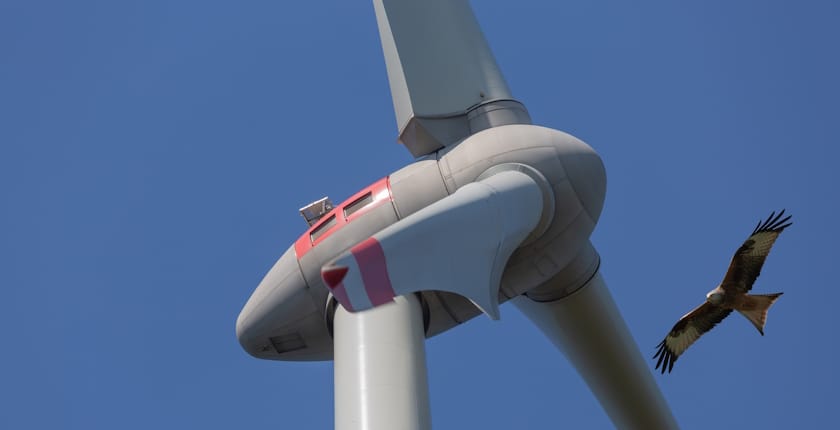
Environmental authority highlights risk to birds from collisions, electrocution

Sensitive species would be displaced and their populations reduced, the update reads. The environmental authority also highlighted the risk to birds from collisions and electrocution.

It pointed to a cumulative impact from supporting infrastructure and the existing projects. In the wider area there are four wind power plants, of which the one in the northeast is in the Panagia Stazousa River special protection area. West of Stivo Trading’s zone, the fifth one, is a nesting area.

The department highlighted the Bonelli eagle, long-legged buzzard, the European roller and thrush, among other birds. At least three Bonelli’s eagles died in collisions with energy infrastructure and another five by electrocution.