by in News

WISE Serbia Annual Women’s Network Event – October 16 in Belgrade

The Center for the Promotion of Sustainable Development and Deutsche Gesellschaft für Internationale Zusammenarbeit (GIZ) GmbH are organizing the annual WISE Serbia Women’s Network event, which will take place on October 16 at Fabrika Events in Belgrade.

The WISE Serbia Women’s Network in sustainable energy, climate action, and environmental protection has been in existence since 2018 and is one of the first networks of its kind worldwide. WISE Serbia brings together over 250 female experts from the energy sector and related fields, promoting their role in the energy transition, as well as in the democratization and decentralization of the energy sector. The network is recognized as a platform that connects knowledge, experience, and vision of women shaping a sustainable energy and climate future in Serbia.

Registration is open until October 10 or until places are filled via this LINK. The program begins at 4:30 PM at Fabrika Events, Poenkareova 32, Belgrade. Participation in the event is free of charge.

This year, 10 outstanding women have been nominated for the Female Leader in Sustainable Energy 2025 award. Voting is open until October 10 on the WISE Serbia website. Take the opportunity to support the woman you believe deserves the title of leader in sustainable energy.

“This is the third edition of the Female Leader in Sustainable Energy award. Year after year, we celebrate exceptional women professionally engaged in the energy sector, climate action, and environmental protection. Each nominee could rightfully earn the title of leader. Their biographies and professional achievements speak for themselves. They are recognized in their teams as women who drive change and serve as inspiration and motivation for all of us to continue building a sustainable present and future,” emphasized Branislava Jovičić, cofounder of the WISE Serbia Women’s Network.

Photo: Branislava Jovičić, co-founder of the WISE Serbia women’s network, and Svetlana Cervovic, last year’s winner of the Female Leader in Sustainable Energy award.

The event will be officially opened by H.E. Anke Konrad, Ambassador of the Federal Republic of Germany, and Jovana Joksimović, Assistant Minister for International Cooperation, European Integration, and Project Management at the Ministry of Mining and Energy.

The program will continue with a panel discussion moderated by Maja Turković, Executive Vice President at CWP Europe and the 2023 Leader in Sustainable Energy awardee.

Following the panel discussion, the finalists for the Leader in Sustainable Energy award will be announced, followed by the winner’s presentation and the ceremonial award presentation.

The media sponsor of the event is Balkan Green Energy News.
by in News

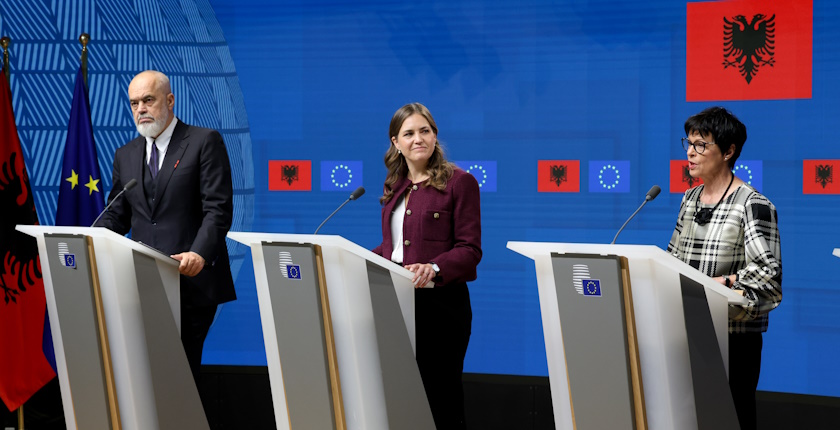
EU opens energy, environment cluster in accession talks with Albania

Albania officially started negotiations with the European Union on the so-called cluster 4, encompassing the green agenda and sustainable connectivity. It is joining Montenegro and Serbia, which haven’t yet closed any of the four chapters in the group: transport policy, energy, trans-European networks, and environment and climate change.

The Council of the EU held an accession conference with Albania and declared the opening of formal talks on cluster 4.

“Enlargement is at the top of our priorities as a geopolitical necessity for the EU. I am happy that we took a next step today with Albania. This is another clear proof of the country’s path towards European integration. I look forward to holding more meetings in the coming months with Albania and with other candidate countries to move forward the EU’s enlargement,” said Minister for European affairs of Denmark Marie Bjerre, who led the European Union’s delegation. Her country is currently holding the six-month presidency of the Council of the EU.

Rama: Our challenge is to reinvent ourselves

Prime Minister Edi Rama and his team represented Albania at the event, in which European Commissioner for Enlargement Marta Kos participated as well.

“Today we opened another cluster, it’s, as a matter of fact, five clusters in 11 months. In my understanding, it’s a record. And we are looking forward to opening the last cluster before this year ends… Environment is today a really pressing issue, and demands are challenging even for member states to keep the standards and to protect the standards. So, our challenge is to reinvent ourselves,” Rama said at a press conference with the two EU officials.

No chapters from cluster 4 closed yet in Western Balkans

The chapters in cluster 4, on the green agenda and sustainable connectivity, are transport policy (14), energy (15), trans-European networks (21) and environment and climate change (27). The trans-European networks comprise Trans-European Networks for Energy (TEN-E), Trans-European Networks for Transport (TEN-T) and Trans-European Networks for Telecommunications (eTEN).

As for the rest of the Western Balkans, Montenegro opened the first three in 2015 and the remaining one in 2018. It started its accession talks in 2012. The EU grouped 33 chapters into six clusters in 2020, while 34 and 35 are separate.

Albania is third in the region to open cluster 4

Serbia, which started negotiations in 2014, launched cluster 4 in late 2021. Notably, neither closed any chapters in the group. Montenegro closed seven in total, compared to just two on Serbia’s list.

Albania opened accession negotiations in 2022, as did North Macedonia. The former didn’t close any chapters yet and the latter didn’t even open a single one. Bosnia and Herzegovina is a candidate but it still didn’t start negotiations. Kosovo* is only a potential candidate.

EU urging tangible progress against environmental crimes

Among other points in its common position regarding the talks being launched, the EU urged Albania to accelerate renewable energy deployment by completing the necessary rules and regulations on permitting. The negotiators from the administration in Brussels said the Electricity Integration Package (EIP) needs to be fully implemented as well.

Albania has to align with EU acquis on environmental crimes and make tangible progress, especially against wildlife crimes, deterioration of habitats, illegal shipment or dumping of waste, pollution crimes and illegal trading in hazardous substances, the document reads.

* This designation is without prejudice to positions onstatus and is in line with UNSCR 1244/99 and the ICJ Opinion on the Kosovo declaration of independence.
by in News

Environmental approvals for 403 MW of wind power on Montenegrin mountain

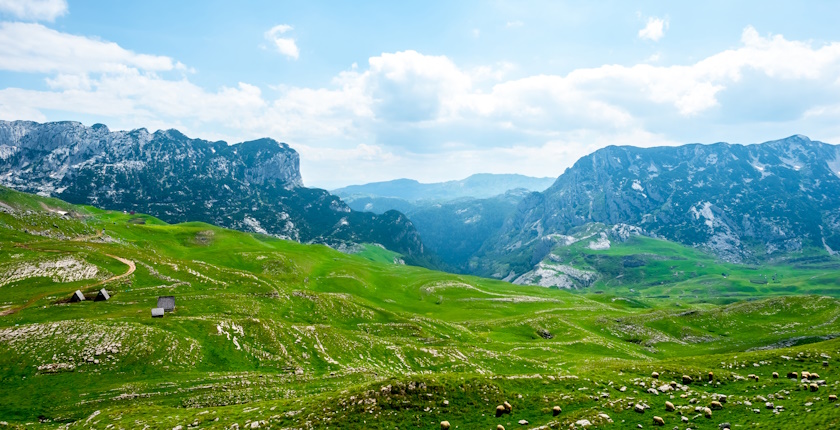
Companies intend to build wind power plants of 403 MW in total on Sinjajevina mountain, a vast pastureland for which activists and locals have been demanding to be protected. The projects have obtained a green light from the Environmental Protection Agency of Montenegro.

After the government leased land for wind parks Sinjajevina Part 1 and Sinjajevina Part 2 to two domestic consortia and issued the urban planning and technical requirements, the developers chalked up another win. They obtained approvals almost simultaneously for their environmental impact reports from the Environmental Protection Agency of Montenegro.

The planned investments on the eponymous mountain in the country’s north are for 112.2 MW and 290.4 MW, respectively. A group led by Energy 2 is developing Sinjajevina Part 1 in Lipovska Bistrica in Kolašin municipality. The other project, with a firm called N1 at the helm, is in the territories of Kolašin and Šavnik and the villages Lipovo, Krnja Jela, Boan, Tušinja and Timar.

Local firms Sistem-MNE and Permonte are in both consortia

The other members of both consortia are Sistem-MNE and Permonte. All the firms are based in the capital Podgorica.

Importantly, the Environmental Protection Agency noted that the two reports are almost identical and even with the same photographs. Some were downloaded from the internet and there are no pictures from the designated locations, the commission stressed.

No cumulative assessment

The agency also highlighted the lack of a cumulative assessment for the two projects. The developers replied that they are two related phases of the same project and that the data is from the same set of field research.

Both groups opted for Siemens Gamesa wind turbines of 6.6 MW. Sinjajevina Part 1 is expected to generate 392 GWh, compared to 944 GWh for Sinjajevina Part 2, the documentation shows.

The agency accepted the proposed measures to prevent, lower or remove harmful impacts on the environment. They include the utilization of existing roads as much as possible, without building new ones, and avoiding the felling of trees and removal of shrubs.

Bats can be protected by lowering speed or halting turbines in critical periods

The operators will need to monitor bird nesting in May and June to detect and counter any deterioration. In their reports, they also suggested stopping or slowing down rotors between 11 pm and 2 am when bats are the most active in June and July, except during rain and strong winds.

Sinjajevina spans more than 1,000 square kilometers, dominated by pastureland. Initiatives have been launched to declare it a nature park and include it in the Natura 2000 network.

Environmentalists and the local population are opposing a plan to set up a military training ground. They insist on the preservation of nature and traditional agriculture in the area.

by in News

Environmentalists warn EU that Bulgaria ignores coal plants breaching pollution rules

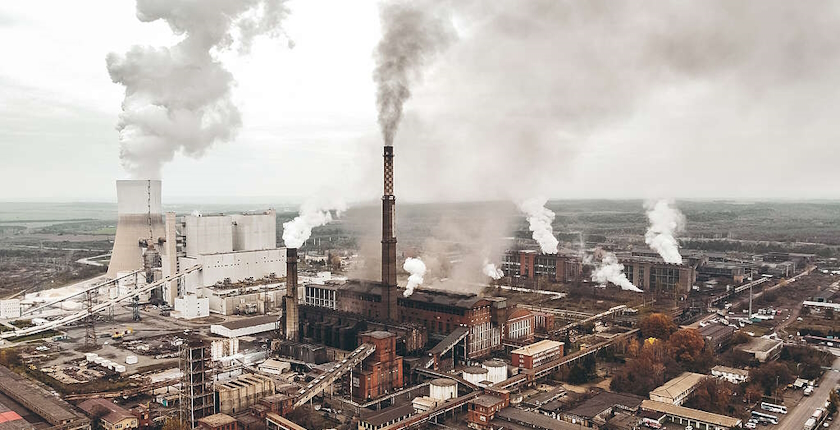
Greenpeace Bulgaria and Za Zemiata (For the Earth) said they would file a complaint today with the European Commission over repeated failures by Bulgarian authorities to enforce the European Union’s environmental law at four coal plants. They expressed the view that institutions are prioritizing financial interests over public health and the environment.

Environmental organizations Greenpeace Bulgaria and Za Zemiata wrote a complaint, to submit to the European Commission, regarding what they described as long-standing violations by four coal power plants linked to Bulgarian businessman Hristo Kovachki. “Bulgarian institutions refuse to apply EU environmental law as intended, favoring coal owners over people and nature. This complaint provides evidence for the European Commission to initiate infringement procedures,” said environmental lawyer Regina Stoilova.

Alleged breaches from 2018 to 2023 concern thermal power plants Bobov Dol in Golemo Selo, Brikel in Galabovo, Republika in Pernik, and Maritsa 3 in Dimitrovgrad. The two groups said they exhausted all national-level mechanisms for holding the polluters accountable and protecting affected citizens and the environment.

The two groups have exhausted all legal mechanisms on the national level

Instead of enforcing environmental standards, Bulgarian institutions – including the Ministry of Environment and Water, the Executive Environmental Agency and regional environmental and water inspectorates – have repeatedly issued permits to offenders, imposed weak or ineffective fines, and ignored serious pollution events that threaten public health, the environmentalists added.

“These coal plants are shielded by an institutional network protecting Kovachki’s opaque coal business. Thousands of Bulgarians living under these chimneys continue to face rampant pollution with no accountability,” said Director of Greenpeace Bulgaria Meglena Antonova.

Penalties could have been millions of euros higher

Bulgarian courts have also failed to act, according to the statement. During the legal proceedings after Brikel and Maritsa 3 were temporarily closed in 2022, the plants continued operating for three years. In the said six-year period, Kovachki-linked plants avoided nearly EUR 2.5 million in penalties, , the organizations calculated and stressed that Brikel payed only EUR 3,300 in fines.

In official documents, the businessman holds no ownership in most of the firms that media outlets regularly link him to. Kovachki has only identified himself as a consultant in some of them. Investigative journalists have obtained documents indicating that he controls a group of companies through a holding called Orion, which he denied.

Violations include illegal wastewater discharge

The violations of the permits consisted of illegal emissions into the air, illegal discharge of wastewater into rivers, and use of prohibited fuels.

“In an attempt to reduce production costs, the coal power plants associated with Kovachki have systematically co-fired waste and biomass with coal without possessing the necessary permits. Even after obtaining the required permits, the operators have significantly exceeded the biomass limits specified in them,” reads a report accompanying the announcement.

Meanwhile, the power plants have gained millions from saved carbon emission allowances, the document adds. An analysis by Za Zemiata estimates the damages for the period 2017-2021 at EUR 75 million for five plants associated with Kovachki, four of which are the subject of the new complaint.

Attack on activist living near Bobov Dol

“Not only has there been no accountability, but activists are also facing aggression for speaking out. Over the weekend, Daniela Toneva, an activist opposing the Bobov Dol TPP coal plant, was attacked after speaking out about the plant’s severe pollution and the links between Hristo Kovachki and the chairman of the Bobov Dol Municipal Council Krasimir Chavraganski,” said Beyond Fossil Fuels, a partner organization.

Namely, someone spilled paint on Toneva’s car and broke her window with a stone they threw into the house. She told Svobodna Evropa (RFE/RL) that local authorities are hostile to her because of her activism. The firm operating the nearby Bobov Dol facility condemned the attack.

by in News

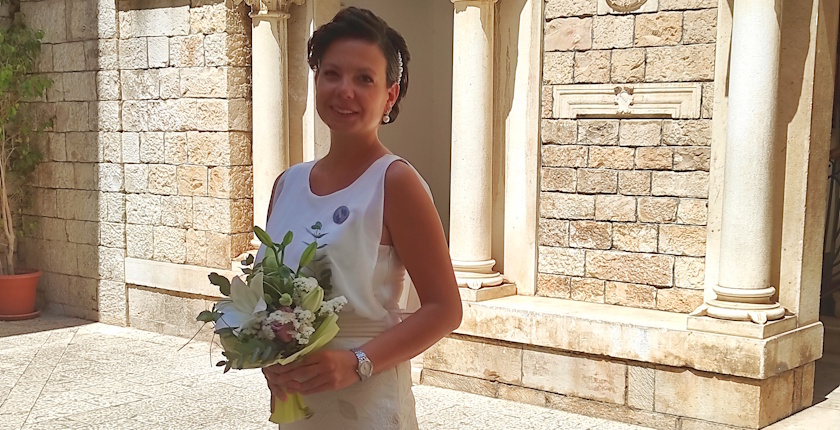
Eco bride Milica Lukić celebrates love with sustainable wedding

Weddings are often associated with celebration, luxury, and significant resource consumption. However, the example of Milica Lukić, a researcher and environmental activist, shows that a celebration of love can be just as festive and emotional while remaining sustainable — without wastefulness or harm to the environment.

For many people, a wedding is one of the most important days of their lives. Choosing a dress, a suit, a venue, food, decorations, and music are just some of the elements that require detailed planning and organization. However, bringing a large number of people together in one place, along with traditional customs, often comes with a darker side: high carbon emissions, food waste, and excessive resource use. Still, there is another way.

Milica Lukić, a researcher at the Faculty of Geography, University of Belgrade, and a member of the WISE Serbia network, has demonstrated that a wedding can be organised with sustainability and care for the planet in mind. In addition to her academic career, Milica is also known as a dedicated environmental activist and an advocate for a healthier environment.

“When we talk about adopting more eco-friendly practices in everyday life, most people start with reusable shopping bags, refillable water bottles, or separating packaging for recycling. The next step is rethinking. Rethinking whether we can do something differently, which might take a little more time and planning but ultimately brings numerous benefits — for us as individuals, for society, and for nature,” Milica emphasizes.

It was precisely this mindset that inspired Milica to make her special day sustainable while also supporting the local community.

“The thought ‘less is more’ guided me throughout the entire process. That’s why I want to inspire others with my story so that, in the future, we have more examples like this,” she says.

The dress can wait for the right moment.

Choosing the right dress, the centerpiece of the celebration and likely the most eye-catching detail, can be a challenging task. It’s common for people to spend several hundred euros on this special garment, but Milica opted for a second-hand dress instead.

“The dress is always the biggest challenge, but luckily, there’s @retro.to.the.rescue, where I’ve been buying second-hand clothes for years. I bought the dress earlier and waited for the right moment,” Milica explains.

Retro to the Rescue is a charity-driven initiative, with all proceeds from sales donated to animal welfare organizations.

Love without a golden wedding ring

A wedding outfit is often paired with carefully selected jewelry made of precious metals and gemstones. However, behind the sparkling pieces lies a darker side. The jewelry industry is linked to numerous ethical and environmental issues: child labor, human rights violations, conflict financing, pollution, and environmental destruction.

That’s why Milica decided to use what she already had. “I’m most proud that I managed to resist the pressure when it came to wedding rings because gold reminds me of exploitation, mining, pollution — everything we are fighting against. Love doesn’t need a golden ring,” says Lukić, sending her support to activists in Eastern Serbia who have long been battling the consequences of mining and the influence of mining companies.

Responsible choices in beauty products protect the environment

The eco-conscious approach to Milica’s wedding was also reflected in her choice of makeup. The cosmetics industry produces around 120 billion units of packaging every year, most of which is non-recyclable plastic. It also relies on animal-derived ingredients and toxic chemicals such as parabens and phthalates.

Sustainable makeup involves products that are not tested on animals, contain no animal-derived ingredients, use natural pigments, and come in recyclable packaging. There are even zero-waste makeup options, such as refillable lipsticks packaged in metal or glass containers.

Milica chose a minimalist, sustainable approach — using vegan mascara and lipstick — and had her hair styled at a small local salon, explaining that she enjoys supporting small businesses, especially those owned by women.

She also bought her bouquet at a local market from an elderly woman selling flowers. “The night before, I tried making my own bouquet from flowers I picked in the neighborhood, but by morning, it had wilted. Even water didn’t help. Still, it won’t go to waste — it’ll continue its life in compost,” Milica says.

Sustainability reflects respect for nature, people, and the community

Instead of hosting a big wedding celebration, Milica chose a small family lunch at a local restaurant, with a vegan and vegetarian menu.

Through her example, Milica has shown that love doesn’t have to be celebrated according to traditional norms. What matters most is making the day authentic and aligned with the values we live by. Her wedding is a reminder that sustainability isn’t about giving things up — it’s about celebrating in a way that reflects respect for nature, people, and the community.

by in News

Deanovec PV project near Zagreb conditionally passes environmental assessment

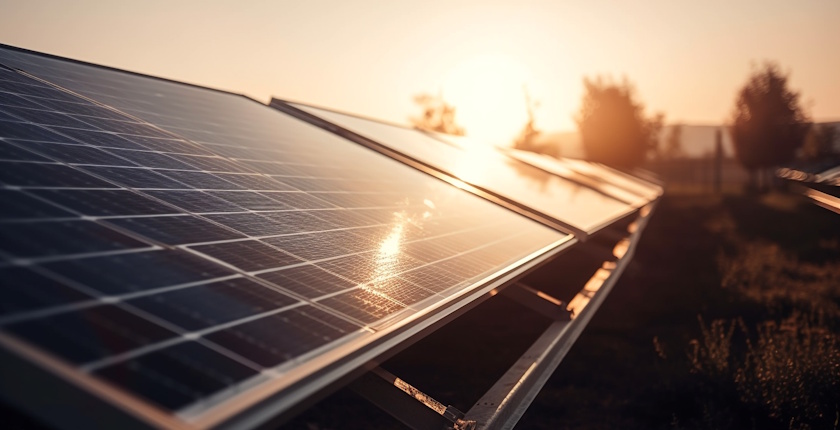
Croatia’s Ministry of Environmental Protection and Green Transition has decided that no environmental impact assessment study is required for the 65.7 MW Deanovec solar power plant project. The investment was initiated by Statkraft, which recently sold its entire business in the country to Resalta.

The project is planned on the territory of Ivanić-Grad in Zagreb county, with a peak capacity of 65.7 MW. The Deanovec site covers 73.2 hectares, of which photovoltaic modules would occupy around 28 hectares.

In May, Statkraft OIE, the project firm, submitted a request to the ministry to determine whether a full environmental impact assessment is necessary. It submitted the environmental study, produced by Zagreb-based Eko Invest, revealing that the plant would have a 59 MW grid connection.

The ministry concluded that a full environmental impact assessment is not necessary, but the investor must prevent potential harm.

The prescribed measures include coordination with the local hunting rights holder. Protection of watercourses involves preventing precipitation runoff from access roads into nearby streams. Wherever possible, cable lines must be placed within existing infrastructure corridors. The solar park needs to be divided into four fenced sections, with fencing designed to allow the passage of small animals.

Deanovec solar power project deemed environmentally acceptable

According to the decision, the investor must use anti-reflective PV modules, ensure sufficient spacing between them, and install eco-friendly lighting. Vegetation within the solar park must be mechanically maintained, without herbicides or chemicals, while the removal of invasive plant species is mandatory.

The ministry stated that the project is not expected to have significant negative impacts on biodiversity, soil, watercourses, agricultural land, landscape, or air quality, and that the defined mitigation measures are sufficient to avoid potential harm. All relevant authorities provided positive opinions, and the public consultation process did not result in major objections.

Furthermore, the ministry ruled that a comprehensive assessment under the procedure for the network of nature protection areas is not required. Its purpose is to determine whether a planned project could have a significant negative impact on protected areas, including those within the Natura 2000 network. It was concluded that the Deanovec solar power project does not affect or directly threaten these areas.

Norwegian energy giant Statkraft recently announced it was selling all its operations in Croatia to Resalta. However, it is still listed as the owner of the Deanovec project.

by in News

Applications for 2025 Female Leader in Sustainable Energy Award in Serbia opened

WISE Serbia, the Network of Women in Sustainable Energy, Climate Action, and Environment, under the auspices of the German development cooperation GIZ, announces the call for nominations for the 2025 Female Leader in Sustainable Energy Award. The call is intended for women who are professionally engaged in the energy and related sectors in the Republic of Serbia and who have demonstrated outstanding results in their careers. Application process is open until September 10.

The call for nominations for the 2025 Female Leader in Sustainable Energy Award aims to recognize women who, through their leadership, outstanding achievements, and vision, have demonstrated significant contribution to the sustainable development of the Serbia’s energy and related sectors, energy transition acceleration, improvement of energy efficiency, energy security, and safety, as well as the greater recognition of women in this field.

The Female Leader in Sustainable Energy award was established in 2023 by the Center for the Promotion of Sustainable Development, the founder of the WISE Serbia women’s network, under the auspices of the German development cooperation GIZ. The WISE Serbia network was established in 2018 and is among the first of its kind globally.

The recipient for the previous year, was Svetlana Cerović, Director of Specialized Financing at UniCredit Bank Serbia

The title of the Female Leader of Sustainable Energy has been awarded to several notable individuals. For 2023, the recipients are Dubravka Đedović Handanović, Minister of Mining and Energy in the Government of the Republic of Serbia; Maja Turković, Executive Vice President at CWP Global; and Ana Džokić, co-founder of the energy cooperative Elektropionir. The recipient for the previous year, 2024, was Svetlana Cerović, Director of Specialized Financing at UniCredit Bank Serbia.

Photo: GIZ’s Project Director Till Barmeier with the laureate, Svetlana Cerović from UniCredit Bank Serbia

“The Female Leader in Sustainable Energy Award is an opportunity to learn more about the achievements, initiatives, and enthusiasm of women who push boundaries through their engagement and contribution to sustainable energy. It is also an exceptional opportunity for networking and exchanging knowledge and experiences within the WISE initiative and beyond,” said Cerović.

Last year’s award winner invited all interested women to take part in this year’s award process and emphasized that she looks forward to future cooperation and joint initiatives.

Information about the Award competition

Women professionally engaged in the energy sector, climate action, or environmental protection in Serbia are eligible to apply, both citizens of Serbia and foreign nationals working in Serbia. The candidates themselves can submit applications, as well as their employers, colleagues, or teams who wish to highlight the outstanding achievements of their associates.

The pannel discussion at 2024 annual event of the WISE Serbia women’s network : pictured from left: Maja Turković, Ankica Babulov, Dušan Macura, Ana Džokić

The call is open to all profiles – decision-makers, employees in business, public enterprises, academia, civic energy, non-governmental sector, international organizations, consulting teams, legal and financial institutions, IT experts, as well as media representatives.

The call is open from August 25 to September 10.

The call for nominations for the Leader of Sustainable Energy is open from August 25 to September 10, 2025. The application needs to be emailed by September 10, 2025, to [email protected]. It needs to include:

  1. Nomination letter presenting the candidate and listing the significant results and achievements, nominating her for the selection.
  2. Professional résumé.
  3. A short nomination statement to present the shortlisted candidate to the wider public (on the WISE Serbia website and social media platforms). The statement should be up to 100 words.
  4. Photo portrait in high resolution.
  5. Contact info – email address, phone number, social network accounts that the candidate is actively using.

Applications should be sent by email to [email protected].

After processing the submitted applications, the candidates’ profiles will be published on the WISE Serbia Network website – wisesrbija.org, and the voting will be open to the public. The candidate with the highest number of votes will be awarded the title of Leader in Sustainable Energy.

The announcement ceremony for the Leader in Sustainable Energy 2025 will take place during the WISE Serbia Women’s Network annual conference in mid-October in Belgrade.

by in News

EU donates EUR 240 million to Serbia for environment, energy efficiency

The European Union approved EUR 240 million in non-repayable assistance to Serbia from pre-accession funds for projects worth an overall EUR 325.2 million. The investments, intended for the period through 2032, are for waste and wastewater management, energy efficiency improvement and the transition to renewable energy sources.

Serbia and the European Union signed a financing agreement for the Multiannual Operational Programme on Environment and Energy, worth EUR 325.2 million. It includes EUR 240 million in non-repayable funds from the Instrument for Pre-accession Assistance, and Serbia is providing the rest.

State institutions will run the mechanism under an indirect management system, in accordance with the way that EU member states conduct programs within the cohesion and regional development funds. The agreement is another type of support in EU accession, the Ministry of European Integration said.

Grants also intended for green energy, waterworks

Serbia’s National IPA Coordinator and State Secretary at the Ministry of European Integration Mira Radenović Bojić said the agreement enables significant financial support for improving environmental protection and further developing the energy sector.

“This way we secured support for sustainable waste management, improvement of wastewater treatment infrastructure and the promotion of energy efficiency measures in public buildings and households,” she stressed. Radenović Bojić added that the assistance package also covers the development of capacities for the transition to renewable energy sources as well as the improvement of public waterworks and sewerage systems.

The program involves measures to protect air quality, aiming to lower harmful emissions and improve public health.

“In addition to renewing or building infrastructure, the program will support the development of strategic documents and plans for the harmonization with European Union standards. We will invest in capacity building of local and national institutions and in the development of technical documentation. Ultimately, the program will enable better cooperation with the relevant national and international stakeholders including civil society organizations and the private sector, in order to secure integrated implementation and improvement of the sustainable development policy,” Mira Radenović Bojić pointed out.

Von Beckerath: Our joint future depends on green, just transition

The agreement is another example of the EU’s strong and long-standing commitment to supporting Serbia on its path toward the EU, said the new Ambassador of the EU in Serbia Andreas von Beckerath.

“Environmental protection and sustainable energy are not only the core of the European Green Deal, but they are key to improving the quality of life of all citizens. With this significant investment, in synergy with the new Growth Plan for the Western Balkans, our goal is to accelerate Serbia’s alignment with EU standards and help the materialization of tangible benefits for citizens and the environment. Our joint future depends on this green and just transition, and we are delighted that we will go down that path together,” the chief of the Delegation of the EU stated.

The plan includes EUR 141.9 million for waste and wastewater and EUR 140 million for air quality and energy efficiency

The program, which covers the programming years 2024-2027, will be implemented from 2025 to 2032. It consists of EUR 141.9 million for waste and wastewater management and waterworks, EUR 140 million for air quality and energy efficiency and EUR 43.3 million for technical support.

There is EUR 44.9 million in the program earmarked for 2024, followed by EUR 108 million for the current year and EUR 76.8 million and EUR 95.5 million for the next two.

by in News

Council of Europe urges North Macedonia to improve environment, protect Romas from disproportionate risks

North Macedonia should bridge the gap between commitments and reality on human rights of Romas and environmental protection, the Council of Europe said. In his new memorandum, the organization’s Commissioner for Human Rights Michael O’Flaherty raised concerns about environmental risks disproportionately affecting Romas, including air and waste pollution, lack of sanitation and exclusion from public services.

As for broader environmental issues, the official noted that poor implementation of laws negatively impacts health and human rights, with cities like Skopje, Bitola, and Tetovo among the most polluted in Europe. O’Flaherty also warned of pressure on journalists and activists.

The Council of Europe Commissioner for Human Rights Michael O’Flaherty published a Memorandum on the Human Rights of Roma and on Issues Related to the Right to a Clean and Healthy Environment in North Macedonia, following his visit in April. He acknowledged the country’s significant efforts and political will to address human rights challenges faced by the Roma community.

Nevertheless, the official observed a gap between the policy framework and its implementation. O’Flaherty expressed concern that Romas continue to face discrimination, poverty and social exclusion. The government responded that relevant authorities would give careful attention to his recommendations.

The commissioner pointed to environmental risks disproportionately affecting Romas, including air and waste pollution, lack of sanitation and exclusion from public services.

Turning to broader environmental issues, he noted North Macedonia’s strong legal and policy framework and international commitments, including constitutional recognition of the right to a healthy environment, criminalizing ecocide and pledging to phase out coal. “Yet, poor implementation negatively impacts health and human rights, with cities like Skopje, Bitola, and Tetovo among the most polluted in Europe. Challenges remain in waste management, pollution control, and public access to environmental information,” the Council of Europe said.

Marginalized Roma communities disproportionately exposed to environmental hazards

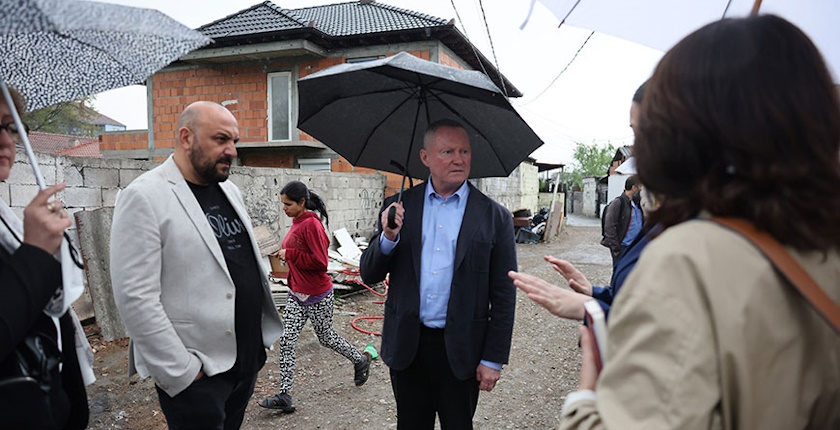
O’Flaherty was informed that marginalized Roma communities experience disproportionate exposure to environmental hazards due to poverty and their living conditions. He visited a settlement in Skopje that has not been legalized in Skopje.

In such settlements, Romas often live in precarious conditions, with dwellings prone to mould and lacking access to services that are essential for living in a healthy environment, including sanitation facilities, sewage systems and clean running water, the memorandum reads.

Air quality meters have been installed in other parts of the city of Skopje, but not in the Roma-dominated Šuto Orizari

“The commissioner is concerned that vulnerable Roma communities are overexposed to air pollution because of poor quality housing and because they burn wood, plastic and waste for heating, due to poverty and a lack of access to safe energy sources. This increases the risk of respiratory illnesses, chronic diseases and reduces life expectancy. In this regard, the commissioner notes that air quality meters, designed to measure spikes in pollution levels and warn the inhabitants, have been installed in other parts of the city of Skopje, but not in the municipality of Šuto Orizari,” mostly inhabited by Roma, the report adds.

The official was informed that areas inhabited by Romas are sometimes excluded from public garbage collection, exposing them to waste pollution and further health risks.

Efforts underway to provide jobs, equipment to informal waste recyclers

O’Flaherty highlighted the recent efforts to equip a local kindergarten in Šuto Orizari with solar panels for heating and to increase the number of parks. In addition, he said he was impressed by a social enterprise that works for the recognition of the contribution of informal waste recyclers to environmental protection and supports them by providing formal employment and electric tricycles for the transport of waste.

The commissioner recommended that the authorities design and implement measures to uphold the community’s right to a healthy environment, as enshrined in the constitution. It includes access to adequate housing, notably as regards the requirements of adequate location and access to public services like clean water, sanitation and the removal of waste and toxic waste.

Persistent challenges in waste management including illegal landfills

The Council of Europe’s Commissioner for Human Rights acknowledged that North Macedonia has ratified multiple international and regional conventions and agreements related to the protection of nature, the atmosphere, tackling climate change, and dealing with chemicals, waste, soil and industrial accidents. It is one of the few member states of the Council of Europe to have introduced the crime of ecocide.

On the other hand, O’Flaherty raised the issue of the lack of implementation of laws and strategic objectives. He is concerned about negative impacts on people’s health of high levels of air pollution, with three cities in the country – Skopje, Bitola and Tetovo – regularly exceeding safe levels of polluting particles and ranking among the 10 most polluted cities in Europe, and sometimes the world, according to the memorandum.

O’Flaherty acknowledged that serious environmental issues cannot be resolved overnight and praised North Macedonia for numerous efforts

The official wrote about the negative impacts on human rights and the environment posed by persistent challenges in waste management and the proliferation of illegal landfills, disproportionately affecting vulnerable communities including Romas.

Serious environmental problems cannot be resolved overnight, he underscored. The commissioner praised the government for efforts that include increasing the number of electric buses, tax reduction on other electric vehicles, work toward an energy system based on gas and the phasing out of coal, as well as ongoing projects to address toxic sites and illegal landfills.

Access to justice largely absent

O’Flaherty learned that access to justice in cases of environmental human rights violations, including the right to a healthy environment, has been largely absent in North Macedonia.

Individuals supported by nongovernmental organizations working on human rights and the environment were unsuccessful in several environmental court cases. The Macedonian Young Lawyers Association (MYLA or MZMP) reported having brought six cases since 2019 concerning air pollution, waste management and water pollution. They were dismissed, with courts arguing they do not have the competence to deal with such matters.

NGOs also report that in some cases the Aarhus Convention and international law are incorrectly interpreted by domestic courts.

The commissioner observed that environmental activists are generally free to carry out their work in North Macedonia. However, he expressed concern about an increase in the use of vexatious lawsuits or so-called strategic lawsuits against public participation (SLAPPs) to silence investigative journalists and activists.

One example is Investigative Reporting Lab Macedonia (IRL), a journalistic NGO. It was ordered to pay thousands of euros of legal costs in the context of a defamation complaint about its documentary entitled Conspiracy Against the Air. Threats of the use of legal defamation and smear campaigns online are also used to silence activists, the Council of Europe added in the memorandum.

[wpcc-iframe title=”Редакција | Заговор против воздухот | Eпизода 1 | ИРЛ” width=”500″ height=”281″ src=”https://www.youtube.com/embed/asdHr27RgqI?feature=oembed” frameborder=”0″ allow=”accelerometer; autoplay; clipboard-write; encrypted-media; gyroscope; picture-in-picture; web-share” referrerpolicy=”strict-origin-when-cross-origin” allowfullscreen=””]

by in News

Court suspends Hidroelectrica’s hydropower project by stopping deforestation

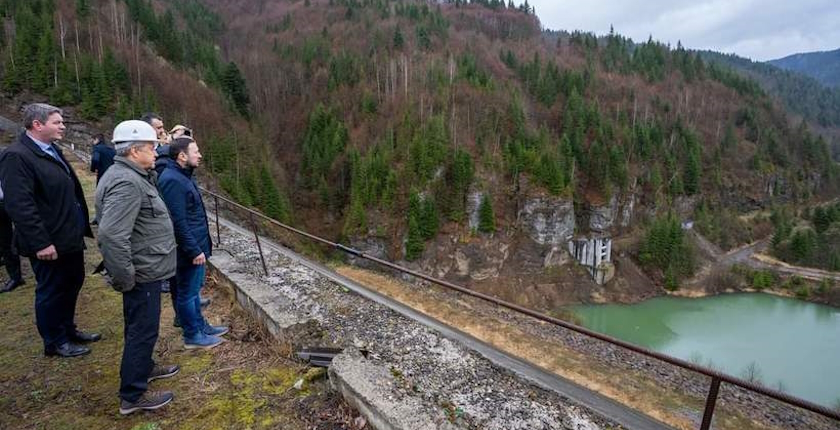
An almost complete hydropower project that was launched in the late 1980s in Romania is stuck again as a court in Cluj suspended a government’s decree that allowed clearing 31 hectares of forest. Hidroelectrica’s endeavor on the Răstolița river is for 35.2 MW.

What was labeled by the Romanian media as the last big investment of Nicolae Ceaușescu’s regime is again on an extended hold. The Cluj Court of Appeal suspended a government decree from earlier this year that allowed the deforestation of 31 hectares for a 35.2 MW hydropower plant on the Răstolița river in Transylvania.

The project, launched in 1989, is 90% finished. In June, the same court suspended the environmental permit.

Răstolița project has special status

The government declared Răstolița a renewable energy project of major public interest in 2022. It exempted it from the obligation to carry out an environmental impact assessment study and the ban on reducing the national forest fund.

Nongovernmental organizations Declic and Bankwatch Romania, which submitted the complaint, pointed out that deforestation continued between the two rulings. The location of the Răstolița hydropower project, run by state-owned Hidroelectrica, is part of the Călimani National Park.

The two groups have argued that the technical documentation is more than three decades old, ignoring climate change, biodiversity and public safety. The affected area is vital for flood prevention and the conservation of species, they pointed out.

Conversely, the government claimed the project would actually reduce the risk of flooding and enable water supply and the management of the Mureș river and its tributaries.

Romania already invested over EUR 200 million

The facility in Mureș county was planned to be commissioned in November. In January, the authorities approved the expropriation of 55 hectares of forest.

Average electricity production in the first phase is estimated at 46.3 GWh per year, and it would reach 117.5 GWh in the final stage. The reservoir would be 5.6 kilometers long. Investments made so far are valued at more than EUR 200 million.

Former Minister of Energy Sebastian Burduja reacted to the new ruling by calling it “economic sabotage.” He is a member of the Chamber of Deputies, the lower house of Romania’s parliament.