by in News

Hidroelectrica to set up joint venture with EDF for 1 GW pumped storage project

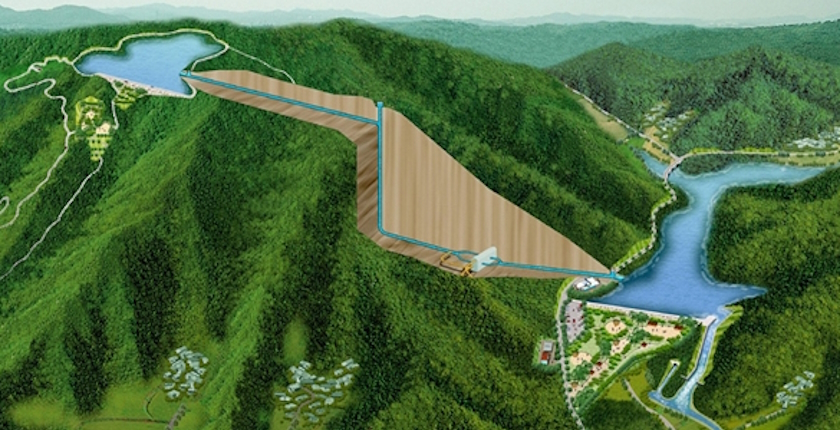
After numerous failed attempts for half a century, Romania intends to revive the Tarnița-Lăpuștești pumped storage hydropower project in tandem with France’s EDF. State-owned Hidroelectrica published a proposal to its shareholder assembly to establish a 50%-50% joint venture for the 1 GW endeavor. The utility also intends to buy the Frasin-Pângărați pumped storage facility when Hidro Blue Energy builds it.

The plans for Tarnița-Lăpuștești date back to mid-1970s. According to a feasibility study from 2008, updated in 2014, the pumped storage hydropower plant on the river Someşul Cald in Romania would consist of four units of 250 MW each. After numerous failed attempts, the Ministry of Energy sat with the representatives of Japanese Itochu and French EDF last year to discuss the project.

In November 2024, Romania signed a memorandum of understanding with Itochu. The latest update came from government-controlled hydropower plant operator Hidroelectrica. It has just scheduled an extraordinary general meeting of shareholders for January 27.

Romania may fast-track Tarnița-Lăpuștești project

In a stock exchange filing, Hidroelectrica said it is proposing a joint undertaking with EDF Power Solutions International, where both state-owned companies would have equal stakes.

The location for Tarniţa-Lăpuşteşti is 30 kilometers from Cluj-Napoca, Transylvania’s biggest city. The river is called Meleg-Szamos in Hungarian.

The old study envisages five to seven years of construction. Within a legislative push to unlock dormant hydropower projects, the project could be given a priority status. In that case, it would be exempted from some permits including the obligation to conduct the study all over again.

Hidroelectrica plans to buy Frasin-Pângărați pumped storage hydropower plant upon its commissioning

In another item for the meeting, Hidroelectrica seeks approval for obtaining advisory services with regard to its intention to acquire, upon commissioning, the Frasin-Pângărați pumped storage hydropower plant.

A company called Hidro Blue Energy is working on the project for 300 MW. The location is in Neamț County in the northeast. Lake Bicaz would be the facility’s lower reservoir.

Hidroelectrica said it would update shareholders about the upcoming refurbishment of pumped storage systems Petrimanu, Jidoaia and Lotru, downstream of the Dorin Pavel hydropower plant. The utility has awarded the contract to Electromontaj, with Elin Motoren, Voith Hydro and Butan Grup as subcontractors.

The project is worth EUR 97.9 million, excluding value-added tax.

Hidroelectrica is also rehabilitating hydroelectric plants Gogoșu, Bradișor and Stejaru.

The company has RON 56.23 billion (EUR 11.04 billion) in market capitalization, according to data from the Bucharest Stock Exchange. The government has an 80.1% share.
by in News

Enery obtains financing for 600 MWh battery project in Bulgaria

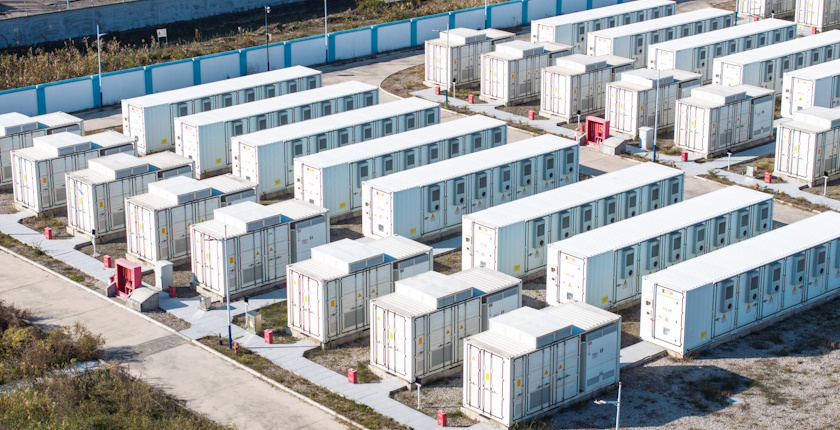
Austria-based Enery intends to commission a four-hour battery storage system of 150 MW in central Bulgaria by the end of the first quarter of next year. The project relies on a virtual power purchase agreement (PPA) with Vitol.

Enery said it has secured a green financing package from DSK Bank AD for its flagship 600 MWh battery energy storage system (BESS) in Nova Zagora, Bulgaria. It is one of the country’s most advanced storage financing deals to date, supporting its transition toward a more flexible and renewables-powered energy system, the update reads.

The facility would have 150 MW in capability, meaning it can operate at full power for four hours. It would be the biggest BESS in Bulgaria at this moment, according to available data, though there are larger projects underway as well.

The site is in a coal region centered on the Stara Zagora lignite basin, in the central part of the country.

Virtual PPAs, optimization services are key for bankability

Enery scheduled the commissioning for March. The BESS would feature its own substation, linked to a new 33/110 kV substation on the transmission grid.

The Austria-based independent power producer revealed that it has signed an innovative virtual power purchase agreement (PPA) with Vitol.

“Sophisticated instruments such as virtual financial deals, combined with Enery Portfolio Optimization’s best-in-class physical optimization services, are now key to unlocking bankable storage projects. This transaction demonstrates how innovative commercial structures, when paired with disciplined execution, can create long-term value for both lenders and project sponsors,” Chief Commercial Officer Severin Vartigov stated.

Vitol plans many more deals with Enery

Vitol expressed confidence that there would be many more deals with Enery. The global energy and commodity trader, headquartered in Geneva, has experience in developing, owning and optimizing BESS in Australia, Europe and the United States, the update adds.

Enery operates a diversified portfolio of 566 MW, generating 766 GWh of clean electricity per year. Its development pipeline is nearing 10
GW across 10 countries in Central and Eastern Europe.

The firm also manages more than 700 MWh of battery capacity across its own and third-party systems. In Bulgaria, it is present through its Enery Element joint venture as well.

by in News

Engie Romania to double its renewables capacity with 253.1 MW wind farm project

Engie Romania, a subsidiary of French energy giant Engie, has bought a 253.1 MW wind farm project in Ialomiţa County. The wind farm, currently under construction, will double the company’s renewable energy portfolio in Romania to over 500 MW.

The Ialomiţa Nord wind farm project was acquired from the Romanian subsidiary of Portugal-based Greenvolt, owned by US investment fund KKR. The value of the transaction was not disclosed. According to earlier reports, the project is valued at EUR 400 million.

With 42 turbines, Ialomiţa Nord will be among the largest wind farms in Romania. It is expected to become fully operational in 2027, local media reported, and sell electricity through a 15-year contract for difference (CfD).

The project will benefit from a 15-year contract for difference

Engie Romania currently owns and operates a total of 248 MW of renewable energy facilities – three wind farms, with a total capacity of 178 MW, and six solar power plants, totaling 70 MW. Ialomiţa Nord will increase its total renewables generation capacity in the country to 501.1 MW.

“With this acquisition, Engie continues to make significant progress in achieving its development plans in Romania, doubling its installed capacity for renewable energy production and consolidating its position in a market with remarkable potential,” said Cristian Buzan, Executive Vice President of Engie Romania.

The company has also secured CfDs for two other projects – one wind farm and one solar park – with a combined capacity of 224 MW. Earlier this year, it completed the acquisition of a 54 MW wind power project. The site is in Mereni in central Romania.

Engie plans to boost its renewables production and energy storage capacity in Romania to 1 GW

Engie’s objective is to increase its renewable energy production and storage capacity in Romania to 1 GW by 2030. The company supplies natural gas and electricity to over 2.3 million customers in Romania.

by in News

Romania’s biggest battery system put into operation

Nova Power & Gas has commissioned the largest battery energy storage system in Romania, doubling the country’s total capacity. The installation in Florești, Cluj County, has an operating power of 200 MW and a capacity of 400 MWh.

Before the new facility was commissioned, Romania’s overall battery energy storage capacity was 398.8 MWh, according to data from the country’s transmission system operator, Transelectrica. Nova Power & Gas earlier said its own capacity was 240 MWh.

The company was already operating 240 MWh in batteries

The new battery energy storage system (BESS) became operational after Mayor of Florești Bogdan Pivariu signed a certificate of occupancy, Profit.ro reported.

In addition, Nova Power & Gas is building a 150 MW gas-fired power plant in Câmpia Turzii, with the first phase set to come online by December 2026.

Nova Power & Gas is developing further battery systems totaling 1,200 MWh

By 2028, the company plans to install one more gas power plant, of 200 MW, and energy storage systems of another 600 MW / 1,200 MWh overall.

“Through these investments, we aim to maintain and strengthen our leadership in energy storage, while making substantial investments in gas-fired electricity generation to support balance and flexibility in the national energy system,” Septimiu Costea, CTO of Nova Power & Gas, stated in July.

Nova Power & Gas, part of Romania-based E-Infra Group, is active across the Southeast Europe region, with subsidiaries in Bulgaria, Serbia, Hungary, and Moldova.

The company is also a major power and natural gas supplier, with over 4.6 TWh of electricity and gas delivered in 2024 and a turnover of almost RON 3 billion (EUR 589.4 million), according to Profit.ro.

by in News

Solar power has become dispatchable anytime at low cost

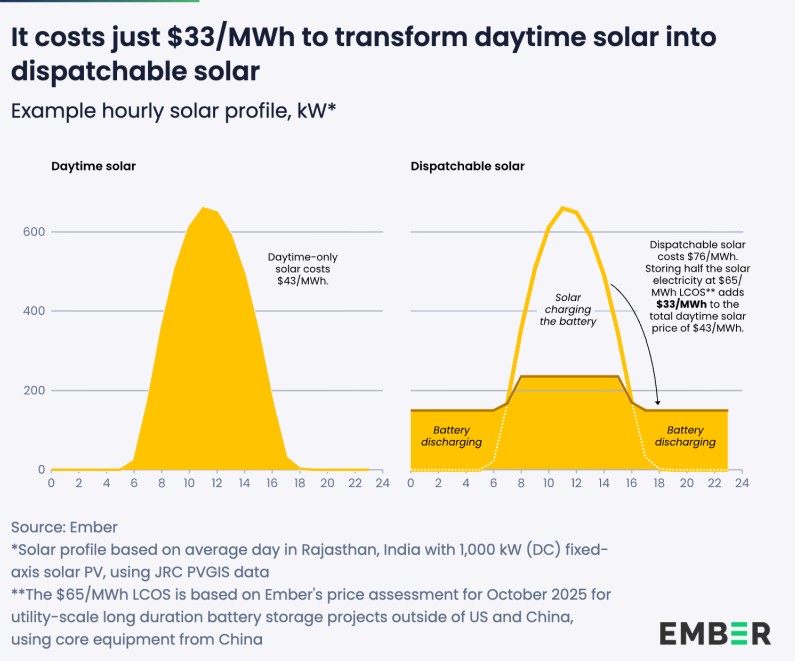
Turning cheap daytime solar electricity into a dispatchable profile results in a total electricity cost of USD 76/MWh, according to the latest analysis by Ember.

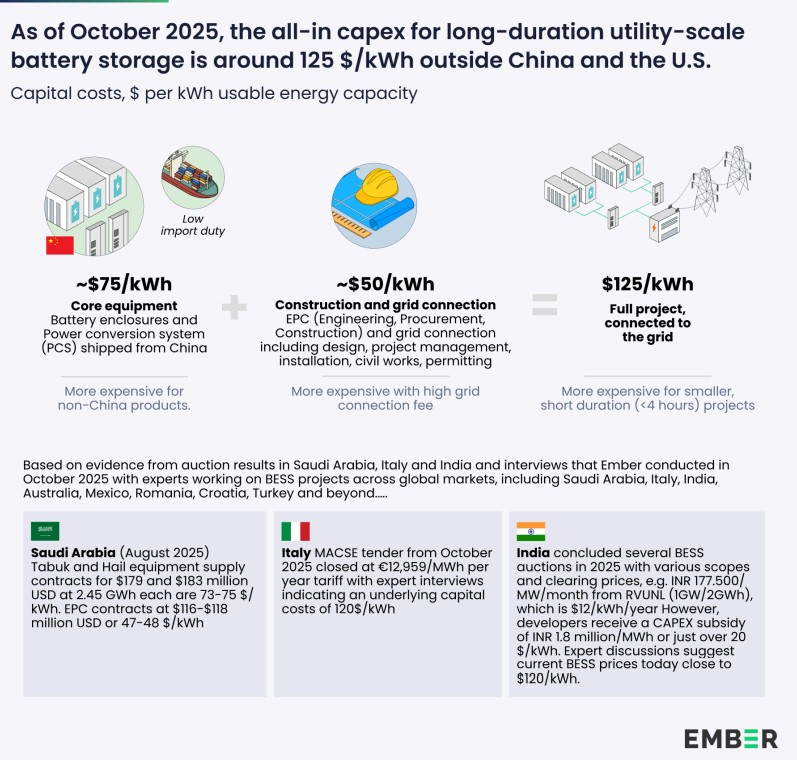
Ember’s assessment of storage costs is based on recent auctions in Italy, Saudi Arabia and India and on expert interviews.

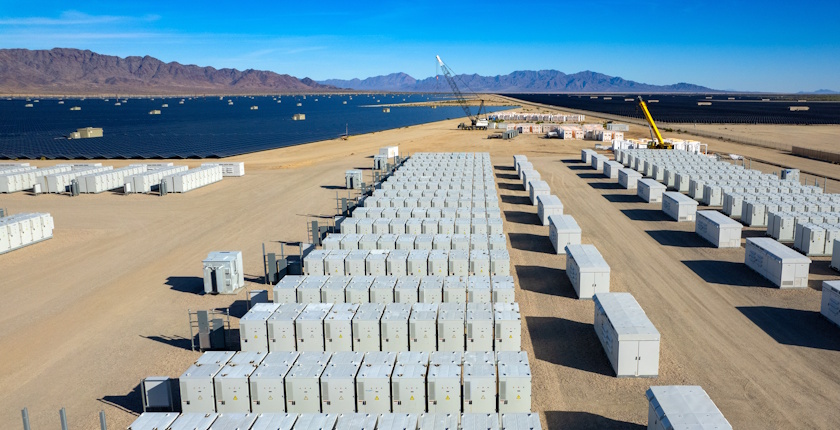
Across global markets outside China and the United States, the total capex to build a long-duration (four hours or more) utility-scale battery energy storage system (BESS) project is around USD 125/kWh, the study reads.

The price combines USD 75/kWh for the core equipment shipped from China and USD 50/kWh to install and connect the battery.

world ember bess energy storage cost capex

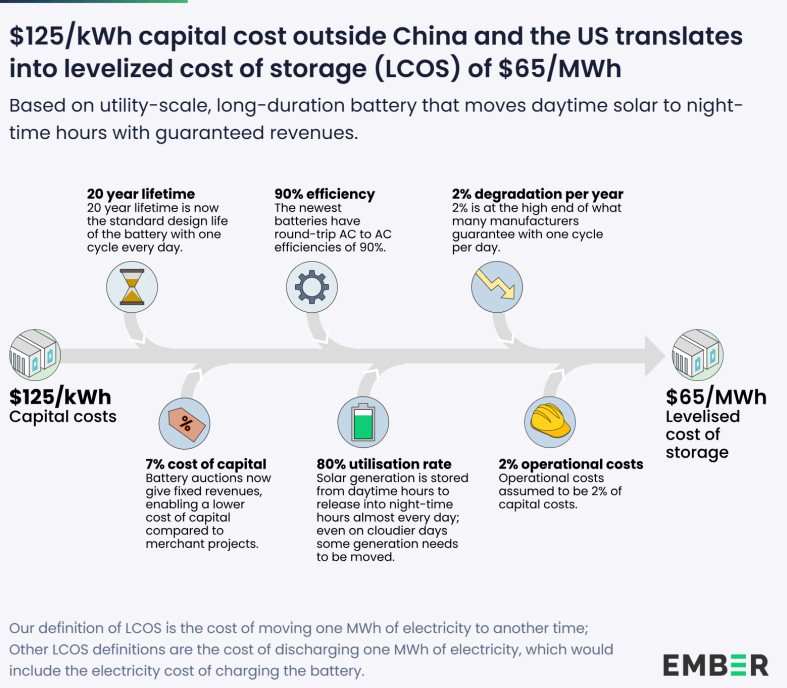
The authors of the analysis calculated a levelized cost of storage (LCOS) to be USD 65/MWh.

The metric reflects the cost of shifting one megawatt-hour to another time, such as moving daytime solar to nighttime. It doesn’t include the cost of electricity to charge the battery.

This low LCOS is not only the result of cheaper batteries, given that longer lifetimes, higher efficiencies and lower financing costs thanks to clearer revenue models like auctions have all helped to push the indicator down sharply, according to the analysis.

With the cost of storing electricity at USD 65/MWh, storing 50% of a day’s solar generation for consumption in nighttime hours adds USD 33/MWh to the total cost of solar. The authors used IRENA’s global average price of solar in 2024 of USD 43/MWh.

Delivering constant power every hour of the year requires solar overbuild and more battery storage

Turning this cheap daytime electricity into a dispatchable profile that is closer to an actual demand profile, would therefore result in a total electricity cost of USD 76/MWh, the analysis reads.

The authors stressed that this isn’t the same as baseload solar. Delivering constant power every hour of the year, including cloudy weeks and seasonal lows, requires solar overbuild and more battery storage, they added.

However, shifting half of daytime solar is a major step that aligns solar generation more closely with a typical demand profile, meaning solar can meet a much larger share of the evening and nighttime demand, the authors explained.

world ember bess energy storage cost lcos

Kostantsa Rangelova, ‍Global Electricity Analyst at Ember, pointed out that after a 40% fall in 2024 in battery equipment costs, another major drop is clearly on track in 2025.

“The economics for batteries are unrecognizable, and the industry is only just getting to grips with this new paradigm. Solar is no longer just cheap daytime electricity, solar is now anytime dispatchable electricity. This is a game-changer for countries with fast-growing demand and strong solar resources,” she is convinced.

Cheap batteries will enable solar to meet the majority of global energy growth

world ember bess energy storage cost lcos dispatchable solar

The analysis cited a projection from the IEA’s latest World Energy Outlook that in the next decade, 80% of global energy demand growth would come from regions with high-quality solar irradiation.

For these countries, combining solar with storage is now the most affordable path to meet soaring demand, improve energy security and reduce dependence on fossil fuel imports, according to the analysis.

It is an opportunity to develop clean industries

Dispatchable solar with a price of USD 76/MWh is cheaper and quicker than building a new gas power plant, especially if the country relies on more expensive LNG imports, they stressed.

The authors also pointed out that the installation of BESS could help the development of clean industries.

Even when core BESS equipment is imported, roughly 40% of total project value (about USD 50/kWh out of USD 125/kWh) remains local through engineering, civil works, grid connection and other EPC activities, the analysis reads.

by in News

Quota surpassed at Romania’s bonus wind power auction

Romania apparently achieved moderately lower prices at its additional wind power auction for contracts for difference (CfDs) than in the regular round. According to a media report, nine bids were approved, for seven proposed facilities, and the winners include OX2, Qair and Zen Energy Group.

All wind farm projects in Romania that obtained the right to state support at the latest renewable electricity auction need to be completed by 2028. The Ministry of Energy and transmission system operator Transelectrica have approved 315.8 MW, compared to the targeted minimum of 290 MW, Economica.net learned.

The bonus round was organized because of a weak turnout in the regular, second wind power auction. Winners are eligible for 15-year CfDs, in a EUR 3 billion scheme covered via the European Union’s Modernisation Fund.

According to the report, the prices were also more favorable for the government than in the previous auction: between EUR 59.95 per MWh and EUR 74.9 per MWh, against EUR 65.17 per MWh to EUR 79.5 per MWh. The ceiling was the same, EUR 80 per MWh.

Cheapest two lots are part of same project

Naxxar Wind Energy Project Zenon won two lots, at 64.8 MW each, for the same project – Tudor Vladimirescu in Brăila county, northeast of Bucharest. The strike prices are EUR 59.95 per MWh and EUR 61.05 per MWh.

Owners of the special purpose vehicle are Renewable Investors and Kaizer Gerhard, an individual, both from Germany.

Aukera Project Company Beta has won a CfD contract for 27.2 MW in the proposed Făurei wind farm. The price is EUR 67.12 per MWh. It is owned by AtlasInvest, headquartered in Belgium.

In Romania, it is working on the projects for the Delesti wind farm in Vaslui county and the Gura Ialomiței storage facility in Ialomița. The battery would have 250 MW in operating power and a capacity of 500 MWh.

The first phase, of 300 MWh, is under construction. The company obtained a EUR 9.9 million grant last year through the National Recovery and Resilience Plan (NRRP or, in Romanian, PNRR) and signed a loan facility of EUR 60 million with Kommunalkredit Austria for the storage system.

OX2 wins CfDs for additional capacity for its future wind farms

Brăila Green Energy qualified for 12.4 MW of its Urleasca wind power project, at EUR 69.86 per MWh. The firm is controlled by OX2, which already won a CfD for a part of the same future facility.

The Sweden-based company also snatched 25.6 MW for its Cerchezu project. It is another winner from the previous round. This time, the South Wind subsidiary secured a contract at EUR 74.49 per MWh.

Clever Power has obtained 21 MW and 14 MW by bidding EUR 69.88 per MWh and EUR 72.92 per MWh, respectively. Both lots are for the same project: Falciu wind farm, envisaged to include storage. The company is controlled by Romanian investor Barbu Cristian, the article adds, citing a businesses registry.

AZ Market Construction won just 8 MW for its Bordei Verde wind project. It is eligible for EUR 74.74 per MWh. The firm is owned by France-based Qair.

Traian Energy, a subsidiary of Zen Energy Group from Luxembourg, is getting the highest price from the bonus round. The wind park would receive EUR 74.9 per MWh for the entire 78 MW.

by in News

Turkey earns EUR 84.8 million upfront from solar power auction

Investors in photovoltaic projects were mostly willing to pay large sums at Turkey’s latest YEKA auction to secure a minimum guaranteed price for five years, followed by 20-year power purchase agreements. The government earned EUR 84.8 million overall from the secondary bidding for 650 MW, split into six areas. One zone is for a floating solar power plant.

According to Turkey’s Minister of Energy and Natural Resources Alparslan Bayraktar, domestic electricity demand is on a trajectory to triple to 1.05 PWh in the next 30 years. It follows an almost threefold jump of the last two decades, while natural gas is rising even faster, he pointed out.

The minister has urged investors to keep up the momentum, noting that the national goal for 2035 for solar and wind power is 120 GW in total.

One of the pillars of the government’s measures to incentivize such endeavors are renewable energy auctions. Notably, the obligatory domestic content rates are high, to boost manufacturing in the sector.

The latest solar power auction under the Renewable Energy Zones (REZ) state support mechanism even brought substantial earnings for Turkey, for the second time. The bidding was initiated at the ceiling price, EUR 55 per MWh, and when the floor level was reached at EUR 32.5 per MWh, the remaining competitors were switched to another auction.

They offered so-called contribution shares, starting at a stunning 10,000 per MW of planned connection capacity. The quota for the REZ SPP 2025 (YEKA GES 2025) round was 650 MW, split into eight zones. Two zones were taken off the table after the call, due to delays in permitting.

Highest fee was EUR 285,000 per MW

In total, Turkey cashed in EUR 84.8 million or EUR 130,400 per MW of connection capacity, excluding value-added tax.

The Eskişehir zone, 260 MW, went for EUR 105,000 per MW to Efor Holding. The company was successful at the previous wind power auction as well, early this year.

Stone Enerji won the Erzurum 1 segment, of 100 MW, by pledging EUR 100,000 per MW. Sertaş Turizm took Erzurum 3, at 85 MW, for EUR 120,000 per MW.

The Ministry of Energy and Natural Resources included a floating solar power plant project for the first time

The 50 MW Bolu zone went to Ecogreen Enerji. The company is paying 44,000 per MW, the least of all winners.

Kahramanmaraş, of 40 MW, was awarded to Güçlü GES Enerji. It pledged EUR 285,000 per MW, which was the highest contribution fee. Aydede Enerji has obtained the Mardin zone for EUR 208,000 per MW while Zincir GES Enerji managed to win the Van solar power project for EUR 187,000 per MW. Both are for 40 MW.

The auction also featured the first zone for a floating solar power plant. Demirköprü Yüzer GES in Manisa province, for 35 MW, was taken by a firm with the same name. It is paying EUR 225,000 per MW, the ministry has revealed.

Solar power auction facilitates USD 400 million in investments

There were 77 applications altogether, from 38 companies.

The winners will be able to sell electricity on the free market for five years. However, they are guaranteed at least their contracted price, which in all cases is the floor price – EUR 32.5 per MWh. The second period, 20 years, is with a power purchase agreement.

Bayraktar estimated that the solar power auction facilitated investments worth a combined USD 400 million. The projected annual output is equivalent to the electricity needs of half a million households.

The minister pointed out that 8 GW of solar and wind power would come online this year in total. The combined capacity on the grid from the two technologies amounts to some 39 GW out of 121 GW overall.

Also of note, the Energy Storage Industries Association (EDEDER) has forecasted that 1.5 GWh of storage capacity would be commissioned next year in Turkey.

by in News

Econergy secures financing for 87 MW Oradea solar plant in Romania

Econergy Renewable Energy has signed a EUR 40.5 million project finance agreement with UniCredit Bank for its 87 MW Oradea solar power plant in the Crișana region in north-west Romania.

The Oradea photovoltaic facility has been fully connected to the grid since August 2025, and is generating revenues, according to Israel-based Econergy.

The proceeds will be used for various purposes including refinancing of the loans spent to construct the power plant, the company explained.

Within a strategy to hybridize its Romanian solar portfolio, Econergy plans to add a 68 MW BESS component at the Oradea site.

It is the second project finance agreement secured with UniCredit

The expected investment in energy storage is about EUR 21 million, with an estimated annual contribution of EUR 8.4 million in revenues and EUR 6.7 million in EBITDA, based on the first five full operating years, the update reads.

The company said it is its second project finance agreement secured with UniCredit.

Econergy Group is operating in key European markets, including Germany, the UK, Italy, Spain, Romania, Poland, and Greece. It develops photovoltaic, wind, and energy storage projects.

The current project pipeline exceeds 14 GW, according to the company’s website.

Econergy is the owner of the largest PV facility in Romania

The company generates revenue by selling electricity, earning development and operation fees, and selling projects at various stages of development.

Of note, Econergy is the owner of the largest PV facility in Romania. In October it agreed to buy out Nofar’s 50% stake in the 155 MW Rătești solar power plant. The firm plans to add a 120 MW BESS.

Econergy has four PV plants in Romania. With the inauguration of Oradea, the company’s operational and ready-to-connect capacity in the country has reached 447 MW. It is building another 788 MW and expects to start the construction of 559 MW more by the end of 2025.

The project was developed with Phoenix Holdings.

by in News

Novi Sad plans to build waste-to-energy cogeneration plant

The City of Novi Sad plans to produce electricity and heat from solid municipal waste and has invited bids for a preliminary feasibility study for a cogeneration plant that would burn processed waste from a planned regional waste management center. Surplus energy could be stored within the future solar thermal system.

Serbia’s capital, Belgrade, already has a combined heat and power plant (CHP) that uses municipal waste. As such facilities exist all over Europe, Novi Sad’s district heating enterprise Novosadska toplana specified in the public call that the study must include an overview of relevant examples and best practices.

The document is to assess the feasibility of obtaining energy from waste processed into refuse-derived fuel (RDF) and solid recovered fuel (SRF). The fuel would be produced in a mechanical-biological treatment (MBT) plant for biodegradable waste within the future regional waste management center for Novi Sad and the municipalities of Bačka Palanka, Bački Petrovac, Beočin, Žabalj, Srbobran, Temerin, and Vrbas, according to the public call.

The bid submission deadline is December 15, and the study must be completed within 180 days of the contract signing. The job is valued at RSD 22 million.

The purpose of the study is to provide a preliminary assessment of the potential for and benefits of using available solid fuel from waste for high-efficiency cogeneration for the city’s needs, as well as the feasibility of building a CHP plant fueled by RDF and SRF, according to the public call.

The cogeneration plant could burn up to 40,000 tons of solid waste fuel per year

The MBT plant at the regional waste management center is expected to produce between 30,000 and 40,000 tons of solid fuel for cogeneration. The planned location of the plant, along with a fuel storage facility, is adjacent to the existing landfill in Novi Sad, according to the documentation.

The preliminary feasibility study should propose the optimal site for the cogeneration plant, taking into account the infrastructural capacity for connection to Novi Sad’s district heating system and the distance from the fuel storage facility.

The authorities suggest that the site should be in the vicinity of the TE-TO cogeneration plant in Novi Sad, Serbia’s second-largest city, due to its excellent connections to the power grid and the city’s district heating system. In addition, this site will host a planned solar thermal system, whose underground storage facility would be able to store excess energy from the waste-to-energy plant during the summer.

Surplus energy could be stored in the future solar thermal system

The project has secured an EUR 85 million loan from the European Bank for Reconstruction and Development (EBRD) and a grant of EUR 24.7 million from the Western Balkans Investment Fund (WBIF). The system will have a storage capacity of around 870,000 cubic meters, solar collectors with a total capacity of 31 MW, heat pumps with a capacity of 17 MW, and two electric boilers with a combined capacity of 60 MW, according to the EBRD website.

The bank said the launch of the public procurement is expected on November 26.

The proposed location for the cogeneration plant should also take into account Novi Sad’s newly-built heating plant, Majevica, which is expected to become operational by the end of the year.

The study should propose the optimal technology for solid fuel incineration, a preliminary design for the cogeneration plant, as well as systems for flue gas cleaning and ash management, according to the documentation.

Since the City of Novi Sad plans to apply for grants from international institutions and funds for the preparation of technical documentation and further project development, the public call states that the study should be carried out in line with the methodology of international financial institutions such as the World Bank, the German development bank KfW, and the EBRD, including a financial analysis and an assessment of CO₂ emission reductions.

by in News

Enery to start building Europe’s largest solar power plant in Romania

Austria-based Enery is preparing to begin construction works early next year on a photovoltaic facility of 750 MW in peak capacity just outside of Bucharest. It would currently be Europe’s largest solar power plant. A few other megaprojects are underway, too, but the Ogrezeni facility is planned with a battery energy storage system that would match its grid connection capacity.

Enery, which operates a range of wind, photovoltaic and small hydropower plants and battery storage across Romania, has only a few final steps before the start of construction of a giant solar farm in Giurgiu county, the company’s Head of Romania Liviu Gavrilă revealed to Profit.ro. The launch of the works is due early next year, he added.

With its 750 MW in peak capacity, the solar park in Ogrezeni, just west of the capital Bucharest, would be Europe’s largest at this moment. The company obtained a grid connection approval for 534 MW in 2023, the article adds.

Europe’s largest PV plant is Witznitz in Germany’s east. It has 650 MW in peak capacity. There is also an 850 MW cluster of 17 units in Spain, called Escatrón-Chiprana-Samper Solar Farm.

If the Asian part of Turkey is included, Kalyon Karapınar is at the top of the list. It has 1.35 GW in peak capacity and a 1 GW grid connection. Already one of the largest in the world outside China, the solar park is due for expansion into a complex of 1.85 GW in peak capacity.

Romania hosting two projects for Europe’s largest solar parks

Of note, Rezolv Energy and Monsson are about to build a solar farm in northwestern Romania of 1.04 GW in peak capacity. The site is in the communes of Pilu and Grăniceri in Arad. The Dama Solar system is envisaged with a battery energy storage system (BESS) of 500 MW.

But Austria-based Enery is planning a BESS with 534 MW in operating power, matching the grid connection. The unit would have a two-hour duration, translating to a storage capacity of 1.07 GWh.

Both Ogrezeni and Dama Solar are planned as hybrid power plants, with giant batteries

Both Dama Solar and Ogrezeni, also known as Baboia Solar Plant, won state support at Romania’s second solar power auction.

Spanish Iberdrola is preparing a bigger project, Fernando Pessoa in Portugal, though it has suffered delays over environmental concerns and disputed permits.

Enery to equip all its power plants in country with battery storage

Some negotiations remain to be completed before the groundbreaking, Gavrilă said. Enery is targeting a commercial operations date in the fourth quarter of 2027. In comparison, Dama Solar is scheduled to come online in the third quarter of 2028.

Enery has completed a PV plant of 54 MW in Titu, Dâmbovița county. The company is preparing it for a test run. It has 167 MW in operation in Romania, of which the Sărmășag solar park accounts for 51.4 MW in peak capacity.

“We want to install batteries for all our production capacities in Romania. But we are also active in the area of ​​stand-alone storage installations,” Gavrilă asserted.

In addition, the company manages electricity supply for others as a balance responsible party, using the SmartPulse platform.