by in News

Electrica issues call for contractors for large PV parks in Romania

Romanian electricity supplier and distributor Electrica, in which the government holds almost 50%, published tenders via its subsidiaries for the second time for ready-to-build solar power projects. The peak capacities are 62.5 MW and 77.6 MW, and the second investment also involves battery storage. The company launched production in November at its Satu Mare 2 solar power plant, also known as Sunwind, of 27 MW.

Companies with the most advantageous offers from the technical and economic point of view will get the contracts for the construction of photovoltaic systems Satu Mare 3 and Bihor 1. Electrica, the investor, issued both calls a year ago, but canceled them in the meantime.

The Romanian Government owns 49.8% of the company, a power supplier and distributor, which also invests in renewables.

Electrica’s subsidiary New Trend Energy is responsible for the Satu Mare 3 project, of 62.5 MW in peak capacity. It is located in the commune of Doba in the Satu Mare county in the northwest. Inverters would enable the delivery of 57.9 MW to the grid.

The investment is estimated at RON 176.6 million (EUR 34.7 million) excluding value-added tax. Electrica expects to generate 70.2 MWh per annum. The deadline for applications is February 17.

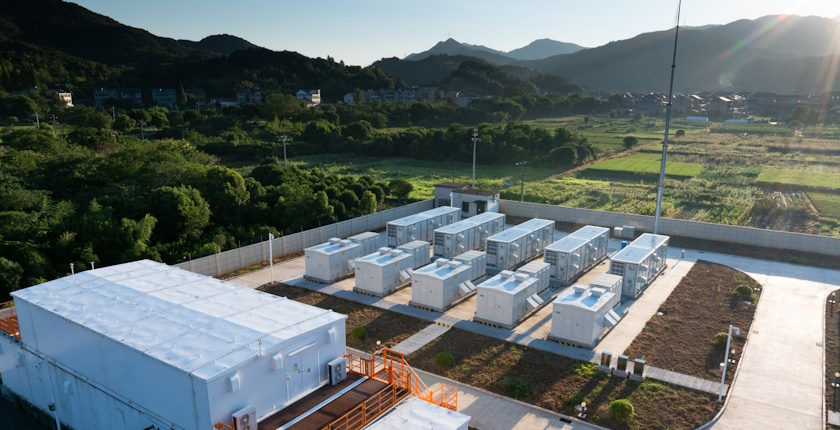
BESS project is for 16.5 MWh in capacity and a 4 MW in operating power

Foton Power Energy, another subsidiary of Electrica, is seeking a contractor for a turnkey deal for Bihor 1. The PV plant would have 77.6 MW in peak capacity, and 77.4 MW in alternating current terms. It would consist of Trina’s bifacial solar panels of 595 W each.

The selected company will need to build a battery energy storage system as well, together with a transformer and fences, according to the document.

Both projects, with sites in northwestern Romania, have won subsidies from the Modernisation Fund

The BESS project is for 16.5 MWh in capacity and a 4 MW in operating power, earlier documents show. It would consist of eight Huawei units with a nominal size of 2.06 MWh each, the special purpose vehicle said. The project envisages the possibility of expansion of the battery storage facility to 75 MW and 150 MWh.

Total expected annual output amounts to 87.5 GWh. Foton Power Energy estimated the project at RON 220 million without VAT, which is EUR 43.2 million. Its site is in the communes of Cefa and Mădăraș in Bihor county, also in Romania’s northwest. Interested firms can submit bids by February 12.

Both Satu Mare 3 and Bihor 1 received state support via the European Union’s Modernisation Fund.

Electrica completed its third PV plant last month

In November, the company completed its Satu Mare 2 solar farm of 27 MW in peak capacity. The project firm is called Sunwind Energy. Electrica also operates PV plants Stănești and Vuturul with peak capacities at 7.5 MW and 12 MW, respectively.

The Crucea Est wind power project, worth eur 253 million, is for up to 138 MW and a BESS of 15 MW and 60 MWh.

In the report on the first nine months of 2025, Electrica wrote that it was developing four energy storage projects of 169.5 MWh altogether. In mid-October it initiated the procedures for 15 BESS facilities of 1 GWh in total.

Before that, in early September, the company signed a memorandum of understanding with Romgaz on the development of 400 MW in solar and storage. Electrica would be the main partner and the other company would hold a minority interest.

The projects are financed from a green bond issuance, which was the largest in Romania.

by in News

China completes grid connection of world’s largest open sea PV plant

CHN Energy declared a 1 GW solar power system that it built off the coast of China’s Shandong province, on the open sea, fully connected to the grid. The facility consists of steel truss platforms on bottom-fixed piles. Just in the past month, the state-owned company commissioned solar power plants of 600 MW and 425 MW, a coal power station of 4 GW and China’s largest gas power unit.

China continues to dominate the energy realm with the world’s largest projects and innovative design. The latest example, on the open sea, is eight kilometers from Kenli district in the city of Dongying in the country’s east. It is a giant solar power plant, but not a floating one.

The Shandong Dongying Kenli (Guohua HG14) facility is on steel truss platforms on bottom-fixed piles. China Energy Investment Corp., also known as CHN Energy, declared the photovoltaic system fully connected to the grid. The initial project of the state-owned enterprise was for 1 GW.

China State Construction Engineering Corp. (CSCEC) so far installed 930 platforms out of 2,934 planned. Each is on four piles, at water depth of one to four meters.

The project on the open sea off Shandong province spans 1,223 hectares. Its developer is CHN Energy’s subsidiary Guohua Energy Investment Co.

Project involves 100 MW in battery storage

According to the latest reports, Guohua HG14 consists of bifacial double-glass modules of 710 W and the annual output, when the facility is completed, is estimated at 1.78 TWh. In earlier updates, 2.37 million monocrystalline solar panels of 550 W each were planned, translating to 1.3 GW in peak capacity. Total investment was valued at CNY 8.1 billion (USD 1.16 billion).

The company reportedly switched to stronger, bifacial solar modules for the project offshore Dongying

The offshore solar power plant on the open sea is connected to the mainland grid with a 66 kV cable. Its first segment came online in November 2024. The project involves a battery energy storage system of 100 MW in capability and 200 MWh in capacity.

Giant solar plant comes online at altitude of 3,000 meters

Just in the past month, CHN Energy commissioned several landmark facilities. A new 600 MW solar power plant is in the Xinjiang province in the west, in Qitai county, near the border with Mongolia.

The company completed another PV system, of 425 MW, via Qinghai Gonghe Co. Part of a 1 GW project with storage, called Guoneng Canadian Solar Hainan, it is located in Gonghe county in Qinghai Province. It is at an altitude of 3,000 meters and above.

Just last week, CHN Energy put into operation the fourth and last 1 GW unit of its coal-fired Guangxi Beihai Power Plant. The complex in Guangxi province in southern China includes a 27.3 MW solar power plant for electric car chargers.

The utility has also launched regular production of the first of two units in its gas power plant Anji in Zhejiang province. It is the largest and most efficient in the country, CHN Energy pointed out. When the second unit comes online in early 2026, the power plant will have 1.69 GW in capacity.

by in News

YEO invests in ARC Clean Technology to pave way for SMRs in Turkey

YEO Technology’s strategic investment in ARC Clean Technology, which develops advanced small modular reactors, brings potential cooperation opportunities for the deployment of the technology in Turkey. The startup with headquarters in Canada and the United States has closed a series B financing round, with a focus on its advanced sodium-cooled fast reactor of 100 MW.

Amid its push into other sectors and markets, Istanbul-based YEO Technology (YEO Teknoloji Enerji ve Endüstri) aspires to be an early mover in advanced small modular reactor (aSMR) technologies, counting on Turkey’s upcoming investments in nuclear power. The company revealed that it invested in ARC Clean Technology, valuing the startup at USD 60.4 million.

Advanced small modular reactors are expected to become a complementary solution for baseload power demand, the update adds. YEO said it expects the transaction to open the way for cooperation with the startup, which has headquarters both in Canada and the United States, in the deployment of the technology in Turkey and the surrounding region.

The investment is strategic, in line with the company’s goals of early positioning in future energy technologies, access to carbon-free and sustainable energy solutions, and long-term value creation, according to the announcement. YEO didn’t reveal other details.

ARC counts on rising demand for AI computing

ARC Clean Technology is developing the ARC-100, a generation 4 sodium-cooled fast reactor. It originates from the Experimental Breeder Reactor-II (EBR-II), which worked for 30 years at Idaho National Laboratory.

Using metallic uranium-zirconium fuel, ARC-100 provides 100 MW of electricity capacity, from 286 MW of heat. It is also intended for supplying steam for industrial processes as well as powering electrolyzers in hydrogen production and data and artificial intelligence (AI) centers.

The ARC-100 would only need to be refueled after 20 years

The startup is targeting a 20-year refueling cycle and a design life of 60 years.

Just last week, ARC Clean Technology said it closed its series B financing round. It involved new and existing investors from the energy, infrastructure and technology sectors. The proceeds are for advancing commercialization programs for the ARC-100.

Additionally, the funding will support work with the US Department of Energy, the collaboration agreement with Korea Hydro and Nuclear Power (KHNP) for global aSMR fleet deployment, and continuation of a Canadian project supported by strategic partner Hatch.

Global search for partners for nuclear reactors in Turkey

Turkey expects to put the first reactor at the Akkuyu nuclear power plant into operation in 2026. While developing the legal framework for small modular reactors (SMRs), the government is also considering a partnership with South Korea and the US for the second conventional nuclear plant, in Sinop.

Discussions about small reactors and a large nuclear power plant in Eastern Thrace are also underway with China and Russia. Turkish officials earlier mentioned contacts with Canada, France and the United Kingdom as well. The country aims to reach 7.2 GW in nuclear power capacity by 2035 and 20 GW by 2050.

The capacity of Reap Battery’s new LFP battery production facility is 5 GWh per year

Of note, YEO’s subsidiary Reap Battery launched production in mid-December of lithium-iron-phosphate (LFP) battery energy storage systems (BESS) in Tuzla, Istanbul.

In addition to the domestic market, the facility with an annual capacity of 5 GWh is targeting the US, Europe, the Middle East, Central Asia and Africa. It manufactures systems for renewable energy projects, the power grid, mobility, commercial and industrial applications, and residential energy storage.

by in News

Turkey to launch carbon market, sign deals for large renewables projects in 2026

Turkey will launch a national carbon trade market, sign intergovernmental agreements on large-scale renewable energy projects and connect 2,000 MW of energy storage to the grid in 2026. These moves will be accompanied by the historic start of electricity production at the country’s first nuclear power plant Akkuyu, and a doubling of domestic natural gas production from the Sakarya field.

These developments represent the core of the 2026 vision for energy and mining in Turkey, revealed by Minister of Energy and Natural Resources Alparslan Bayraktar.

Large-scale projects will be launched next year through intergovernmental agreements, he stressed.

The deals include solar and other renewable energy technologies and storage, Bayraktar explained.

According to the minister, Turkey remains committed to its emission reduction targets. The government plans to launch a carbon trade center and market in 2026 within the Energy Exchange Istanbul (EXIST or EPİAŞ), he said.

Of note, Turkey’s imports of a group of goods and electricity to the European Union will be subject to the CBAM carbon border tax from January 1, 2026.

Energy storage facilities totaling 2,000 MW will be commissioned in 2026

Bayraktar recalled that the country issued permits for the installation of an overall 33,500 MW of energy storage. A very small portion has been implemented so far, but 2,000 MW will be commissioned in 2026, he underlined.

The minister said Turkey is considering the introduction of Storage Resources Zones or Depolama Alanları (DEKA) in 2026.

It would be similar to Renewable Energy Zones mechanism – REZ or YEKA – for support for solar and wind projects.

Bayraktar mentioned that a 5,000 MW solar power arrangement with Saudi Arabia-based ACWA is being discussed. Of note, it is equivalent to between 30% and 40% of Turkey’s current photovoltaic capacity.

Locations for the 2,000 MW solar project are in Sivas and Taşeli

He expressed belief that the agreement for the first phase, which envisages 2,000 MW, would be finalized in the first quarter of 2026. The plan is for 1,000 MW in Sivas and 1,000 MW in Taşeli.

A solar-plus-storage project with another company from a different country in the Persian Gulf is also under consideration, Bayraktar revealed. The investment is estimated at EUR 1.5 billion to EUR 2 billion.

A floating solar power plant of about 3,000 MW will be built as soon as possible, according to Bayraktar

In Bayraktar’s view, there is great potential in floating solar power plants. The country intends to implement a floating solar power plant of about 3,000 MW as soon as possible, the minister underlined.

The partners in this endeavour could be private companies or Turkish government-controlled Electricity Generation Corp. (EÜAŞ), the minister said. He claimed significant plans have been developed for offshore wind projects for 2026.

“We are considering a model similar to YEKA for offshore wind,” he added.

Russia to provide USD 9 billion for Akkuyu

turkey 2026 vision energy Alparslan Bayraktar brifing
Photo: Ministry of Energy and Natural Resources

The Akkuyu project is entering its final stages, according to the minister.

The country secured a USD 9 billion financing package from Russia for the investment, of which USD 4 billion to USD 5 billion is intended to be drawn in 2026.

Simultaneously, the ministry is in talks with South Korea, the US, China, and Russia for nuclear projects in Sinop and Thrace.

The Sakarya gas field is expected to double its current output in 2026, to 7.5 billion cubic meters, Bayraktar underscored.

This surge will prevent approximately USD 3.2 billion in energy imports, he explained.

by in News

Athens International Airport builds biggest photovoltaic-BESS plant

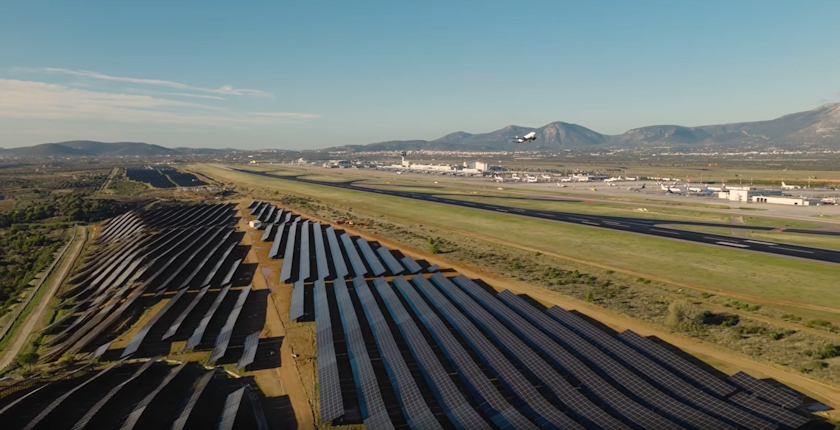
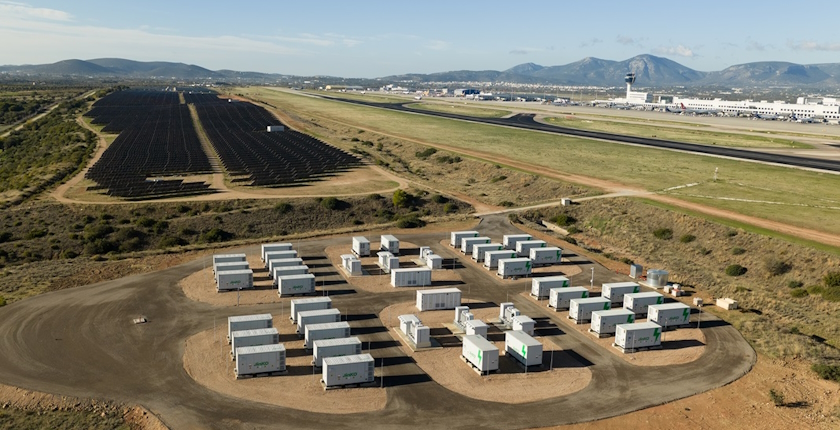
Athens International Airport (AIA) Eleftherios Venizelos completed its comprehensive energy makeover program. It is now operating a photovoltaic facility of 51.5 MW and a battery energy storage system of 82 MWh. It is the largest hybrid power plant of its kind within the premises of any airport in Europe and, reportedly, even the entire world.

At the same time, the Bucharest Henri Coandă International Airport is about to build 12.6 MW in peak PV capacity and a BESS of 17.9 MWh, in the first phase of a larger project.

Following European and global trends, airports in Southeastern Europe are introducing resource, waste and wastewater management systems. Energy is the largest segment of the decarbonization push. With the completion of its Route 2025 program, Athens International Airport Eleftherios Venizelos covered all its electricity needs with photovoltaics, becoming the only such airport in Europe.

In the groundbreaking project, the operator extended the existing solar power plant by 35.5 MW in peak capacity, reaching 51.5 MW, and added a battery energy storage system. The facility has 124 MWh in nominal capacity, of which 82 MWh is usable.

The hybrid system is the largest of its kind inside the fence of any airport in Europe, while the Greek press has even called it the largest in the world. Some of the world’s largest airports are set to follow soon. For instance, IGA Istanbul Airport is investing EUR 212 million in an external solar power plant of 199.3 MW, in Eskişehir.

Athens International Airport builds biggest photovoltaic BESS plant
Photo: Athens International Airport

Hybrid power plant to keep Athens International Airport at net zero through 2046

AIA’s PV-BESS plant will generate an estimated 88 GWh per year, which is equivalent to the consumption of 22,000 households. The storage system is only for self-consumption. Importantly, the hybrid system can cover the entire planned expansion up to 2046, when the concession period ends.

AviAlliance, which controls 50.2% of the public-private partnership, is a wholly-owned subsidiary of Public Sector Pension Investment Board (PSP Investments) from Canada. The government holds 25.6% through Superfund, officially Growthfund – The National Fund of Greece.

AIA launched Route 2025 six years ago, with the aim to cut net greenhouse gas emissions to zero by the end of this year. It compares to the 2050 net zero goal of the European airports sector.

The Route 2025 program was worth EUR 70 million

The investments totaled EUR 70 million. A significant portion was financed through loans from the European Union’s Recovery and Resilience Facility (RRF), the update adds.

Heat pumps have eliminated the need for natural gas in buildings at AIA in normal winter conditions. The electric vehicle fleet consists of 19 buses, 13 follow-me vehicles and 29 vans. A network of chargers also serves passenger cars.

“In the airport company, we operate on the basis of the principle that sustainability, and environmental responsibility in particular, are and will increasingly be prerequisites for what we call the social license to operate and grow,” said outgoing Managing Director of AIA Yiannis Paraschis.

Two airports in Romania receive EU funds for solar-BESS projects

As for other recent developments in the Balkans, operators of two airports in Romania received grants via the European Union’s Modernisation Fund for solar power plants with battery storage.

National Company Bucharest Airports (CNAB) signed a contract for RON 132.04 million (EUR 25.9 million) excluding value-added tax. It is for 12.6 MW in peak PV capacity and a BESS of 17.9 MWh at the Bucharest Henri Coandă International Airport in Otopeni.

The entire investment amounts to RON 176.9 million (EUR 34.7 million) excluding VAT. The Romanian state-owned company said it is the first phase of a project for 31.5 MW and 30 MWh overall, valued at EUR 55.7 million.

Bacău International Airport George Enescu will build a solar power plant of 1.25 MW and a BESS of 2.06 MWh. Bacău County Council will also provide support for the on-site project on 2.2 hectares, worth more than EUR 4.9 million.

by in News

YEO invests in ARC Clean Technology to pave way for SMRs in Turkey

YEO Technology’s strategic investment in ARC Clean Technology, which develops advanced small modular reactors, brings potential cooperation opportunities for the deployment of the technology in Turkey. The startup with headquarters in Canada and the United States has closed a series B financing round, with a focus on its advanced sodium-cooled fast reactor of 100 MW.

Amid its push into other sectors and markets, Istanbul-based YEO Technology (YEO Teknoloji Enerji ve Endüstri) aspires to be an early mover in advanced small modular reactor (aSMR) technologies, counting on Turkey’s upcoming investments in nuclear power. The company revealed that it invested in ARC Clean Technology, valuing the startup at USD 60.4 million.

Advanced small modular reactors are expected to become a complementary solution for baseload power demand, the update adds. YEO said it expects the transaction to open the way for cooperation with the startup, which has headquarters both in Canada and the United States, in the deployment of the technology in Turkey and the surrounding region.

The investment is strategic, in line with the company’s goals of early positioning in future energy technologies, access to carbon-free and sustainable energy solutions, and long-term value creation, according to the announcement. YEO didn’t reveal other details.

ARC counts on rising demand for AI computing

ARC Clean Technology is developing the ARC-100, a generation 4 sodium-cooled fast reactor. It originates from the Experimental Breeder Reactor-II (EBR-II), which worked for 30 years at Idaho National Laboratory.

Using metallic uranium-zirconium fuel, ARC-100 provides 100 MW of electricity capacity, from 286 MW of heat. It is also intended for supplying steam for industrial processes as well as powering electrolyzers in hydrogen production and data and artificial intelligence (AI) centers.

The ARC-100 would only need to be refueled after 20 years

The startup is targeting a 20-year refueling cycle and a design life of 60 years.

Just last week, ARC Clean Technology said it closed its series B financing round. It involved new and existing investors from the energy, infrastructure and technology sectors. The proceeds are for advancing commercialization programs for the ARC-100.

Additionally, the funding will support work with the US Department of Energy, the collaboration agreement with Korea Hydro and Nuclear Power (KHNP) for global aSMR fleet deployment, and continuation of a Canadian project supported by strategic partner Hatch.

Global search for partners for nuclear reactors in Turkey

Turkey expects to put the first reactor at the Akkuyu nuclear power plant into operation in 2026. While developing the legal framework for small modular reactors (SMRs), the government is also considering a partnership with South Korea and the US for the second conventional nuclear plant, in Sinop.

Discussions about small reactors and a large nuclear power plant in Eastern Thrace are also underway with China and Russia. Turkish officials earlier mentioned contacts with Canada, France and the United Kingdom as well. The country aims to reach 7.2 GW in nuclear power capacity by 2035 and 20 GW by 2050.

The capacity of Reap Battery’s new LFP battery production facility is 5 GWh per year

Of note, YEO’s subsidiary Reap Battery launched production in mid-December of lithium-iron-phosphate (LFP) battery energy storage systems (BESS) in Tuzla, Istanbul.

In addition to the domestic market, the facility with an annual capacity of 5 GWh is targeting the US, Europe, the Middle East, Central Asia and Africa. It manufactures systems for renewable energy projects, the power grid, mobility, commercial and industrial applications, and residential energy storage.

by in News

Turkey to launch carbon market, sign deals for large renewables projects in 2026

Turkey will launch a national carbon trade market, sign intergovernmental agreements on large-scale renewable energy projects and connect 2,000 MW of energy storage to the grid in 2026. These moves will be accompanied by the historic start of electricity production at the country’s first nuclear power plant Akkuyu, and a doubling of domestic natural gas production from the Sakarya field.

These developments represent the core of the 2026 vision for energy and mining in Turkey, revealed by Minister of Energy and Natural Resources Alparslan Bayraktar.

Large-scale projects will be launched next year through intergovernmental agreements, he stressed.

The deals include solar and other renewable energy technologies and storage, Bayraktar explained.

According to the minister, Turkey remains committed to its emission reduction targets. The government plans to launch a carbon trade center and market in 2026 within the Energy Exchange Istanbul (EXIST or EPİAŞ), he said.

Of note, Turkey’s imports of a group of goods and electricity to the European Union will be subject to the CBAM carbon border tax from January 1, 2026.

Energy storage facilities totaling 2,000 MW will be commissioned in 2026

Bayraktar recalled that the country issued permits for the installation of an overall 33,500 MW of energy storage. A very small portion has been implemented so far, but 2,000 MW will be commissioned in 2026, he underlined.

The minister said Turkey is considering the introduction of Storage Resources Zones or Depolama Alanları (DEKA) in 2026.

It would be similar to Renewable Energy Zones mechanism – REZ or YEKA – for support for solar and wind projects.

Bayraktar mentioned that a 5,000 MW solar power arrangement with Saudi Arabia-based ACWA is being discussed. Of note, it is equivalent to between 30% and 40% of Turkey’s current photovoltaic capacity.

Locations for the 2,000 MW solar project are in Sivas and Taşeli

He expressed belief that the agreement for the first phase, which envisages 2,000 MW, would be finalized in the first quarter of 2026. The plan is for 1,000 MW in Sivas and 1,000 MW in Taşeli.

A solar-plus-storage project with another company from a different country in the Persian Gulf is also under consideration, Bayraktar revealed. The investment is estimated at EUR 1.5 billion to EUR 2 billion.

A floating solar power plant of about 3,000 MW will be built as soon as possible, according to Bayraktar

In Bayraktar’s view, there is great potential in floating solar power plants. The country intends to implement a floating solar power plant of about 3,000 MW as soon as possible, the minister underlined.

The partners in this endeavour could be private companies or Turkish government-controlled Electricity Generation Corp. (EÜAŞ), the minister said. He claimed significant plans have been developed for offshore wind projects for 2026.

“We are considering a model similar to YEKA for offshore wind,” he added.

Russia to provide USD 9 billion for Akkuyu

turkey 2026 vision energy Alparslan Bayraktar brifing
Photo: Ministry of Energy and Natural Resources

The Akkuyu project is entering its final stages, according to the minister.

The country secured a USD 9 billion financing package from Russia for the investment, of which USD 4 billion to USD 5 billion is intended to be drawn in 2026.

Simultaneously, the ministry is in talks with South Korea, the US, China, and Russia for nuclear projects in Sinop and Thrace.

The Sakarya gas field is expected to double its current output in 2026, to 7.5 billion cubic meters, Bayraktar underscored.

This surge will prevent approximately USD 3.2 billion in energy imports, he explained.

by in News

Athens International Airport builds biggest photovoltaic-BESS plant

Athens International Airport (AIA) Eleftherios Venizelos completed its comprehensive energy makeover program. It is now operating a photovoltaic facility of 51.5 MW and a battery energy storage system of 82 MWh. It is the largest hybrid power plant of its kind within the premises of any airport in Europe and, reportedly, even the entire world.

At the same time, the Bucharest Henri Coandă International Airport is about to build 12.6 MW in peak PV capacity and a BESS of 17.9 MWh, in the first phase of a larger project.

Following European and global trends, airports in Southeastern Europe are introducing resource, waste and wastewater management systems. Energy is the largest segment of the decarbonization push. With the completion of its Route 2025 program, Athens International Airport Eleftherios Venizelos covered all its electricity needs with photovoltaics, becoming the only such airport in Europe.

In the groundbreaking project, the operator extended the existing solar power plant by 35.5 MW in peak capacity, reaching 51.5 MW, and added a battery energy storage system. The facility has 124 MWh in nominal capacity, of which 82 MWh is usable.

The hybrid system is the largest of its kind inside the fence of any airport in Europe, while the Greek press has even called it the largest in the world. Some of the world’s largest airports are set to follow soon. For instance, IGA Istanbul Airport is investing EUR 212 million in an external solar power plant of 199.3 MW, in Eskişehir.

Athens International Airport builds biggest photovoltaic BESS plant
Photo: Athens International Airport

Hybrid power plant to keep Athens International Airport at net zero through 2046

AIA’s PV-BESS plant will generate an estimated 88 GWh per year, which is equivalent to the consumption of 22,000 households. The storage system is only for self-consumption. Importantly, the hybrid system can cover the entire planned expansion up to 2046, when the concession period ends.

AviAlliance, which controls 50.2% of the public-private partnership, is a wholly-owned subsidiary of Public Sector Pension Investment Board (PSP Investments) from Canada. The government holds 25.6% through Superfund, officially Growthfund – The National Fund of Greece.

AIA launched Route 2025 six years ago, with the aim to cut net greenhouse gas emissions to zero by the end of this year. It compares to the 2050 net zero goal of the European airports sector.

The Route 2025 program was worth EUR 70 million

The investments totaled EUR 70 million. A significant portion was financed through loans from the European Union’s Recovery and Resilience Facility (RRF), the update adds.

Heat pumps have eliminated the need for natural gas in buildings at AIA in normal winter conditions. The electric vehicle fleet consists of 19 buses, 13 follow-me vehicles and 29 vans. A network of chargers also serves passenger cars.

“In the airport company, we operate on the basis of the principle that sustainability, and environmental responsibility in particular, are and will increasingly be prerequisites for what we call the social license to operate and grow,” said outgoing Managing Director of AIA Yiannis Paraschis.

Two airports in Romania receive EU funds for solar-BESS projects

As for other recent developments in the Balkans, operators of two airports in Romania received grants via the European Union’s Modernisation Fund for solar power plants with battery storage.

National Company Bucharest Airports (CNAB) signed a contract for RON 132.04 million (EUR 25.9 million) excluding value-added tax. It is for 12.6 MW in peak PV capacity and a BESS of 17.9 MWh at the Bucharest Henri Coandă International Airport in Otopeni.

The entire investment amounts to RON 176.9 million (EUR 34.7 million) excluding VAT. The Romanian state-owned company said it is the first phase of a project for 31.5 MW and 30 MWh overall, valued at EUR 55.7 million.

Bacău International Airport George Enescu will build a solar power plant of 1.25 MW and a BESS of 2.06 MWh. Bacău County Council will also provide support for the on-site project on 2.2 hectares, worth more than EUR 4.9 million.

by in News

Polat Enerji completes largest wind-BESS hybrid power plant in Turkey

Polat Holding’s joint venture with İş Enerji has received the license for the 12.8 MW battery energy storage system (BESS) integrated with its Ege wind power plant of 15.2 MW in western Turkey. It is the largest hybrid power plant of its kind in the country.

In cooperation with SolarToday Türkiye and iNOVAT, Polat Enerji reached another milestone in combining renewable energy plants with battery storage. The Ministry of Energy and Natural Resources of Turkey has issued an approval for its BESS with 12.8 MW in operating power and a capacity of 15.2 MWh.

The facility is integrated with the company’s Ege wind power plant. They are located in the Kemalpaşa district of Izmir province in the country’s west. It is Turkey’s first DRES, an acronym for a licensed wind-storage system, of 10 MWh or more. The companies pointed out it is also the first hybrid power project of its kind to receive incentives.

Polat Enerji’s BESS consists of four 3.8 MWh units manufactured by Contemporary Amperex Technology Co. Ltd (CATL) from China. In the second phase, the capacity will reach 28.2 MWh, according to the update.

In the second phase, BESS capacity will reach 28.2 MWh

Electricity from wind turbines will be stored and delivered to the grid to cover production imbalances and stabilize the system. The companies signed the agreement about the battery project in January.

Ege was built in 2015. The wind park consists of eight turbines, of which the last two were connected almost two years ago. It has 15.2 MW in nameplate capacity and a 13 MW connection.

Earlier this month, Polat Enerji won a 160 MW project at a wind power auction under Turkey’s YEKA support mechanism. The company is a joint venture of Polat Holding and İş Enerji Yatirimlari, each holding 50%. The latter is a subsidiary of Türkiye İş Bankası, the largest private sector bank in Turkey.

The ministry said today that the country’s wind power capacity reached 14.5 GW in November, out of 121.8 GW in total. There was 24.7 GW of solar power in operation.

by in News

Greek company Aktor sets up BESS subsidiary after entering LNG trade

Power storage services are the core activity of Aktor’s new subsidiary Aktor BESS, but it could also build and operate renewable electricity and natural gas–fired plants and enter trade and distribution. The company earlier formed a business with DEPA Trade for liquefied natural gas (LNG).

Greek infrastructure and renewable energy developer and operator Aktor Group has formally positioned itself in the rapidly growing sector of electricity storage. Last week it established a 100% subsidiary called Aktor BESS, with an initial EUR 80,000 in capital.

The firm operates under Aktor Renewables and the main activity is providing electricity storage services. Aktor is apparently aiming to tap into the rapidly growing demand for batteries in Greece amid crippling wind and solar power curtailments.

In addition, battery energy storage systems or BESS are becoming a necessity because of the strengthening cannibalization effect. Operators of photovoltaics and wind parks require more predictable production profiles to for cost-effective pricing. They need to bridge the gaps between peak production and peak demand as well, as subsidies are gradually expiring.

Aktor BESS can benefit from the rapidly growing demand for battery storage in Greece

The statute of Aktor BESS points to a range of possible secondary activities. They include the construction and operation of renewable electricity and natural gas–fired plants as well as power trade and distribution and the development of technical studies.

The BESS facilities can be of the standalone type or colocated with the parent company’s production assets. Aktor Group’s Chairman and Chief Executive Officer Alexandros Exarchou is also the head of the new firm’s three-member board.

The company earlier established a joint venture for LNG and gas trade with DEPA Commercial, which controls 40%. It is also known as DEPA Emporias (in Greek), DEPA Commerce and DEPA Trading.