by in News

Greece’s IPTO connects to balancing energy platform PICASSO

The Independent Power Transmission Operator of Greece announced that it connected to PICASSO. It is the second transmission system operator or TSO in Southeastern Europe that joined the European platform, so now it can exchange balancing energy with its counterpart in Bulgaria. In addition, IPTO (or Admie, in Greek) has proposed the introduction of negative prices in the domestic balancing market.

The Platform for the International Coordination of Automated Frequency Restoration and Stable System Operation (PICASSO) optimizes balancing energy between control blocks in the Continental Europe synchronous area. Bulgaria’s Electricity System Operator (ESO) joined last month, but it was isolated as it didn’t share electrical borders with any other operational member. Neighboring Greece’s transmission system operator IPTO (or, in Greek, Admie), has just connected to the platform, so the two countries can now exchange balancing energy.

Denmark, Germany, Belgium, the Netherlands, Czech Republic, Slovakia, Austria and Italy are a geographically separate group within PICASSO. Lithuania’s Litgrid joined earlier this month.

Key step for common European energy market

By becoming the 14th operational member, IPTO made a key step in the process of formation of a resilient and efficient common European energy market, the statement adds. The PICASSO methodology and algorithm are intended primarily for the cross-border provision of secondary reserve so that the electricity grid’s operating frequency remains stable.

There are 29 TSOs from the European Network of Transmission System Operators for Electricity – ENTSO-E in the project. Additionally, North Macedonia’s MEPSO, which has electrical borders with both Bulgaria and Greece, is an observer in PICASSO. The platform doesn’t include the rest of the Western Balkans.

With the latest achievement, IPTO and ESO can jointly benefit from the automatic frequency restoration reserve (aFRR). Romania has been delaying its connection to PICASSO.

The platform collects and rates all available offers for balancing energy from aFRR according to their prices, placing them into a common merit order list – CMOL.

PICASSO helping reduce number of balancing price spike events

The new method for calculating cross-border marginal prices on PICASSO has greatly improved performance as the number of instances of electricity balancing price spikes dropped, according to European Union Agency for the Cooperation of Energy Regulators (ACER). Integrating balancing markets across borders lowers costs and improves efficiency by allowing TSOs to activate cheaper balancing energy bids, the body explained.

In other relevant news, IPTO has proposed the introduction of negative prices in the balancing market in Greece of EUR 50 per MWh at most for one year, Energypress reported. The change would enter into force on allocation day April 10, ahead of Easter, a critical moment for grid stability.

The TSO said the limit should be boosted to EUR 15,000 per MWh after joining PICASSO.

by in News

BiH, Montenegro ask EU to delay CBAM

Bosnia and Herzegovina and Montenegro requested at the meeting of the Energy Community Ministerial Council for the introduction of the CBAM cross-border CO2 tax, scheduled for January 1, 2026, to be postponed.

The rollout of payments within the European Union’s Carbon Border Adjustment Mechanism (CBAM) is going to affect companies in the region – in Albania, Bosnia and Herzegovina, Montenegro, North Macedonia, Kosovo*, and Serbia.

The countries can be exempted from the CBAM on electricity. However, they are too slow in fulfilling the requirements. The results so far show there is no chance any of them can get an exception before January 1, 2026.

Staša Košarac (photo: Energy Community)

After the latest meeting of the Ministerial Council, the Minister of Foreign Trade and Economic Relations of BiH Staša Košarac said his country has drafted a harmonized law on electricity for the transposition of the EU’s Third Energy Package. In his words, it was success enabled by the cooperation of the energy ministries of BiH’s both entities: the Republic of Srpska and Federation of BiH.

Košarac: We want to help businesses continue exporting without CO2 tax

The country also demonstrated good cooperation between the entity ministries by asking the Energy Community Secretariat to seek a postponement of the implementation of CBAM, Košarac noted, citing a specificity of activities carried out not only by BiH but also the other contracting parties.

He told Balkan Green Energy News the parties backed his proposal. BiH is asking to delay CBAM to allow domestic exporters to continue exporting to the EU without paying a carbon tax, Košarac added.

Mujović: Postponement until Montenegro completes electricity market coupling with the EU

Saša Mujović (photo: Energy Community)

Montenegrin Minister of Energy Saša Mujović confirmed for Balkan Green Energy News that he also requested a CBAM delay for a certain period.

The country is seeking an exemption from January 1, 2026, until it completes electricity market coupling with the EU, which is expected in the fourth quarter of that year, he explained.

Mujović added he supported an initiative for a longer postponement as well.

According to Vijesti, Mujović said his requests would be forwarded to the European Commission. He stressed that the ministry made and that it would continue to make efforts toward the implementation of the energy package – consisting of laws on renewables, energy, and cross-border exchange of electricity and gas – and coupling the domestic electricity market with the EU.

A postponement would save Montenegro EUR 350 million per year

With the current pace, Montenegro could finish coupling by the fourth quarter of 2026, according to Mujović. Starting the payments within CBAM on January 1, 2026, could be a huge financial burden for coal power plant Pljevlja, he said.

To achieve an exemption from CBAM, Montenegro and all other contracting parties must conduct market coupling with EU member states, so Mujović is asking for a postponement until the final quarter of 2026, when the market coupling could be completed.

He noted that a positive response from the EU would save the country EUR 350 million per year and enable Pljevlja to operate profitably.

Lorkowski: The European Commission will probably respond to the request

Artur Lorkovski (photo: Energy Community)

The secretariat’s director Artur Lorkowski confirmed that BiH minister Košarac raised the issue of a CBAM postponement. “But, CBAM isn’t our legislation. The Energy Community isn’t a proper address for that request. It was well noted by the representative of the European Commission,” he stressed.

Lorkowski assumes that follow-ups or an answer to the request are expected.

“It is the proposition of the BiH, as minister Košarac said”, he added.

by in News

Eurowind Energy signs virtual PPA in Romania with automotive manufacturer

Denmark-based Eurowind Energy signed a 12-year virtual power purchase agreement (PPA) with Autoliv in Romania, for the supply of electricity from the Pecineaga wind park. The automotive manufacturer headquartered in Stockholm also signed one such deal for a solar park in Finland.

The strongest wind turbines in Romania will generate electricity for Autoliv, which makes safety systems for vehicles including airbags and seatbelts, as well as steering wheels and other components. Eurowind Energy will supply the energy from its Pecineaga wind power plant for 12 years under a virtual PPA. In addition, the Swedish automotive manufacturer has another new contract in Finland.

Eurowind Energy recently completed the construction of all eight SG 6.6-170 turbines at the site in Northern Dobruja (Dobrogea in Romanian). However, the 48 MW wind farm is expected to become operational by 2027, according to an update from Autoliv.

PPAs essential for project development for Eurowind Energy

Estimated annual output is 176 GWh, equivalent to the electricity needs of 48,000 Romanian households. The investment is worth EUR 79 million. Eurowind Energy, based in Hobro, Denmark, is one of the biggest wind and solar power developers in Romania.

The company is also a partner in the construction of a giant photovoltaic plant in Bulgaria. The Tenevo facility is planned to be combined with a future wind park and a battery energy storage system into a hybrid power plant.

“PPAs are essential in developing new energy parks. Power purchase agreements with large, ambitious companies like Autoliv ensure the continuous development of new parks and a cleaner future for all of us,” Commercial Director Jesper Schaumburg-Düring said. Eurowind Energy is 50% owned by EWE Holding while Norlys Holding controls the other half.

Autoliv is combining wind with solar in different countries to optimize electricity production

Autoliv’s other new virtual PPA, also for 12 years, is with Alight, for a proposed solar power plant of 100 MW in peak capacity. The two deals are important for ensuring a consistent and reasonably priced energy supply for the manufacturer’s activities in Europe, reducing the risks associated with potential future energy price fluctuations, the announcement reads.

“The innovative approach of combining solar and wind technologies ensures optimal energy generation during both day and night. This approach and the fact that the facilities are located in two different European countries provides flexibility in Autoliv’s physical operations and electricity procurement,” the company added.

The PV park in Eurajoki, Finland is supposed to come online in 2026. Autoliv revealed that it intends to “contract a majority of the clean electricity produced.” Construction is set to start during the spring, the statement adds.

“Through these initiatives, we support our ability to supply customers seeking sustainable products and we take a significant step forward in achieving our climate targets for the European operations,” said Autoliv Europe’s President Magnus Jarlegren. The company aims to achieve carbon neutrality in own operations by 2030 and net zero emissions across the supply chain by 2040.

by in News

Bulgaria aims to make Europe’s biggest energy community

The Ministry of Energy, Electricity System Operator (ESO) and the Bulgarian Development Bank (BDB) are launching a solar power program for municipalities, schools, kindergartens, hospitals and small businesses. There are no upfront costs and the installations become the beneficiary’s ownership within eight years.

Minister Zhecho Stankov said the goal is to create the largest energy community in Europe and hinted that the government would finance the scheme with a green bond. He also declared the start of the regional Vertical Gas Corridor project in Bulgaria as the first pipes were delivered.

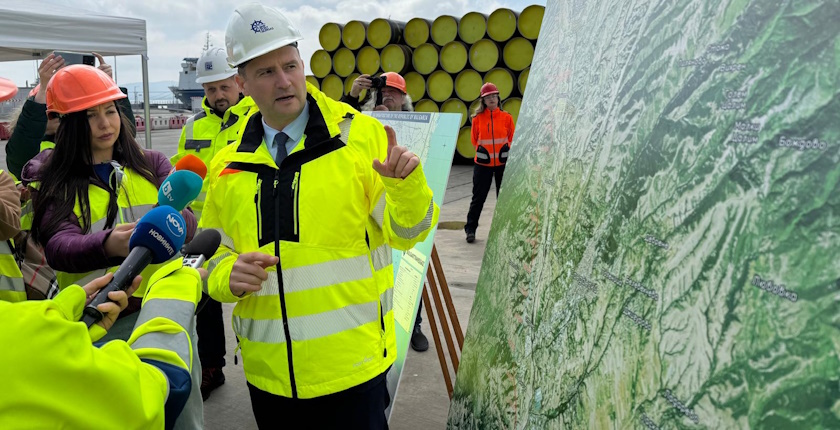
Every school and hospital in Bulgaria can become an electricity producer, Minister of Energy Zhecho Stankov stressed as he presented a financial support mechanism designed with the ambition to create the largest energy community in Europe. The model will benefit both the public sector and private business, he pointed out in the port city of Burgas at a ceremony marking the arrival of the first 4,000 pipes for the Bulgarian sections of the regional Vertical Gas Corridor.

The joint initiative with the country’s power transmission system operator ESO and the Bulgarian Development Bank is for the installation of solar panels with no upfront costs. Beneficiaries – municipalities, schools, kindergartens, hospitals and small businesses – would pay through energy savings and become owners in six to eight years, Stankov claimed.

Bulgaria mulls issuing green bond to finance sustainable energy

The minister also said the project could lead to the government’s first green bond to finance clean and locally produced energy available to a wide range of consumers.

For example, Burgas Municipality can equip all schools, hospitals, kindergartens and other facilities with photovoltaic panels without spending a penny from the local budget, Stankov explained.

Government to invest EUR 57 million in Vertical Gas Corridor

The Vertical Gas Corridor is envisaged to connect Greece, Bulgaria, Romania, Moldova and Ukraine. They plan to transport the fuel from liquefied natural gas (LNG) terminals Alexandroupolis and Revithoussa in Greece, and from the Caspian region, via the Southern Gas Corridor.

The government is fully funding the first stage of the project on Bulgarian territory, with EUR 57 million. The pipes for the pipelines came from India.

Stankov: Bulgaria will never again be left without natural gas

“Bulgaria will never again be left without natural gas,” said Minister Stankov. The capacity of the line between Kulata, on the border with Greece, and Kresna will be increased to 3.6 billion cubic meters per year from 2.3 billion, he added. The distance is 48.5 kilometers.

The most difficult part is between Mikrevo and Ribnik, where three kilometers will be built by horizontal drilling, the minister revealed. He explained there would be no aboveground work, so that nature and infrastructure wouldn’t be affected.

Another section, 80 kilometers, is from Rupcha to Vetrino. The purpose of the investment is to double the maximum annual flow toward Romania to 10 billion cubic meters, Stankov stressed. The last one, Tarnik-Piperovo, is 51 kilometers long.

The compressors on the corridor are reversible, allowing gas supply in both directions, the minister noted.

by in News

Number of prosumers in Romania spikes 79% in one year to 204,000

Prosumers in Romania operated 2.44 GW of capacity at the end of January or 63% more than one year before. Their number soared 79% to 203,984 and it is set to keep growing substantially with more government subsidies underway.

Once again, prosumers confirmed their role as the main pillar of Romania’s energy transition. Growth in the segment is fueled by government support, mostly through funds obtained via the European Union. The number of households, small firms and institutions with the status reached 203,984 by the end of January or a stunning 79% more than 12 months earlier. There were only 303 registered at the end of 2019!

Total capacity jumped 63% on an annual basis, to 2.44 GW, the National Energy Regulatory Authority (ANRE) said. Photovoltaic installations in Romania surged 57% last year, to 4.7 GW, according to the International Renewable Energy Agency (IRENA). It means prosumers still account for more than half.

The Environment Fund Administration (AFM) said it would propose a record EUR 442 million budget for the Casa Verde Fotovoltaice subsidy scheme for prosumers

The number of households was 180,617 two months ago, so roughly 2.4% are currently prosumers. They had 1.13 GW installed.

The remaining ones are legal entities, 23,277 of them, with 1.31 GW.

Most prosumers are in Ilfov county, almost 13,783, followed by Timiș (10,007) and Bihor (8,286).

The Environment Fund Administration (AFM) said it would propose a record EUR 442 million budget for Casa Verde Fotovoltaice. It is a subsidy program for the installation of solar panels, mostly for households. Last year the sum amounted to EUR 402 million.

This year the fund is introducing a scheme worth EUR 80.4 million for battery storage for prosumers. More than 66,000 candidates already applied for a maximum of EUR 6,000 per household for solar panels with storage systems.

President of the APCE association of prosumers and energy communities Dan Pîrșan said EUR 80.4 million for 2025-2026 enables one in four existing prosumers to install batteries and become almost energy independent.

by in News

Power exchanges to test cross-border day-ahead trading in 15-minute intervals

Nominated electricity market operators in Europe are starting joint member testing on April 7 for cutting the cross-zonal day-ahead power trading interval to 15 minutes. The switch is expected to improve the integration of renewable energy sources.

The European wholesale electricity market is preparing to switch its market time unit (MTU) from 60 to 15 minutes within the Single Day-Ahead Coupling (SDAC) mechanism. The move is significant in competition terms as well as for liquidity and the optimization of power production resources. The Market Coupling Steering Committee, MCSC, said joint member testing is kicking off on April 7 with a plan to complete it on May 15.

It scheduled the go-live for 15-minute products for June 11, for delivery on June 12.

“Testing will allow us to fine-tune processes, validate key scenarios and ensure everything is in place for a smooth launch. Our teams are committed to rigorous testing to guarantee the system’s efficiency and reliability from day one. TSOs will provide production-like capacities,” the body added.

Intermittent renewables require shorter market time units

The Single Intraday Coupling (SIDC) and SDAC projects merged and formed MCSC three years ago. It consists of exchanges, formally called nominated electricity market operators or NEMOs, and transmission system operators (TSOs).

SDAC allocates scarce cross-border transmission capacity by coupling wholesale electricity markets from different regions through a common algorithm. It simultaneously takes into account cross-border transmission constraints. The aim is to create a single pan-European cross-zonal day-ahead electricity market.

The market is experiencing a surge in intermittent sources – wind and solar energy, completely exposed to unexpected weather changes. The 15-minute MTU could eventually be cut to five minutes or even less.

“This new development will refine market operations by enhancing precision, improving the integration of renewable energy sources, and increasing overall efficiency and flexibility. By enabling better adaptation to fluctuations in energy supply and demand, it will support more accurate pricing and scheduling, delivering significant benefits to market participants,” the announcement reads.

NEMOs, TSOs to monitor as exchange members test new system

NEMOs and TSOs are responsible for monitoring as market participants test the shorter interval. The two sides will collaborate to further enhance process stability, MCSC said.

The tests include full decoupling with a shadow auction and the simulations of bidding errors and a lack of liquidity. The switch implies checking functional and simulation integration, among other elements.

JAO, the single allocation platform (SAP) for all the TSOs for cross-border transmission capacity, said it would conduct shadow auctions on April 7, 8 and 9.

As for power exchanges region that Balkan Green Energy News covers, the Romanian Gas and Electricity Market Operator (OPCOM), Independent Bulgarian Electricity Exchange (IBEX), Croatian Power Exchange (CROPEX) and Greece’s Hellenic Energy Exchange (EnEx or HEnEx) updated their members on joint testing ahead.

Of note, Greece and Bulgaria recently achieved another step in power market integration. Both connected to the Platform for the International Coordination of Automated Frequency Restoration and Stable System Operation (PICASSO). It enables them to trade balancing energy.

The Western Balkans aren’t coupled yet with the single European electricity market.

by in News

Greek companies expand to Bulgaria with solar power investments

Greece’s government-controlled power utility PPC and Masdar’s subsidiary Terna Energy are separately building two photovoltaic plants in Bulgaria, worth an estimated EUR 190 million in total.

The biggest two renewable energy companies in Greece have taken over one major project each in neighboring Bulgaria, where domestic investors dominated the photovoltaics market until recently. Soon after government-controlled Public Power Corp. (PPC) said it began building a 165 MW solar power plant with batteries, Capital reported that Terna Energy plans to complete a 130 MW project by the end of next year.

The segment appears saturated, given the lack of energy storage capacities in Bulgaria to balance high PV output at times of abundant sunshine. Permits that the Sustainable Energy Development Agency (SEDA) issued show 4 GW in overall installed solar power capacity. Nevertheless, Executive Director of Electricity System Operator (ESO) Angelin Tsachev estimated there is as much as 5 GW, the media outlet noted.

In its annual statistics update, the International Renewable Energy Agency (IRENA) said Bulgaria hosted 3.9 GW of PV capacity at the end of 2024.

Terna Energy bought out initial developer one year ago

Terna Energy became a subsidiary of Abu Dhabi Future Energy Co. (Masdar) last year. The Greek company entered the ownership of the project firm Bio PD Solar Energy for the 130 MW facility three years ago with a 25% stake.

In mid-2024, Terna Energy Overseas Ltd., registered in Cyprus, became the sole owner. It invested some EUR 25 million and bought out Helios Construction Project. According to the article, the previous parent company is associated with businessman Ahmed Dogan. He was the founder and long-time leader of the Movement for Rights and Freedoms party, representing Muslim minorities.

Both projects are on municipal land

The project spanning more than 200 hectares was initially planned at 180 MW. The lot is on municipal land in Kameno in eastern Bulgaria.

According to the news website, the investment amounts to EUR 92 million. The location near the village of Vratitsa isn’t subject to an environmental impact assessment study except for the intended construction of a 33/110 kV substation.

Terna Energy said its former affiliate Terna, part of the GEK Terna conglomerate, is building the solar power plant in Burgas province.

New hybrid power plant in Bulgaria is part of PPC’s regional expansion

PPC is building its PV plant in the Chirpan municipality in Stara Zagora province. Having included a battery energy storage system in the project, and given the power links with its assets in Romania and Greece, the company is counting on a strategic advantage in the market with the new hybrid facility. PPC is pursuing major expansion in the region, including Italy.

The investment is valued at EUR 97 million, of which the energy storage segment accounts for EUR 10.2 million to EUR 12.8 million, the article adds.

The Colosseum site consists of 11 municipal properties formerly designated as agricultural land, on 200 hectares altogether. PPC bought the project from Enery. The company is headquartered in Austria and active in the renewables sector in Romania as well.

by in News

Energy Community opens dispute settlement procedure against Albania, Bosnia and Herzegovina and Ukraine

The Energy Community Secretariat initiated ex officio preliminary dispute settlement procedures against AlbaniaBosnia and Herzegovina and Ukraine for the lack of unbundling of the countries’ electricity distribution system operators.  In its Opening Letters, the Secretariat takes the view that the three Contracting Parties fail to comply with their obligations under the Energy Community Treaty by (completely, partly or incorrectly) not having transposed the unbundling requirements of the Third Energy Package into national legislation and not having taken measures to implement legal and functional unbundling of their national electricity distribution system operators in practice. The electricity distribution system operators of the three countries still have fully integrated legal and functional governance structures for electricity distribution and supply.

Unbundling of distribution system operators is one of the central elements of electricity market liberalisation and has been obligatory in the Energy Community since 2015. Only when separated from other segments of the energy supply chain can distribution system operators act independently and consumers benefit from greater choice of electricity supply companies, which in turn offer improved services at a fair price.

Interested parties may be granted access to the case file and may submit written observations on the present case. All requests for information should be addressed to the Deputy Director and Legal Counsel at [email protected] or +43 1 535 2222 24 and should make reference to the relevant case number.

by in News

Fier and Lushnja, the main destination for photovoltaic parks in Albania

The Ministry of Infrastructure and Energy in Albania has announced on Monday that it has received 10 new expressions of interest for the construction of photovoltaic parks in the country.

The requirements of various companies for the construction of these plants have been numerous throughout the summer after the approval of tariffs that the government will apply. The price of 100 euros per MWh for the purchase of electricity and various support schemes has caused many to run after the renewable resources.

Although so far, all requests have come for solar photovoltaic plants and none for the Wind Farm plants.

Fier and Lushnja areas have also received the most numerous applications, 5 only in the latest announcement, but added dozens of other requests since August. Along with the high level of solar irradiance supply throughout the year, and good flat terrain is a factor that has caused Myzeqeja Region to emerge in the demands of private investors.

In the Darëzezë area in Fier region, company SOLAR RENEWABLE ENERGY seeks to utilize 3.6 hectares of land to install a 2MW plant. The value of the investment amounts to 1.7 million euros.

Even in Seman Fier region, the company “3AD Energy” wants to use 2.34 hectares to set up a 1.75 MW photovoltaic park. The investment here amounts to 2.3 million euros.

In Lushnja region, “Plug” area, a temporary joint venture of three companies seeks to invest 3.9 million euros. This joint venture has asked the MEI to use a 10-hectare surface to install a 5MW power plant.

Again in Lushnja region, the temporary association of companies “FAVINA 1” SH.A. and “ARTYKA 2” SH.PK, has expressed the interest to build a 2MW photovoltaic park. The investment in the region thus adds an additional value of 2 million euros.

The company “Favina” wants to invest 2 million euros in Fier, to set up an 8 hectare plant of 2 MW.

Again  the company “Favina 1” wants to repeat the same investment in the Korca region. In Korça, a similar investment is required by the companies “HIDROCENTRALI QARR & KALTANJ”, as well as “REJ” sh.a.

In Pilur of Himara region, the company “Max Energy” wants to utilize 3 hectares of land to install a 2 MW photovoltaic park. This investment will reach the value of about 1.92 million euros.

In Durres, Solar – Expert Society wants to utilize 2.5 acres of land to set up a 1.98 MW plant with an investment value of 2.7 million euros.

The Solarium Society wants to build a 1.99 MW photovoltaic park in Vora near Tirana, utilizing 2.53 hectares of land. Here, too, the investment amounts to 2.7 million euros.

The total investment for this block of interest expressions published by the Ministry reaches 23.2 million euros and will increase the country’s power capacity by 22.7 MWh.

by in News

Macedonia’s MEPSO planning to rehabilitate its power transmission grid

The Electricity Transmission System Operator of Macedonia AD MEPSO published tenders inviting proposals for goods and services for its project to rehabilitate and modernize its nation-wide power transmission grid along with a power system control project. The total investment in the projects is estimated to stand at EUR 40.5 million.

The money to finance the projects in all their stages will be co-financed by the European Bank for Reconstruction and Development (EBRD) and the Macedonian power transmission company. The bank said in a statement that AD MEPSO wants to use a loan from or a grant administered by the EBRD along with its own funds to complete the project to rehabilitate and modernize its sub-stations and other infrastructure and facilities.

AD MEPSO has invited interested companies to make offers for goods, work and services which includes procuring equipment for sub-stations, high voltage equipment, equipment for the remote monitoring of sub-stations, optical ground wire and overhead transmission lines along with their installation and telecommunications equipment among other things as well as work on the rehabilitation of a number of sub-stations and relay protection work.

The tender specifies that work is planned to be done on the rehabilitation of sub-stations in the towns of Prilep, Bitola, Skoplje, Veles, Štip, Probištip and Ovče Polje.

The Electricity Transmission System Operator of Macedonia AD MEPSO is a fully state-owned company, formed in 2005 following the transformation of the Electric Power Company of Macedonia. The company says that its main business is providing a smooth electricity transmission through the national high voltage network, power control and the organization of the national electricity market. It supplies power to large-scale industrial consumers such as Bucim, OKTA, Maksteel, Mitalsteel, USJE, Silmak, and the FENI Industry as well as to the low voltage grids of the EVN Macedonia and ELEM Energetika privately-owned power supply companies.

Source : balkangreenenergynews