by in News

Slovenia kicks off grants program for renewables-based district heating, cooling

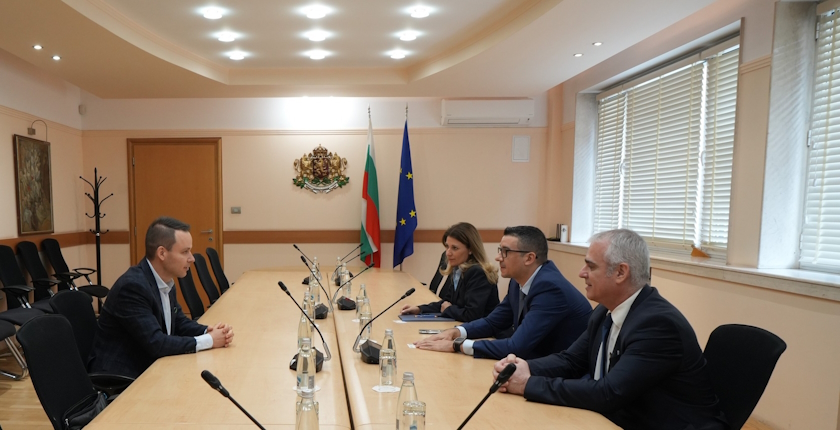
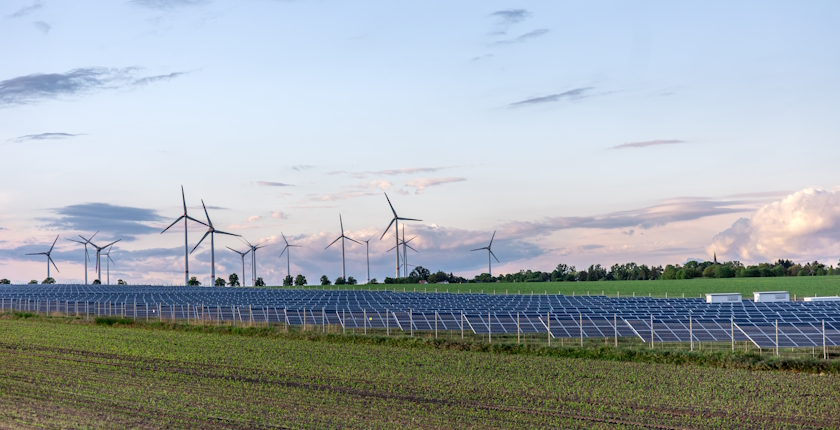
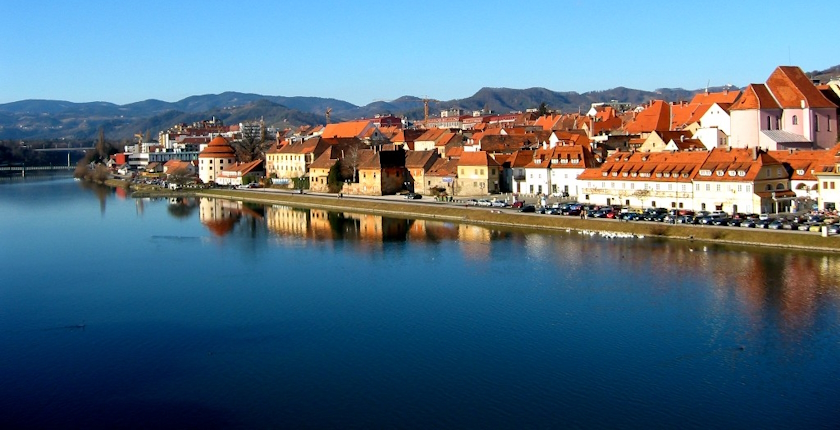
The Ministry of the Environment, Climate and Energy of Slovenia launched a public call for cofunding the construction or restructuring of district heating and cooling systems using renewable energy sources. The grants, for companies and cooperatives, are from the European Union’s cohesion support mechanisms.

The introduction of renewables-based district heating and cooling systems reduces pollution, greenhouse gas emissions and the dependence on fossil fuels. Much of the European household and business sectors still rely on gas boilers for heating. In addition, the ever-increasing severity and length of heat waves are prompting the need for a systemic cooling solution.

As part of its decarbonization and energy efficiency efforts, Slovenia launched a EUR 51.2 million cofunding package for companies and cooperatives.

The program covers the construction or restructuring of district heating and cooling systems using renewable energy sources. The first deadline for applications is September 11, followed by one on January 8, the Ministry of the Environment, Climate and Energy said.

The public call will be open until the entire sum is allocated, or at the latest until September 11, 2026, the third deadline. The EU’s cohesion funding accounts for 85% and Slovenia is providing the rest.

District heating projects that include cooling get additional points

While primarily aimed at increasing the production of electricity and heat from renewable energy sources and from waste heat, the scheme includes additional points for projects that involve cooling. The systems are required to cover at least 350 kW of consumption.

Eligible equipment includes heat pumps, solar collectors, wood biomass boilers and combined heat and power (CHP or cogeneration) solutions.

Large companies can receive up to 45% of their investment, while mid-sized ones can get 55%. The cap for small and micro enterprises is 65%. The maximum individual grant is EUR 30 million.

Slovenia’s current calls for subsidizing sustainable mobility, energy efficiency and renewables projects are worth more than EUR 300 million altogether. The government is preparing four more, for EUR 62 million overall.
by in News

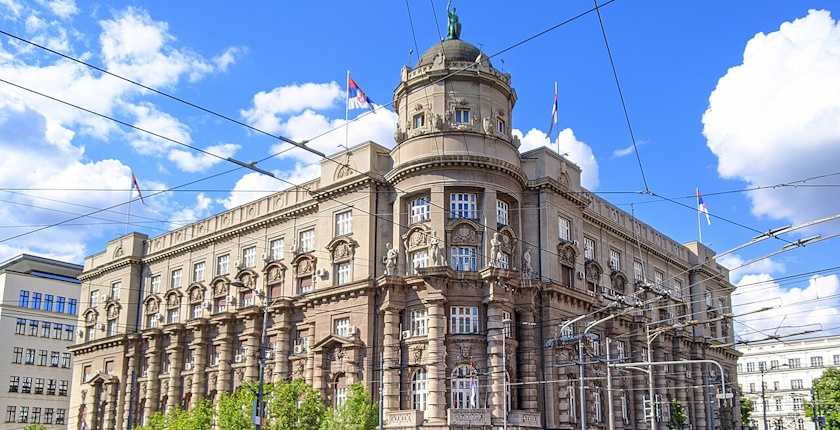
Germany supports Serbia in clean energy supply, environmental protection

The Republic of Serbia and Germany’s KfW Development Bank signed a loan agreement on July 18 for EUR 135 million for the second phase of the credit program Green Transition Development Policy Operation (DPO II).

The signatures underscore the joint activities by Germany and Serbia aimed at a climate-compliant and socially just energy transition, said Chargés d’Affaires ad interim Carsten Meyer-Wiefhausen from the Embassy of the Federal Republic of Germany in Serbia. “We will continue to be with Serbia on this path and support its reform efforts,” he stressed.

Within the financing for the reforms, the World Bank, French Development Agency (AFD) and the German KfW Development Bank are supporting the Republic of Serbia in conducting its ambitious reform agenda. The goal is to accelerate the transition to energy from clean sources and align with EU standards in environmental protection and climate.

Series of reforms through DPO II

Several successful reforms have been materialized within DPO II, among which:

  1. Promoting investments that are acceptable in environmental and climate terms: Public investments are graded under environmental criteria and with regard to the risk of natural disasters, and with models developed solely for the purpose. The citizens of Serbia benefit from the government’s more sustainable investment decisions.
  2. Enhanced transparency in the public budget: The Government of the Republic of Serbia has committed to publishing information on the execution of the public budget, not only at the end of the fiscal year, but also during the year. It improves the transparency of public expenditures, primarily concerning investments in environmental and climate protection.
  3. Affordable energy prices: The Government of the Republic of Serbia has rolled out temporary targeted subsidies for households with low income, like citizens with low pensions. The share of households receiving such aid has grown from 2.7%, registered in 2021, to last year’s 8%.
  4. Improvement in waste disposal: Aligning with EU standards brings a better approach to sanitary landfills, namely from 42% (2021) to last year’s 50%. The citizens of Serbia benefit from improved waste disposal and a cleaner environment.
  5. Prepared for CBAM: Since this year, large industrial facilities and power plants report their CO2 emissions in line with EU standards. That way Serbia is more prepared for the upcoming full implementation of the European Carbon Border Adjustment Mechanism (CBAM) for carbon prices. For instance, the country would be able to price CO2 emissions and charge them.

Financing reforms within climate partnership

Germany’s contribution to financing reforms is an integral part of Germany’s climate partnership with Serbia and the entire Western Balkans. The purpose of the partnership is to support Serbia’s work on achieving its national climate goals and adapting to climate change. The key goal of the partnerships is for the transformation that is necessary to meet climate goals, in the interest of Serbian citizens, to be socially just, a just transition.

This year, Serbia and Germany are celebrating the 25th anniversary of their development cooperation. In the meantime, KfW financed projects worth EUR 2.5 billion in Serbia.

by in News

Biggest PV plant in Slovenia begins regular operation

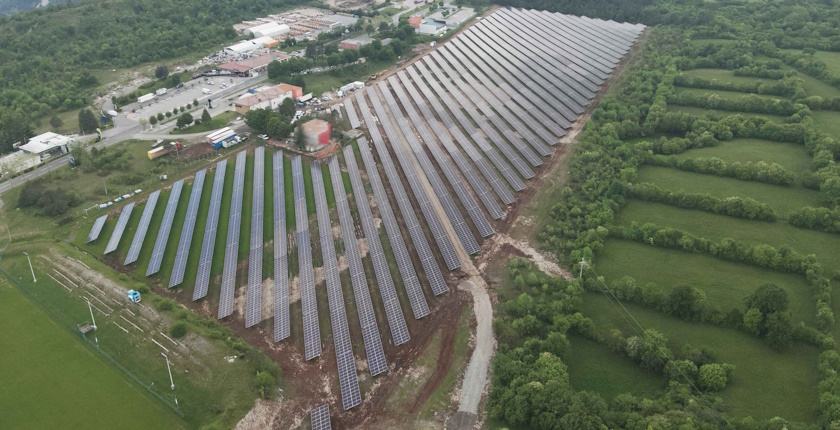
The largest solar power plant in Slovenia has only 7.1 MW in peak capacity and a 5 MW grid connection. The facility in the country’s southwest, on the border with Italy, has begun regular operation, according to its developer Moja elektrarna.

Slovenia is mostly leaning on small photovoltaic and battery storage installations for its renewables expansion. Moja elektrarna, a firm based in Maribor, the second-largest city, built the country’s biggest solar power facility.

The PV plant consists of 12,888 modules of 550 W apiece, Naš stik reported. It translates to barely 7.1 MW in peak capacity, in terms of direct current or DC. The grid connection, for alternating current (AC), is 5 MW.

Moja elektrarna installed the PV park at the Krvavi Potok village on the border with Italy. The facility in southwestern Slovenia is on the territory of the Hrpelje-Kozina municipality. It is expected to generate 8.4 GWh per year. The projected output is equivalent to the electricity consumption of 2,400 domestic households, the article adds.

Located next to one of the main roads to Italy, the PV plant in Krvavi Potok is suitable for powering future electric vehicle charging points

The firm said the test operation began on April 1 and that the solar power plant entered regular operation on July 1. It expects to receive the certificate of occupancy, the final permit, by September.

Moja elektrarna is a subsidiary of Austria-based PV-Invest, which earlier said the PV plant spans 7.2 hectares. The company has calculated that the solar power plant would prevent an equivalent of almost 64,000 tons of carbon dioxide emissions in total over its 30-year operating life.

Located next to one of the main roads to Italy, the facility is suitable for powering future electric vehicle charging points, according to the company. PV-Invest develops funding plans for private and institutional investors for joint photovoltaic projects supported by banks and financial institutions, according to its website.

In 2023, HESS built the now second-largest solar power plant in Slovenia in Brežice, at its hydropower plant.

by in News

Pexapark: PPA activity in Europe drops in first half of 2025

The number of power purchase agreements (PPAs) for renewables in Europe fell by 31% and the volume tumbled 26% in the first half of the year from the levels in the same period of 2024, Pexapark found. Germany and France registered sharp declines in the photovoltaics segment, but a surge in Italy and Spain has more than offset the drop.

The meteoric rise in deals for battery energy storage systems, BESS, is a clear sign of its maturity.

In its latest report, analytics and advisory firm Pexapark provided a detailed look into PPAs and contracts for battery energy storage systems in the first six months of 2025. It found that PPA activity shrank by more than a quarter in year-over-year terms, but not everywhere and not due to solar power.

Across 124 deals, 6.08 GW of renewable electricity capacity was contracted in the first half, which is 31% and 26% down, respectively, from the same period of 2024. Conversely, the average deal size advanced 5% to 48.2 MW.

Notably, the April-June period was much weaker than the first quarter of the year, with just 50 deals, but the volumes were almost evenly split.

The main technologies in the first half were solar power, 4.2 GW from 73 deals, onshore wind (1.4 GW and 32 PPAs), mixed technology (290 MW and nine deals) and offshore wind (134 MW and four deals). The result is proportionate to the picture from January through June 2024.

Despite concerns over saturation of demand for standalone solar, volumes have firmed. The 4.2 GW of solar capacity contracted under PPAs compares to 3.9 GW of the first half of last year. The deal count landed at 73, against 95, which is in line with the overall trend.

PPA activity in Germany plunged 84% in terms of volume

Solar offtake activity reveals a clear split in market momentum. It is slowing down in markets where cannibalization has worsened drastically and rapidly – such as Germany and France. In fact, Germany saw the largest decline in volumes – a remarkable 84% year-on-year decrease in terms of overall volumes, with 228 MW across eight deals in the last six months, versus 1.2 GW and 31 deals in last year’s equivalent.

There is stable or even upward appetite in markets which have had time to adjust to cannibalization and the lower valuation of solar production, or where cannibalization levels are still very low

Conversely, solar PPA activity in Italy and Spain spiked, more than making up for the said decline.

“These numbers support the hypothesis that there is stable, or even upward appetite in markets which have had time to adjust to cannibalization and the lower valuation of solar production – i.e., Spain, or cannibalization levels are still very low – such as Italy. Italy’s solar PPA volumes grew 184% year-on-year, with nearly an additional 700 MW procured compared to the same period last year. Corporate appetite in the country is growing, and so is deal size – with a 420 MW solar corporate deal announced in June comprising the country’s largest PPA ever recorded,” the analysis reads.

As for Southeastern Europe, OMV Petrom’s deal with Enery for their joint solar power project Gabare in Bulgaria was Europe’ third-largest PPA in June.

Flexibility monetization is opportunity for market players with right profile

In a market increasingly driven by flexibility monetization, today’s challenges – cannibalization, future capture dynamics and balancing risks – are becoming opportunities for market players with the right profile. And with corporate buyers more hesitant to pay premiums for solar, transactable prices are—perhaps for the first time in a while – closer to perceived fair value, according to the report’s authors.

Wholesale electricity prices in Sweden were negative for almost two fifths of the time in the first six months of 2025

Hourly periods with negative prices at wholesale electricity markets continued strong in the first half. Sweden maintained its top position by far, with most such events. There were 1,635 hours with negative prices from January until the end of June. It is a stunning 37.8% share of the entire period and already 63% of the tally from all last year.

The other jurisdictions that make up the top five in Europe: Finland, Germany, the Netherlands and Belgium, remained the same since 2024.

On average, European countries have already reached around 67% of the number of hours counted in 2024 as a whole. Norway hit 90%, Denmark 87% and Spain climbed to 86%, suggesting that last year’s records would fall.

Top five European markets by number of negative price hours, 2024 vs. the first half of 2025

BESS deal volumes already three times higher than in all 2024

The maturity of the BESS industry is clearly reflected in the deal count and contracted volumes over the past 18 months, with the trend increasingly pronounced in 2025.

Battery storage capacity being contracted under optimization or fixed-revenue offtake contracts (so-called floors and tolls, respectively) amounted to a total of 4.6 GW in capability and 9.2 GWh in capacity across 36 deals. It is just over three times more than in entire 2024 in both benchmarks. The deal count was 44% up from all last year.

The lion’s share of the deal count concerns BESS assets with a two-hour duration

The rapid growth was driven by a wave of new agreements in the two most advanced markets – Great Britain and Germany – alongside first-ever BESS deals emerging in Belgium, Poland, Greece, and Bulgaria. The lion’s share of the deal count concerns BESS assets with a two-hour duration, which the ratio of operating power and capacity also indicates.

Pexapark provides of price data, market intelligence, and advisory services for renewable energy. It was one of the knowledge partners at this year’s edition of Belgrade Energy Forum, organized by Balkan Green Energy News.

by in News

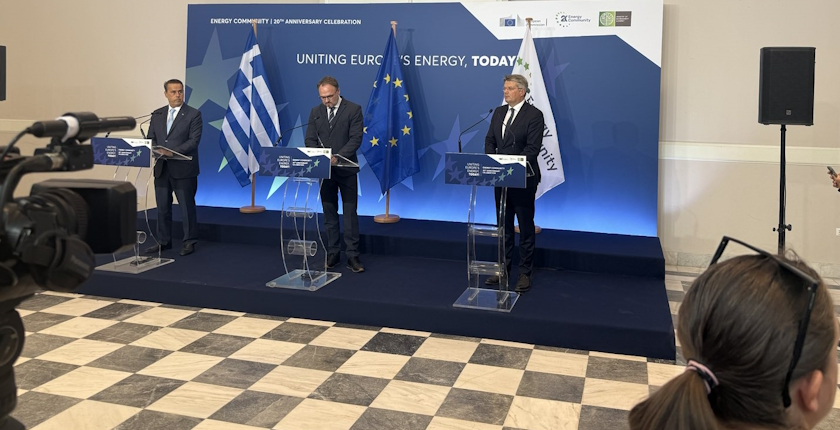
Energy Community marks 20th anniversary as integration pillar for Southeastern Europe

The Energy Community Ministerial Council held its annual informal meeting in Athens, where the organization was founded twenty years ago. No contracting party is expected to meet the criteria for exemption from the Carbon Border Adjustment Mechanism (CBAM) in the electricity sector – the European Union is due to start charging the CO2 tax on January 1 – but the European Commission could propose amendments.

The Energy Community promotes integration, reforms and investments across the region, top officials stressed.

Ministers from the Energy Community contracting parties convened today at the Informal Ministerial Council in Athens to mark the organization’s 20th anniversary. The Energy Community Treaty, establishing the Energy Community, was also signed in the Greek capital. The purpose of the organization is to create a more integrated market, help attract investment and speed up decarbonization by aligning with the European Union’s rules on energy, environment and competitiveness.

In recent years, close cooperation has enabled the contracting parties to strengthen the security of supply, particularly against the backdrop of the ongoing Russian war in Ukraine, the Energy Community Secretariat said. During the annual gathering, hosted by the Greek Ministry of the Environment and Energy, the ministers underlined the need for an accelerated integration with the EU, grounded in delivering a secure, resilient energy transition.

Ministers agreed to revise capacity calculation regions

Many contracting parties are close to completing the reforms needed to launch the 18-month countdown to electricity market coupling – including full legal alignment under the Energy Community’s Electricity Integration Package and the appointment of nominated electricity market operators (NEMOs). If transposition is verified as compliant by the European Commission and the Energy Community Secretariat, integration will be initiated with the EU’s Single Day-Ahead Coupling (SDAC) and Single Intraday Market Coupling (SIDC).

Ministers made a breakthrough in regional coordination, backing a proposal by EU transmission system operators to revise capacity calculation regions (CCRs), now under review by the EU energy regulator ACER – Agency for the Cooperation of Energy Regulators. Recognizing the proposal’s importance for an effective operation of the interconnected grid, they called for swift follow-up, including the operationalization of regional coordination centers (RCCs) and system operation regions (SORs).

The aim is to boost electricity flows and grid security, especially along the north-south corridor of the Balkans, while laying the groundwork for full EU market coupling.

Decarbonization must accelerate ahead of CBAM implementation in 2026

To avoid disruptions to regional electricity trade, clarifying CBAM rules for electricity is a priority for the ministers, the secretariat pointed out. The EU is set to begin charging the carbon border tax on January 1.

Lorkowski: Electricity market integration and decarbonisation are two sides of the same coin

As no contracting party is expected to meet the exemption criteria by then, a proportionate and context-sensitive application of the mechanism is essential, as supported by active engagement in the European Commission’s ongoing call for evidence that precedes the future amendments of the CBAM regulation to be possibly proposed by the European Commission, in the secretariat’s view.

“Electricity market integration and decarbonisation are two sides of the same coin. The green energy transition unlocks meaningful integration with the EU market – and vice versa. Only by aligning policy, infrastructure, and pricing can contracting parties fully realise the benefits of clean, secure, and affordable energy,” said Energy Community Secretariat Director Artur Lorkowski.

The ministers called for carbon revenues to support vulnerable communities and mobilize investment in clean energy, stressing that just transition financing must go hand in hand with policy reforms.

Energy Community Treaty is now cornerstone of Europe’s energy architecture

Born out of crisis and shaped by cooperation, the Energy Community Treaty has become a cornerstone of Europe’s energy architecture, Lorkowski stressed. What began as an unlikely experiment in regional integration has grown into a dynamic framework – extending the EU’s internal energy market, strengthening energy security, and advancing the clean energy transition across South-Eastern and Eastern Europe, he asserted.

Energy Community contracting parties can fully integrate their electricity markets with the EU before joining it

“Our contracting parties are now on the cusp of a major breakthrough: full electricity market integration with the EU – even ahead of accession. This is the product of two decades of reform, dialogue, and trust-building. With the right political will, we can move from transposition to transformation,” Lorkowski stated.

In his view, Greece is the window for the Energy Community contracting parties to the liquefied natural gas (LNG) market and the access point to the European electricity system. Close cooperation with the Western Balkans has economic benefits for Greece – but beyond the economy, it is also about security and stability, Lorkowski said at the event.

Energy Community pioneered extension of EU energy market

Over the past two decades, the Energy Community has brought the EU closer to its neighbours, pioneering the extension of the trade bloc’s energy market across its borders, promoting integration, reforms and investments across the region, according to European Commissioner for Energy and Housing Dan Jørgensen.

“Now it is time to look ahead at our shared future based on a greener, sustainable and resilient system which will bring cheaper energy and more security to all,” he said.

Separately, in an interview with Kathimerini, Jørgensen noted that Southeastern Europe experienced electricity price spikes last summer, mainly in the evening hours, due to a lack of cross-border capacity and sufficient flexibility. The only solution is further infrastructure and market integration, as costs are separated and benefits are multiplied, he opined.

For every EUR 2 billion invested annually in cross-border infrastructure, the potential benefits reach up to EUR 5 billion, the commissioner added.

Papastavrou: Southeastern Europe’s is at disadvantage as its electricity market is not fully integrated with EU

Southeastern Europe is still not fully integrated with the EU, which is a structural disadvantage for citizens, said Minister of Environment and Energy of Greece Stavros Papastavrou.

“I am very optimistic after the first session of the meeting, because all the contracting parties expressed commitment, a strong commitment, to market coupling,” he stated. Papastavrou said a lot of work is required in the electricity sphere to bridge the gap for the prosperity of citizens and the entire region.

Energy integration is one of the pillars of EU accession

Energy integration is not just a technical issue – it is one of the fundamental pillars of the EU accession process, the minister told his counterparts from the Energy Community.

“Greece, too, has faced the same challenges that many of you are experiencing today. Back in 2005, our energy system was almost entirely dependent on lignite, by more than 60%. Today, we have reduced lignite use by an impressive 91% – a clear demonstration of our strong commitment to a clean, sustainable, and resilient energy future,” he stated.

Serbia’s Đedović Handanović sees possibility for market coupling with Hungary already next year

Serbia was the first in the region to fulfill the conditions for market coupling with the EU, the country’s Minister of Mining and Energy Dubravka Đedović Handanović said. She urged for the verification process to be accelerated, so that Serbia can connect with the Hungarian market in 2026 and, through it, with the other EU member states.

The minister acknowledged the challenge of the upcoming full implementation of CBAM.

Photo: Minister Dubravka Đedović Handanović (Nenad Kostić / Ministry of Mining and Energy)

Serbian institutions analyzed the available options from the study that the European Commission published. “We think that carbon pricing should be introduced gradually, in phases and fairly, with support from funds from the European Union,” she said.

The minister stressed that revenues from carbon taxes would be directed, like in the EU, to decarbonization, renewables, energy efficiency, just transition and support to companies.

“Without an adequate period of time for the transition from coal to renewable energy sources, without modernizing the network, increasing RES capacities and adjusting the industry, higher carbon costs can only increase the financial pressure on our industry and consumers, which is already happening in the EU, instead of resulting in a significant emissions reduction in the short term. Solving these issues requires careful planning, a phasein and the EU’s targeted financial support, so that climate goals would be aligned with the economic reality,” Đedović Handanović said.

She recalled that EU member states had more than two decades to gradually adjust to carbon emission levies. Đedović Handanović affirmed that Serbia is willing to continue its alignment with the EU’s energy and climate policy.

“All the reform measures that we are conducting are primarily for the benefit of our citizens and companies, and we won’t make decisions overnight that would jeopardize our energy stability,” she said.

by in News

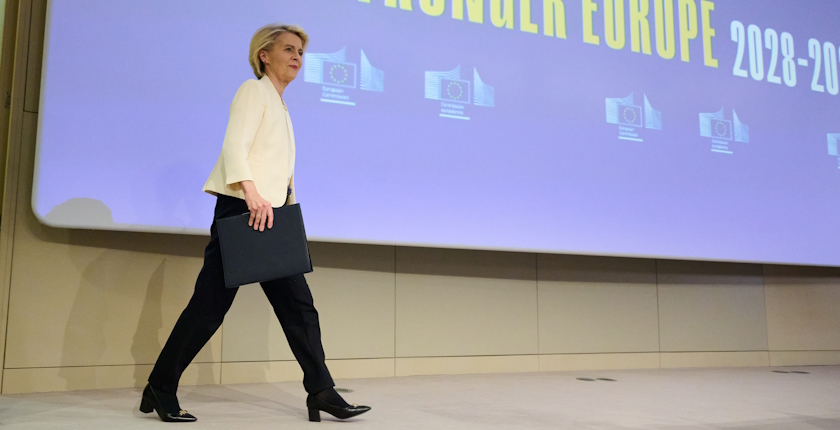
Clean transition, decarbonization among priorities in EU’s draft budget

Within the European Union’s proposed budget for the period from 2028 to 2034, the EUR 409 billion European Competitiveness Fund is for investments in strategic technologies, including for the clean transition and decarbonization. The new Connecting Europe Facility (CEF), worth EUR 81.4 billion, would finance the completion of Trans-European Networks and foster the EU’s green and clean transition in energy and transportation.

The European Commission proposed the next long-term budget of almost EUR 2 trillion, of which 35% would be earmarked for climate and environment. Energy infrastructure spending in the so-called Multiannual Financial Framework (MFF) for 2028-2034 will be EUR 29.5 billion, five times higher than in the previous seven-year period, it said, arguing it would reinforce energy independence and accelerate the clean transition.

The entire proposed sum amounts to 1.26% of the expected gross national income, on average. The framework is aimed at an independent, prosperous, secure, and thriving society and economy, the update adds.

“Europe faces an increasing number of challenges in numerous areas such as security, defence, competitiveness, migration, energy and climate resilience. These are not temporary but reflect systemic geopolitical and economic shifts that require a strong and forward-looking response,” the EU’s top executive body said.

Adapting to local needs

The European Commission pointed out that the budget would be tailored to local needs. National and regional partnership plans based on investments and reforms would be introduced, for targeted impact where it matters most and ensuring a faster and more flexible support for more economic, social and territorial cohesion across the union, according to the outlined measures.

“Our new long-term budget will help protect European citizens, strengthen Europe’s social model and make our European industry thrive,” European Commission President Ursula von der Leyen stated.

For the first time, the spending plan would enable member states to invest more in the EU objectives, with loans of up to 150 billion EUR altogether. “We will call it Catalyst Europe. The loans are backed by the EU budget. It targets common European priorities. You can invest it – for example in defence industry or energy infrastructure or strategic technologies,” Von der Leyen said.

The budget plan includes a European Competitiveness Fund, worth EUR 409 billion, for investment in strategic technologies. Operating under one rulebook, and offering a single gateway to funding applicants, it aims to simplify and accelerate EU funding and catalyse private and public investment. The focus is on four areas:

  • clean transition and decarbonization,
  • digital transition,
  • health, biotech, agriculture and bioeconomy,
  • defense and space.

In close connection with the European Competitiveness Fund, the EU research framework, with its flagship Horizon Europe worth EUR 175 billion, will continue to finance world-class innovation, the commissioners revealed.

Commissioners line up EUR 81.4 billion in budget for next Connecting Europe Facility

The next Connecting Europe Facility (CEF), worth EUR 81.4 billion, would finance the completion of Trans-European Networks and foster the EU’s green and clean transition in energy and transportation. It covers cross-border projects for energy, transportation and military mobility that are essential for competitiveness and security and reducing strategic dependencies.

To simplify external action financing, the EU’s top executive body envisaged an item called Global Europe, of EUR 200 billion, to maximise impact on the ground and improve visibility of EU external action in partner countries. It would allow the EU budget to step up support to candidate countries and prepare for their accession.

Among other segments, the European Commission said it plans to direct 75% of revenues from the Carbon Border Adjustment Mechanism (CBAM) to the EU budget. It expects the resource to generate EUR 1.4 billion per year.

by in News

Bulgarian firm to install pilot hydropower plant on pontoon on Danube

With the ambition to build several hydroelectric plants on pontoons on the Danube river in Bulgaria, a local company intends to install a 20 kW pilot facility in Vidin.

An initiative is underway for the deployment of an environmentally friendly energy production technology on Europe’s second-largest river. Vidin-based company Tyfun intends to build a pontoon hydroelectric plant near the Telegraph kapia (Telegraph Gate) of the town’s Kaleto (Baba Vida) fortress.

It is the first phase of its ambition to install several such facilities in the Bulgarian section of the Danube river, according to an investment proposal that it submitted to the Regional Inspectorate for Environmental Protection of Montana.

The firm said the 20 kW micro hydropower plant would not affect any area of ​​the Danube in ​​Bulgaria or its coast.

The construction of the prototype will allow testing of the new source of renewable energy, using a significantly more efficient technology and ensuring a continuous supply of clean energy, Tyfun added. In addition, it will demonstrate the viability of hydrokinetic technology as a reliable renewable energy source from the Danube river, with significant benefits, due to the low cost of energy and minimal adverse environmental impacts, the company said.

The facility would be operational 24 hours a day, all year round. During the first month after commissioning, the efficiency of the technology will be analyzed, as well as its volume, productivity and scope, the project shows.

The machine would be three meters long and 1.5 meters wide, placed on a pontoon of 20 times ten meters.

by in News

Bulgarian battery factory Exeron X-BESS gets EU strategic status

Bulgaria-based International Power Supply (IPS) is opening a factory for battery energy storage systems using proprietary technology. The Exeron X-BESS is one of only six strategic projects in the European Union with a designation under the Net Zero Industry Act.

Minister of Economy and Industry of Bulgaria Petar Dilov met with Chief Executive Officer of International Power Supply (IPS) Alexander Rangelov, as the company’s investment in the production of BESS entered the EU’s public registry of strategic projects under NZIA. It is one of only six endeavors that made it to the list so far.

The Exeron X-BESS factory will put Bulgaria on the world map for the production of battery energy storage technologies, the ministry said. It is fully aligned with the NZIA goals for secure and sustainable supply of net zero emission technologies and the expansion of production capacities and supply chains, it added.

Exeron X-BESS to become key factor in EU’s clean technology chain

The government is promoting energy efficiency and the security of supply for industrial production in Bulgaria, especially in the segment of zero emission technologies, Dilov stresed. “The project is an important step towards including Bulgaria among European producers of environmental technologies and the implementation of high-tech solutions to mitigate climate change,” the minister stated.

He expressed the belief that the project would become a key factor in the clean technology chain. It is a step forward for Bulgaria’s participation in the European and global industry that is transforming the energy sector, Dilov pointed out.

The X-BESS line includes a battery management system developed by IPS

IPS has patented the entire Exeron X-BESS technology. Production should begin in the autumn. The facility is in the Hemus high-tech industrial park in Kremikovtzi (Kremikovtsi) near Sofia.

The project entails the creation of 65 jobs by the end of the year, of which a quarter would be in development and engineering. Two thirds of the employees would be technical specialists.

The majority owner of IPS, with 65.5%, is Power Technology Investment Group. It is controlled by the family of the founder Stoil Rangelov Trifonov. SIL Energy Invest has 31.5%. The Capital Investments Fund (CIFund) of the Bulgarian Development Bank holds the remaining 3%.

The company mainly uses European parts and the lithium-iron-phosphate (LFP) battery cells are from China. IPS has a proprietary battery management system (BMS) for the X-BESS line.

NZIA is fast-tracking permits for strategic projects

The NZIA designation secures a priority status at the national level for all administrative processes, faster permitting including environmental approvals, and advice on financing.

Of the six projects in the list, three are in Germany. Carbon2Business and MoReTec are for the decarbonization of a cement plant and chemicals production, respectively, while the one branded Resilience develops renewable energy technologies.

The remaining two are located in Sweden. NKT HV Cables AB is an endeavor for new electricity grid technologies including electric charging for transportation and grid digitalization solutions. The Talga Battery ANODE Refinery ONE is the only other project in the battery and energy storage segment.

by in News

Slovenia publishes call for incentives for wind, solar power projects

Solar and wind power projects with or without energy storage that are on Slovenia’s priority list can be submitted for grants from the European Union’s Modernisation Fund. The round is worth EUR 29.5 million and the deadline is January 7. Notably, of the 1,117 projects for renewables and cogeneration approved for state support so far, only 254 were completed by the end of 2024.

The Ministry of the Environment, Climate and Energy launched a public call for cofunding under a mechanism for the modernization of energy systems in Slovenia and improvement of energy efficiency. It is for projects for solar and wind power plants, with or without storage, from the so-called A list of indicative, priority investments.

Eligible companies can receive support from the EU’s Modernisation Fund under the RES Scheme (Part A). It was approved by the European Investment Bank. The list was published in March of last year.

Total planned support amounts to over EUR 84 million and the selected projects must be completed by the end of September 2030. The deadline for submissions in the current round is January 7, 2026.

The grants can cover up to 45% of the costs for photovoltaic and wind power systems and a maximum of 30% of the electricity storage segment, the documentation shows. Storage capacity must be at least 0.75 kWh per kW of the nominal capacity of the power plant.

All five eligible projects are within state-owned HSE Group

There are 21 items on the A list and most are power grid investments. Only five are for renewables, of which Dravske elektrarne Maribor (DEM) is present with its controversial Ojstrica wind farm project, the proposed expansion of the Zlatoličje-Formin solar park, and the ZOOP photovoltaic project for 9.9 MW in peak capacity on the former Pobrežje waste landfill.

The largest priority investment among the ones that can apply in the current round is HSE’s proposed floating PV plant with batteries

The company is part of state-owned Holding Slovenske elektrarne – HSE. Another subsidiary on the list, Soške elektrarne Nova Gorica (SENG), intends to expand its recently commissioned Kanalski Vrh solar power plant.

HSE itself has the largest project – for the Družmirje floating solar power plant, which would include storage. It also plans to produce green hydrogen using electricity from the facility.

Few completed energy production projects among ones selected through public calls

The Energy Agency of Slovenia has so far approved 1,117 renewables and cogeneration projects to enter the support scheme, selected through 13 public calls. The combined planned capacity is 794 MW, of which there were 996 renewable energy projects, for 682 MW.

However, only 254 endeavors, with 112.6 MW altogether, were completed by the end of last year. In the previous round, the agency selected 507 projects, for a total nominal capacity of just over 259 MW, mostly for PV plants.

Of note, lengthy procedures, strict environmental rules and local opposition are keeping Slovenia at the bottom of the European Union’s wind power capacity chart in the European Union. The country hosts just three standalone wind turbines and DEM has contracted the fourth one.

by in News

Electrica sells green bonds for EUR 500 million amid record demand

Electricity supplier and distributor Electrica listed its first green bonds on the Luxembourg Stock Exchange. It was the largest issuance of its kind among Romanian companies, excluding financials.

Electrica, in which the Romanian Government controls a stake of just under 50%, issued green bonds worth up to EUR 500 million. It is using the proceeds to finance and refinance its projects, mainly for green energy production and energy storage.

The senior unsecured green bonds, maturing in five years, are now listed on the Luxembourg Stock Exchange. Admission to trading on the Bucharest Stock Exchange is estimated to take place at the beginning of August, Electrica said.

The company’s core activities are electricity distribution and supply and energy services, but it is expanding into renewables and battery storage.

Pricing reaches 2.3 percentage points above benchmark rate

Credit appraisal agency Fitch has assigned the 4.375% senior unsecured green notes a BBB- rating. It is the lowest investment grade. The projects will have a limited connection to Electrica’s 100%-owned distribution and supply subsidiaries Distribuție Energie Electrică Romania (DEER) and Electrica Furnizare, the note adds.

Electrica targets 1 GW of installed renewable energy capacity by 2030 alongside the deployment of 900 MWh of energy storage

The company’s inaugural debt securities were priced at a yield of 4.566%, according to a regulatory filing. It was 2.3 percentage points above the benchmark mid-interest rate swap. The demand from investors at the final price exceeded the supply by more than 11.5 times, marking a record oversubscription in bond issuances of Romanian companies, Electrica pointed out.

Moreover, it was the largest green bond issuance in Romania excluding financial institutions. Electrica targets 1 GW of installed capacity by 2030 alongside the deployment of 900 MWh of energy storage.

Electrica grows market capitalization by one fifth this year

Banca Comercială Română (member of Erste Group), BNP Paribas, Citi, ING, J.P. Morgan and Raiffeisen Bank International were the joint global coordinators and joint bookrunners in the transaction, while BT Capital Partners, IMI-Intesa Sanpaolo, Société Générale and UniCredit were joint bookrunners.

Electrica has EUR 1.06 billion in market capitalization. Its shares surged 21.1% since the end of last year.