by in News

Court suspends Hidroelectrica’s hydropower project by stopping deforestation

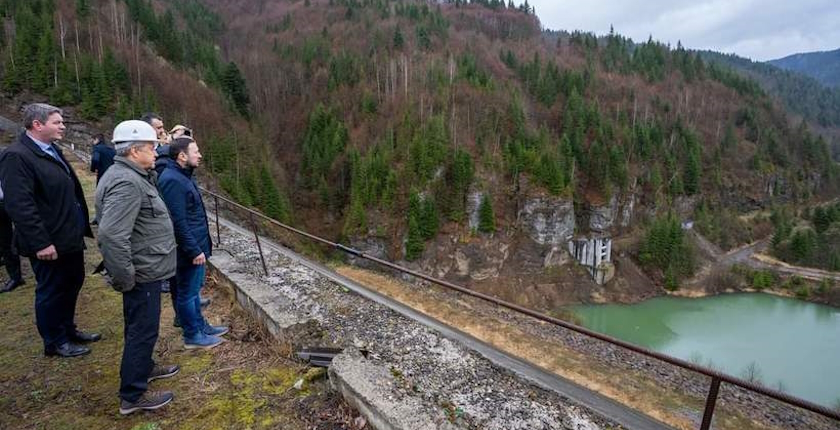
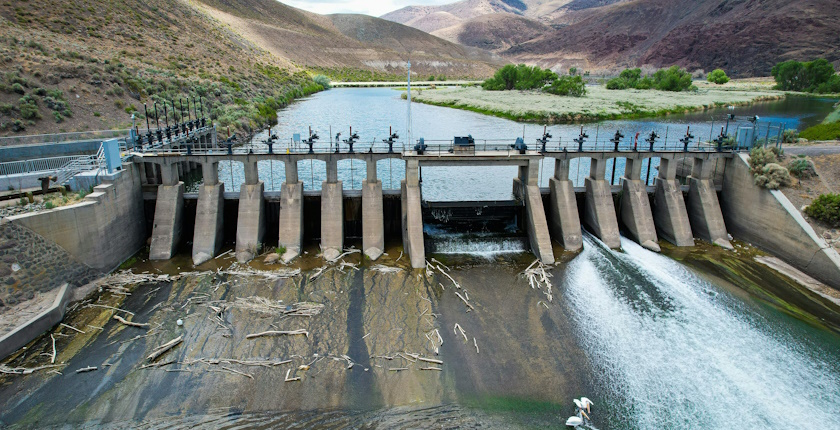
An almost complete hydropower project that was launched in the late 1980s in Romania is stuck again as a court in Cluj suspended a government’s decree that allowed clearing 31 hectares of forest. Hidroelectrica’s endeavor on the Răstolița river is for 35.2 MW.

What was labeled by the Romanian media as the last big investment of Nicolae Ceaușescu’s regime is again on an extended hold. The Cluj Court of Appeal suspended a government decree from earlier this year that allowed the deforestation of 31 hectares for a 35.2 MW hydropower plant on the Răstolița river in Transylvania.

The project, launched in 1989, is 90% finished. In June, the same court suspended the environmental permit.

Răstolița project has special status

The government declared Răstolița a renewable energy project of major public interest in 2022. It exempted it from the obligation to carry out an environmental impact assessment study and the ban on reducing the national forest fund.

Nongovernmental organizations Declic and Bankwatch Romania, which submitted the complaint, pointed out that deforestation continued between the two rulings. The location of the Răstolița hydropower project, run by state-owned Hidroelectrica, is part of the Călimani National Park.

The two groups have argued that the technical documentation is more than three decades old, ignoring climate change, biodiversity and public safety. The affected area is vital for flood prevention and the conservation of species, they pointed out.

Conversely, the government claimed the project would actually reduce the risk of flooding and enable water supply and the management of the Mureș river and its tributaries.

Romania already invested over EUR 200 million

The facility in Mureș county was planned to be commissioned in November. In January, the authorities approved the expropriation of 55 hectares of forest.

Average electricity production in the first phase is estimated at 46.3 GWh per year, and it would reach 117.5 GWh in the final stage. The reservoir would be 5.6 kilometers long. Investments made so far are valued at more than EUR 200 million.

Former Minister of Energy Sebastian Burduja reacted to the new ruling by calling it “economic sabotage.” He is a member of the Chamber of Deputies, the lower house of Romania’s parliament.
 

by in News

Bulgaria’s NEK to launch offering of guarantees of origin on IBEX

State-controlled hydropower plant operator NEK said it would launch auctions for gurarantees of origin in Bulgaria, providing liquidity in the market segment. There is currently no offering scheduled on the IBEX electricity exchange.

Following the first auction for guarantees of origin (GOs) in Bulgaria last month, state-owned hydropower operator Nаtsionalna elektricheska kompania (NEK) is preparing its first offering. The company said it would ensure liquidity in the segment.

NEK is one of the 12 participants in the market, operated by the Independent Bulgarian Energy Exchange (IBEX). The utility said it is the leader in guarantees of origin and the production of electricity from renewable sources. It is part of Bulgarian Energy Holding (BEH).

The company operates 31 hydropower and pumped storage hydropower plants, of 2.74 GW in total capacity. All guarantees of origin owned by NEK will be offered on the platform through auctions for the sale of guarantees of origin, starting this month, according to the update. However, there are no auctions in IBEX’s schedule.

A small wind power plant broke the ice in Bulgaria by selling 2,475 guarantees of origin last month. Each represents 1 MWh. The exchange established the platform four months earlier.

NEK revealed that it would start to sell GOs before the end of the month

Electricity consumers buy guarantees of origin from producers to verify that they used renewable energy.

IBEX, solely owned by the Bulgarian Stock Exchange (BSE) and the Sustainable Energy Development Agency (SEDA) of Bulgaria are authorized to jointly operate the organized market. The legal framework envisages issuing GOs monthly, quarterly and semianually.

When SEDA achieves integration with the European guarantees of origin system, the participants in the Bulgarian platform will be able to trade abroad as well.

IBEX, founded in 2014, operates day-ahead and intraday markets and a mechanism for bilateral contracts.

Neighboring Greece introduced GOs in June of last year. Also of note, Greece and Bulgaria recently enabled bilateral trade in balancing energy within the Platform for the International Coordination of Automated Frequency Restoration and Stable System Operation (PICASSO).

by in News

Bulgaria on track to add 1.5 GW of solar power by mid-2026

The pace of large photovoltaic projects in Bulgaria indicates that total capacity can reach 6 GW by the middle of next year. The expansion isn’t slowing down.

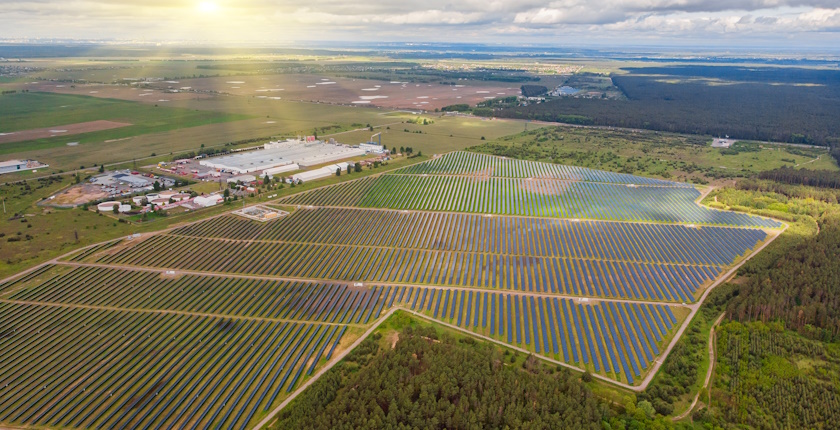
Investors in large solar power plants in Bulgaria don’t seem intimidated by zero and negative wholesale electricity prices eating away at their revenues. One of the factors is a surge in the construction of battery energy storage systems (BESS), which iron out the gap between intraday peak production and the power demand curve. In a new analysis, Capital.bg estimated that the country’s photovoltaic capacity is set to increase by 1.5 GW by the end of the first half of next year, only accounting for big projects.

The total would reach 6 GW. The report lists 14 projects, of which some are benefitting from BESS grants from one of Bulgaria’s past tenders.

Chinese group building largest current PV project

The biggest solar park under construction is Simeonovgrad-Polyanovo, consisting of two units of 250 MW in total. It is located in the Haskovo region in the southern part of the country.

United Energy Group bought the two projects last year. It it the first significant Chinese investment in Bulgaria, the article reads. The PV plant is expected to be put into operation early next year.

The construction of the first phase of the Tenevo hybrid power plant began almost two years ago

Next on the list is Tenevo. Almost two years ago, Eurowind Energy and Renalfa IPP marked the start of the construction of the solar segment of a hybrid power plant near Yambol. The PV park is envisaged with 237.6 MW in peak capacity and a 213.7 MW grid connection.

The largest solar power plant in Bulgaria is called Apriltsi.

St. George coming online before year-end

Czech company Rezolv Energy bought the St. George project for 229 MW two years ago and broke ground at the construction site last autumn. According to the latest data, the investment is worth almost BGN 1 billion (EUR 511 million) and it is coming online by the end of the year. The developer secured a 199 MW connection.

Greek government-controlled utility Public Power Corp. (PPC) is commissionning its Colosseum (Kolizeum) facility of 165 MW in the coming months, the update reveals. The project in Chirpan has an approved network connection of 120 MW. The company is planning to add batteries of 25 MW in capability and a capacity of 55 MWh.

The company is also building an 88 MW in Vedrare near Plovdiv. The contractor for the facility in the municipality of Karlovo is Chint Green Energy of the Chint Group. The power plant is on track to become operational early next year.

A 123 MW system will be on 400 hectares between the villages of Knizhovnik and Dolno Vojvodino in Haskovo. Austria-based Enery said it would install a BESS of 180 MWh next to its solar park.

Electrohold is testing its Maglizh PV plant, the article adds. The project for 100 MW occupies 127 hectares and the estimated investment is almost EUR 90 million. The plan was changed along the way.

Top Energy Solutions has a construction permit for its Loznitsa project in northeastern Bulgaria. The project is for a peak capacity of 115 MW and a grid connection of 99.99 MW, spanning 82.4 hectares. It is located at the villages of Vesselina and Kamenar in the Loznitsa municipality, Razgrad district.

by in News

Private equity fund to take over 39.5% stake in Romanian SMR project

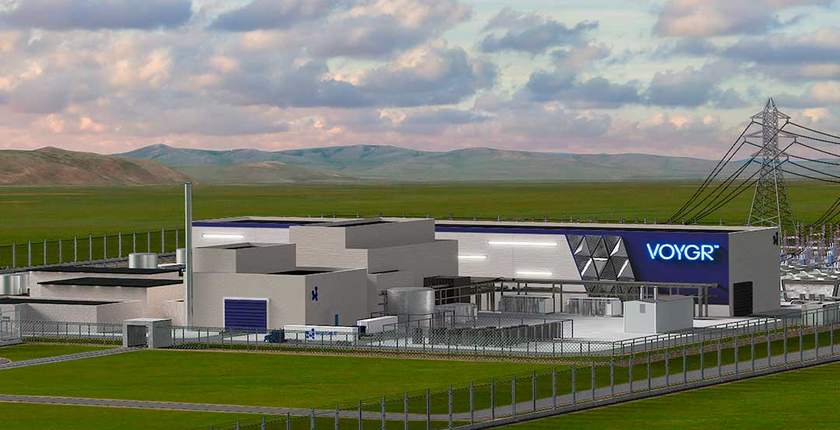
DS Private Equity (DSPE) is reportedly entering ownership in RoPower Nuclear, a project firm working to build a small modular reactor (SMR) in Romania. In a proposed capital increase, current co-owners Nuclearelectrica and Nova Power and Gas, now at 50% each, would land at 46.5% and 14%, respectively. The South Korean firm’s DSPE Beta Private Equity Fund would control the remaining stake in the Doicești project.

RoPower Nuclear is getting a third co-owner. The joint venture established for the SMR project northwest of Bucharest is about to get a capital increase as part of the financing process, according to a document that Profit.ro obtained.

State-owned Nuclearelectrica, which operates Romania’s Cernavoda nuclear power plant, and Nova Power and Gas (NPG) of the E-Infra group, now own 50% each. Under a new deal, DSPE Beta Private Equity Fund, controlled by DS Private Equity from South Korea, would contribute EUR 68 million in cash and get a 39.5% stake, the report reveals.

Nuclearelectrica to be biggest shareholder

Nuclearelectrica has earmarked EUR 76 million, with an option to convert part of its loans to RoPower Nuclear into ownership, instead of providing cash, the article reads. It would lower the company’s stake to 46.5%.

NPG would add EUR 20 million and have 14% after the transaction. E-Infra is controlled by Romanian entrepreneurs Teofil Mureșan, Simion Mureșan and Marian Pantazescu.

The proposed agreement would lift the project firm’s capital from EUR 8 million to EUR 172 million. DSPE is a shareholder in NuScale Power, which owns the technology for the planned SMR facility of 462 MW. It would be built in Doicești in Dâmbovița county in the Muntenia region. It is the site of a former coal plant.

DSPE could bring KEXIM, Samsung on board

NuScale, based in Oregon in the United States, recently said that it expects Romania to reach a final investment decision early in the second quarter of next year at the latest.

DSPE can bolster the project through its relationship with financial institutions such as Korea Export-Import Bank (KEXIM) and potential contractors including Samsung, the news outlet learned.

The Ministry of Energy in Bucharest earlier estimated the cost of the Doicești project at EUR 4.9 billion.

by in News

Bosnia and Herzegovina’s power utility keeps posting losses amid weak output, increased imports

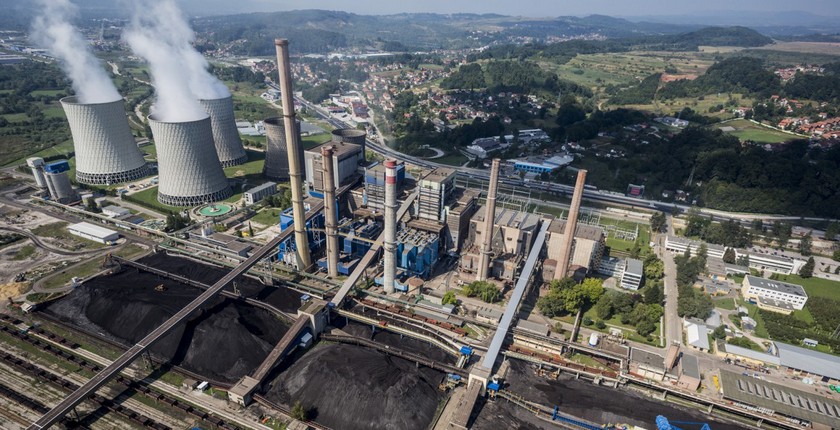
State power utility Elektroprivreda Bosne i Hercegovine (EPBiH) failed to stabilize its operations and turn a profit in the first half of 2025, posting a loss of BAM 45.47 million (EUR 23.25 million) instead. The poor performance was largely due to reduced electricity production and increased imports caused by a coal shortage.

EPBiH’s target for the first six months of 2025 was BAM 11 million in profit. Instead, the state power utility generated a loss that was by BAM 18.76 million higher than in the same period of 2024, when the loss amounted to BAM 26.71 million, according to Biznisinfo.

EPBiH suffered a net loss of EUR 29.4 million in 2024, following a EUR 170 million loss in the previous year.

In the first half of this year, EPBiH’s hydropower plants generated 121.8 GWh less electricity than planned, while output at its thermal power plants fell short of the target by as much as 651.4 GWh amid a coal shortage. At the same time, due to the lower production in its own power plants, EPBiH’s expenditure on electricity purchases was several times higher than planned.

The lower production and losses were mainly due to the coal shortage

In H1 2025, Bosnia and Herzegovina imported almost 4.5 times more electricity than it did in the same period in 2024, reflecting the difficult state of EPBiH and the other two power utilities in the country – Elektroprivreda HZHB (EPHZHB) and Elektroprivreda Republike Srpske (ERS).

EPBiH recorded a loss despite higher revenues

EPBiH recorded the six-month loss despite an increase in total revenues, from BAM 561.8 million in H1 2024 to BAM 745.1 million in the first half of this year. Revenues from power purchase agreements grew from BAM 549.3 million to BAM 733.3 million.

Total expenditures, however, increased to BAM 790.6 million from BAM 588.5 million in the first half of last year.

by in News

CW Enerji to tap on subsidies in Turkey for solar panel factory project

CW Enerji earmarked USD 520 million for the expansion of its solar panel manufacturing capacity in Antalya to 5 GW per year. It said it would benefit from the government’s HIT-30 incentives program.

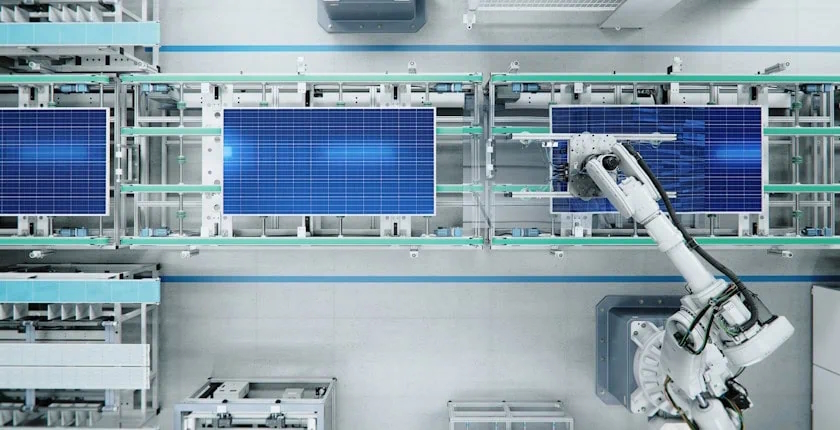
While Europe is stagnating in solar panel production and some large facilities are even closing under pressure from China’s increasing global dominance, Turkey is expanding its industrial base across new green energy technologies. CW Enerji is about to invest USD 520 million in the construction of a photovoltaic equipment factory, Anadolu Agency reported.

The company said it would implement the project under the government’s HIT-30 incentives program for high technology. The location is in AOSB – Antalya Organized Industrial Zone in the country’s southern, Mediterranean region.

High domestic content enables access to subsidies

CW Enerji’s new facility, would complement the existing CW Solar Cell factory. It makes up to 1.2 GW of TOPCon high-efficiency solar cells per year and the company claims it is the largest in Europe.

The upcoming investment would enable an annual capacity of 5 GW by the end of the second phase, in 2028, according to the company. The products would have a domestic content of more than 80%, complying with the requirements for tax incentives, CW Enerji’s Chairman Tarık Sarvan said.

He founded the company in Turkey in 2010. It also makes other components and provides installation and maintenance services. CW Enerji has established subsidiaries in Munich, Germany, and Houston, Texas. Total solar panel capacity is 1.8 GW per year and it exports to nearly 60 countries, Sarvan added. He pointed out that the company’s target markets are the United States and Europe.

Dozens of companies manufacturing PV equipment in Turkey

Right before CW Enerji’s announcement, Astronergy allocated USD 700 million for its second solar module factory, in Balıkesir.

Early this year, 75 solar panel manufacturers operated in Turkey. Put together, their annual capacity was 44.5 GW. Three were making solar cells and their overall capacity was 6.1 GW per year.

The country is also strong in other technologies, like for geothermal power plants.

The government recently declared a 2035 target for solar and wind of 120 GW in total. At the end of June, Turkey’s total electricity capacity was 119,6 GW, of which photovoltaics accounted for just under 23 GW.

by in News

Bulgaria preparing more BESS subsidies amid boom in construction of large facilities

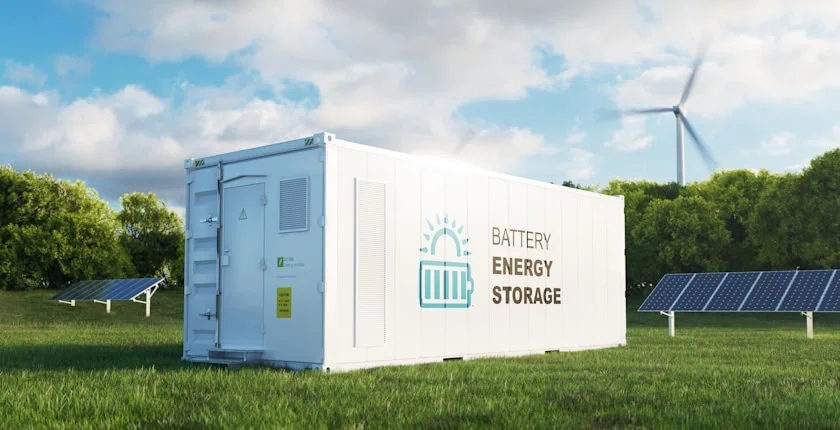
The Ministry of Energy of Bulgaria is reportedly working on a public call for EUR 120 million in state aid for investments in battery energy storage systems of 1.5 GWh overall. Many projects have been stuck since the European Union suspended funding, but major deals are underway nevertheless, alongside the construction of large facilities.

Bulgaria has managed to renegotiate the terms of the National Recovery and Resilience Plan (NNRP) with the European Commission, allocating another EUR 120 million for support for battery energy storage systems (BESS). Instead of awarding the grants to the projects that didn’t meet the quota in the National Infrastructure for Storage of Electricity from Renewable Sources (RESTORE) call for standalone facilities, the Ministry of Energy is preparing a separate competitive procedure, Kapital reported.

The EUR 120 million is apparently intended for supporting 1.5 GWh, compared to EUR 587 million last time, for 9.7 GWh. The move is far-fetched, as all battery facilities under the NRRP are required to come online already by the end of March.

The EU has blocked payments to Bulgaria from its Recovery and Resilience Facility (RRF), adding to the crunch. It’s why the winners from the RESTORE procedure still haven’t signed their contracts. However, the next tranche could be released soon.

Developers, contractors counting gigawatt-hours in BESS projects in Bulgaria

Small players are stretched the most by the lack of financing. On the other hand, many projects are advancing even before or without the grants.

Sunterra Re has entered into a strategic partnership with Sungrow to add the China-based company’s BESS solutions to its largest three solar power plants in Bulgaria. Total storage capacity is envisaged at more than 1 GWh. The Bulgarian operator said it already has 300 MWh.

Sunotec has struck massive deals for the deployment of its BESS solutions in Bulgaria

The deal is for the MV-Power Titan 2.0 lithium-iron-phosphate batteries and accompanying equipment and software. Sunterra Re owns PV plants Dalgo Pole (208 MW) Galabovo (201.4 MW) Karlovo (115 MW) and Pleven (9.6 MW).

Sungrow has just achieved another massive deal, with Sunotec.

Solaris Holding, a joint venture of the Bulgarian-German Sunotec and the main shareholders of Eurohold Bulgaria (Evrohold), recently commissioned a large hybrid power plant.

Bulgaria is among EU’s strongest BESS markets

Two months ago, a BESS facility of 124.1 MW in operating power, the largest in the country, was inaugurated in Lovech. At the time, the Ministry of Energy claimed it was the biggest in the EU.

Of note, Bulgarian company International Power Supply (IPS) is opening a factory for battery energy storage systems near Sofia. However, the Association for Production, Storage and Trading of Electricity (APSTE) warned that the government’s recycling levy for the installation of photovoltaic panels and BESS is five to 10 times higher than EU averages.

Bulgaria is one of the most lucrative markets for battery storage in Europe, given its wide range between the highest and lowest intraday wholesale electricity price.

by in News

KKR to provide Greenvolt with EUR 150 million capital boost

Greenvolt Group said its majority owner KKR fully subscribed to a EUR 150 million share capital increase. The transaction will especially support investments in battery storage.

In two tranches, KKR will increase the capital of its subsidiary Greenvolt by EUR 150 million. The injection is particularly aimed for the segment of utility-scale battery energy storage systems. The transaction reflects continued confidence in Greenvolt’s execution capabilities and long-term growth potential, the statement adds.

The update revealed the first phase of the capital increase, totaling EUR 100 million, would be completed in the coming days, and that the rest is expected to be completed by September 30. The Portuguese firm’s core business segments are sustainable biomass, utility scale, and distributed generation.

Greenvolt sold renewable energy assets for EUR 528.3 million in the first half of the year

It tends to sell 70% to 80% of its large-scale projects at the ready-to-build (RtB) or commercial operation date (COD) phases. Greenvolt said two months ago that it held a 13.2 GW pipeline across 18 countries, aiming to bring at least 5.3 GW to RTB by the end of the year. The renewable energy company has a probability-weighted pipeline of 4.3 GW in BESS across nine countries, with projects under construction in Poland, the United Kingdom and Hungary.

Greenvolt said its asset rotation sales in the first half of the year reinforced its capacity to finance the next investment cycle in Europe, North America and Asia.

“This capital increase is part of the path we’ve been building alongside our shareholder and once again demonstrates its commitment to Greenvolt’s strategy,” Chief Executive Officer João Manso Neto stated.

In early June, the company said it has agreed to sell a 231 MW portfolio of wind and solar projects in Spain, through its partnership with Green Mind Ventures, to Transiziona. The deal was worth EUR 195 million. Earlier this year, Greenvolt divested of EUR 333.3 million worth of utility-scale assets in Poland, mostly wind power.

by in News

Serbia adopts Just Energy Transition Plan until 2030

Serbia now has a Just Energy Transition Plan until 2030. The document contains suggested measures for the mitigation of the impact of reducing fossil fuel use, primarily coal, so that workers, firms and communities aren’t left behind.

Following last month’s completion of the public consultation process regarding the proposed Just Transition Action Plan, the Government of Serbia passed, at its last session, the Just Energy Transition Plan of the Republic of Serbia until 2030. The document leans on the Integrated National Energy and Climate Plan (INECP or NECP)

It lays out sustainable energy policy measures that would need or could be undertaken. The point is in reducing fossil fuel dependence and improving security and efficiency of electricity supply by switching to renewable energy sources, and in an energy efficiency boost.

A just transition aims to promote environmentally sustainable economies in a way that is fair and inclusive for all

“A just transition aims to promote environmentally sustainable economies in a way that is fair and inclusive for all – workers, businesses and communities – by creating opportunities for decent work and leaving no one behind. This initiative should not be seen as a fixed set of rules, but as a dynamic process based on dialogue with a focus on addressing the concerns and needs of local populations and affected stakeholders,” the plan reads.

The approach is based on mitigating the negative effects of the energy transition process. It implies significant investments in retraining and reskilling, to assist workers in adjusting to new industries, as well as education, the plan adds.

It highlights the importance of incentivizing the development of new industries, and supporting small and medium-sized enterprises, which can enable alternative sources of income and employment.

Electricity system collapse in December 2021 marked as turning point?

Until December 2021, domestic electricity production met domestic needs, although even before that, the power system had been making maximum efforts for many years to provide sufficient amounts of electricity or, rather, provide sufficient amounts of coal for the operation of thermal power plants, the document notes.

There is no elaboration on the time reference, but that’s when a major outage struck coal-fired thermal power plants of state-owned power utility Elektroprivreda Srbije (EPS). Of note, it was one in a string of serious incidents in the electricity system.

Coal plants are old and they mostly don’t comply with environmental standards

“The fact is that existing electricity generation plants are old and most of them are not in line with new operating conditions and standards when it comes to environmental protection. Therefore, it is quite clear that in the case of the Serbian energy sector, the energy transition should lead to a radical change in the structure of sources and methods of electricity production,” according to the plan.

Coal plants, open pit mines could be replaced with wide range of activities from culture to gas power plants

Listed among the possibilities for repurposing coal plants and coal mine land after shutting them down are green power plants (but also gas-fueled energy facilities), launching industrial production, logistical and commercial activities, together with sports, culture, education, agriculture, tourism and waste management.

In 2023. there were 25,288 employees in thermal power plants (22.2%) and coal mines (77.8%), the document notes. The oldest coal plant, Kolubara A of 239 MW, was built in 1956, and the newest unit is Kostolac B3, of 350 MW. It came online last year.

“Social dialogue mechanisms should be established to ensure that the voices of all stakeholders are heard and their concerns are addressed. This includes consultations with trade unions, local self-governments and civil society organisations,” the Just Energy Transition Plan of the Republic of Serbia until 2030 suggests.

Expenses are envisaged at EUR 75.4 million, of which EUR 12 million would be for incentives for entrepreneurship and self-employment and EUR 60 million for improving business structure at existing industrial parks.

Carbon pricing system to make coal power plants in Serbia increasingly uncompetitive

One section covers the upcoming rollout of charges within the European Union’s Carbon Border Adjustment Mechanism (CBAM). The tax affects imports of a group of raw materials and electricity. Third countries can be exempted if they establish their own carbon pricing and emissions trading systems.

“In order to balance the economic and environmental impacts of the introduction of domestic carbon pricing in Serbia, a phased approach could be adopted, starting with a modest carbon price and gradually increasing it. Support for affected industries, such as subsidies for low-carbon technologies and worker retraining programs, along with recycling revenues to finance green projects and providing direct rebates to citizens, can mitigate negative effects,” the plan adds.

NGOs have criticized the action plan draft for only describing preparatory activities

Actually, proceeds from greenhouse gas emissions allowances in the EU are used only for the green economic transition, and it is similar with most environmental levies.

The introduction of a carbon tax mechanism will make domestic coal-fired power plants increasingly uncompetitive, especially in regional electricity markets, the government warned.

Nongovernmental organizations and associations earlier criticized the draft, arguing that it delays the energy transition until 2030, only lists preparatory activities and that, inter alia, there is no targeted date for ending the use of coal for electricity production.

In any case, a just energy transition requires defining deadlines and projects and securing funds exclusively for the said purposes. Otherwise the market will trample coal plants and mines, and it will probably happen abruptly, which would jeopardize energy security and employment. Such effects are already tangible in Southeastern Europe, especially in Bosnia and Herzegovina, as well as in Bulgaria and Slovenia.

by in News

EDP Renewables sells wind farms in Greece to Enel-Macquarie joint venture

Principia agreed to acquire all four EDPR’s wind power plants in Greece. The joint venture of Enel and Macquarie Asset Management’s funds is nearing 800 MW in renewable energy and battery storage capacity in the country.

Principia, owned equally by Italy-based Enel and funds managed by Macquarie Asset Management, headquartered in Australia, is strengthening its presence in Greece with a purchase of four wind farms. EDP Renewables is selling the facilities to the firm after reportedly deciding to exit the country.

The joint venture, which expects to close the transaction later this year, revealed that the estimated enterprise value exceeds EUR 200 million. The measure can include debt and some other items. The takeover is adding 149.6 MW to its operational capacity, which would reach 727 MW, from 70 power plants. Wind power accounts for 517.8 MW.

With the purchase, Principia will operate a total of 517.8 MW in wind power capacity.

“The acquisition of this portfolio strategically strengthens Principia’s presence in the Greek renewable energy market, in a constantly evolving environment, and reaffirms a role of leadership in the country’s energy transition. With this investment, we further reinforce our position in the Greek clean energy market and take another step toward delivering on our ambitious plan for growth, diversification, and reliable clean energy generation across Greece,” Principia’s Chief Executive Officer Aristotelis Chantavas said.

All four wind farms operate within CfD scheme

All four wind farms are operating under 20-year contracts for difference (CfDs). Livadi (45 MW) and Erimia (35 MW) are in Malesina, Phthiotis. Wind power plants Xironomi (36 MW) and Chalcodonio (33.6 MW) were commissioned this year. They are located in Boeotia, Central Greece, and Magnesia, Thessaly, respectively.

Newmoney learned, without revealing its source, that Terna Energy, ENI Plenitude, HELLENiQ Energy and some investment funds also participated in the process, interested in the portfolio. The acquisition will lift Principia by one notch to become third among the largest wind farm operators in the country, the article adds.

Principia aims to complete construction of 49 MW battery system by year-end

Principia has another 230 MW under construction or in the ready-to-build stage, and 5.6 GW more in various stages of development.

It is building a battery energy storage system (BESS) of 49 MW in Polygyros, in the Halkidiki peninsula. It won government support at Greece’s second energy storage auction.

The Paleolivada facility is due to come online before the end of the year. Construction began in March. It will have 98 MWh in guaranteed capacity, versus 127 MWh installed.

The firm has a mature project for a hybrid power plant of 111 MW and 70 MW of solar power capacity. The site is in Atherinolakos, in Sitia in the south of Crete.

Principia inaugurated a photovoltaic cluster of 95 MW in May. The Perasma facility, near the villages of Mavrodendri and Sidera, is set to generate 126.8 MW per year. It comprises seven units and 170,000 bifacial panels.

Macquarie Asset Management agreed to buy 50% of Enel Green Power Hellas in 2023.

Of note, EDP Renewables (EDPR) is headquartered in Spain, but traded on the Euronext Lisbon stock exchange. It is a subsidiary of EDP.