by in News

RP Global gets EUR 12.2 million loan for Novalja solar project

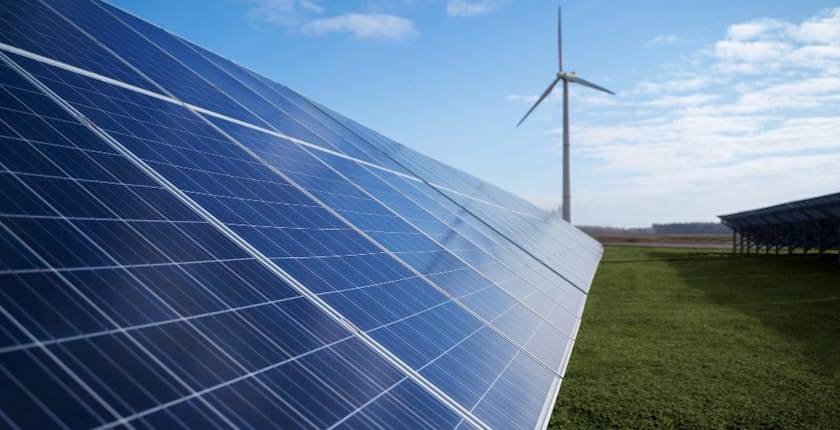
RP Global has secured a EUR 12.2 million loan to build its Novalja solar power plant in Croatia.

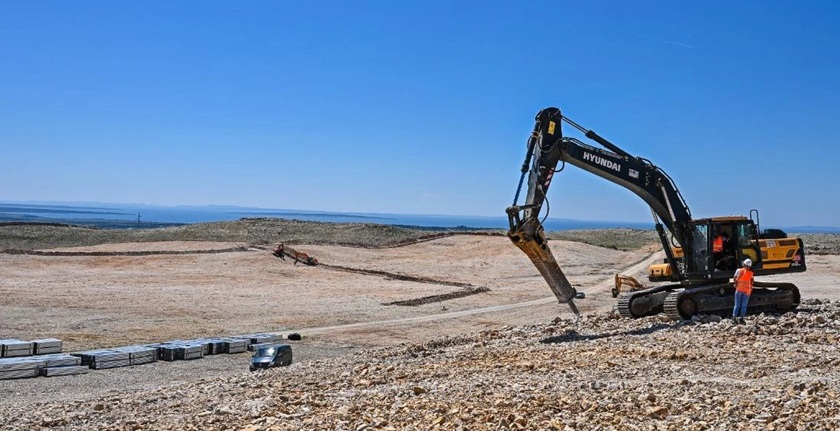
In late April, Austrian company RP Global began the construction of the Novalja photovoltaic plant at the Zaglava site on the island of Pag.

The European Bank for Reconstruction and Development (EBRD) said it approved a senior non-recourse project finance loan of up to EUR 12.2 million to RP Global Novalja d.o.o., owned by RP Global Energy GmbH, for the development and construction of the 21 MW Novalja PV plant in Croatia.

The project has been approved under the EBRD InvestEU Framework for Sustainable Transition.

The loan is divided into two tranches

The loan is split into two tranches: one amounting to a maximum of EUR 7.2 million, and the second of up to EUR 5 million, benefiting from a 20% first loss coverage under the EBRD InvestEU Framework for Sustainable Transition, the bank’s decision reads.

The total project cost is estimated at EUR 16.3 million.

The endeavor includes the installation of 35,776 photovoltaic panels. The expected annual electricity production is around 31,000 MWh, enough to supply about 12,000 households.

According to the EBRD, the project supports innovative offtake arrangements. It will combine a national renewables support with a merchant exposure in later years.

RP Global won premiums for its project at auctions

Last July, the Croatian Energy Market Operator (HROTE) awarded premiums for solar and hydropower plants with a total capacity of 420 MW. RP Global’s Novalja was among them, with 15 MW.

Back in 2022, the company said it intended to build wind farms and solar parks of 500 MW overall in Croatia over the next five years.

RP Global has completed two renewable energy projects in Croatia: the Danilo wind farm near Šibenik and the Rudine wind park near Dubrovnik.

Of note, the island town of Novalja could become one of the first in Croatia to begin the production of green hydrogen, and a rare example in the region. A project was launched in May.

by in News

Montenegrin power utility to borrow EUR 25.6 million for phase 2 of Gvozd wind farm

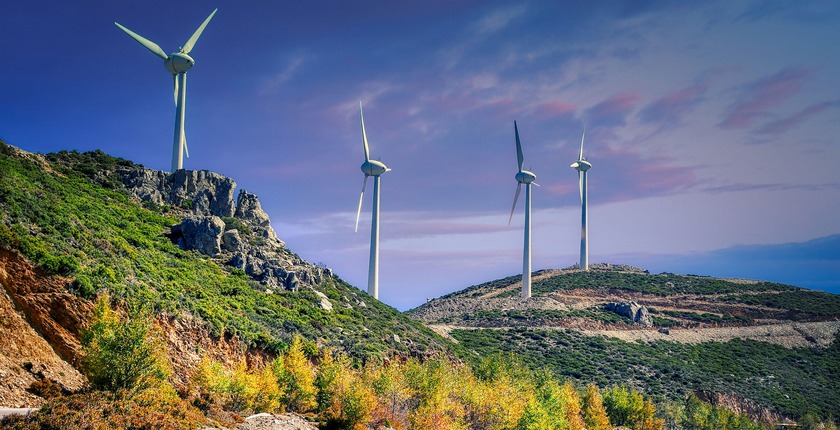
Montenegro’s state-owned power utility Elektroprivreda Crne Gore (EPCG) plans to take out a EUR 25.6 million loan from the European Bank for Reconstruction and Development (EBRD) to finance the second phase of the Gvozd wind farm project, with an installed capacity of 21 MW. The first phase of wind farm Gvozd, which is under construction, will have a capacity of 54.6 MW.

Announcing its request for government consent, EPCG stated that the capacity increase through the second phase of Gvozd would improve the security of electricity supply, increase the share of renewable energy in the country’s energy mix, and help Montenegro meet its international climate policy commitments.

EPCG previously announced that it expected the start of construction of the Gvozd 2 wind farm in early 2026.

The new document also states that EPCG has submitted a viability assessment of the Gvozd 1 and Gvozd 2 projects, prepared by German consultancy Fichtner GmbH & Co. KG for the purpose of securing financing from the EBRD.

The first phase of wind farm Gvozd will cost EUR 82 million

The first phase of the Gvozd wind farm, with eight turbines, is financed by an EUR 82 million loan from the EBRD. The groundbreaking ceremony was held in November 2024, and EPCG expects the power plant to enter trial operation by the end of this year. Its planned annual electricity output is 150 GWh.

A contract for the design, procurement, supply, and installation of equipment, as well as the commissioning and long-term maintenance of the future wind power plant, was signed with German company Nordex. EPCG said at the time that wind farm Gvozd would be its first large-scale power generation facility built in more than 40 years.

SCADA and ADMS will be introduced through a EUR 35 million project

In the announcement, EPCG also says it signed an agreement with the EBRD in January on financing a project to introduce the SCADA and ADMS systems into Montenegro’s power system. The implementation of SCADA (supervisory control and data acquisition) and ADMS (advanced distribution management system) is a key step towards modernizing the electricity distribution network, the document states.

SCADA enables remote control, monitoring, and automation of electricity distribution, while ADMS supports the integration of renewable energy sources. Together, these systems significantly improve the reliability, efficiency, and security of the power system, EPCG explains.

by in News

NGOs request withdrawal of draft just transition action plan in Serbia

Eighteen non-governmental organizations have criticized Serbia’s draft just transition action plan and called for the creation of a new document with concrete measures and activities. The Ministry of Mining and Energy said the adoption of the action plan should enable the establishment of an institutional framework for managing a just transition and define the most important activities up to 2030.

The Ministry of Mining and Energy recently published a draft just transition action plan and launched a public debate. The plan foresees investments of EUR 88 million.

The presentation of the draft took place yesterday in the Chamber of Commerce and Industry (PKS) in Belgrade. The public debate began on May 21 and ended today.

According to the Renewables and Environmental Regulatory Institute (RERI) and the Belgrade Open School, with support from 16 organizations, the ministry announced at the debate in PKS that the energy transition would be postponed until 2030 and that the proposed measures would be limited to preparatory activities aimed at preventing the negative outcomes of the energy transition.

The NGOs called for the development of a new draft with concrete measures and activities for a just transition.

The organizations urged the EBRD to check if the drafting and adoption of the document is in line with its standards

They called on the ministry to restart the preparation of the draft in line with the standards of the Law on the Planning System and the Energy Community’s guidelines for planning the just transition. They also urged the European Bank for Reconstruction and Development (EBRD) to compare the document’s drafting and adoption process against its environmental and social protection standards.

Of note, the draft is the result of a project funded by the EBRD. The NGOs outlined five main shortcomings.

The public debate was supposed to be organized in Lazarevac, Obrenovac, Kostolac, Požarevac, and other locations where the residents will be most affected

The first is that the public was neglected (the 20-day period for public debate is insufficient; no presentations were held in Lazarevac, Obrenovac, Kostolac, Požarevac, or other places where the residents will face the greatest and most direct impact). Another one is legal baselessness.

The third objection relates to the fact that the measures are neither precise nor substantive but only preparatory (most of the proposed measures are either preparatory or require additional analyses and research). The next item is that half a million euros are envisaged for updating recently adopted acts (it is not specified which strategies, laws, and bylaws need to be amended).

Finally, the civil sector criticized the fact that there is no precise date for phasing out coal-fired electricity production (it prevents affected communities and workers from making rational and informed decisions).

Zlatković: The draft action plan serves as an introduction to a broader energy transition process

Aleksandar Zlatković – second from left (photo: Ministry of Mining and Energy)

Aleksandar Zlatković, advisor to the minister of mining and energy and head of the working group for the preparation of strategic documents at the ministry, said that the draft action plan represents an operational framework for the specification of the strategic goals defined in the Integrated National Energy and Climate Plan until 2030, with a vision to 2050 (INECP), and the Energy Development Strategy until 2040, with projections to 2050.

The proposed measures include support for workers and communities in transition, strengthening local economies, education, and retraining, as well as capacity building for local authorities.

The detailed elaboration and identification of priority territories and targeted measures will be carried out by bodies that are planned to be established

According to Zlatković, the document also serves as an introduction to a broader energy transition process and establishes the institutional framework for setting up the bodies that would systematically manage and plan the just and energy transition processes.

“It is important to emphasize that the action plan provides only illustrative examples for some potentially affected regions. The detailed elaboration and identification of priority territories and targeted measures will be carried out through the work of the newly formed bodies, primarily after the adoption of the decarbonization plan of Elektroprivreda Srbije (EPS),” Zlatković stated. The state-owned power utility is expected to produce the document by the end of the year, he added.

by in News

Montenegro preparing first renewable energy auction to accelerate green transition

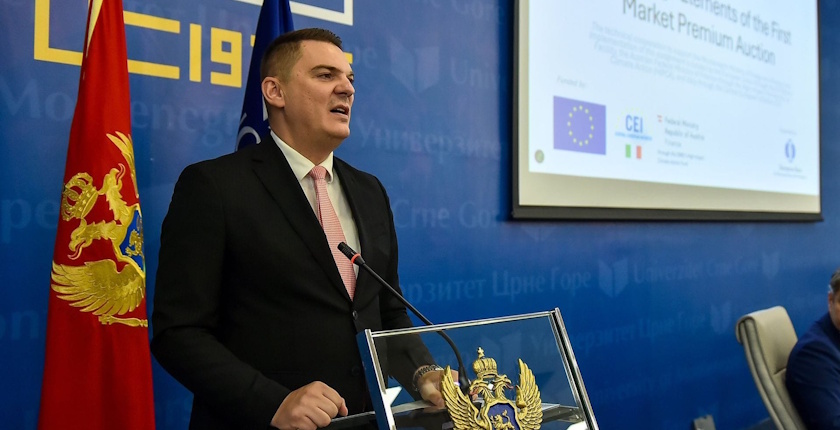
A model for Montenegro’s first auction for market premiums for solar power was outlined at an event in the capital Podgorica. The new legal framework for the green energy transition includes guarantees of origin, citizen energy communities and streamlined permitting. Stakeholders will be able to participate with their comments and suggestions in the renewables auction design.

The Ministry of Energy and Mining of Montenegro organized a conference today to present the key design elements of the first market premium auction for renewables. The competitive bidding process for wind and solar power is part of the reform agenda within the European Union’s Growth Plan for the Western Balkans.

The country’s new legal framework includes guarantees of origin, citizen energy communities and simplified permitting aimed at facilitating investment. They were defined with the new laws on energy and renewables.

The ministry said the first auction would be for photovoltaics. Solar power is the segment with the greatest potential and the lowest share in domestic electricity production, it explained.

EBRD’s Zakaria: First auction should match market needs

The Head of Montenegro in the European Bank for Reconstruction and Development (EBRD) Remon Zakaria urged stakeholders to send their comments and suggestions. The design of the first auction should match the needs of the market as much as possible, he argued.

EBRD participated in drafting the model. The ministry also thanked the Ministry of Finance of Austria, Central European Initiative (CEI) and other partners for their assistance.

At the event in Podgorica, a team of experts presented the technical matters concerning the upcoming auction.

Montenegro to boost renewables’ share in electricity output to 70% by 2030

This is not just the beginning of a technical process – it is a strategic leap, according to Minister of Energy and Mining Admir Šahmanović. He pointed out that Montenegro is transitioning from state incentives to a market-based support model, saying it aligns with the best European practices.

“We know our ambitions and goals for 2030 – a 50% share of renewable energy sources in final consumption and 70% of electricity to be produced from renewable sources. They are indeed demanding targets, but reachable – especially with support from international partners and the private sector,” Šahmanović added.

Montenegro has demanding, but achievable green energy targets, Minister Admir Šahmanović said

Montenegro doesn’t see itself isolated in its energy future but as an integral part of the European market, the minister asserted. With the forthcoming auction, the country is sending a clear message that it is ready for the next steps in the green transition, in his view.

The government is committed to decarbonization, digitalization and preparations for the European Union’s instruments like the emissions trading system (ETS) and Carbon Border Adjustment Mechanism (CBAM), Šahmanović underscored.

“We don’t see this process as a political goal – but as an economic opportunity and social imperative,” the minister said.

by in News

Works beginning on North Macedonian side of gas interconnector with Greece

The North Macedonian section of the gas interconnector with Greece is expected to be completed by early 2027. The construction contract was signed by the Ministry of Energy, Mining and Mineral Resources, domestic contractor Rapid Build and the country’s gas transmission system operator Nomagas.

The construction of the gas pipeline connecting North Macedonia with Greece is set to begin in a month, according to officials. Land expropriation is 90% complete. The initial capacity of the interconnector would be 1.5 billion cubic meters per year, with a potential to double it. The works are expected to be completed within 22 months.

„With the signing of the contract for the construction of the Macedonian section of the gas interconnector with Greece, we are marking the beginning of the largest energy investment in North Macedonia in the last ten years. The interconnector is proof that when there is political will, regional trust, and professional dedication – the results are real and tangible,” said Minister of Energy, Mining and Mineral Resources Sanja Božinovska.

The contract was signed by the ministry, contractor Rapid bild, based in Kumanovo in North Macedonia, and the country’s gas transmission system operator Nomagas. The future pipeline would be able to carry both natural gas and hydrogen.

Repeated tender slashes price by EUR 12 million

The winning bid was EUR 59.9 million or EUR 12 million less than in the initial tender, which was annulled.

The project is worth over MKD 5.1 billion (EUR 82.9 million). It is financed by the European Investment Bank (EIB) and the European Bank for Reconstruction and Development (EBRD). It includes grants of EUR 2.5 million for technical assistance and another EUR 9.9 million via the Western Balkans Investment Framework (WBIF).

The project is financed by the EIB and EBRD

„This contract ensures diversification and access to a greater number of natural gas sources, enables economic development, progress and environmental protection, and contributes to the security of energy supply,” said Executive Director of Nomagas Muhamet Elmazi.

Gasification would significantly improve air quality, especially in areas where wood and fuel oil are currently used for heating.

Greek section of interconnector under construction since February

On the North Macedonian side, the interconnector route is 68 kilometers long, out of a total of 123 kilometers. It will run from Nea Mesimvria in Greece through Evzoni (Mačukovo) and Gevgelija at the border, to Negotino. The next phase involves building gas links from Gostivar to Kičevo (34 kilometers) and from Sveti Nikole to Veles (28 kilometers).

Greek company Terna began constructing its country’s section of the pipeline in February.

Nomagas and Greece’s National Natural Gas System Operator (DESFA) made their final investment decision a year and a half ago.

The companies leaned the investment on the project for the Alexandroupolis LNG Terminal. The liquefied natural gas facility in northeastern Greece was opened on October 1. However, due to a malfunction, it has been out of operation for more than three months. According to the latest update, gradual reactivation is expected to begin by the end of May.

by in News

Investors seek to install 5.5 GW of renewables in Montenegro – minister

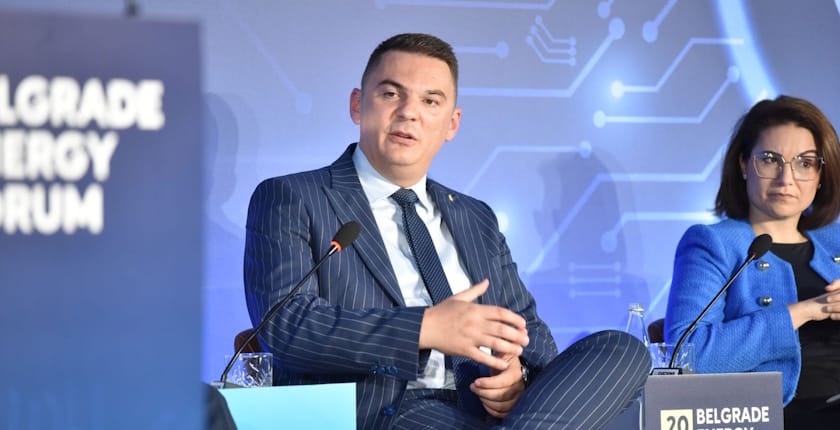
Montenegro has received applications for building solar power plants and wind farms with a total capacity of 5.5 GW, Admir Šahmanović, the Minister of Energy and Mining, said at Belgrade Energy Forum 2025.

Montenegrin Minister of Energy and Mining Admir Šahmanović said the country has made significant progress in shaping its regulatory framework.

Montenegro has passed new laws on energy and renewable energy sources, while a draft law on the exchange of electricity and natural gas has been prepared.

“We are currently drafting a national energy and climate plan, which will be finalized by the end of next month,” Šahmanović stressed.

Montenegro currently has about 1,000 MW of renewable energy capacity

He also recalled that the government is preparing renewable energy auctions in collaboration with the European Bank for Reconstruction and Development (EBRD). The minister expects these auctions will significantly boost investments in renewables.

According to Šahmanović, the country has made considerable efforts to improve the investment climate.

“As a result, we have received 45 applications for the construction of renewable power plants with a combined capacity of 5.5 GW. For comparison, the country’s current capacity is slightly over 1 GW, which demonstrates our success,” he explained.

A memorandum on market coupling with Italy would be signed very soon

He said that a memorandum on market coupling with Italy would be signed next month. “We will also discuss the installation of another subsea cable for electricity transmission between Montenegro and Italy,” Šahmanović noted.

Montenegro plans to couple its day-ahead electricity market with Italy, linking it to the single European market. It previously considered two options for its first market coupling: with Serbia and with Albania, Kosovo*, North Macedonia, and Greece.

The third Belgrade Energy Forum 2025 (BEF 2025), started today welcoming four hundred participants from more than 30 countries from the region, Europe and beyond. The two-day conference is organized by Balkan Green Energy News.

by in News

Second HVDC link from mainland Greece to Crete coming online

Greece’s Independent Power Transmission Operator (IPTO) is completing the last elements of the Ariadne Interconnection project, one of the deepest subsea links in the world. The company plans to switch on the double high-voltage direct current (HVDC) cable between Attica and Crete by the end of the month. In addition, IPTO and its Italian counterpart Terna are developing a project for a second interconnector between them.

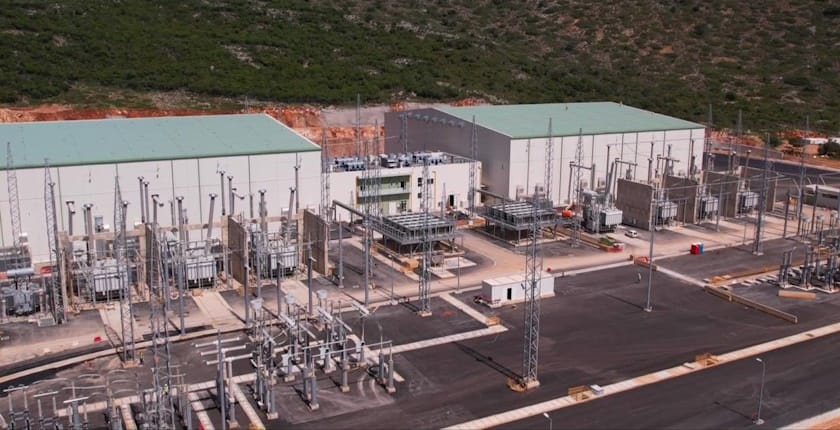
Final tests and equipment checks are being completed at the Damasta Converter Station in Heraklion ahead of the start of the trial operation of the Crete-Attica electricity link. The management of IPTO, also known by its Greek acronym Admie, and the HDVC Ariadne Interconnection project firm inspected the site.

The transmission system operator said it plans to energize it this week by injecting reactive power into the electricity system in the country’s biggest island.

The transmission of active power from Attica to Crete is set to begin in late May, the update adds. Ariadne consists of two 500 kV cables of  500 MW each. One end is in Pachi in the city of Megara, between Athens and Corinth, and the other one in Korakia in Crete. The submarine and underground cables were tested earlier.

Line on mainland is under trial electrification

At the same time, on the Attica side, a trial electrification of a 400 kV cable system is taking place between the Koumoundouros Converter Station and the adjacent Extra High Voltage Center. Ariadne Interconnection is the largest and most complex electricity transmission project in Greece so far, IPTO underscored.

Furthermore, a 150 kV transmission line between Chania and Damasta recently received the decision on the approval of environmental conditions (AEPO), the company added. It is considered necessary for an optimal combined use of Crete’s two interconnections with the mainland, the announcement reads. The first one, from Peloponnese, was established in 2021.

Ariadne, worth more than EUR 1.1 billion, is one of the three deepest interconnections in the world. The HVDC line’s capacity matches the interconnector to Sardinia, the strongest power link so far with an island.

The project is co-financed through the National Strategic Reference Framework (NSRF 2014-2020 and NSRF 2021-2027), via the European Union, with up to EUR 535.5 million. The idea for the endeavor dates back to the 1990s.

The contractors are Nexans and Prysmian. Each was responsible for one of the two cables while the latter also laid two submarine telecommunication lines.

Erdoğan again taunts Great Sea Interconnector by promising alternative cable

Ariadne is part of a proposed corridor with the Great Sea Interconnector project, formerly EuroAsia Interconnector, envisaged going to Cyprus and Israel. The Crete-Cyprus investment has been suffering heavy delays amid financing issues, ownership disputes and Turkey’s threats.

In early May, President Recep Tayyip Erdoğan visited the Cypriot Turkish breakaway republic, recognized only by Turkey, and promised an interconnection with his country. He compared it to an existing water pipeline.

“Did we bring water from under the sea to Northern Cyprus from Turkey? Now we are in the second stage. God willing, we will bring electricity and with that we will cover the needs of Northern Cyprus in water and electricity,” Erdoğan stated.

Notably, IPTO denied yesterday a press report that it is considering the possibility, together with Nexans, the contractor, to alter the route and connect Crete with the Dodecanese Islands instead of with Cyprus. The archipelago includes Rhodes, Astypalaia (Astypalea), Kos and Tilos.

EBRD is providing a grant for the first studies for an interconnection between Greece and Egypt

In other news, the European Bank for Reconstruction and Development (EBRD) and Elica Interconnector, a member of the Copelouzos Group, signed a grant agreement for the first studies for the planned Egypt-Greece (GREGY) electricity interconnection.

IPTO and its Italian counterpart Terna signed today a memorandum of understanding to install a second undersea HDVC power line. The GR.ITA 2 project is for a double cable, two times 500 MW, scheduled for completion in 2031. The two sides earmarked a total of EUR 1.9 billion.

The existing 500 MW interconnector, in operation since 2002, is temporarily down due to a malfunction.

by in News

Montenegro’s CEDIS to invest EUR 30 million in distribution grid

Montenegrin electricity distribution system operator CEDIS plans to invest EUR 30 million this year or EUR 6 million more than in 2024.

The increase in investments demonstrates greater ambitions year after year and that grid works are becoming more intensive and demanding, according to CEDIS.

The country’s distribution system operator (DSO) said it would increase capacity for the integration of new users, improve voltage conditions, strengthen reliability and security of power supply, and reduce losses.

The investments include projects planned to be started this year as well as ones already in motion, such as the modernization of six 35/10 kV substations.

CEDIS is building two substations

CEDIS pointed to several significant endeavors within the primary grid. The most significant ones are the construction of 35/10 kV substations Tivat 3 and Rijeka Crnojevića, and the modernization of the systems Buljarica-Kufin (110/35 kV) and Podgorica 7 (110/10 kV).

Seven 35/10 kV substations are up for reconstruction – Tuzi, Unač, Ptič, Andrijevica, Velika Plaža 1, Velika Plaža 2 and Čanj. The plan includes procuring new equipment for existing 35 kV transmission lines, worth about EUR 1.4 million.

The company is introducing SCADA and ADMS systems

CEDIS will use a EUR 35 million loan from the European Bank for Reconstruction and Development (EBRD) to roll out SCADA and ADMS systems, and to purchase smart meters.

The company highlighted SCADA and ADMS as a key step towards the modernization of the distribution network and the improvement of reliability, efficiency, and security of the power system.

Investments envisaged by the project Decarbonization of the Energy Sector of Montenegro, financed with a loan from the World Bank, are kicking off this year. Its subproject for increasing the operational efficiency of the power distribution grid comprises the reconstruction and modernization of substations, and improvement in the visibility of the distribution network.

EUR 5 million for energy infrastructure on Jaz-Tivat Boulevard

One of the largest investments is the installation of power infrastructure within the construction of the Jaz-Tivat Boulevard. The investment is estimated at EUR 5 million.

Projects within the secondary distribution grid are the construction of 268 substations of 10/0.4 kV, modernization of 10 kV transmission lines, and reconstruction of existing 10/0.4 kV substations. The planned works are valued at more than EUR 6 million.

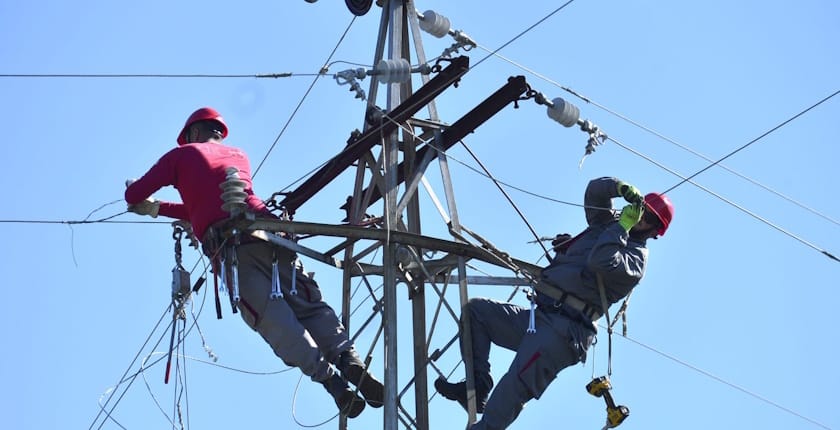
CEDIS is continuing with the revitalization of the middle- and low-voltage grid. It earmarked EUR 9 million for this year for the purpose. The project is for the renewal of four 10 kV transmission lines and 52 substations of 10/0.4 kV and replacing 1,500 poles.

The installation of new meters and the relocation of measuring points will also be continued. The plan is to start phase 4 of the advanced metering management (AMM) project. The investment is estimated at EUR 12 million.

by in News

Elektroprivreda BiH seeks contractor for three solar power projects

Power utility Elektroprivreda BiH (EPBiH) called on companies to apply for designing and building three solar power plants. Two sites are on depleted coal land and the third one could become a hybrid power plant with existing wind farm Podveležje.

Within a project called EPBiH Solar Transition Programme, Bosnia and Herzegovina’s state-owned company Elektroprivreda BiH launched a tender for three photovoltaic facilities of 28 MW in total. The public call is on the EBRD Client e-Procurement Portal (ECEPP) of the European Bank for Reconstruction and Development. The lender pointed out it is the first phase of the first tranche.

EBRD is considering financing the investment valued at EUR 80.8 million with a EUR 36.5 million loan. EPBiH would provide EUR 7.7 million and secure the rest from other sources.

The tender consists of two stages while applications are received until May 26. The company selected for the first phase would be tasked with designing and building solar power plants Gornja Breza (15 MW), Višća (8 MW) and Podveležje 3 – with 5 MW in capacity.

EPBiH has 30-year concession for its PV project Podveležje 3

Phase 2 of the second tranche, for 56 MW, would comprise the proposed facilities Potočari 1, of 16 MW, Bedrock 1-3 (two times 8 MW plus 16 MW) and Banovići Selo, of 8 MW. Combined with the second tranche, the plan envisages 13 solar power plants of 195 MW overall.

Gornja Breza is on a former dump of the Breza coal mining complex north of the capital Sarajevo. Višća is at a depleted open cast coal mine on the territory of the city of Živinice near Tuzla.

The Podveležje 3 solar power project is colocated with the Podveležje wind power plant, owned by Elektroprivreda BiH. If the two systems are connected to the same infrastructure and digitally integrated, together they will become a hybrid power plant. The company won a concession last year for 30 years for 4.8 MW in the photovoltaic segment.

Abandoned coal land to host PV plants of Elektroprivreda BiH

EPBiH intends to build its other PV units in the first tranche also at abandoned parts of its mining complexes.

EBRD and UniCredit are financing the Gračanica 1 and 2 projects, located at a former tailings dump of the Gračanica mine. They are for 25 MW each and the connection capacity of the solar park would be 45 MW.

Notably, the company has been reporting losses quarter after quarter. It concluded last year with EUR 29.4 million in the red, compared to EUR 170 million in 2023. However, the company said in December that Chinese contractors have returned the advance payment of EUR 127 million that it payed them for the failed Tuzla 7 coal-fired power plant project.

Elektroprivreda BiH is planning another two wind farms: Vlašić and Bitovnja.

by in News

Montenegro’s DSO CEDIS secures funds for grid digitalization

Montenegrin distribution system operator (DSO) CEDIS has secured funds for the installation of an advanced grid management system and procurement of smart meters.

The EUR 40 million package consists of a EUR 35 million loan provided by the European Bank for Reconstruction and Development (EBRD) and a EUR 5 million grant under the European Union’s Western Balkans Investment Framework (WBIF).

The funds are intended for a new supervisory control and data acquisition (SCADA) system and an advanced distribution management system (ADMS), as well as the procurement of new smart meters.

Smart meters help users and utility companies monitor and manage electricity usage more efficiently

The project is expected to reduce technical losses by 10%, decrease grid outages to approximately one sixth of the current level, allow new renewable energy sources to be integrated into the grid and enhance cyber security, according to CEDIS and EBRD.

The SCADA system will be used to monitor and control medium-voltage grid networks in real time. ADMS is an advanced platform that optimizes the management and operation of the electricity distribution system.

Smart meters help users and utility companies monitor and manage electricity usage more efficiently, reducing losses and improving reliability, the update reads.

The loan agreement was signed by the EBRD’s Head of Montenegro Remon Zakaria, CEDIS CEO Vladimir Ivanović, and Ivan Bulatović, CEO of EPCG.

Ivanović: The integration of smart meters will empower consumers to better understand and optimize their energy usage

According to Zakaria, the project represents a transformative step towards the digitalisation of the electricity distribution system in Montenegro.

Citizens will experience a more reliable electricity supply, and CEDIS will achieve substantial reductions in technical losses and gain the advanced capabilities required to swiftly detect and address technical faults, he added.

Vladimir Ivanović said SCADA and ADMS would revolutionize the way the company operates the distribution network. The integration of smart meters will empower consumers to better understand and optimize their energy usage, contributing to greater energy efficiency across the network, he stressed.

Last year Ivanović said CEDIS has reduced grid losses from 12.93% to 10.84% and that it planned to lower them below 10% by the end of December.