by in News

Serbia’s EPS inks EUR 109.7 million deal for Vlasina HPPs revamp

Serbia’s power utility Elektroprivreda Srbije (EPS) signed a contract for the modernization of its Vlasina hydropower plants with Energotehnika – Južna Bačka.

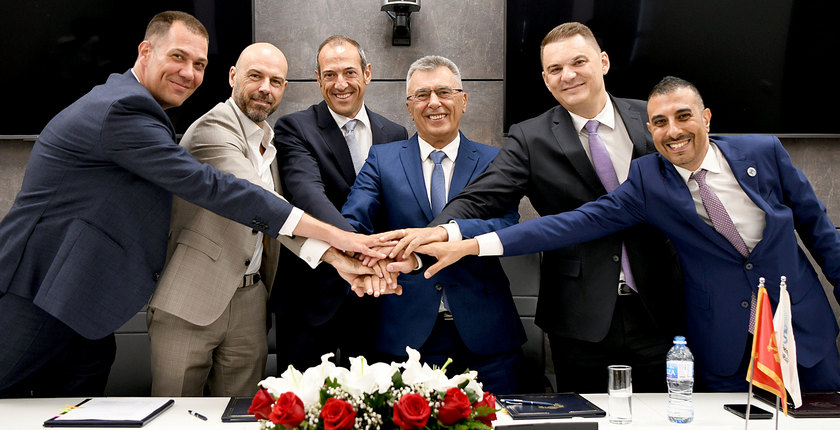
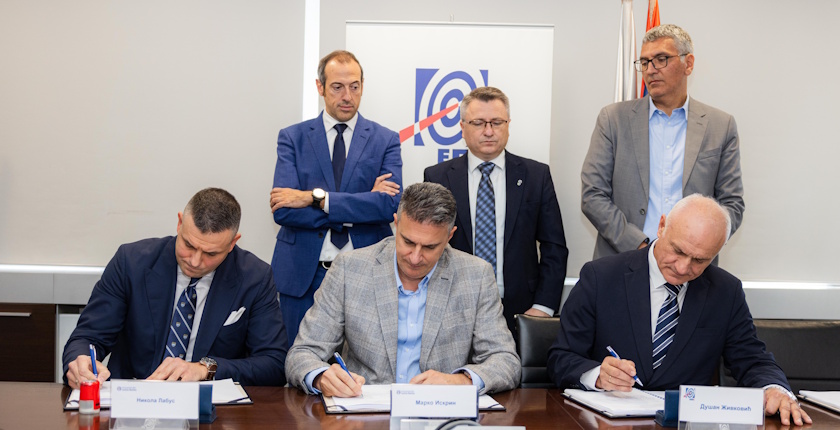
The contract for the reconstruction and modernization of the Vlasina (Vlasinske) hydropower plants (HPPs), with a capacity of 129 MW, was signed by Dušan Živković (sitting first from right), Chief Executive Officer of Elektroprivreda Srbije (EPS), and representatives of Energotehnika Južna Bačka – Marko Iskrin (second from left), Executive Director for Technical Affairs, and Nikola Labus (first from left), Deputy Executive Director for Financial Affairs.

Of note, in mid-July, Hungarian state-owned energy company MVM became the majority owner of Energotehnika – Južna Bačka.

The total value of the project is estimated at EUR 109.7 million. It envisages the reconstruction and modernization of generation units, auxiliary systems, and hydromechanical equipment. The main equipment suppliers are Andritz Hydro and Gamesa Electric, EPS said.

Financing has been secured through a EUR 67 million loan from the European Bank for Reconstruction and Development (EBRD), a EUR 15.4 million grant from the European Union via the Western Balkans Investment Framework (WBIF), and EPS’s own funds in the amount of EUR 27.2 million.

The capacity of the Vlasina HPPs would be increased by 8 MW

“On the day when the Vlasina HPPs celebrate their 70th anniversary, we officially start the project of their modernization. The result would be an increase in the installed capacity by 8 MW and reliable operation for the next three to four decades,” Dušan Živković underlined.

He recalled that the Vlasina HPPs are unique plants in the EPS portfolio. They operate in a cascade system, generating electricity four times one after the other and representing a significant source of peak energy.

The Vlasina HPPs began operating in 1955

According to Milan Aleksić (second from left in back row), advisor to the Minister of Mining and Energy for capital projects, investments are key to securing an electricity supply amid growing demand and the need to rely more on renewable energy sources.

Vlasina started its operations on November 6, 1955, with the commissioning of the first unit at the Vrla 1 hydropower plant.

The system consists of the Vlasina lake – reservoir, four cascade run-of-river hydropower plants, and the Lisina pumping station with the Lisina reservoir. Since the start of operation, the plants have produced more than 17 million GWh.

The signing was also attended by Francesco Corbo (first from left in back row), Regional Head of Energy for the Western Balkans and Croatia at the European Bank for Reconstruction and Development (EBRD).
Photo: EPS/Nenad Kostić
by in News

North Macedonia’s ESM needs investments of EUR 3 billion to replace coal power

Power utility Elektrani na Severna Makedonija estimated that it requires EUR 3 billion by 2040 to replace electricity from its lignite-fired power plants. According to member of the Board of Directors Ivan Stojanovski, the state-owned company is preparing investments in gas power plants, solar, wind, hydropower and energy storage. He highlighted its plans for a 300 MWh battery and the Bogdanci hybrid energy park.

North Macedonia’s utility Elektrani na Severna Makedonija (ESM), the country’s main electricity producer, generated 60% of the 2024 output in the Bitola and Oslomej coal plants.

A rough estimate is that ESM would have to invest around EUR 3 billion in the next 15 years to replace its power production from lignite, which is baseload energy, Ivan Stojanovski, a member of the Board of Directors and the company’s Chief Financial Officer, told Balkan Green Energy News on the sidelines of the International Forum on Energy for Sustainable Development (IFESD-14).

He explained that the transition to green energy is quite expensive. ESM needs to replace the 840 MW in baseload production that the Bitola and Oslomej thermal power plants provide, the executive added.

Hydropower is a domestic electricity source, unlike natural gas

The company opted for investments in diverse energy sources to achieve it, Stojanovski stressed.

Gas power plants provide baseload energy, but at the same time, they turn the spotlight on national security as well as the security of supply, in his words.

Lignite is currently mined in North Macedonia while natural gas must be imported, so gas supply interruption is possible, ESM’s CFO added.

Gas power plants are required, but it is necessary to invest in hydropower as it is a domestic resource, Stojanovski said. On the other hand, hydroelectric plants are more expensive and it takes longer to build them, he noted.

ESM launched the Bitola 3 solar power project

ESM is developing wind and solar power projects as well. Stojanovski highlighted the planned expansion of its Bogdanci wind farm. The European Bank for Reconstruction and Development (EBRD) is participating in the development of the Miravci wind power project, of at least 100 MW, he recalled.

The company is working on solar power projects Oslomej 1 (10 MW), Oslomej 2 (10 MW), Bitola 1 (20 MW) and Bitola 2 (60 MW), Stojanovski asserted. Bitola 3 endeavor is underway, too, and the financing contract is expected to be signed by the end of the year, he revealed.

The photovoltaic system will have at least 100 MW, Stojanovski asserted.

“We plan to sign a contract next year with Agence Française de Développement (AFD) for a solar power plant in Bogdanci of at least 30 MW and to create a hybrid energy park there – wind, solar, and a battery,” he stated.

According to Stojanovski, the company is developing a battery energy storage project with the EBRD, for up to 300 MWh in capacity. The site is within the REK Bitola coal complex and the facility will be a systemic solution for all the solar power plants there, he explained.

Blended financing as a solution

“EUR 1 billion to EUR 1.3 billion is needed just for solar, wind and batteries. We will need between EUR 500 million and EUR 700 million for gas power plants. Another EUR 1 billion to EUR 1.3 billion would be for large hydropower plants such as Čebren and Vardar Valley, and some smaller projects,” Stojanovski explained.

Asked how the company plans to secure financing, he pointed to blended financing – own sources combined with some participation from international financial institutions. It is important to diversify the sources by opening cooperation with as many financial institutions as possible, in Stojanovski’s view.

ESM traditionally cooperates with the EBRD and KfW. Stojanovski announced that the company would diversify financing by launching cooperation with the World Bank, Italy’s development bank Cassa Depositi e Prestiti, and AFD.

“It will enable us to access more sources and complement them with financing from local banks. We also tend to obtain support from the state budget over a longer period, 10-15 years, and state guarantees, but also additional funds. This is a financial model that can secure long-term and sustainable financing of infrastructure projects,” Stojanovski said.

by in News

Second phase of Gvozd wind farm gets green light from environment agency

The Environmental Protection Agency of Montenegro has determined there is no need for an environmental impact assessment report for the second phase of the Gvozd wind farm, and allowed the project to proceed. It is for three additional wind turbines with a total capacity of 21 MW, bringing the wind farm’s overall capacity to 75.6 MW.

Within the same decision, the firm implementing the Gvozd 2 project is instructed to conduct a one-year survey of birds and bats at the project site by November 1, 2026, and to submit the findings to the Environmental Protection Agency, which reserves the right to order additional measures if necessary.

During construction, the project developers must take steps to reduce noise and use the existing road network to avoid the destruction of bird and bat habitats. It is also necessary to monitor bird nesting and take measures to protect nesting sites, while minimizing forest clearance and reducing the risk of vehicle collisions, according to the agency’s decision.

Special attention must be paid to bird and bat habitats

The second phase of the Gvozd wind farm project is financed by a EUR 25 million loan from the European Bank for Reconstruction and Development (EBRD), signed with Montenegro’s state-owned power utility Elektroprivreda Crne Gore (EPCG). Its subsidiary in charge of the project, Green Gvozd WPP Second Phase, is registered in Podgorica.

Once completed, Gvozd will be the largest of Montenegro’s three wind farms, with a capacity to generate over 210 GWh of electricity annually. It would be enough to supply around 36,000 households, with CO₂ emissions expected to be reduced by nearly 137,000 tons per year, EPCG said after signing the loan agreement.

The first phase should be completed by the end of this year, and the entire project before the end of 2026

The first phase of Gvozd will have eight wind turbines with a total capacity of 54.6 MW. Construction began in November 2024. EPCG expects the plant to be put into trial operation by the end of this year. Its annual electricity output is estimated at 150 GWh.

EBRD financed the first phase as well, with an EUR 82 million loan. Gvozd will be EPCG’s first large-scale power generation facility built in more than 40 years.

The EBRD previously announced that all 75.6 MW should be online before the end of 2026.

by in News

EU-Montenegro Investment Conference: 14 partnerships, MoUs signed for energy, sustainable projects

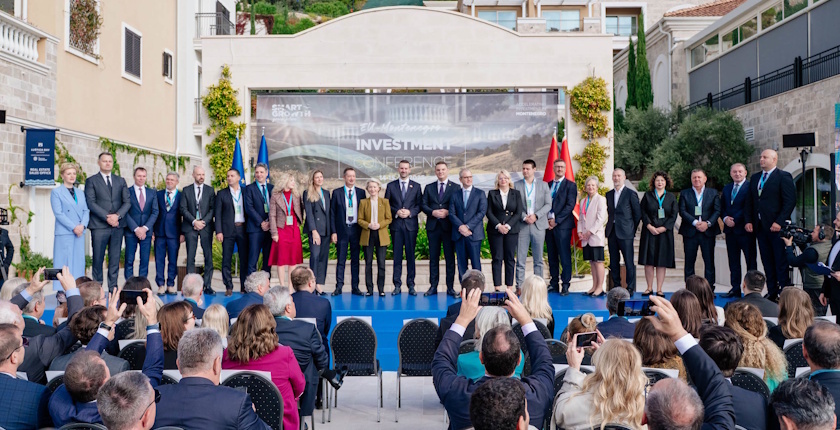
A total of 14 cooperation projects between Montenegrin and European companies have been initiated at the ongoing European Union-Montenegro Investment Conference, including investments in wind farms, solar parks, energy storage, and grids.

The two-day conference, titled Smart Growth, Green Future: Accelerating Investment in Montenegro, was opened today in Luštica, near Tivat, by the President of the European Commission, Ursula von der Leyen, and the Prime Minister of Montenegro, Milojko Spajić.

Montenegro’s growing potential for strategic, green, and sustainable investments was presented through new partnerships between leading Montenegrin and European companies, according to a press release by the Government of Montenegro.

The Conference was jointly organized by the government and the European Commission, with the support of the Montenegro Investment Agency (MIA).

State power utility EPCG has signed three memoranda of understanding

State-owned power utility Elektroprivreda Crne Gore (EPCG) has signed three memoranda of understanding (MoUs). One was signed with Akuo for the development of several renewable energy projects, including floating solar, a photovoltaic plant, and energy storage.

The second MoU, signed with SS&A Power Group, envisages the development, manufacture, and installation of thermal energy storage, while the third, with Wind Fisher, concerns a new technology for high-altitude wind power generation.

Alcazar Energy signed a memorandum with the government’s project management office for the development and financing of renewable energy projects. CWP Europe and the Montenegrin Investment Agency (MIA) signed a memorandum on the development of the Montečevo solar farm project with battery storage. The company signed a similar agreement for its project in Albania yesterday.

A memorandum was also signed between Čevo Solar and Grawert Jenny & Partner on battery energy storage systems (BESS). A 20 MW/60 MWh battery is being considered.

Four sustainable investment partnerships were also signed

The Ministry of Energy and Mining and EDF will further discuss the issue of modernizing Montenegro’s power distribution network.

Among the signed documents is an MoU on collaboration between the European Bank for Reconstruction and Development (EBRD) and Erste on a Regional Energy Efficiency Program (REEP), as well as cooperation in the field of wastewater management between Suez and MIA.

In addition, four sustainable investment partnerships were also signed: Farm2Fork Montenegro, Station M, Green Logistics Hub, and Northern Investments Compact for Ecology & Resilience (NICER). Green Logistics Hub refers to the Port of Bar, which aims to become the first net-zero port on the Adriatic. NICER concerns the just transition and is led by the Pljevlja Coal Mine.

Von der Leyen: Do not wait for accession to invest in Montenegro

Photo: Bojan Gnjidić/Vlada Crne Gore

The event brought together senior representatives of the Government of Montenegro, the European Union, international financial institutions, as well as prominent European and Montenegrin investors.

“My message is very clear: do not wait for accession to invest in Montenegro, because by then you may miss the opportunities that others will seize,” Ursula von der Leyen noted.

She stressed that by continuing its European journey with determination and speed, Montenegro is making its goal of EU accession attainable.

“Today, we are opening a new chapter of development—we are beginning a major investment cycle, strengthening our ties with the European market even before formally joining the European family. Today, we are bringing our vision of green and smart growth to life. We are doing this together with our most important strategic partner—the European Union, which is also the largest investor in our country,” Prime Minister Milojko Spajić said.

He recalled that the country plans to close all negotiating chapters with the EU by the end of 2026 and become its 28th member state in 2028.

Photo: Bojan Gnjidić/Vlada Crne Gore
by in News

Croatia installs one million smart meters, Serbia reaches 650,000

Croatia has so far installed one million smart meters, while Serbia has reached 650,000. They make up 40% of all power metering devices in Croatia, compared to a 17% level in Serbia.

Digital or smart meters offer numerous advantages for consumers and distribution system operators (DSOs). The devices are a cornerstone of future distribution networks – smart grids that will allow consumers, including many prosumers, to both draw electricity from the network and inject it. Smart grids also enable consumers to provide various flexibility and demand response services.

The smart meters rollout in Croatia is being implemented across the country, with about 40,000 new devices installed per month. Croatia’s DSO HEP-Operator Distribucijskog Sustava (HEP ODS), a subsidiary of state-owned power utility Hrvatska Elektroprivreda (HEP), has previously announced that it intends to replace all 2.5 million devices by the end of 2029.

Nearly all users in the business category have received new devices

Installation of new meters is completely free of charge for customers. It takes about twenty minutes. HEP underlined that smart meters offer a range of benefits – enabling simpler and remote reading of consumption, more precise consumption management, better planning, and savings.

Danijela Žaja, chief of the metering and market support sector of HEP ODS, told RTL that more than one million smart meters have been installed so far for households and firms. In the business category, almost all meters have already been replaced, she said, Poslovni Dnevnik reported.

In her words, new devices help consumption management.

Serbia is financing new meters with loans

According to Ana Pavlović, head of the electricity markets support sector of neighboring Serbia’s DSO Elektrodistribucija Srbije (EDS), so far the company has installed almost 650,000 smart meters.

EDS plans to set up another 200,000 units in the next round, financed by a loan from the European Bank for Reconstruction and Development (EBRD), she said at a conference organized by Energija Balkana.

Out of the 200,000 meters, the cities of Čačak and Kraljevo are earmarked for 30,000 each, and 140,000 are for consumers in Niš. The next project is the installation of 400,000 smart meters, to be financed by a loan from the European Investment Bank (EIB).

Niš will be one of the first cities in Serbia to be almost entirely covered by smart meters, Pavlović stressed, as quoted by Tanjug.

by in News

Montenegro’s power utility gets EUR 25 million loan to expand Gvozd wind farm

Montenegrin state-owned power utility Elektroprivreda Crne Gore (EPCG) said it signed a EUR 25 million loan contract with the European Bank for Reconstruction and Development (EBRD) for expanding the Gvozd wind farm to 75.6 MW. Once fully operational, it will be the largest wind farm in Montenegro.

The Gvozd 2 project involves the installation of three additional wind turbines, with a combined capacity of 21 MW. It will increase the wind farm’s total projected annual production to over 210 GWh, enough to cover the needs of about 36,000 households and reduce CO2 emissions by almost 137,000 tons a year, EPCG said following the signing of the loan agreement.

The expansion project involves three additional wind turbines with a combined capacity of 21 MW

An EUR 82 million loan for the first, 54.6 MW phase of the wind farm, including the grid connection infrastructure, was signed with the EBRD in June 2023. Gvozd will be EPCG’s first large-scale power generation facility built in more than 40 years.

Construction on the first phase, featuring eight turbines, began in November 2024. EPCG expects the power plant to enter trial operation by the end of this year, with a projected annual electricity output of 150 GWh.

Construction on the first, 54.6 MW phase of wind farm Gvozd was launched in late 2024

Commissioning of the full 75 MW capacity is expected by the end of 2026, according to a press release from the EBRD.

A key step in Montenegro’s energy transition

Milutin Đukanović, President of EPCG’s Board of Directors, described the expansion of Gvozd as a key step in Montenegro’s energy transition. In the press release, EPCG stated that the wind park would significantly contribute to achieving the European goal to produce electricity exclusively from clean sources by 2050 at the latest.

Minister of Energy and Mining Admir Šahmanović noted that the Gvozd project would strengthen Montenegro’s energy security, reduce CO2 emissions, and pave the way for sustainable development.

Francesco Corbo, the EBRD’s Regional Head of Energy for the Western Balkans and Croatia, recalled that the bank, through its Renewable Energy Market Accelerator (REMA) program, helped the Montenegrin authorities organize the country’s first renewable energy auction, for solar projects totaling 250 MW.

by in News

Enerjisa Enerji to rebuild grid, install solar in earthquake-hit region in Turkey

Turkish electricity distribution company Enerjisa Enerji has secured a USD 150 million loan to rebuild and modernize the power grid in the earthquake-hit Toroslar region in the country’s south, as well as to install solar power plants to supply corporate customers. The loan was provided by the European Bank for Reconstruction and Development (EBRD).
The Toroslar region accounts for about one-third of Enerjisa Enerji’s total operations. It was heavily affected by the earthquakes of February 2023, which caused widespread damage and more than 55,000 fatalities, the EBRD noted.

The 2023 earthquake caused heavy damage and killed more than 55,000 people

Enerjisa Enerji will use the EBRD loan to finance the reconstruction and modernization of the electricity distribution network, contributing to the overall reconstruction efforts in the region. The company will also install solar power plants offering sustainable energy solutions to its corporate customers, the bank said.

The company said in a press release that the five-year loan would be utilized to improve the quality of its electricity distribution services and expand its customer-focused renewable energy solutions.

The solar power plants will offer sustainable energy to Enerjisa’s corporate customers

Enerjisa Enerji is a subsidiary of Enerjisa Üretim, a joint venture between German E.ON and Turkey-based Sabanci.

Early this year, Enerjisa Enerji won the right to build and operate two wind farms totaling 750 MW, the largest projects available in Turkey’s auction for a total of 1.2 GW of wind.

The EBRD also stated that the project demonstrates its commitment to Turkey’s green agenda by helping to prevent distribution losses in the electricity network, as well as supporting the construction of renewable energy infrastructure, leading to significant reductions in carbon emissions.

Philipp Ulbrich, the CFO of Enerjisa Enerji, said that support from the EBRD strengthens the company’s strategic steps toward sustainable growth, reflecting investor interest in the energy transition in Turkey.

Turkey has secured over EUR 650 million in World Bank financing to support renewables integration

Earlier this month, the World Bank approved a financing package for Turkey’s transmission system upgrade project, aimed at enabling the integration of increased renewable energy capacity. The package includes a EUR 625 million loan from the International Bank for Reconstruction and Development (IBRD), a EUR 32.8 million loan from the Clean Technology Fund (CTF), and a USD 2 million CTF grant.

by in News

Kragujevac heating plant begins ash removal from disposal site in city center

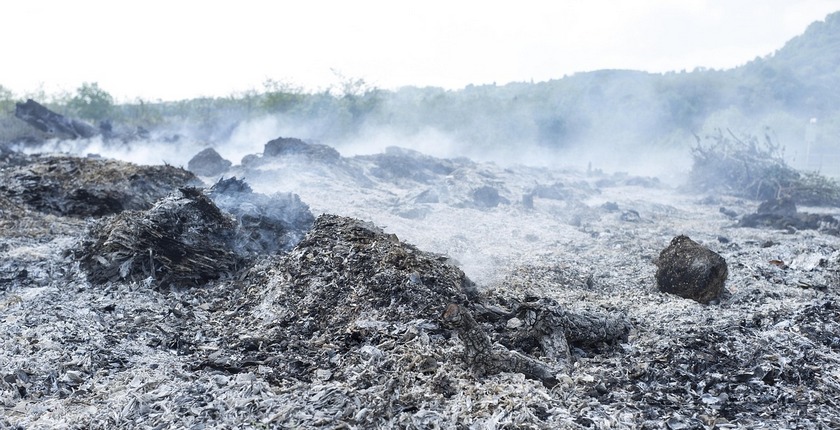
District heating plant Energetika has begun removing coal ash from an uncovered disposal site that has been polluting air and soil for years in the heart of Kragujevac, Serbia’s fourth-largest city. The effort is part of a project financed by an EUR 18 million loan from the European Bank for Reconstruction and Development (EBRD), to decarbonize the local district heating system.

The ash from Kragujevac is transported to cement plants in Kosjerić and Popovac to be used in the production of cement and construction materials, in line with circular economy principles, according to Serbian Minister of Environmental Protection Sara Pavkov.

On the first day, about 75 tons of ash was removed from the site, with plans to transport a total of 60,000 tons over 24 months.

The ash will be used in cement production in Kosjerić and Popovac

Ash removal is the second phase of the district heating decarbonization project in Kragujevac. In the first phase, old boilers were replaced with gas-fired units, significantly reducing air pollution, according to Dejan Ružić, deputy mayor of Kragujevac. This marked the end of coal use in the city’s district heating system.

The EBRD approved the loan for the project in 2021. Of the total amount, EUR 14 million was earmarked for boiler replacement, together with up to EUR 4 million for ash removal.

In the first phase, coal-fired boilers were replaced with gas-fired units

The bank said at the time that gas-fired boilers would have a capacity of 110 MW and that CO2 emissions from district heating would be cut by an estimated 66%, with sulfur dioxide and particulate matter (PM) emissions eliminated.

The Ministry of Environmental Protection has hired Novi Sad-based engineering and consultancy firm AG Institut to monitor the ash disposal services under a EUR 73.900 contract. The works are targeted for completion by July 15, 2027.

Aleksandar Lazović, general manager of the district heating plant, said the works would be carried out in line with the highest environmental standards, in a covered area, to prevent ash from dispersing into the environment.

District heating decarbonization in several Serbian cities

In June this year, Serbia and the EBRD signed a EUR 50 million loan to finance a series of air quality projects in Belgrade, Niš, Valjevo, Zaječar, Novi Pazar, and Smederevo, which had been mapped as cities with the largest excesses of harmful emissions.

The planned projects include replacing outdated boilers running on fuel oil, coal, and other air-polluting fuels with modern and sustainable heat energy sources, such as heat pumps, biomass, and industrial waste heat.

by in News

Nofar Energy set to secure financing for 515 MW of solar in Romania

Israeli renewables company Nofar Energy is set to secure a EUR 68 million loan from the European Bank for Reconstruction and Development (EBRD) for three large-scale photovoltaic projects in Romania, with a combined capacity of 515 MW, including the 265.5 MW Corbii Mari solar park.

The EBRD’s loan, with an expected approval date of September 10, 2025, will be disbursed to Nofar’s three Romanian subsidiaries – Corbii Mari Solar Plant, Aviv Renewable Investment, and Slobozia Solar Plant.

Nofar’s firms intend to build a 175.7 MW solar farm in Iepurești, a 74 MW solar farm in Slobozia, both in Giurgiu county, and a 265.5 MW solar farm in Corbii Mari, Dâmboviţa county, according to the EBRD.

The three solar parks are expected to generate 676 GWh of electricity annually. Their operation is expected to reduce CO2 emissions by 280,000 tons annually, the bank noted.

The three solar parks are expected to produce 676 GWh a year

The Corbii Mari solar park, spanning a total of 290 hectares, would be located near the Romanian capital, Bucharest. Given its size, the project is divided into six lots, Romanian news portal Profit.ro reported.

Nofar operates the largest existing photovoltaic park in Romania, of 155 MW, located in Rătești in Argeș county.

Nofar’s 155 MW solar park in Rătești is currently the largest in Romania

There are other major photovoltaic projects in Romania larger than Corbii Mari, in various stages of development, including one of over 1 GW, under development in Arad county by Czech company Rezolv Energy.

Ingka Investments, the investment division of Sweden-based Ingka Holding, the largest IKEA franchisee company, is building its first solar power plant in Romania. The Butimanu project is for 300 MW in peak capacity, it recently said.

Nofar is also developing the Ghimpați solar project near Bucharest, with an installed capacity of 146 MW. Earlier this year, the Israeli company said it had connected to the electricity grid its solar park in Ada, the largest such system in neighboring Serbia.

by in News

Production starts at new 38.4 MW wind farm northeast of Bucharest

Eximprod, which installed the first wind turbine in Romania more than two decades ago, delivered the first megawatt-hours to the grid from its new wind farm in the country’s east. In addition, it is about to receive a commercial operating license for a 49.5 MW solar park in Prahova county.

Several other wind parks are also under construction amid a revival in investments in Romania. Rezolv recently secured financing for phase 2 of its Vifor wind power plant, set to become one of the largest in Europe.

Romania has been enjoying a solar power boom for the past three years, and the pace of the construction of battery energy storage facilities (BESS) is accelerating. On the wind energy front, the country’s capacity has barely held above 3 GW for a long time after the 3.24 GW peak in 2014, due to the failure of an incentives mechanism. But the investment momentum is strengthening – notably, Eximprod said it launched the operation of its 38.4 MW wind power plant in the Galați area.

The company actually installed the first wind turbine in Romania. In 2003, it put online the Vestas V 47 machine of 660 kW in Topolog in Tulcea County in the country’s east.

Eximprod Group (EPG) also provides equipment and services in the energy sector. The company’s contractor Lemacons poured concrete less than half a year ago for the foundation of the first wind turbine in the new Cudalbi 2 facility. It is located in Galați county in eastern Romania, in the Western Moldavia region.

Eximprod received support through National Recovery and Resilience Plan

Cudalbi 2 is the first wind park in the country with Enercon turbines in 12 years. The model is E-160 EP5 E2, of 5.5 MW. Eximprod has won state support for the project northeast of Bucharest via the National Recovery and Resilience Plan (NRRP or, in Romanian, PNRR). The funds are approved under the European Union’s Recovery and Resilience Facility (RRF).

The company has also built the nearby Cudalbi 1 wind farm of 54 MW, consisting of nine turbines.

In addition, Eximprod is about to receive the commercial operating license from National Energy Regulatory Authority (ANRE) for its Solar System Project photovoltaic plant. It completed the facility with 49.5 MW in connection capacity in April. According to its documentation, the facility has 65 MW in peak capacity. It consists of five units with grid connections of 9.9 MW each.

The solar park is in Ciorani, Prahova county, north of the capital city. The endeavor was reportedly worth EUR 56.2 million including a grant of EUR 13.4 million from the NRRP. The company plans to add a BESS unit of 21 MW in operating power. The said final permit will allow the project firm to sell electricity.

Lenders indicate confidence in Romania’s wind power market with financing package for Vifor

In other recent news, Rezolv secured a EUR 331 million financing package for the 269 MW second phase of its Vifor wind farm in Buzău county. It includes EUR 44 million from the European Bank for Reconstruction and Development (EBRD).
Erste Group, UniCredit Group, International Finance Corp. (IFC), Intesa Sanpaolo Group, OTP Bank and Raiffeisenlandesbank Niederösterreich-Wien all participate in the arrangement.

The Vifor wind park would consist of 72 turbines of 6.4 MW each

The first part of Vifor is under construction and scheduled for commissioning in the spring. Rezolv plans to complete phase two in late 2027.  The wind park would be one of the biggest in Europe, at 461 MW. The company is installing 72 Vestas V162 turbines of 6.4 MW.

Rezolv won a contract-for-difference (CfD) at the country’s first renewable energy auctions for phase 2, for 240 MW. The government approved 1.1 GW for wind power. The qualifications phase is ongoing for the second round of auctions, for 2 GW for wind park projects and 1.47 GW for photovoltaics.

Several wind farms under construction

According to the International Renewable Energy Agency (IRENA), Romania had just under 3.1 GW in wind power capacity in operation at the end of 2024.

Eurowind Energy built the turbines earlier this year at its Pecineaga wind park. Greece-based Public Power Corp. (PPC) is supposed to connect its Deleni facility to the grid before the end of the year.

OX2 is building the Green Breeze wind farm as the turnkey contractor for the investor, Nala Renewables.