by in News

Renalfa Advances Oslomej Solar Project with 50 MW Battery Storage Installation

Austria-based developer and independent power producer Renalfa IPP has commenced the installation of a battery energy storage system (BESS) at its solar power plant in Oslomej, North Macedonia. The system will have an operating power of 50 MW and a storage capacity of 200 MWh, marking a significant step in enhancing grid flexibility and renewable integration.

The co-located BESS is being deployed alongside the 65.8 MW Oslomej solar power plant, which is situated on the site of a former coal mine. The project reflects ongoing efforts to repurpose legacy fossil fuel infrastructure into clean energy assets. The solar facility was developed through a public-private partnership with state-owned utility Elektrani na Severna Makedonija (ESM).

Financing for the solar plant was provided by the Green for Growth Fund, which has also committed €24 million to support the deployment of the battery storage system. The combined investment forms part of a broader initiative to transition North Macedonia’s coal-based energy complex toward sustainable generation.

In 2025, Renalfa secured a €315 million loan facility from a consortium led by the European Bank for Reconstruction and Development. The financing underpins the company’s €1.2 billion regional investment program, which targets the development of approximately 1.6 GW of renewable generation capacity and 3.3 GWh of co-located battery storage across Bulgaria, Hungary, Romania, and North Macedonia.

These assets are expected to produce around 2.3 TWh of green electricity annually—sufficient to meet the energy needs of approximately 920,000 households—while supporting grid stability through integrated storage solutions.

Beyond North Macedonia, Renalfa is also advancing a major hybrid renewable project in Hungary. The company is developing a 450 MW solar power plant in Szihalom, complemented by a BESS with an operating power of 250 MW and a capacity of 1 GWh. The battery system is being supplied by HiTHIUM.

According to Renalfa, the Szihalom project represents the largest hybrid renewable energy development undertaken in Hungary to date and ranks among the most significant such projects in Europe.

by in News

The Border Wall of Carbon: How CBAM Rewrote Balkan Power Trade in Q1 2026

Q1 2026 marked an abrupt break in Southeast Europe’s electricity market structure. Exceptional hydro output pushed WB6 prices down, but CBAM prevented the old price convergence mechanism from doing its job. The result was a wider-than-usual spread of more than €30/MWh between WB6 and EU benchmarks, a 25% drop in scheduled cross-border commercial exchanges, and a visible re-routing of trade toward CBAM-free corridors. The data suggest that CBAM did not merely tax imports; it changed the geography of trade.

Origin of imported electricity Default value (tCO2eq/MWh) CBAM cost per imported MWh (€)
Albania 0 0
Bosnia and Herzegovina 1.148 86.513
Kosovo* 0.984 74.154
Moldova 0.530 39.941
Montenegro 0.979 73.777
North Macedonia 0.887 66.844
Serbia 1.041 78.450
Ukraine 0.907 68.352

Table 1. CBAM default factors and implied import costs in Q1 2026

The Hydro Paradox

The irony of Q1 2026 is that the region’s own luck partly disguised CBAM’s first-quarter damage. Hydro generation surged across the WB6 and neighbouring markets, rising regionally by 33% year on year, with Albania alone up 70%. That flood of carbon-free output softened domestic prices and kept some markets liquid, which made the underlying CBAM shock look less severe than it would have in a normal hydrological quarter. The report itself warns that these results are preliminary and heavily shaped by exceptional water conditions, not just the new carbon border regime.

Figure 1. Hydro vs coal generation in Q1 2026 versus Q1 2025

Figure 1. Hydro vs coal generation in Q1 2026 versus Q1 2025

But the same hydro boom also exposed a second vulnerability: it showed how quickly the region can swing from shortage to surplus, which matters for solar and wind investment signals. The Energy Community Secretariat notes that growing solar capacity may generate renewed surplus conditions in spring and summer, even as hydro declines. That means renewable developers are now financing into a market where merchant upside can be sharply altered by a carbon border charge on exports, especially in systems that are not as clean as Albania.

Technical Deep-Dive: Trade Diverges from Physics

The most unsettling finding in the report is the widening gap between commercial schedules and physical reality. Commercially, WB6-EU trade contracted and transit-based trading weakened. Physically, however, electricity still moved according to network physics, not trader preferences. The report gives concrete examples: Albanian export schedules to Greece rose strongly, yet physical flows did not align proportionally; power continued to move through Albania toward Montenegro and Bosnia and Herzegovina and onward to EU border countries.

That divergence is not just a bookkeeping issue. It creates operational risk. The report links the pattern to unscheduled and loop flows, less efficient transmission capacity use, and a growing burden on balancing and security management. It also explicitly recalls the June 21, 2024 blackout, when near-simultaneous outages on 400 kV lines in Montenegro and Albania exposed the fragility of the South-North corridor and the costs of weak cross-border coordination. In the current setting, the same corridor could again become heavily loaded, but with less predictable commercial schedules to guide system operation.

Market Fragmentation: The Rise of CBAM-Free Routing

The report reads like a map of avoidance behaviour. Intra-WB6 exchanges intensified, while trade moved toward routes that do not trigger CBAM exposure. Albania’s zero default emission factor made it a natural winner, with export routes to Greece gaining importance. Greece then became a bridge to Bulgaria and Italy, effectively allowing some power to bypass the more exposed WB6 transit geography.

Figure 2. Average day-ahead prices across the region

Figure 2. Average day-ahead prices across the region

This is why the Secretariat’s “CBAM-free route” language matters. It suggests that the market is not simply shrinking; it is reorganising itself around carbon liability. Transit-based trading through the WB6 is becoming less attractive, and that is a structural problem for regional integration because the WB6 has historically functioned not only as a set of markets, but also as a corridor between larger EU systems.

Financial Outlook

For project finance, the message is straightforward: ETS-linked carbon costs are now a core merchant-risk variable in the Western Balkans. The report states that the relevant Q1 2026 CBAM certificate price was based on an EU ETS quarterly weighted average of €75.36/tCO2eq, and that this price fell sharply after an initial increase as political debate over ETS reform intensified. That level of volatility matters because it directly changes export economics quarter by quarter.

Figure 3. Scheduled commercial exchanges between the WB6 and the EU

For EBRD-style underwriting, this means more conservative assumptions are unavoidable. Revenue cases for new renewable projects in the WB6 should be stress-tested not only against power-price volatility and hydrology, but also against CBAM-induced basis risk on export routes. Projects that depend on merchant access to EU markets will need stronger carbon-risk sensitivity, more robust route diversification, and a clearer view of whether they are selling into a CBAM-exposed corridor or a CBAM-free one. The report’s core warning is that low-carbon systems may send stronger investment signals, while more carbon-intensive systems face a worsening structural handicap.

Strategic Recommendations

The Secretariat’s own policy direction is the right one: better clarity in CBAM electricity rules, stronger coordination between market participants and TSOs, and continued alignment of carbon pricing and market design across the region. Building on that, the practical priorities are clear. WB6 TSOs need tighter coordinated capacity calculation, stronger congestion management, and more transparent handling of transit flows. Policymakers should also close the information gap around proof of transit and improve rules that currently reward route avoidance over efficient system use.

The deeper objective is to stop the region from sliding into transit-based trading collapse. That means preserving market integration even as carbon policy changes the economics of exchange. If WB6 markets are left to fragment into isolated hydro winners and carbon-heavy losers, the region will not simply lose trade; it will lose the very interoperability that made its system valuable in the first place.

by in News

CGES Secures €15 Million Investment to Upgrade Tri-Nation Power Infrastructure in the Western Balkans

Crnogorski Elektroprenosni Sistem (CGES), Montenegro’s national transmission system operator, has successfully secured a €15 million loan to finance the modernization of the 220-kilovolt (kV) power line connecting Montenegro, Bosnia and Herzegovina, and Albania.

This strategic initiative is designed to enhance the efficiency and reliability of Montenegro’s domestic electricity transmission network while simultaneously fortifying cross-border energy connectivity throughout the Western Balkans. According to CGES, the project represents a critical step toward the broader regional integration of power systems.

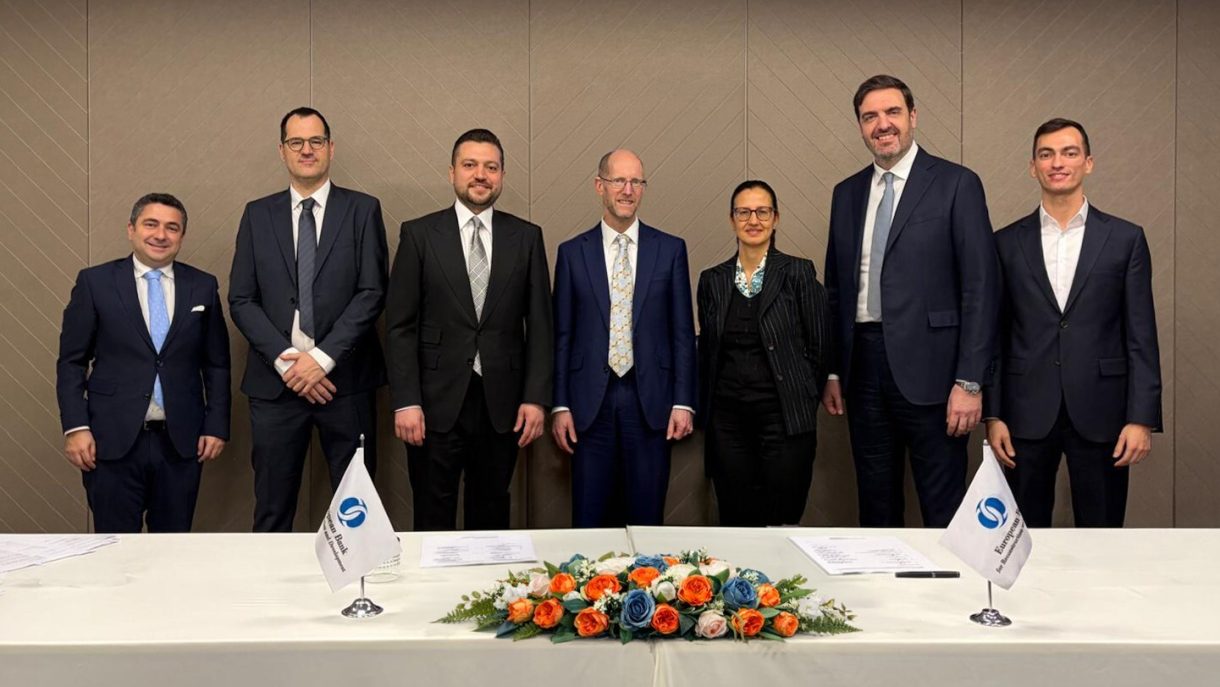
The financial agreement was formally signed by CGES Chief Executive Officer Ivan Asanović, European Bank for Reconstruction and Development (EBRD) Vice President Mark Bowman, and Montenegrin Minister of Finance Novica Vuković. The Ministry of Finance backed the initiative by issuing a state guarantee, underscoring the government’s steadfast commitment to supporting strategic investments that bolster both national infrastructure and regional connectivity.

Detailing the technical improvements, CEO Ivan Asanović noted that the modernization project will effectively double the transmission line’s current capacity from 300 megawatts (MW) to approximately 600 MW. He characterized the upgrade as a foundational investment in a secure, stable, and integrated energy future for the region, resulting in a more resilient grid capable of meeting increasing systemic demands and facilitating deeper regional cooperation.

EBRD Vice President Mark Bowman echoed these sentiments, emphasizing that reinforcing transmission networks is essential for securing long-term energy security and regional integration in the Western Balkans. Bowman noted that the project will overhaul vital infrastructure in Montenegro, aligning with the EBRD’s mandate to foster sustainable and resilient infrastructural development.

Looking forward, this project falls under a broader capital expenditure strategy for CGES, which plans to invest a total of €200 million into transmission infrastructure over the next five years.

by in News

Albania’s Solar Surge: Capital Inflows, Grid Pressures and a Market in Transition

Photovoltaic energy is attracting capital at an accelerated pace in Albania, emerging as a new investment pillar for both traditional energy players and diversified business groups. With licenses granted for nearly 980 MW of solar capacity and hundreds of megawatts already operational, the market is undergoing a structural transformation—shifting from overwhelming dependence on hydropower toward a more diversified generation mix.

Private investment in the sector is estimated at around €1.5 billion, encompassing solar, wind and hydropower projects. Yet the rapid expansion is placing mounting pressure on existing infrastructure, highlighting the urgent need for parallel grid investments. Without reinforcement of transmission and distribution networks, the growth of photovoltaics risks outpacing the system’s capacity to absorb new output. Once again, the private sector appears to be moving faster than institutions.

When Albania first adopted its legal framework “On Renewable Energy Sources” in 2017, few anticipated the scale of transformation that would unfold less than a decade later.

From Slow Beginnings to Accelerated Growth

The early years of renewable development, particularly solar, were marked by bureaucratic hurdles, limited institutional experience and an energy market still in reform. The turning point came through two key developments.

First, market liberalization opened space for self-producers—an expanding segment entitled to install capacities of up to 500 MWp. Second, and more decisively, the global energy crisis that erupted in October 2021 dramatically reshaped market dynamics.

Post-pandemic raw material inflation, surging energy demand driven by economic recovery, and the war in Ukraine—triggering disruptions in Russian gas supplies—sent shockwaves through global energy markets. In 2022, prices reached record highs. Albania spent nearly €500 million on electricity imports, while on the Hungarian exchange—an important regional benchmark—prices peaked at €1,037 per MWh.

Although prices later retreated, volatility remains a defining feature of the market. This climate of uncertainty has become a major catalyst for new energy projects. Authorities report more than €2 billion invested in Albania’s energy sector in recent years. Currently, over 700 MW of private photovoltaic capacity is operational, alongside approximately 400 MW installed by self-producers.

The development pipeline could lift total photovoltaic and wind capacity to around 1,500 MW, while more than 1,600 MW of storage projects are under study or seeking financial facilitation.

Licensing and Market Structure

Despite numerous projects in various administrative stages, only a portion have secured production licenses. The Energy Regulatory Authority (ERE) has issued 71 production licenses for photovoltaic plants, totaling approximately 980 MW of installed capacity.

Most licensed projects fall within the sub-2 MW category, which benefited from a simplified regulatory framework introduced several years ago. These smaller plants were approved through accelerated procedures and supported by reference tariffs set periodically by the regulator. Electricity is purchased by OSHEE Group under a scheme similar to that applied to priority hydropower producers.

At the same time, a growing number of independent producers operate in the liberalized market. Supply liberalization has pushed thousands of businesses to secure electricity via private contracts, creating a stable demand base for new generators.

Solar projects also benefit from technical flexibility: they can be commissioned in phases, allowing electricity production before full completion of investment works.

Production Growth and Flagship Projects

Photovoltaic output rose sharply in 2025. According to preliminary data from INSTAT for January–September, the category “Other Producers”—which includes solar plants—generated 775 GWh, doubling year-on-year. Even compared to full-year 2024 output of 506 GWh, nine-month 2025 production was 53% higher.

Solar accounted for roughly 15.3% of Albania’s net electricity generation during the same period—more than double its 2024 share. This proportion is expected to rise steadily as new plants enter operation.

Among the largest projects is the 140 MW Karavasta solar park, developed by Voltalia. Additional operational projects include Blue (130 MW combined), Nova Solar System (50 MW) and multiple 20 MW facilities in Ersekë.

Projects under development include GreeNNat Solar Park Ballsh (100 MW), Faethon (78.6 MW), Sunny Side Energy (50 MW, part of the Kastrati Group), and the 100 MW Spitalla Solar park, also owned by Voltalia.

The rapid growth of solar capacity is gradually reshaping Albania’s electricity mix—historically dominated by hydropower—reducing exposure to imports and cushioning the impact of extreme price swings in international markets.

Year Energy Production (Thousand MWh)
2019 25
2020 35
2021 40
2022 52
2023 88
2024 506
2025 (9-Months) 775

European Bank for Reconstruction and Development: Strong Potential, Grid Constraints

The European Bank for Reconstruction and Development (EBRD) has been instrumental in supporting Albania’s renewable transition, advising the government on early photovoltaic auctions, including Karavasta—the country’s first large-scale solar plant.

Ekaterina Solovova, EBRD Resident Representative in Albania, has emphasized that the country’s solar potential remains considerable due to favorable geography and high solar irradiation. However, large-scale integration requires adequate transmission infrastructure.

Recent EBRD support includes sustainability-linked financing for OSHEE, restructuring short-term liabilities into longer-term financing to free up investment for grid upgrades. The bank is also cooperating with OST on EU grant-funded technical projects: closing the national transmission loop and modernizing the Fier substation—currently among the most congested solar zones—and developing a new cross-border transmission line with Kosovo to enhance regional interconnection.

Through initiatives such as the Renewable Energy Market Acceleration Program (REMA), the EBRD has supported the allocation of roughly 800 MW of new renewable capacity via Contracts for Difference (CfD) schemes.

Albania stands at a critical juncture: rich in renewable potential but constrained by infrastructure that requires substantial upgrading to ensure system stability.

European Investment Bank: Solar Could Reach 1 GW by 2030

Alessandro De Concini, EIB representative in Albania, notes that while Albania’s green credentials are strong, they remain vulnerable due to hydropower dependence and climate variability.

Solar capacity could reach 1 GW and wind 600 MW by 2030, supported by recent reforms easing licensing and auction procedures. However, climate risks—floods, fires and landslides—could cost up to 7% of GDP by mid-century.

Albania’s energy strategy prioritizes supply security, diversification, competition and environmental protection, aligned with EU legislation. The EIB’s forward plans include infrastructure modernization to ensure year-round supply security and price stabilization.

Investor Appetite and Market Diversification

Government-backed auctions—facilitating land access and streamlining procedures—sparked early investment during the pandemic. Yet a growing number of investors have entered the sector without subsidies, relying instead on private land, private power purchase agreements and market-based strategies.

Besnik Leskaj, founder of Blessed Investment Group, explains that detailed analysis of photovoltaic technology costs and regional price trends pointed to a favorable long-term risk-return profile. The group, alongside Matrix Konstruksion, has invested in fully private solar projects, emphasizing financial discipline and direct market exposure.

The Blue Parks, spanning 230 hectares with 263,000 smart panels, aim to build a 1 GW portfolio over the medium term, with 400 MW currently under development. Wind energy (two 25 MW projects) and battery storage systems are also part of the strategy.

Supporting Industries and Vertical Integration

The solar boom has stimulated domestic supply chains, from workforce training to mounting structure manufacturing. Companies such as Emante sh.p.k have expanded into producing Magnelis steel support structures for ground-mounted systems, supplying projects including Nova Solar (74 MW) in Seman and Info-Telecom (101.5 MW) in Ballsh.

Rapid sector growth is encouraging vertical integration, with firms expanding into mounting accessories and specialized structures to enhance added value.

End-of-Life Challenges

As solar installations multiply, long-term waste management is emerging as a strategic issue. Panels have a 25–30 year lifespan, meaning the first wave of mass installations will soon approach end-of-life. The International Energy Agency estimates panel waste could reach tens of millions of tons by 2050.

While recycling is technically feasible, it is often not yet economically competitive. The European Union mandates extended producer responsibility for collection and recycling, while China is scaling industrial recycling plants. The US and Japan are experimenting with high-value material recovery models.

Albania will need to address this issue proactively to ensure sustainability extends beyond generation.

Credit Growth and Corporate Performance

Energy and tourism have been the most dynamic sectors in recent years, reflected in rising bank lending. According to the Bank of Albania, outstanding credit to the energy sector grew 19% to 47 billion lek (€470 million) by December 2025, representing 9% of total business lending.

Karavasta Solar, managed by Voltalia, generated revenues of 3.5 billion lek in 2024 and profits of approximately 2 billion lek, with a 57% margin. The plant produced 258.3 GWh last year—3.2% of domestic net output and more than half of total solar generation, according to ERE. Under its 15-year contract, 70 MW is sold at a regulated tariff (€24.89/MWh) and 70 MW on the free market.

Spitalla Solar (100 MW) follows a similar structure, though progress has been slower.

Blue 1 (50 MW), commissioned in May 2024 at Sheq Marinas, Fier, operates entirely in the free market—one of the first large projects outside support schemes. Owned 51% by Blessed Investment and 49% by Matrix Konstruksion, it generated revenues of 680 million lek and profits of 380 million lek in 2024, producing around 72,000 MWh—roughly 15% of total solar output.

Other players, such as EZ5 Energy and Nova Solar System (50 MW), are reporting rapid revenue and profit growth, underscoring solar’s emergence as one of Albania’s most profitable and strategically significant industries.

Company Revenue (2023) Revenue (2024) Pre-tax Profit (2023) Pre-tax Profit (2024)
KARAVASTA SOLAR 450 17,000 408 2,000
EZ-5 ENERGY 412 1,422 83 265
SPV BLUE 1 266 679 102 379

Albania’s solar expansion reflects a decisive shift in its energy landscape—driven by private capital, catalyzed by crisis and increasingly supported by multilateral finance. The next phase will depend on grid modernization, storage deployment and responsible lifecycle management. If these elements advance in tandem, Albania could consolidate its position as a regional renewable energy hub.

by in News

Fortis Energy and EBRD Partner to Finance Landmark 270 MW Solar-plus-Storage Project in Serbia

Fortis Energy and EBRD Partner to Finance Landmark 270 MW Solar-plus-Storage Project in Serbia

In a significant move for the Western Balkans’ energy transition, Fortis Energy has formalized a mandate letter with the European Bank for Reconstruction and Development (EBRD). The agreement initiates due diligence and structured negotiations for the long-term financing of a 270 MW solar photovoltaic (PV) plant, integrated with a 72 MWh battery energy storage system (BESS).

Located in the city of Sremska Mitrovica, west of Belgrade, the project is set to become the largest solar facility in both Serbia and the broader region.

Strategic Importance and Regional Impact

The mandate letter, signed by Fortis Energy’s leadership and the EBRD’s Sustainable Infrastructure Group, establishes the preliminary terms for a project aimed at bolstering Serbia’s national grid. According to Fortis Energy, the facility is a “demonstration of bankability,” signaling that large-scale renewable assets in Southeast Europe can meet rigorous international environmental and social sustainability standards.

The Sremska Mitrovica plant is expected to deliver substantial environmental and social benefits:

  • Annual Output: Estimated at over 365 GWh of clean electricity.

  • Household Impact: Capable of powering more than 105,000 households annually.

  • Carbon Mitigation: Forecasted to avoid approximately 182,000 tons of emissions per year.

Construction is scheduled to begin in the third quarter of 2026, with full commissioning targeted for the first quarter of 2028.

Technical Breakdown and EPC Partnerships

The development is being executed in phases. Earlier this year, Fortis signed an Engineering, Procurement, and Construction (EPC) contract with Kontrolmatik Technologies for the first phase, known as Noćaj 1.

Phase/Project Solar Capacity (MWp) Grid Connection (MW) Storage Capacity (BESS)
Noćaj 1 135 MW 90 MW 36 MWh
Full Sremska Mitrovica 270 MW 72 MWh
Erdevik (Proposed) 100 MW 74 MW 30 MWh

Fortis Energy and EBRD Partner to Finance Landmark 270 MW Solar-plus-Storage Project in Serbia

In a significant move for the Western Balkans’ energy transition, Fortis Energy has formalized a mandate letter with the European Bank for Reconstruction and Development (EBRD). The agreement initiates due diligence and structured negotiations for the long-term financing of a 270 MW solar photovoltaic (PV) plant, integrated with a 72 MWh battery energy storage system (BESS).

Located in the city of Sremska Mitrovica, west of Belgrade, the project is set to become the largest solar facility in both Serbia and the broader region.

Strategic Importance and Regional Impact

The mandate letter, signed by Fortis Energy’s leadership and the EBRD’s Sustainable Infrastructure Group, establishes the preliminary terms for a project aimed at bolstering Serbia’s national grid. According to Fortis Energy, the facility is a “demonstration of bankability,” signaling that large-scale renewable assets in Southeast Europe can meet rigorous international environmental and social sustainability standards.

The Sremska Mitrovica plant is expected to deliver substantial environmental and social benefits:

  • Annual Output: Estimated at over 365 GWh of clean electricity.

  • Household Impact: Capable of powering more than 105,000 households annually.

  • Carbon Mitigation: Forecasted to avoid approximately 182,000 tons of emissions per year.

Construction is scheduled to begin in the third quarter of 2026, with full commissioning targeted for the first quarter of 2028.

Fortis Energy’s Growing Regional Footprint

Headquartered in the Netherlands with key operational hubs in Istanbul and Belgrade, Fortis Energy is aggressively pursuing its goal of becoming a premier Green Baseload Independent Power Producer (IPP).

Beyond Sremska Mitrovica, the company is advancing a robust pipeline:

  • Erdevik, Serbia: A planned 100 MW hybrid plant with 30 MWh of storage.

  • Erseka, Albania: A 75 MW solar project with 25 MWh of storage, currently under construction.

  • Portfolio Growth: Fortis currently operates over 200 MW of renewable assets, with an additional 500 MW slated for deployment through 2027.

By integrating storage with solar and wind assets, Fortis is positioning itself to provide stable, renewable energy across Southeast Europe, supporting the region’s broader decarbonization objectives.

by in News

Scatec Secures €121M Financing to Build 189.7 MW Solar Portfolio in Romania

The Scatec has reached financial close for a 189.7 MW photovoltaic portfolio in Romania, enabling the company to commence construction on the three-site project. Most of the planned capacity—in which Defic Globe is a minority shareholder—is covered by contracts-for-difference (CfDs).

A financing package led by the European Investment Bank (EIB), the European Bank for Reconstruction and Development (EBRD) and Banca Comercială Română (BCR) — part of the Erste Group — underpins the development of the Romanian solar portfolio. Equinor, the Norwegian energy company, is the largest shareholder in Scatec. Total capital expenditure for the portfolio is EUR 121 million, to be financed through a mix of non-recourse project debt and equity with roughly 70% leverage.

EBRD and the EIB each allocated EUR 34 million to the financing, while BCR committed EUR 17.3 million in long-term lending alongside other financing components. Scatec said it will procure key components representing about 35% of total capex and will assume responsibility for operations, maintenance and asset management. The company reported a target commercial-operation date in the second half of 2027.

“Reaching financial close and starting construction of our first projects in Romania confirms the market’s attractiveness and the strength of the CfD framework,” said Terje Pilskog. “With long-term revenue visibility and a robust financing structure, the projects are well positioned for construction and delivery. We look forward to advancing them with our partner Defic Globe and contributing to Romania’s energy transition.”

Scatec secured 15-year CfD contracts covering 70% of production for two of the three projects under the country’s first auction for such contracts; the remaining output will be sold in the wholesale market. The sites are located in southern Romania: one in the commune of Dobrun commune, Olt County, Romania and another in the commune of Sadova commune, Dolj County, Romania. CfD-backed capacity totals 127.8 MW, with a further 61.9 MW planned to operate under full merchant exposure, according to the EBRD.

Defic Globe — a joint venture owned by YEO Technology (51%) and Emsolt Investments — holds a 35% stake in the portfolio and has been appointed to deliver turnkey engineering, procurement and construction (EPC) services. The project companies are registered as Solar World, RB Solar Energy and Energie Soleil.

Listed on the Oslo Stock Exchange, Scatec now has 6.2 GW of capacity in operation and under construction across five continents.

by in News

Concession agreement signed for 50 MW Vlašić wind farm in BiH

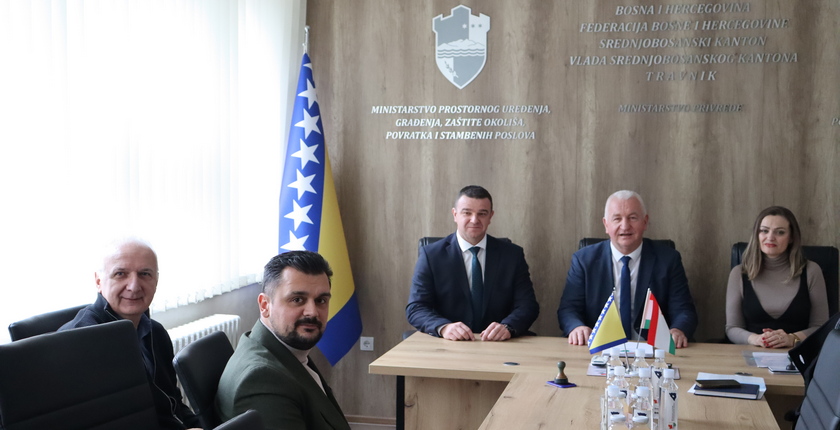
State-owned power utility Elektroprivreda Bosne i Hercegovine (EPBiH) and the Central Bosnia Canton have signed a concession agreement for the Vlašić wind farm near Travnik, along with annexes to the concession agreements for solar power plants Gračanica 1 and Gračanica 2 in the municipality of Bugojno.

The Vlašić wind farm will have up to nine wind turbines with a total capacity of 50 MW, installed at an elevation of 1,850 meters. The projected annual electricity output is between 112 GWh and 116 GWh, and the investment is estimated at EUR 90 million, according to a statement by EPBiH.

Wind farm Vlašić is expected to generate up to 116 GWh of electricity annually

Germany’s KfW Development Bank is providing a loan and grants for the project totaling EUR 38.43 million, and the Council of Ministers of Bosnia and Herzegovina, the country’s central government, adopted draft agreements for the arrangement in late December 2025.

The concession agreement, signed by EPBiH General Manager Sanel Buljubašić and Minister of Economy of the Central Bosnia Canton Sedžad Milanović, covers the construction, operation, and maintenance of the Vlašić wind power plant, reads the statement.

The first wind farm in Bosnia and Herzegovina, Mesihovina, was inaugurated in 2018, followed by Jelovača in 2019 and Podveležje in 2021.

Last year, wind farms Ivovik and Ivan Sedlo were put into operation. In addition, EPBiH plans to build a 90 MW wind park called Bitovnja, while Elektroprivreda Republike Srpske (ERS), the state-owned power utility of the Republic of Srpska, has reactivated the 60 MW Hrgud wind farm project.

Bosnia and Herzegovina consists of two entities: the Republic of Srpska and the Federation of BiH, which controls EPBiH.

Solar plants Gračanica 1 and Gračanica 2 will have a total capacity of 45 MW

The statement recalls that the Gračanica 1 and Gračanica 2 solar power plants would have a combined capacity of 45 MW and notes that a building rights agreement was concluded in December 2025. It also states that activities related to grid connection are currently underway, alongside procedures concerning land expropriation and repurposing.

EPBiH has secured loans for the project from the European Bank for Reconstruction and Development (EBRD) and UniCredit Bank’s subsidiary in BiH. The sites are at a rehabilitated tailings dump of the Gračanica coal mine.

As part of the EPBiH Solar Transition Programme, implemented in cooperation with the EBRD, the state-owned power utility plans to build 13 solar power plants with a total capacity of around 195 MW.

by in News

North Macedonia’s ESM secures loans for investments in solar, hydro

North Macedonia’s power utility Elektrani na Severna Makedonija has secured EUR 97 million for the installation of the Bitola 3 solar power plant and revitalization of hydropower plants.

Elektrani na Severna Makedonija (ESM) said today it signed the contracts for a state guarantee and loans totaling EUR 97 million for two major energy projects.

This is an important step in strengthening North Macedonia’s energy transition, ESM added.

The company received EUR 87 million for the construction of the largest photovoltaic plant, Bitola 3. KfW allocated EUR 50 million, and the European Bank for Reconstruction and Development approved EUR 37 million.

The Hydropower Plants Revitalization Project is estimated at EUR 47.3 million

Another EUR 10 million from KfW will support the revitalization of ESM’s hydropower plants (HPPs), ESM explained.

According to the utility, the Hydropower Plants Revitalization Project, estimated at EUR 47.3 million and supported by a EUR 10 million EU grant, will increase annual hydropower generation by 50 GWh.

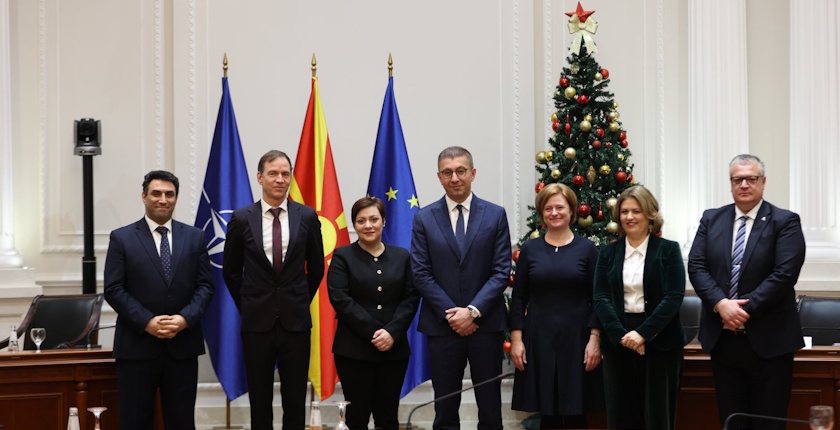
The agreements were signed by Minister of Finance Gordana Dimitrieska-Kochoska, EBRD representative Fatih Türkmenoğlu, KfW’s director for Kosovo* and North Macedonia Moritz Remé, and ESM CEO Lazo Uzunchev.

The ceremony was attended by Prime Minister Hristijan Mickoski and Minister of Energy, Mining and Mineral Resources Sanja Božinovska.

Uzunčev: We will increase domestic renewable capacity by over 200 MW

“With these capital investments, together with ESM, we are strengthening domestic energy production, ensuring stable electricity supply, and fostering sustainable economic development,” Gordana Dimitrieska-Kochoska underscored.

According to ESM CEO Lazo Uzunčev, the company’s strategic goals are being implemented with strong momentum.

“With ongoing solar and wind projects, including Bitola 3, we will increase domestic renewable capacity by over 200 MW in the next two to three years, while reducing CO₂ emissions by more than 260,000 tons annually,” he stressed.

Petra Drexler, Ambassador of Germany to North Macedonia, recalled that over the last years, Germany and the EU have continuously supported North Macedonia on its path toward a sustainable and resilient energy future.

* This designation is without prejudice to positions onstatus and is in line with UNSCR 1244/99 and the ICJ Opinion on the Kosovo declaration of independence.
by in News

Nofar Energy launches work on Romania’s largest solar park

Israel’s Nofar Energy has begun construction of the 282 MW Corbii Mari solar park in Romania, with plans to connect it to the grid next year. The project is being financed from a recently secured EUR 192 million financing package that also covers the company’s two other large solar facilities in Romania.

The financing for Nofar’s projects was arranged by the European Bank for Reconstruction and Development (EBRD). The bank is providing a EUR 64 million loan, with the remaining EUR 128 million mobilized from commercial lenders.

In addition to Corbii Mari, the financial package covers the Iepurești II and Slobozia solar parks. The total capacity of all three projects is 531 MW, and the planned annual electricity production is 676 GWh.

Two solar parks are zero-subsidy projects, while the third has secured a contract for difference

Corbii Mari and Iepurești II will sell electricity on Romania’s competitive day-ahead market, while Slobozia will benefit from a 15-year contract for difference (CfD), according to an EBRD press release.

In late 2023, when Nofar acquired the Corbii Mari project, it was announced that the solar power plant would produce 362 GWh of electricity a year, enough to meet the needs of around 160,000 households.

There are several solar projects in Romania larger than Corbii Mari in various stage of development. These include the 1 GW Dama Solar, developed by Czech company Rezolv Energy, and the 300 MW Butimanu project, implemented by the investment division of Sweden-based Ingka Holding, the largest IKEA franchisee company.

Austria-based Enery is preparing to begin construction works early next year on a photovoltaic facility of 750 MW in peak capacity just outside of Bucharest.

Corbii Mari is set to be Romania’s biggest solar park to date

Given the longer completion timelines for these projects, Corbii Mari is expected to be Romania’s largest solar park for a time, local media reported. The top spot is currently held by Econergy’s Rătești solar power plant, with an installed capacity of 155 MW.

Nofar is also building its Ghimpați solar project near Bucharest, with an installed capacity of 146 MW. Earlier this year, the Israeli company said it had connected to the grid its solar park in Ada, the largest such system in neighboring Serbia.

by in News

Serbia plans to stop using coal, fuel oil in district heating by 2040

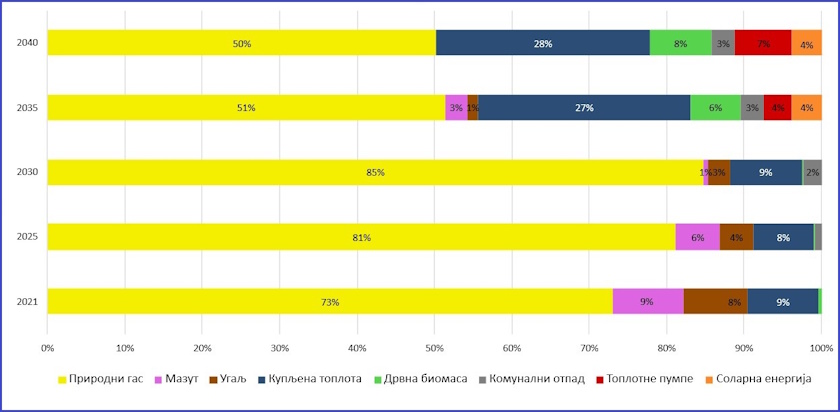
By 2040, Serbia intends to replace fuel oil and coal in district heating plants with solar, wood biomass, heat pumps, municipal waste and geothermal energy.

Maja Vukadinović, acting Assistant Minister of Mining and Energy for Energy Efficiency and Climate Change, has said that the goal for the district heating sector is to phase out fuel oil and coal by 2040.

She explained that the idea is to replace fossil fuels with solar energy, wood biomass, heat pumps, municipal waste and geothermal energy.

“The list of programs and projects until 2028 is defined in the draft Program for the Implementation of the Energy Development Strategy of the Republic of Serbia until 2040 with projections to 2050, for the period from 2026 to 2028,” Vukadinović told Balkan Green Energy News.

The share of renewables should increase from 2.4% to 5.5%

According to the draft, implementation of decarbonization projects in district heating systems by 2028 should lift the share of renewable energy sources in heat production from 2.4% to 5.5%.

The fuel mix in 2023 was 75% natural gas, 8% petroleum products, 2% coal, 2% wood biomass, and 13% purchased heat. The structure of purchased heat production is 46.8% natural gas, 48.8% coal, 3.3% wood biomass, and 1.1% fuel oil.

serbia decarbonization district heating mix 2040

Natural gas will remain the dominant source of thermal energy, as it is today, although its share is expected to decrease from 73% to 50% by 2040, according to Vukadinović.

The decarbonization of the district heating system would reduce air pollution in cities, especially where coal or fuel oil is currently used, the ministry added.

A strategic plan for the district heating decarbonization policy is being prepared

“It’s very important that the fuels conversion is carried out in parallel with energy renovation of buildings and a reduction of the energy consumption for heating. It would significantly improve living conditions,” Vukadinović underlined.

Decarbonization would also have to lead to the improvement of the overall operation of the heating plants, as well as a reduction in network losses, the modernization of substations, and the introduction of daily and seasonal thermal energy storage, in her opinion. The operation of the district heating systems should depend less on the price volatility of imported fuels, Vukadinović stressed.

Serbia is preparing a strategic plan for the district heating decarbonization policy. The document is under development in cooperation with the European Bank for Reconstruction and Development (EBRD) and the business association of Serbian heating plants, Toplane Srbije.

The document, she explained, will outline steps to improve the district heating system, including the rollout of thermal energy storage, heat pumps, and heat production from waste, as well as the development of the country’s first district cooling systems.