by in News

RE-Source Platform: Number of PPAs in Europe drops by 60%

The number of power purchase agreements in Europe decreased by 60% compared to the same period last year, while contracted capacity has dropped by 40%, according to RE-Source Platform.

Europe’s power purchase agreement (PPA) market is facing headwinds in grid development, permitting and electrification and from negative electricity prices, RE-Source Platform warned.

RE-Source Platform facilitates corporate renewable energy sourcing in Europe. It was founded by WindEurope, SolarPower Europe, Climate Group RE100, and World Business Council for Sustainable Development, and steered by a group of corporate buyers and developers.

There are four main problems

“This slowdown is very paradoxical. Europe has no path to energy security and competitiveness unless it electrifies its economy – shielding itself from energy shocks and leveraging large scale deployment of wind and solar energy. But the market is facing headwinds,” the update reads.

The platform identified four main problems.

Europe is not expanding its grid infrastructure quickly enough. The main bottleneck is grid permitting with hundreds of gigawatts of projects awaiting grid connection.

The permitting process for renewables remains too slow. The Renewable Energy Directive has set permitting rules for acceleration, but EU member states have not implemented them.

The Clean Industrial Deal rightly names PPAs as a key solution

Direct electrification is the cheapest and most efficient way to decarbonize. It could also improve competitiveness and energy security, however Europe’s electrification rates are stagnating.

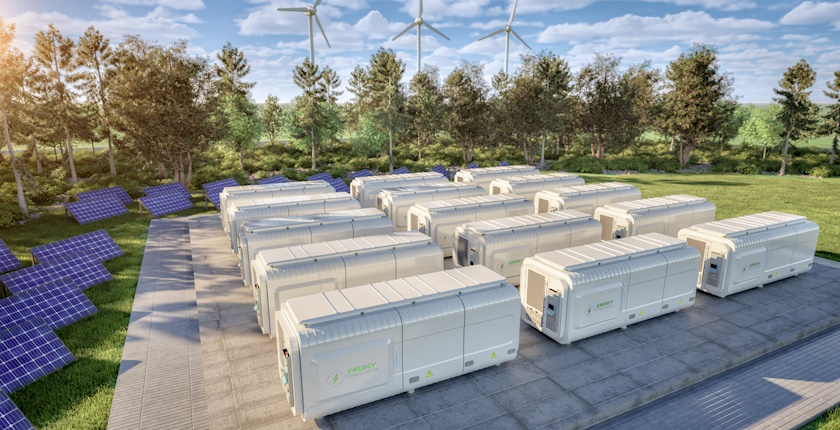
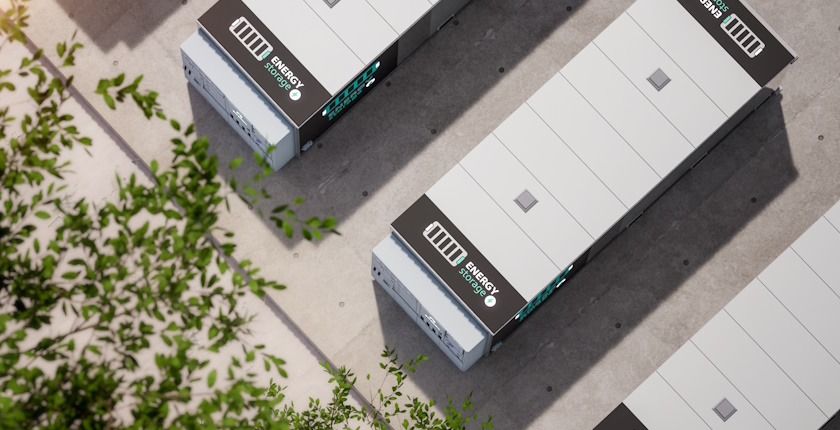
The increase of the negative price hours is making PPA negotiations harder. The way out are energy storage solutions.

The platform stressed the importance of PPAs.

“The Clean Industrial Deal rightly names PPAs as a key solution. Without them, we risk losing industrial competitiveness – and missing our climate targets. PPAs are a cornerstone of Europe’s industrial decarbonization,” the platform added.

They also give companies price certainty, help new wind and solar projects get financed and cut buyers’ exposure to volatile energy markets, according to the update.
by in News

EU waters down its 2040 climate target in runup to COP30 in Brazil

The Council of the European Union upheld the proposed 90% emissions cut target for 2040 ahead of the United Nations Climate Change Conference COP30 in Brazil, but with substantial workaround possibilities. In addition, the environment ministers failed to define the 2035 ambition, leaving the desired reduction in the amount of released greenhouse gases in a range of 66.25% to 72.5%.

Faced with declining competitiveness due to high energy prices and its strict climate and environmental standards, the EU is loosening its decarbonization goal. Following a marathon session in Brussels, the so-called Environment Council kept the desired greenhouse gas emissions reduction by 2040 at 90%, against the 1990 level, to take it to the COP30 event in Belém, Brazil. However, the competent ministers making up the body allowed several important flexibilities to avoid a last-minute stalemate.

Namely, the Council of the EU approved an updated nationally determined contribution (NDC) of the 27-member bloc and individual states to submit it at the Conference of the Parties of the UN Framework Convention on Climate Change (UNFCCC). Political leaders are gathering tomorrow, while COP30 formally lasts from November 10 to 21.

Following the 2020 NDC and its 2023 update, the new one covers the period up to 2035.

Outsourcing climate improvements instead of domestic decarbonization

On the path to eliminating net emissions by 2050, the EU is sticking with its nominal 2040 goal. On the other hand, in the latest version, the environment ministers allow “an adequate contribution of high-quality international credits in a manner that is both ambitious and cost-efficient.”

In particular, five percentage points of the 90% can be met via emission cuts promised outside the EU, and governments would be allowed to outsource a further five points, Greenpeace warned. It means they would buy carbon credits abroad as offsets.

EU is counting on purchases of other countries’ carbon credits for offsets

“The European Scientific Advisory Board on Climate Change [ESABCC] had called for emissions cuts of 90%-95% by 2040, and had stressed that this target must be for domestic reductions to climate pollution, not cuts outsourced to other countries. Environment ministers also agreed that the European Commission should reopen and water down the climate target in the case of high energy prices, a perceived negative economic impact or in light of technological advances. To reach a deal with reluctant countries, ministers also agreed to delay the start of the EU’s carbon market for pollution from cars and heating systems, extend pollution permits for heavy industry and exempt some ‘low-carbon’ fuels under the internal combustion engine phaseout,” the organization added.

The carbon market in question is the planned Emissions Trading System 2 (EU ETS 2). The Environment Council proposed to delay its establishment by a year, until 2028, and work on measures for a smooth launch.

“According to the ESABCC, only 16% of offsets have delivered genuine emissions reductions. But if they were high-quality offsets, they would be costly, and relying on them would divert investment from transforming the EU’s own industries, economy, and workers,” World Wide Fund For Nature (WWF) pointed out.

Indicative range for 2035 goal entirely below required efforts

The protracted discussions between the EU’s national governments also delayed the announcement of the EU’s indicative climate target for 2035, under the Paris Agreement. It is supposed to be submitted at the UN Climate Change Conference COP30.

“Ministers failed to agree a firm 2035 target, instead keeping a previously agreed range of 66.25% to 72.5% emission cuts, even the upper end of which is inconsistent with a credible pathway to the proposed 90% cut for five years later, undermining the EU’s position as a climate leader at COP30,” Greenpeace stressed.

Climate-competitiveness-independence tradeoff

The European Parliament’s Committee on Environment, Public Health and Food Safety (ENVI) is expected to discuss the matter soon. After a plenary vote, the institution would negotiate with the Council of the EU and European Commission.

“We need climate, competitiveness and independence. All three are crucial and going forward we need to ensure that one doesn’t come at the expense of the other. This morning, the environment and climate ministers of all member states reached a pragmatic, ambitious deal which ensures that,” said European Commissioner for Climate, Net-Zero and Clean Growth Wopke Hoekstra.

by in News

PPC building three battery storage facilities in Greece

PPC Group has launched the construction of a battery energy storage system in the area of its Amyntaio coal plant. The company is also building BESS facilities at its thermal power plants Kardia and Meliti, as it is preparing to end coal use in Greece. One BESS unit is under construction in Bulgaria, as well. In Romania, PPC is expanding its wind park project Deleni, which would bring its operational portfolio in the country to over 1.5 GW.

Public Power Corp. – PPC Group is investing in energy storage in Greece and surrounding countries, complementing its solar and wind power investments and contributing to the transformation of coal regions. The government-controlled utility revealed that its future battery energy storage system near the Amyntaio coal plant in the Western Macedonia region is under construction.

The new station will consist of batteries with 50 MW in operating power and a duration of four hours, translating to a capacity of 200 MWh. Wholly-owned subsidiary PPC Renewables is responsible for the project. It is for liquid-cooled batteries of the LFP (lithium iron phosphate) technology.

The construction of two more electrochemical storage stations is already underway in the same northern region, in the areas of the Kardia and Meliti thermal power plants, the company pointed out. Their combined capability would be 98 MW, for 196 MWh in capacity.

Western Macedonia region to host 860 MW of energy storage

The role of energy storage units for the system is critical, as they aim to support the operation of adjacent photovoltaic power plants and contribute to the stability of the electricity system, PPC Group added. It is planning 860 MW of energy storage in the Western Macedonia coal region. The company said it would create 1,300 jobs in the construction phase and hundreds during operation.

Two pumped storage hydropower projects are included in the portfolio. The one that would transform the Kardia mine is for 320 MW and eight hours, and the facility at the South Field mine would have 240 MW and a 12-hour duration. PPC Group said it has completed the permitting process for the latter.

Solar power plants of 2.13 GW in northern Greece nearing completion

Earlier this month, the utility said its solar power projects in Western Macedonia of 2.13 GW overall are moving ahead at a fast pace and within schedule, in areas around coal plants Ptolemaida, Kardia, Agios Dimitrios and Amyntaio. Overall, upon their completion, the photovoltaic clusters in the region, largest ones in the entire Europe, will generate almost 3.15 TWh of electricity per year, the company added.

Coal land in the Western Macedonia region is turning into endless solar parks

It is equivalent to over 6% of the annual energy consumption in the Greek mainland. Utilising the land of the former lignite mines of Ptolemaida, Kardia, and Agios Dimitrios, PV plants totaling 1.19 GW are being installed, of which 90% is complete and some is in operation.

The clusters include PPC Group’s flagship project, of 550 MW. It would be the biggest facility of its kind in Southeastern Europe excluding Turkey.

In cooperation with the German company RWE, the construction of photovoltaic plants in Amyntaio of 940 MW overall is also advancing rapidly toward completion, the latest update reads.

Advancing investments in Bulgaria, Romania

In addition, the company said it is building a BESS unit of 25 MW and 55 MWh in neighboring Bulgaria.

As for other recent news, PPC said it is expanding its Deleni wind park project in Vaslui county in northwest Romania. The first phase, 140 MW, is supposed to be completed by the end of the year. The addition would amount to 85 MW, consisting of 14 turbines, the Greek company added.

The site is at the Bogdănița commune. With the 225 MW in Deleni, PPC in Romania would reach 1.5 GW in operational capacity.

by in News

Renewable electricity should not be subject to EU’s CO2 import tax

The European Commission is collecting evidence to come up with solutions for unintended effects of the Carbon Border Adjustment Mechanism (CBAM) on renewable electricity in the Western Balkans, Director of the Energy Community Secretariat Artur Lorkowski pointed out in an interview with Balkan Green Energy News, as one of the most important developments in the sector. Boosting renewable energy development and trade with third countries such as the Western Balkans was supposed to be accelerated by the European Union’s CO2 import tax.

To reduce the payment obligations of EU importers under CBAM, the contracting parties in the region are planning carbon pricing systems, but under different models. The ultimate goal is eventually joining the EU Emissions Trading System, implying the need for coordination and cooperation between the governments in the process, Lorkowski stressed.

Looking back twenty years since the Energy Community Treaty was signed, it proved to be a successful format of cooperation, the Energy Community Secretariat Director Artur Lorkowski said. On the occasion of the anniversary, Balkan Green Energy News sat down with the head of the international organization to speak about the achievements and benefits for the contracting parties, and the remaining milestones that the Western Balkans need to reach in order to integrate with the EU’s energy union.

“Economic growth depends on energy security and fair pricing. There is visible progress in transformation, clearly seen from the 2024 figures. And the final element is the accelerated energy market integration with the EU, and this is what we can be really proud of,” Lorkowski asserted.

Among the segments with tangible improvements, he also highlighted the convergence on the wholesale gas and electricity markets. It is facilitating competitiveness in the Energy Community, the secretariat’s chief added.

Renewables capacity doubled in four years

Fossil fuels used to account for 60% of electricity production in the contracting parties five years ago, compared to 50% now, Lorkowski noted. The significant results in renewables except for large hydro are illustrated by the fact that the overall capacity in the segment has more than doubled between 2020 and 2024, he stressed. More importantly, the carbon footprint – the CO2 emissions per unit of the nominal gross domestic product, fell 11% last year alone.

CO2 emissions per unit of the nominal GDP fell 11% last year in the Energy Community

As for EU integration, electricity market coupling is progressing very well, as a good example, in Lorkowski’s view. The legislation is mostly aligned, so most countries are just waiting for the process to be concluded, the director of the Energy Community Secretariat explained.

“There are operating wholesale markets everywhere in the Western Balkans except in Bosnia and Herzegovina, which is about to adopt the required law. Serbia is at the forefront of that process. North Macedonia and Montenegro are very close, with small elements yet to be achieved. It is a non-reversible point, point of no return on a path towards EU integration,” Lorkowski said. He recalled that when capacity calculations regions (CCRs), operationalization and verification are cleared from the to-do list, it would take 18 months to join the EU’s market coupling project.

Electricity can be exempted from CBAM at later stage

Energy Community contracting parties may become eligible for exemption until 2030 from CBAM in electricity, if they meet the CBAM requirements. However, the EU is starting to charge the CO2 import tax already on January 1.

“I wish the contracting parties followed my messages from the Belgrade Energy Forum in 2023, because you might remember me saying that CBAM is coming and we have to prepare for that. But unfortunately, we have observed a lot of delays and hiccups in the preparatory process. Fair enough, this is the reality we have to face now – no country of the Energy Community will be exempted on 1 January 2026. But we can still work to be exempted at a later stage,” Lorkowski underscored.

Artur Lorkowski was a keynote speaker at Belgrade Energy Forum 2025, organized by Balkan Green Energy News

European Commission expected to clarify rules by end of year

The second part of the story is that CBAM, in addition to its intended impacts, especially on coal power, also has unintended impacts, Lorkowski explained. For example, electricity transit between EU member states through the contracting parties, in practice, may also be subject to the tax, even if it was not intended by the European legislators.

CBAM was intended to provide equal treatment for products produced inside and outside the EU when it comes to carbon payments. “Renewable energy, not being subject to the EU ETS, would – logically – not need to be subject to CBAM, but with the current rules, even EU off-takers with cross-border power purchase agreements (PPAs) may still be subject to payment obligations, as the implementing rules remain overly complex, effectively treating them in the same way as fossil fuel importers. These are real problems that stakeholders have been raising with us in our targeted outreach to power companies, traders, and other stakeholders both from the EU and Energy Community,” Lorkowski added.

Legislative efforts to further improve trade in renewables with the EU continue under the Energy Community

The Energy Community Ministerial Council reported it in Athens to the European Commission and asked it to find a solution.

Lorkowski said he expects the EU’s top executive body to soon issue implementing and delegated acts, by the end of 2025, clarifying the CBAM implementation rules, and to follow it up in 2026 with a targeted amendment proposal on electricity.

Legislative efforts to further improve trade in renewables with the EU continue under the Energy Community. “The European Commission has presented to the contracting parties a draft decision on the mutual recognition of guarantees of origin and is now awaiting their feedback. I hope that in 2026 we can have a decision. But it does not mean that the guarantees of origin can be used as the currency for paying the CBAM fee. That would require amending the CBAM legislation,” he stated.

Carbon pricing systems need to evolve toward matching EU ETS

For a potential reduction of CBAM payments in other areas as well – iron and steel, aluminum, fertilizers, cement and hydrogen – third countries need to introduce carbon pricing systems. Serbia recently drafted legislation for a CO2 tax and for a tax on imports of carbon-intensive products. It is a good step forward, according to Lorkowski.

“We expect each and every country to make a decision on the carbon pricing. All of the countries of the Energy Community, with the exception of Kosovo*, have communicated to the secretariat which model they will implement. And the models vary: from Serbia’s carbon tax to a domestic emissions trading system of Montenegro, which is already in place,” he revealed.

There is no uniform carbon pricing model for the Energy Community

Namely, the Energy Community Ministerial Council decided not to implement a uniform regional carbon pricing mechanism but opted for individual models. They should all be built with the perspective of aligning eventually with the EU Emissions Trading System (EU ETS), Lorkowski said.

“The key challenge now for the Energy Community is how to maintain the integrity of the electricity market between the contracting parties and the European Union after CBAM enters its definitive phase from next January. We need to figure out how to coordinate among the systems. It implies not only the existence of the domestic carbon markets, but also the cooperation within the region,” he pointed out.

Ministerial Council to announce way forward on carbon pricing coordination

The Ministerial Council is due to conclude on carbon pricing at its regular annual meeting in December, Lorkowski said.

“The three critical elements are how much the CO2 will cost, who will pay – which businesses and sectors are in scope – and when those carbon pricing systems will be introduced. They need to maintain the integrity of the market, the level playing field of the market, and avoid market distortions,” the top Energy Community official added.

Practical policies more important than coal phaseout dates alone

Turning to the coal phaseout, essential for the decarbonization of the economy, Lorkowski acknowledged the significance of political declarations such as the Sofia Declaration and commitments from the national energy and climate plans (NECPs).

“That said, it is critically important to anchor the actions for the future with practical policies. The decisions on the establishment of carbon pricing mechanisms are even more important. In addition, we should focus on monitoring, reporting and verification – MRV systems. The contracting parties need to identify emitters and measure quantities,” the director of the Energy Community Secretariat underscored.

* This designation is without prejudice to positions onstatus and is in line with UNSCR 1244/99 and the ICJ Opinion on the Kosovo declaration of independence.
by in News

Bulgaria’s coal regions to get further EUR 808 million for just transition

Bulgaria’s coal regions will receive BGN 1.58 billion (EUR 808 million) through the Just Transition program, under the European Union’s Just Transition Fund (JTF), for energy efficiency, renewable energy, and green hydrogen projects, as well as for converting mining areas for commercial use.

With a EUR 598 million program already underway, total investments in the economic transformation during and after the country’s coal phaseout would reach EUR 1.38 billion. They cover coal regions Stara Zagora, Kyustendil, and Pernik and the municipalities of Nova Zagora, Yambol, Simeonovgrad, Harmanli, Topolovgrad, Dimitrovgrad, Haskovo, Elhovo, Sliven and Tundzha.

Grants from the JTF are intended to help coal regions shut down mines and coal-fired power plants, rehabilitate land, switch to a circular and climate-neutral economy, and lift households out of energy poverty.

By the end of the year, the Bulgarian Ministry of Regional Development and Public Works will launch three new procedures for the allocation of grants, according to Deputy Minister Yura Vitanova.

One, worth EUR 153.4 million, will focus on energy communities and energy efficiency in public buildings. Another, worth EUR 72.6 million, will help small and medium-sized enterprises (SMEs) install solar panels and energy storage systems for both self-consumption and commercial use.

A third call, with a budget of EUR 242.9 million, will support the socio-economic transformation, including projects to convert mining areas into business and industrial zones.

Green hydrogen projects will be backed with EUR 134.5 million

Additionally, EUR 134.5 million will be used to fund the development of hydrogen production and transportation infrastructure in Stara Zagora. It includes the construction of a green hydrogen production complex and hydrogen charging stations, the procurement of hydrogen vehicles and hydrogen trailers, and the construction of supporting infrastructure, including photovoltaic systems and energy storage facilities.

The current JTF program in Bulgaria’s coal regions focuses on renovating residential buildings, supporting SMEs, and developing industrial and logistics parks. It also funds training and retraining programs for workers affected by the energy transition, as well as production investments in large enterprises.

by in News

European Commission: Russian gas ban doesn’t include transit to Serbia, BiH

The proposed ban on importing Russian natural gas to the European Union doesn’t apply to the transit of Russian gas, so it doesn’t affect the supply of Serbia and Bosnia and Herzegovina, the European Commission’s spokesperson Anna-Kaisa Itkonen told Balkan Green Energy News.

After the Council of the European Union on Monday adopted its negotiating position on the European Commission’s draft regulation to phase out imports of Russian natural gas by January 1, 2028, reports emerged that Bulgaria would halt the transit of Russian gas to Serbia from January 1, 2026. The council agreed with the initiative to prohibit imports of Russian gas, starting on January 1, 2026, while maintaining a transition period for existing contracts.

Notably, Bulgaria’s Prime Minister Rosen Zhelyazkov announced in late September that his country would suspend Russian gas transit for short-term contracts in 2026 as part of EU plans to cut off Russian gas imports completely, Reuters reported.

Serbia receives natural gas from Russia via the Balkan Stream. The pipeline is an extension of TurkStream that passes through Bulgaria and Serbia. TurkStream delivers gas from Russia across the Black Sea to Turkey.

Bosnia and Herzegovina and Hungary, Serbia’s neighbors, are also supplied via Balkan Stream.

With regards to transit via EU territory, the EU proposal only requires more transparency on transited volumes to third countries

Balkan Green Energy News asked the European Commission to clarify if the supply of Russian gas to Serbia and BiH via Bulgaria would be halted as of January 1, 2026, but also how the EU could assist Serbia and BiH in that case.

The European Commission’s spokesperson Anna-Kaisa Itkonen noted that its REPowerEU proposal foresees a prohibition of the import of Russian gas into the EU.

“The EU import prohibition doesn’t concern the transit of Russian gas through the EU territory to third countries – including to Serbia and BiH. It doesn’t therefore affect Serbia’s or BiH gas supply,” she stressed.

With regards to transit via EU territory, in her words, the EU proposal only requires more transparency on transited volumes to third countries.

EU candidate countries are expected to progressively align their legislation with the EU acquis and rules

However, EU candidate countries are expected to progressively align their legislation with the EU acquis and rules as part of the accession process, Itkonen pointed out and added that it includes REPowerEU regulation once it becomes EU law.

Of note, the draft regulation to phase out imports of Russian natural gas constitutes a central element of the EU’s REPowerEU roadmap to end the EU’s dependency on Russian energy.

According to Itkonen, as a way to ensure security of supply, candidate countries including Serbia should diversify away from unreliable energy suppliers such as Russia. Following Russia’s war of aggression on Ukraine, it became evident how important this is and what problems it can create for any European country, she asserted.

“The EU is supporting the WB countries for diversifying their energy supplies”

Anna-Kaisa Itkonen (photo: European Commission)

“The EU is supporting the Western Balkan countries for diversifying their energy supplies and for closer integration into the EU’s energy networks, both for electricity and gas, as well as through investments in renewable energy and decarbonization efforts,” Itkonen underlined.

After energy ministers in the Council of the EU have agreed on the institution’s negotiating position on the European Commission’s draft regulation, the next step is the adoption of the European Parliament’s position.

The council and the parliament would then start negotiations on the regulation. When the two institutions approve a regulation, it directly applies to all member states.

The meeting of the so-called Energy Council highlighted several issues and concerns among EU member states about the proposed ban on Russian natural gas.

by in News

Repono acquires BESS project for 404 MWh in Romania

Swedish energy storage operator Repono has completed the acquisition of a 202 MW / 404 MWh battery energy storage system project located in Romania’s Argeș county.

Romania has become one of the most active markets for battery energy storage system (BESS) projects in South East Europe.

Developed by a domestic firm, the Argeș project reached a ready-to-build stage, Repono said. The investment benefits from a grid connection contract with the country’s transmission system operator Transelectrica. The entry point is the 220 kV Pitești substation, northwest of Bucharest.

Once operational, it will be among the largest grid-scale storage assets in Southeast Europe, capable of storing and releasing enough energy to supply more than 120,000 four-person households during peak-demand periods, according to the company.

The partnership with local developers includes a framework for additional energy storage projects

A partnership with local developers is set to drive significant future growth for the firm, based in Sweden.

It includes a framework for additional energy storage projects across Romania with a combined capacity of up to 1.4 GW, reinforcing Repono’s long-term commitment to the market, the update reads.

“This transaction represents an important milestone for Repono AB and demonstrates our continued commitment to developing large-scale storage infrastructure that supports Europe’s energy transition,” CEO Karim Nils Grueber stated.

De Kool: Large-scale storage assets are key enablers of a stable European power system

The Argeș project’s market optimization will be handled by Gunvor, in collaboration with Vienna-based optimiser Enspired. They are tasked with managing the energy offtake and market strategy to ensure the BESS is efficiently integrated into the Romanian and regional power markets.

According to Harmen de Kool, Chairman of the Board of Repono and a representative of InnoEnergy, large-scale storage assets like the one in Argeș are key enablers of a stable and decarbonized European power system.

It further fortifies InnoEnergy’s aim to achieve carbon neutrality, he added.

With this acquisition, Repono continues to expand its European portfolio of grid-scale BESS, with active developments spanning Germany, Romania, Italy, Austria, and Poland.

by in News

North Macedonia launches decarbonization guide for small businesses

The Economic Chamber of North Macedonia has developed the country’s first decarbonization guide for small businesses. The digital tool is intended to help North Macedonia’s economy adapt to international climate rules, including the European Union’s carbon border tax (CBAM).

The decarbonization guide provides detailed instructions on the most effective ways for local companies to reduce their carbon footprint as part of the global fight against climate change, according to the Economic Chamber of North Macedonia.

The key feature is a carbon footprint calculator that covers nearly 60 different energy sources and refrigerants. Information is also available on EU and domestic climate regulations, as well as funding opportunities, such as subsidies.

The platform offers practical case studies and success stories of leading companies to highlight the benefits of clean energy, according to the chamber.

Božinovska: The decarbonization guide marks a turning point in the country’s green transition

The guide was developed in cooperation with the advisory team of the European Investment Bank (EIB) and the Delegation of the EU to North Macedonia.

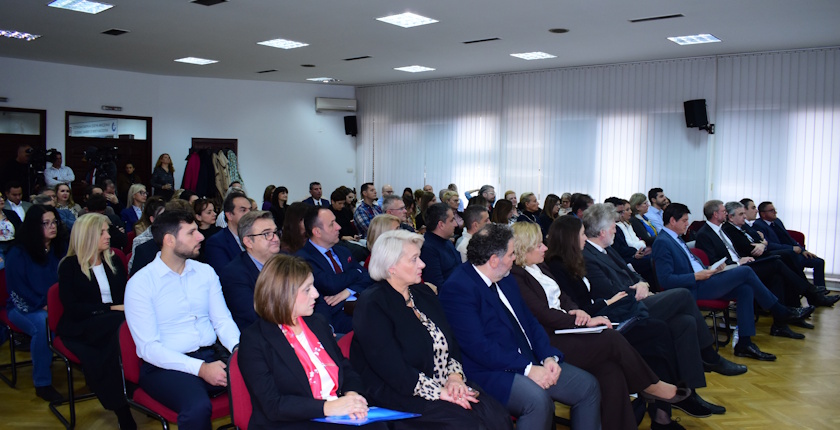
The guide was presented in the country’s capital, Skopje, at a gathering attended by more than a hundred entrepreneurs from all sectors of the North Macedonian economy.

Sanja Božinovska (photo: Economic Chamber of North Macedonia)

“The decarbonization guide is a turning point in our country’s green transition, equipping businesses with the tools they need to act now,” said Sanja Božinovska, North Macedonia’s Minister of Energy, Mining and Mineral Resources.

The guide is designed to help companies reduce greenhouse gas emissions and adapt to international climate rules, while, as the chamber says, preserving competitiveness.

One of these rules is the EU’s tax on the import of carbon-intensive goods, the Carbon Border Adjustment Mechanism (CBAM), which is set to take effect on January 1, 2026.

The guide is available on the website of the Economic Chamber of North Macedonia

This digital tool will help North Macedonia move towards a low-carbon economy, the chamber added.

The guide is available on the chamber’s website in the form of an interactive platform. Its development was financed by EIB Global.

Björn Gabriel, Head of EIB Representation in North Macedonia, has said that the guide comes at a crucial time as North Macedonia advances its green transition and prepares for upcoming carbon regulations.

According to Head of the Delegation of the EU to North Macedonia Michalis Rokas, decarbonization, energy efficiency, and renewable energy sources are powerful tools for building a more innovative, resilient, and competitive economy.

If every small and medium-sized enterprise (SME) takes at least a few significant steps toward greener business practices, the combined impact on more than 68,000 firms will be truly transformative, claims Rokas.

Michalis Rokas (photo: Economic Chamber of North Macedonia)

by in News

Romania’s coal town Turceni starts EUR 380 million green energy transformation

Turceni is dependent on the local coal power plant, so the municipal authority is turning to agrivoltaics, energy storage and green hydrogen to replace it. The small town in southwestern Romania is kickstarting a EUR 380 million project.

The coal plant in Turceni used to be one of the biggest in Europe, at 2.3 GW. Located next to the eponymous town in Romania’s Gorj coal region, only two units of 660 MW in total are still operational. At the same time, dozens of such facilities across Europe are shutting down ahead of schedule. The power plant and its associated mines within Complexul Energetic Turceni have been essential for the local economy, which is under threat of devastation amid the country’s coal phaseout.

As with other coal regions in the European Union, the solution is in green energy and new technologies. The town hall has signed a contract with the European Investment Bank for agrisolar parks, energy storage units and the production and storage of green hydrogen.

Turceni town hall secures municipal land for green energy projects

The project is worth a whopping EUR 380 million, Mayor Constantin Popescu revealed. Turceni and its administrative area have fewer than seven thousand inhabitants.

More than 123 hectares of municipal land (pastures) and more than 200 hectares of private land were designated for the renewable energy hub, the mayor stressed.

Bankwatch: The coal region is transitioning to a future based on innovation, sustainability and strong partnerships

Partners in the project are Bankwatch Romania and GAL Sudul Gorjului, the so-called local action group for southern Gorj. Bankwatch said over 370 hectares would be switched to clean and sustainable energy production.

“We are glad that we had an important role in developing the project plan and aligning it with European environmental policies, as well as in applying for technical assistance. For a region that has been, for decades, a pillar of coal-fired energy, this project marks a strategic transformation: a transition to a future based on innovation, sustainability and strong partnerships,” the organization added.

Investments to start in 2026

Implementation is scheduled to begin next year. The project will contribute to a just transition of the region by increasing the production of electricity from renewable energy sources, Popescu asserted. In his words, it will be complementary to the local authority’s other ongoing and future decarbonization investments.

The mayor also highlighted the plans to use geothermal energy for district heating and agriculture.

Complexul Energetic Turceni is part of state-owned Complexul Energetic Oltenia (CE Oltenia). According to the company’s restructuring and decarbonization plan, the coal business will be separated from green energy and other investments.

They include projects for CCGT (combined-cycle gas turbine) power plants of 475 MW in Turceni and 800 MW in nearby Ișalnița, as the main replacement for coal plants. Both are suffering heavy delays.

Minister of Energy Bogdan Ivan said last week that CE Oltenia’s Ișalnița coal plant in neighboring Dolj county would be closed on January 1. Romania has asked the European Commission to delay the closure of several coal plant units, scheduled for this year, until 2030.

Earlier this year, a joint venture between CE Oltenia and OMV Petrom hired contractors for four solar power plants at former coal land, with a combined capacity of about 550 MW. One of the sites is in Ișalnița.

by in News

Energy Community’s CBAM Readiness Tracker: Western Balkans still far from exemption as full implementation nears

With less than three months remaining until the European Union’s Carbon Border Adjustment Mechanism (CBAM) is fully implemented, none of the Energy Community’s contracting parties has yet qualified for an exemption in the electricity segment, according to the 2025 CBAM Readiness Tracker. However, the Energy Community’s report suggests that efforts to meet the are gaining momentum, with Serbia, Moldova, North Macedonia, and Montenegro leading the way to market coupling with the EU, and almost all contracting parties planning to introduce carbon pricing.

These efforts signal a growing readiness across the Energy Community to turn CBAM into a catalyst for deeper regional energy market integration and decarbonization, according to the annual report.

“The progress reflected in this year’s tracker underlines that CBAM can drive – not deter – regional cooperation on the energy transition,” Energy Community Secretariat Director Artur Lorkowski stressed and added that the scheme should “serve as a bridge into the EU, not a barrier.”

Lorkowski: CBAM should serve as a bridge into the EU

Starting on January 1, 2026, the EU will charge fees on the CO2 emissions of goods imported from countries that don’t apply matching carbon pricing schemes. In addition to electricity, the carbon border tax will cover cement, iron and steel, aluminum, fertilizers, and hydrogen.

Serbia faces the highest exposure to CBAM costs

Estimates based on 2024 data show the CBAM exposure of EU electricity importers could reach around EUR 1.17 billion a year. Serbia accounts for the largest share, with an estimated EUR 612.5 million in annual CBAM costs, followed by North Macedonia, with about EUR 200 million, Montenegro, EUR 190 million, and Bosnia and Herzegovina, EUR 158 million. Moldova’s exposure is about EUR 6 million, while Albania, which has an electricity mix almost entirely dominated by renewables, faces no CBAM-related costs, according to the report.

The estimated average CBAM cost per megawatt-hour is EUR 33.14 for Moldova, EUR 59.71 for North Macedonia, EUR 62.45 for Montenegro, EUR 66.71 for Serbia, and EUR 73.37 for Bosnia and Herzegovina.

The criteria for a CBAM exemption for electricity include integrating the power market with the EU and introducing a carbon pricing system. A contracting party must also adopt EU regulations on energy, electricity, environment, and competition, increase the share of renewables in its energy mix to align with the EU’s 2030 targets, commit to climate neutrality by 2050 and submit a related roadmap to the EU, and implement measures to prevent indirect electricity imports from non-compliant countries.

Advances evident in emissions, renewables, and market coupling

The 2025 CBAM Readiness Tracker shows that last year alone, carbon intensity across the contracting parties’ power sectors fell by an average of 11%. At the same time, capacity from renewables, excluding large hydro, surged to 5.1 GW from 2 GW between 2020 and 2024. The expansion was driven almost entirely by solar and wind, helped by renewable energy auctions.

When it comes to electricity market integration, no contracting party has completed market coupling with the EU. However, Serbia, Moldova, North Macedonia, and Montenegro are approaching a “point of no return,” which represents a full transposition of EU regulations relevant for market coupling, according to the tracker.

The energy transition unfolding across the Energy Community contracting parties is both tangible and measurable, Adam Cwetsch, Head of the Green Deal Unit at the Energy Community Secretariat, told Balkan Green Energy News. “Carbon intensity in electricity production and economic output continues to fall, while renewable energy deployment accelerates through competitive auctions. This progress reflects a clear commitment to European decarbonisation goals and lays the foundation for deeper energy market integration and long-term climate neutrality,” he stressed.

The secretariat remains committed to ensuring the process continues smoothly – without obstacles from possible unintended impacts of CBAM, Cwetsch said.

Even though no contracting party has introduced a carbon pricing instrument for electricity, almost all of them have outlined plans to establish domestic systems that reflect their specific circumstances.

“This is a crucial step toward alignment with the EU’s carbon pricing framework under CBAM. The rollout of monitoring, reporting, and verification systems across the region is laying the groundwork for implementation and demonstrates growing readiness and credibility, even as timelines remain tight and challenges persist,” Cwetsch stated.

Available carbon pricing models are carbon taxes, ETS and a combination of the two

The available models are a carbon tax, an emissions trading system (ETS), and a hybrid version. The only contracting party that has no plans to introduce carbon pricing is Kosovo*, according to the report.

All contracting parties have concluded agreements to apply EU law in the fields of energy, electricity (including renewable energy), the environment, and competition. In each of them, the implementation of renewable energy legislation is either underway or showing visible progress, the report shows.

No Western Balkan country has included the EU’s 2050 climate goals into national legislation

On the other hand, Ukraine and Moldova are the only ones that have included the 2050 climate neutrality objective in national legislation, while no contracting party has submitted a corresponding roadmap to the EU.

Another requirement that no one has yet fulfilled is the establishment of an effective system to prevent indirect import of electricity into the EU from other third countries or territories that do not meet the CBAM exemption criteria for electricity.

* This designation is without prejudice to positions onstatus and is in line with UNSCR 1244/99 and the ICJ Opinion on the Kosovo declaration of independence.