by in News

Romania’s plan to install 2.15 GW of gas power plants isn’t viable

Romania’s plans for new combined cycle gas turbines with a total capacity of 2.15 GW isn’t economically viable and, if constructed, the facilities should be decommissioned by 2035, according to ENTSO-E’s annual assessment of Europe’s security of electricity supply for the ten years ahead.

ENTSO-E’s European Resource Adequacy Assessment 2024 (ERAA 2024) provides an integrated pan-European perspective for the years 2026, 2028, 2030 and 2035.

The document includes comments on individual countries, specific insights provided by transmission system operators (TSOs).

According to the entry about Romania, low adequacy concerns have been identified in ERAA 2024. The findings rely on assumptions from the National Energy and Climate Plan (NECP), in place on the date of the data collection, as well as from investment plans, permits, connection requests, and available inputs from market participants.

NECP’s central reference scenario reflects the coal phase-out process and further plans for the replacement of the decommissioned capacity with, mainly, combined cycle gas turbine (CCGT) power plants, the document reads.

The results of the economic viability assessment show 2.15 GW of CCGT capacity would not be economically viable by the 2035 horizon

The commissioning of envisioned gas CCGTs is, however, highly uncertain, and national analyses reveal that the validity of the adequacy indicators depends on the implementation of generation goals, the update showed.

Uncertainties related to the commissioning date of the new capacities may have an adverse impact on Romania and, potentially, on the region, the document underlines.

Moreover, results of the economic viability assessment (EVA), part of ERAA 2024, demonstrate that the 2.15 GW of envisaged CCGT capacity would not be economically viable by the 2035 horizon and should be decommissioned in target year 2035.

Considering it is not existing capacity, but rather assumed commissioned in the 2026-2030 period, it is most likely the investments will not materialize at all and thus, the correspondent capacity should be excluded from the analysis for the earlier target years, too, not only 2035, with a negative effect on loss-of-load-expectation (LOLE) results, the authors warned.

Goal in NECP is 2.6 GW of CCGT power plants

According to Romania’s NECP, the goal is 2030 to construct at least 2.6 GW of natural gas–powered CCGTs and around 900 MW of natural-gas-fired combined heat and power (CHP) plants.

The CCGT facilities are Iernut (430 MW), Mintia (at least 860 MW, with a possibility of reaching 1.700 MW), and Ișalnița and Turceni, of 1,325 MW in total.

Investments aren’t going as planned. In January, Minister of Energy Sebastian Burduja acknowledged that the addition of gas-fired units expected in line with the restructuring plan for Complexul Energetic Oltenia – CE Oltenia has been delayed.

Burduja: Mintia to be operational next year

Tenders were launched, such as the one for Ișalnița, but not a single offer was submitted, he added. In Burduja’s words, it is one of the reasons why the operation of coal power plants should be extended.

State-owned CE Oltenia is the largest producer of coal power and the third-largest producer of electricity in the country. Its restructuring plan envisages lignite-based electricity production to be replaced with natural gas, in Işalniţa and Turceni, and renewables.

The Mintia project got the construction permit in January. In March, Burduja said it would be commissioned next year, according to Romania Insider.
by in News

Turkey to manufacture green hydrogen, nuclear, CCS equipment

The 2030 Industry and Technology Strategy includes setting up industrial facilities in Turkey for nuclear energy, green hydrogen, battery storage and carbon capture and storage (CCS). The country is planning to establish a value chain for critical raw materials. The government vowed to support the development of semiconductor technology, autonomous and flying vehicles and cybersecurity solutions, alongside innovations for electric vehicles and solar and wind power.

With its recently unveiled 2030 Industry and Technology Strategy, Turkey announced the ambition to upgrade its industrial production to one of the most advanced in the world. As Russia’s Rosatom is completing the country’s first nuclear reactor in Akkuyu, the government is planning to develop its own technology in the segment.

The strategy involves setting up industrial clusters for equipment and infrastructure. Among the possible technologies are molten salt reactors. The Scientific and Technological Research Council of Türkiye (TÜBİTAK), Turkish Energy, Nuclear and Mineral Research Agency (TENMAK) and Istanbul Technical University (İTÜ) are tasked with establishing a nuclear tech park.

Green hydrogen mostly needed for decarbonizing hard-to-abate industrial production

TÜBİTAK is responsible for developing domestic electrolyzers as well. The national hydrogen program is set to bring support for integrating the production of green hydrogen, storage, transportation and consumption. The last of the four is especially focused on energy-intensive industries such as steel, petrochemicals and fertilizers.

Another segment that would get incentives is the use of hydrogen in fuel cell vehicles including heavy vehicles. The strategy envisages setting up pilot zones for green hydrogen production, with electrolyzers powered by wind and solar energy.

Turkey has high ambitions for high-tech exports

Turkey has revealed the goal of tripling its high-tech exports to USD 30 billion by the end of the decade. It is part of an ambition to lift industrial exports to USD 400 billion from last year’s USD 247 billion. At the same time, the government’s target for the overall valuation of domestic tech startups is USD 100 billion.

The 2030 Industry and Technology Strategy has other chapters, too, like carbon capture, utilization and storage (CCUS or just CCS), access to critical raw materials, semiconductor and battery manufacturing and cybersecurity. Officials vowed to continue prioritizing domestic electric vehicles, but with investments in autonomous operation systems and even flying cars.

Cybersecurity solar and wind turbine technologies. Turkey apparently remains dedicated to expanding the industrial base for solar panels and wind turbines as well.

by in News

Greece’s DEPA Commercial picks contractors for PV plants of 500 MW

Construction companies Terna and Aktor are about to start building a solar power plant of 400 MW in northern Greece and another 100 MW near Larissa, for state-owned DEPA Commercial, according to a new report. In its switch toward cleaner sources, the gas holding has also finished the construction of its biomethane plant.

Greek state-controlled gas supplier, importer and trader DEPA Commercial has completed the tenders for photovoltaic parks of 500 MW overall, OT learned. The 400 MW facility in Kozani in the Western Macedonia province would currently be the largest in the country.

However, Lightsource bp, owned by BP, started the construction of a 560 MW solar park last summer in Central Greece and Thessaly. State-controlled Public Power Corp. (PPC or DEI) is about to finish a 550 MW photovoltaic facility in Ptolemaida, near Kozani.

DEPA Commercial is also known as DEPA Emporias (in Greek), DEPA Commerce and DEPA Trading. Both for the giant PV plant in northern Greece and another 100 MW in Farsala, Larissa, it selected the consortium of Terna, part of the GEK Terna conglomerate, and Ellaktor’s Aktor.

The turnkey deals are worth EUR 270 million in total

The turnkey agreements are worth a combined EUR 270 million. The company obtained a EUR 390 million loan in July from the European Investment Bank (EIB) for its photovoltaic projects. The portfolio amounted to 816 MW.

The projects, which are at various stages of maturity, are conducted under subsidiaries North Solar, North Solar 1 and New Spes Concept.

DEPA Commercial’s new move comes after the government bought a 35% stake from Helleniq Energy. The company is now fully owned by the Hellenic Republic Asset Development Fund (HRADF or TAIPED). The transaction was completed at the turn of the year, when the vehicle also integrated the so-called Superfund.

DEPA Commercial starts producing biomethane for its fuel stations

Within its energy transition efforts, the gas giant is entering biomethane production as well. DEPA Commercial said early this month that it produced Greece’s first quantities of the fuel.

The new pilot unit, Farma Hitas (Chitas) in Filippiada in the country’s west, makes 97% pure methane and compresses it. The bio-CNG goes to the company’s Fisikon gas stations, where it is mixed with natural (fossil) gas and sold as vehicle fuel.

Ownership stakes in Alexandroupolis gas complex, IGB pipeline

As for its conventional business operations, DEPA Commercial holds a 29% stake in special purpose firm Ilektroparagogi Alexandroupolis (Alexandroupolis Electricity Production). PPC is the majority partner, with 71%.

They are building a combined-cycle gas turbine (CCGT) of 840 MW. In addition, DEPA Commercial owns 20% of the Alexandroupolis LNG Terminal and 25% of ICGB, which operates the Interconnector Greece-Bulgaria (IGB) gas pipeline.

The company is participating in the Fier Thermoelectric project for a 174 MW gas power plant in Albania. DEPA Commercial intends to supply some of the renewable electricity that it generates to its wholly-owned subsidiary Fysiko Aerio – Hellenic Energy Co. The gas and electricity distributor has more than 530,000 customers.

Notably, DEPA Commercial already owns an aggregator license – FOSE, allowing it to trade in the wholesale power market on behalf of a group of producers.

by in News

Bulgaria grants EUR 587 million to 82 battery storage projects

Developers of 82 standalone battery storage projects in Bulgaria, for an overall 9.71 GWh in capacity, got approval for EUR 587 million in subsidies from the Ministry of Energy. Another 30 landed below the line, but the government intends to boost the program by EUR 120 million.

More than four months after the deadline for applications, the Ministry of Energy of Bulgaria ranked 112 projects for standalone battery energy storage systems (BESS). Through the RESTORE call for grants, it approved EUR 587 million for 82 of them, exhausting the budget.

The scheme is part of the National Recovery and Resilience Plan (NRRP), under the Recovery and Resilience Facility (RRF), which the European Commission controls.

The selected investments envisage an overall 9.71 GWh of storage capacity, compared to the target of at least 3 GWh. The aim is to provide balancing to enable a significant increase in the share of wind and solar power in the energy mix, as well as to ensure the security and stability of the country’s electricity system. The facilities will be connected to the grid at both the transmission and distribution levels.

Notably, Bulgaria is struggling to meet the conditions and deadlines for NRRP funding, including for battery projects. Moreover, the ministry apparently decided not to move forward with a second call for subsidies for households for solar panels with or without batteries, and for solar collectors. It risks losing the European Union’s funding.

Project underway for 125 MW battery system in Burgas

The largest selected investment is BESS Burgas. The project is worth EUR 90 million, of which the grant would cover 26.5%. The proposed facility would have 125 MW in operating power and a four-hour duration, translating to 500 MWh.

The list lacks data on planned capacities for many of the projects. Among them is the one from ContourGlobal Maritsa East 3 (Maritsa iztok 3), the operator of a coal power plant that recently ceased operations. The company intends to invest EUR 74.5 million, the fifth-highest amount. The ministry said it would provide 40% of the total.

The owner of the recently closed Maritsa East 3 coal power plant won a 40% subsidy for its EUR 74.5 million BESS proposal

Weapons and ammunition producer Arsenal 2000 won a 44% subsidy for its EUR 48.9 million project. It intends to install a BESS of 80 MW and 350 MWh. One of the selected proposals is called Verila Solar Park 2. The share of the approved grant in the EUR 65.7 million investment is 32%.

Toki Storage stands out among the beneficiaries with 11 approved projects of the same size and valuation: 10 MW, 40 MWh and EUR 6 million each. The grants would cover 30% to 39.3%.

NEK fails to qualify with its project for battery system at Topolnitsa hydropower plant

Out of 151 applications, 118 initially passed to the ranking stage. The ministry said they were worth a combined EUR 838 million. The 30 projects in reserve are worth EUR 212 million, it added.

They include proposals from coal plant operators Toplofikatsiya Pernik and Bobov Dol. The ministry rejected four projects, of which one from state-owned National Electricity Co. (NEK), for a 20 MWh battery unit at its Topolnitsa hydropower plant.

According to consulting firm New I, involved in more than 40% of the winners in the call, they are worth EUR 1.59 billion altogether, Bulgarian language EU Funds website reported. Requested support ranges between just below EUR 40,000 per MWh and EUR 80,000 per MWh, and the weighted average came in at EUR 60,000 per MWh, it revealed.

Many of the 151 projects were duplicated, the article adds.

Importantly, the government has proposed increasing the RESTORE program by EUR 120.6 million, which would be sufficient for at least 20 projects in the reserve group.

The ministry was supposed to select the beneficiaries by January. The deadline for drawing the EU funds is June next year, so the developers must rush to install their battery systems – but first they need to sign contracts with the government.

by in News

Elektroprivreda BiH seeks contractor for three solar power projects

Power utility Elektroprivreda BiH (EPBiH) called on companies to apply for designing and building three solar power plants. Two sites are on depleted coal land and the third one could become a hybrid power plant with existing wind farm Podveležje.

Within a project called EPBiH Solar Transition Programme, Bosnia and Herzegovina’s state-owned company Elektroprivreda BiH launched a tender for three photovoltaic facilities of 28 MW in total. The public call is on the EBRD Client e-Procurement Portal (ECEPP) of the European Bank for Reconstruction and Development. The lender pointed out it is the first phase of the first tranche.

EBRD is considering financing the investment valued at EUR 80.8 million with a EUR 36.5 million loan. EPBiH would provide EUR 7.7 million and secure the rest from other sources.

The tender consists of two stages while applications are received until May 26. The company selected for the first phase would be tasked with designing and building solar power plants Gornja Breza (15 MW), Višća (8 MW) and Podveležje 3 – with 5 MW in capacity.

EPBiH has 30-year concession for its PV project Podveležje 3

Phase 2 of the second tranche, for 56 MW, would comprise the proposed facilities Potočari 1, of 16 MW, Bedrock 1-3 (two times 8 MW plus 16 MW) and Banovići Selo, of 8 MW. Combined with the second tranche, the plan envisages 13 solar power plants of 195 MW overall.

Gornja Breza is on a former dump of the Breza coal mining complex north of the capital Sarajevo. Višća is at a depleted open cast coal mine on the territory of the city of Živinice near Tuzla.

The Podveležje 3 solar power project is colocated with the Podveležje wind power plant, owned by Elektroprivreda BiH. If the two systems are connected to the same infrastructure and digitally integrated, together they will become a hybrid power plant. The company won a concession last year for 30 years for 4.8 MW in the photovoltaic segment.

Abandoned coal land to host PV plants of Elektroprivreda BiH

EPBiH intends to build its other PV units in the first tranche also at abandoned parts of its mining complexes.

EBRD and UniCredit are financing the Gračanica 1 and 2 projects, located at a former tailings dump of the Gračanica mine. They are for 25 MW each and the connection capacity of the solar park would be 45 MW.

Notably, the company has been reporting losses quarter after quarter. It concluded last year with EUR 29.4 million in the red, compared to EUR 170 million in 2023. However, the company said in December that Chinese contractors have returned the advance payment of EUR 127 million that it payed them for the failed Tuzla 7 coal-fired power plant project.

Elektroprivreda BiH is planning another two wind farms: Vlašić and Bitovnja.

by in News

Aurora forecasts Western Balkans power capacity growth of 20 GW by 2040

The Western Balkans could see a 20 GW increase in installed capacity by 2040, with nearly 65% coming from renewables, Aurora Energy Research found. Short-term volatility and increased costs of commodities are expected to keep electricity prices near or over EUR 100 per MWh until 2030.

Aurora Energy Research issued its first forecast for the Western Balkans, eyeing investor movement. The firm expanded its market forecasting services, now offering full granularity modeling for Albania, Kosovo*, North Macedonia, Montenegro and Bosnia and Herzegovina, available in its Western Balkans Power and Renewables Market Forecast.

The announcement follows the conclusion of a multiclient study comprising three workshops, the results of which reveal increased investor interest in the region.

Photovoltaics have the fastest growth rate and biggest capacity in the forecast

The combined installed capacity in the Western Balkans excluding Serbia is expected to grow by 20 GW by 2040 and by as much as 35 GW by 2060 from the current levels, leading to tens of billions in investments, Aurora said. Renewables account for the lion’s share with nearly 65% while battery energy storage systems (BESS), interconnectors and hydrogen-fired combined-cycle gas turbines (CCGT) make up the remaining capacity additions.

Solar power shows the fastest rate of growth and absolute capacity value, according to the global power market analytics provider.

Electricity market prices returning below EUR 100 per MWh only after 2030

Looking into wholesale prices, the analysis expects the Western Balkans to follow similar trends as other SEE markets but with regional nuances, based on the local energy system evolution. Short-term volatility and increased commodities are foreseen to keep prices near or over the EUR 100 per MWh mark until 2030 while long-term baseload prices under Aurora’s central scenario are expected at between EUR 70 per MWh and EUR 80 per MWh, driven by high commodity prices, while an increasing renewables’ penetration acts in the opposite direction.

Early movers have an advantage as cannibalization looms

Renewable energy assets capture prices will benefit from lower cannibalization levels in the early years compared to other SEE countries, as there is less capacity in the system, giving early movers an advantage, the analysis reads. Over time, the momentum for storage seen in SEE likely spreads to the Western Balkans.

Coal phaseout seen by 2045

The speed of decarbonization in the region largely depends on the implementation of the European Union’s Carbon Border Adjustment Mechanism (CBAM) or alignment with the EU Emissions Trading System (EU ETS). The shift away from lignite could take time, Aurora’s experts say, with a full exit expected by 2045, but its share in the power system is expected to decrease significantly in the next decade due to pressure from CBAM and carbon taxes.

“The Western Balkans are Europe’s most rapidly changing power markets. Ageing thermal fleets, liberalisation of markets, policy support schemes, and strong fundamental economics are poised to bring the Western Balkans at the forefront of developers’ agendas,” said Panos Kefalas, Research Lead at Aurora Energy Research.

The Western Balkans Power and Renewables Market Forecast provides in-depth insights, detailed market analysis, and data-driven projections for investors, developers, and stakeholders.

Established in 2013, Aurora Energy Research provides power market forecasting and analytics for investment and financing decisions. Headquartered in Oxford, it operates out of 16 offices worldwide covering Europe, North and South America, Asia, and Australia. The firm’s services include market outlook for energy industry participants, advisory support, and software solutions.

* This designation is without prejudice to positions onstatus and is in line with UNSCR 1244/99 and the ICJ Opinion on the Kosovo declaration of independence.
by in News

Turkey’s renewables failing to cover power demand growth despite solar boom

Turkey switched in 2024 from a net electricity importer to net exporter, but renewables are still not growing fast enough to meet rising domestic power demand – one of the highest in the world, Ember found. The country has become Europe’s biggest coal power producer and there are plans for more such capacity.

Wind and solar generated 18% of electricity last year or 62 TWh, according to data from Ember’s Türkiye Electricity Review 2025. Together they were higher than domestic coal again, at 47 TWh, after surpassing it for the first time in 2023. But imports account for 61% of coal power production in the country.

Solar power growth spiked 39% in Turkey or by 7.3 TWh and the capacity reached 19.8 GW by the end of 2024. It compares to the global rise of 29% in output.

Photovoltaics had a 7.5% share, after 5.7% one year earlier. The wind power item advanced by only 0.1 percentage point, to 10.7%.

Government’s ambitions for renewables would result in 49% combined solar, wind power share in production

At 5.5%, Turkey had one of the highest increases in power demand last year in the world, mostly because of record meteorological heat pushing up cooling needs. The amount was 18 TWh and the total reached 342 TWh.

The rise in domestic electricity generation totaled 23 TWh and Turkey achieved a switch from a net power importer to net exporter. Nevertheless, wind and solar are still not growing fast enough to meet rising demand, translating to costly imported fossil fuel power generation, the report points out. The situation is similar on a worldwide scale.

The 7.3 TWh increase in solar accounted for 32% of the jump in electricity generation, compared to 40.2% on a global scale. The ambitious renewables targets for 2035 would result in a share of fossil fuels of 20%, and wind and solar at 49% in combination.

“Although demand growth has slowed in recent years, it is still outpacing the rate of new wind and solar additions. Demand increased by 42 TWh in the last five years, compared to 31 TWh of additional wind and solar. The rest of demand is met by imported coal and gas,” said Ufuk Alparslan, the report’s author and the energy think tank’s regional lead for Turkey and the Caucasus.

‍Romania beats Turkey in solar power production share

In the group of 20 countries with the highest electricity demand in Europe, Turkey surpassed Switzerland in solar electricity generation in 2024. On the other hand, it fell one position behind Romania, which is ranked 12th, as it doubled its solar power share to 7.8% in 2024.

The first in the list is Hungary, with 24.9%, followed by Greece (21.5%) and Spain (21.2%).

Adding solar to hydroelectric plants with dams mitigates drought impact

From 2020, solar power plants can be installed as an auxiliary source in power plants in Turkey, which creates hybrid power plants. Making more use of solar and wind power plants, which have a complementary generation profile to hydroelectricity, will play a key role in ensuring Türkiye’s energy security, the report reads.

Terrestrial and floating solar power plants as secondary sources to existing hydroelectric power plants reduce the risk of a shortfall from hydro in dry years, it added.

Although the amount of incoming water in 2024 was very close to the previous two years, hydroelectric power generation with dams increased by 29%. Total hydropower generation was 75 TWh or 17% more than in 2023 and it was the third-highest result so far.

Turkey is largest coal power producer in Europe

Despite a jump in electricity generation from coal by 3.4% to 122 TWh, its share in electricity mix declined from 36.9% to 35.6%. With coal-fired power generation continuing to decline across Europe, Turkey overtook Germany to become number one. Meanwhile, gas power fell by 4%. It brought the share of fossil fuels in production to 55% — the lowest level since 1993.

There are no coal-fired power plants under construction, but several projects remain. There is a plan to expand the largest facility in the fleet, Afşin Elbistan A (1.36 GW), by two units of an overall 688 MW.

Germany’s coal power output fell 17% to 104 TWh while in Poland, the third in the list, it declined 8% to 91 TWh. As for the share in domestic electricity production, Poland is first, with 53.6%, followed by Czechia (36.5%), Turkey (35.6%), Germany (21.8%), Bulgaria (21.6%), Romania (13%) and Greece, with just 5.7% last year.

As for the Western Balkans, Kosovo* is ranked the highest in the world, now at 92%. Serbia and Bosnia and Herzegovina are fifth and sixth, respectively, both at 63% on a rounded basis.

* This designation is without prejudice to positions onstatus and is in line with UNSCR 1244/99 and the ICJ Opinion on the Kosovo declaration of independence.
by in News

Europe must finance its clean future now

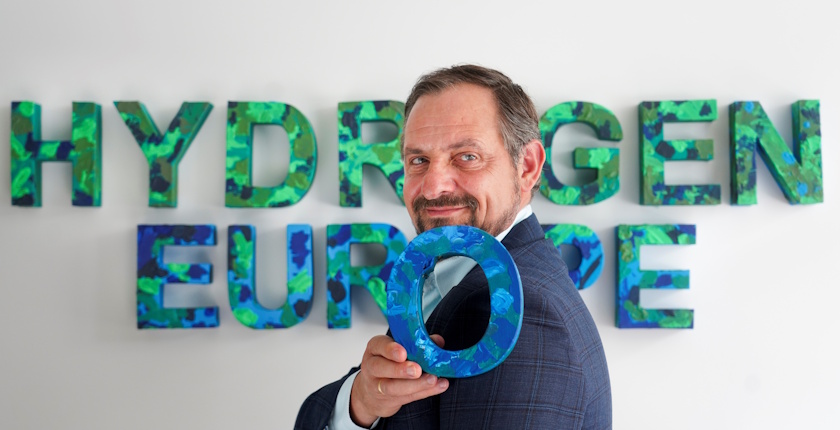
Author: Jorgo Chatzimarkakis, CEO of Hydrogen Europe, EUSEW’s partner organisation.

‘The best time to plant a tree was 20 years ago. The second-best time is now.’ In a world of short-term thinking and instant gratification, this old adage continues to hold true. In the context of the energy transition, and the race against time to offset the worst effects of climate change, it is even more relevant.

In fact, we in Europe can say that we did start investing properly in wind and solar power 20 years ago (although we would be in a much stronger position had we started 20 years before that, immediately after Professor James Hansen’s landmark testimony to the US Senate committee on energy in 1988).

But rather than look back in disappointment or despair at humanity’s delayed climate action, we can resolve not to make the same mistakes again. Hydrogen, one of the enablers of the energy transition, offers us a new solution with which to decarbonise.

Clean hydrogen is a versatile energy carrier with multiple applications across our society. You can use it to sustainably produce steel, fertilisers, and chemicals – hard-to-abate sectors which cannot be easily electrified – or fuels for road, maritime, or aviation mobility systems, where smaller size and longer ranges compared with batteries make fuel cell propulsion systems more desirable for long-haul journeys. You can also use it for long-term energy storage, grid balancing, and flexibility, which will grow in importance as we move to a fully renewable electricity grid. This is just a short summary of the vast potential held within this clean molecule.

Hydrogen is a helpful addition to electricity

Hydrogen is thus a complementary tool to electrification, reaching where electrons cannot. Already several projects around Europe are showing how. In Sweden, H2 Green Steel – Europe’s first greenfield steel mill in 50 years – replaced coal with green hydrogen to power the steelmaking process, cutting CO2 emissions by up to 95% compared to traditional steelmaking. In France, Lhyfe produces renewable hydrogen from wind energy and sells it to industrial end-users, as well as zero emission bus and freight fleets. In Italy, one of the world’s largest shipbuilders, Fincantieri, is designing hydrogen-based cruise and cargo ships.

These success stories can be built upon, and Europe could lead a global market based on the production, transport, and use of renewable hydrogen. But there is a risk that moving too slowly will see Europe lose out to global competitors, as seen in the solar and battery industries, where decades of European-led research and development could not prevent profits from going elsewhere once the technologies came to market.

Despite a substantial pipeline of projects up and down the hydrogen value chain, Final Investment Decisions (FID) have been comparatively rare – only 4% of global hydrogen projects reached FID last year, and most of those were in China. This is due in large part to the cost of producing renewable hydrogen in Europe still exceeding that of fossil fuel-based hydrogen. With a strong support system, we can make clean hydrogen a viable option for all those businesses looking to achieve emissions reduction.

We need to think more pragmatically. China has achieved massive success through state-led innovation and the development of clean technologies to the point that it is now a global market leader in most subsectors. And climate change means we do not have the time to simply wait for the economics to work out. These two facts show us that it is not only desirable but necessary, to spend in the short-term in order to reap the benefits in the long term. Sow the seeds. Plant the tree now.

More effort required to accelerate hydrogen market development in Europe

This is not to say that Europe has not already taken important steps to close the financing gap. The European Hydrogen Bank auctions, under the Innovation Fund call, are and will continue to be a successful endeavor to provide key support to hydrogen production projects. The Important Projects of Common European Interest (IPCEI) program has already awarded support to more than 120 projects involving nearly 100 European companies and should raise over €43 billion from a blend of public and private funds. This is positive, but more is needed both at the European and national level if we are to seriously get the hydrogen market moving here before it is too late to compete.

In the latest draft of the European Commission’s ‘Clean Industrial Deal’ regulatory package, the state aid framework introduces relevant capital expenditure (CAPEX) support, with aid intensities of up to 50% for hydrogen use in industry and 45% for renewable energy rollout, creating a strong foundation for hydrogen deployment. Europe wants to stake its claim as a clean technology leader, but to do so we must stop pulling the rug out from under our own feet.

Europe has repeatedly and publicly professed its support for hydrogen, and as a result, hundreds of companies have invested time and money into building up the sector. We have some existing, successful funding schemes in place and a mammoth pipeline of projects. But we must go further, for example by encouraging national governments to accelerate the transposition of EU legislation and to consider implementing their own funding mechanisms for hydrogen projects. By planting these trees now, we will be able to sit in the shade of a robust, competitive hydrogen market for years to come – with all the new jobs, decarbonization potential, added resilience, and global competitiveness that it will bring.

This opinion editorial is produced in co-operation with the European Sustainable Energy Week 2025. See ec.europa.eu/eusew for more details.

by in News

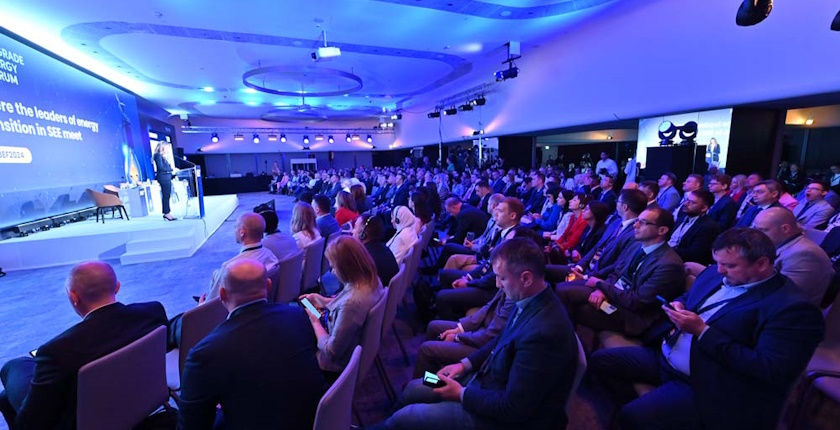
Belgrade Energy Forum 2025 – 50 speakers at eight panels to track pace of SEE energy transition

The agenda of the third Belgrade Energy Forum, taking place on May 14-15, has been finalized with the addition of further prominent energy experts and companies. The conference, organized by Southeast Europe’s leading energy news portal, Balkan Green Energy News, will feature eight panels covering key topics in the energy sector, with an impressive lineup of speakers. Make sure you register on time via this link.

The Belgrade Energy Forum will once again be a meeting place for representatives of regional and international institutions and organizations, as well as the business community from across the region, Europe, and the world.

Eight panels featuring more than 50 speakers will offer an overview of the current challenges in the energy sector. Conference participants will hear in-depth analyses of the current situation, but also projections for the future. The thread that connects everything at this year’s BEF is digitalization – it permeates energy production, consumption, and storage and allows enough flexibility for the stable functioning of the energy systems of the future, where renewable energy will dominate.

Chikán: Electricity knows no borders

One of the key speakers at the conference, Alteo Group CEO Chikán Attila, will lead the company’s high-level delegation. Alteo has recently launched a regional expansion drive, aiming to establish a green platform of up to 2 GW in energy production, including operation, software, maintenance, storage, and waste management.

The Hungarian company primarily targets its home market, Slovakia, Croatia, and Serbia.

“Electricity knows no borders, therefore partnerships and collaborations among energy market players are essential, even at the regional level. Such cooperation is vital to ensuring the security and reliability of electricity supply, facilitating the integration of renewable energy sources, and providing essential digital solutions, supported by expertise and professional know-how,” Chikán stressed.

Decarbonization strategies for power generation in Southeast Europe 2040/2050

  • Dejan Paravan, CEO, GEN Energija
  • Dušan Živković, CEO, EPS
  • Eric Scotto, CEO, AKUO
  • Milutin Đukanović, Chairman, EPCG Board of Directors
  • Neda Lazendić, Country Manager, WV-International

Although at the heart of national energy systems, state-owned power utilities are faced with an environment that has changed and continues to change rapidly. The key shift is the entry of private capital into electricity production through the construction of solar power plants and wind farms.

The energy transition, at this stage, requires cooperation between state power utilities and private companies. With decarbonization as the main objective, the key challenge lies in choosing appropriate strategies and electricity generation technologies.

Moderating the panel will be Dražen Jakšić, Director of the Energy Institute Hrvoje Požar (EIHP).

“The transition to a low-carbon energy system is a key challenge for our region, demanding innovation, investment, and cooperation. As a sponsor of the Belgrade Energy Forum, EIHP is committed to fostering dialogue and driving sustainable energy solutions. I look forward to an insightful discussion,” he stressed.

Jakšić: The transition to a low-carbon energy system is a key challenge for our region, demanding innovation, investment, and cooperation

In recent years, nuclear energy has emerged as a possible alternative. There is hardly a better interlocutor on this topic in the region than Dejan Paravan, the top man of GEN Energija, the Slovenian company developing the Krško 2 nuclear power plant project.

Dušan Živković, CEO of Elektroprivreda Srbije (EPS), will tell us about the Serbian power utility’s plans when it comes to nuclear energy.

Živković: Without decarbonization, the region’s energy sector has no future

“Without decarbonization, there is no future for the region’s energy sector, and that is the biggest challenge ahead of us. It is essential to accelerate decisions and ensure sustainable project financing mechanisms that will provide energy security for every country and power utility in the decades to come. By investing in existing capacities and new renewable energy projects, EPS, as the biggest utility in the region, will make its own contribution to energy security. That’s why we have initiated a transformation process – because we need to be more profitable, more efficient, and fully prepared to tackle any challenge,” Živković pointed out.

The energy transition, in his words, is the path EPS has chosen, and all its plans will align with that goal, based on the belief that the diversification of energy sources and new technologies are essential for achieving it. “These are just some of the key messages I will share with the participants of this year’s BEF,” said Živković.

Eric Scotto, co-founder and CEO of French company Akuo, will share the latest information on the energy transition from across the globe.

The company’s portfolio consists of 1.9 GW of power plants in operation and under construction, with a further 12 GW in the pipeline in more than 20 countries around the world, including a number of countries in the Southeast Europe region.

Integration of Western Balkans electricity markets into internal European market through market coupling

  • Anže Predovnik, Director, ADEX Group
  • Ivan Asanović, Executive Director, CGES
  • Marko Bislimoski, President, Energy, Water Services and Municipal Waste Management Services Regulatory Commission of the Republic of North Macedonia
  • Zoran Vujasinović, Policy Officer, ACER

The integration of the Western Balkans’ electricity markets with the European Union (EU) markets is a process that deserves much greater public attention than it currently receives. It is safe to say that its true importance will become evident only once it is completed.

Full integration will unlock significant synergies, maximizing the benefits of a unified market by enhancing supply security, accelerating the integration of renewable energy sources, and fostering greater competition and transparency.

Moderator Dejan Stojčevski, CTO of the SEEPEX power exchange, says the panel seeks to encourage dialogue on the importance of cross-border collaboration and market efficiency in bolstering energy security and sustainability in the region.

Bislimoski: The time for inspiring speeches is over. Geopolitical developments demand action – now!

Since market integration is largely the job of regulators, the challenges they face will be analyzed by Marko Bislimoski, president of North Macedonia’s Energy and Water Services Regulatory Commission (RKE).

He says that three things are essential for the regional integration of electricity markets into a single European market: investment, investment, and nothing but investment. In his words, the energy crisis demonstrated that limitations become a reality when governments fail to prioritize the implementation of key energy infrastructure capacities in their budgets.

“This past winter, the region faced the highest electricity prices compared to the rest of Europe. Why? Because the implementation of energy investments is not just a ribbon-cutting ceremony. Today, more than ever before, the countries of the former Yugoslavia must demonstrate maturity. These are the years when energy independence will be built through action. The time for inspiring speeches is over. Geopolitical developments demand action – now!” he stressed.

Energy revolution underway – uniting efforts to deliver green, intelligent and sustainable energy solutions

  • Aleš Prešern, VP, Head of Southeast Europe, Siemens Energy
  • Maja Turković, SVP, CWP Europe
  • Ann-Catherine de Tourtier, Managing Director Mediterranean, Nordex Group

As much as contesting the energy transition may be futile, there are still those who find such a view meaningful, especially in light of certain global political developments. That’s why it is important to give the floor to some of the transition leaders and let them testify that an energy revolution is indeed underway in the region.

The panel’s moderator Mirza Kušljugić – professor, energy expert, and one of the founders of Bosnia and Herzegovina’s Centre for Sustainable Energy Transition Centre (RESET) – goes one step further to show that change is not only happening but also accelerating.

“The key words are a new energy paradigm driven by the four Ds – decarbonization, digitalization, decentralization, and democratization. But now we also have another D: disruption, or radical change in the industry and market caused by technological innovation. Of course, we must focus the discussion – from global processes (China, the US, the EU, the Global South) to where the region stands in all of this,” Kušljugić points out, providing a perfect introduction to the panel.

Turković: It’s more important than ever to have open discussions about real solutions

Aleš Prešern, Vice President and Head of Southeast Europe at Siemens Energy, has worked in the energy sector for more than 20 years. He recalls that digitalization is key, along with grid resilience and electricity transmission.

With nearly 100,000 employees in more than 90 countries, Siemens Energy develops the energy systems of the future, ensuring that the growing energy demand of the global community is met reliably and sustainably. The technologies created in the company’s research departments and factories drive the energy transition and provide the base for one sixth of the world’s electricity generation.

As a leader in renewable energy development, CWP is actively working on several large-scale projects across the SEE region with a total capacity exceeding 7 GW, positioning the company at the forefront of the region’s energy transition. Given its global expertise and insights into the regional energy market, CWP’s contribution to this year’s conference will be invaluable.

Maja Turković, Executive Vice President of CWP Europe, says that BEF 2025 is a key gathering of leading experts driving the energy transition in Southeast Europe.

“As this shift gains momentum, it’s more important than ever to have open, action-driven discussions about real solutions to the challenges and opportunities ahead,” says Turković.

PPAs as a key to renewable energy growth in SEE

  • Nikola Gazdov, Chairman, Association for production, storage and trading of electricity – APSTE
  • Natalija Ljubić, Manager PPA & BESS Transactions, Pexapark
  • Ivana Đurović, Category Manager Renewable Energy, Knauf Group

Power Purchase Agreements (PPAs) are, like flexibility, a tool for fixing the imperfections of renewable energy sources, and they are recognized as a key mechanism within the new electricity market design. They ensure price stability, attract new investment, and accelerate the decarbonization of industry.

Is the region ready for PPAs? What are the dominant models? What is the current market practice? How are PPAs viewed by financial institutions? What do they offer to end consumers and what to investors in new power plants? Answers to these questions will be sought at the panel moderated by Mislav Slade-Šilović, Energy, Utilities & Resources Consulting Leader for Southeast Europe and member of the core PPA team at consultancy PwC.

Experience with PPAs for more than 500 GWh of electricity

Slade-Šilović’s experience in concluding PPAs for the production and consumption of over 500 GWh of electricity per year in the SEE region will certainly be of help.

Nikola Gazdov, Chairman of Bulgaria’s association for electricity production, storage, and trading (APSTE) and member of the Board of Directors of the European solar industry association SolarPower Europe, has no shortage of experience either. As CEO of three companies – Enery Element GmbH, Element Power Group, and Renergy – he is involved in the development of a large number of projects.

Pexapark, a company that provides logistics to businesses in the renewable energy market, is synonymous with PPAs in Europe. Natalija Ljubić is the Manager for PPA and BESS Transactions at Pexapark, which has helped conclude contracts for facilities with a combined capacity exceeding 35 GW.

The views of electricity buyers – without whom there would be no PPAs – will be conveyed by Ivana Đurović, Category Manager for Renewable Energy at Knauf Group.

Market flexibility: the backbone of a resilient energy system

  • Roman Bernard, CEO, NGEN
  • Luka Renko, COO, KOER
  • Alteo Group representative
  • Nikolaj Candellari, Project Manager and Market Intelligence, CyberGrid
  • Marko Zarić, EMS

Moderating the panel will be Elena Boškov Kovač, co-founder and CEO of Blueprint Energy Solutions, and a leading voice on market flexibility in Europe.

She will host representatives of the sector’s leading companies: NGEN, Alteo, KOER, CyberGrid, as well as Serbia’s transmission system operator Elektromreža Srbije (EMS).

“Excited to moderate a high-impact panel on ‘Market Flexibility: The Backbone of a Resilient Energy System’ at the Belgrade Energy Forum 2025,” says Boškov Kovač, whose work has shaped smart grid strategies and digitalization innovation agendas across the EU and under ETIP SNET.

As Europe accelerates its shift to renewables, market flexibility is emerging as the cornerstone of reliable, affordable, and decarbonized energy systems. With the European flexibility market promising to unlock over EUR 20 billion in savings, this session will explore how digital tools, flexible assets, and new market designs are unlocking value and resilience across the grid.

Slovenia’s NGEN is the technology sponsor of BEF 2025

Slovenian energy company NGEN, the technology sponsor of the conference, has managed to establish itself as a significant player in European markets in just five years of operation and is now ready to enter the Western Balkans’ markets.

Specializing in premium battery storage systems and smart energy solutions, the company is developing systems with a total capacity of 1.6 GWh in European countries. Its founder, Roman Bernard, will be speaking at the panel.

Also taking part in the panel will be Luka Renko, COO of KOER, a pioneer in virtual power plants in the region.

Rounding off the lineup of exceptional panelists will be Nikolaj Candellari, who is responsible for project management at CyberGrid. The software company was acquired a few years ago by Austria’s EVN, one of the first to demonstrate that greater integration of renewable energy sources, battery storage, and prosumers is not possible without digitalization and software solutions.

In a nutshell, this innovative company stands for the digitalization of the energy sector, with a focus on virtual power plants.

by in News

Two thirds of industrial gas consumers in Slovenia eye hydrogen use

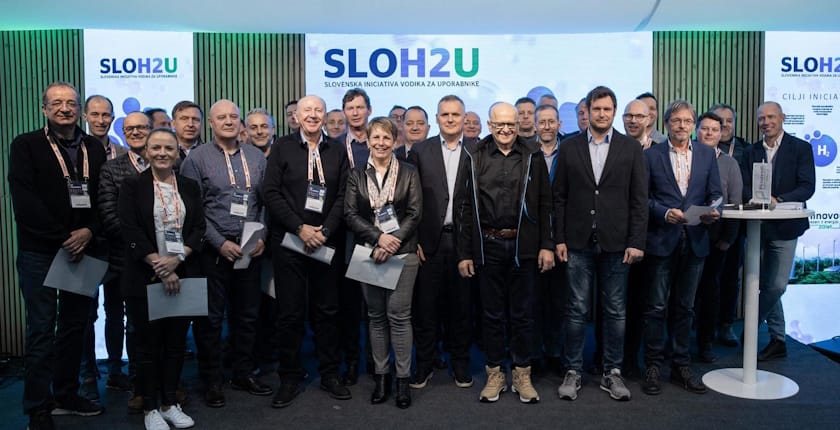
Slovenia’s natural gas transmission system operator Plinovodi and more than 50 industrial companies have signed an agreement on the establishment of the Hydrogen for Users consortium – SloH2U.

The SloH2U consortium represents a systemic response by Slovenian industrial consumers to the need for restructuring the use of hydrogen and renewable gases, according to Plinovodi.

The inclusion of more than two thirds of industrial gas consumers clearly demonstrates that Slovenia is well prepared to meet European decarbonization goals, the company said.

Marjan Eberlinc, the general manager of Plinovodi, underscored that the establishment of the SloH2U consortium is a major Slovenian hydrogen initiative connecting key stakeholders in industry, energy, and government. The aim is to achieve a coordinated, technically feasible, and timely transition to a decarbonized future, he added.

Kumer: We need an industry that is ready to invest, experiment, and collaborate

According to Minister of Environment, Climate, and Energy Bojan Kumer, infrastructure projects alone are not enough for a successful transition to low-carbon energy. “We need an industry that is ready to invest, experiment, and collaborate,” he asserted.

Matija Bitenc, a member of the executive board and deputy general manager of Plinovodi, explained that the platform was established after discussions with the industry about its needs and the technological, financial, geopolitical, and regulatory challenges.

In his words, SloH2U isn’t an ideological declaration, but a concrete foundation for the development of user infrastructure, specific pilot projects, and integration into the European hydrogen ecosystem.

Čas: It is crucial to ensure the transition doesn’t happen too late or that it isn’t too slow

“For the industry, the question is no longer whether, but how to decarbonize processes,” Steklarna Hrastnik CEO Peter Čas stressed.

Collaboration with infrastructure partners like Plinovodi is crucial to ensure the transition doesn’t happen too late or that it isn’t too slow, according to Čas.

In November last year, Slovenia joined the European Union’s Clean Hydrogen Partnership. Six months earlier the country established a consortium of 18 companies, organizations, and municipalities for an ecosystem for hydrogen from low-carbon sources.