by in News

Kragujevac heating plant begins ash removal from disposal site in city center

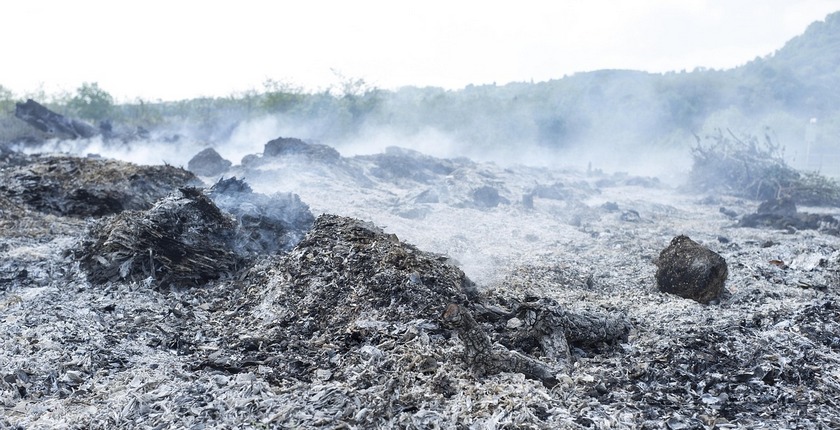
District heating plant Energetika has begun removing coal ash from an uncovered disposal site that has been polluting air and soil for years in the heart of Kragujevac, Serbia’s fourth-largest city. The effort is part of a project financed by an EUR 18 million loan from the European Bank for Reconstruction and Development (EBRD), to decarbonize the local district heating system.

The ash from Kragujevac is transported to cement plants in Kosjerić and Popovac to be used in the production of cement and construction materials, in line with circular economy principles, according to Serbian Minister of Environmental Protection Sara Pavkov.

On the first day, about 75 tons of ash was removed from the site, with plans to transport a total of 60,000 tons over 24 months.

The ash will be used in cement production in Kosjerić and Popovac

Ash removal is the second phase of the district heating decarbonization project in Kragujevac. In the first phase, old boilers were replaced with gas-fired units, significantly reducing air pollution, according to Dejan Ružić, deputy mayor of Kragujevac. This marked the end of coal use in the city’s district heating system.

The EBRD approved the loan for the project in 2021. Of the total amount, EUR 14 million was earmarked for boiler replacement, together with up to EUR 4 million for ash removal.

In the first phase, coal-fired boilers were replaced with gas-fired units

The bank said at the time that gas-fired boilers would have a capacity of 110 MW and that CO2 emissions from district heating would be cut by an estimated 66%, with sulfur dioxide and particulate matter (PM) emissions eliminated.

The Ministry of Environmental Protection has hired Novi Sad-based engineering and consultancy firm AG Institut to monitor the ash disposal services under a EUR 73.900 contract. The works are targeted for completion by July 15, 2027.

Aleksandar Lazović, general manager of the district heating plant, said the works would be carried out in line with the highest environmental standards, in a covered area, to prevent ash from dispersing into the environment.

District heating decarbonization in several Serbian cities

In June this year, Serbia and the EBRD signed a EUR 50 million loan to finance a series of air quality projects in Belgrade, Niš, Valjevo, Zaječar, Novi Pazar, and Smederevo, which had been mapped as cities with the largest excesses of harmful emissions.

The planned projects include replacing outdated boilers running on fuel oil, coal, and other air-polluting fuels with modern and sustainable heat energy sources, such as heat pumps, biomass, and industrial waste heat.
by in News

Greek coal region of Megalopolis opens new chapter after lignite

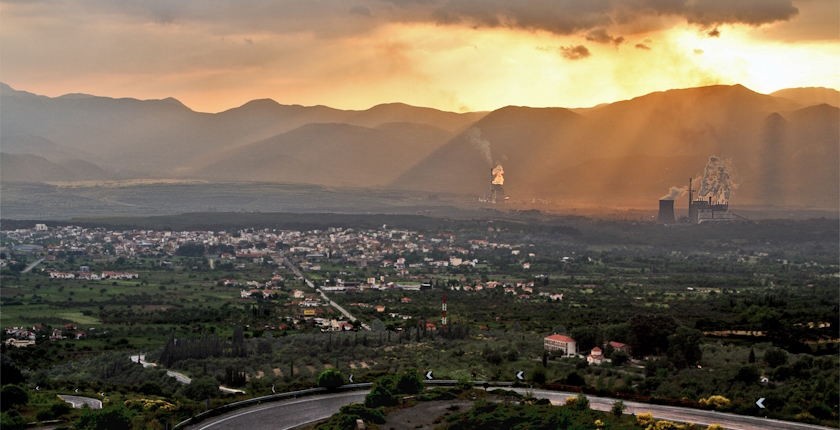
Last year, for the first time in decades, no smoke rose out of coal plants in the Peloponnese peninsula. The last two units had 500 MW together. Megalopolis is one of the two coal regions in Greece, along with Western Macedonia in the country’s north.

According to Public Power Corporation (PPC or DEI) the units Megalopolis-3 and Megalopolis-4 have now been permanently retired. Under the government-controlled utility’s plan to phase out coal completely next year, all such power plants stopped operating by now, with the exception of Ptolemaida 5, of 660 MW, which entered into operation last year. To maintain the security of supply, two units are kept in reserve, also in Western Macedonia in northern Greece.

PPC has produced a study for the reconstruction of the Megalopolis thermal power station, intending to accommodate other activities. Similar works are already underway in the local lignite mine.

New energy investments underway

The group’s investment plan involves various renewable energy and storage projects in Megalopolis to support the area’s energy transition. It is building two photovoltaic farms of 125 MW each, as part of a 490 MW cluster in the area.

The plan includes a 181 MW pumped storage hydropower station in the former lignite mine.

Based on the government’s Just Transition Development Program, Megalopolis will also host a battery factory, by Enercells, as well as two data centers, by Eunice and Kiefer, of 5 MW each. The investments have been approved by the Ministry of Economy and Finance, to seek funding from the European Union’s Just Transition Fund (JTF).

PPC expressed the belief that data centers are important for coal regions. Earlier this year, the group’s CEO George Stassis said they are ideal for such investments as the land and grid connections are already available. PPC is planning a 300 MW data center in Western Macedonia, but it hasn’t announced anything similar for Megalopolis yet.

by in News

Serbia adopts Just Energy Transition Plan until 2030

Serbia now has a Just Energy Transition Plan until 2030. The document contains suggested measures for the mitigation of the impact of reducing fossil fuel use, primarily coal, so that workers, firms and communities aren’t left behind.

Following last month’s completion of the public consultation process regarding the proposed Just Transition Action Plan, the Government of Serbia passed, at its last session, the Just Energy Transition Plan of the Republic of Serbia until 2030. The document leans on the Integrated National Energy and Climate Plan (INECP or NECP)

It lays out sustainable energy policy measures that would need or could be undertaken. The point is in reducing fossil fuel dependence and improving security and efficiency of electricity supply by switching to renewable energy sources, and in an energy efficiency boost.

A just transition aims to promote environmentally sustainable economies in a way that is fair and inclusive for all

“A just transition aims to promote environmentally sustainable economies in a way that is fair and inclusive for all – workers, businesses and communities – by creating opportunities for decent work and leaving no one behind. This initiative should not be seen as a fixed set of rules, but as a dynamic process based on dialogue with a focus on addressing the concerns and needs of local populations and affected stakeholders,” the plan reads.

The approach is based on mitigating the negative effects of the energy transition process. It implies significant investments in retraining and reskilling, to assist workers in adjusting to new industries, as well as education, the plan adds.

It highlights the importance of incentivizing the development of new industries, and supporting small and medium-sized enterprises, which can enable alternative sources of income and employment.

Electricity system collapse in December 2021 marked as turning point?

Until December 2021, domestic electricity production met domestic needs, although even before that, the power system had been making maximum efforts for many years to provide sufficient amounts of electricity or, rather, provide sufficient amounts of coal for the operation of thermal power plants, the document notes.

There is no elaboration on the time reference, but that’s when a major outage struck coal-fired thermal power plants of state-owned power utility Elektroprivreda Srbije (EPS). Of note, it was one in a string of serious incidents in the electricity system.

Coal plants are old and they mostly don’t comply with environmental standards

“The fact is that existing electricity generation plants are old and most of them are not in line with new operating conditions and standards when it comes to environmental protection. Therefore, it is quite clear that in the case of the Serbian energy sector, the energy transition should lead to a radical change in the structure of sources and methods of electricity production,” according to the plan.

Coal plants, open pit mines could be replaced with wide range of activities from culture to gas power plants

Listed among the possibilities for repurposing coal plants and coal mine land after shutting them down are green power plants (but also gas-fueled energy facilities), launching industrial production, logistical and commercial activities, together with sports, culture, education, agriculture, tourism and waste management.

In 2023. there were 25,288 employees in thermal power plants (22.2%) and coal mines (77.8%), the document notes. The oldest coal plant, Kolubara A of 239 MW, was built in 1956, and the newest unit is Kostolac B3, of 350 MW. It came online last year.

“Social dialogue mechanisms should be established to ensure that the voices of all stakeholders are heard and their concerns are addressed. This includes consultations with trade unions, local self-governments and civil society organisations,” the Just Energy Transition Plan of the Republic of Serbia until 2030 suggests.

Expenses are envisaged at EUR 75.4 million, of which EUR 12 million would be for incentives for entrepreneurship and self-employment and EUR 60 million for improving business structure at existing industrial parks.

Carbon pricing system to make coal power plants in Serbia increasingly uncompetitive

One section covers the upcoming rollout of charges within the European Union’s Carbon Border Adjustment Mechanism (CBAM). The tax affects imports of a group of raw materials and electricity. Third countries can be exempted if they establish their own carbon pricing and emissions trading systems.

“In order to balance the economic and environmental impacts of the introduction of domestic carbon pricing in Serbia, a phased approach could be adopted, starting with a modest carbon price and gradually increasing it. Support for affected industries, such as subsidies for low-carbon technologies and worker retraining programs, along with recycling revenues to finance green projects and providing direct rebates to citizens, can mitigate negative effects,” the plan adds.

NGOs have criticized the action plan draft for only describing preparatory activities

Actually, proceeds from greenhouse gas emissions allowances in the EU are used only for the green economic transition, and it is similar with most environmental levies.

The introduction of a carbon tax mechanism will make domestic coal-fired power plants increasingly uncompetitive, especially in regional electricity markets, the government warned.

Nongovernmental organizations and associations earlier criticized the draft, arguing that it delays the energy transition until 2030, only lists preparatory activities and that, inter alia, there is no targeted date for ending the use of coal for electricity production.

In any case, a just energy transition requires defining deadlines and projects and securing funds exclusively for the said purposes. Otherwise the market will trample coal plants and mines, and it will probably happen abruptly, which would jeopardize energy security and employment. Such effects are already tangible in Southeastern Europe, especially in Bosnia and Herzegovina, as well as in Bulgaria and Slovenia.

by in News

Project underway for 81 MW solar park on coal mine in Montenegro

The Government of Montenegro adopted urban planning and technical conditions for a solar power plant of 81.1 MW in peak capacity in Pljevlja. The site for the facility is part of a coal mining complex.

Greece is the most successful by far in the Balkans in transforming coal land into clean energy and advanced technology hubs. The projects in the region are mostly for solar power plants. Neighboring North Macedonia is next when it comes to implementation, while Romania and Bulgaria as well as Serbia and Slovenia have made their first steps. Bosnia and Herzegovina and Kosovo* are still in the planning phase, and now Montenegro is joining them with a photovoltaic project.

The government in Podgorica adopted the urban planning and technical conditions for a solar power plant of 81.1 MW in peak capacity in Pljevlja. The facility in the country’s north called Rudnik uglja would be in the Ilino Brdo I cadastral unit, on the site of the Potrlica open cast coal mine.

According to a study submitted with the application, the connection capacity would be 62.5 MW. The coal mine’s operator and PV project developer, Rudnik uglja Pljevlja, said the location spans 62.6 hectares.

The government plans to close the Pljevlja coal plant in 2041

The firm is a subsidiary of state-owned power utility Elektroprivreda Crne Gore (EPCG), which runs the Pljevlja power plant in the same complex. It is the only coal-fired facility in Montenegro. The government plans to close the thermal power plant, currently under reconstruction, in 2041.

Rudnik uglja Pljevlja presented a just transition plan in March. It aims to establish 12 businesses to transform the region and spin them off. They include construction, transportation and the installation of a small hydropower plant called Durutovići and a photovoltaic facility.

The previous government initiated the development of a plan two years ago for an industrial complex in Pljevlja. There are several separate renewable energy projects in the area as well.

* This designation is without prejudice to positions onstatus and is in line with UNSCR 1244/99 and the ICJ Opinion on the Kosovo declaration of independence.
by in News

Solar beats nuclear in June, becoming EU’s biggest electricity source for first time

Solar became the EU’s largest source of electricity for the first time in June 2025. National records for both photovoltaics and wind rolled in in May and June, pushing coal to an all-time low.

Solar was the largest source of electricity in the European Union for the first time last month, with multiple countries producing record amounts of solar power, Ember found. Wind power achieved the highest ever generation for the months of May and June, the think tank said.

Solar power generated 22.1% of EU electricity (45.4 TWh) in June, more than any other power source. It was a year-over-year increase of 22%. In second place was nuclear, with 21.8% (44.7 TWh), followed by wind, with 15.8% (32.4 TWh).

The big opportunity now comes from adding battery storage and flexibility to extend the use of renewable power into mornings and evenings, where fossil fuels still set high power prices, according to Ember’s Senior Energy analyst Chris Rosslowe.

At least thirteen EU countries set monthly solar records

At least thirteen countries recorded their highest-ever month of solar generation, amid an ongoing surge in photovoltaic installations. Among them were Bulgaria, Croatia, Greece, Slovenia and Romania, all the EU countries in the region that Balkan Green Energy News is focused on except Cyprus, for which there was no data for June.

Wind power reached an all-time high shares of 16.6% (33.7 TWh) and 15.8% (32.4 TWh) in May and June, respectively

Strong photovoltaic output helped the power system to handle higher levels of demand resulting from heatwaves that gripped the continent towards the end of the month, according to the report.

Wind farms generated 16.6% (33.7 TWh) and 15.8% (32.4 TWh) of EU electricity in May and June, respectively. It was an all-time high for both months. Notably, at the start of the year, wind conditions were relatively poor. They improved, and they were the main driver, though capacity has been continuously growing over the past year. Several large offshore wind farms were commissioned.

Coal falls to record low

As a result of high renewables generation in June, coal had the lowest-ever share of EU electricity. Total fossil generation was also low, but it grew in the entire first half of the year on an annual basis.

Coal generated just 6.1% (12.6 TWh) of EU electricity in June, down from the 8.8% registered in the same month of last year.

The two countries that account for the vast majority of EU coal power (79% in June) both saw record lows in June. Namely, Germany generated just 12.4% (4.8 TWh) of its power from coal, and Poland 42.9% (5.1 TWh). Four other countries recorded their lowest-ever month of coal generation in June: Czechia (17.9%), Bulgaria (16.7%), Denmark (3.3%) and Spain (0.6%), which is approaching its coal phaseout.

Fossil fuels generated 23.6% (48.5 TWh) of EU electricity in June, just above the record low of 22.9% in May 2024. Nevertheless, fossil generation in the first half of 2025 was 13% higher (by 45.7 TWh) than in the first half of 2024, mainly due to a jump in gas generation by 19% or 35.5 TWh. Lower hydropower (due to drought) and wind generation than last year, and increasing demand marked the period.

Electricity demand continued on an upward trajectory. In the first half of 2025, the EU consumed 1.31 PWh of electricity or 2.2% more than in the same period of last year.

by in News

Bulgaria’s TPP Maritsa East 2 coal plant posts EUR 52 million loss for 2024

Even with a quota for the regulated electricity market in Bulgaria, low electricity prices pushed TPP Maritsa East 2 into a loss last year. It is the only state-owned coal power plant.

The financial report for 2024 showed a loss of EUR 52 million for TPP Maritsa East 2 (Maritsa-iztok 2), Kapital reported. It compares to a modest net income of EUR 29 million achieved one year earlier. Notably, the subsidiary of state-owned Bulgarian Energy Holding (BEH) had a record profit of some EUR 600 million in 2022, during the energy crisis.

Operating income plunged almost 15% to EUR 614 million last year. The only government-controlled coal power plant sold more electricity than in 2023, but at lower prices.

Moreover, liabilities surged to EUR 358 million from EUR 127 million, mainly due to greenhouse gas emission certificates. The gap between liabilities and assets reached EUR 1.18 billion, against EUR 920 million one year before, the report reads.

Regulated market keeps Maritsa East 2 afloat

Interestingly, almost 86% of the output was sold on the regulated electricity market, which covers households. For the past few years, TPP Maritsa East 2 has been operating under a quota determined by the Ministry of Energy, even though it doesn’t have the right, in principle, to work for the regulated market, the article notes.

Even with the market liberalization that was introduced on July 1, the facility keeps supplying households, the news outlet added. It was enabled through a new segment at the electricity exchange, for long-term contracts, with so-called non-standard products. They are intended for all sellers, but in practice the sellers are state-owned power plants: Kozloduy Nuclear Power Plant, TPP Maritsa East 2 and National Electricity Co.’s hydroelectric facilities.

It means the coal plant’s high production costs are passed on to household bills. It has 1.62 GW in nominal capacity, but it is utilizing much less. The enterprise sold 605 GWh in the open market and 3.23 TWh in the regulated market in 2024.

Coal plants failing to maintain competitiveness throughout EU

Slovakia and Spain officially intend to exit coal this year, followed by Greece (2026), France and Hungary (2027) and Denmark and Italy (2028). However, the dates could be pushed forward and there is a possibility that more countries will join the group in the meantime.

Several of the remaining facilities in the European Union and beyond are active just sporadically – in islands or to cover winter peaks or only until the district heating systems that they supply switch to cleaner sources.

Coal power is already uncompetitive most of the time, particularly because of emission costs. In addition, when such facilities are idle, their costs rise further because of salaries and the complex logistics, primarily mining operations. Other coal plants in Bulgaria are also affected.

by in News

Open call for green hydrogen high-efficiency CHP pilot plant in northern Greece

Greece’s Alternate Minister of Economy and Finance Nikos Papathanasis has launched an open call for the installation and operation of a high-efficiency combined heat and power (CHP) unit using fuel cells powered by green hydrogen. The site for the pilot project is in the Western Macedonia coal region in the country’s north. It is part of the government’s Just Development Transition Programme 2021–2027.

Western Macedonia is Greece’s main coal region, and the other one is Megalopolis in the Peloponnese. The country is transforming the economies of the two areas toward clean and smart technologies, largely with funding from the European Union and aiming at a just transition.

The open call signed by Alternate Minister Nikos Papathanasis for the installation and operation of a pilot unit for high-efficiency combined heat and power (CHP) facility, running on fuel cells, has a total budget of EUR 7.87 million. The facility would utilize green hydrogen produced in electrolyzers powered by renewable electricity.

The energy would be used to provide 24/7 power and heat to the Bodosakeio General Hospital of Ptolemaida, the Chemical Process & Energy Resources Institute (CPERI) in the same city and the Daycare Center for People with Disabilities in the municipality of Eordaia.

The deadline for proposal submission is October 31

The deadline for the submission of proposals is October 31, with immediate evaluation of applications.

The project is for the construction of a pilot CHP unit and a photovoltaic park on municipal land in Eordaia.

According to the announcement from the Ministry of Economy and Finance, the flagship initiative aims to showcase and implement cutting-edge energy and environmental technologies, contributing to the region’s energy transition and decarbonization efforts.

In April, Public Power Corp. (PPC) announced a EUR 5.8 billion investment plan to support the transition of Western Macedonia. The endeavor consists of the decommissioning of old assets and the rollout of new energy technologies.

According to the decarbonization timeframe, Ptolemaida 5 will be the last coal plant in the country, continuing to operate until the end of 2026. It is set to be converted to a gas power plant with a capacity of 350 MW. PPC is also open to upgrading it to 500 MW or even 1 GW.

The plan also includes: 2.1 GW of solar PV capacity, with one 550 MW project nearing completion in a former lignite mine, 860 MW of energy storage, including pumped hydro and battery systems, and a 300 MW data center, planned to be scaled up to 1 GW.

by in News

Slovenia’s sole coal-fired power plant Šoštanj to keep main unit offline until fall

As of this year, Slovenia’s only coal-fired power plant, Termoelektrarna Šoštanj (TEŠ), has shifted its primary focus to supplying heat, with electricity now sold as a byproduct. The ongoing overhaul of its unit 6 is expected to be completed in the coming days, but the 600 MW block will not be restarted until the end of September, when demand for heat is set to rise.

As part of the coal-phaseout process, targeted for completion in 2033, the Government of Slovenia decided last year to set aside EUR 403 million to save TEŠ and coal mine Velenje from bankruptcy and take over both from state-owned power utility Holding Slovenske Elektrarne (HSE).

TEŠ hopes the fall months will drive revenues

TEŠ hopes that the fall months will enable it to meet this year’s revenue target, as the operation of unit 6 is unprofitable in the summer due to low market prices for electricity and reduced demand for heat. This year, the power plant aims to earn EUR 400 million from the sale of heat and electricity.

Apart from unit 6, TEŠ operates only one other coal-fired generator, unit 5, with a capacity of 345 MW, while its first four blocks have been shut down.

The changed circumstances have been challenging for TEŠ, according to its CEO, Branko Debeljak. As HSE no longer sells TEŠ’s electricity, the plant had to set up its own sales department and seek customers on the market. Even so, the first four months of 2025 were quite successful when it comes to electricity sales, says Debeljak. The plant sold 1,045 GWh of electricity, generating revenues of EUR 138 million, or EUR 29 million more than initially planned, according to him.

The overhaul of unit 6 began in April

The overhaul of unit 6 began on April 22 and was expected to be completed by June 20. However, due to delays in the delivery of components, it had to be extended until early July. The completion of the overhaul will be followed by a short trial run, and a restart is planned at the end of September when the need for heat supply is set to rise again.

Slovenia aims at a 55% drop in emissions by 2033, and an early closure of its only coal-fired plant could help achieve that target. It seems likely that TEŠ will be shut down within a few years or operate at minimum capacity.

In June, Ireland’s Moneypoint power plant stopped burning coal, marking the end of coal use in the country. Slovakia and Spain officially intend to exit coal in 2025, followed by Greece (2026), France and Hungary (2027), and Denmark and Italy (2028). However, the dates could be pushed forward, and more countries could join the group in the meantime.

by in News

Montenegro publishes NECP for public consultation – sole coal plant planned for shutdown in 2041

State institutions, companies, organizations, and individuals have until August 6 to deliver their suggestions and comments about the draft National Energy and Climate Plan of Montenegro. It sets the provisional date for taking the Pljevlja coal power plant, the only one in the country, at 2041, but the authors pointed out that it primarily depends on a just transition and the security of electricity supply.

Montenegro’s long-awaited draft National Energy and Climate Plan (NECP) sets out the key 2030 targets for greenhouse gas emission cuts, share of renewable energy sources in gross final energy consumption, and energy efficiency.

The document, also known for its acronym INECP, in which the first letter stands for integrated, was published for the public consultation phase. It lasts until August 6. The Ministry of Energy and Mining called on the interested public – local authorities and other state institutions, the expert and scientific communities, associations, organizations, companies and individuals, to send their comments and suggestions.

“The energy and climate policy isn’t just a task for the government – it is a joint responsibility. That is why I am inviting all stakeholders, and especially nongovernmental organizations, to use this opportunity and contribute to the creation of a realistic, ambitious and just plan,” Minister Admir Šahmanović stated.

Renewables target can be surpassed

National goals match the ones adopted within the Energy Community. The targeted primary energy consumption in 2030 amounts to 0.92 million tons of oil equivalent. Under the business-as-usual scenario (with existing measures – WEM), the benchmark is expected to land at 1.04 million. With additional measures (WEM), the trajectory moves closer to the objective, projected at 0.97 million tons of oil equivalent.

The goal for final energy consumption is 0.73 million tons of oil equivalent. Existing measures result in 0.82 million, and added ones in 0.77 million tons of oil equivalent.

The share of renewable sources in transportation could reach 24.4% instead of only 7.2%

Montenegro fares better with its expected share of renewables in gross final energy consumption, against the 50% target. In the WEM scenario, it reaches 42.5%, and the WAM projection is 53.3%.

Without additional measures, renewable sources have a 66.3% share in electricity production. The document’s authors calculated that it could grow to 79.4%. As for transportation, the range is from 7.2% to 24.4%. In heating and cooling, the possible progress from the results of current measures is only 0.4 percentage points, reaching 49.2%.

The targeted reduction in emissions is 55%, the same as in the European Union. It translates to 2.42 million tons of carbon dioxide equivalent in the final year of the current decade. With existing measures, the curve touches 3.06 million in 2030, and with added ones the result is 2.4 million tons of CO2 equivalent.

Retirement of Pljevlja coal plant depends on socio-economic situation in northern region

Oil derivatives, which are all imported, participated in the 2022 final energy consumption with 47.3%, followed by electricity, 33.3%. Wood fuel is the next item, with 18.7%. The share of coal is only 0.7%, because almost the entire output goes to thermal power plant Pljevlja, the only such facility in Montenegro.

The overall electricity production capacity at the end of 2023 was 1.07 GW. The Pljevlja coal plant, which is currently under reconstruction, has 225 MW.

According to the projection, the Pljevlja coal plant is in cold reserve after 2040

The provisional date for its shutdown is 2041, but it primarily depends on the success of the just transition process and maintaining the security of electricity supply, the NECP reads. It also shows the Pljevlja coal plant in cold reserve after 2040.

In addition, taking it offline requires supplying end consumers under favorable conditions, while minding the overall socio-economic situation in the country’s northern region, where the coal mines and the power plant are, the authors explained. They noted as well that an energy storage pilot project is under consideration for the site of the Pljevlja facility.

Electricity sector’s self-sufficiency varying due to dependence on hydrological conditions

The country’s two large hydropower plants Piva and Perućica have 342 MW and 307 MW in capacity, respectively.

There are 38 other hydroelectric units in Montenegro, of which the smallest one is 200 kW. The biggest facility, Vrbnica (6.75 MW), is owned by a firm with the same name, registered in the capital Podgorica.

The high share of hydropower plants in electricity production, implying dependence on hydrology, is the main reason of the variability of the level of self-sufficiency of the national energy balance year after year, the NECP says.

There are two wind power plants on the grid: Krnovo (72 MW) and Možura (46 MW), while the third one, called Gvozd, is under construction. The project envisages 54.6 MW in the first phase.

There are only five independent solar power plants. The biggest one, Čevo, has 4.4 MW in nominal capacity and a 3.25 MW connection. Nevertheless, units operated by prosumers reached 75 MW altogether, according to one entry, though the numbers are lower in other parts of the NECP.

by in News

Ireland ends coal use – Spain, Italy, Greece set to follow

The Moneypoint power plant stopped burning coal, marking the end of Ireland’s coal era. The last such facilities in several other countries in the European Union are operating only barely or occasionally.

Ireland has ended coal power generation. It is the eleventh coal-free country in the European Union and the 15th in Europe overall. Notably, nine countries in total never hosted coal power plants, according to the Beyond Fossil Fuels database.

Slovakia and Spain officially intend to exit coal this year, followed by Greece (2026), France and Hungary (2027) and Denmark (2028). However, the dates could be pushed forward and there is a possibility that more countries will join the group in the meantime. Several of their remaining facilities are active just sporadically – in islands or to cover winter peaks or only until the district heating systems that they supply switch to cleaner sources.

For instance, the share of coal power in Finland is minuscule.

Coal power is already uncompetitive most of the time. Moreover, when such facilities are idle, their costs rise further because of salaries and the complex logistics.

Moneypoint plant switches to backup with heavy fuel oil

The Moneypoint plant in Ireland ceased burning coal last week earlier than planned. Its operator ESB is turning the site into a renewable energy hub.

At the turn of the millennium, wind supplied just 1% of the country’s electricity. Today, it generates more than a third.

“The government’s priority now must be building a power system fit for a renewable future; one with the storage, flexibility, and grid infrastructure needed to run fully on clean, domestic renewable electricity,” said Alexandru Mustață, campaigner on coal and gas at Beyond Fossil Fuels.

Moneypoint will serve a limited backup role until 2029, burning heavy fuel oil under emergency instruction from transmission system operator EirGrid.

Subsea interconnections to enable coal phaseout completion in Spain, Italy

Spain and Italy are set to follow suit, excluding the Balearic Islands and Sardinia, respectively.

Brindisi Sud (2 GW) and Torrevaldaliga Nord (2 GW) are expected to cease regular operations in mid-2025 and are set to be placed into a strategic reserve, pending full decommissioning. Italy’s remaining coal plants, Sulcis (590 MW) and Fiume Santo (640 MW) in Sardinia, are expected to remain online until a second undersea grid cable to the mainland is completed.

Aboño (916 MW) in Spain is being converted from coal to fossil gas. Soto de Ribera (350 MW) and Los Barrios (589 MW), are barely operating. The Alcúdia plant in the island of Mallorca has two coal units of 130 MW each. Its closure depends on the construction of the archipelago’s second interconnection with the mainland.

Slovakia’s coal phaseout was extended for a short while as a smaller unit kept using what it had left in stock

Slovakian energy company Slovenské elektrárne ended production at its combined heat and power (CHP) plant Vojany (220 MW) in March of last year, which was supposed to mark the country’s coal exit. However, the Teko facility of 121 MW continued to operate with its remaining stockpiles to cover the winter season.

The Cordemais coal plant (1.2 GW) in France is designated for closure in 2027. Émile-Huchet (600 MW), the other remaining facility in the country, should be converted to gas by then.

Turkey, Germany, Poland, Slovenia, the Czech Republic, Serbia, Montenegro, Bosnia and Herzegovina and Kosovo* have the largest shares of coal in power production in the European Union and Southeastern Europe.

* This designation is without prejudice to positions onstatus and is in line with UNSCR 1244/99 and the ICJ Opinion on the Kosovo declaration of independence.