by in News

EU allows Romania to delay shutdown of coal plants until end-2029

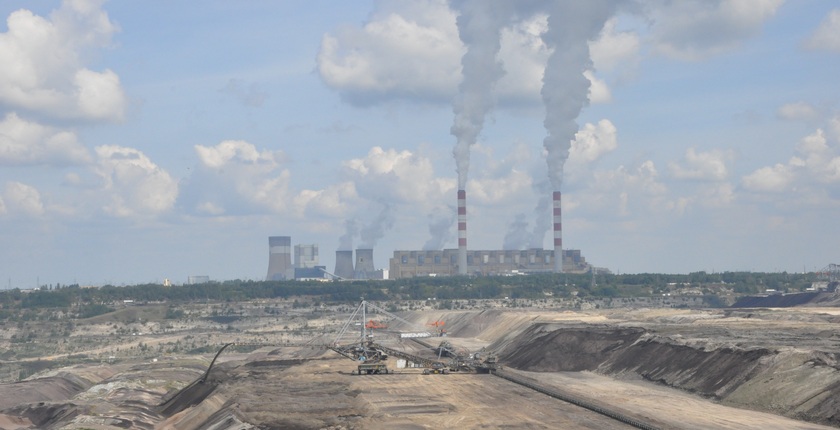
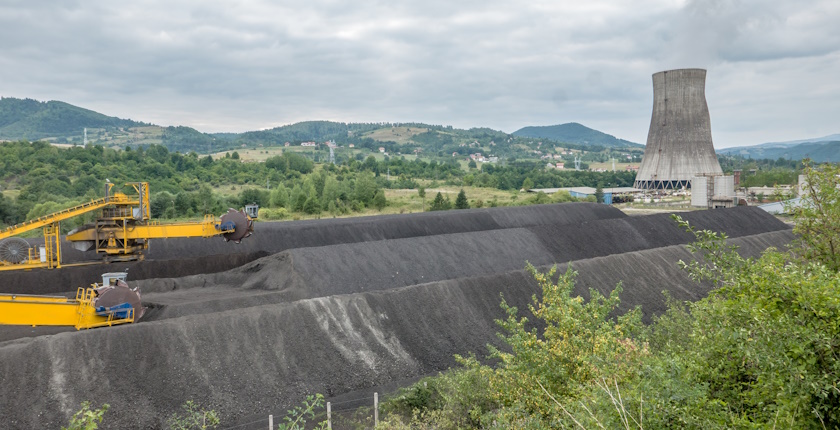
Amid severe delays in projects for gas power plants, the European Commission approved Romania’s request to push back the closure of several coal-fired systems. The country is increasingly risking electricity shortages due to the lack of baseload capacity.

Romania will be able to keep three coal plants in operation until the end of 2029, following the renegotiation with the European Commission of the decarbonization calendar for electricity production, Minister of Energy Bogdan Ivan said. In a social media post, he announced that 900 MW would remain online.

Two other coal plants can operate at least until the end of August next year, Ivan revealed earlier at a press conference, where he first said the closure of 990 MW would be postponed until the end of 2029.

Turceni, Ișalnița gas power plants must be completed by 2029

State-owned Complexul Energetic Oltenia (CE Oltenia) remains fully active until the end of the summer, he added. “We will continue to have active coal-fired units in the city of Craiova, in order to continue to supply heat to the population, electricity, and steam to the Ford company. And those in Govora, which will produce heat for the inhabitants this winter, until the summer, when the municipality’s [Râmnicu Vâlcea] new energy system comes into operation,” the minister stated, as quoted by Profit.ro.

Romania was supposed to take 1.76 GW of coal power capacity offline at the end of this year. Ivan earlier warned of the risk of energy poverty and even blackouts. He explained that the European Commission accepted the 2029 deadline for the commissioning of CCGT (combined-cycle gas turbine) power plants in Turceni and Ișalnița.

Ivan: Romania will have 1.5 GW of coal power available in the winter season

The two new facilities of 1.33 GW would replace the coal plants in the same two towns. Their projects have suffered massive delays. Tender procedures are still ongoing for contracting the works.

Romania will have 1.5 GW of coal power available this winter, the minister claimed. In the amended National Recovery and Resilience Plan (NRRP or PNRR), the Rovinari and Turceni coal plants in Gorj county and one in the Jiu Valley in Hunedoara remain, together with the units in Craiova and Râmnicu Vâlcea.

Deal with EU to halve estimated nominal gap in winter

In a document from the beginning of October, National Energy Dispatcher (DEN), a unit of transmission system operator Transelectrica, said it counted on 850 MW from lignite for the upcoming winter. The season lasts from November through March. It would be one unit in Turceni, of 250 MW, with another one in technical reserve, and two units of 600 MW in total in Rovinari, having a third one as backup.

The electricity production deficit in the peak evening hours would range from 1.12 GW in the moderate scenario, to a stunning 3.8 GW.

The minimum required reserve is 1,000 MW, but only 520 MW would be available, so the expected gap was actually 1.6 MW – or 4.3 GW in the pessimistic version! The report puts transmission capacity at 4.5 GW for exports and 4.2 GW for imports.

Notably, Turceni, a small town in southwestern Romania dependent on the local coal power plant, is kickstarting a EUR 380 million project. The municipal authority is turning to agrivoltaics, energy storage and green hydrogen to replace it.
by in News

Romania’s coal town Turceni starts EUR 380 million green energy transformation

Turceni is dependent on the local coal power plant, so the municipal authority is turning to agrivoltaics, energy storage and green hydrogen to replace it. The small town in southwestern Romania is kickstarting a EUR 380 million project.
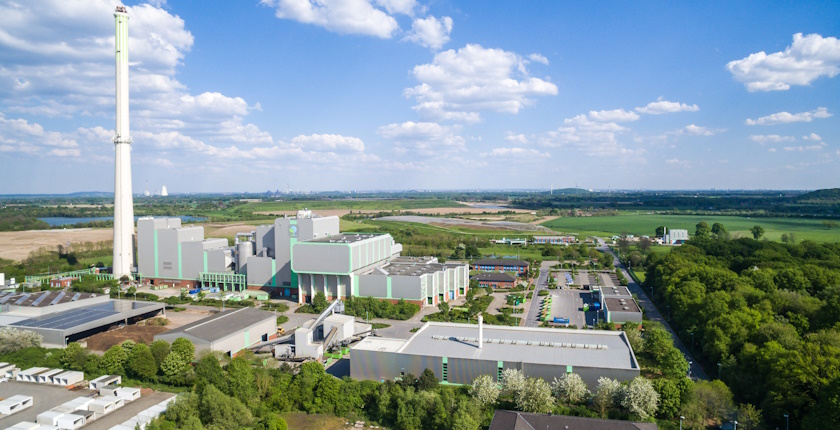
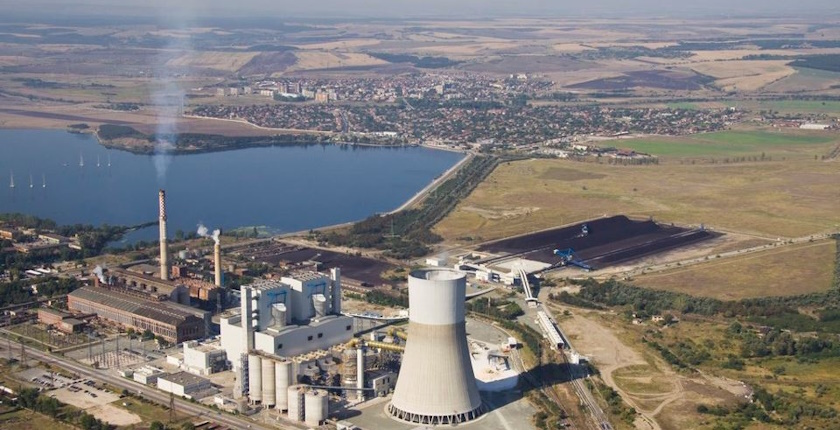
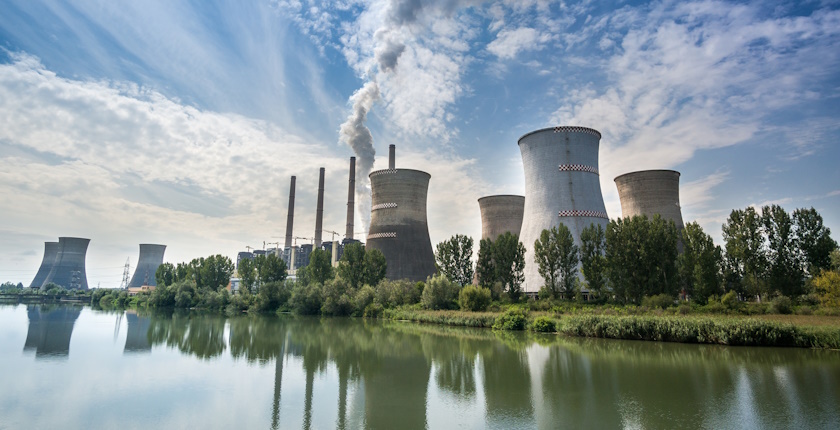
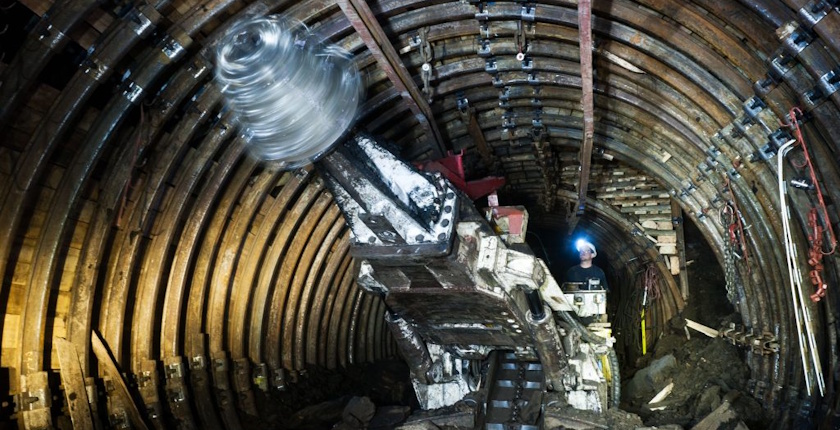
The coal plant in Turceni used to be one of the biggest in Europe, at 2.3 GW. Located next to the eponymous town in Romania’s Gorj coal region, only two units of 660 MW in total are still operational. At the same time, dozens of such facilities across Europe are shutting down ahead of schedule. The power plant and its associated mines within Complexul Energetic Turceni have been essential for the local economy, which is under threat of devastation amid the country’s coal phaseout.

As with other coal regions in the European Union, the solution is in green energy and new technologies. The town hall has signed a contract with the European Investment Bank for agrisolar parks, energy storage units and the production and storage of green hydrogen.

Turceni town hall secures municipal land for green energy projects

The project is worth a whopping EUR 380 million, Mayor Constantin Popescu revealed. Turceni and its administrative area have fewer than seven thousand inhabitants.

More than 123 hectares of municipal land (pastures) and more than 200 hectares of private land were designated for the renewable energy hub, the mayor stressed.

Bankwatch: The coal region is transitioning to a future based on innovation, sustainability and strong partnerships

Partners in the project are Bankwatch Romania and GAL Sudul Gorjului, the so-called local action group for southern Gorj. Bankwatch said over 370 hectares would be switched to clean and sustainable energy production.

“We are glad that we had an important role in developing the project plan and aligning it with European environmental policies, as well as in applying for technical assistance. For a region that has been, for decades, a pillar of coal-fired energy, this project marks a strategic transformation: a transition to a future based on innovation, sustainability and strong partnerships,” the organization added.

Investments to start in 2026

Implementation is scheduled to begin next year. The project will contribute to a just transition of the region by increasing the production of electricity from renewable energy sources, Popescu asserted. In his words, it will be complementary to the local authority’s other ongoing and future decarbonization investments.

The mayor also highlighted the plans to use geothermal energy for district heating and agriculture.

Complexul Energetic Turceni is part of state-owned Complexul Energetic Oltenia (CE Oltenia). According to the company’s restructuring and decarbonization plan, the coal business will be separated from green energy and other investments.

They include projects for CCGT (combined-cycle gas turbine) power plants of 475 MW in Turceni and 800 MW in nearby Ișalnița, as the main replacement for coal plants. Both are suffering heavy delays.

Minister of Energy Bogdan Ivan said last week that CE Oltenia’s Ișalnița coal plant in neighboring Dolj county would be closed on January 1. Romania has asked the European Commission to delay the closure of several coal plant units, scheduled for this year, until 2030.

Earlier this year, a joint venture between CE Oltenia and OMV Petrom hired contractors for four solar power plants at former coal land, with a combined capacity of about 550 MW. One of the sites is in Ișalnița.

by in News

Slovenia begins preparations for closure of Velenje coal mine

Slovenian Prime Minister Robert Golob visited the Savinja and Šalek region and the Velenje coal mine to present a draft law on the gradual closure of the mine. The event marked the beginning of a public debate on the document. Its implementation is estimated at EUR 1.1 billion. The trade union has raised concerns about the plan.

The Government of Slovenia has initiated a coal phaseout by assuming direct ownership of the Šoštanj coal power plant and coal mine Velenje from state-owned power utility Holding Slovenske Elektrarne (HSE). The first steps towards the closure of Termoelektrarna Šoštanj (TEŠ) have begun, and the decision makers have turned to Premogovnik Velenje.

Slovenia earlier closed the Trbovlje-Hrastnik mine in Zasavje. Zasavje and Savinja and Šalek (in Slovenian language: Savinjsko-šaleška regija – SAŠA) are two of 31 coal regions in the European Union.

Prime Minister Robert Golob held several meetings with representatives of local authorities in the towns of Šoštanj and Velenje, as well as with the management of the mine, union representatives, and businesspeople.

Golob: We have to take care of you because you took care of us

During the discussions, he emphasized that after the first reading of the draft law in the government, the document would be analyzed by the Economic and Social Council.

“We have to take care of you because you took care of us for so many years,” Golob said, as quoted by his government.

The government will, in his words, strive to protect the social security and jobs of miners and their families. Its goal is to reduce the uncertainty linked with the closure of the coal mine and the restructuring of the region, the prime minister added.

Golob: We have become aware of the workers’ concerns

Golob told workers’ representatives and mine management that the law on the coal mine closure would ensure they have a safe future and security, according to the update. He informed them that the law should enter parliamentary procedure by the end of the year.

“I understand the employees’ concerns, which is why I also attended the meeting with them. We became aware of their concerns before the government adopted the law,” he stated.

Golob claimed that solutions were found for 80% of workers’ demands, and that they would be included in the bill. He expressed confidence that the remaining 20% would be resolved at the Economic and Social Council in the coming weeks.

Trade union: The law must define what happens with employees and associated companies

Minister of Natural Resources and Spatial Planning Jože Novak explained that the government agrees with the management of the coal mine on all key elements, while negotiations with the unions are still ongoing, Naš Stik reported.

The management will prepare a twenty-year program for closure and remediation, Novak noted, and added that EUR 1.1 billion is necessary to implement the law.

According to the General Manager of Premogovnik Velenje Marko Mavec, the technical part of the draft law is appropriate, while the social aspect requires additional coordination.

The SPESS trade union President Simon Lamot pointed to controversial issues including the possibility of selling the HTZ Velenje subsidiary and uncertainties regarding early retirement.

The law must clearly define what happens to employees and associated companies – without that, there can be no talk of a just transition, Lamot stressed.

by in News

Race against time to secure EU funding for waste-to-energy plants in Greece

Hostile reactions from citizens and the opposition by municipal authorities threaten to derail Greece’s efforts to build six waste-to-energy plants. Moreover, time is running out to secure EUR 800 million in European funding.

The Ministry of Environment and Energy is expected to publish a call for waste-to-energy projects planned in Attica, Western Macedonia, Rodopi, Peloponnese, Boeotia (Viotia) and Crete. Total investment would amount to EUR 1 billion, for 1.19 million tons in capacity. However, time is running out to secure EUR 800 million in European funding set aside for them and the accompanying recycling plants.

Greece has been warned several times by the European Commission and fined for failing to fulfil its obligations in waste management. The country still relies mostly on landfills to handle municipal waste, instead of modern solutions. Ideally, useful materials should be sorted for recycling before the waste gets burned in incinerators to produce energy.

Two of the proposed units, the ones in Rodopi and Western Macedonia, are expected to provide district heating. The Ptolemaida 5 lignite-fired plant supplies district heating in the coal region of Western Macedonia in the country’s north, but it is scheduled to be decommissioned by 2028 at the latest.

Its owner, Public Power Corporation (PPC or DEI) aims to complete a waste-to-energy plant by then. Other prospective investors include GEK Terna, Metlen, Aktor and Motor Oil Hellas, all big players in the country’s energy market.

High fees and pollution worry municipalities

Many local authorities have expressed their objections to hosting these plants, fearing a rise in municipal fees and pollution. A discussion is underway in numerous municipal councils. They could lodge appeals to the Supreme Court and delay the process.

Amanatidis: Cancel all waste-to-energy plans

The regional council of Western Macedonia recently voted overwhelmingly to reject the plan for PPC’s planned unit from the ministry’s strategic environmental assessment (SEA). Governor Giorgos Amanatidis called on the government to withdraw the study and cancel the project. Municipalities in the same region and other institutions are also against an incinerator.

European funding through the National Strategic Reference Framework (NSRF) ends in 2027. The government and investors have until mid-2026 for implementation, Newmoney reported, adding that waste-to-energy projects take two to three years to complete.

Recently, another initiative, the Apollo program, for investments in renewable energy to lower energy costs for vulnerable consumers, lost EUR 100 million from the EU’s Recovery and Resilience Facility (RRF).

by in News

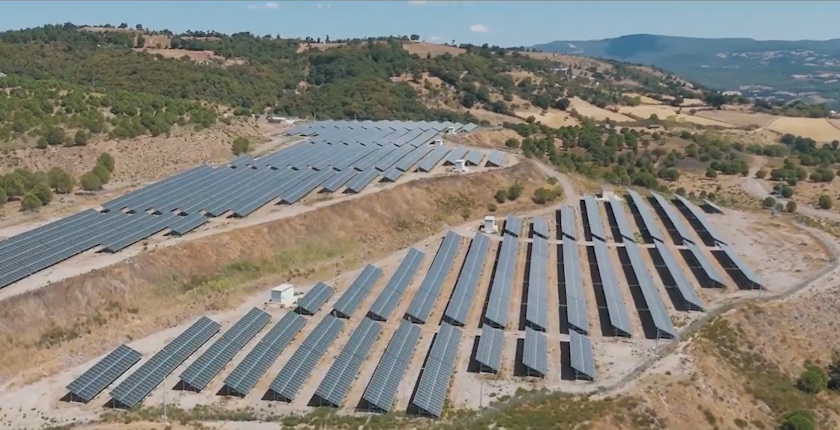
Turkey starts building solar parks on former coal land

After the first two units of 5 MW each, state-owned Turkish Coal Enterprises (TKI) is planning two solar power plants of 14 MW in combined peak capacity at sites of its previous mining operations.

Former coal mines and their tailings dumps, together with the ash disposal fields of thermal power plants, are among the most convenient areas for solar power plants, unlike fertile agricultural land. In Southeastern Europe, Greece is leading the way by transforming its coal land into industrial hubs with cutting-edge technologies, with the focus remaining on energy – mostly solar power plants. Their capacity is among the highest in the world.

Other countries in the region are advancing slowly in such decarbonization projects, with the exception of North Macedonia, or are still in the planning stage, but Turkey announced that it intends to speed up the construction of photovoltaic units on sites of former coal mining operations.

The Ministry of Energy and Natural Resources said the capacity would reach 24 MW next year

Turkish Coal Enterprises (TKI) is revitalizing the areas of depleted open pit mines also through afforestation, the Ministry of Energy and Natural Resources said. The company planted just over 12 million trees on 6,265 hectares last year.

With photovoltaic projects, such areas are contributing to the country’s economy again. The state-owned company’s Aegean region subsidiary ELI operates a self-consumption unit of 5 MW in Manisa. Another firm, ÇLI, based in Çanakkale, further to the north, has installed a 5 MW solar park.

The two facilities generate 18 GWh of electricity per year, supplying businesses, the update adds.

Preparations are underway for the construction of a 5 MW photovoltaic plant in the Tavşanlı district of Kütahya province in Turkey’s west. Another project is for 9 MW in the Afşin district in Kahramanmaraş, in the Mediterranean region in the country’s south. TKI plans to complete them next year.

The four solar parks will produce some 41 GWh per year, according to the ministry.

by in News

Romania risks blackouts if it shuts coal plants as scheduled

Minister of Energy Bogdan Ivan claims that energy poverty or even blackouts could hit Romania if it proceeds with the closure of coal plants. Namely, the gas power projects for replacing them are suffering severe delays.

The European Commission has become flexible for the first time in the last four years, said Romania’s Minister of Energy Bogdan-Gruia Ivan. He has asked for a postponement of the deadline for shutting down a group of coal power plants.

They need to be closed by the end of the year. If the coal plants, run by state-owned Complexul Energetic Oltenia (CE Oltenia) go before gas power plants Iernut and Mintia are commissioned, Romania is jeopardized, according to the minister.

Ivan told Digi24.ro he was negotiating with the European Commission on delaying the closure by “a few months.” Romgaz decided last week to cancel the contract with Duro Felguera, the contractor for the Iernut facility.

Energy poverty risk increasing

A study conducted with Romania’s transmission system operator Transelectrica has shown that Romania can otherwise end up in energy poverty and even risk a blackout, he underscored. “Especially in the winter, when we have no solar, when we have no wind power,” Minister Ivan explained.

Furthermore, Romania would like to keep three large coal units and another two in technical reserve for replacement them in case of damage, Ivan revealed. It would ensure a 1 GW minimum coal power supply, he asserted.

Romania requires at least 1 GW in baseload energy from coal for two more years, according to Minister Bogdan Ivan

Simulations showed that the group would need to operate for two years more, at least, until Iernut and Mintia are completed.

“We are pressed for time. We need to conclude contracts for next year. We need to conclude contracts for energy supply, contracts with suppliers, coal stocks. It is a complex of factors that must be organized very well from now on. It is already late, for Romania and for our energy companies,” Ivan stated.

Gas power projects in constant delay

Additionally, gas power plants Turceni (475 MW) and Ișalnița (850 MW) are supposed to replace some of the capacity in the Oltenia complex. The two projects suffered constant delays. The deadlines in the tenders for construction have been pushed back to September 30 and November 14, respectively.

Romania has received billions of euros from the European Union for gas power plants to substitute coal, the minister noted separately. He acknowledged that the projects are still on paper. That’s why today Romanians have almost the highest electricity price in Europe, Ivan claimed.

by in News

Bulgarian coal plant mulls replacing boiler with molten salt battery

The operator of the AES Maritsa iztok 1 coal plant in Bulgaria is interested in replacing one of its boilers with a molten salt reactor. It would accumulate excess renewable energy from the power grid as heat and produce steam to drive the existing turbine.

With the surge in solar and wind power capacity throughout the world, the grid needs to match it with balancing and flexibility to handle the intermittency of the two sources. Their output varies with weather conditions, so the amount of electricity is often much higher or lower than demand.

Batteries are all the rage now, with investors racing to bridge the gaps between intraday peak production and peak consumption. Southeastern Europe is catching up with the trend, especially in Bulgaria, Romania and Turkey.

A molten salt battery could turn out to be a lifeline for AES Maritsa East 1

It opens up space for some other solutions in the emerging energy storage market which are nearing maturity. United States-based AES Corp.’s subsidiary in Bulgaria is examining one such overlooked opportunity. The molten salt reactor technology could revive the prospects of its coal power plant in Galabovo in Stara Zagora province.

The operator of the AES Maritsa iztok 1 (AES Maritsa East 1) facility is planning to transform one of the units into a so-called Carnot battery, Capital.bg reported. Such systems turn electricity into thermal energy and store it, to convert it back to electricity.

AES plans to maintain generator’s capacity

The company’s solution of choice is a molten salt reactor, which would replace the boiler. AES plans to power it with surplus renewable energy and produce steam for the existing 345 MW turbine. Importantly, among its other assets is the Saint Nikola wind power plant of 156 MW, the largest in Bulgaria.

The battery would hold enough heat to drive the unit at maximum power for five hours, translating to 1.73 GWh.

Coal plants can technically work nonstop, but the market has all but overrun most such facilities in Europe. Now they increasingly operate only when prices are high, covering peaks. It could make the business case for molten salt reactors and preserve jobs.

Molten salt is used in concentrated solar power (CSP) plants. They mostly use electrolytes such as alkali metal chlorides – sodium chloride, potassium chloride or lithium chloride – or nitrates: for instance, sodium nitrate or potassium nitrate.

Need for energy storage strengthening with rise in intraday price spreads

Market prices were negative on 2.8% of the days of last year, while they were lower than EUR 5 per MWh for 8.8% of the time. It compares to 1.9% and 5.5% in 2025, respectively, the article adds. The spread between the maximum and minimum prices is increasing. On 53% of days in the first half of this year, the difference was between EUR 100 per MWh and EUR 200 per MWh. The share of spreads above EUR 200 per MWh was 30%.

Such high amplitudes indicate both oversupply and shortages within the same day, amid the strong growth in variable renewables capacity.

by in News

Environmentalists warn EU that Bulgaria ignores coal plants breaching pollution rules

Greenpeace Bulgaria and Za Zemiata (For the Earth) said they would file a complaint today with the European Commission over repeated failures by Bulgarian authorities to enforce the European Union’s environmental law at four coal plants. They expressed the view that institutions are prioritizing financial interests over public health and the environment.

Environmental organizations Greenpeace Bulgaria and Za Zemiata wrote a complaint, to submit to the European Commission, regarding what they described as long-standing violations by four coal power plants linked to Bulgarian businessman Hristo Kovachki. “Bulgarian institutions refuse to apply EU environmental law as intended, favoring coal owners over people and nature. This complaint provides evidence for the European Commission to initiate infringement procedures,” said environmental lawyer Regina Stoilova.

Alleged breaches from 2018 to 2023 concern thermal power plants Bobov Dol in Golemo Selo, Brikel in Galabovo, Republika in Pernik, and Maritsa 3 in Dimitrovgrad. The two groups said they exhausted all national-level mechanisms for holding the polluters accountable and protecting affected citizens and the environment.

The two groups have exhausted all legal mechanisms on the national level

Instead of enforcing environmental standards, Bulgarian institutions – including the Ministry of Environment and Water, the Executive Environmental Agency and regional environmental and water inspectorates – have repeatedly issued permits to offenders, imposed weak or ineffective fines, and ignored serious pollution events that threaten public health, the environmentalists added.

“These coal plants are shielded by an institutional network protecting Kovachki’s opaque coal business. Thousands of Bulgarians living under these chimneys continue to face rampant pollution with no accountability,” said Director of Greenpeace Bulgaria Meglena Antonova.

Penalties could have been millions of euros higher

Bulgarian courts have also failed to act, according to the statement. During the legal proceedings after Brikel and Maritsa 3 were temporarily closed in 2022, the plants continued operating for three years. In the said six-year period, Kovachki-linked plants avoided nearly EUR 2.5 million in penalties, , the organizations calculated and stressed that Brikel payed only EUR 3,300 in fines.

In official documents, the businessman holds no ownership in most of the firms that media outlets regularly link him to. Kovachki has only identified himself as a consultant in some of them. Investigative journalists have obtained documents indicating that he controls a group of companies through a holding called Orion, which he denied.

Violations include illegal wastewater discharge

The violations of the permits consisted of illegal emissions into the air, illegal discharge of wastewater into rivers, and use of prohibited fuels.

“In an attempt to reduce production costs, the coal power plants associated with Kovachki have systematically co-fired waste and biomass with coal without possessing the necessary permits. Even after obtaining the required permits, the operators have significantly exceeded the biomass limits specified in them,” reads a report accompanying the announcement.

Meanwhile, the power plants have gained millions from saved carbon emission allowances, the document adds. An analysis by Za Zemiata estimates the damages for the period 2017-2021 at EUR 75 million for five plants associated with Kovachki, four of which are the subject of the new complaint.

Attack on activist living near Bobov Dol

“Not only has there been no accountability, but activists are also facing aggression for speaking out. Over the weekend, Daniela Toneva, an activist opposing the Bobov Dol TPP coal plant, was attacked after speaking out about the plant’s severe pollution and the links between Hristo Kovachki and the chairman of the Bobov Dol Municipal Council Krasimir Chavraganski,” said Beyond Fossil Fuels, a partner organization.

Namely, someone spilled paint on Toneva’s car and broke her window with a stone they threw into the house. She told Svobodna Evropa (RFE/RL) that local authorities are hostile to her because of her activism. The firm operating the nearby Bobov Dol facility condemned the attack.

by in News

Climate won’t suffer if Romanian coal power plants keep running – energy minister

The Romanian government is in talks on postponing the coal power plant closures envisaged under the National Recovery and Resilience Plan (NRRP), according to Energy Minister Bogdan Ivan. The current deadline for decommissioning these plants is the end of 2025, but Romania is hoping to push it back to 2030.

Ivan noted that Romania’s gas and coal power generation has dropped by 56% over the past decade, with around 7,000 MW of capacity closed and only 1,200 MW replaced.

“Now I am convinced that the world’s climate will not suffer so much if Romania continues to keep its coal-fired power plants in the Jiu Valley,” the minister said, according to Profit.ro.

Ivan: Keeping the Jiu Valley coal power plants operational will not hurt the global climate

He also stressed that Romania has pursued the most aggressive decarbonization policy in the European Union, choosing 2025 as a deadline to eliminate coal-fired electricity generation, compared to Poland or Germany, which intend to use coal until 2040–2050.

Ivan explained that wind and solar capacity in Romania has been growing, but that the country needs more battery storage to better utilize its output.

Romania needs more battery storage for the growing wind and solar capacities

Romania’s former energy minister, Sebastian Burduja, said earlier this year that the country intended to extend the operation of coal-fired power plants because there was no other option to ensure energy security and replace existing capacities.

He said in January that the operating period of coal-fired power plants was expected to be extended by three years.

According to earlier reports, Romania intends to stop coal mining by 2032 at the latest, while replacing conventional power plants in the meantime. Romania’s largest producer of coal-based electricity is state-owned power utility CE Oltenia, based in Târgu Jiu. It is also the country’s third-largest producer of electricity.

by in News

CE Oltenia to set up subsidiary to take over coal power plants slated for closure

Romanian state-controlled coal power utility Complexul Energetic Oltenia (CE Oltenia) is preparing to establish a subsidiary to take over its lignite-fired thermal power plants slated for closure and the coal mining operations that supply them.

CE Oltenia’s “lignite subsidiary” is envisaged under a restructuring and decarbonization plan approved by the European Commission, according to Profit.ro.

The subsidiary will incorporate and operate the existing lignite-based power generation units and related assets that are not planned to switch to natural gas or renewable energy sources, according to the European Commission’s decision from 2022 approving state aid for CE Oltenia’s restructuring.

The state aid Romania planned to grant CE Oltenia amounted to EUR 2.66 billion.

The subsidiary will operate coal-fired plants that are not planned to switch to gas or renewables

CE Oltenia’s decision to start the separation of lignite-related activities into a separate subsidiary was adopted as early as 2023, but nothing has been done since then.

Now, the company has launched a procedure to select a consultant and intends to award a contract by winter, with a deadline of about six months for the delivery of services.

The new firm is to be created before the end of CE Oltenia’s restructuring period, i.e. before the end of 2026, according to the commission’s decision. It further states that the lignite capacities in question should decrease over time and eventually be phased out, in accordance with the national coal phase-out timetable.

CE Oltenia is building 550 MW of solar power plants at former coal mines

Earlier this year, a joint venture between CE Oltenia and oil and gas company OMV Petrom signed an agreement with contractors to design and install four solar power plants at former coal mines, with a combined capacity of about 550 MW.

According to Profit.ro, Romanian Energy Minister Bogdan Ivan said last month that Romania was in talks with Brussels on a 5-year postponement of the deadline for closing lignite-fired power plants, envisaged by the country’s National Recovery and Resilience Plan.