by in News

IEA: Power Demand Up 3.6%/yr to 2030 as Renewables Rise

Global electricity demand is projected to grow by an average of 3.6% per year through 2030, propelled largely by industrial electrification, the rapid uptake of electric vehicles, and the expanding power needs of data centres and artificial intelligence, the International Energy Agency (IEA) said.

In its Electricity 2026 report, the IEA expects renewables, natural gas and nuclear to cover all additional demand over the period. Electricity generation from coal is forecast to edge down, leaving CO₂ emissions from power generation broadly flat to the end of the decade. By 2030, renewables and nuclear are set to provide half of global electricity output, up from 42% today, the agency said.

Power Use Accelerates Faster Than Overall Energy Demand

The IEA estimates that electricity demand will expand at least 2.5 times faster than total energy demand. Key drivers include rising electricity use in industry, stronger EV adoption, higher air-conditioning demand, and continued growth in data centres and AI.

Global electricity consumption rose 3% year-on-year in 2025, after a 4.4% increase in 2024, the report notes.

Grid Investment and Flexibility Become the Next Bottlenecks

IEA Director of Energy Markets and Security Keisuke Sadamori said meeting the demand surge will require a significant upgrade of power networks. The IEA expects annual investment in electricity grids to rise by 50% by 2030.

Flexibility measures—such as storage, demand response and other balancing tools—will also be essential as power systems evolve, alongside stronger attention to security and resilience, Sadamori said.

Renewables Overtake Coal on the Back of Record Solar Growth

The IEA said global renewable power generation reached parity with coal in 2025 and is now moving ahead, supported by record solar installations. Renewable electricity output is expected to increase by around 1,000 TWh each year, with solar alone contributing more than 600 TWh annually.

Even so, the agency cautions that coal would still remain the single largest fuel source for electricity generation globally, despite a gradual decline.

EU: Renewables Share Seen at 63% by 2030

In the European Union, electricity demand is increasingly being met by renewables as coal use falls sharply. According to the report, renewables’ share of total EU power generation is expected to surpass all non-renewables combined as early as this year.

The IEA forecasts that renewables will exceed 50% of EU electricity generation in 2026, and rise to 63% by 2030, up from 48% in 2025. Wind and solar are projected to account for 46% of EU power output by 2030, compared with 30% in 2025.

By the end of the decade, the EU is expected to add more than 400 GW of net renewable capacity, around 70% from solar, split roughly evenly between utility-scale and distributed installations.

Nuclear Output Hits Record, Battery Storage Expands

The IEA said nuclear power is regaining strategic importance in many advanced economies. Global nuclear generation set a new record in 2025 and is expected to keep rising steadily through 2030.

The report also highlights rapid growth in utility-scale battery storage, particularly in California, Germany, Texas, South Australia and the United Kingdom, strengthening short-term system flexibility.

Connection Queues and Curtailment Rise as Grids Struggle

Despite strong momentum in renewables and storage, grid congestion is creating delays. The IEA estimates that as of 2025, at least 1,700 GW of advanced-stage renewable projects and more than 600 GW of battery storage projects were waiting in connection queues.

Grid bottlenecks are also driving higher curtailment. In Germany, wind curtailment rates between 2022 and 2024 were above 5%, while solar curtailment climbed to 2% in 2024. In China, 4.1% of wind and 3.2% of solar generation were curtailed in 2024, up from 2.7% and 2% in 2023, with preliminary 2025 data indicating curtailment rose above 5% for both wind and solar.

Coal Declines, Keeping Power-Sector CO₂ Emissions Flat

On the fossil side, the IEA expects natural gas-fired generation to increase, driven by rising demand in the United States and a shift from oil to gas in the Middle East.

Coal-fired generation is projected to fall as renewables expand, returning to 2021 levels by the end of the decade. As a result, global CO₂ emissions from electricity generation are expected to remain broadly flat through 2030.

The IEA forecasts emissions declines in major markets: between 2026 and 2030, China’s power-sector CO₂ emissions are expected to decrease by 0.2% per year on average, the United States by 1.4% annually, and the EU by around 11% per year. India, however, is projected to see emissions rise by an annual average of 2.4% over the same period.
by in News

Slovenia opens its first highway solar power plant

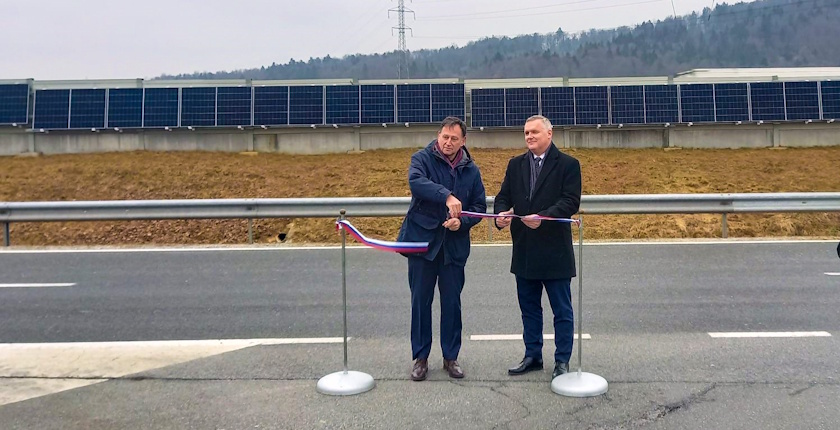
Slovenia’s road management firm Družba za Avtoceste v Republiki Sloveniji has installed a solar power plant on a noise barrier alongside a highway. It is the first such photovoltaic system in the country.

Družba za avtoceste v Republiki Sloveniji (DARS) has officially opened its first photovoltaic plant on a noise barrier at the Šmarje Sap West rest area. It is about ten kilometers from Ljubljana on the motorway connecting the Slovenian capital and Zagreb.

According to DARS, the project is part of a series of activities to achieve the company’s strategic goals in sustainable development, decarbonization, and efficient energy use.

The firm announced the development of such projects in July 2023. A pioneering idea in the region, it was later followed by Bosnia and Herzegovina, Montenegro, and Croatia.

Ribič: An example of thoughtful siting of renewable power plants

The opening ceremony was attended by the Chairman of the Management Board of DARS Andrej Ribič, Minister of the Environment, Climate and Energy Bojan Kumer, representatives of the contractor – Solvera Lynx, and representatives of distribution system operator Elektro Ljubljana.

Andrej Ribič stressed that the project is significant for electricity production but also as an example of thoughtful siting of renewable energy power plants without impacting traffic safety or routine highway maintenance.

The electricity generated by the PV system will be used for DARS’s own consumption, including public lighting and tunnel systems, he explained. This will ensure greater energy independence and more rational management of the energy system, Ribič added.

DARS plans to continue building PV plants

In line with its strategy, DARS aims to gradually reduce energy consumption from the grid and lower CO2 emissions in scopes 1 and 2. By 2030, the goal is to reduce energy consumption and carbon emissions by 30% from the 2024 levels, according to the firm.

Based on its revised strategy, DARS adopted several energy measures in 2024. They included the establishment of an energy department and the implementation of the first phase of solar installations across its five facilities, with a total capacity of 420 kW.

These plants can cover approximately 2% of the company’s annual electricity consumption.

DARS intends to further expand its solar energy projects. The plan includes building bigger plants in degraded areas and more PV systems on buildings and along highway tunnels.

The electricity produced would primarily power lighting and other road systems to ensure the safe and smooth operation of the motorway network, the company added.

Careful site selection for solar plants is crucial

In July 2023, DARS and state-owned hydropower operator Soške Elektrarne Nova Gorica (SENG) announced plans to build solar power plants along highways.

The first one was planned in the Slovenian Littoral and Coastal-Karst area. However, the new solar power plant is not located there.

The two firms later established similar cooperation with the Ministry of Defense and the Municipality of Vipava.

Solar energy use is expanding all over the planet. Experts warn that the optimal siting of PV panels is crucial to avoid occupying large areas of arable land or harming the environment. Therefore, the best solution is to install solar panels in locations that cannot be used for other purposes, such as alongside railways and roads, or on rooftops.

by in News

From construction waste to circular economy: how STRABAG drives green transition

Today, the construction industry is at the crossroads between tradition and transformation. Accounting for approximately 40% of the global energy consumption and for more than 35% of the overall CO₂ emissions, this sector has a huge potential, as well as a responsibility to become one of the key leaders of change in environmental protection. It is this change where STRABAG in Serbia recognises its task and opportunity: through recycling and reuse of materials, solar energy consumption, electric vehicles and digital innovation, the company demonstrates that sustainability can be an integral part of every construction phase.

Acting responsibly, objectively and ethically, STRABAG operates in accordance with the highest integrity standards. Aiming to expand business operations to new areas, they develop innovative and creative approaches within defined frameworks, utilising resources regionally, purposefully and efficiently. Their goal is to become the market leader via automation and adoption of new technologies, while pledging to achieve climate neutrality and CO₂ emission reduction.

Circular economy in practice: second life of materials

Construction waste is no longer and must not be the end of a process, but the start of a new cycle. For instance, concrete that used to end up at a landfill is now treated as a valuable resource: after separating reinforced elements and crushing, the material is reused in construction, as an aggregate for bases, foundations or access roads. This reduces the need for exploiting natural resources, the volume of waste at landfills and CO₂ emissions resulting from transport and production of new materials. The approach confirms that the construction industry can be a generator of a circular economy, rather than just its observer.

By recycling materials, STRABAG enhances processes and rationalises costs, while setting a new benchmark in responsible resource management, thus following its strategic goal of transforming every construction site into a part of a closed, sustainable construction cycle by 2040.

“Our objective is to turn every tonne of waste into a resource in the next project – that is the essence of the circular approach,” STRABAG’s representatives say.

Solar energy and electric mobility: construction sites of the future

In line with STRABAG’s Work On Progress strategy and aiming to become climate neutral by 2040, the company is introducing photovoltaic (PV) panels at its facilities, construction sites and logistics and asphalt bases in Serbia. Solar systems enable a reduction of power consumption from the grid, as well as of CO₂ emissions, thus directly contributing to the company’s global objective.

Green transition also includes the transport segment. STRABAG is modernising its vehicle fleet and introducing e-vehicles and new-generation construction machinery, decreasing its fossil fuel consumption and overall carbon footprint. By combining solar energy sources and electric mobility, construction sites become self-sustainable, with more environmentally responsible and technologically advanced daily operations.

Digital tools – less paper, more efficiency

Not only does digital transformation in STRABAG represent the implementation of new technologies, but it also changes the method of managing each segment of a construction site. By introducing the SSO (Smart Site One) application, the process of planning, monitoring and optimising operations is fully digitalised, from asphalt transport to final installation phases. The app connects people, machinery and processes in real time, thus eliminating downtime, increasing efficiency and reducing fuel consumption and waste.

Furthermore, the company has developed the 5S application (based on the 5S principles – sort, set in order, shine, standardise, sustain), aimed at monitoring order, safety and implementation of the LEAN methods at construction sites. This digital tool enables daily on-site status monitoring, design of automatic reports in order to reduce the risk of injuries, for orderly construction sites with optimal resource use, while additional values: 6S (safety), 7S (team spirit) and 8S (sustainability), facilitate further the culture of safety, team spirit and environmental awareness.

With these applications, STRABAG connects digitalisation and sustainability, showcasing that modern construction can simultaneously be precise, efficient and environmentally responsible.

Journey to climate neutrality

STRABAG in Serbia is implementing an ambitious plan, harmonised with its global ESG strategy and climate neutrality goals. The focus is both on technological innovation and systemic change in the method of construction, use of resources and day-to-day operations.

Key objectives set by the company include the following:

  • 50% of recycled materials in construction processes by 2030
  • CO₂ emission reduction of 42% per project by 2030
  • Fully electric or hybrid vehicle fleet by 2035

Besides technical and infrastructure measures, STRABAG continuously invests in employee education via LEAN and sustainability training courses (training in environmental protection), promoting the principles of sustainable construction, energy efficiency and responsible resource management. As a result, sustainability within the company goes beyond restrictions of individual initiatives, becoming a part of the corporate culture and mindset in every segment of operations.

STRABAG’s sustainability story is more than a series of projects – it is a long-term strategy that changes the future perspective of the construction sector.

“Sustainability is not a trend, but a new foundation of quality. What we are building today must last for the generations to come,” STRABAG’s representatives concluded.

by in News

From construction waste to circular economy: how STRABAG drives green transition

Today, the construction industry is at the crossroads between tradition and transformation. Accounting for approximately 40% of the global energy consumption and for more than 35% of the overall CO₂ emissions, this sector has a huge potential, as well as a responsibility to become one of the key leaders of change in environmental protection. It is this change where STRABAG in Serbia recognises its task and opportunity: through recycling and reuse of materials, solar energy consumption, electric vehicles and digital innovation, the company demonstrates that sustainability can be an integral part of every construction phase.

Acting responsibly, objectively and ethically, STRABAG operates in accordance with the highest integrity standards. Aiming to expand business operations to new areas, they develop innovative and creative approaches within defined frameworks, utilising resources regionally, purposefully and efficiently. Their goal is to become the market leader via automation and adoption of new technologies, while pledging to achieve climate neutrality and CO₂ emission reduction.

Circular economy in practice: second life of materials

Construction waste is no longer and must not be the end of a process, but the start of a new cycle. For instance, concrete that used to end up at a landfill is now treated as a valuable resource: after separating reinforced elements and crushing, the material is reused in construction, as an aggregate for bases, foundations or access roads. This reduces the need for exploiting natural resources, the volume of waste at landfills and CO₂ emissions resulting from transport and production of new materials. The approach confirms that the construction industry can be a generator of a circular economy, rather than just its observer.

By recycling materials, STRABAG enhances processes and rationalises costs, while setting a new benchmark in responsible resource management, thus following its strategic goal of transforming every construction site into a part of a closed, sustainable construction cycle by 2040.

“Our objective is to turn every tonne of waste into a resource in the next project – that is the essence of the circular approach,” STRABAG’s representatives say.

Solar energy and electric mobility: construction sites of the future

In line with STRABAG’s Work On Progress strategy and aiming to become climate neutral by 2040, the company is introducing photovoltaic (PV) panels at its facilities, construction sites and logistics and asphalt bases in Serbia. Solar systems enable a reduction of power consumption from the grid, as well as of CO₂ emissions, thus directly contributing to the company’s global objective.

Green transition also includes the transport segment. STRABAG is modernising its vehicle fleet and introducing e-vehicles and new-generation construction machinery, decreasing its fossil fuel consumption and overall carbon footprint. By combining solar energy sources and electric mobility, construction sites become self-sustainable, with more environmentally responsible and technologically advanced daily operations.

Digital tools – less paper, more efficiency

Not only does digital transformation in STRABAG represent the implementation of new technologies, but it also changes the method of managing each segment of a construction site. By introducing the SSO (Smart Site One) application, the process of planning, monitoring and optimising operations is fully digitalised, from asphalt transport to final installation phases. The app connects people, machinery and processes in real time, thus eliminating downtime, increasing efficiency and reducing fuel consumption and waste.

Furthermore, the company has developed the 5S application (based on the 5S principles – sort, set in order, shine, standardise, sustain), aimed at monitoring order, safety and implementation of the LEAN methods at construction sites. This digital tool enables daily on-site status monitoring, design of automatic reports in order to reduce the risk of injuries, for orderly construction sites with optimal resource use, while additional values: 6S (safety), 7S (team spirit) and 8S (sustainability), facilitate further the culture of safety, team spirit and environmental awareness.

With these applications, STRABAG connects digitalisation and sustainability, showcasing that modern construction can simultaneously be precise, efficient and environmentally responsible.

Journey to climate neutrality

STRABAG in Serbia is implementing an ambitious plan, harmonised with its global ESG strategy and climate neutrality goals. The focus is both on technological innovation and systemic change in the method of construction, use of resources and day-to-day operations.

Key objectives set by the company include the following:

  • 50% of recycled materials in construction processes by 2030
  • CO₂ emission reduction of 42% per project by 2030
  • Fully electric or hybrid vehicle fleet by 2035

Besides technical and infrastructure measures, STRABAG continuously invests in employee education via LEAN and sustainability training courses (training in environmental protection), promoting the principles of sustainable construction, energy efficiency and responsible resource management. As a result, sustainability within the company goes beyond restrictions of individual initiatives, becoming a part of the corporate culture and mindset in every segment of operations.

STRABAG’s sustainability story is more than a series of projects – it is a long-term strategy that changes the future perspective of the construction sector.

“Sustainability is not a trend, but a new foundation of quality. What we are building today must last for the generations to come,” STRABAG’s representatives concluded.

by in News

European Commission proposes easing 2035 car emissions rules

The European Commission has proposed a new Automotive Package that aims to give carmakers greater flexibility in meeting emissions reduction requirements. The new rules would lower the emissions cut target from 100% to 90%, allowing the sale of hybrid and internal combustion vehicles after 2035.

From 2035 onwards, carmakers will need to comply with a 90% emissions reduction target, while the remaining 10% emissions will need to be compensated through the use of low-carbon steel produced in the European Union, or from e-fuels and biofuels, according to a press release from the commission.

“This will allow for plug-in hybrids (PHEV), range extenders, mild hybrids, and internal combustion engine vehicles to still play a role beyond 2035, in addition to full electric (EVs) and hydrogen vehicles,” reads the announcement.

Carmakers will be incentivized to produce affordable EVs

The commission is also proposing “super credits” to incentivize carmakers to produce small, affordable electric cars made in the European Union. This measure would be in place until 2035.

Hoekstra: The EU is staying the course towards zero-emissions mobility

European Climate Action Commissioner Wopke Hoekstra has said the EU is staying the course towards zero-emissions mobility, but introducing some flexibilities for manufacturers to meet their CO2 targets in the most cost-efficient way.

The move comes amid pressure from car manufacturers, who claim their business is threatened by competition from China and the United States, according to reports.

The move comes amid pressure from European carmakers

Several EU member states – Germany, Italy, Bulgaria, the Czech Republic, Hungary, Poland, and Slovakia – say their automakers are struggling with high energy prices, a shortage of components, including batteries, and weak demand for electric vehicles.

The proposal includes a EUR 1.8 billion package to help develop a fully EU-made battery value chain and tackle competition from outside the bloc. As part of the accompanying Battery Booster package, EUR 1.5 billion will be disbursed in interest-free loans to European battery manufacturers, according to the press release.

by in News

Šahmanović: Montenegro still in talks on CBAM postponement

Montenegro is still negotiating a postponement of the implementation of the European Union’s carbon border tax or an exemption from the levy, according to Minister of Energy and Mining Admir Šahmanović.

“We are not giving up on the request for an exemption or a postponement of the application of CBAM. The potential effects would be significant for [Montenegro’s] energy system, which is why we are negotiating at the European and regional level, while at the same time accelerating domestic energy projects,” Šahmanović said at a meeting with the management of state power utility Elektroprivreda Crne Gore (EPCG).

The EU’s Carbon Border Adjustment Mechanism (CBAM) represents a key issue for the Montenegrin energy sector, and it requires coordinated action by the government and energy companies, it was stressed at the meeting, which was also attended by Damjan Ćulafić, the minister of ecology and sustainable development.

The CBAM negotiations require joint efforts by the government and energy companies

At a meeting of the Energy Community Ministerial Council in December last year, Montenegro and Bosnia and Herzegovina asked for the application of CBAM to be postponed.

CBAM, whose implementation is scheduled for January 1, 2026, imposes a tax on CO2 emissions for goods imported into the EU from countries that do not have carbon pricing. The tax will cover cement, iron and steel, aluminum, fertilizers, electricity, and hydrogen. CBAM is expected to have a serious impact on the EU’s neighbors, including the Western Balkan countries.

At the meeting at the EPCG headquarters in Nikšić, it was agreed to continue communication with EU institutions to ensure additional flexibility for Montenegro in the process of CBAM implementation, according to a statement from EPCG.

Montenegro will highlight its investments in environmental projects and the energy transition

A particular emphasis in the talks will be placed on arguments related to investments in environmental projects and the energy transition in Montenegro, the statement added.

The EPCG management updated the ministry on the progress of its solar and wind energy projects, which play a key role in ensuring grid stability and energy security, while Šahmanović emphasized that the state strongly supports these investments and is speeding up procedures to help build new capacities as quickly as possible, according to the statement.

by in News

Cement maker Holcim gets EU grant for carbon capture project in Romania

A carbon capture and storage (CCS) project developed by cement maker Holcim Romania has been awarded financing under the European Union’s Innovation Fund. The European Commission has selected 61 cutting-edge net-zero technology projects across the EU to receive a total of EUR 2.9 billion in funding, covering sectors such as oil refining, hydrogen, transportation, chemicals, iron and steel, and the manufacture of components for renewable energy plants and batteries.

Holcim’s project at its plant in Câmpulung, Argeș county, involves capturing CO2 from cement and lime production and storing it underground. The first large-scale onshore CCS project of its kind in Eastern Europe is expected to produce an estimated two million tons of near-zero cement annually from 2032, according to a press release from Holcim.

The project will enable Holcim Romania to produce two million tons of near-zero cement annually

Carbon Hub CPT 01 will use proven carbon capture technology to separate CO2 from flue gases, which will then be compressed and transported for permanent, safe storage underground, the company said.

The Switzerland-based cement producer now has eight large-scale EU-supported carbon capture projects – in Germany, Poland, Belgium, France, Croatia, Greece, and Romania, according to the press release.

Decarbonizing energy-intensive industries across the EU

The European Commission said that the EUR 2.9 billion in grants follow its first call for net-zero technologies (IF24 Call), launched in December 2024, aiming to strengthen the EU’s technological leadership and accelerate the deployment of innovative decarbonization solutions.

The selected projects span 19 industrial sectors in 18 countries, focusing on energy-intensive industries, renewable energy and energy storage, net-zero mobility and buildings, cleantech manufacturing, and industrial carbon management.

The largest number of selected projects is in the cement and oil refining sectors

The largest number of awarded projects is in the refineries sector, with 11, followed by 10 in the cement and lime sector, 6 in the manufacturing of components for renewable energy, and 4 in the manufacturing of components for energy storage.

Other sectors on the list include chemicals, solar, maritime, road transportation, aviation, non-ferrous metals, hydrogen, buildings, construction materials, geothermal energy, and the manufacturing of components for energy-intensive industries.

The 61 selected projects have the potential to cut some 221 million tons of CO2 equivalent over their first decade of operation, supporting the EU’s objective of achieving climate neutrality by 2050, according to a press release from the European Commission.

by in News

North Macedonia launches decarbonization guide for small businesses

The Economic Chamber of North Macedonia has developed the country’s first decarbonization guide for small businesses. The digital tool is intended to help North Macedonia’s economy adapt to international climate rules, including the European Union’s carbon border tax (CBAM).

The decarbonization guide provides detailed instructions on the most effective ways for local companies to reduce their carbon footprint as part of the global fight against climate change, according to the Economic Chamber of North Macedonia.

The key feature is a carbon footprint calculator that covers nearly 60 different energy sources and refrigerants. Information is also available on EU and domestic climate regulations, as well as funding opportunities, such as subsidies.

The platform offers practical case studies and success stories of leading companies to highlight the benefits of clean energy, according to the chamber.

Božinovska: The decarbonization guide marks a turning point in the country’s green transition

The guide was developed in cooperation with the advisory team of the European Investment Bank (EIB) and the Delegation of the EU to North Macedonia.

The guide was presented in the country’s capital, Skopje, at a gathering attended by more than a hundred entrepreneurs from all sectors of the North Macedonian economy.

Sanja Božinovska (photo: Economic Chamber of North Macedonia)

“The decarbonization guide is a turning point in our country’s green transition, equipping businesses with the tools they need to act now,” said Sanja Božinovska, North Macedonia’s Minister of Energy, Mining and Mineral Resources.

The guide is designed to help companies reduce greenhouse gas emissions and adapt to international climate rules, while, as the chamber says, preserving competitiveness.

One of these rules is the EU’s tax on the import of carbon-intensive goods, the Carbon Border Adjustment Mechanism (CBAM), which is set to take effect on January 1, 2026.

The guide is available on the website of the Economic Chamber of North Macedonia

This digital tool will help North Macedonia move towards a low-carbon economy, the chamber added.

The guide is available on the chamber’s website in the form of an interactive platform. Its development was financed by EIB Global.

Björn Gabriel, Head of EIB Representation in North Macedonia, has said that the guide comes at a crucial time as North Macedonia advances its green transition and prepares for upcoming carbon regulations.

According to Head of the Delegation of the EU to North Macedonia Michalis Rokas, decarbonization, energy efficiency, and renewable energy sources are powerful tools for building a more innovative, resilient, and competitive economy.

If every small and medium-sized enterprise (SME) takes at least a few significant steps toward greener business practices, the combined impact on more than 68,000 firms will be truly transformative, claims Rokas.

Michalis Rokas (photo: Economic Chamber of North Macedonia)

by in News

Energy Community’s CBAM Readiness Tracker: Western Balkans still far from exemption as full implementation nears

With less than three months remaining until the European Union’s Carbon Border Adjustment Mechanism (CBAM) is fully implemented, none of the Energy Community’s contracting parties has yet qualified for an exemption in the electricity segment, according to the 2025 CBAM Readiness Tracker. However, the Energy Community’s report suggests that efforts to meet the are gaining momentum, with Serbia, Moldova, North Macedonia, and Montenegro leading the way to market coupling with the EU, and almost all contracting parties planning to introduce carbon pricing.

These efforts signal a growing readiness across the Energy Community to turn CBAM into a catalyst for deeper regional energy market integration and decarbonization, according to the annual report.

“The progress reflected in this year’s tracker underlines that CBAM can drive – not deter – regional cooperation on the energy transition,” Energy Community Secretariat Director Artur Lorkowski stressed and added that the scheme should “serve as a bridge into the EU, not a barrier.”

Lorkowski: CBAM should serve as a bridge into the EU

Starting on January 1, 2026, the EU will charge fees on the CO2 emissions of goods imported from countries that don’t apply matching carbon pricing schemes. In addition to electricity, the carbon border tax will cover cement, iron and steel, aluminum, fertilizers, and hydrogen.

Serbia faces the highest exposure to CBAM costs

Estimates based on 2024 data show the CBAM exposure of EU electricity importers could reach around EUR 1.17 billion a year. Serbia accounts for the largest share, with an estimated EUR 612.5 million in annual CBAM costs, followed by North Macedonia, with about EUR 200 million, Montenegro, EUR 190 million, and Bosnia and Herzegovina, EUR 158 million. Moldova’s exposure is about EUR 6 million, while Albania, which has an electricity mix almost entirely dominated by renewables, faces no CBAM-related costs, according to the report.

The estimated average CBAM cost per megawatt-hour is EUR 33.14 for Moldova, EUR 59.71 for North Macedonia, EUR 62.45 for Montenegro, EUR 66.71 for Serbia, and EUR 73.37 for Bosnia and Herzegovina.

The criteria for a CBAM exemption for electricity include integrating the power market with the EU and introducing a carbon pricing system. A contracting party must also adopt EU regulations on energy, electricity, environment, and competition, increase the share of renewables in its energy mix to align with the EU’s 2030 targets, commit to climate neutrality by 2050 and submit a related roadmap to the EU, and implement measures to prevent indirect electricity imports from non-compliant countries.

Advances evident in emissions, renewables, and market coupling

The 2025 CBAM Readiness Tracker shows that last year alone, carbon intensity across the contracting parties’ power sectors fell by an average of 11%. At the same time, capacity from renewables, excluding large hydro, surged to 5.1 GW from 2 GW between 2020 and 2024. The expansion was driven almost entirely by solar and wind, helped by renewable energy auctions.

When it comes to electricity market integration, no contracting party has completed market coupling with the EU. However, Serbia, Moldova, North Macedonia, and Montenegro are approaching a “point of no return,” which represents a full transposition of EU regulations relevant for market coupling, according to the tracker.

The energy transition unfolding across the Energy Community contracting parties is both tangible and measurable, Adam Cwetsch, Head of the Green Deal Unit at the Energy Community Secretariat, told Balkan Green Energy News. “Carbon intensity in electricity production and economic output continues to fall, while renewable energy deployment accelerates through competitive auctions. This progress reflects a clear commitment to European decarbonisation goals and lays the foundation for deeper energy market integration and long-term climate neutrality,” he stressed.

The secretariat remains committed to ensuring the process continues smoothly – without obstacles from possible unintended impacts of CBAM, Cwetsch said.

Even though no contracting party has introduced a carbon pricing instrument for electricity, almost all of them have outlined plans to establish domestic systems that reflect their specific circumstances.

“This is a crucial step toward alignment with the EU’s carbon pricing framework under CBAM. The rollout of monitoring, reporting, and verification systems across the region is laying the groundwork for implementation and demonstrates growing readiness and credibility, even as timelines remain tight and challenges persist,” Cwetsch stated.

Available carbon pricing models are carbon taxes, ETS and a combination of the two

The available models are a carbon tax, an emissions trading system (ETS), and a hybrid version. The only contracting party that has no plans to introduce carbon pricing is Kosovo*, according to the report.

All contracting parties have concluded agreements to apply EU law in the fields of energy, electricity (including renewable energy), the environment, and competition. In each of them, the implementation of renewable energy legislation is either underway or showing visible progress, the report shows.

No Western Balkan country has included the EU’s 2050 climate goals into national legislation

On the other hand, Ukraine and Moldova are the only ones that have included the 2050 climate neutrality objective in national legislation, while no contracting party has submitted a corresponding roadmap to the EU.

Another requirement that no one has yet fulfilled is the establishment of an effective system to prevent indirect import of electricity into the EU from other third countries or territories that do not meet the CBAM exemption criteria for electricity.

* This designation is without prejudice to positions onstatus and is in line with UNSCR 1244/99 and the ICJ Opinion on the Kosovo declaration of independence.
by in News

Montenegro’s EPCG to develop floating solar, thermal batteries, high-altitude wind turbines

Montenegrin state-owned power utility Elektroprivreda Crne Gore has signed memoranda of understanding with Akuo, E2S Power AG, and wind fisher for a floating solar power plant, thermal batteries, and a pilot project for high-altitude wind turbines, respectively.

Memoranda of understanding (MoUs) were signed within the framework of the European Union – Montenegro Investment Conference. Domestic and European companies initiated 14 projects, including for wind and solar power, energy storage, and the electricity grid.

The two-day conference Smart Growth, Green Future: Accelerating Investment in Montenegro, held earlier this week in Luštica, near Tivat, was opened by European Commission President Ursula von der Leyen and Prime Minister of Montenegro Milojko Spajić.

Bulatović: We will develop three projects with Akuo

Ivan Bulatović, CEO of government-controlled Elektroprivreda Crne Gore (EPCG), told Balkan Green Energy News that the memorandum with French renewable energy company Akuo includes a 36 MW floating solar power plant on Slano lake.

The investment is estimated at EUR 60 million.

It is an innovative technology and it helps the environment by reducing water evaporation, Bulatović explained.

Scotto: Montenegro has everything it needs for the development of renewables

Another project within the deal is for a solar power plant, and the third one is for energy storage. On behalf of Akuo Energy, the memorandum was signed by CEO Eric Scotto.

He stressed that floating solar saves water and space while providing energy. Scotto revealed the possibility for the proposed onshore photovoltaic plant to be agrisolar.

Montenegro has everything it needs for the development of renewable energy sources – sun, wind and space, Scotto stressed.

Thermal batteries at TE Pljevlja

Photo: EPCG

EPCG signed its second memorandum with E2S Power AG, based in Switzerland, for the joint development, production, and application of thermal energy storage. The ceremony was attended by Montenegrin Prime Minister Milojko Spajić.

The aim of the project is to lower the domestic utility’s CO2 emissions, primarily from the Pljevlja coal power plant.

Electricity would be purchased on the market when it’s cheap, to charge the energy storage facility and later produce steam to drive the turbine and generate electricity, Bulatović explained.

He stressed that the cooperation opens up the possibility for the application of advanced technologies enabling more efficient energy use and a reduction in CO2 emissions.

Wind fisher is developing innovative high-altitude wind turbines

“Our thermal energy storage technology, TWEST, provides concrete solutions for decarbonizing thermal power plants and stabilizing power systems that are increasingly reliant on renewable sources,” E2S Power AG CEO Saša Savić said.

The memorandum with French innovative solutions firm wind fisher envisages the development of a joint pilot project for high-altitude wind turbines. Bulatović signed it with the company’s CEO Stéphane Vidaillet.

It is an innovative idea that should take off in the future, and this is a pilot project in the testing phase, Bulatović revealed.

The company, in his words, has the technology, and Montenegro has the space where it can be tested.

Photo: EPCG
  • 1
  • 2