by in News

EU mulls steps to prevent bypassing of CBAM

The European Commission plans to propose measures by the end of the year to prevent exporters to the European Union from avoiding the bloc’s carbon border tax.

Brussels fears exporters from third countries could ship low-emission goods to the EU, while selling high-carbon products in other markets, without reducing their overall emissions, Reuters reported.

The Carbon Border Adjustment Mechanism (CBAM), set to come into force on January 1, 2026, will impose fees on the CO2 emissions of goods imported to the EU from countries without a carbon pricing scheme. The tax will cover cement, iron and steel, aluminum, fertilizers, electricity, and hydrogen.

The carbon border tax is expected to severely affect the EU’s neighbors, including the Western Balkan countries.

CBAM could be extended to other products

The European Commission is concerned that CBAM could be bypassed if foreign firms redirect their low-carbon products to Europe while still producing high-carbon goods for export to other markets. This way, they would avoid the EU’s carbon border tax without actually reducing their overall emissions.

To address the problem, the EU executive intends to propose extending CBAM to other products, a European Commission spokesperson has said, according to Reuters.

Imported goods could be given a fixed emissions value per country or per company

The Commission is also considering a system under which goods are given a fixed CO2 emissions value per country or per company rather than calculating specific emissions per shipment, Reuters reported, quoting an unnamed senior EU official.

According to the news agency, the official also hinted that Chinese exporters could potentially attempt to circumvent CBAM in this way.

Exporters from these countries are struggling to adjust to the new system, especially in the electricity sector, and have requested a postponement of CBAM.

However, the administration in Brussels is not willing to consider delaying its implementation date.

by in News

Google reveals Gemini AI’s energy and water consumption

Artificial intelligence (AI) is becoming increasingly important in our daily lives, but its rapid expansion is raising concerns about how much energy it consumes. Google has become the first tech company to publish a report on the energy consumption, emissions, and water use of its AI software, Gemini.

Google estimates that the median Gemini text prompt uses 0.24 watt-hours (Wh) of energy, emits 0.03 grams of CO2 equivalent, and consumes 0.26 milliliters (or about five drops) of water. “The per-prompt energy impact is equivalent to watching TV for less than nine seconds,” according to a press release from the company.

When applying a non-comprehensive methodology, which only considers the consumption of active TPU and GPU chips, the median Gemini text prompt uses 0.10 Wh of energy, emits 0.02 gCO2e, and consumes 0.12 mL of water.

On the other hand, Google’s comprehensive methodology includes the energy and water consumption of the software itself, the operation of IT equipment in data centers, the energy used by chips while idle, as well as the amount of water used to cool the equipment.

It should be noted, however, that energy consumption depends on multiple factors, including prompt length, the number of users, and the model’s efficiency.

Google’s AI is becoming increasingly efficient thanks to innovations

Google claims that its consumption of energy and water for AI is “substantially lower than many public estimates.” It also stresses that its AI systems are becoming more efficient through research innovations and software and hardware efficiency improvements.

Over a recent 12-month period, the energy and total carbon footprint of the median Gemini Apps text prompt dropped by 33 times and 44 times, respectively, while delivering higher-quality responses, the company claims.

Google has announced that it will continue investing in technologies that reduce per-prompt energy and water use, as well as emissions associated with AI systems. By 2030, the company aims to achieve net-zero emissions and to replenish 120% of the freshwater consumed in its data centers and offices.

However, despite Google’s efforts to reduce emissions, they have soared 51% compared to 2019, driven by the expansion of data center capacities needed for training and running AI models.

By 2030, data centers could be consuming 4.5% of global electricity generation

Data centers are essential for the operation of AI systems, and the International Energy Agency (IEA) estimates that their total electricity consumption could double by 2026, reaching 1,000 TWh per year, equivalent to Japan’s entire annual electricity use.

According to research firm SemiAnalysis, the expansion of AI could lead to data centers using 4.5% of total global electricity generation by 2030.

by in News

Kragujevac heating plant begins ash removal from disposal site in city center

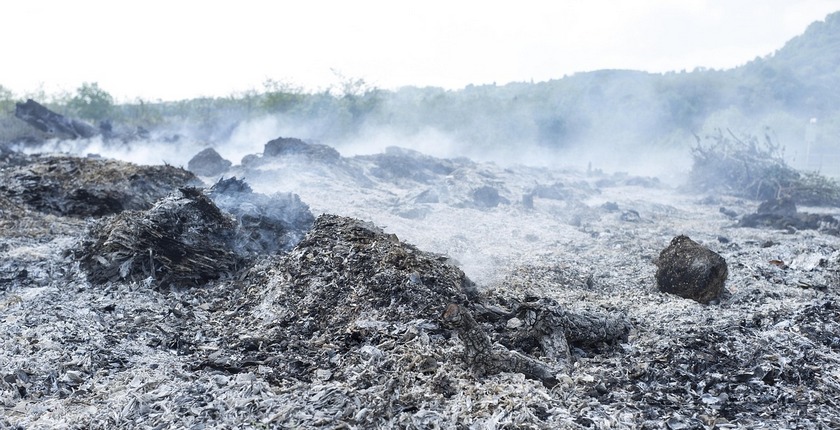
District heating plant Energetika has begun removing coal ash from an uncovered disposal site that has been polluting air and soil for years in the heart of Kragujevac, Serbia’s fourth-largest city. The effort is part of a project financed by an EUR 18 million loan from the European Bank for Reconstruction and Development (EBRD), to decarbonize the local district heating system.

The ash from Kragujevac is transported to cement plants in Kosjerić and Popovac to be used in the production of cement and construction materials, in line with circular economy principles, according to Serbian Minister of Environmental Protection Sara Pavkov.

On the first day, about 75 tons of ash was removed from the site, with plans to transport a total of 60,000 tons over 24 months.

The ash will be used in cement production in Kosjerić and Popovac

Ash removal is the second phase of the district heating decarbonization project in Kragujevac. In the first phase, old boilers were replaced with gas-fired units, significantly reducing air pollution, according to Dejan Ružić, deputy mayor of Kragujevac. This marked the end of coal use in the city’s district heating system.

The EBRD approved the loan for the project in 2021. Of the total amount, EUR 14 million was earmarked for boiler replacement, together with up to EUR 4 million for ash removal.

In the first phase, coal-fired boilers were replaced with gas-fired units

The bank said at the time that gas-fired boilers would have a capacity of 110 MW and that CO2 emissions from district heating would be cut by an estimated 66%, with sulfur dioxide and particulate matter (PM) emissions eliminated.

The Ministry of Environmental Protection has hired Novi Sad-based engineering and consultancy firm AG Institut to monitor the ash disposal services under a EUR 73.900 contract. The works are targeted for completion by July 15, 2027.

Aleksandar Lazović, general manager of the district heating plant, said the works would be carried out in line with the highest environmental standards, in a covered area, to prevent ash from dispersing into the environment.

District heating decarbonization in several Serbian cities

In June this year, Serbia and the EBRD signed a EUR 50 million loan to finance a series of air quality projects in Belgrade, Niš, Valjevo, Zaječar, Novi Pazar, and Smederevo, which had been mapped as cities with the largest excesses of harmful emissions.

The planned projects include replacing outdated boilers running on fuel oil, coal, and other air-polluting fuels with modern and sustainable heat energy sources, such as heat pumps, biomass, and industrial waste heat.

by in News

EU’s Modernisation Fund disburses EUR 3.66 billion for clean energy projects in nine countries

Energy modernization projects in nine member states of the European Union will receive a total of EUR 3.66 billion from the Modernisation Fund, in the largest disbursement to date from the facility financed by carbon pricing revenues, according to a press release from the European Commission. The selected projects focus on renewable energy, grid upgrades, energy storage, and energy efficiency.

The largest beneficiary of the latest disbursement is Poland, which will receive EUR 1.33 billion for its projects, followed by the Czech Republic, with EUR 1.05 billion, and Romania, with EUR 712.3 million. Hungary will get EUR 181.3 million, Croatia EUR 170 million, and Greece EUR 113.6 million. The rest will go to Latvia (EUR 40 million), Lithuania (EUR 37 million), and Slovenia (EUR 19.7 million).

Croatia will finance renewable heat production and zero-emission transportation, and Slovenia will upgrade power grid to integrate renewables

In Croatia, EUR 80 million will be used for the production and use of heat from renewable energy sources and energy efficiency improvement in heating and cooling systems. The rest will go to investments in zero-emission transportation. In Slovenia, the funding will facilitate renewables integration through the modernization and development of the electricity transmission and distribution network.

Greece, which became a Modernisation Fund beneficiary in January 2024, intends to replace urban diesel buses with new electric buses, improve energy efficiency in municipal swimming pools, and switch the heating and cooling systems in its greenhouse infrastructure to renewables.

In Romania, the funding will help improve the energy efficiency of facilities covered by the European Union’s Emissions Trading System (EU ETS), support the contract-for-difference (CfD) scheme for onshore wind and solar, and finance the installation of solar and wind power plants for self-consumption in the agricultural and food sectors and public institutions. It is also intended for investments in new solar, wind, and hydropower capacities and to support the modernization and rehabilitation of the district heating network.

In the Czech Republic and Lihtuania, the funding will support energy storage projects

Other example projects include investments in storage capacity for renewable electricity in the Czech Republic, investments in large-scale energy storage capacities in Lithuania, and a clean air program in Poland that focuses on energy efficiency improvements and heat source replacements in single-family houses, according to the press release.

The investments will reduce greenhouse gas emissions in the energy, industry, and transportation sectors, improve energy efficiency, and help the beneficiary states meet climate and energy targets, the commission said.

The projects will also help improve people’s everyday lives, by reducing bills, improving public services, creating jobs, and making the energy transition real, fair, and beneficial for all, according to Teresa Ribera, the European Commission’s Executive Vice-President for Clean, Just and Competitive Transition.

With this latest round of funding, the total disbursements from the Modernisation Fund since January 2021 have climbed to EUR 19.1 billion. The fund is financed by revenues from the auctioning of emission allowances under the EU ETS.

by in News

NALED urges action to protect jobs at energy-intensive industries threatened by CBAM

The National Alliance for Local Economic Development (NALED) has called on the authorities to establish a regulatory framework that would shield Serbia’s energy-intensive industries from the impact of the European Union’s (EU) Carbon Border Adjustment Mechanism (CBAM), which threatens jobs and businesses employing about 7% of the country’s workforce and accounting for 11% of its GDP.

Once the EU starts taxing the import of high-emission products on January 1, 2026, exporters from Serbia will face an increase in the prices of their products on the EU market. Simultaneously, they will face unfair competition on the domestic market from third countries that have not introduced a national carbon pricing system, according to the National Alliance for Local Economic Development (NALED).

The entry into force of the Carbon Border Adjustment Mechanism (CBAM) means that a levy will be charged on imports of cement, iron, steel, aluminum, fertilizers, hydrogen, and electricity into the EU from countries that do not tax CO2 emissions. Although there is more and more talk about delaying the implementation of the tax, it would not make the problem of CO2 taxation disappear – it would only give the affected countries more time to prepare for the change.

NALED has completed an analysis of CBAM’s potential impacts

NALED warns that the introduction of CBAM could have a severely adverse and destabilizing impact on the competitiveness of Serbia’s energy-intensive industries, which requires an urgent and appropriate response from state institutions. NALED’s recently completed analysis of potential impacts of CBAM suggests a high risk of financial pressures and loss of competitiveness of Serbia’s energy-intensive industries, which employ about 7% of the country’s workforce and account for 11% of its GDP.

“To maintain the competitiveness of domestic industry in the initial stage of its green transition, it is necessary to provide mechanisms for reducing CO2 emissions as soon as possible through a set of national regulatory measures. After that, a national mechanism should be established that would include levying a carbon tax on domestic industry, along with a national CBAM mechanism, modeled after the EU’s, to tax goods from third countries where climate policies are less ambitious than Serbia’s,” says Slobodan Krstović, director of NALED’s Sustainable Development Department.

Revenues from CO2 taxation would be used to decarbonize Serbia’s energy-intensive industries

This would ensure a level playing field, in terms of costs related to CO2 emissions, for the sale of energy-intensive products on the Serbian market, as is the case in the EU.

Additional budget revenues that would be secured in this way would primarily be used for supporting the decarbonization of energy-intensive industries, Krstović added.

The analysis further shows that introducing a national CO2 tax at the carbon price projected for 2034 in the National Energy and Climate Plan (NECP) –about EUR 40 per ton – would cost the economy up to EUR 539 million a year, not including the electricity sector.

A domestic CBAM would bring an additional EUR 13 million in state budget revenues in 2027 and as much as EUR 128.6 million in 2034.

Serbia needs mechanisms to decarbonize energy-intensive industries

NALED believes that such a measure, which would channel revenues into Serbia’s budget instead of the EU coffers, would be sustainably justified if the state first introduced regulatory mechanisms to help industry reduce its CO2 emissions.

Given that CBAM and the Green Agenda are new regulatory factors, which have not been taken into account before when defining state aid rules, it is necessary to thoroughly review the existing regulations for granting state aid to companies, according to NALED.

Adapting the national regulatory framework to ensure mechanisms for the decarbonization of energy-intensive industries primarily involves liberalizing the import of alternative fuels and raw materials, banning the export of waste that can be processed in Serbia, and incentivizing the construction of new renewable energy capacities.

If the state fails to react, the domestic industry will face a serious threat

In the absence of state action, NALED warns, the projected decline in the cost efficiency of domestic industry would irreversibly jeopardize Serbia’s exports to the EU market, as well as its competitiveness on the domestic market due to a sharp increase in imports of CBAM goods from non-EU countries.

This would inevitably lead to the loss of a large number of jobs and the financial sustainability of the entire energy-intensive industry operating in Serbia, NALED concludes.

The authorities in Bosnia and Herzegovina recently estimated the economy’s potential loss due to CBAM at between BAM 722 million and BAM 3.17 billion (EUR 369 million to EUR 1.62 billion).

  • 1
  • 2