by in News

US wants Central Europe to join ‘team energy freedom’, ditch EU’s energy transition goals

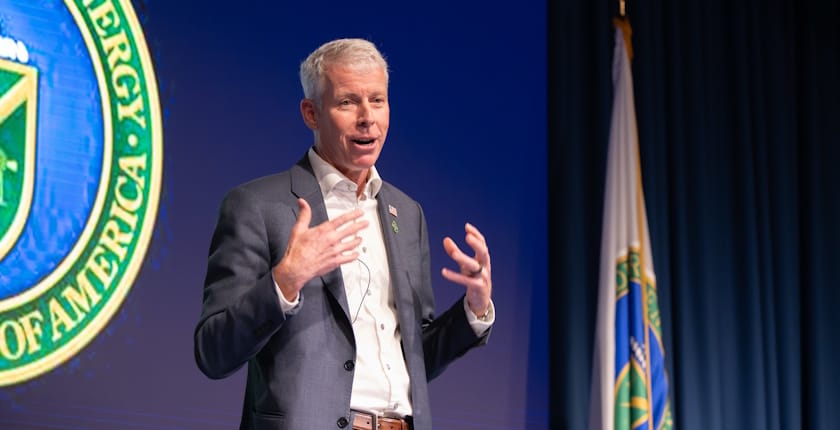
United States Secretary of Energy Chris Wright invited Central European countries to abandon the official European Union’s energy and climate policy and join his country on “team energy freedom.”

US Energy Secretary Chris Wright has delivered a keynote speech at the inaugural session of the Three Seas Business Forum, held in Warsaw, Poland.

“This is a time for choosing,” he said. Wright, who called himself a “lifelong energy entrepreneur,” claimed that after the global financial crisis 15 years ago, “the major nations of Western Europe — not Central Europe — chose one side of a fork in the road” and that his country took the other one.

In his words, the US path represents “energy for the sake of human flourishing,” one that is” abundant, secure, affordable and reliable” and “comes from innovation and choice.” In Wright’s view, it leads to economic growth.

Wright: Climate alarmism has clearly reduced energy freedom, prosperity and national security

“The other side of the fork deprives citizens, consumers of choice. It is a top-down imposition of mandates for the energy system. This top-down imposition of enforced ‘climate policies’ is justified as necessary to save the world from climate change,” the energy secretary stated in the written remarks, published by the Department of Energy.

Wright stressed in the speech that “climate alarmism” has “reduced energy freedom” alongside prosperity and national security across Western Europe.

Criticizing what he called “top-down diktats,” the US official argued they have produced an expensive and unreliable energy system that drives industry and economic activity out of national borders and made energy more expensive for citizens.

The previous US administration worked hard to move the US onto that same fork, he added. The American people re-elected President Donald Trump to bring back freedom and prosperity, according to Wright.

Wright: We warmly welcome you to join us on team energy freedom

Of note, Trump has substantially reversed the previous administration’s energy and climate policy. Launching a slogan “Drill, baby, drill” at the beginning of his current mandate, he withdrew the US from the Paris Agreement and suspended offshore wind power leases, among other measures.

Now Wright conveyed a message: “Central Europe faces a time for choosing. You all have a long history of choosing freedom and sovereignty for your citizens. We warmly welcome you to join us on team energy freedom and prosperity for citizens. President Trump’s agenda of prosperity at home and peace abroad is a team sport!”

He said decarbonization would “likely take generations.” The energy secretary claimed natural gas and nuclear energy are the two biggest climate solutions for the coming decades, “as they were in the last two decades… for the simple reason that they work.”

They supply affordable, reliable, secure energy, Wright underscored.
by in News

Join Young Bled Strategic Forum – applications now open

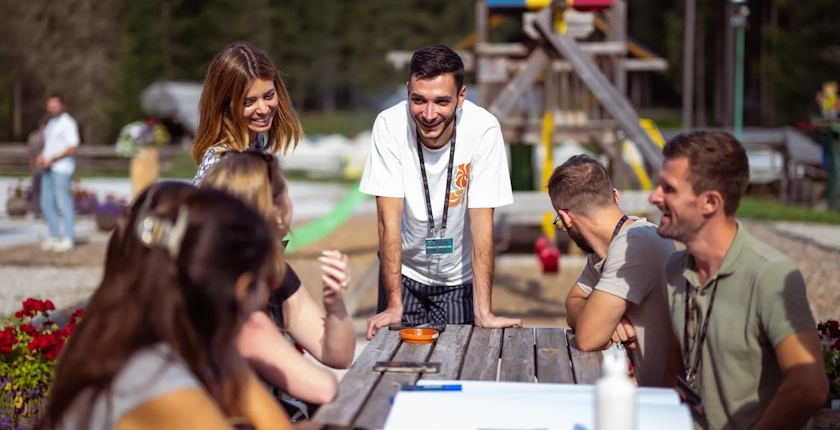
At the end of August, Slovenia will once again host one of the most inspiring international youth gatherings – the Young Bled Strategic Forum (Young BSF), which will take place from August 29 to 31 in Pokljuka. Applications for participation are now officially open.

Young BSF was launched in 2011 as a side event of the Bled Strategic Forum (BSF), bringing together students and young professionals. Since then, it has evolved into an independent and standalone platform.

This year’s edition of the forum is titled ‘What Values?’ and it will focus on exploring the relationship between personal and collective values and their role in shaping global politics.

Applications are open until April 27

Applications for this year’s Young BSF, which will be held from August 29 to 31 in Pokljuka, are open until April 27, and all interested candidates can apply via the form available on the BSF website. Attendance is free, and all costs are covered by the organizers.

The platform is shaped by the participants themselves – young people aged 18 to 35 working in the broadly defined field of world politics. “We seek candidates from diverse backgrounds, disciplines, and regions. Whether you’re an activist, engineer, diplomat, philosopher, entrepreneur, artist, or professional in any field with a strong interest in international politics – if you’re passionate about creating positive change, we encourage you to apply,” the organizers said in the announcement.

The forum will gather around 40 participants from all over the world, offering them a space to exchange ideas, reflect together, and design solutions for today’s global challenges.

After the conclusion of the Young BSF program, participants will also attend the 20th Bled Strategic Forum

The main thematic areas are the crises of the rules-based international order, conflicting value systems of the climate emergency, and the perspectives of the people implementing policies on a global scale. Young leaders, activists, researchers, and professionals will strive to open a dialogue on the key issues of our time.

The forum aims to contribute to a deeper understanding of contemporary social phenomena and to encourage positive change in both local and global communities, through the exchange of ideas and collaborative work on concrete challenges.

Following the Young BSF program, participants will attend the 20th Bled Strategic Forum in Bled on September 1 and 2, where they will take part as panelists, moderators, and audience members.

by in News

Ember: Warming’s 2024 share of global power demand rise was covered with fossil fuels

According to Ember’s new figures, renewable energy sources met almost three quarters of last year’s increase in the world’s electricity demand. Together with nuclear energy, they would have covered almost the entire jump if it wasn’t for the share attributed to the annual increase in temperatures. Looking at it the other way around, the need for additional cooling accounted for the overwhelming part of the rise in fossil fuel use, and at the same time the resulting additional emissions contributed to the acceleration of global warming.

The share of low-carbon sources rose to a historic 40.9% of global output in 2024. Photovoltaics made up 55.2% of renewable electricity production growth. Hungary, Greece and Bulgaria are among the world’s strongest solar power producers while Turkey has one of the highest power demand growth rates.

Taken together, wind and solar power, hydroelectric plants, other renewables and nuclear energy amounted to 40.9% of global electricity generation in 2024. One year earlier, the level was 39.4%. Last year’s share was the highest since the 1940s, when the global electricity system was fifty times smaller, Ember said in its Global Electricity Review 2025. 

At the time, there was only hydropower and some biomass on the list. Solar power has been the main factor of change over the past several years, and so has China.

Global electricity demand jumped 4% last year or 1.17 PWh, amplified by heatwaves, and reached an all-time high of 30.9 PWh. Periods of higher temperatures in another hottest year ever drove up demand for cooling. The relative increase in 2023 was 2.6%.

Hydropower remained the largest source of low-carbon electricity (14.3%), followed by nuclear (9%). Wind (8.1%) and photovoltaics (6.9%)  are rapidly gaining ground and together they overtook hydro in 2024, while nuclear’s share reached a 45-year low.

Renewables meet 73.2% of growth in world power demand

Renewable power sources accounted for 858 TWh of added output. The previous record of 577 TWh was set two years earlier, as hydropower dropped in 2023, also mostly because of heat.

EVs, heat pumps, data centers and other new drivers of power demand more than doubled their share in annual growth in five years

Renewables met 73.2% of growth in demand and nuclear energy covered 5.9%. Together, they nearly accounted for all growth except the temperature effects, and the rest was from fossil fuels.

Interestingly, looking at it the other way around, the need for additional cooling accounted for the overwhelming part of the rise in fossil fuel use. Of course, the resulting additional emissions contributed to the acceleration of global warming.

Fossil fuel use would have remained almost unchanged if temperatures didn’t grow, the think tank claims. Global power sector emissions rose by 1.6% to a new all-time high of 14.6 billion tonnes of CO2.

But at least the demand for cooling during the day mostly runs in parallel to solar power production. Moreover, the pace of energy storage capacity increase still isn’t keeping up with the growing need to balance photovoltaics and wind power, as they depend on the weather.

However, the update focuses only on one indicator, within the annual growth in power demand. The system is much more complex and fossil fuels weren’t only and directly used for cooling. There is also the matter of distribution across segments from the entire output.

New drivers of demand such as electric vehicles, heat pumps and data centers contributed roughly the same to annual demand growth as the temperature effect, but more than twice as much as they did five years before.

China nearing one third of global electricity demand

China’s electricity demand surged 6.6% or by 623 TWh, which accounted for more than half of the global rise. Its 10.07 PWh in total was 32.6% of the overall figure. Five years before the country was at 28%. Renewables and nuclear energy covered 81% of its demand increase.

China’s per capita electricity use overtook France’s for the first time last year

The United States is number two overall, with 4.4 PWh in 2024 or 14.3% of the global level. China’s per capita electricity use overtook France’s for the first time, and was five times that of India’s.

Turkey’s growth rate, 5.6%, was among the highest on the planet. In absolute terms, demand jumped 18 TWh.

Photovoltaics beat coal power in 2024 in EU

Solar power production spiked by a stunning 29%, which was a six-year high, or by 474 TWh. Photovoltaics were the largest segment of new electricity for the third year in a row and grew the fastest for the 20th straight year. Total output reached 2.13 PWh.

Global solar power capacity reached 1 TW in 2022 after decades of growth, but it surpassed 2 TW only two years later. China amounted to 53% of the increase in PV generation in 2024.

Solar power topped coal power output in the European Union for the first time. As for the share of domestic production, Hungary tops the global list, with 25%. Chile is second at 22%, and Greece is third and best, with 22%, among the countries that Balkan Green Energy News mainly tracks.

Bulgaria is also in the main chart, coming in ninth on a global scale, with 14.4%.

As for solar power production per capita, Australia leads by far with 1.87 MWh, followed by the United Arab Emirates (1.29 MWh) and Greece, also at 1.29 MWh on a rounded basis. Hungary is seventh in the category, at 971 kWh per person.

In the rest of Southeastern Europe, Turkey sticks out as tenth on the planet in hydropower output, at 75 TWh. Albania has the fourth-highest share of domestic production, 97%.

Notably, Kosovo* tops the list of coal’s share in electricity production, with 92%. Bosnia and Herzegovina and Serbia still seem pretty much stuck with the technology. They are fifth and sixth, respectively, both at 63% on a rounded basis.

* This designation is without prejudice to positions onstatus and is in line with UNSCR 1244/99 and the ICJ Opinion on the Kosovo declaration of independence.
by in News

Serbia to afforest 7,000 hectares, revitalize 51,000 hectares of forests

Serbia intends to afforest 7,000 hectares with climate-resilient tree species and converse 51,000 hectares of degraded forests within the USD 84 million FOREST Invest project.

An agreement for the project ‘Enhancing the resilience of Serbian forests to ensure energy security of the most vulnerable while contributing to their livelihoods and carbon sequestration (FOREST Invest)’ was signed between the Food and Agriculture Organization of the United Nations (FAO), in its capacity as an Accredited Entity of the Green Climate Fund (GCF), the Ministry of Agriculture, Forestry and Water Management, as well as public enterprises Srbijašume and Vojvodinašume, which manage forests.

The project envisages afforestation of 7,000 hectares with climate-resilient tree species, the conversion of 51,000 hectares of degraded low forests into high forests, and the rehabilitation of at least 500 hectares of abandoned private agricultural land through agroforestry plantations, according to FAO.

The project is financed by FAO, Serbia and GCF

The project, valued at USD 84 million, is funded by the Green Climate Fund, the Government of Serbia and FAO. Over the course of seven years, FOREST Invest will enhance the resilience of forest ecosystems, improve energy security for vulnerable communities, and contribute to reducing greenhouse gas emissions.

By implementing these and other measures, greenhouse gas emissions are expected to be reduced by 8.4 million tonnes of carbon dioxide equivalent (CO2e). Nearly three million residents of Serbia will indirectly benefit from improved forest resilience and sustainable management, FAO said.

Gonzalez: Progress in Serbia will guide future efforts in other countries

The contract was signed by the Minister of Agriculture, Forestry and Water Management Aleksandar Martinović, Srbijašume CEO Krsto Janjušević, executive manager for forestry, ecology and development of Vojvodinašume Marko Marinković, and FAO Deputy Regional Representative for Europe and Central Asia Nabil Gangi.

According to Aleksandar Martinović, the project will help Serbia to establish foundations for long-term reforms in the forestry sector, ensuring sustainability, climate resilience and a better quality of life for people.

Henry Gonzalez said the innovative project in Serbia increases investment in sustainable forestry initiatives that include both mitigation and adaptation measures. Progress in Serbia will guide future efforts in other countries, he stressed.

The partnership between FAO and the government is built on a shared commitment to sustainable development, food security, and climate resilience, Nabil Gangi pointed out.

by in News

Building resilient cities: how to align competitiveness and sustainability in Europe’s energy transition?

By Filipe Araùjo, Deputy Mayor of Porto, Portugal and Vice President of Energy Cities,one of EUSEW partner organisations

With the new EU Institutions taking office, it seems that the main discourse has shifted from the EU Green Deal to competitiveness. This new narrative presents both a challenge and an opportunity for European cities. We want our territories to prosper, but this can’t happen at the expenses of our health and safety.

Resilient local economies for a competitive Europe

A city that is thriving is a place where there is community wealth: the needs of its inhabitants are met, preferably by local economic actors. This contributes to reinforcing the local economic system, the social bonds and overall help withstand crisis situations. Resilient local economies are a precondition to EU’s competitiveness.

This community wealth approach applies to many sectors, but I believe it’s quite effective when it comes to energy. Nowadays, very few are questioning the need to have more renewable energy fed into the grid, not only to fight climate change, but also to ensure everyone (businesses and citizens alike) has access to energy at a relatively stable and affordable price, no matter the geopolitical context. But if we want to speed up RES deployments, we need to ensure everyone is on board. Not in my backyard behaviours (NIMBY) are still a reality many local leaders are confronted with. According to our experience in Porto, local ownership of renewable energy is a way for cities to address NIMBY, but also to help tackling energy poverty and contribute to thriving local economies.

Community energy addressing energy poverty in Porto

That is why Porto is planning to include all municipal social housing, around 12% of buildings in the municipality, in community energy projects. 6MW of solar power is going to be installed, providing clean electricity to vulnerable families at a lower price.

While some of the projects are still being tendered, some are already in the implementation phase. For example, the energy community in the Agra do Amial district, active since May 2024, is already providing its members with renewable energy, with around 50% of the energy generated consumed by vulnerable families

While our ambition is high, we can’t ignore the many challenges we are confronted with – some are common to many European municipalities. Cities frequently lack staff and financial resources to lead highly participatory process, often involving citizens who are very difficult to engage (such as vulnerable households) or even to provide information to their community on energy related issues. This, combined with the complexity of such topics, makes our work even more difficult.

In addition, burdensome administrative processes and challenging legal frameworks at national level can halt innovative projects and discourage citizens and small businesses from participating. When setting up Porto’s first energy community, it took us 2 years to get social housing units connected to the solar panels we installed.

Leveraging on local ecosystems for a more resilient Europe

Luckily, solutions do exist to ensure local communities can play their part to contribute to a more resilient and democratic Europe. Aside from ensuring legislation is properly transposed so that everyone across Europe can benefit from the same energy rights, we need capacity building programmes, develop local One Stop Shops to inform/engage citizens on the opportunities available to them and energy literacy programs.

For this to happen, cities will have to access finance, and the integration among the different initiatives at all levels that aim at increasing renewable energy deployment (and energy security) is fundamental. Another important aspect will be to ensure multilevel governance, so that cities can participate in the decision making around what concerns them, and not just been asked to implement.

In the coming period, the new European Commission is set to work on a new Citizens Energy Package, but also to develop a Clean Industrial Deal and reform the EU Cohesion Policy. This presents as a unique opportunity to align the EU approach to competitiveness with its energy and environmental targets, by establishing proper governance mechanisms and funnelling the necessary resources accordingly.

This opinion editorial is produced in co-operation with the European Sustainable Energy Week (EUSEW) 2025. See ec.europa.eu/eusew for open calls.

by in News

Seven cities, regions in Western Balkans to strengthen climate resilience with CLIMAAX

Seven cities and regions in the Western Balkans will receive financial and technical support to enhance their climate resilience.

Four local authorities in Albania and one each in Bosnia and Herzegovina, Montenegro, and Serbia are among the 69 in 23 countries selected within the CLIMAAX call for applications.

As a result of the two open calls, municipalities, cities and regions will receive more than EUR 12 million in total from the European Union’s Mission on Adaptation to Climate Change, the announcement reads.

The maximum amount of financial support within CLIMAAX ranges between EUR 115.227 and EUR 300.000.

The selected cities and regions will conduct multi-risk climate risk assessments

Tirana, Vlora, Belsh, and Libohova in Albania became beneficiaries together with the municipalities of Neum in BiH and Bijelo Polje in Montenegro and the Secretariat for Urban Planning and Environmental Protection in Serbia’s Autonomous Province of Vojvodina.

As for other countries tracked by Balkan Green Energy News, regions and cities in Bulgaria (7), Croatia (2), Cyprus (1), Greece (8), Romania (3), Slovenia (1), and Turkey (7) have also been selected, according to the List of selected beneficiaries 1 and List of selected beneficiaries 2.

The CLIMAAX program highlights the increasing frequency and intensity of extreme weather events, rising sea levels, and other climate-related hazards as significant risks to economies, societies, and ecosystems across the globe. Therefore it is critical to understand the risks and develop effective strategies to manage and adapt to them.

Sempere-Torres: We are building a collaborative network of communities committed to climate resilience across Europe

The main objective is to support the implementation of the EU Adaptation Strategy and especially the first objective of the Horizon Europe Mission Adaptation: preparing and planning for climate resilience.

Selected cities and regions will implement the proposed methodological framework and toolbox to conduct multi-risk climate risk assessments. The regions are eligible for support from the CLIMAAX consortium in their work on the assessments.

“With CLIMAAX expanding to more regions, we are enhancing our efforts to make climate risk assessment into a practical process that leads to real, impactful action. By empowering regions with the necessary tools and financial support, we are not just improving local adaptation strategies—we are building a collaborative network of communities committed to climate resilience across Europe,” said Daniel Sempere-Torres, project co-coordinator of CLIMAAX and director of the Center of Applied Research in Hydrometeorology of the Universitat Politècnica de Catalunya.