by in News

BEF 2025: Corporates’ education, product diversification crucial to speed-up PPA uptake

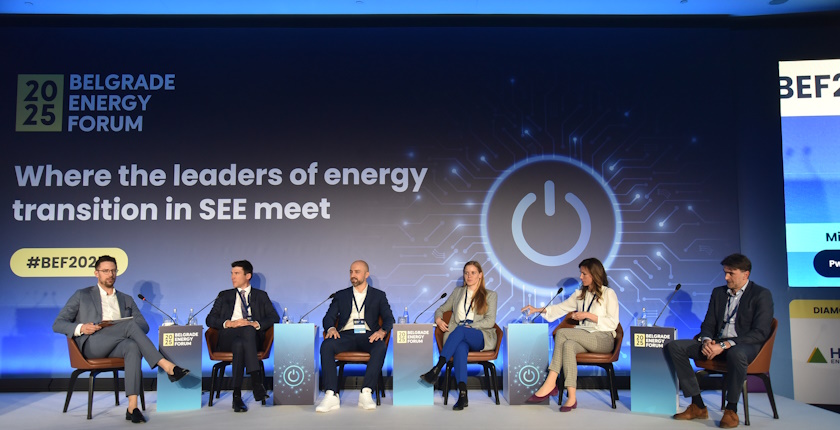
Capacity building and education for corporates, together with product diversification and an upgrade of the regulatory framework, could clear the obstacles for power purchase agreements in the Western Balkans, which are lagging behind the other countries in Southeast Europe. In addition to their other benefits, such contracts could contribute to securing baseload energy from hybrid facilities, given that baseload is a key issue for the decarbonization of the region, according to the participants of a panel on power purchase agreements, held at Belgrade Energy Forum 2025 (BEF 2025).

BEF 2025 has gathered four hundred participants from more than 30 countries in the region, Europe, and beyond.

The panel PPAs as a key to renewable energy growth in SEE featured stakeholders from all segments of the PPA market: developers, corporates, utilities and consultants. The discussion comprised five segments – the global trends, main drivers, the region’s specifics, challenges and trends, and the implications of the model.

The panel’s moderator was Mislav Slade-Šilović, Energy, Utilities & Resources Consulting Leader for Southeast Europe and member of the core PPA team at the consultancy PwC.

Global trends: PPAs are hot, but the solar capture rate is becoming an issue

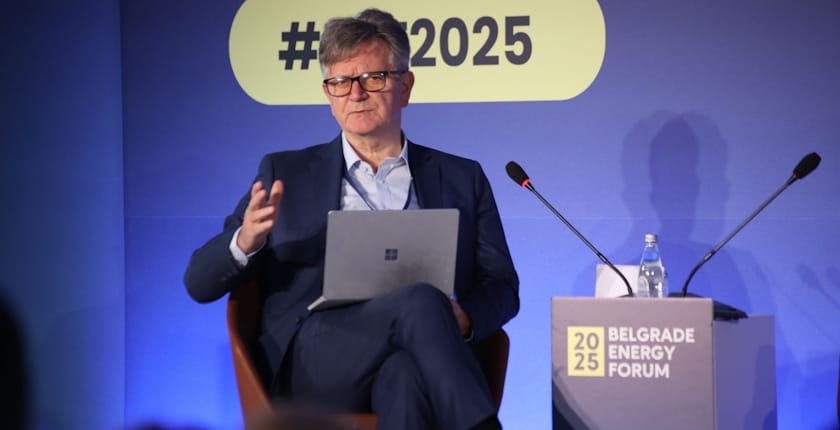
Mislav Slade-Šilović, Joffroy Beckers and Nikola Gazdov

According to Natalija Ljubić, Manager of PPA & BESS Transactions at Pexapark, PPAs are still hot in Europe. On a monthly basis, between 500 MW and 2,000 MW of new PPAs are signed (15 to 30 deals). She referred to long-term, fixed-price PPAs considered bankable and publicly announced. There is much more together with short-term PPAs, for two to three years.

There is an impression that everything comes down to corporate PPAs, but there are many utility PPAs that aren’t always made public, she added.

The majority are physical PPAs but Pexapark is registering more and more financial PPAs. In 2025, almost 20% of all the announced PPAs were financial, whereas a couple of years ago, they made up 5% to 10%. There are more pay-as-produced contracts than the monthly ones for baseload energy.

Mislav Slade-Šilović (PwC) added that 70% of PPAs in SEE are virtual or financial.

It’s quite challenging in the region to find a creditworthy counterparty on the consumer side

For developer Joffroy Beckers, Head of PPA at DRI, it’s quite challenging to find a creditworthy counterparty on the consumer side of the market in the region comprising Greece, Bulgaria and Romania. So when the firm wants to speed things up with selling its electricity, it goes to utilities or traders.

Negative prices are emerging in the region, with much more cannibalization for solar in the long term, he added.

According to Bulgaria’s Association for Production, Storage, and Trading of Electricity – APSTE, the situation in the region is different than five years ago. “There were zero PPAs in the region, but now they start to get common. Paradoxically, the conditions start getting much more and more complex,” chairman Nikola Gazdov said.

Mislav Slade-Šilović (PwC) pointed to the decline in the solar capture rate – the ratio of the price of solar power and wholesale price. It is spilling over to the PPA price and increasing its complexity, and solar PPAs are generally more complex than the ones for wind power, he added.

Main drivers: Different priorities ask for different PPA models

Natalija Ljubić, Ivana Đurović and Davor Pupovac

For Ivana Đurović, Category Manager Renewable Energy at Knauf Group, PPAs are a game changer in energy procurement because essentially it’s no longer just about buying energy or hedging. “Now corporate PPAs bring the long-term deal, so they even extend the tenure for those hedging, and they also allow us to achieve our sustainability targets,” she explained.

PPAs aren’t for companies with consumption below 30 GWh or 40 GWh per year, while branding and cost savings are often the reasons for companies to sign them.

Such factors determine the PPA product that the offtaker opts for, Mislav Slade-Šilović (PwC) stressed.

According to Nikola Gazdov (APSTE), in the region comprising Bulgaria, Romania, and Greece, PPAs are usually signed by corporates that have some ESG commitments or want to show their clients and customers that they are thinking green.

The key feature of a PPA is the partnership between two companies

As examples of the various kinds of deals, he mentioned a physical PPA with an electricity-intensive consumer, virtual PPA with a telecom and a PPA with a big international company producing tires, combining the two types.

As a developer, DRI is modifying its strategy toward a mixed portfolio. Instead offering a solar asset for a PPA, it adds wind power plants and combines different technologies into a single contract. “It allows us to capture a better price, and this is also usually more beneficial for the off-taker. The second thing is that we’re trying to keep this upside in our PPA by entering a floor price instead of a fixed price,” Joffroy Beckers (DRI) revealed.

For Mislav Slade-Šilović (PwC) the key characteristic of a PPA is the partnership between two companies. It needs to be balanced, to ensure that both parties can fulfill throughout the tenure. If one goes bankrupt, then it doesn’t make sense for both parties, he underlined.

The specifics in the region: Corporates need to learn, PPAs should be more diverse

Nikola Gazdov, Natalija Ljubić and Ivana Đurović

Serbia’s state-owned power utility Elektroprivreda Srbije (EPS) has been signing a lot of PPAs. However, the difference from the conventional deals is that they are based on premiums. But according to Davor Pupovac, head of the company’s market analysis and risk management, it is interested in corporate PPAs that don’t include government support. There is not much interest among consumers for corporate PPAs with EPS, he revealed.

Mislav Slade-Šilović (PwC) said the role of EPS and big power utilities is very important in developing the PPA market. A dominant supplier in a market has a critical role, either as a sleever or as someone that will provide B2B products to off-takers and developers or producers for entering the market, he said.

Joffroy Beckers (DRI) agreed with him about the role of big utilities in facilitating PPAs and expressed the belief that in the near future, they would get a larger share as intermediaries.

Asked if corporate PPAs are coming anytime soon in Serbia, Davor Pupovac (EPS) said: “Not so soon.” However, he claimed EPS wouldn’t lose consumers regardless of the fact that it has no such product.

Corporates aren’t super ready for PPAs because they are seeking stability when it comes to the energy price

In Ivana Đurović’s (Knauf) view, there are several reasons for the slow uptake of corporate PPAs in the Western Balkans. Corporate buyers aren’t super ready for PPAs because they are seeking stability when it comes to the energy price, but the pay-as-produced PPA model is dominant in the market, which doesn’t ensure price stability. Monthly baseload deals would enable more price stability.

A bigger offtake through PPAs requires corporates to build their capacity for closing such deals and for the offer to be more diverse, she stressed.

Natalija Ljubić (Pexapark) agreed with her and suggested that companies need to understand more about the risks and accounting. Also, not many corporates are willing to enter five- to ten-year agreements as they don’t know their demand or costs that far ahead, Ljubić underlined.

Challenges, risks: Management boards are delving into energy-related topics in detail

Ivana Đurović and Davor Pupovac

Creditworthiness is one of the key challenges, Joffroy Beckers (DRI) said. As he sees it, credit insurance could be key, providing a kind of a state guarantee. Nikola Gazdov (APSTE) again stressed education. He also recalled that all European countries needed time to get along with PPAs.

“But coming to credit risk, I think that now we also see the European Commission taking note of the situation,” Gazdov noted.

As for education, Mislav Slade-Šilović (PwC) said it requires one to two years. Management boards of companies from different industries on the offtake side are forced to delve into energy-related topics in detail, he noted.

There are practically no obstacles for PPAs in Serbia

Slade-Šilović asked EPS’s representative whether the utility is prepared to offer B2B products, arguing that they go hand-in-hand with PPA market development.

Davor Pupovac (EPS) responded that there are practically no obstacles to PPAs in Serbia. Namely, there is an electricity exchange, EPS is willing to sign contracts with developers for sleeving or balancing, the guarantees of origin (GO) system is in place, and EPS is active on power exchanges in the region as a producer and supplier.

“EPS could also offer a route to market to the off-taker. However, currently, it cannot offer access to the spot or forward market,” he explained.

Coming from a corporate electricity consumer, Ivana Đurović (Knauf) was curious what EPS could offer to a perfect corporate off-taker asking for a physical PPA. Pupovac answered that currently it would be a pay-as-produced deal.

What does the implementation bring us: hybrid combinations open the room for innovative deals

Joffroy Beckers, Nikola Gazdov and Natalija Ljubić

Mislav-Slade Šilović (PwC) summarized the landscape. “If you look at the broader EU situation and challenges, especially with solar capture rates, negative prices, we are now already discussing technology advanced structures including batteries and other hybrid solutions on the PPA side,” he underlined.

Natalija Ljubić (Pexapark) pointed out that last month in Germany the solar capture rate was just 40%, calling it almost unbearable for photovoltaic projects. All developers or energy producers, especially in the solar power sphere, are seriously considering adding batteries, while projects for standalone battery storage facilities are appearing, in her words.

She and Nikola Gazdov (APSTE) agreed that the outcome is a lot of interesting innovative structures, room for different solutions.

BESS with solar reduces cannibalization and increases capture rates

Ljubić said it is a challenge to maximize revenues from a battery system and make it bankable. Gazdov pointed to the dilemmas of a single company owning different assets versus a big utility combining and aggregating everything, and whether the producers or optimizers manage the revenue streams.

When it comes to standalone storage units, he sees a perspective only in arbitrage and, perhaps, system services further down the road.

Joffroy Beckers (DRI) explained the main purpose of a battery energy storage system (BESS) in Romania, from the point of view of a developer and power producer. A BESS combined with solar power reduces cannibalization and increases capture rate, whereas wind lowers the balancing cost, he stressed.

“If you co-locate a battery next to solar, you will be in a position to negotiate a higher price on the off-take side,” he pointed out.

A combination of wind, solar and batteries is equivalent to a new power plant

In the future, he anticipates more PPAs with a pay-as-nominated structure rather than pay as produced, arguing that it enables more flexibility for monetizing batteries on different markets.

“With those combinations of wind, solar, and battery, basically you have a new power plant, baseload structure,” Mislav Slade-Šilović (PwC) stated.

That way PPAs fit into the broader discussion on the energy transition and decarbonization. EPS is decarbonizing its production through its role as a renewable energy offtaker.

“Hybrid combinations are partly addressing the baseload needs. So, many different technologies, including storage, can provide a part of the answer this region heavily needs, and this is the baseload substitution problem,” Slade-Šilović concluded.
by in News

PPC starts building two battery storage systems in northern Greece

Public Power Corp. (PPC Group) is launching construction on two battery energy storage systems (BESS) in northern Greece, of 48 MW / 96 MWh and 50 MW / 100 MWh. There is currently no larger BESS in Southeastern Europe, but the Oslomej solar park in North Macedonia is expected to get a battery system of 62 MW in operating power by the end of the year.

PPC’s Melitis 1 battery system will be located in the vicinity of its future photovoltaic plants in the Western Macedonia region, and Ptolemaida 4 will be built in the area of the former Ptolemaida coal mines. The energy storage units are intended to support the operation of adjacent photovoltaic plants.

The battery systems are targeted for completion within the year

The systems will use liquid-cooled batteries with the lithium iron phosphate (LFP) technology, maximizing both energy utilization and safety during operation, according to a statement from the Greek company, controlled by the government through a minority stake. It expects to complete the construction within the year.

PPC Group’s investment plan for the 2025-2027 period envisages BESS projects totaling 600 MW, which are currently at various stages of implementation in Greece and elsewhere in Southeastern Europe.

Konstantinos Mavros, the group’s deputy CEO responsible for renewable energy sources, said PPC is a leader in investing in energy storage systems. “In the coming years it will significantly increase investments in all flexible generation systems through energy storage,” he stated.

PPC plans 600 MW of battery projects in Southeastern Europe

PPC Group recently started building a battery system in neighboring Bulgaria with 25 MW in operating power and a capacity of 55 MWh. The facility would support the operation of a new solar power plant with a total capacity of 165 MW.

The company runs renewable energy systems with a total capacity of 6.2 GW in Greece, Romania, Italy, and Bulgaria. Its investment plan envisages increasing the capacity from renewables to 11.8 GW by 2027. PPC’s strategic goal is to expand into new renewable energy technologies, such as offshore wind farms and floating solar parks.

by in News

Alteo’s Chikán: Aggregators have AI solutions for grid stability, production optimization (video)

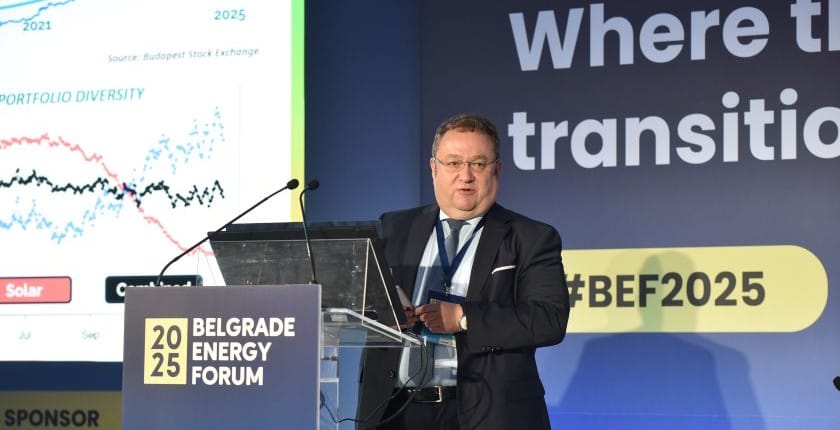
Factors like power price volatility, the global shift in policy making and the need for flexible solutions for the integration of renewables are creating an important momentum for developers and aggregators, Chief Executive Officer of Alteo, Attila Chikán, said at Belgrade Energy Forum 2025. The company is expanding in Central and Southeastern Europe with investments in power plants and its AI-backed platform for operating third-party assets.

The electricity system needs to become more and more flexible to accommodate weather-dependent, intermittent sources – solar, wind and hydropower, Alteo’s CEO and Chairman of the Board Attila Chikán said and pointed out that the outage in Spain and Portugal on April 28 highlighted the need for investing in grid stability and upgrades.

In his keynote speech at Belgrade Energy Forum (BEF 2025), he stressed that a global shift in policy making in the sector, particularly in the United States and Europe, is bringing both challenges and opportunities. In Chikán’s view, the situation creates an important momentum for developers and aggregators.

[wpcc-iframe title=”Belgrade Energy Forum 2025 – Attila Chikan Jr., CEO and President of the Board, ALTEO Plc” width=”500″ height=”281″ src=”https://www.youtube.com/embed/FZCrhx8yh6E?feature=oembed” frameborder=”0″ allow=”accelerometer; autoplay; clipboard-write; encrypted-media; gyroscope; picture-in-picture; web-share” referrerpolicy=”strict-origin-when-cross-origin” allowfullscreen=””]

“In the past five years we have seen a great deal of price volatility on the markets in the region. If you look into the future, taking into account the impact of the ambitious plans of regional countries to expand renewable power, one might expect even more pressure on balancing price volatility,” he asserted.

Role of international initiatives

Alteo’s CEO said tailored incentive mechanisms are essential for developing a balanced energy mix. There are also major endeavors on an international scale, Chikán added: connecting markets with diverse geographical characteristics, power plant portfolios and different supply-demand balances.

He explained that cross-border initiatives such as PICASSO and the Blue Sky project bring electricity exchanges in the region closer together. Interconnectors like the Pannonian Corridor and the proposed Black Sea green cable contribute to balancing and the management of energy price volatility, Chikán noted.

Future-proof tech solutions required for risk mitigation

In risk mitigation, the energy system’s stability benefits from future-proof technological solutions as well, namely smart metering, advanced weather forecasting and artificial intelligence–based production optimization, he said. This is where aggregator companies like Alteo come into the picture, its chief underscored.

As for its hardware, the company based in Budapest operates a diverse and balanced production portfolio of gas power plants and renewables, combined with storage, Chikán added.

Alteo runs a portfolio of gas power plants, renewables and storage facilities

“Sounds good, but without a well-designed and functional software, any hardware is purely a collection of materials. And even if they do operate, for sure they operate in a suboptimal way, without synchronization,” he stated.

That’s why Alteo developed its own production management platform, which it offers as a software-as-a-service (SaaS) solution as well. The company also supports the operation of 2 GW in third-party capacity, mostly photovoltaics.

“We optimize production in an automated way, using artificial intelligence, integrating real-time weather forecast data, capacity data and market data,” Chikán stressed.

The platform includes executing trading activities. The partners don’t have to deal with scheduling and the balancing energy costs, he said. The company makes a renewable electricity product closer to baseload, Alteo’s head asserted.

Slovakia, Croatia, Serbia are primary investment destinations in Alteo’s regional expansion

Early this year, the company unveiled a strategy for expansion in Hungary as well as into Slovakia, Croatia and Serbia as primary investment destinations. Alteo revealed it is interested in Poland, Czechia, Slovenia, Bosnia and Herzegovina, Montenegro and North Macedonia, too.

Chikán said it also aims to position itself in operations and maintenance (O&M), among other segments. Alteo is particularly seeking stable and reliable AI-based aggregator partnerships, he noted. The company has an investment target of up to EUR 3.5 billion by the end of the decade.

by in News

BiH laying groundwork for battery energy storage systems

Bosnia and Herzegovina is set to have its first battery energy storage systems installed in the transmission network, which will provide auxiliary services.

The State Electricity Regulatory Commission is drafting a decision to allow battery energy storage systems (BESS) to offer secondary frequency regulation, Mirza Kušljugić, a member of the Board of the Regional Center for Sustainable Energy Transition (RESET) from BiH, said at Belgrade Energy Forum 2025 (BEF 2025).

Since such a decision does not require a lengthy regulatory procedure, and the balancing market is already regulated, batteries could be installed very soon, he noted.

“I anticipate that private investors will take the lead in this initiative,” Kušljugić added.

He stressed the importance of experimenting with new technologies, noting that batteries represent a technology that can fundamentally transform the energy paradigm.

To be economically viable, batteries must serve multiple functions

The cost of batteries has significantly decreased in recent years. For instance, prices fell by 40% last year and have decreased by an additional 5% so far this year.

According to Kušljugić, batteries should not be limited to providing arbitrage but should also perform additional roles.

“Batteries come in various sizes – small, medium, and large – each with specific functions. They can regulate voltage or enable a black start, especially when equipped with new grid-forming inverters. This is a disruptive technology. It doesn’t matter whether it is installed on the transmission grid, the distribution grid, or behind the meter,” noted Kušljugić, who moderated the BEF panel titled Energy revolution underway – uniting efforts to deliver green, intelligent and sustainable energy solutions.

He added that batteries in the transmission system need to perform two or more functions, including frequency regulation.

Behind-the-meter batteries are also on the way

Historically, secondary regulation in BiH has been provided by any entity capable of offering flexibility, typically through tenders. So far, the service has mostly been provided by hydropower plants. However, due to lower nighttime prices, their operators were not interested in continuing to supply the service, leading to a shortage of secondary regulation. Batteries now have the potential to fill this gap.

Kušljugić believes that batteries installed behind electricity meters will soon become a reality in BiH as well. Currently, there are 300 to 350 MW of solar power capacities installed on the roofs of business premises, but their owners cannot feed excess electricity into the grid. It is only a matter of time before battery prices decrease enough to facilitate their installation, he underlined.

RESET, which advocates for citizen energy and prosumers, suggests that all solar installations should now be equipped with hybrid inverters, making them ready for future battery integration.

This approach is essential for the distribution grid to be ready to integrate excess electricity, Kušljugić concluded.

by in News

Everything is ready for Belgrade Energy Forum 2025 – welcome!

Everything is ready for the third Belgrade Energy Forum – BEF 2025. On May 14 and 15, the conference will gather four hundred participants from more then 30 countries from the region, Europe, and beyond.

Participants of the Belgrade Energy Forum 2025 (BEF 2025) will have the opportunity to hear from speakers from the European Union and five countries in the region and exchange views. Eight panels featuring more than 50 officials, executives and prominent energy experts will try to untangle the currently most important issues in the energy sector.

Representatives of governments, regulatory agencies, regional and international institutions and organizations as well as the business community will outline their future moves, which is invaluable information given the new reality of a turbulent geopolitical landscape.

Latest information on the largest project for the installation of solar power plants in the region and beyond

Energy Community Secretariat Director Artur Lorkowski and Serbian Minister of Mining and Energy Dubravka Đedović Handanović will open the event. One of the key speakers is Christian Zinglersen, director of the EU Agency for the Cooperation of Energy Regulators (ACER).

The ministerial panel consists of ministers and other officials from Montenegro, Croatia, Hungary, Serbia, and the Republic of Srpska, which is one of the two entities making up Bosnia and Herzegovina.

Representatives of the Hyundai Engineering – UGT Renewables consortium will summarize the next steps in the largest solar power project in the region and beyond. The consortium is the diamond sponsor of the event this year as well.

It entails solar power plants with a total connected power of 1,000 MW, and battery energy storage systems (BESS) of 200 MW in overall capability and 400 MWh in capacity.

It is a joint project with Serbian state-owned power utility Elektroprivreda Srbije. The partners took another important step this week by signing a grid connection contract with the country’s transmission system operator Elektromreža Srbije.

Hitachi’s cutting-edge technological solutions are indispensable in Southeast Europe

Keynote speakers Seung-Won Lee, Vice President of Hyundai Engineering, and Chan Wo Park, Global Executive Advisor at UGT Renewables, will present the project.

Hitachi Energy‘s cutting-edge technological solutions are indispensable in Southeast Europe. Some examples of its contribution to the energy transition of the region are the largest solar power plant in the Balkans – Apriltsi in Bulgaria, of 250 MW, as well as the second wind farm in North Macedonia – Bogoslovec, with a capacity of 36 MW.

Together with the Association of Serbian Energy Intensive Industry, Hitachi Energy is in the group of silver sponsors of BEF 2025.

The association was founded by Metalfer Group, Elixir Group, Lafarge Serbia, Moravacem (part of CRH) and TITAN Cementara Kosjerić. They are producers of steel, fertilizers and cement driven by a vision of sustainable development, industrial innovation and regulatory clarity.

Zečević: Decarbonization must be shaped by strategy, not imposed by circumstance

BEF 2025 will be attended by the association’s manager Stanislava Simić, Metalfer Group president, Branko Zečević and Lafarge Serbia CEO Dimitrije Knjeginjić.

“As Europe enforces carbon accountability through CBAM, Serbia and the Western Balkans must not remain a regulatory blind spot. Without our own regionally adapted carbon border policy, we risk being overwhelmed by carbon-intensive imports, eroding both our industry and climate goals,” Zečević stressed.

The association calls for a regional, synchronized approach – one that levels the playing field, accelerates innovation, and positions the Western Balkans as a credible partner in Europe’s green transition, he added. Decarbonization must be shaped by strategy, not imposed by circumstance, according to Zečević.

Batteries are the stars of BEF 2025

The panel ‘Energy storage system market in SEE: trends and forecasts’ has attracted great interest.

One of the panelists is Ioanna Barouni, Research Associate in Aurora Energy Research, a reliable energy market analyst and a knowledge partner of the forum. The company’s analysis unveils answers to questions that everybody asks – politicians, investors and regulators alike. For instance, one burning issue is the effect of cannibalization in solar power on wholesale power prices.

Aurora recently presented its first forecast for the Western Balkans, based on investment activity. The firm now provides forecasting services for Albania, Kosovo*, North Macedonia, Montenegro, and Bosnia and Herzegovina.

Cerović: BEF is a key event bringing together industry experts

Financing battery energy storage systems is a job banks such as UniCredit Bank Serbia, a bronze sponsor of the conference.

“I’m delighted to once again represent UniCredit Bank Serbia, in BEF, a key event that brings together industry experts and leaders in the energy transition in Southeast Europe. As the global market moves towards decarbonization and greater use of renewable sources, the role of energy storage systems becomes increasingly important,” said Svetlana Cerović, Head of Specialized Lending at UniCredit Bank Serbia.

She is also last year’s winner of the Female Leader in Sustainable Energy award.

Fortis brings its vast experience in investments in energy storage

Fortis is bringing its vast experience in investments in energy storage. In February, the firm inked a deal for batteries for North Macedonia’s largest PV plant, Oslomej, while a 36 MWh battery in Serbia is in the pipeline. Fortis has also signed a framework agreement with PowerChina on joint investments in renewable energy projects.

Nikola Oklobdžija, CEO of Fortis Energy for Eastern Europe, will present the company’s vision.

Renewable Energy Insurance Broker, a bronze sponsor, was one of the key factors for the largest photovoltaic plant in Romania. It provided insurance packages for every phase of development of the 155 MW Rătești facility. REIB is a specialized insurance intermediary focused exclusively on the renewable energy sector.

Tailored insurance solutions improve project bankability and long-term security, according to the firm.

Four companies are exhibitors

BEF 2025 has an exhibition segment, too. One of the companies showcasing its activities is ScadaWatt, which develops smart and reliable solutions for power plants. The company provides remote monitoring, real-time control, and AI-powered analytics to improve efficiency and reduce losses.

SciEngineer and Zarja Elektronika will also present their services and solutions. SciEngineer is the exclusive representative of MathWorks, COMSOL, and Speedgoat in Central and Eastern Europe. Their solutions reduce development time, cut costs, improve reliability, and accelerate time-to-market.

Zarja Elektronika is a leading Slovenian company specializing in advanced fire detection and alarm systems. With over 40 years of experience, it provides innovative, reliable, and tailor-made safety solutions for industrial, commercial, and residential environments.

DRI and YEO are friends of the conference

The Chinese company SANY Renewable Energy, which owns the Alibunar 1 and Alibunar 2 wind farms, will also have an exhibition stand.

DRI and YEO are joining the group of the friends of the conference. DRI is an Amsterdam-headquartered renewables developer and a subsidiary of the DTEK Group, one of the biggest private investors in Ukraine’s energy sector.

Joffroy Beckers, Head of PPA, will speak at a panel dedicated to the topic.

In January, DRI said it planned to start building the 120 MW Ljubovo wind power plant in Croatia in 2027. It revealed it right after it completed a 60 MW solar power plant in Romania.

Turkey-based YEO is active in more than 30 countries, delivering turnkey solutions in energy and industrial systems. In the Balkans, in addition to its energy expertise role, the company invests in renewable energy projects.

* This designation is without prejudice to positions onstatus and is in line with UNSCR 1244/99 and the ICJ Opinion on the Kosovo declaration of independence.
by in News

Serbia’s TSO EMS signs grid connection contracts for 11 renewable power plants

Serbia’s transmission system operator Elektromreža Srbije signed grid connection contracts today for 11 renewable power plants.

TSO Elektromreža Srbije (EMS) noted that the contracts were signed after the second interval for the preparation of studies for the connection of power plants to the transmission grid. The total capacity of the facilities within the new deals is 2,052 MW, the company added.

They include four self-balancing solar power plants that state-owned power utility Elektroprivreda Srbije (EPS) is developing with the consortium Hyundai Engineering – UGT Renewables under a strategic partnership. The contracts were signed by EMS CEO Jelena Matejić and EPS CEO Dušan Živković.

The grid connection contracts were signed for Salaš and Sikole (490 MW in combined capacity), Jablanica (421.5 MW), Bački Gračac (65.9 MW) and Srpska Kuća (27 MW). Their total approved connection capacity is 1,004.4 MW.

Two projects with grid connection contracts are for hybrid power plants

Five other projects on the list are also for photovoltaic plants: East One (49.5 MW), South Two (44 MW), Erdevik (74 MW), Solar Knjaževac (136 MW) and Palić (110 MW). Two are for energy parks – hybrid power plants combining wind and solar energy – Vida Power with 150 MW and Equinox with 277 MW.

Projects East One and South Two are developed by Hive Energy, Erdevik by Fortis and Solar Knjaževac by Central Europe Energy Company, owned by China’s GCL. CWP Europe is in charge for two hybrid power plants.

Of note, in October 2024, the Government of Serbia launched the strategic partnership with the consortium Hyundai Engineering – UGT Renewables, which was selected at a tender for the investment. It envisages solar power plants with a total connected power of 1,000 MW, or 1,200 MW in nominal terms, and battery energy storage systems (BESS) of 200 MW in overall capability and 400 MWh in capacity.

UGT Renewables CEO Adam Cortese told Balkan Green Energy News that the consortium’s strategic partnership with Serbia for the six photovoltaic facilities is worth EUR 1.6 billion.

Minister of Mining and Energy Dubravka Đedović Handanović said in January that the first works on the project are expected by early 2026.

EMS has two intervals per year for the preparation of grid connection studies

Every year EMS organizes two intervals for grid connection studies: from March 1 to June 30 and from September 1 to December 31. After the contract for the grid connection study is signed and the study is completed, investors must submit bank guarantees to sign the grid connection contract.

The grid connection contract that has been signed now is part of the interval initiated on September 1, 2024.  The contracts for the grid connection studies have been signed for 22 projects, and grid connection contracts have been signed for 11.

In the next interval that started on March 1, 2025, EMS has received eight applications, including two for batteries, the first such projects in Serbia.

In July of last year, EMS announced that September 1 would mark the start of the new interval for the preparation of studies for the connection of power plants and other facilities to the transmission grid.

In the previous interval, bank guarantees for solar, wind and hydropower projects and substations, within the transmission system in Serbia, were provided for 28 facilities with an overall capacity of 4,000 MW, according to EMS.

by in News

Janom Investments reaches ready-to-build stage for 30 MW solar power plant in Croatia

Around a year after announcing its pilot project in Croatia’s Slavonia region, Janom Investments has reached the ready-to-build stage for the 30 MW photovoltaic plant.

This marks Janom Investments’s first investment in Croatia and a significant step in its regional expansion. Construction is scheduled to begin in August 2025, with commissioning planned for the second quarter of 2026.

The project is supported by Ekonerg, a Croatian engineering firm, which is providing technical assistance throughout the development and construction process.

Sršeň: We will do our utmost to deliver this solar power plant to the grid by Q2 2026

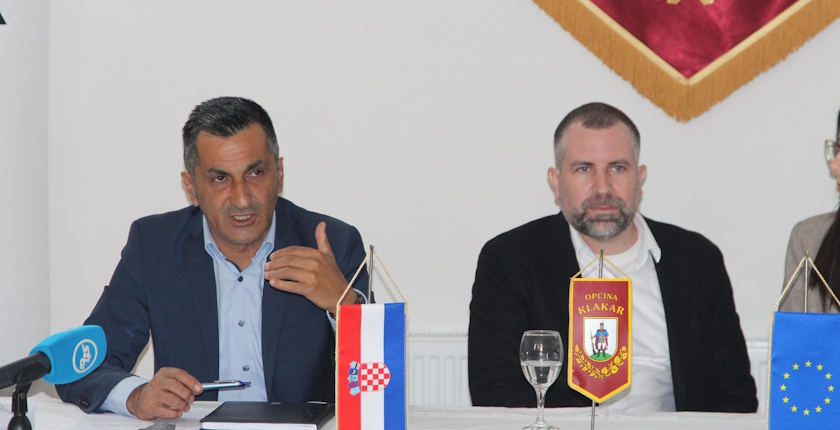
A recent meeting in Klakar in Slavonia brought together Janom Investments’ CEO Andrej Sršeň and CIO Radovan Šavolt, Ekonerg’s Boris Režek, and Klakar Mayor Tomislav Pendić to discuss the upcoming construction phase and long-term cooperation.

Andrej Sršeň, CEO of Janom Investments, said they are proud to be part of one of the largest PV projects in Croatia to date.

“We appreciate the strong support from the Municipality of Klakar throughout the permitting process and will do our utmost to deliver this solar power plant to the grid by Q2 2026,” Sršeň stated.

According to Tomislav Pendić, Mayor of Klakar, the project will contribute to Croatia’s decarbonization goals. “This solar power plant not only supports the country’s green transition but will also bring tangible benefits to our municipality through a long-term land lease, providing additional revenue to support public services,” he stressed.

Janom Investments is currently advancing the permitting for a portfolio of solar and wind projects totaling more than 200 MW

Janom Investments is currently advancing the permitting process for a portfolio of solar and wind projects totaling more than 200 MW in Croatia.

The company also plans to leverage its expertise in battery energy storage systems (BESS) to support grid modernization and resilience.

Of note, a month ago Janom Investments, a leading CEE investor in clean technologies and co-founder of GreenWay, reaffirmed its commitment to sustainable mobility by participating in another investment round for the company. This round was worth more than EUR 50 million.

by in News

Investors in BiH developing 3,800 MW of wind, 12,500 MW of solar

Wind farms with a capacity of 3,800 MW and solar power plants with a capacity of 12,500 MW are currently in various stages of development in Bosnia and Herzegovina, according to the indicative plan for the development of production  2026-2035, published by the Independent System Operator in Bosnia and Herzegovina.

The goal of the ten-year plan is to provide information on projects initiated for the construction of new production capacities to be connected to the transmission system, according to the transmission system operator (TSO), Independent System Operator in Bosnia and Herzegovina (NOSBiH).

The plan is supposed to prioritize covering domestic consumption and capacity needs with domestic resources.

NOSBiH said investors continued in 2024 to apply with their renewable energy projects. The interest in grid connections wasn’t affected by the significant reduction in electricity purchase prices, especially for the hours when solar power plants typically produce, it added in the plan

A lack of transmission capacities could become an obstacle to the export of electricity

According to the register of the applications for grid connections, which Elektroprenos BiH manages, there are about 3,800 MW of proposed wind farms and 12,500 MW of photovoltaic facilities in various stages of development, NOSBiH underlined.

Results of an adequacy assessment showed that increasing production makes it possible to increase exports. BiH’s TSO warned that in such a scenario, the currently planned transmission capacity expansion wouldn’t be sufficient.

Another 100 MW of solar is seen coming online in BiH by the end of 2025

With the current production development plans, the system could be left without sufficient balancing capacities. NOSBiH therefore called for developing balancing capacities in parallel.

The document shows that four solar power plants of 206 MW in total were added last year to the transmission network in BiH: FNE Zvizdan (28.5 MW), SE Bileća (55 MW), FNE Hodovo (92.47 MW), and FNE Deling invest 1 (29.75 MW), together with one wind farm, VE Ivovik, of 84 MW. In February of this year, the Ivan Sedlo wind farm (25 MW) was also put online.

By the end of 2025, the start of trial operation of another five PV plants is expected, the plan showed. They would have 100 MW altogether: FNE Hodovo F1-F4 (11.96 MW), FNE Brotnjo (9.98 MW), FNE Polog 1-8 (7.99 MW), FNE Plavo Sunce 1-2 (40 MW) and FNE Livno 1-6 (27.6 MW).

Batteries can bridge the period until the transmission grid capacity becomes adequate

The plan anticipates a similar tempo of grid connections for 2026, too.

In that case, along with the integration of renewables into the distribution network and similar power plants coming online in neighboring countries, a congestion can appear in the transmission network, together with complications in operating the country’s transmission system from a regulatory point of view, NOSBiH said.

Battery energy storage systems can solve both potential issues in the medium term, until investments get the transmission grid to an adequate level, it suggested.

BiH needs battery capability of 225 MW and 450 MWh in total capacity

The company recalled that a year ago it produced a study, together with the Deutsche Gesellschaft für Internationale Zusammenarbeit (GIZ), provisionally called Operational Models for Battery Energy Storage Systems in the Balancing Market of NOS BiH.

They estimated the need for additional balancing based on hour-by-hour production profiles for facilities of 1,500 MW in total photovoltaic capacity and 1,000 MW of wind. The authors said a combined 225 MW in battery operating power is required and an overall capacity of 450 MWh.

The study also explored revenue generation opportunities for BESS, particularly through participation in the ancillary services market.

by in News

Serbia receives first two grid applications for battery energy storage systems

Serbia’s transmission system operator Elektromreža Srbije received two grid connection applications for battery energy storage systems. They are the first energy storage projects in the country.

Investments in battery energy storage systems (BESS) is ramping up around the world and Serbia is now making its first steps. Annual installations have increased more than 12 times in just four years, projects for an overall 11.5 GWh were announced in only three European countries, and last year China and Germany increased their battery capacity by 130% and 50%, respectively.

The grid connection applications in Serbia were submitted by Green BESS KV, for a 100 MW project of the same name, and MKBDP Energy, for its 50 MW project Skladište električne energije Jagodina.

Applications were submitted by Green BESS KV and MKBDP Energy

Green BESS is a special purpose vehicle (SPV) of Radiant Partners, while MKBDP Energy is part of the MK Group. Of note, there are other energy storage projects in the pipeline, but none of them are as far ahead as them. Both parent companies are registered in Serbia.

MK Group is very active in the renewable energy sector in the country. It put its Krivača wind farm into operation last year.

Serbia’s TSO Elektromreža Srbije (EMS) confirmed to Balkan Green Energy News that it has received the first applications for signing the agreement on the preparation of the connection study for standalone storage.

MKBDP Energy applied for a 50 MW facility located close to Jagodina. The site for Green BESS KV of 100 MW facility is near Kraljevo, according to EMS. Both cities are in the central part of the country.

After signing such an agreement, the TSO starts work on the study, which lasts 120 days.

The start of construction is scheduled for the first half of 2026

According to Green BESS KV, it is an SPV established by consulting firm Radiant Partners, a developer of large-scale renewable energy projects. Radiant Partners is developing one of the largest solar power projects in Serbia – Noćaj, near Sremska Mitrovica, with a capacity of 180 MW, while new solar and wind projects are in the initial phase.

“Our vision is focused on sustainability, innovation, and energy independence. The 100 MW / 200 MWh battery storage facility represents a significant step in the modernization of Serbia’s energy system, contributing to environmental protection and bringing numerous economic benefits,” CEO of Radiant Partners Nikola Ćeha told Balkan Green Energy News.

Batteries are a good market opportunity

In the next phase, the construction of a storage facility after obtaining all the permits, Radina Partners plans to cooperate with Chinese partners. The project is located in Kraljevo, in the vicinity of the TS Kraljevo 3 transformer station. The start of works is scheduled for the first half of 2026.

Asked about motives for the pioneering step, Ćeha explains there are currently no battery storage facilities in Serbia and that interest in renewable energy projects is growing.

“We see a project for supporting existing and future renewable power plants as a market opportunity, given their variability in daily production,” he stated.

Battery storage increases flexibility in the market

He stressed the importance of large-scale BESS units in Serbia, saying they are crucial for balancing production with consumption, in a situation where renewable energy production is increasing. Batteries stabilize the power grid and enable the storage of excess energy and its use in times of higher consumption or lower production.

In his words, batteries increase flexibility in the market because of their quick response to changes in energy consumption and prices, which opens up opportunities for trade and cost optimization.

Such a project attracts investments and encourages the development of energy infrastructure, which contributes to market competitiveness and technological progress, Ćeha said.