by in News

Visual Fan to install BESS facility of 65 MWh for Renovatio Trading

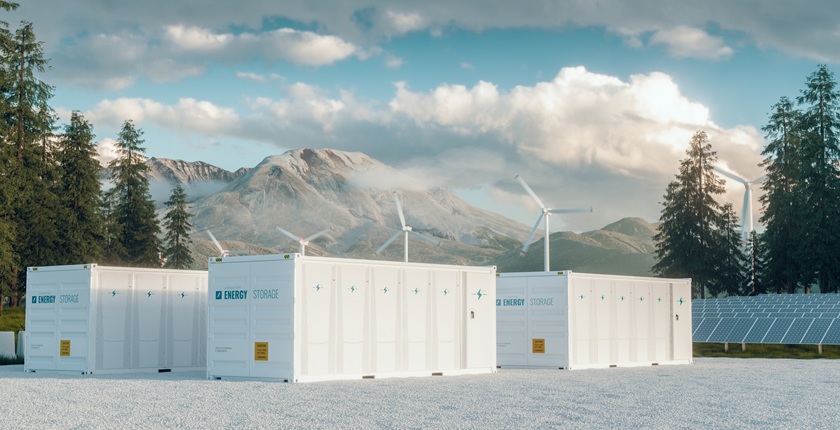
Visual Fan will install a 65 MWh energy storage for Renovatio Trading in Toplița in Romania’s Harghita county.

The batteries market in Romania is very active these days.

The battery energy storage system  (BESS) will be built by Allview Energy, Visual Fan’s division specialized in the development of large-scale photovoltaic parks, including storage capacities.

It is the first major contract for the implementation of a power storage system, Allview said.

The contract is valued at EUR 9.2 million. It is set to be implemented in association with partners Enersec Technology and TQM Services.

The implementation period for the contract is seven months

The project includes state-of-the-art technologies in terms of batteries and energy flow control, according to Allview.

The implementation period is seven months. The deal includes all stages of the project – engineering, procurement and execution, full integration into the energy system and the successful completion and testing.

The goal is to help balance the national grid and accelerate the integration of green energy into daily consumption, Allview added.

“The signing of this contract marks a defining moment in Visual Fan’s development journey, reflecting the company’s strategic maturity and the market’s growing confidence in our skills. Since the end of 2024 and the beginning of 2025, the company has entered a new stage of consolidation and expansion, by attracting major projects, which validate the management’s strategic vision, the team’s expertise and the ability to implement complex solutions on a large scale,” said Christina Munteanu, Economic Director of Visual Fan.

Peticilă: Thec ontract is a confirmation of the active role that Visual Fan has in Romania’s energy future

According to Visual Fan CEO Lucian Peticilă, the signing of the contract is a confirmation of the company’s strategic vision and the active role it has in Romania’s energy future.

Visual Fan is happy to build this path together with Renovatio Trading, guided by the same vision: a clean, balanced and sustainable energy future for Romania, he added.

Of note, a few days ago the National Energy Regulatory Authority of Romania (ANRE) approved a regulation eliminating double taxation of energy storage, to accelerate the deployment of solutions for storing electricity.
by in News

Simtel to install BESS for Güriş in Romania

Romanian engineering and technology company Simtel will install a battery energy storage system in Romania for Turkey-based Güriş.

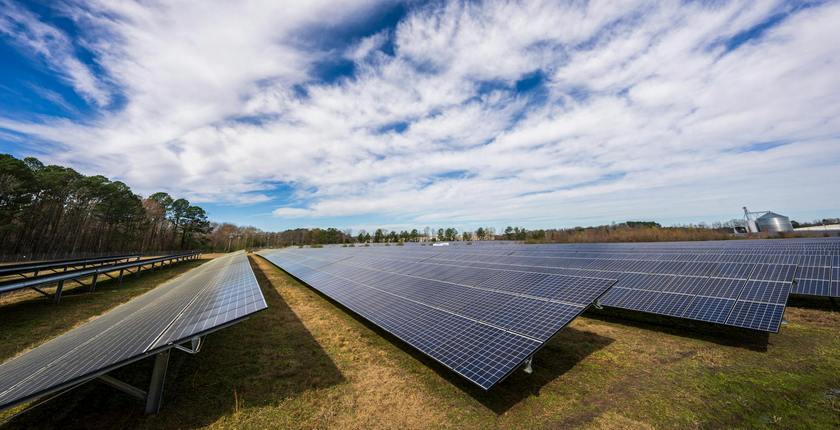
With a storage capacity of up to 196.4 MWh and an installed power of up to 98.6 MW, it would be one of the largest battery energy storage systems (BESS) in Romania.

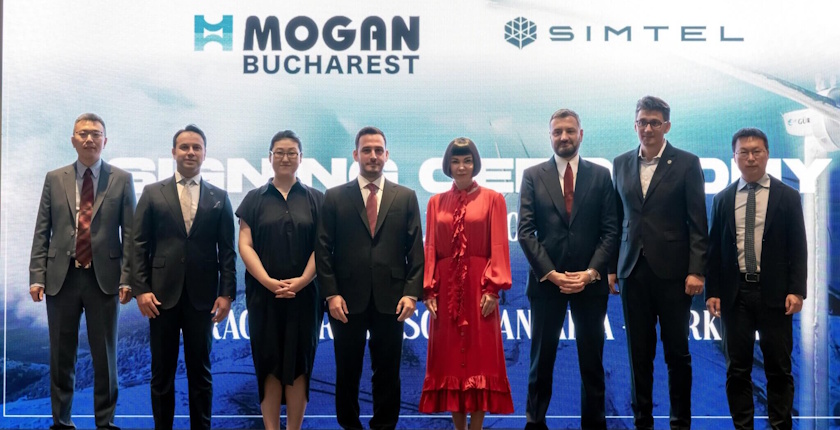
Simtel said it signed an engineering, procurement, and construction contract with Energy Capital Group, owned by Mogan Bucharest SRL, part of the Güriş Group from Turkey.

The contract is worth RON 168.9 million (EUR 33.3 million), and the deadline is nine months.

The contract includes the supply of a BESS, the design, construction, installation, commissioning, completion, and testing of the facility. The project will be implemented in the village of Iaz, Obreja commune, Caraș-Severin county.

Energy Capital Group obtained support via the National Recovery and Resilience Plan

Energy Capital Group received support via the National Recovery and Resilience Plan (NRRP) for its project. It is part of the pillar dedicated to the green transition. Romania approved a grant of over RON 50 million (EUR 9.86 million) for the implementation of the battery energy storage project.

With the investment, Romania is taking a significant step towards strengthening its energy infrastructure and increasing flexibility in consumption and production, according to Simtel COE Mihai Tudor. Storage systems are an essential pillar of the energy transition process and in the sustainable development of power grids, he added.

Director of Mogan Bucharest SRL Kaan Yamantürk said the company sees “a great future and opportunity” in Romania.

Güriş is active elsewhere in Southeastern Europe as well.

Simtel: The largest storage project has a capacity of 72 MWh

Simtel pointed out that the size of the facility is significant, considering that, according to the latest data published by Transelectrica, the current total battery energy storage capacity in Romania is 398.8 MWh.

Moreover, the largest storage project completed so far has a maximum capacity of 72 MWh, the firm added.

Of note, in October last year, Monsson said it was completing the second phase of a battery energy storage system within a hybrid power plant project in Constanța. The first phase was inaugurated in April and, with 24 MWh, it was the largest BESS unit in Romania at the time.

A subsidiary of Monsson has submitted a battery storage project of just over 2 GWh in capacity for an environmental permit in Romania. Simtel and Monsson have signed a strategic partnership on the development of solar and energy storage projects in Romania.

by in News

Project underway for 99 MW Bokšić solar plant with battery storage

The Croatian Ministry of Environmental Protection and Green Transition has initiated a procedure to determine the need for an environmental impact assessment for the planned 99 MW solar power project Bokšić, which includes a battery energy storage system.

The annual electricity production of the Bokšić solar power plant is estimated at just under 120 GWh. The facility, with a planned connection power of 89 MW, would be connected to the grid through a new 110/33 kV transformer station, and then to the existing 110 kV Našice-Slatina transmission line.

The annual electricity output is estimated at just under 120 GWh

The project also includes a battery energy storage system (BESS), according to the environmental impact assessment report prepared in February and updated in June. It would be designed for an operating power of 38 MW and a capacity of 70.8 MWh, with an expected lifespan of 20 years.

Solar power plant Bokšić will have a 70.8 MWh battery system

The assessment procedure is necessary because the developer, Zagreb-based Funicula, intends to build a stand-alone photovoltaic plant, according to the ministry. The project’s site is near Bokšić, in the Đurđenovac municipality in Osijek-Baranja County.

The solar power plant is planned to occupy ​​about 123.8 hectares of land, with photovoltaic panels covering about 46 hectares. The site will be enclosed by a protective masonry fence up to two meters high, raised at least 15 centimeters above the ground to allow small animals to pass underneath, according to the ministry.

Bokšić is among the largest solar projects in Croatia

Few solar projects in Croatia are for a larger capacity than Bokšić. State power utility Hrvatska elektroprivreda (HEP) is working on the Korlat endeavor, also of 99 MW. At an auction last year, two major solar power projects were awarded market premiums – Promina, with a planned installed capacity of around 189 MW, developed by Spain-based Acciona Energia, and Obrovac Sinjski, for 144 MW, to be built by Aurelis Solis.

by in News

SolarPower Europe: EU needs ten times more battery storage by 2030 to meet renewables targets

SolarPower Europe believes that the European Union needs ten times more battery storage by 2030 to support the growth of solar and other renewable energy capacities and maintain the pace of the energy transition. To promote battery growth across the EU, SolarPower Europe has launched an initiative called the Battery Storage Europe Platform.

“Battery storage is no longer optional – it is essential. Without urgent action, the EU risks stalling its energy transition,” stated Juhi Dion Sud, the newly appointed Head of the Battery Storage Europe Platform. She added that a tenfold increase in battery storage by 2030 is vital to sustain the rapid growth of solar and other renewables, and to ensure the EU’s energy security, resilience and competitiveness.

Dion Sud: The EU needs to boost BESS capacities from 50 GWh to at least 500 GWh

The EU currently has just over 50 GWh of battery energy storage systems (BESS), but to stay on track for the 2030 renewables targets, the level must increase to between 500 GWh and 780 GWh, explained Dion Sud.

Walburga Hemetsberger, CEO of SolarPower Europe, described solar and storage as “the perfect pair,” adding that battery storage must grow at the same pace as solar installations across Europe.

The platform’s founding partners include REIB, Statkraft and Sunotec

The Battery Storage Europe Platform was launched with support from founding strategic partners, including Renewable Energy Insurance Broker (REIB), Statkraft, and Sunotec. Over 50 representatives from leading battery storage companies joined the kick-off day in Brussels.

The platform will represent the interests of the sector at the EU level, facilitating engagement with policymakers and delivering constructive legislative trade and investment frameworks for battery storage manufacturing and deployment, according to a press release from SolarPower Europe.

Participation in the platform is open to members of SolarPower Europe, with strategic partnership opportunities available for organizations interested in taking a leading role in the work of the platform, it added.

by in News

Energy storage in focus: How custom insurance solutions are fueling Southeast Europe’s green transition

Battery energy storage is becoming increasingly central to the energy transition in Southeast Europe and beyond, thanks to its key role in enabling renewables integration while ensuring grid flexibility and resilience. However, as battery energy storage systems (BESS) become more advanced and technologically complex, the risks involved exceed those of traditional renewable energy projects, making tailor-made insurance vital to their bankability, safety, and profitability. We discuss the importance of energy storage for the region’s green transition, as well as the critical role of custom-made insurance solutions in the success of BESS projects, with Delyan Iliev, Managing Director of Renewable Energy Insurance Broker (REIB), a market leader in BESS insurance in Southeast Europe.

Why storage is becoming central to Europe’s energy strategy

As Europe accelerates its energy transition, solar is leading the charge. In 2024 alone, 21.9 GWh of new battery energy storage systems (BESS) were installed across the continent, marking a 15% year-on-year growth. With storage now considered essential for grid flexibility, market stability, and renewable integration, Southeast Europe is beginning to recognize its strategic value.

“Energy storage is not a side note anymore, it’s quickly becoming a pillar of the energy system,” says Delyan Iliev, Managing Director of Renewable Energy Insurance Broker (REIB). “We’re proud to help accelerate that shift. In the first half of 2025, we’ve already insured over 5 GWh of battery projects across Europe – including in Bulgaria, Germany, and the UK. That scale shows how far the market has come, and how much trust there is in high-quality insurance.”

In Serbia, solar deployment is gaining pace, and developers are preparing for large-scale projects. Regulatory frameworks are evolving to support hybrid models that combine generation with storage. BESS is no longer just a technical upgrade; it’s a strategic enabler for grid stability, revenue optimization, and investor confidence.

What makes BESS riskier than traditional energy projects?

As storage projects become more complex, so do the risks. Unlike conventional solar or wind installations, BESS introduces specific technical and operational challenges—from thermal runaway and fire risk to cyber threats, component failure, and yield degradation. These are real risks requiring serious attention from insurers and developers alike.

Poor system design, such as insufficient spacing between battery units and PV modules, can also trigger insurance exclusions or delay permitting. “In emerging markets like Serbia, where regulations are still catching up with technology, project design and compliance can make or break an investment,” says Iliev.

This is why traditional, off-the-shelf insurance is no longer adequate. Storage requires a more nuanced approach – one that aligns with each project’s structure, revenue model, and operational realities.

REIB’s approach: Insurance that mirrors project reality

Recognizing this need, Renewable Energy Insurance Broker has created tailor-made insurance solutions designed specifically for energy storage systems. A cornerstone of its model is Business Interruption (BI) insurance – not a standard add-on, but a fully customized product. Rather than applying generic compensation formulas, REIB designs the BI structure around how each project actually earns revenue, whether through tolling agreements, profit-share arrangements, or hybrid mechanisms.

This precision ensures fair and effective compensation, not only when a system completely fails, but also when partial degradation or performance issues occur. Furthermore, the BI coverage accounts for income loss, not just profit, delivering significantly higher payouts in case of disruption. Indemnity periods can be extended up to 18 months, supporting the financial stability of a project well beyond initial damage control.

Why early-stage insurance is so critical for BESS

One of the most critical features in REIB’s offering is early-stage protection. The company insures storage projects from the installation phase, well before grid connection. This phase, often excluded by traditional policies, is one of the riskiest stages in a project’s lifecycle. By covering this early gap, REIB offers peace of mind to both developers and investors.

In addition, REIB’s policies include protection against underperformance (reduced yield), cyber risk coverage for systems managed via EMS or SCADA, and third-party liability, including sudden environmental pollution, which is increasingly relevant for permitting and compliance in European markets.

Applicable to co-located and stand-alone storage

While co-located solar + storage projects dominate the market, stand-alone BESS is gaining traction in Serbia and other Southeast European countries. These projects play a crucial role in grid balancing, frequency regulation, and capacity markets, especially in areas where renewable generation is unevenly distributed.

REIB’s insurance framework applies to both co-located and stand-alone BESS systems, adjusting coverage parameters to meet the distinct operational and revenue profiles of each. Whether tied to a solar plant or operating independently, these assets face risks that must be managed holistically.

What gives REIB its unique market perspective?

REIB is more than a broker, it’s also an investor. The company is directly involved in PV+BESS projects like the 4.1 MWp solar plant with 4MW/8 MWh BESS in Nikolichevtsi and the 5 MWp + 6MW/12 MWh BESS in Bagrentsi. “We don’t just assess risk from a distance,” says Iliev. “We experience it firsthand, and that’s what helps us design smarter coverage.”

How insurance can drive the BESS market forward

For REIB, insurance is not just a regulatory requirement; it’s a strategic lever. “Well-structured insurance improves bankability, secures investor confidence, and unlocks access to financing,” says Iliev. “In a sector like BESS, that can be the difference between stalled progress and market leadership.”

As Serbia and its neighbors move toward a new energy reality, battery systems will be central to the equation. Making them bankable, and insurable is where REIB steps in, helping to turn risk into resilience and innovation into long-term value.

For more information about tailor-made insurance solutions for BESS projects, contact the REIB team to explore how they can support your next project.

by in News

Coal power plant Maritsa East 3 plans to build solar plant, 200 MW battery system

Coal-fired power plant ContourGlobal Maritsa East 3, which operates only sporadically to ensure the stability of supply for Bulgaria’s power system, plans to repurpose the grid infrastructure of its units 1 and 2 for solar and battery storage capacities. Units 3 and 4 will remain on standby to generate electricity during peak demand periods in the summer and winter months, but the plant will need state support to cover maintenance and workforce costs.

Maritsa East 3 (Maritsa iztok 3), majority owned by the US-based ContourGlobal, plans to use the existing grid infrastructure, including transformers and switchgear, to speed up the green energy project within the complex, according to Vassil Shtonov, Executive Director of ContourGlobal Bulgaria.

The central element is a 200 MW standalone battery energy storage system (BESS), the largest of its kind in Bulgaria, which would improve the flexibility and stability of the national power system, Shtonov explained in an interview with Capital.bg.

The project involves a 200 MW standalone battery system and a solar power plant

The planned battery system at Maritsa East 3 was among 82 projects selected to receive a total of EUR 587 million in subsidies from Bulgaria’s Ministry of Energy in April this year.

“In parallel, we are considering the development of an additional hybrid solar park with a battery at the same site,” he said. This will allow for faster deployment of new clean energy capacity, while preserving all options for future use of the coal-fired plant and its original infrastructure, Shtonov added.

ContourGlobal plans to build 400MW to 500 MW of renewable energy capacity combined with batteries

ContourGlobal plans to invest hundreds of millions of euros to develop 400 MW to 500 MW of renewable energy capacity combined with storage systems, he said, adding that nearly half of this target is under construction or final approval. The company’s goal is to phase out coal by 2027 and achieve carbon neutrality by 2040, he stressed, recalling that Bulgaria’s targeted coal phaseout date is 2038.

Keeping coal plants on standby requires state support

Bulgaria’s state-owned National Electricity Co. (NEK) holds a minority stake in Maritsa East 3. After the plant’s 15-year power purchase contract with NEK expired in February 2024, it has only been able to operate on the free market for a few months a year. This year, units 3 and 4 were online from January to the end of March to maintain energy security.

Shtonov: Key coal-fired power plants should get a fixed amount from the state

However, to be on standby for system security, the plant needs to keep workers on the payroll even when it is not operating. For this reason, strategically important coal-fired power plants should receive a fixed amount from the state to cover ongoing personnel and maintenance costs, and then be switched on when necessary to protect consumers from sharp increases in electricity prices, as happened last year in July and November, according to Shtonov.

by in News

Dimitar Dimitrov: Battery developers should seek insurance in early project stages

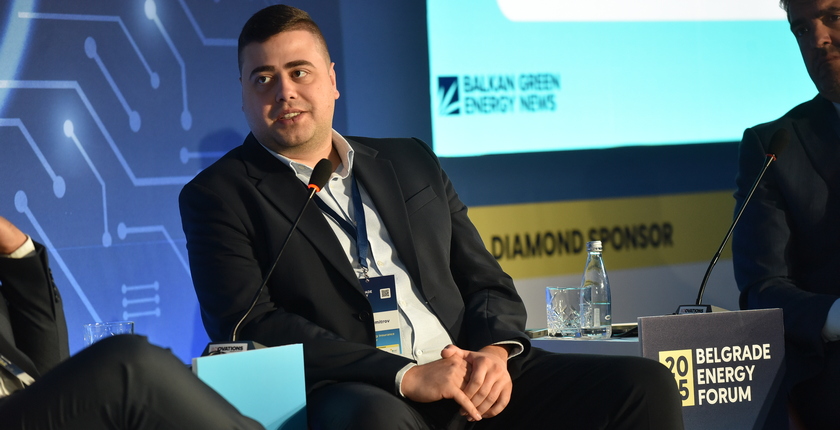
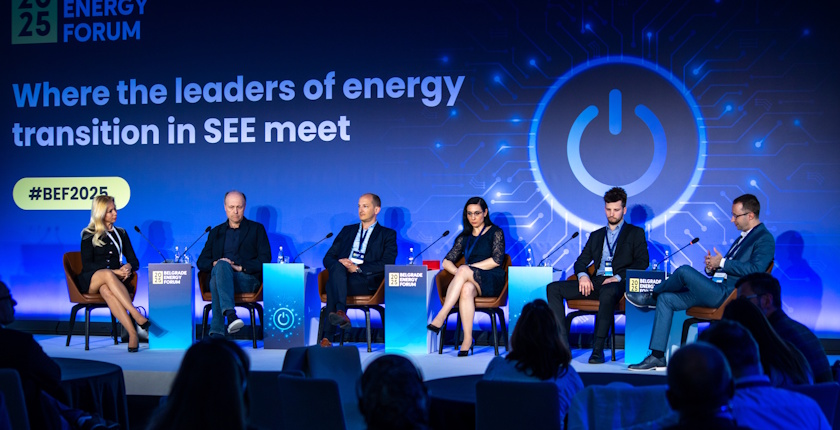
Investors and developers of battery energy storage systems (BESS) should engage with insurers or specialized brokers as early as the development phase to effectively manage risks and ensure bankability, advised Dimitar Dimitrov, Business Development Manager at Renewable Energy Insurance Broker (REIB), during Belgrade Energy Forum 2025.

With over 4 GWh of energy storage systems across four continents, REIB offers bespoke insurance solutions tailored to the needs of utility-scale developments. Dimitrov emphasized that REIB’s portfolio includes dedicated products for BESS, covering business interruption, cyber threats, and technical malfunctions.

Speaking at the storage panel, Dimitrov underscored the importance of insuring against business interruption, especially due to outages that may compromise grid connections. He also highlighted the value of cargo insurance and robust fire protection strategies, noting these are key concerns from the insurer’s standpoint.

[wpcc-iframe title=”Dimitar Dimitrov, Business Development Manager, Renewable Energy Insurance Broker, at BEF 2025″ width=”500″ height=”281″ src=”https://www.youtube.com/embed/obGw8_zdj4U?feature=oembed” frameborder=”0″ allow=”accelerometer; autoplay; clipboard-write; encrypted-media; gyroscope; picture-in-picture; web-share” referrerpolicy=”strict-origin-when-cross-origin” allowfullscreen=””]

“As both a broker and an investor in renewable energy projects, we have first-hand knowledge of what developers go through,” said Dimitrov. “This dual perspective enables us to anticipate risk points during different phases and recommend solutions that align with actual project needs.”

REIB has developed specialized insurance products for BESS projects

REIB offers specialized insurance coverage for renewable energy and BESS projects, including tailor-made solutions for Business Interruption, Reduced Yield Coverage, Cyber Risk, and Third-Party Liability.

The company has more than 14 years of experience in renewable energy and currently insures over 60% of the PV market and more than 80% of BESS projects (installed and under construction) in Bulgaria, and cover more than 30% of the solar sector in Romania.

As an investor, REIB is familiar with all the requirements developers and contractors should meet

Having gone through the procedures of installing solar power plans and battery storage systems as an investor, REIB is familiar with all the requirements that developers, power producers, and contractors should meet. “In this way, we definitely can give the right recommendations to companies,” Dimitrov asserted.

REIB partners exclusively with A+ rated insurance companies, recognized as market leaders in both the US and Europe. This strategic approach ensures that all coverage options meet the highest standards of reliability and financial strength.

“The company also has strong exposure in the European Union market, which allows us to secure A-rated insurance policies that are fully aligned with bank requirements and enhance project bankability,” Dimitrov emphasized.

by in News

Đukanović: EPCG is implementing three key strategic policies

State-owned power company Elektroprivreda Crne Gore is currently implementing three key strategic policies: producing energy at the point of consumption, utilizing existing hydropower infrastructure to connect solar power plants, and developing battery energy storage systems, the President of EPCG’s Board of Directors, Milutin Đukanović, said at the EPCG NET conference.

EPCG NET is organized by Elektroprivreda Crne Gore (EPCG) and its partners. At the event’s opening in Budva, Milutin Đukanović announced the start of trial operations at the Gvozd wind farm and the launch of tendering to install battery energy storage systems (BESS).

“Our ‘produce where you consume’ policy is, in our view, the winner of the energy transition. At the same time, hydropower infrastructure provides technical and meteorological compatibility for connecting solar power plants. However, these activities will have their full impact only with the development of BESS,” Đukanović noted.

The 10,000+ solar project is expected to begin in mid-2026

He also said that numerous investments are underway. By the end of the year, the 55 MW Gvozd wind farm, an EUR 82 million investment backed by KfW, will enter trial operation. Early next year, the company expects to start construction on the second phase of the project – Gvozd 2, with a capacity of 21–22 MW.

A few days ago, tendering was completed for the installation of the eighth unit at the Perućica hydropower plant, with a capacity of 58 MW. The new unit is expected to be online in 2027.

Đukanović recalled that the 3000+ project, featuring 35 MW of solar capacity across 3,500 facilities, has been completed, while the 5000+ project is halfway through, with 40 MW and over 4,000 consumers involved. The 10,000+ project is expected to start in mid-2026, he added.

Preparations are ongoing for the construction of several solar power plants: Krupac (50 MW), Štedim (150 MW), four plants at Kapino Polje (totaling 50 MW), as well as facilities in the Željezara Nikšić industrial complex, where 10 MW of the planned 30 MW has already been installed.

The first tendering for procuring BESS will be launched soon, covering two systems with a capacity of 30 MW each (120 MWh). By the end of 2027, EPCG plans five such systems, with a combined capacity of 600 MWh.

The energy transition is a great opportunity for progress

Đukanović also announced an upcoming call for bids for the construction of a tunnel that will connect the Krupac and Slano reservoirs, valued at EUR 12 million, as part of a broader plan to enhance the utilization of the water resources of Nikšićko polje, Montenegro’s largest karst field. Additionally, plans are underway to develop Lake Liverovići and underground waters in the Nikšićko polje, with total investments potentially exceeding EUR 1 billion and a projected capacity reaching 700 MW, he added.

“The energy transition is a great opportunity for progress, but also a serious threat if risks are overlooked. Time is of the essence – we must act immediately,” Đukanović urged, calling on forum participants to focus their discussions on concrete solutions and offer ideas for improving existing policies.

The two-day forum has brought together numerous experts, investors, and representatives of institutions from the energy sector across the region and Europe.

by in News

Global battery storage capacity expands by record 200 GWh in 2024

Global installed energy storage is on a steep rise and is expected to increase ninefold by 2040, to over 4 TW, driven by battery energy storage systems (BESS), which saw record growth in 2024, according to a report by Rystad Energy. In recent years, the cost of storing electricity has dropped significantly thanks to the declining cost of battery projects, coupled with technological advancements.

Last year, a record 200 GWh of new BESS projects came online globally, bringing the world’s total operational battery storage capacity to 375 GWh. China maintained its leading position, with over 100 GWh of new capacity, followed by the United States, which added 35 GWh. Germany, Australia, and the United Kingdom were among the top five.

Energy storage will play a key role in integrating renewables as power demand grows

As power demand is expected to continue its strong growth in 2025 and after, the growth rate of low-carbon energy sources is now close to covering the entire demand increase. Energy storage will play a key role in integrating the increasing share of intermittent renewable energy and providing the needed flexibility for the secure operation of the power systems, according to Rystad’s report.

The increasing share of intermittent renewables, combined with low flexibility in supply and load, creates price volatility in the liberalized power markets, making energy trading (arbitrage) a good source of revenue for BESS, according to the report.

Solar energy is projected to grow more than all other energy sources combined between 2025 and 2050, expanding tenfold over the period, Rystad noted.

The cost of BESS projects has fallen below USD 300 per kWh in recent years

The global average cost of BESS projects fell below USD 300 per kWh in 2024. If it were to decline to USD 250 per kWh, the cost of storing electricity could be as low as USD 60 per MWh, allowing BESS operators to retain a larger portion of the price spread as profit, Rystad said.

The lower costs of electricity storage are also driven by technological advancements, as battery manufacturers currently guarantee over 10,000 charge-discharge cycles and more than 80% battery health during that lifespan.

by in News

BEF 2025: Digitalization, open markets, time are major preconditions for flexibility services mainstreaming

Digitalization and massive use of data are crucial for providing flexibility services that bring benefits for transmission system operators and renewable energy producers. Aggregators and software firms have developed the technological solutions. However, the process, together with the introduction of flexibility platforms, requires a long time. The reforms also have to be accompanied by market liberalization and end consumers acting as active buyers, according to the participants of Belgrade Energy Forum 2025.

The panel on flexibility services called Market Flexibility: The Backbone of a Resilient Energy System was one of eight that were held at Belgrade Energy Forum 2025 (BEF 2025).

The conference, organized by Balkan Green Energy News, welcomed four hundred participants from more than 30 countries from the region, Europe, and beyond.

“Flexibility has been promoted in Europe as a buzzword, sometimes reflected as demand-side flexibility, but it represents so much more. It includes supply-side flexible assets like hydro, biomass, storage, as well as grid-side flexibility,” according to panel moderator Elena Boškov Kovacs, co-founder and CEO of Blueprint Energy Solutions, and a leading voice on market flexibility in Europe.

Serbia will introduce a flexibility services market

Elena Boškov Kovač and Roman Bernard (photo: Balkan Green Energy News)

Serbia’s transmission system operator (TSO) Elektromreža Srbije (EMS) is preparing to liberalize the ancillary services market. The country adopted the Law on Energy in November and implemented a large proportion of the European Union’s Electricity Integration Package (EIP) while the remaining parts will be transposed through bylaws.

“The balancing capacity market will be liberalized from next year. We will have new participants – active buyers and independent aggregators,” said Marko Zarić, Head of the Market Operations sector of EMS.

He stressed that the TSO is trying to ensure that no market participant is impaired by engaging flexibility resources or demand side response or a balancing service.

“EMS has finished drafting the new market code, which envisages dual balancing responsibility. We will launch a public debate on the act. The TSO estimates that it is the best solution to open the market of flexibility services,” he noted.

Bernard: Technology is on our side

NGEN CEO Roman Bernard expressed the opinion that the region is moving in the right direction, and suggested to regulators to look around and implement best practices. If the participants in the market are motivated, things will go forward, he added.

Back in 2019-2020, when NGEN started its operations in Slovenia, flexibility services were a pioneering job. The Slovenian energy company, the technology sponsor of the BEF 2025 conference, specializes in premium battery energy storage systems (BESS) and smart energy solutions.

According to Bernard, the balancing services market in the EU is well developed thanks to balancing platforms MARI (Manually Activated Reserves Initiative) and PICASSO (Platform for the International Coordination of Automated Frequency Restoration and Stable System Operation).

“We have 150 employees, and we can do everything. Technology is on our side and the sky’s the limit,” he stressed.

For example, NGEN solutions can provide monetization of battery energy storage systems (BESS), and the only thing that is needed is investors in such facilities.

Digitalization is the only way forward

Roman Bernard, Luka Renko and Magdolna Tokai (photo: Balkan Green Energy News)

The representatives of aggregators KOER and Alteo and software company CyberGrid all agreed that digitalization and the use of data are crucial for the energy transition.

Compared to NGEN and its use of BESS, Croatia-based KOER, a pioneer in virtual power plants in the region, is utilizing existing assets, like diesel generators, or employing the flexibility intrinsic to most manufacturing companies; for example, cement factories and wood manufacturers.

Existing assets work well, not just batteries, KOER COO Luka Renko stressed.

The only problem, in his words, is digitalization. The majority of the said firms aren’t ready to connect to the platform to be automatically switched on and off. The markets are getting faster and faster, so digitalization is the only way forward, Renko claimed.

Alteo, a leading Hungarian aggregator, also believes in lots and lots of data, which back up its scheduling and contribute to the security of supply.

Tokai: Alteo is looking for partners in the region

“Our superpower is providing scheduling services with the support of AI, including lots of data,” said Magdolna Tokai, Deputy CEO for International Relations and Corporate Services of Alteo.

Hungary has experienced a photovoltaic boom in the past four or five years, with the installation of almost 8,000 MW. It’s good for greening power production, but not from the perspective of a TSO, and that is where aggregators come into the picture, she added.

Alteo is combining conventional resources like gas-fired power plants with renewables. It currently has 140 MW in renewable resources, it manages 2,000 MW of third-party solar, and operates two virtual power plants. The company is providing the service to small photovoltaic facilities and the TSO.

Alteo is integrating solar energy in a product that is close to baseload, and placing it on the market. It translates to lower balancing costs for solar and a more stable product for the TSO, she explained.

Serbia is facing a challenge from the upcoming 1.2 GW of solar power

Alteo has just started implementing its new strategy for regional growth by exporting know-how on balancing services and providing flexibility to market players.

According to Nikolaj Candellari, Project Manager and Market Intelligence of CyberGrid, real-time data gives a TSO and other market participants the possibility to understand where they are.

He recalled that, over the years, the market went from 15-minute time stamps, down to one minute, and that now it is only two seconds. The improvement helps dealing with challenges, and CyberGrid knows a lot about such issues.

“For Serbia, the challenge comes with 1.2 GW of solar, which will be installed next year. So if you don’t see it as a challenge, ask yourself who needs 1.2 GW of energy at noon on Sunday,” Nikolaj said.

Over its 15 years of existence, CyberGrid developed good examples of how to exchange data with assets and TSOs.

“Assets are always the same, no matter the country, but to have this data exchange with TSOs, or even market platforms, that is something I think we need to do in the future in Southeastern Europe,” he stressed.

How to get to the future: properly liberalize markets

Luka Renko, Magdolna Tokai and Nikolaj Candellari (photo: Balkan Green Energy News)

Elena Boškov Kovač (Blueprint Energy Solutions) asked the panel participants what the solution is for addressing different types of flexibility assets including prosumers.

“How do we avoid getting stuck in the easy-to-commercialize part of the aggregation, and postpone the true demand response, which is needed to avoid the issues with negative pricing and electricity market swings?” she asked.

There is no dilemma for Nikolaj Candellari (CyberGrid): “I think we can connect everything, including households.”

It is something futuristic, he said. “We have to try to go as low as possible and connect everybody because, in the end, it’s not different if you have a 1 MW battery or 100 smaller residential ones” of 1 MW combined, Candellari asserted.

His company is currently implementing a project to integrate 150 batteries of 2 MW overall and put them on the market.

The batteries can drive the prices for end users down by 25% within five years

Candellari and Roman Bernard (NGEN) alike highlighted the factor of market motivation.

Bernard said motivation is created by the market. The imbalance price can go up to EUR 15,000 per MWh, and it is the signal and the motivation to fix everything, in his opinion.

He is convinced that batteries can lower the prices for end users by 25% within five years if dynamic prices are applied.

According to Nikolaj Candellari, participants will come to the market, as long as it’s not too regulated. As an example of a non-functional market, he mentioned Bulgaria, where the capacity price for downward regulation is zero.

“So, why would anybody join the market, if the capacity price is zero? Get the market running and you will get participants and capacity needed to balance it,” he said.

Tokai: We need a proper energy mix

Magdolna Tokai (Alteo) has a slightly different view of the markets. She recalled that episodes of negative prices are happening in Hungary, while that last August and September very high prices were recorded on HUPX, up to EUR 1,000 per MWh, and above EUR 500 per MWh in Croatia and Serbia.

“We have to be prepared for that, which is data, data, data, and the cooperation of all the market players, providing the proper energy mix, and the proper product for the TSO,” she pointed out.

Marko Zarić (EMS) stressed time as a vital ingredient for developing markets. A transition from the regulated market to the truly open market envisages multiple steps that take time, he said.

Flexibility platforms need time for implementation

Nikolaj Candellari and Marko Zarić (photo: Balkan Green Energy News)

Another big change are the balancing platforms developed by aggregators. Traditionally, TSOs were buying the same kind of standardized product, for example, SCADA, EMS, and other market applications, with more or less the same kind of functionalities.

Elena Boškov Kovač (Blueprint Energy Solutions) brought up the question of a more standardized approach. “Before we start talking about interoperability and connecting with everything else, would it be good to at least have platforms with similar kinds of functionalities and services provided?” she asked.

According to Luka Renko (KOER), every platform is structured in line with the needs of the operator. The communication platforms are more or less standardized, but it depends on what one needs in the background and what kind of assets they drive.

Piloting a flexibility platform can take years

The two aggregators, KOER and Alteo, developed their platforms because they couldn’t find a ready-made solution on the market.

A platform must have the ability to communicate with any other solution and to integrate new types of power plants and customers, Magdolna Tokai (Alteo) added.

Elena Boškov Kovač (Blueprint Energy Solutions) recalled that her company has implemented flexibility platforms since 2019, at the dawn of the opening of the flexibility market in Europe, and added that pilot projects for them take a long time.

“They require an immense amount of data. There’s a multitude of different stakeholders that need to support this, unlock the data, provide data resources. Piloting is incredibly important, and it can take years,” she pointed out.

Luka Renko (KOER) added that it took his company three to four years to start working as an aggregator in Croatia.

The future is bright, but we need to work on it

The panelists with Branislava Jovičić, Founder and Editor of Balkan Green Energy News (photo: Balkan Green Energy News)

Summarized, here are the messages of the session’s participants:

Bernard (NGEN): The end consumer will start acting as an active buyer.

Zarić (EMS): We see changes in the future.

Candellari (CyberGrid): Open the markets.

Tokai (Alteo): Give a chance to all market participants and types of production.

Renko (KOER): Digitalization will help.

Elena Boškov Kovač (Blueprint Energy Solutions) praised the companies that had their representatives at the panel for starting to develop solutions ahead of the market reform.

“It’s also a good message to the system of sometimes sleepy energy companies waiting for their proprietary vendors to offer them solutions,” Boškov Kovač stated.