by in News

EPCG Expands Generation and Storage Portfolio with 639 MW of New Projects

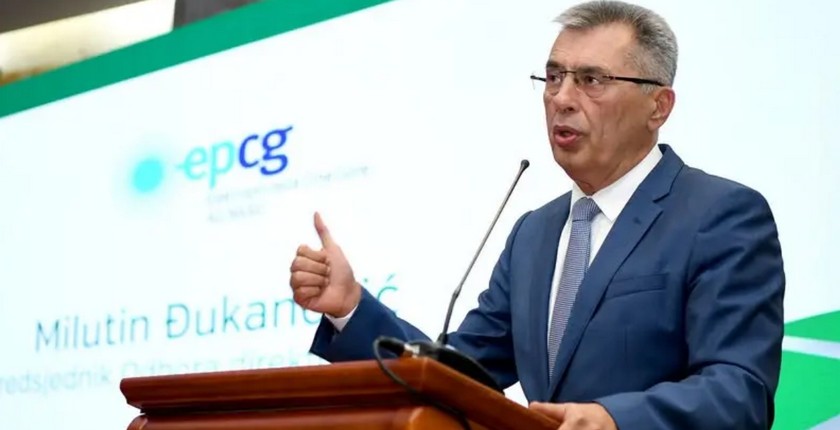
Montenegro’s state-owned utility Elektroprivreda Crne Gore (EPCG) is advancing a broad portfolio of solar, wind, battery storage, and hydropower projects with a combined capacity of 639 MW, and an expected annual electricity output of more than 1 TWh, according to Milutin Đukanović, President of EPCG’s Board of Directors.

In an opinion piece, Đukanović said the company has already completed part of a major investment cycle, including rooftop solar projects, the Gvozd 1 wind farm, the ecological reconstruction of the Pljevlja thermal power plant, and part of the modernization works at the Piva and Perućica hydropower plants. He added that new generation capacities, battery storage systems, hydropower upgrades, rooftop solar, wind projects, and strategic partnerships are EPCG’s response to the operational and market challenges it faced in 2025.

EPCG’s direct project pipeline amounts to around 639 MW/MWp, with estimated investments of approximately EUR 646.5 million and an expected annual output of about 1,024 GWh. Đukanović noted that the investment framework also includes reconstruction and upgrade projects that cannot always be expressed in megawatts.

When strategic and potential private partners are included, the company’s total portfolio rises above 4,636 MW/MWp, with a potential annual electricity generation of more than 8,176 GWh. Đukanović said EPCG is positioning itself for a larger role in Montenegro’s energy transition and in the broader regional power market.

The portfolio includes EPCG-owned solar power plants with a combined capacity of 221.1 MW and projected annual production of 299 GWh, rooftop solar systems for prosumers totaling 209.1 MW and 245 GWh in annual generation, the Gvozd 1 and Gvozd 2 wind farms with a combined capacity of 75.6 MW and expected output of 227 GWh, hydropower projects totaling 71.7 MW and 135 GWh annually, and battery energy storage facilities with an operating power of 60 MW.

A battery energy storage system is also planned at EPCG’s steel plant Željezara Nikšić. The project is estimated at around EUR 48 million and is designed as a 60 MW / 240 MWh system, with an expected annual electricity output of about 118.3 GWh, Đukanović said.

Among the completed investments, EPCG has already added 143.66 MW of new generation capacity, corresponding to around 268 GWh of annual electricity production. The value of these completed projects stands at approximately EUR 258.87 million.

These include rooftop solar systems installed under the Solari 3000+ and Solari 500+ programs, with a total peak capacity of 34.34 MW and expected annual generation of 40.18 GWh, as well as the completed portion of the Solari 5000+ project, which has a total peak capacity of 54.72 MW and expected annual output of 64.02 GWh. A further 20 MW of rooftop solar remains to be installed under the same program.

The 54.6 MW Gvozd 1 wind farm has also been completed, with an investment of EUR 82 million and projected annual output of 163.8 GWh. Together with the second phase, Gvozd 2, the project will raise total wind capacity by about 75.6 MW.

Additional completed investments include the ecological reconstruction of the Pljevlja thermal power plant, valued at EUR 75 million, along with the second phase of reconstruction and modernization works at the Piva hydropower plant, worth EUR 10.83 million, and the second phase at the Perućica hydropower plant, worth EUR 33 million.

Đukanović also noted that the Pljevlja coal mine carried out the diversion of the Ćehotina River during the power plant reconstruction, in a project worth EUR 20 million. The intervention was necessary to secure continued coal mining operations, as available reserves were close to exhaustion.

He said the main reasons for EPCG’s EUR 92.1 million loss in 2025 were the eight-month outage at the Pljevlja thermal power plant due to ecological reconstruction, as well as unfavorable hydrological conditions.

According to Đukanović, once production at Pljevlja resumed, EPCG’s energy balance returned to positive territory. The company then posted a profit of EUR 36.47 million in the first quarter of this year.

by in News

Renalfa Advances Oslomej Solar Project with 50 MW Battery Storage Installation

Austria-based developer and independent power producer Renalfa IPP has commenced the installation of a battery energy storage system (BESS) at its solar power plant in Oslomej, North Macedonia. The system will have an operating power of 50 MW and a storage capacity of 200 MWh, marking a significant step in enhancing grid flexibility and renewable integration.

The co-located BESS is being deployed alongside the 65.8 MW Oslomej solar power plant, which is situated on the site of a former coal mine. The project reflects ongoing efforts to repurpose legacy fossil fuel infrastructure into clean energy assets. The solar facility was developed through a public-private partnership with state-owned utility Elektrani na Severna Makedonija (ESM).

Financing for the solar plant was provided by the Green for Growth Fund, which has also committed €24 million to support the deployment of the battery storage system. The combined investment forms part of a broader initiative to transition North Macedonia’s coal-based energy complex toward sustainable generation.

In 2025, Renalfa secured a €315 million loan facility from a consortium led by the European Bank for Reconstruction and Development. The financing underpins the company’s €1.2 billion regional investment program, which targets the development of approximately 1.6 GW of renewable generation capacity and 3.3 GWh of co-located battery storage across Bulgaria, Hungary, Romania, and North Macedonia.

These assets are expected to produce around 2.3 TWh of green electricity annually—sufficient to meet the energy needs of approximately 920,000 households—while supporting grid stability through integrated storage solutions.

Beyond North Macedonia, Renalfa is also advancing a major hybrid renewable project in Hungary. The company is developing a 450 MW solar power plant in Szihalom, complemented by a BESS with an operating power of 250 MW and a capacity of 1 GWh. The battery system is being supplied by HiTHIUM.

According to Renalfa, the Szihalom project represents the largest hybrid renewable energy development undertaken in Hungary to date and ranks among the most significant such projects in Europe.

by in News

PPC and Metlen Forge 1.5 GW Regional Battery Storage Alliance

In a major move to solidify their dominance in the Southeast European energy transition, Greece-based PPC Group and Metlen Energy and Metals (formerly Mytilineos) have entered into a strategic joint venture. The agreement aims to develop, construct, and operate a massive portfolio of Battery Energy Storage Systems (BESS) totaling 1.5 GW in power capacity and 3 GWh in energy storage across Romania, Bulgaria, and Italy.

Fast-Tracking Storage Infrastructure

The partnership is designed for rapid deployment, with both companies targeting the completion of 1 GW of capacity within just 12 months. This aggressive timeline underscores the urgency of integrating flexible assets into regional grids to manage the influx of intermittent renewables.

The technical specifications of the portfolio focus on high-efficiency, utility-scale technology:

  • Total Capacity: 1.5 GW / 3 GWh (representing two-hour duration systems).

  • Technology: Liquid-cooled Lithium-Iron-Phosphate (LFP) batteries.

  • Asset Management: The venture will be equally owned (50/50), leveraging PPC’s regional market presence and Metlen’s specialized EPC (Engineering, Procurement, and Construction) expertise.

Synergy Beyond Solar

This deal follows a landmark 2024 agreement between the two entities, which saw them collaborate on a 2 GW solar pipeline across Italy, Romania, Bulgaria, and Croatia. While that previous arrangement focused on an “at-completion” acquisition model by PPC, this new BESS venture creates a deeper operational partnership.

The storage facilities are intended to perform two critical functions:

  1. Renewable Support: Balancing the output of adjacent photovoltaic and wind farms.

  2. Grid Stability: Providing essential ancillary services to national electricity systems to prevent frequency fluctuations.

Strategic Implications for Southeast Europe

For the government-controlled PPC Group, this alliance secures a significant portion of its three-year energy storage targets. For Metlen, the deal represents a pivotal milestone in its broader European strategy, positioning the firm as a leading player in the continent’s storage infrastructure sector.

“This agreement creates value for both parties and further expands our group’s already significant presence in Southeast Europe,” noted Konstantinos Mavros, PPC Group’s Deputy CEO for Renewables.

As the Balkan and Mediterranean markets continue to decarbonize, the rapid commissioning of these 3 GWh of storage capacity is expected to be a cornerstone for regional energy security and market liquidity.

by in News

Slovenia’s GEN-I Group Goes Global with Launch of North American Trading Hub

Slovenia’s GEN-I Group Goes Global with Launch of North American Trading Hub

Slovenian energy leader GEN-I has officially expanded its footprint across the Atlantic, announcing the establishment of its first U.S.-based subsidiary: GEN-I Trading North America LLC.

Headquartered in Houston, Texas—a premier global energy hub—the move marks a transformative milestone for the group, elevating it from a regional European player to a global energy trader. With this expansion, GEN-I now maintains active operations in 27 countries across multiple continents.

Strategic Foundation and Market Entry

The launch follows a rigorous preparation period in 2025, during which the firm finalized its trading, regulatory, and human resources infrastructure. According to Igor Koprivnikar, Member of the Management Board, the Houston office is staffed by a specialized team that blends international trading experience with local market expertise.

GEN-I aims to leverage its proprietary digital solutions and advanced trading models to capture growth in the high-liquidity U.S. market. The company views the American energy landscape as a prime environment for value creation, particularly through its focus on innovation and data-driven trading strategies.

A Vision for “Small Country” Global Leadership

For Maks Helbl, President of the Management Board, the expansion is a validation of the company’s technical maturity. He characterized the move as a strategic effort to prove that firms originating from smaller nations can significantly influence the global energy future.

“The expansion into the USA is a milestone in GEN-I’s evolution into a global energy trader operating across multiple continents. It is a significant recognition of our expertise, reliability, and innovation.” — Maks Helbl

Momentum in Energy Storage

While expanding its geographic reach, GEN-I continues to deepen its technical capabilities in Europe. Over the last quarter, the firm has secured two landmark agreements in Bulgaria and Romania, both focused on the deployment of Battery Energy Storage Systems (BESS). These projects underscore the company’s dual strategy: expanding its trading reach while investing in the physical infrastructure necessary for a flexible, renewable-led grid.

by in News

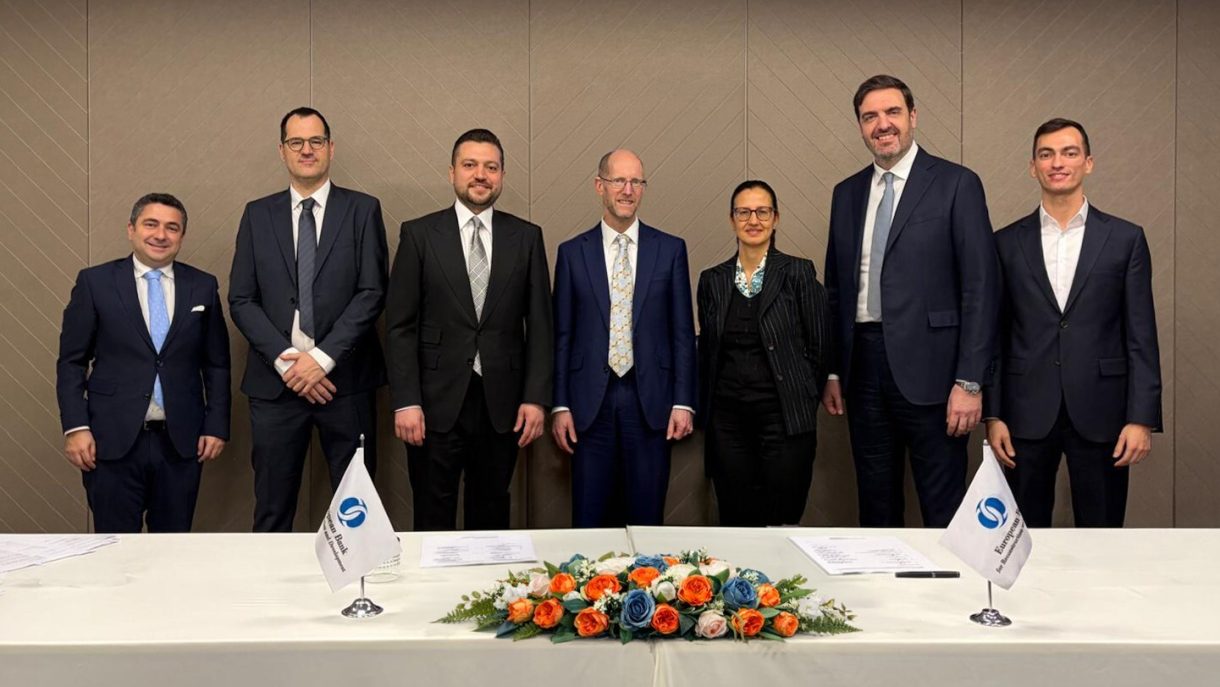
Fortis Energy and EBRD Partner to Finance Landmark 270 MW Solar-plus-Storage Project in Serbia

Fortis Energy and EBRD Partner to Finance Landmark 270 MW Solar-plus-Storage Project in Serbia

In a significant move for the Western Balkans’ energy transition, Fortis Energy has formalized a mandate letter with the European Bank for Reconstruction and Development (EBRD). The agreement initiates due diligence and structured negotiations for the long-term financing of a 270 MW solar photovoltaic (PV) plant, integrated with a 72 MWh battery energy storage system (BESS).

Located in the city of Sremska Mitrovica, west of Belgrade, the project is set to become the largest solar facility in both Serbia and the broader region.

Strategic Importance and Regional Impact

The mandate letter, signed by Fortis Energy’s leadership and the EBRD’s Sustainable Infrastructure Group, establishes the preliminary terms for a project aimed at bolstering Serbia’s national grid. According to Fortis Energy, the facility is a “demonstration of bankability,” signaling that large-scale renewable assets in Southeast Europe can meet rigorous international environmental and social sustainability standards.

The Sremska Mitrovica plant is expected to deliver substantial environmental and social benefits:

  • Annual Output: Estimated at over 365 GWh of clean electricity.

  • Household Impact: Capable of powering more than 105,000 households annually.

  • Carbon Mitigation: Forecasted to avoid approximately 182,000 tons of emissions per year.

Construction is scheduled to begin in the third quarter of 2026, with full commissioning targeted for the first quarter of 2028.

Technical Breakdown and EPC Partnerships

The development is being executed in phases. Earlier this year, Fortis signed an Engineering, Procurement, and Construction (EPC) contract with Kontrolmatik Technologies for the first phase, known as Noćaj 1.

Phase/Project Solar Capacity (MWp) Grid Connection (MW) Storage Capacity (BESS)
Noćaj 1 135 MW 90 MW 36 MWh
Full Sremska Mitrovica 270 MW 72 MWh
Erdevik (Proposed) 100 MW 74 MW 30 MWh

Fortis Energy and EBRD Partner to Finance Landmark 270 MW Solar-plus-Storage Project in Serbia

In a significant move for the Western Balkans’ energy transition, Fortis Energy has formalized a mandate letter with the European Bank for Reconstruction and Development (EBRD). The agreement initiates due diligence and structured negotiations for the long-term financing of a 270 MW solar photovoltaic (PV) plant, integrated with a 72 MWh battery energy storage system (BESS).

Located in the city of Sremska Mitrovica, west of Belgrade, the project is set to become the largest solar facility in both Serbia and the broader region.

Strategic Importance and Regional Impact

The mandate letter, signed by Fortis Energy’s leadership and the EBRD’s Sustainable Infrastructure Group, establishes the preliminary terms for a project aimed at bolstering Serbia’s national grid. According to Fortis Energy, the facility is a “demonstration of bankability,” signaling that large-scale renewable assets in Southeast Europe can meet rigorous international environmental and social sustainability standards.

The Sremska Mitrovica plant is expected to deliver substantial environmental and social benefits:

  • Annual Output: Estimated at over 365 GWh of clean electricity.

  • Household Impact: Capable of powering more than 105,000 households annually.

  • Carbon Mitigation: Forecasted to avoid approximately 182,000 tons of emissions per year.

Construction is scheduled to begin in the third quarter of 2026, with full commissioning targeted for the first quarter of 2028.

Fortis Energy’s Growing Regional Footprint

Headquartered in the Netherlands with key operational hubs in Istanbul and Belgrade, Fortis Energy is aggressively pursuing its goal of becoming a premier Green Baseload Independent Power Producer (IPP).

Beyond Sremska Mitrovica, the company is advancing a robust pipeline:

  • Erdevik, Serbia: A planned 100 MW hybrid plant with 30 MWh of storage.

  • Erseka, Albania: A 75 MW solar project with 25 MWh of storage, currently under construction.

  • Portfolio Growth: Fortis currently operates over 200 MW of renewable assets, with an additional 500 MW slated for deployment through 2027.

By integrating storage with solar and wind assets, Fortis is positioning itself to provide stable, renewable energy across Southeast Europe, supporting the region’s broader decarbonization objectives.

by in News

El-Mor Pushes Two 203 MW Stand-Alone BESS Projects Toward Delivery in Romania

Romania’s grid-scale energy storage market is rapidly shifting from development into execution, making time-to-market an increasingly decisive differentiator. In this context, El-Mor Electric Installations & Services is progressing two large stand-alone Battery Energy Storage System (BESS) projects structured for fast delivery: BRADU BESS (Argeș) and BRAZI BESS (Prahova).

Each project is planned at 203 MW with up to 800 MWh of energy capacity (4-hour duration) and is designed to connect at 110 kV to substations operated by Romania’s transmission system operator, Transelectrica. Both projects already hold an ATR (technical connection approval) and are targeted to achieve RTB (ready-to-build) status in Q1 2026, with a defined pathway to commissioning in H1 2027, subject to investor execution and financing.

As Romania’s BESS market expands and moves into what many describe as a “delivery phase,” projects can look similar on paper. Increasingly, however, the separation between bankable opportunities and speculative pipelines comes down to execution certainty—particularly connection clarity, permitting maturity, optimized grid-connection CAPEX, and documentation capable of meeting lender-grade due diligence requirements.

El-Mor’s development model is focused on de-risking the items that most commonly delay BESS delivery—especially the grid interface and permitting quality—so investors can move quickly with fewer late-stage disruptions.

Quality control, risk management, and bankability

El-Mor Electric Installations & Services is a public company listed on the Tel Aviv Stock Exchange, reporting over €200 million in 2025 sales. Across its PV and BESS activities, the company highlights an engineering-led approach supported by decades of high-voltage experience, shaping a development practice centered on quality control, risk management, and overall bankability of the permitting package.

A key element of El-Mor’s strategy is technology flexibility. The projects are permitted on an equipment-agnostic basis, enabling investors to select BESS containers and Power Conversion System (PCS) technology during detailed design. This approach is intended to protect schedules as equipment availability, pricing, and lender requirements evolve—while avoiding the need to reopen permits to accommodate technology decisions.

BRADU BESS: permits issued, grid agreement targeted for March

BRADU BESS is a 203 MW / up to 800 MWh project located in Bradu commune (Argeș), planned to connect to Transelectrica’s BRADU 400/220/110 kV substation. El-Mor said the underground 110 kV cable route is approximately 0.6 km, supporting both schedule execution and connection cost optimization. The company noted that building permits were issued in January 2026, with Grid Connection Agreement (GCA) signature targeted for March 2026.

BRAZI BESS: advanced development track toward RTB in Q1 2026

BRAZI BESS is a 203 MW / up to 800 MWh project in Brazi commune (Prahova), planned to connect to Transelectrica’s BRAZI 400/220/110 kV substation via an underground 110 kV cable route of approximately 1.2 km. Development began in 2023, and the project remains on track to reach full RTB in Q1 2026.

In a market where speed and certainty are becoming core investment criteria, “delivery-ready” must withstand rigorous diligence to be meaningful. El-Mor’s positioning centers on disciplined VDR (virtual data room) management and a permitting approach designed to keep technology options open while enabling rapid execution.

by in News

GEN-I to optimize operation of R.Power’s battery system in Romania

GEN-I and R.Power have signed a long-term optimisation agreement for the Scornicesti battery energy storage system (BESS), one of Romania’s largest utility-scale storage projects currently under development. The project is planned with an installed capacity of 127 MW and an energy storage capacity of 254 MWh.

Under the deal, GEN-I will serve as the exclusive commercial optimiser and trading partner for the Scornicesti BESS, covering the period from the start of commercial operations through to the fifth anniversary of full revenue activation. GEN-I will oversee the asset’s commercial optimisation across wholesale electricity markets and ancillary service mechanisms, including market optimisation, revenue management and real-time dispatching, supported by 24/7 algorithmic trading operations.

Igor Koprivnikar, Ph.D., MBA, Member of the Management Board of GEN-I, and
Rafał Hajduk, Chief Commercial Officer at R.Power.

The partnership is structured around a long-term revenue-sharing model, aligning the interests of R.Power as the asset owner and GEN-I as the optimisation partner. Alongside performance-based revenue sharing, GEN-I will also provide a minimum revenue guarantee, intended to deliver more predictable cash flows for the project while supporting the long-term market value of the battery asset.

“This agreement represents another important step in the expansion of GEN-I’s battery storage optimisation portfolio in Central and South-Eastern Europe,” said Igor Koprivnikar, Ph.D., MBA, a member of GEN-I’s Management Board. He added that Romania is undergoing a power-market transformation, with growing renewable capacity and an increasing role for flexibility and storage solutions in maintaining system balance. According to Koprivnikar, GEN-I aims to translate market complexity into value for asset owners by combining regional market knowledge, real-time trading capabilities and long-term optimisation expertise.

The Scornicesti project is co-owned by R.Power and its joint venture partner Eiffel Investment Group, following Eiffel’s acquisition of a 49.9% equity stake in October 2025. The optimisation agreement marks a key milestone in establishing the project’s long-term commercial strategy ahead of market entry.

GEN-I said the agreement strengthens its position as an independent optimiser for utility-scale battery energy storage systems in Central and South-Eastern Europe. The company added that by supporting efficient market participation, system services provision and dynamic revenue optimisation, it helps investors and developers unlock the value of flexibility assets while contributing to power system stability and the integration of renewable energy.

About GEN-I

Founded in 2004, GEN-I is an energy market participant active across 27 markets in Europe. The company was recognised as Best Energy and Power Dealer in Europe in the Energy Risk Commodity Rankings 2025. GEN-I operates in wholesale energy trading and provides services linked to the green transition, including renewable portfolio management, ancillary services and battery energy storage optimisation. It said its optimisation models, 24/7 trading operations and integrated risk and operational processes support its goal of becoming a leading asset optimiser in Central and South-Eastern Europe.

About R.Power

R.Power is an independent power producer active in renewable energy across multiple European markets, with operations spanning origination and development through to commercialisation and long-term operation. Founded in 2010 and headquartered in Warsaw, the company has 1.4 GW of projects operational or under construction. Its growth strategy includes a pipeline of grid-secured battery energy storage projects, both standalone and hybrid with solar PV. R.Power said it has more than 10 GW of grid-secured, utility-scale BESS, hybrid and renewable generation projects across markets including Poland, Romania, Germany, Italy, Portugal and Spain.

R.Power’s long-term equity investment partners include the European Bank for Reconstruction and Development and the Three Seas Initiative Investment Fund (3SIIF), advised by Amber Infrastructure, while its debt finance partners have included BNP Paribas and ING.

by in News

Enery secures EUR 250 million for hybrid power plants in four EU states

Austrian green energy producer Enery has secured financing for hybrid power plants in Czechia, Slovakia, Bulgaria, and Slovenia.

Enery said it has successfully raised more than EUR 250 million in long-term portfolio project financing.

Československá obchodní banka, a. s. (ČSOB) is acting as the sole lender, while United Bulgarian Bank AD and Československá obchodná banka, a.s. Slovakia are subparticipants. The financing has a tenor of 22 years.

The transaction is structured as portfolio project finance, featuring a single borrower and a single lender, and supported by several operating companies as guarantors, Enery explained.

Enery currently operates a portfolio with 566 MW of installed capacity

The financing will be used to support the development and operation of a cross-border renewable energy portfolio in Czechia, Slovakia, Bulgaria, and Slovenia, according to the announcement.

It includes 300 MW of solar capacity and 100 MW / 220 MWh of co-located battery energy storage systems (BESS) assets spanning four countries.

“Securing more than EUR 250 million through this long-term portfolio financing is another strong endorsement of our strategy and execution capabilities,” Enery CEO Richard König underscored.

König: Another strong endorsement of Enery’s strategy and execution capabilities

Teodor Filip, VP Financing at Enery, pointed to this long-term financing as a major milestone for the company. It strengthens its ability to scale renewable generation and storage solutions in the region and supports its contribution to long-term decarbonization goals, he added.

In early January, the company started the construction of one of the largest photovoltaic plants and hybrid power plants in Europe. The Ogrezeni facility will feature an installed peak capacity of 761 MW, coupled with a 1 GWh battery energy storage system.

Enery also intends to commission a four-hour battery storage system of 150 MW in central Bulgaria by the end of the first quarter.

The company currently operates a portfolio of 566 MW in installed capacity, 90% which is solar.

by in News

Sunotec advances Germany’s largest EEG hybrid power plant

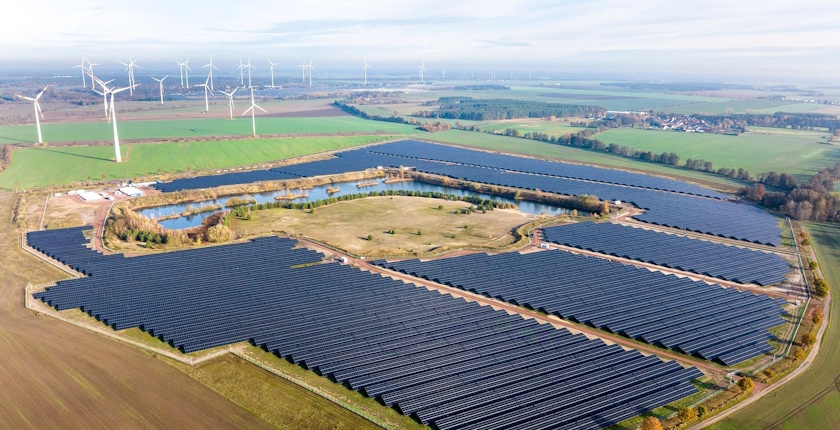
Sofia-based solar and battery developer Sunotec announced a key milestone in the construction of the Hybrid Power Plant Zerbst. The company claims it is set to become Germany’s largest solar-battery hybrid power plant under the Renewable Energy Sources Act (EEG).

Located on a 41-hectare former gravel pit, the site combines 73,000 solar modules with a capacity of 46.4 MWp and a 57 MWh battery energy storage system (BESS).

The facility is designed and built to operate as a fully co-located hybrid asset, providing grid-supportive, dispatchable renewable power, Sunotec explained.

The project is being developed by Statkraft

The project is being developed by Statkraft. The Hybrid Power Plant Zerbst will deliver 50,000 MWh of renewable electricity per year. It is sufficient for 14,000 households.

This is the company’s first hybrid power plant in Germany and a proof of concept for its fully integrated, beyond-EPC delivery model, according to Sunotec.

The model is different from a traditional EPC contract. Sunotec implemented the core phases of the Zerbst hybrid power plant internally, including engineering, geotechnical assessments, and environmental planning.

Following completion, Sunotec will continue to manage the operations and maintenance of the PV plant.

​Atanasov-Lankes: we demonstrate the strength of Sunotec’s integrated model

This integrated approach reduces interfaces, eliminates fragmentation, and guarantees high-quality delivery, the company said.

“With the Hybrid Power Plant Zerbst, we demonstrate the strength of Sunotec’s integrated model and our ability to deliver complex systems at scale,” Zharin Atanasov-Lankes, Managing Director of Sunotec Germany, stressed.

He underscored that the project reflects the engineering depth and execution capability of the firm’s teams.

Over the last six months, Sunotec has made major steps in developing its operations in Europe.

In November 2025 the company signed an agreement with oil and gas major Shell on the development of battery energy storage systems in Central Eastern Europe. In July it has agreed with China-based Sungrow to install 2.4 GWh of BESSs.

by in News

Sunotec advances Germany’s largest EEG hybrid power plant

Sofia-based solar and battery developer Sunotec announced a key milestone in the construction of the Hybrid Power Plant Zerbst. The company claims it is set to become Germany’s largest solar-battery hybrid power plant under the Renewable Energy Sources Act (EEG).

Located on a 41-hectare former gravel pit, the site combines 73,000 solar modules with a capacity of 46.4 MWp and a 57 MWh battery energy storage system (BESS).

The facility is designed and built to operate as a fully co-located hybrid asset, providing grid-supportive, dispatchable renewable power, Sunotec explained.

The project is being developed by Statkraft

The project is being developed by Statkraft. The Hybrid Power Plant Zerbst will deliver 50,000 MWh of renewable electricity per year. It is sufficient for 14,000 households.

This is the company’s first hybrid power plant in Germany and a proof of concept for its fully integrated, beyond-EPC delivery model, according to Sunotec.

The model is different from a traditional EPC contract. Sunotec implemented the core phases of the Zerbst hybrid power plant internally, including engineering, geotechnical assessments, and environmental planning.

Following completion, Sunotec will continue to manage the operations and maintenance of the PV plant.

​Atanasov-Lankes: we demonstrate the strength of Sunotec’s integrated model

This integrated approach reduces interfaces, eliminates fragmentation, and guarantees high-quality delivery, the company said.

“With the Hybrid Power Plant Zerbst, we demonstrate the strength of Sunotec’s integrated model and our ability to deliver complex systems at scale,” Zharin Atanasov-Lankes, Managing Director of Sunotec Germany, stressed.

He underscored that the project reflects the engineering depth and execution capability of the firm’s teams.

Over the last six months, Sunotec has made major steps in developing its operations in Europe.

In November 2025 the company signed an agreement with oil and gas major Shell on the development of battery energy storage systems in Central Eastern Europe. In July it has agreed with China-based Sungrow to install 2.4 GWh of BESSs.