by in News

Germany gets applications for 661 GWh of BESS projects

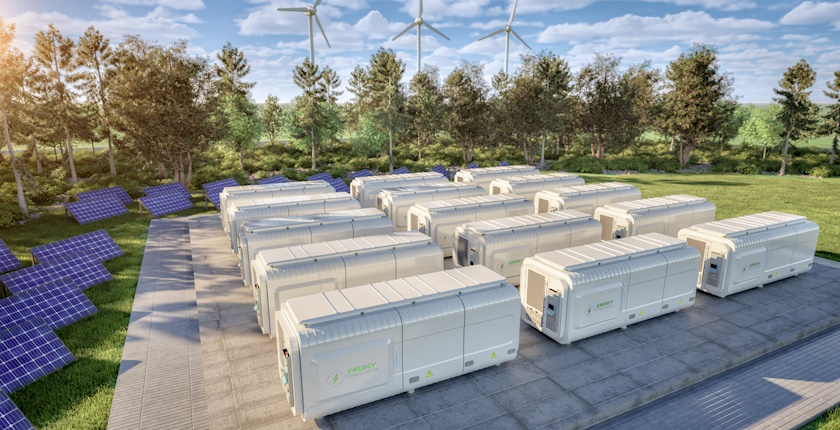
Grid operators in Germany received requests for the connection of large battery energy storage systems with an operational power totaling 400 GW and capacity of 661 GWh overall. It is 174 times greater than the current capability of all the batteries in the country, and 206 times more than their capacity, respectively.

The Federal Network Agency, the national regulatory authority also known as Bundesnetzagentur or BNetzA, has for the first time published data on the applications for battery storage projects.

Germany has increased its total BESS capacity by 50% last year. The vast majority of the capacity is in households. In July, the category accounted for 11.5 GW out of 14.5 GW in overall operational power, the data showed.

Now BNetzA announced that in 2024, a total of 9,710 connection requests for BESS on the medium and higher voltage levels were submitted to the grid operators. They don’t include home storage systems.

Currently, 921 large-scale batteries are in operation in Germany

The applications have a combined planned operational power of approximately 400 GW and a storage capacity of around 661 GWh, according to the agency’s data.

Currently, 921 large-scale batteries are in operation. They have approximately 2.3 GW altogether and a storage capacity of about 3.2 GWh.

In 2024, grid operators issued approximately 3,800 connection commitments for applications submitted in 2024 and previous years, BNetzA underlined.

Germany is a hotspot for BESS optimization and offtake

The 3,800 applications are for a combined operational power of about 25 GW and a storage capacity of about 46 GWh, data showed.

The agency recalled that the connection commitments are an obligation only for the grid operator. It means not all applications have to be implemented, BNetzA pointed out.

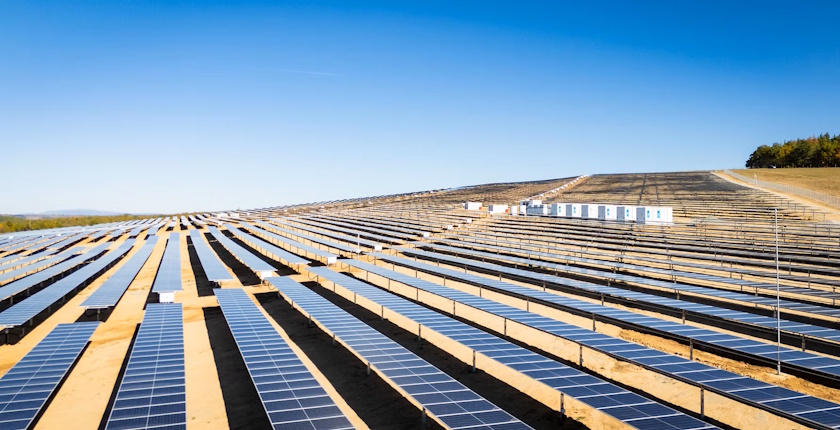
Germany’s solar power plants have a total capacity of 112 GW.

The BESS dealmaking landscape in Europe has evolved dramatically over the past four to five years, according to Pexapark’s analysis. Germany and Netherlands have emerged as hotspots for optimization and offtake, after Great Britain’s convincing lead for several years.

In the first five months of 2025 alone, 11 BESS deals were announced in Germany, totaling 540 MWh.

by in News

Europe’s energy storage capacity to reach 100 GW this year, more than double by 2030

Energy storage in Europe has been expanding rapidly since 2020, with the total installed capacity in the European Union, the United Kingdom, Norway, and Switzerland set to reach 100 GW by the end of November. Pumped hydro storage has the largest share of the existing capacity, 50.6 GW, followed by batteries, with 44.8 GW of operating power, according to an analysis by LCP Delta and Energy Storage Europe.

All energy storage technologies combined are expected to grow by 115%, to 215 GW, by 2030, expanding at a rate of 20 GW to 25 GW per year, according to the report, titled the European Market Monitor on Energy Storage. On November 1, the cumulative figure stood at 99.3 GW.

Battery storage capacity has seen stronger growth than pumped storage hydropower plants this year, with 4 GW of new utility-scale installations, and is projected to expand to 163 GW by 2030.

Battery storage capability is expected to reach 163 GW by 2030

Of the total 44.8 GW of battery capacity, large-scale systems connected to the grid (front of the meter) account for 17 GW, and systems installed on the customer’s side (behind the meter) for 27.8 GW.

According to the report, 18 million homes have a solar system, and four million have battery storage. Residential battery sales are now stabilizing following the 2022-2023 peak, with recovery expected from 2027, supported by a rebounding PV market, rising electrification of homes and transportation, dynamic tariffs, and new financing models.

Europe has 18 million solar homes and four million homes with batteries

Germany has the largest number of home battery systems, 2.1 million, followed by Italy, with 780,000, the UK, with 280,000, Austria, with 200,000, and Belgium, with 160,000.

Jacopo Tosoni, Head of Policy at Energy Storage Europe, hailed energy storage as the fastest-growing clean technology in Europe, with the potential to become the engine of its competitiveness, according to a press release from the association.

Silvestros Vlachopoulos, Energy Storage Research Lead at LCP Delta, said that reaching the 100 GW energy storage capacity marks a key moment for the industry, setting the stage for an even faster renewable energy growth in the coming years.

LCP Delta and Energy Storage Europe believe the energy storage industry is only just getting started and will continue to make a substantial contribution to Europe’s energy transition, according to a press release from the association.

by in News

Three types of deals emerge in new PPA era – Pexapark

Hybrid power purchase agreements from co-located projects, battery offtake agreements, and stand-alone PPAs are beginning to dominate the renewable energy market, according to Luca Pedretti, Co-Founder & COO of Pexapark.

The power purchase agreement (PPA) market is going through a turbulent period. Two days ago, RE-Source Platform noted that the number of PPAs in Europe had decreased by 60% compared with the same period last year. The figure was consistent with Pexapark’s July report, which stated that the number fell 31% in the first six months of the year.

Over recent months, the analytics and advisory firm has spoken with a number of executives at independent power producers.

“Their message was consistent. The period dominated by straightforward, conventional power purchase agreements (PPAs) is transitioning into a new era,” Luca Pedretti wrote in a piece for Pexapark’s website.

While the initial phase centered on PPAs, the focus now is on more structured deals and the integration of new asset classes, such as battery energy storage systems (BESS), he noted.

Battery offtake agreements can take various forms

One of the models involves hybrid PPAs from co-located projects. Co-location is the deployment of multiple technologies at a single site. Most often, it is wind and solar, or solar with battery energy storage systems.

Previously, this kind of project included pricing based solely on energy delivered, but that has now changed.

Today, it is necessary to evaluate and price the marginal value added by co-location, the interactions between different resources, and the premium associated with reduced curtailment and improved grid capacity utilization, Pedretti wrote.

Battery offtake agreements include tolling contracts, merchant sharing agreements, and capacity-based deals. Valuation and pricing in these deals vary a lot from those used in pure energy agreements.

Stand-alone PPAs are still standing

The third model is the stand-alone PPA. These deals have managed to maintain their share of the market. However, there have been some changes in approach.

The number of “plain vanilla PPAs” has decreased, while transaction price ranges have expanded. In the new circumstances, understanding the impact of negative prices and curtailments on price and value has become crucial.

Additionally, in many markets, the balancing risk is now handled completely differently than it was just 12 months ago, according to Pedretti.

He stressed that the Pexapark Renewable Valuation Framework for PPAs continues to provide a solid foundation.

“However, the importance of the ‘middle part’– understanding risk and projecting future realized prices – has increased substantially,” he noted.

by in News

Sunotec, Shell join forces to develop BESS in Europe

Sofia-based Sunotec signed an agreement with oil and gas major Shell on the development of battery energy storage systems in Central Eastern Europe.

Sunotec is developing projects for large solar and battery energy storage systems (BESS) in Europe while Shell is one of the leading oil and gas companies in the world.

Sunotec said it signed a cross-border agreement with Shell Energy Europe B.V. It marks a milestone in advancing innovative financial mechanisms for the development of battery energy storage systems in Central Eastern Europe, the Bulgaria-based company added.

The five-year agreement is linked to a 600 MW BESS project owned by Sunotec. The battery is under development and expected to enter commercial operation by Q2 2026, the update reads.

The deal helps Shell to diversify its wider power portfolio in the region

“The agreement provides long-term price stability for the project, supporting its financial viability. For Shell, the deal helps to diversify its wider power portfolio in the region. The agreement was facilitated by Enery Portfolio Optimisation,” Sunotec said.

The transaction is among the first of its kind in Central Eastern Europe and it helps to establish battery project development in the region, according to the renewables developer.

Kaloyan Velichkov, Sunotec founder and CEO, stressed that agreements like the one with Shell highlight the company’s commitment to working with leading energy players who share its vision for a sustainable and forward-looking energy future.

Velichkov: The agreement demonstrates the power of collaboration in advancing flexibility and renewable-energy driven independence

“This pioneering agreement demonstrates the power of collaboration in advancing flexibility and renewable-energy driven independence. By uniting technical expertise with financial ingenuity, we are helping to build a more resilient and integrated energy system,” he underlined.

The transaction demonstrates how cross-border cooperation and forward-looking financial mechanisms can enhance regional energy market integration and facilitate the deployment of large-scale renewable energy assets, in Kaloyan’s view.

Of note, Sunotec has been very active in the market over the last few months.

In October, the firm secured financing for a portfolio of seven projects in Bulgaria.

Three months prior, it signed an agreement with Sungrow on installing 2.4 GWh of BESS in Europe.

by in News

North Macedonia’s ESM needs investments of EUR 3 billion to replace coal power

Power utility Elektrani na Severna Makedonija estimated that it requires EUR 3 billion by 2040 to replace electricity from its lignite-fired power plants. According to member of the Board of Directors Ivan Stojanovski, the state-owned company is preparing investments in gas power plants, solar, wind, hydropower and energy storage. He highlighted its plans for a 300 MWh battery and the Bogdanci hybrid energy park.

North Macedonia’s utility Elektrani na Severna Makedonija (ESM), the country’s main electricity producer, generated 60% of the 2024 output in the Bitola and Oslomej coal plants.

A rough estimate is that ESM would have to invest around EUR 3 billion in the next 15 years to replace its power production from lignite, which is baseload energy, Ivan Stojanovski, a member of the Board of Directors and the company’s Chief Financial Officer, told Balkan Green Energy News on the sidelines of the International Forum on Energy for Sustainable Development (IFESD-14).

He explained that the transition to green energy is quite expensive. ESM needs to replace the 840 MW in baseload production that the Bitola and Oslomej thermal power plants provide, the executive added.

Hydropower is a domestic electricity source, unlike natural gas

The company opted for investments in diverse energy sources to achieve it, Stojanovski stressed.

Gas power plants provide baseload energy, but at the same time, they turn the spotlight on national security as well as the security of supply, in his words.

Lignite is currently mined in North Macedonia while natural gas must be imported, so gas supply interruption is possible, ESM’s CFO added.

Gas power plants are required, but it is necessary to invest in hydropower as it is a domestic resource, Stojanovski said. On the other hand, hydroelectric plants are more expensive and it takes longer to build them, he noted.

ESM launched the Bitola 3 solar power project

ESM is developing wind and solar power projects as well. Stojanovski highlighted the planned expansion of its Bogdanci wind farm. The European Bank for Reconstruction and Development (EBRD) is participating in the development of the Miravci wind power project, of at least 100 MW, he recalled.

The company is working on solar power projects Oslomej 1 (10 MW), Oslomej 2 (10 MW), Bitola 1 (20 MW) and Bitola 2 (60 MW), Stojanovski asserted. Bitola 3 endeavor is underway, too, and the financing contract is expected to be signed by the end of the year, he revealed.

The photovoltaic system will have at least 100 MW, Stojanovski asserted.

“We plan to sign a contract next year with Agence Française de Développement (AFD) for a solar power plant in Bogdanci of at least 30 MW and to create a hybrid energy park there – wind, solar, and a battery,” he stated.

According to Stojanovski, the company is developing a battery energy storage project with the EBRD, for up to 300 MWh in capacity. The site is within the REK Bitola coal complex and the facility will be a systemic solution for all the solar power plants there, he explained.

Blended financing as a solution

“EUR 1 billion to EUR 1.3 billion is needed just for solar, wind and batteries. We will need between EUR 500 million and EUR 700 million for gas power plants. Another EUR 1 billion to EUR 1.3 billion would be for large hydropower plants such as Čebren and Vardar Valley, and some smaller projects,” Stojanovski explained.

Asked how the company plans to secure financing, he pointed to blended financing – own sources combined with some participation from international financial institutions. It is important to diversify the sources by opening cooperation with as many financial institutions as possible, in Stojanovski’s view.

ESM traditionally cooperates with the EBRD and KfW. Stojanovski announced that the company would diversify financing by launching cooperation with the World Bank, Italy’s development bank Cassa Depositi e Prestiti, and AFD.

“It will enable us to access more sources and complement them with financing from local banks. We also tend to obtain support from the state budget over a longer period, 10-15 years, and state guarantees, but also additional funds. This is a financial model that can secure long-term and sustainable financing of infrastructure projects,” Stojanovski said.

by in News

Webinar summary: How to design PV and BESS in the Balkans faster and smarter with RatedPower software

RatedPower, a leading provider of software for PV plant and BESS design and engineering, has organized a webinar to present its solutions that make it faster and easier for developers and contractors to design and build PV and battery storage facilities, helping increase their efficiency and profitability. The online event included a step-by-step demonstration of how RatedPower’s cloud-based software tool creates simulations of PV plants, battery energy storage systems (BESS), and hybrid facilities to assess costs, performance, and profitability under various scenarios. The hosts also answered questions such as whether the software can be used for rooftop solar, how it accounts for terrain, what financial aspects it considers, and how user-friendly it is for non-technical staff. A recording of the webinar is available at this link.

The webinar opened with an overview of the main challenges that solar and BESS projects face in the Balkans, but also elsewhere in the world. These include a lack of collaboration between teams, difficulty finding investors for projects in the ready-to-build stage, insufficient documentation needed for permitting, lengthy manual calculations, and poor decision-making in feasibility studies.

Addressing common challenges in the Balkans

RatedPower was created precisely to address these problems, and today it provides services for a wide range of companies in the solar and BESS market, including well-known international players, it was explained at the webinar, hosted by Emil Trepin, Account Executive at RatedPower.

The company decided to expand to the Balkans because it is one of the fastest-growing regions in Europe when it comes to renewable energy projects. This, it was explained, is thanks to energy transition efforts, grid modernization, investment momentum, and state support for renewables across the region.

Much more than an engineering tool

RatedPower, part of Enverus, a global software-as-a-service (SaaS) platform for the energy sector, offers a cloud-based tool for designing ground-mounted PV plants of 1 MW and above, and up to 3-4 GW, as well as hybrid systems (PV plus BESS) and standalone battery storage projects.

The platform creates the fastest simulations in the industry, reducing design and engineering time by up to 90%, while helping increase project profitability by about 20%. It generates over 400 pages of ready-to-use documents, including bills of quantities, single-line diagrams, business plans, and much more.

The tool reduces design and engineering time by up to 90%

RatedPower’s software is much more than an engineering tool – it is a decision-making platform that combines the simulation of technical design, energy yield, and financial analysis, according to the hosts.

A step-by-step demonstration of how the platform works

During the demonstration, Matteo Menazzi, Technical Advisor at RatedPower, explained how the platform is used in practice. Since it is cloud-based, it can be accessed from any web browser and used simultaneously by several people working on the same project or on multiple projects.

The first step is to select a location on the map, taking into account various restrictions, such as roads, forests, and archaeological sites, and then add PV arrays, BESS, and other equipment.

Equipment, such as PV modules or battery containers, is selected from a pre-filled database or uploaded manually. The software then creates a full simulation in a matter of seconds, allowing users to test different modules or equipment and compare results.

Solar modules, batteries, and other equipment can be selected from a pre-filled database

In the layout phase, users can set the distance between rows, adapt the configuration to the terrain slope, and estimate the scope and cost of necessary earthworks.

The software also allows the customization of grid connection parameters, including voltage levels and line types (underground or overhead). It then automatically estimates substation size and electrical losses, and calculates the necessary cable lengths.

It calculates the amount of electricity that can be produced and injected into the grid, as well as financial performance. In addition, a large number of documents is automatically generated – from hourly energy yield and battery performance results to lists of necessary cables, bills of quantities, and 2D and 3D drawings.

Designs can be edited and saved as templates for future projects

It is important to note that any design created with the RatedPower software can be edited by moving, adding, or removing elements. Also, all inputs can be saved as a template, which can be used for another project, saving considerable time.

Designing battery storage systems with RatedPower

When it comes to batteries, users can choose a power conversion system and battery containers from the database, define the number of BESS blocks and their layout, and adjust the distances between containers to comply with fire safety regulations. They can also customize charging and discharging efficiency and use the optimization algorithm to adjust operations for maximum profitability.

It is also possible to choose between a fixed and a variable price. For variable prices, the software will upload the day-ahead price for the relevant market or allow users to upload their own price. The tool will also recommend the most profitable time to sell electricity.

Users can also choose whether to charge the batteries only from the PV plant or from the grid as well.

The software provides project cost estimates based on standard values or the user’s input

In the financial segment, RatedPower’s software will estimate the total cost of building a PV plant or battery system, based on standard values provided by the International Renewable Energy Agency (IRENA) and the US National Renewable Energy Laboratory (NREL).

However, input values can also be fully customized by the user, based on the price of solar modules, BESS units, or cables.

If you want to know more about RatedPower’s software, request a demo today.

by in News

Croatia allocates EUR 50 million for prosumers in business sector to install BESS

Croatia has allocated EUR 50 million to support businesses in installing batteries for storing energy from their existing solar power plants or ones they plan to install.

In recent years, many companies all over Europe have installed solar panels for self-consumption to reduce electricity costs. But battery energy storage systems (BESS) offer additional benefits for such prosumers.

Now Croatia’s Ministry of Economy and Sustainable Development has launched a public call for the allocation of grants to firms.

Small, medium, and large entrepreneurs are eligible to apply

The goal is to enable entrepreneurs to store the energy produced in their power plants and use it when it is most needed – delivering it to the grid later or for their own consumption.

The call is financed by funds from the National Recovery and Resilience Plan (NRRP). Small, medium, and large entrepreneurs are eligible to submit applications. The deadline is January 31, 2026.

The ministry’s goal is to continue investments in the power system, thereby ensuring the integration of an increasing amount of energy from renewable sources.

BESS has numerous advantages over other technologies: high efficiency, adaptability, reliability, economic viability, and fast response, the call reads.

The call targets installation of batteries with a total capacity of 60 MWh

All applicants must specify concrete benefits that would be achieved by implementing the project in their bids.

BESS projects with a total capacity of at least 60 MWh could be installed by the end of the second quarter of 2026, according to the call.

New energy storage capacities would significantly increase the flexibility and resilience of the domestic power system, the ministry said.

The minimum subsidy amount per project is EUR 60,000, and the highest is EUR 1.5 million. The minimum storage capacity eligible for grant is 1 MWh per facility.

Of note, Croatia has already implemented a call for the installation of batteries in firms.

However, the subsidies were allocated for joint installation of renewable power plants and batteries.

by in News

Repono acquires BESS project for 404 MWh in Romania

Swedish energy storage operator Repono has completed the acquisition of a 202 MW / 404 MWh battery energy storage system project located in Romania’s Argeș county.

Romania has become one of the most active markets for battery energy storage system (BESS) projects in South East Europe.

Developed by a domestic firm, the Argeș project reached a ready-to-build stage, Repono said. The investment benefits from a grid connection contract with the country’s transmission system operator Transelectrica. The entry point is the 220 kV Pitești substation, northwest of Bucharest.

Once operational, it will be among the largest grid-scale storage assets in Southeast Europe, capable of storing and releasing enough energy to supply more than 120,000 four-person households during peak-demand periods, according to the company.

The partnership with local developers includes a framework for additional energy storage projects

A partnership with local developers is set to drive significant future growth for the firm, based in Sweden.

It includes a framework for additional energy storage projects across Romania with a combined capacity of up to 1.4 GW, reinforcing Repono’s long-term commitment to the market, the update reads.

“This transaction represents an important milestone for Repono AB and demonstrates our continued commitment to developing large-scale storage infrastructure that supports Europe’s energy transition,” CEO Karim Nils Grueber stated.

De Kool: Large-scale storage assets are key enablers of a stable European power system

The Argeș project’s market optimization will be handled by Gunvor, in collaboration with Vienna-based optimiser Enspired. They are tasked with managing the energy offtake and market strategy to ensure the BESS is efficiently integrated into the Romanian and regional power markets.

According to Harmen de Kool, Chairman of the Board of Repono and a representative of InnoEnergy, large-scale storage assets like the one in Argeș are key enablers of a stable and decarbonized European power system.

It further fortifies InnoEnergy’s aim to achieve carbon neutrality, he added.

With this acquisition, Repono continues to expand its European portfolio of grid-scale BESS, with active developments spanning Germany, Romania, Italy, Austria, and Poland.

by in News

Romanian power distributor Electrica to build 15 battery systems totaling 1 GWh

Romanian power supplier and distributor Electrica has initiated a permitting procedure for the construction of 15 battery energy storage parks, with a combined capacity of about 1 GWh, aimed at providing flexibility to the national grid and supporting the integration of renewable energy sources.

The battery energy storage systems (BESS) would boost Electrica’s ability to respond dynamically to fluctuations in consumption and production within the national energy system. It should also enable the efficient integration of growing renewable capacities in Romania, significantly reducing price volatility and dependence on imports, according to a press release from Electrica.

Electrica’s new battery capacity is expected to reduce price volatility and dependence on energy imports

“Developing this 1 GWh storage infrastructure is a strategic pillar in Electrica’s transformation into a leader of the energy transition,” the company said, adding that the battery systems would be built on Electrica’s own land, leveraging assets from its existing portfolio.

“This project is not just about technology or capacity; it is about redefining how Romania manages energy security for the decades ahead,” said Alexandru Chirița, Electrica’s CEO. He also stated that the timeline for the project was “ambitious,” according to the press release.

The BESS capacities will be distributed across Romania

The project, part of Electrica’s 2030 strategy, will be developed in phases, with BESS installations distributed across Romania. The first phase is expected to bring a significant portion of the storage capacity online already in 2025, according to a report by PVknowhow.com.

Battery energy storage is on track to become another pillar of Romania’s energy transition, as investors increasingly develop BESS capacities combined with solar, hydropower, and wind, or as standalone energy storage facilities.

Romania is supporting BESS projects for renewables integration with subsidies provided from its national recovery and resilience plan (NRRP). In September last year, the Ministry of Energy awarded grants to 13 projects.

by in News

Sunotec secures financing for Bulgarian BESS, renewables portfolio

Sunotec has secured financing for a portfolio of seven projects in Bulgaria. The deals were agreed in September.

The portfolio, for 115 MW in peak solar power capacity and 763 MWh of battery storage, significantly expands Sunotec‘s investment presence in its home market, according to the update.

Six projects are for standalone battery energy storage systems (BESS) and one is for a solar power plant with a colocated BESS.

According to the firm, they are either wholly owned or partially, through Solaris Holding AD, a 50/50 joint venture with the main shareholders of Eurohold Bulgaria AD.

The standalone battery energy storage system projects are part of the government’s RESTORE program

The seven projects contribute to decarbonizing Bulgaria’s power sector, enhancing its grid stability and energy independence, Sunotec stressed.

The Bulgarian Ministry of Energy has approved the said standalone BESS projects to receive subsidies under the RESTORE program, the company added.

In the first round of the National Infrastructure for Storage of Electricity from Renewable Sources (RESTORE) program, Bulgaria approved EUR 587 million in subsidies for 82 BESS projects totaling 9.71 GWh.

In late July, Sunotec and Sungrow agreed to install 2.4 GWh of BESS

In late August, the ministry launched the public consultation process for a proposed new round of its subsidy program for BESS.

Viktor Stefanov, Head of IPP at Sunotec, said the seven investments mark a major milestone in its evolution.

The company added that they further strengthen its position, as well as of Solaris Holding, among Bulgaria’s leading investors in photovoltaics and energy storage.

In late July, China-based Sungrow achieved an agreement with Sunotec on installing 2.4 GWh of BESS in Europe. The portfolio includes several large-scale projects across Bulgaria, which will serve energy storage needs.