by in News

Domac: No energy transition without much stronger grid investments

Croatia is investing only half as much in the electricity network as Slovenia and Austria, said Managing Director of North-West Croatia Regional Energy and Climate Agency (REGEA) Julije Domac. He warned that without an acceleration in grid investments, there are no renewable sources and no energy transition.

Croatia is about to overcome one of the biggest obstacles to investments in green energy, with its proposed methodology for the grid connection fee. However, there are several more bottlenecks in the sector, and they mostly also concern the electricity network.

The grid is apparently not among priority segments in Croatia, which depends to a large extent on electricity imports. The situation is similar throughout the Balkans and Europe, and beyond, and the basic question is who will cover the expenses as well as which projects are the most important for enabling the deployment of renewables. Among other difficulties, the administrative capacity for permitting for grid improvements and expansion is too weak, alongside complex environmental and spatial planning requirements.

Managing Director of REGEA Julije Domac outlined his view on the matter in a LinkedIn post. “Without an electricity network, there are no grid connections, no RES, no transition… There is more than 13 GW of solar and wind power projects under development today, but the network cannot integrate it without accelerated investments,” he wrote.

Photo: Julije Domac (REGEA)

Grid operators reacting with emergency measures instead of long-term strategy

The free capacity in the power distribution grid is estimated at 3.7 GW, but a large part is in areas with low interest for investing, Domac pointed out. Of note, he is also Croatian President Zoran Milanović’s special advisor on energy and climate.

“In the coastal area and Dalmatia, where the resources are the best, the network is near the maximum load in many parts – it means a malfunction of one element could jeopardize the system’s stability. To avoid that, the operators are already often turning to emergency measures in dispatching now: shutting down parts of the network, redirecting flows, pausing works. It is ‘putting out fires’ – and not a long-term strategy,” the head of REGEA said.

The regulated income from tariffs limits investments as the transition’s urgency isn’t acknowledged

Domac stressed that Croatia is investing less than EUR 20 per customer per year, only half as much as Slovenia and Austria. In his opinion, the tariff-based methodology is limiting investments. Namely, Croatian Transmission System Operator (HOPS) and HEP-ODS, the national distribution system operator, are funded through regulated income under the Croatian Energy Regulatory Agency (HERA), and the mechanism doesn’t acknowledge the urgency of the transition, according to the energy expert.

Another point is delayed digitalization, as Croatia has a much lower share of smart meters than neighboring Slovenia, where it surpassed 99%, or Italy, where the level is around 95%, he underscored. There is no domestic market for flexibility and no contracts with batteries and with consumers that could help ease the pressure on the grid, Domac claims.

In addition, he highlighted the sluggish grid connection procedure, saying it lasts ten years for wind power plants and four years for photovoltaics, the most in all European Union.

Grid connection costs can be covered with EU funding, green bonds

Domac is recommending to the authorities to introduce temporary connection points, with a controlled power delivery – limited until network enhancements are completed. HERA did envisage such a possibility in its draft methodology.

The grid connection fee for renewable electricity plants should be abolished, which was already promised, Domac recalled. It is an obstacle blocking 60 projects for 3.5 GW in total, he noted. It is the grid operator that should bear the cost and, aside from the tariff items, it can finance them through EU funds and green bonds, like most member states do, Domac added.

He expressed the belief that ten or so most important grid interventions should be accelerated – transformer stations and transmission lines in particular and especially in Dalmatia. Pilot projects for batteries and flexibility would pave the way for more grid connections without the wires, and public procurements need to be streamlined as well for works worth up to EUR 1 million, for instance, so that the replacement of one transformer doesn’t last twelver months, Domac asserted.
by in News

SANY International takes over large PV-BESS project in southwestern Romania

Renewable energy company Sany International (Singapore) has completed the acquisition of a project for a solar power plant of 95 MW in peak capacity combined with 218 MWh in battery storage. The location is in Romania’s Dolj county.

SANY Renewable Energy signed power purchase agreements (PPAs) and contracts for difference (CfD) earlier this year in Serbia for its wind power projects Alibunar 1 and Alibunar 2. Just before that, and through another subsidiary, SANY Group secured its entry into the European market for solar power plants with energy storage

Renewable energy company SANY International (Singapore) is now the owner of a project for a solar power plant of 95 MW in peak capacity combined with 218 MWh in battery storage. The location is in Dobrești in Romania’s southwest.

Deal was signed in April

The shares transfer ceremony took place in Bucharest on October 15 in the presence of representatives of domestic developer Enero and local energy officials, the company said, as quoted by Economica.net. It is its first acquisition of such a project outside China.

SANY Singapore’s representative Xu Zhongtian signed the share purchase agreement in April. After that, the Commission for the Examination of Foreign Direct Investments (CEFDI or CEISD) approved the transaction.

Dobrești project is at ready-to-build stage

The project at a site 45 kilometers from Craiova in southwestern Romania is at a ready-to-build stage, Sany International (Singapore) revealed.

It is one of the largest hybrid projects integrating photovoltaics with a battery energy storage system (BESS) in Romania, the company added. Of note, Dolj is one of Romania’s coal regions, which are transitioning to cleaner energy sources.

“This investment reflects the growing interest in the clean energy sector in Central and Eastern Europe, in a context in which countries in the region accelerate efforts to achieve EU energy and climate targets. At the same time, SANY strengthens its strategic focus on renewable energy investments at the European level, aiming to expand its presence in fast-growing green energy markets,” the announcement reads.

SANY Group is an industrial conglomerate, established in 1989 in China. It is mostly known for construction machinery, but SANY Renewable Energy is one of the world’s biggest wind turbine manufacturers, too.

by in News

Romania’s coal town Turceni starts EUR 380 million green energy transformation

Turceni is dependent on the local coal power plant, so the municipal authority is turning to agrivoltaics, energy storage and green hydrogen to replace it. The small town in southwestern Romania is kickstarting a EUR 380 million project.

The coal plant in Turceni used to be one of the biggest in Europe, at 2.3 GW. Located next to the eponymous town in Romania’s Gorj coal region, only two units of 660 MW in total are still operational. At the same time, dozens of such facilities across Europe are shutting down ahead of schedule. The power plant and its associated mines within Complexul Energetic Turceni have been essential for the local economy, which is under threat of devastation amid the country’s coal phaseout.

As with other coal regions in the European Union, the solution is in green energy and new technologies. The town hall has signed a contract with the European Investment Bank for agrisolar parks, energy storage units and the production and storage of green hydrogen.

Turceni town hall secures municipal land for green energy projects

The project is worth a whopping EUR 380 million, Mayor Constantin Popescu revealed. Turceni and its administrative area have fewer than seven thousand inhabitants.

More than 123 hectares of municipal land (pastures) and more than 200 hectares of private land were designated for the renewable energy hub, the mayor stressed.

Bankwatch: The coal region is transitioning to a future based on innovation, sustainability and strong partnerships

Partners in the project are Bankwatch Romania and GAL Sudul Gorjului, the so-called local action group for southern Gorj. Bankwatch said over 370 hectares would be switched to clean and sustainable energy production.

“We are glad that we had an important role in developing the project plan and aligning it with European environmental policies, as well as in applying for technical assistance. For a region that has been, for decades, a pillar of coal-fired energy, this project marks a strategic transformation: a transition to a future based on innovation, sustainability and strong partnerships,” the organization added.

Investments to start in 2026

Implementation is scheduled to begin next year. The project will contribute to a just transition of the region by increasing the production of electricity from renewable energy sources, Popescu asserted. In his words, it will be complementary to the local authority’s other ongoing and future decarbonization investments.

The mayor also highlighted the plans to use geothermal energy for district heating and agriculture.

Complexul Energetic Turceni is part of state-owned Complexul Energetic Oltenia (CE Oltenia). According to the company’s restructuring and decarbonization plan, the coal business will be separated from green energy and other investments.

They include projects for CCGT (combined-cycle gas turbine) power plants of 475 MW in Turceni and 800 MW in nearby Ișalnița, as the main replacement for coal plants. Both are suffering heavy delays.

Minister of Energy Bogdan Ivan said last week that CE Oltenia’s Ișalnița coal plant in neighboring Dolj county would be closed on January 1. Romania has asked the European Commission to delay the closure of several coal plant units, scheduled for this year, until 2030.

Earlier this year, a joint venture between CE Oltenia and OMV Petrom hired contractors for four solar power plants at former coal land, with a combined capacity of about 550 MW. One of the sites is in Ișalnița.

by in News

NGEN inaugurates Austria’s most powerful battery energy storage system

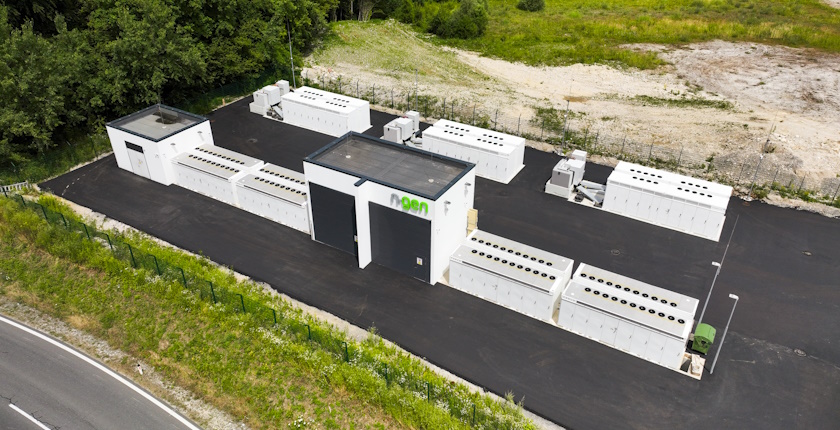
NGEN Group inaugurated its battery storage system in Austria’s Carinthia province after expanding it. At 21.9 MW in operating power and 43.8 MWh in capacity, it is again the country’s largest grid-supporting BESS.

With the official commissioning of the Arnoldstein-Gailitz battery energy storage system (BESS) in the Carinthia province, the NGEN Group has set another milestone in Austria’s energy transition. Following the completion of its second expansion phase in 2025, the facility now boasts 21.9 MW and 43.8 MWh in capacity, making it the country’s largest and most powerful grid-supporting battery storage power plant.

The project marks a significant step toward a sustainable, secure, and climate-neutral energy future and stands as a strong symbol of innovation, energy security, and technological excellence Made in Carinthia, the company stressed. NGEN is headquartered in Žirovnica in Slovenia, just across the border from Arnoldstein.

NGEN’s software contributes to grid stability, renewables deployment

NGEN Group developed the energy storage project and completed the standalone facility in 2023 as Austria’s first large-scale investment of its kind.

The company stressed that the BESS makes a crucial contribution to grid stability and the integration of renewable energy sources through its innovative software solutions. They enable peak shaving – to reduce load peaks and ease grid congestion – and the provision of balancing reserves for grid stability.

The company’s proprietary software enables trading optimization, peak shaving and balancing services

NGEN’s proprietary software also optimizes intraday and day-ahead trading on the power exchange. The Arnoldstein-Gailitz BESS enhances the security of supply by providing flexibility and helps accelerate the integration of renewables.

The company pointed out that the facility has a minimal impact on the landscape. NGEN Group offers rapid project implementation in urban environments and power supply support for charging stations, including lower electricity costs, around-the-clock availability of renewable energy and blackout resilience.

Redispatch capabilities prevent local supply bottlenecks through load flow balancing, the update adds.

Carinthia pioneering resilient, sustainable energy infrastructure

NGEN is already planning a four times larger BESS facility in Upper Austria.

“With the Arnoldstein-Gailitz battery storage power plant, we are sending a clear signal: Carinthia is becoming a pioneer of a modern, resilient, and sustainable energy infrastructure. This facility demonstrates what is possible when technology, political will, and local commitment come together. It bridges the gap between generation and consumption, makes solar energy reliably available, and ensures true energy security,” managing directors of NGEN Austria Matija Dolinar and Andreas Ljuba explained in a joint statement.

The expanded BESS underscores Carinthia’s role as a hub of innovation and demonstrates that grid-stabilizing storage technologies are decisive for the energy transition, not only in Austria but across Europe, the company said.

“Our vision is a fully digitalized and decentralized European electricity system that keeps pace with the rapid growth of renewable energy and sustainably reduces CO2 emissions,” said Chief Executive Officer and Founder of NGEN Group Roman Bernard.

Since 2019, the company has been combining its expertise in engineering, procurement and construction (EPC) services with cutting-edge storage technology and advanced energy market connectivity. NGEN Group currently employs over 200 people across nine countries, including 40 in Austria. It has an annual turnover of EUR 100 million, of which EUR 60 million in Austria.

by in News

Principia builds CfD-backed battery storage facility in Greece

Principia built its first battery system in just six months. The Themelio facility in Chalkidiki in northern Greece, with 49 MW in operating power, will help reduce curtailments from wind and solar power plants and contribute to grid stability.

One of the first standalone battery energy storage systems (BESS) in Greece is coming online in December. Principia said it built the Themelio facility in the Vouno area of Chalkidiki peninsula, aligned with the national plan for grid stability and electrification.

The BESS has 49 MW in capability and a two-hour duration, translating to a guaranteed capacity of 98 MWh, while the nominal capacity is 127 MWh.

Principia is an equally-owned joint venture of Italy-based Enel and funds managed by Macquarie Asset Management, headquartered in Australia. The company said the name Themelio, foundation, symbolizes the beginning of its new era, diversifying beyond renewables.

The construction of the battery system near the town of Polygyros in the Central Macedonia region began in April. It will help reduce curtailments from wind and solar plants, especially in grid-congested areas, by absorbing excess electricity and injecting it back into the system when needed, Principia explained.

The battery energy storage system features a guaranteed capacity of 98 MWh

BESS also enhances system stability by providing power during peak demand and ensuring smooth grid operation. In addition, the unit promotes energy decentralization, as it is located close to renewable energy production sites, contributing to the creation of a more flexible and intelligent energy environment, the joint venture pointed out.

Eurobank financed half of the EUR 28 million project.

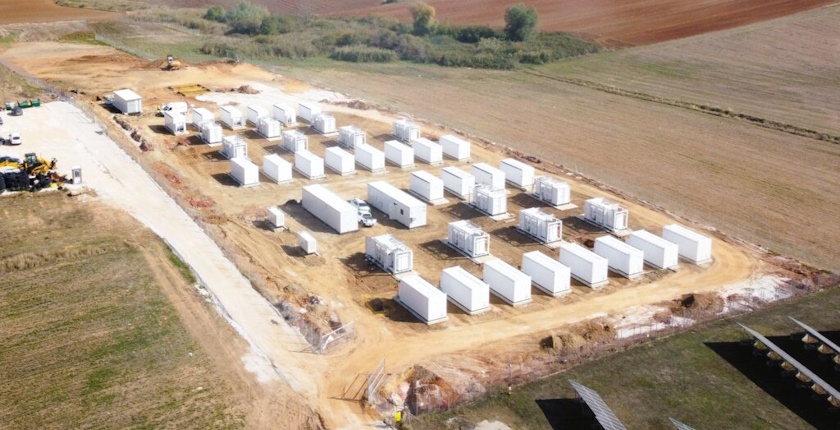
The new system in northern Greece consists of 26 Sungrow battery containers, each with a maximum capacity of 5 MWh and equipped with advanced CALB 314 Ah cells. Themelio includes 13 Sungrow power stations, containing 5,140 kW transformers and 33 kV medium-voltage switchgear, as well as two medium-voltage terminal substations.

The project won government support last year, in the form of a contract for difference (CfD), in Greece’s second auction for standalone energy storage systems. Almost all other beneficiaries of the program are struggling with strict deadlines.

by in News

Renalfa IPP expands its Tenevo, Kaolinovo PV plants in Bulgaria with batteries

Vienna-based Renalfa IPP commissioned a 65 MW / 260 MWh battery energy storage system within its hybrid power plant project in Tenevo. Also in Bulgaria, the joint venture expanded its Kaolinovo solar power plant to 33 MW and added a BESS of 33 MW in operating power and 110 MWh in capacity.

One of the biggest hybrid power plants in Southeastern Europe is gradually coming together. Renalfa IPP, which last year marked the start of the BESS boom in Bulgaria, said it added a battery system of 65 MW in capability and 110 MWh in capacity to the Tenevo solar power plant.

Project firm Tenevo Solar Technologies is a joint venture with Denmark-based Eurowind Energy. Renalfa IPP, headquartered in Austria’s capital city, is itself a joint venture, established by clean energy and e-mobility company Renalfa Solarpro Group and French renewable energy infrastructure fund manager RGreen Invest.

Ultimately, the plan is to build a 250 MW wind farm at the Tenevo site, in Yambol province in Bulgaria’s southeast. The first 69 MW in peak capacity of the solar power plant came online two months ago, within a 237.6 MW project.

Tenevo BESS to grow to 315 MW

Tenevo is one of the biggest co-located BESS projects in Europe to date, according to Renalfa IPP, which added that it surpassed 1 GWh of energy storage in operation.

The firm aims to increase the battery facility to 315 MW and 760 MWh by early next year, when it expects to complete the solar park as well.

Solarpro Bulgaria builds both battery storage facilities

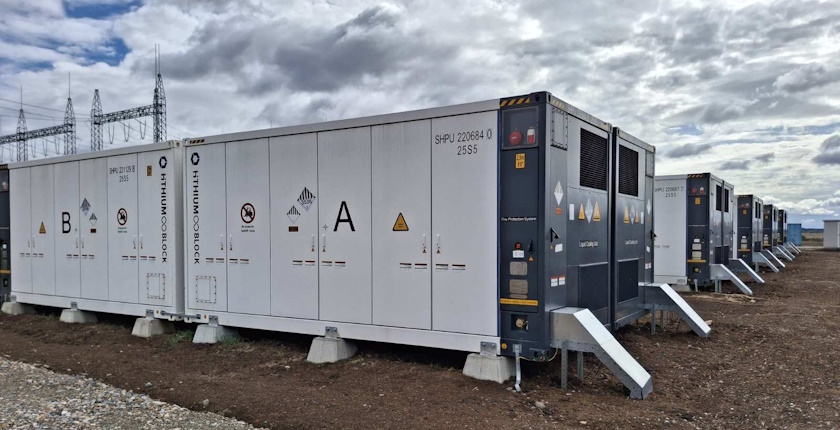
The project manager for the Tenevo BESS is Solarpro Bulgaria, part of Renalfa Solarpro Group, while Hithium and Kehua supplied the equipment. Solarpro and Hithium established cooperation two years ago and recently expanded it.

The same affiliate was the project manager and engineering, procurement and construction (EPC) contractor for the expansion of the Kaolinovo photovoltaic park in northeastern Bulgaria. Renalfa IPP said it grew to 33 MW in peak capacity from 10 MW, while a BESS of 33 MW and 110 MWh was also added. The facility was built in 2012.

Renalfa IPP is also active in Hungary, Romania, and North Macedonia, where it is about to add batteries to its Oslomej PV plant. In the last update, it said it has 554 MW in operational generating assets, BESS of 455 MW and 1.01 GWh in total, and over 1 GW of projects in late-stage development.

by in News

EU, Serbia to support ElevenEs in battery cell manufacturing expansion

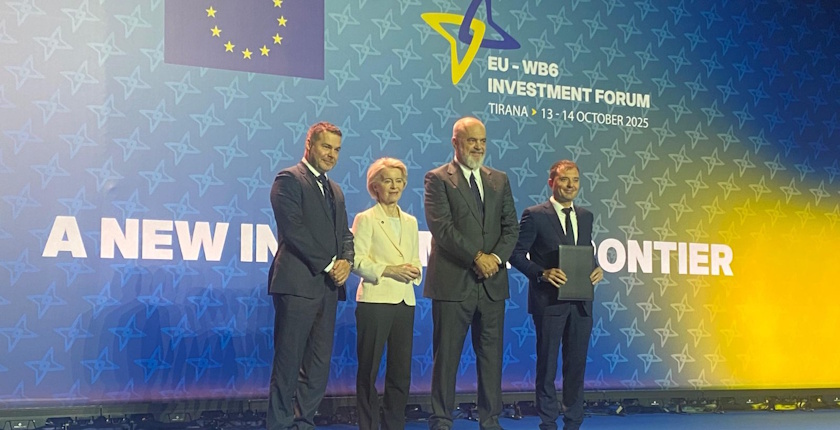
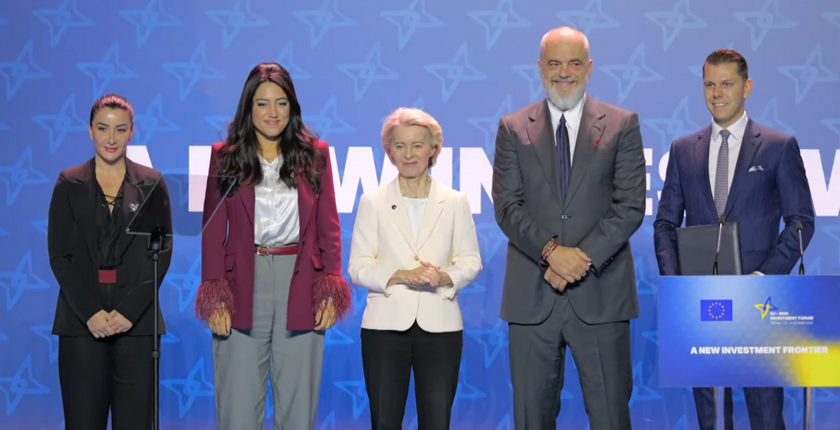
At the EU–Western Balkans Investment Forum in Tirana, Serbian company ElevenEs signed a joint declaration of support with representatives of the European Commission and the Development Agency of Serbia, marking a major step toward expanding battery cell manufacturing in the region.

ElevenEs CEO Nemanja Mikać signed the document in the presence of European Commission President Ursula von der Leyen. The joint declaration of support recognizes the company’s battery manufacturing expansion as a project aligned with the European Green Deal and Global Gateway strategy. The initiative highlights ElevenEs’s role in supporting the European Union’s decarbonization goals across the energy, transport, and industrial sectors.

The signing ceremony took place on the first day of the inaugural EU–Western Balkans Investment Forum, which is supported by the European Commission and aims to enhance economic cooperation and investment opportunities between European Union member states and Western Balkan partners.

“Signing this joint declaration of support with the European Commission and the Serbian Development Agency is an important recognition of the quality of the prismatic LFP blade cells battery we produce, and ElevenEs’s upcoming contribution to the EU’s decarbonization efforts, and the economic and industrial development across the region”, Mikać said.

With a EUR 700 million investment in two phases, ElevenEs will create roughly 1,000 jobs in Serbia

Mikać said the Western Balkans have the potential to become a key location for Europe’s energy storage industry, emphasizing that his company’s technological expertise and commitment to innovation demonstrate the region’s capability to be a reliable partner for the EU’s battery supply chain.

With an investment of EUR 700 million planned in two phases, ElevenEs aims to establish Serbia and the Western Balkans as a key hub for LFP (lithium-iron-phosphate) battery cell production, creating around 1,000 new jobs. The company’s LFP blade cells are designed to meet Europe’s growing demand for batteries used in electric vehicles and stationary energy storage systems.

Founded in 2022 as a spin-out from Al Pack Group, ElevenEs is building Europe’s first LFP gigafactory in Subotica. The company leverages three decades of electrode manufacturing expertise to produce long-lasting, cost-efficient batteries that support the continent’s clean energy transition.

by in News

Greece’s energy transition at risk amid gridlock with batteries, new tech

An overreliance on photovoltaics, combined with slow growth in the deployment of new technologies and storage, threatens Greece’s renewable energy future.

The country achieved rapid growth in renewable energy in the past five years, and penetration has surpassed 50% of the electricity mix.

However, the very success of the energy policies also led to significant issues that the government must address to achieve its 2030 goals.

Curtailments slashing profits as storage lags

This year, curtailments doubled from 2024, alongside a rising number of hours of zero or negative prices in the day-ahead market (DAM). It means that producers are subject to a loss of profits. Some investors have exited the Greek market as a result of worsening conditions.

At the same time, there is a huge licensing queue, as more than 15 GW of projects have acquired connection terms from the network operators. This is more than enough to cover the country’s 2030 goal and even beyond.

Energy storage is expected to provide a solution to curtailments and zero pricing. However, the first standalone battery projects have been pushed back nine months, as the original deadline was deemed too strict. Developers are competing against time to secure European funding through the Recovery and Resilience Facility (RRF), via the National Recovery and Resilience Plan Greece 2.0.

Energy mix diversification needed

Photovoltaics dominate the energy mix and this year they are expected to surge by 2 GW. There is growth in every segment of the solar market, although small investors complain of a preferential policy towards larger players. This is especially evident in the case of energy communities and farmers‘ photovoltaics, where such issues are abundant.

Wind installations have stalled in recent years and the offshore wind program has not made any progress towards the 2030 goal. The European Commission warned that investments in carbon capture and storage (CCS) are in danger of losing RRF funding at the current pace. Pilot projects in hydrogen are advancing, but it remains uncertain when they will become operational and at what scale.

The special renewables account turned red this summer, with an ever-growing deficit. There is also uncertainty surrounding projections about the country’s future electricity demand. Sales of electric cars and heat pumps are lagging behind the European average, while large data centers are seen as a way to increase consumption and support more power production.

All these issues mean that Greece may not achieve all its 2030 goals from the final National Energy and Climate Plan (NECP). The country initially presented a highly ambitious first version, but later reduced it to keep costs low for consumers.

by in News

CWP Europe gets European Commission’s backing for renewables projects in Albania, Montenegro

CWP Europe has signed a joint declaration with the European Commission, the Albanian Investment Development Agency, and the Montenegrin Investment Agency in support of its two landmark renewable energy projects – the Tropoja wind farm in Albania and the Montechevo solar farm with battery storage in Montenegro.

The declaration of support for CWP Europe’s projects was signed during the EU-Western Balkans Investment Forum in Albania’s capital, Tirana, in the presence of Albanian Prime Minister Edi Rama and European Commission President Ursula von der Leyen, according to a press release from CWP Europe, a leading renewable energy project developer in Southeast Europe.

The 600 MW Tropoja wind farm will advance Albania’s energy independence by providing clean, affordable electricity, supporting the country’s energy strategy, the company stressed.

The 600 MW Tropoja wind farm will boost Albania’s energy independence

In Montenegro, the 400 MW Montechevo solar farm will combine solar generation with battery storage directly connected to the country’s new 400 kV transmission grid. It will leverage Montenegro’s strategic interconnections – including the undersea power cable to Italy – to maximize the export of clean electricity and its integration into the European energy market.

A new energy backbone for the Western Balkans and Europe

Speaking at the signing ceremony, von der Leyen emphasized the Western Balkans’ increasing role in Europe’s clean energy transition.

“Today you are signing several investments that will do just that. From clean energy production in all six Western Balkan partners to energy storage in Montenegro. They will bring the cost of electricity down. And they will also contribute to our collective energy independence. You are building a new energy backbone not only for the Western Balkans. But for all of Europe,” said von der Leyen.

CWP Europe CEO Dimitar Enchev signed the declaration on behalf of the company, alongside Executive Vice Presidents Maja Turković and Viktor Garbev.

Enchev: We are unlocking the region’s immense renewable energy potential

“With Tropoja and Montechevo, we are unlocking the region’s immense renewable energy potential and strengthening cooperation across the Western Balkans. We greatly appreciate the support of the European Commission, the Albanian Investment Development Agency, and the Montenegro Investment Promotion Agency in advancing this shared vision for a clean, economically competitive and secure energy future of the region and Europe as a whole,” said Enchev.

Over the past 17 years, CWP has invested in sustainable development and the energy transition, successfully developing the largest wind farms in the region, including the largest one in Europe – the 600 MW Fântânele-Cogealac project in Romania. It is currently developing over 7 GW of renewable energy capacity, according to the statement.

by in News

International Power Supply inaugurates Bulgaria’s first battery gigafactory

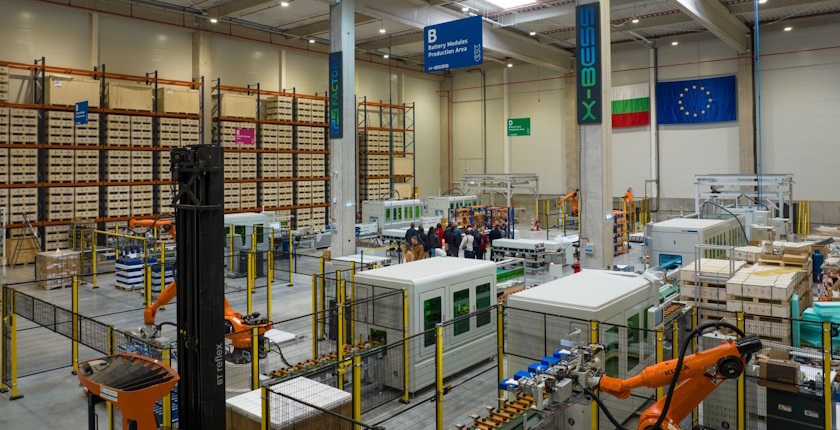
International Power Supply (IPS) opened its Factory X1, with a capacity of 3 GWh per year. It is the first gigafactory in Bulgaria for battery energy storage systems (BESS).

Recognized by the European Commission as a strategic project for a net zero industry, Factory X1 officially began production. International Power Supply (IPS) held the inauguration ceremony at the site in Chelopechene in the Kremikovtsi industrial district, part of the territory of Bulgaria’s capital Sofia.

The first battery energy storage gigafactory in the country is part of the Hemus high-tech industrial park. The facility will manufacture X-BESS modular systems of 8.2 MWh. Its annual capacity is 3 GW but IPS plans to lift it to 5 GW by the middle of next year.

Everything made in Europe except for battery cells

The company’s portfolio includes a proprietary battery management system (BMS). Actually, more than 70% of the supply chain is based in Europe, according to IPS. It includes distributed liquid cooling systems, mechanical structures, housings, electronics, control units, and inverters, the announcement reads.

“Made in Europe – the mission is possible. European know-how, European technology and IP, European sovereign BESS Gigafactory recognized as strategic manufacturing project from the European Commission. Today, it all starts – right here in Bulgaria,” said Chief Executive Officer Alexander Rangelov.

The lithium ion systems feature Chinese EVE and Cornex battery cells.

Power Technology Investment Group holds almost two thirds of IPS. It is controlled by the family of the founder Stoil Rangelov Trifonov. SIL Energy Invest is a minority partner.

Another factory could revive one of Bulgaria’s coal regions

Another manufacturing project is in the pipeline, worth EUR 160 million. It is for 10 GWh. IPS is seeking financial support from the European Union for the endeavor.

Locations in the vicinity of coal plants in the Maritsa East complex and Bobov Dol are under consideration, Economic.bg reported.

CEO Alexander Rangelov revealed that MM Energy decided to build a 10 GWh manufacturing facility in Poland using IPS’s technology.