by in News

Revolutionising retail: power of real-time energy visibility with SolarEdge ONE for C&I

As retail evolves, supermarkets are under pressure to boost efficiency and sustainability. The key enabler of this transformation is SolarEdge ONE for C&I – a comprehensive platform that delivers real-time energy visibility and management for commercial and industrial (C&I) environments.

SolarEdge ONE for C&I integrates advanced solar PV, storage, and energy analytics, providing retailers with a unified “single pane of glass” to monitor, control, and optimize energy flows across their entire estate. This platform enables supermarkets to harness solar energy during peak hours, store excess power, and intelligently manage consumption, reducing reliance on the grid and lowering operational costs.

With the rise of electric vehicles and increasing electrification, supermarkets face growing energy demands. SolarEdge ONE for C&I addresses this by combining real-time data from solar panels, refrigeration, lighting, HVAC, and EV chargers. The result is a holistic view of energy usage, allowing retailers to identify inefficiencies, prevent asset failures, and take targeted actions to reduce waste and costs.
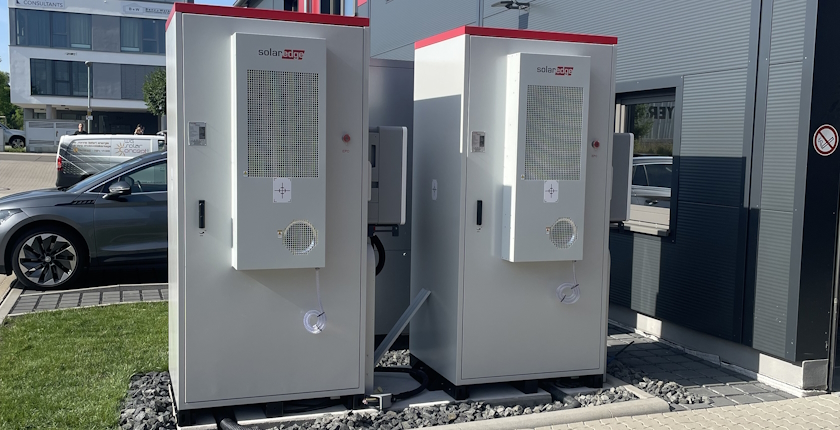
CSS-OD WG Solar Germany

Millions of sensor readings in real time

A standout feature of SolarEdge ONE for C&I is its edge-based computing, capable of processing millions of sensor readings in real time. This empowers retailers to visualize and analyze data instantly, even across hundreds of stores, warehouses, and logistics centers. The platform’s scalability means that even large retail chains can centralize energy management, ensuring consistent performance and rapid response to anomalies.

The financial benefits are significant: retailers using SolarEdge ONE for C&I have reported substantial reductions in energy costs – such as a 4.5% drop in lighting expenses – translating to millions in annual savings. The system also supports flexible energy pricing strategies, enabling retailers to shift consumption based on tariff changes, avoid penalties, and even participate in energy trading or arbitrage.
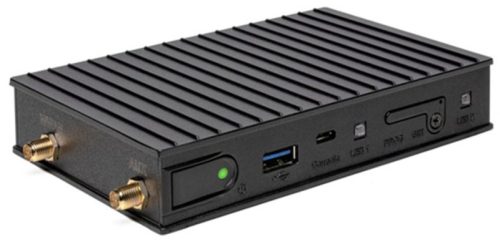
SolarEdge ONE Controller for C&I

SolarEdge ONE for C&I sets retailers on path to future

By leveraging SolarEdge ONE for C&I, supermarkets are not only meeting their sustainability goals but also gaining a competitive edge in a dynamic energy market. The platform’s advanced analytics and automation prepare retailers for the future, allowing them to optimize energy use, comply with carbon reduction targets, and unlock new revenue streams.

In summary, SolarEdge ONE for C&I is transforming retail energy management. Its real-time visibility, intelligent controls, and scalable architecture empower supermarkets to operate more efficiently, sustainably, and profitably – setting a new standard for the industry.

Find out more: SolarEdge ONE for C&I: optimizing all energy assets | SolarEdge

by in News

Energy communities reduce power bills for members, improve electricity market

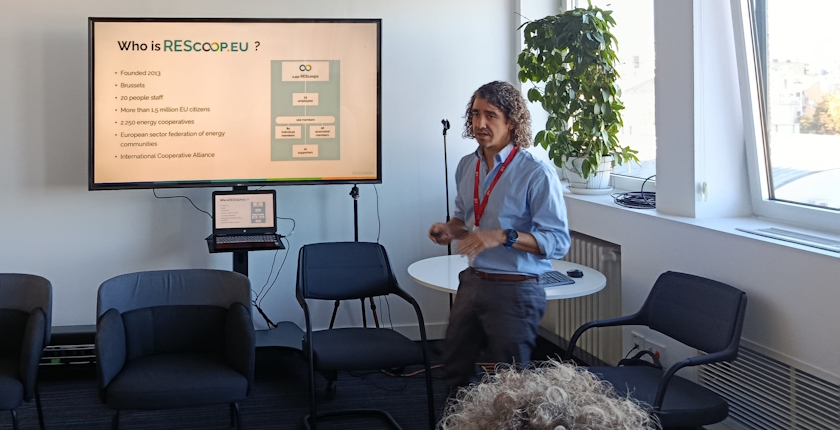
Citizen energy communities make the energy system greener and benefit society at a local level, Josh Roberts from European federation of energy communities REScoop said in his presentation, organized in Belgrade by Deutsche Gesellschaft für Internationale Zusammenarbeit (GIZ) GmbH. It is a form of association that also lowers costs for households, institutions and small firms and entrepreneurs, and contributes to the deployment of progressive technologies. Furthermore, it is a framework for democratic control.

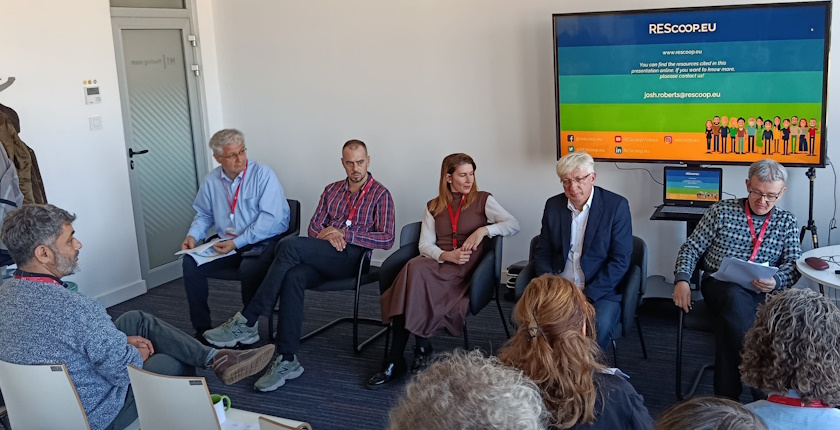
The event included developers from the emerging segment of energy communities and cooperatives in Serbia. They outlined the current initiatives and pointed to challenges regarding market entry, financing and policies.

The establishment and operation of energy communities is arranged through the European Union’s latest legislation, as well as in Serbia and other Western Balkan countries, but they are not a new concept. For instance, such entities still accounted for almost half of wind power output in Denmark in late 1990s, according to Senior Policy Advisor Josh Roberts from REScoop, the European federation of energy communities and cooperatives.

Speaking at a gathering that GIZ organized in Belgrade he pointed to the benefits for citizens, small firms and entrepreneurs and for institutions from setting up or joining energy communities. Initiatives in Serbia were also presented, and their progress in the same field, and the event included dialogue on the necessary technical solutions for connecting to the distribution grid.

Brussels-based REScoop was founded in 2013. In its membership are organizations from 22 European countries. They include Serbian energy cooperative Elektropionir. It gained the most ground regarding association and the implementation of projects.

One coal town has put up signpost for energy communities in Slovenia

Among other examples, Roberts highlighted Slovenia’s first energy community with a rooftop solar power plant for joint use. The facility is on the roof of an elementary school. The project involves aid for people living in energy poverty and it is free to join the group.

It is in the town of Hrastnik in a former coal industry area. The participants already lowered their power bills by 30%, and the gains will be even greater when they pay off the loan, Roberts said.

There are more than 1,600 energy communities in Austria

The representative of the REScoop federation stressed that municipalities in the Belgian region of Wallonia have succeeded in obtaining the right for citizens to participate in investments in green energy projects. It resulted in the foundation of a range of energy communities.

Roberts especially commended Austria’s legal framework with regard to enabling citizens to participate. The country hosts more than 1,600 energy communities.

Udruzivanje energetske zajednice smanjuje troskove trziste elektricne energije Dzos Roberts Josh REScoop GIZ

Energy community eases grid operator’s job

Energy communities are envisaged to return the invested funds to society at the local level. Subsidies are especially favorable for that, Roberts explained. Income is directed to education, infrastructure and aid against energy poverty.

The essence is that the community controls the distribution of the proceeds. In addition, grid operators can communicate more easily with one entity than with a hundred prosumers, Roberts underscored. Prosumers – or buyers-consumers, as they are formally called in Serbia, generate electricity for their own needs.

Pooling together enables providing services in the market, where energy communities can supply and store energy as well as conduct energy efficiency services, among other activities.

It means an entity of such type can ease the evening grid load, in moments of the highest demand, using energy from its batteries. That way, price peak shaving is achieved.

Registration process must be separate from defining activity

As for the procedure, Roberts said registration needs to be only for acknowledgement, rather than for approving specific activities.

“It’s about acknowledging the legal form and it’s about checking about how that legal form ensures compliance with the eligibility criteria. We have found very complex registration procedures. This does not work. It needs to be simple,” he stressed.

There are many activities that energy communities can undertake and they need to be able to enter them gradually, without complex procedures for licenses and permits

Conversely, in some jurisdictions there are simplified ways to get a supplier license. It enables an energy community to enter the activity gradually, instead of having to fulfill the requirements for all segments, even without having a comprehensive business model, the members or a business case, Roberts said.

He mentioned at the same time that one of the basic ideas is promoting inclusiveness.

“It’s already hard to set up an energy community, but it’s even harder to involve members who may have a hard time paying their bills, or have a lot less disposable income. So we found that the best models at the moment are for energy communities either to front the membership fees or for local authorities to pay for this upfront. And in energy sharing, we’re seeing more and more of energy donated to vulnerable households,” he stated.

Energy cooperatives helping improve rural areas from which people are leaving

Energy communities are giving people an opportunity for climate action and to contribute to their community, Roberts said. He added that such projects improve the area where they are conducted, stressing that it is especially important for rural areas from which many people are leaving.

A key point is that they enable participants to control their costs, production, consumption and energy sharing.

 The main challenge in Serbia is how to obtain a grid connection, alongside the matter of accessibility of incentives and loans

Importantly, energy communities are linked to the tradition of cooperatives, for which Serbia used to be known, but there is still much left to do around the legal framework.

There was word at the said gathering with representatives of institutions about the complexity of adjusting the electricity network to the production’s decentralization, as well as about the possibility to streamline the procedure for the establishment of energy communities and their operation.

Serbia is yet to address the accessibility of subsidies and financing, while currently the main issue is how to get grid connection approvals.

Energetsko zadrugarstvo smanjuje troskove trziste elektricne energije GIZ

Enterprise, association or cooperative

The speakers and other participants in the event agreed that the electricity market isn’t complete without energy communities, while that they modernize and democratize it.

When it comes to Serbian regulations, such legal entities have the right to conduct aggregation, but they need a license for it. Notably, aggregators have balancing responsibility, so they need to cover the deviations from the forecasted output.

Energy communities were introduced in the latest version of the Law on Energy. When they become regular in practice, the framework will need to be adjusted gradually to the situation. Citizens, firms and municipal authorities establish energy communities as enterprises, associations or cooperatives.

The bottom line is to enable citizens to take part in the clean energy transition and achieve local environmental, economic and social benefits, as opposed to prioritizing profits. It implies collective ownership, democratic control and reinvestment into the community with the goal of reducing energy poverty and promote energy independence.

The basic technical requirement for members is to have a smart electricity meter.

Elektropionir pioneering agrisolar in Serbia

The event’s organizers gathered the people who achieved the first steps in Serbia – from the Sunčani krovovi (Sunny Roofs) energy cooperative, created in 2019, to Platform for Energy Transition, which participated in uniting three residential buildings in Niš, which have a joint solar power plant and electric vehicle chargers. It is one of the first six prosumers in Serbia in the category of homeowner associations.

The Elektropionir energy cooperative managed through crowdfunding to install two cooperative-owned rooftop solar power systems on the territory of the City of Pirot, on the buildings of a local community council and a cultural center. As part of the Solarna Stara project, on Mt. Stara planina, the two villages receive the income from the sale of surplus electricity.

Srem is set to become the main region in Serbia for community energy

Next, the same organization built the first agrisolar power plant in Serbia. The 20 kV facility is at an organic farm, Organela, near the city of Valjevo.

Another recent undertaking is a rooftop photovoltaic unit on a school in the town of Ruma, envisaged to be the basis for an energy community. In the same area, Elektropionir is working on the installation of several prosumer power plants on house roofs and on aggregating them, inspired by the enthusiasm and the solar system of its member Nenad Maričić.

Owners and neighbors can jointly invest and they will be able to become an energy community and share energy among themselves.

Center for Sustainable Development to integrate string of energy systems of various technologies

Near Ruma, which is in the Srem (Syrmia) region, the City of Sremska Mitrovica and Regional Development Agency Srem have launched a major project. It is for the establishment of renewable energy communities (RECs), which are essentially a subset of citizen energy communities (CECs).

The local authority provided land for research and development. It is next to the regional waste landfill and a wastewater treatment plant. The plan is that the Center for Sustainable Development builds and integrates a string of energy systems.

They would include combined heat and power (CHP) production – cogeneration – from biomass, small wind turbines and a PV plant. The project also involves heat pumps and a storage facility assembled from old batteries.

There would be a facility running on biogas from the landfill within the center, and a magnet electric generator. Residents of the adjacent village of Jarak would be able to join the energy community.

Belgrade Energy Community is focused on equity, solidarity

Another group emerging in community energy is Belgrade Energy Community. It intends to apply a model of collective self-consumption in an urban area, with a focus on trust, equity and solidarity.

Its idea is to enable people to generate, share and use green energy. The plan is to map roofs and consumption and set up the first pilot installations.

According to the Belgrade Energy Community, it will donate 5% of the output to households affected by energy poverty. It consists of a cooperative, a civil society organization, two small enterprises, several prosumers and citizens.

by in News

Europe’s energy storage capacity to reach 100 GW this year, more than double by 2030

Energy storage in Europe has been expanding rapidly since 2020, with the total installed capacity in the European Union, the United Kingdom, Norway, and Switzerland set to reach 100 GW by the end of November. Pumped hydro storage has the largest share of the existing capacity, 50.6 GW, followed by batteries, with 44.8 GW of operating power, according to an analysis by LCP Delta and Energy Storage Europe.

All energy storage technologies combined are expected to grow by 115%, to 215 GW, by 2030, expanding at a rate of 20 GW to 25 GW per year, according to the report, titled the European Market Monitor on Energy Storage. On November 1, the cumulative figure stood at 99.3 GW.

Battery storage capacity has seen stronger growth than pumped storage hydropower plants this year, with 4 GW of new utility-scale installations, and is projected to expand to 163 GW by 2030.

Battery storage capability is expected to reach 163 GW by 2030

Of the total 44.8 GW of battery capacity, large-scale systems connected to the grid (front of the meter) account for 17 GW, and systems installed on the customer’s side (behind the meter) for 27.8 GW.

According to the report, 18 million homes have a solar system, and four million have battery storage. Residential battery sales are now stabilizing following the 2022-2023 peak, with recovery expected from 2027, supported by a rebounding PV market, rising electrification of homes and transportation, dynamic tariffs, and new financing models.

Europe has 18 million solar homes and four million homes with batteries

Germany has the largest number of home battery systems, 2.1 million, followed by Italy, with 780,000, the UK, with 280,000, Austria, with 200,000, and Belgium, with 160,000.

Jacopo Tosoni, Head of Policy at Energy Storage Europe, hailed energy storage as the fastest-growing clean technology in Europe, with the potential to become the engine of its competitiveness, according to a press release from the association.

Silvestros Vlachopoulos, Energy Storage Research Lead at LCP Delta, said that reaching the 100 GW energy storage capacity marks a key moment for the industry, setting the stage for an even faster renewable energy growth in the coming years.

LCP Delta and Energy Storage Europe believe the energy storage industry is only just getting started and will continue to make a substantial contribution to Europe’s energy transition, according to a press release from the association.

by in News

UAE, Montenegro establish strategic green energy partnership

A new agreement between the UAE and Montenegro will facilitate connecting the energy sector with financial technologies and artificial intelligence. The two countries are also considering to deploy solar, wind, hydropower, green hydrogen and battery projects.

The United Arab Emirates and Montenegro agreed to cooperate in the energy sector, setting up a bilateral strategic partnership for the development of renewables, modern energy infrastructure and advanced technologies. The deal envisages joint contribution to projects of strategic significance to Montenegro from solar, wind and hydropower plants to the application of battery energy storage systems and the development of the green hydrogen technology.

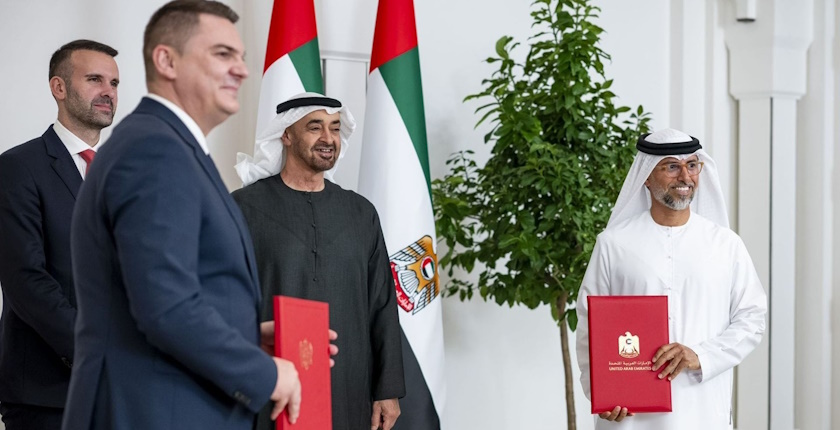
Minister of Energy and Mining Admir Šahmanović signed the agreement with UAE’s Minister of Energy and Infrastructure Suhail Mohamed Al Mazrouei. Montenegrin Prime Minister Milojko Spajić and the President of the UAE Mohamed bin Zayed al-Nahyan attended the ceremony.

Montenegro aspires to become digital hub

The agreement is especially significant for connecting the energy sector with financial technologies and artificial intelligence, the Ministry of Energy and Mining of Montenegro said. The country is aspiring to position itself as a regional hub for innovation, digital transformation and the energy transition, it added.

Within their strategic partnership, the two countries are looking to establish a fintech and AI council. It would consist of representatives of the public and private sector and work on the development of innovative solutions, attracting investments and strengthening the domestic economy through the implementation of progressive technologies.

Joint vision of sustainable development, energy security

The agreement is a new step in the partnership between Montenegro and the UAE, founded on a joint vision of sustainable development, energy security and economic progress, the ministry pointed out.

“The partnership confirms that foreign partners recognize Montenegro as a safe and attractive place for investment in energy and advanced technologies. Our goal is to, through cooperation with the United Arab Emirates, open a new chapter in the development of renewable energy sources, digital infrastructure and innovation,” Šahmanović stressed.

The agreement will facilitate faster materialization of projects strengthening energy security and contributing to the decarbonization of the economy and job creation in the sector of the future, the ministry said.

by in News

Cypriot firm preparing to build several solar parks with batteries

Public consultation is underway in Cyprus for environmental impact assessment (EIA) studies for three projects for photovoltaic units, of 14.5 MW in total peak capacity, with 40 MWh in battery storage. The developer, SAOLA, plans several such investments. It is facing opposition from the local population and environmentalists.

The electricity system in Cyprus is severely strained due to the lack of interconnections and energy storage and amid a photovoltaics boom and power demand surge. Even though the installation of the required battery capacity depends on substantial grid investments as well, investors are lining up to seize the opportunity in the budding market as soon as possible. Larnaca-based SAOLA opted for a group of hybrid power plants consisting of small photovoltaic units and battery energy storage systems (BESS) with a matching operating power.

Public consultation is underway for environmental impact assessment (EIA) studies that the firm submitted to the Department of Environment for three such projects. The sites are on the territory of the Agios Theodoros community, in Larnaca district.

SAOLA has vowed to apply a range of mitigation measures

One investment would involve the installation of a solar park of 5 MW in peak capacity together with a 5 MW / 15 MWh BESS. The second project is for 5.5 MW in photovoltaic panels and a battery system with a 5.5 MW capability and 15 MWh in storage capacity. The remaining facility would have 4 MW in peak PV capacity and BESS operating power, and 10 MWh of storage capacity.

The company owns the land. Suggestions and comments will be received until November 26.

Earlier, residents from the affected area raised concerns because the facilities would be on agricultural land, as well as about the impact on the rural landscape. Environmental groups and hunters pointed out that wildlife habitats would be affected.

SAOLA has vowed to conduct mitigation measures. According to the EIA studies, it would plant trees, preserve animal migration corridors and, after decommissioning, recycle equipment and return the area to its original state.

The company is preparing several other investments in photovoltaics with BESS, including in Alaminos and Anafotia in the same district.

by in News

R.Power completing its first solar parks in Romania while more assets enter construction phase

Poland-based R.Power began work on its Lazuri photovoltaic plant of 55 MW in peak capacity in Satu Mare county in northwestern Romania. The company is energizing four solar parks of more than 23 MW overall, its first operational assets in the country. In addition, it is about to break ground on its 254 MWh Scornicești battery energy storage system.

Notably, Electrica recently commissioned its Satu Mare 2 solar power plant, of 21.7 MW.

Romania is set to appear on the map of renewable energy plants and battery energy storage systems (BESS) operated by Poland-based R.Power. The company also has such assets in its home market and Portugal and projects under development in Germany, Spain and Italy. In line with the schedule, R.Power is energizing its first photovoltaic plants in Romania – Stâlpu, Suseni, Dudești and Punghina – and is preparing to begin the construction its first BESS in the country, in Scornicești.

The four solar parks in central and eastern Romania have more than 23 MW altogether in peak capacity. R.Power’s contractors are Nomad Electric and Waldevar. The former has also just begun the construction of the Lazuri solar park in northwestern Romania for the same client.

The PV park in the commune of the same name in Satu Mare county would have 55 MW in peak capacity. The company won a 15-year contract for difference (CfD) for 48 MW in connection terms at Romania’s first renewable energy auction.

Lazuri was part of a group of five solar power projects with support approved for 73.1 MW, or 85 MW in peak capacity. Its annual output is estimated at 70 GWh, equivalent to the consumption of more than 48,000 households in the country.

Major BESS project up for sale

The Scornicești project in Olt county, west of Bucharest, is for 127 MW in operating power. The BESS would have a duration of two hours, translating to 254 MWh in capacity. The project received EUR 15 million in funding via the National Recovery and Resilience Plan (NRRP or, in Romanian, PNRR).

R.Power has sold a 49.99% stake last month to Eiffel Investment Group. The transaction follows the two companies’ previous cooperation in photovoltaic projects.

The Polish firm recently said it would divest of a ready-to-build project for a battery energy storage system of 200 MW and 400 MWh. The move is part of an asset rotation and portfolio diversification strategy, according to the update.

The company added that the future facility near Bucharest would provide flexibility for the grid. It is known as Project Tessara.

Solar-battery hybrids in project pipeline

As of August, R.Power had over 1.2 GW of projects for standalone BESS in Romania. It said it would set up PV-BESS hybrid configurations as well.

“The start of construction of the Lazuri solar farm highlights our commitment to expanding operations in Romania, which is one of our key markets. Alongside Lazuri, we are developing additional photovoltaic and battery energy storage (BESS) projects there,” the company’s Chief Executive Officer and Co-founder Przemek Pięta said.

Satu Mare county also hosts several new solar parks. Romanian power supplier and distributor Electrica recently commissioned its Satu Mare 2 unit of 27.1 MW in peak capacity, in the Botiz commune.

The company partially funded the investment, worth more than EUR 20 million, from NRRP. The project included a 110/20 kV transformer station and grid connections.

by in News

PPC building three battery storage facilities in Greece

PPC Group has launched the construction of a battery energy storage system in the area of its Amyntaio coal plant. The company is also building BESS facilities at its thermal power plants Kardia and Meliti, as it is preparing to end coal use in Greece. One BESS unit is under construction in Bulgaria, as well. In Romania, PPC is expanding its wind park project Deleni, which would bring its operational portfolio in the country to over 1.5 GW.

Public Power Corp. – PPC Group is investing in energy storage in Greece and surrounding countries, complementing its solar and wind power investments and contributing to the transformation of coal regions. The government-controlled utility revealed that its future battery energy storage system near the Amyntaio coal plant in the Western Macedonia region is under construction.

The new station will consist of batteries with 50 MW in operating power and a duration of four hours, translating to a capacity of 200 MWh. Wholly-owned subsidiary PPC Renewables is responsible for the project. It is for liquid-cooled batteries of the LFP (lithium iron phosphate) technology.

The construction of two more electrochemical storage stations is already underway in the same northern region, in the areas of the Kardia and Meliti thermal power plants, the company pointed out. Their combined capability would be 98 MW, for 196 MWh in capacity.

Western Macedonia region to host 860 MW of energy storage

The role of energy storage units for the system is critical, as they aim to support the operation of adjacent photovoltaic power plants and contribute to the stability of the electricity system, PPC Group added. It is planning 860 MW of energy storage in the Western Macedonia coal region. The company said it would create 1,300 jobs in the construction phase and hundreds during operation.

Two pumped storage hydropower projects are included in the portfolio. The one that would transform the Kardia mine is for 320 MW and eight hours, and the facility at the South Field mine would have 240 MW and a 12-hour duration. PPC Group said it has completed the permitting process for the latter.

Solar power plants of 2.13 GW in northern Greece nearing completion

Earlier this month, the utility said its solar power projects in Western Macedonia of 2.13 GW overall are moving ahead at a fast pace and within schedule, in areas around coal plants Ptolemaida, Kardia, Agios Dimitrios and Amyntaio. Overall, upon their completion, the photovoltaic clusters in the region, largest ones in the entire Europe, will generate almost 3.15 TWh of electricity per year, the company added.

Coal land in the Western Macedonia region is turning into endless solar parks

It is equivalent to over 6% of the annual energy consumption in the Greek mainland. Utilising the land of the former lignite mines of Ptolemaida, Kardia, and Agios Dimitrios, PV plants totaling 1.19 GW are being installed, of which 90% is complete and some is in operation.

The clusters include PPC Group’s flagship project, of 550 MW. It would be the biggest facility of its kind in Southeastern Europe excluding Turkey.

In cooperation with the German company RWE, the construction of photovoltaic plants in Amyntaio of 940 MW overall is also advancing rapidly toward completion, the latest update reads.

Advancing investments in Bulgaria, Romania

In addition, the company said it is building a BESS unit of 25 MW and 55 MWh in neighboring Bulgaria.

As for other recent news, PPC said it is expanding its Deleni wind park project in Vaslui county in northwest Romania. The first phase, 140 MW, is supposed to be completed by the end of the year. The addition would amount to 85 MW, consisting of 14 turbines, the Greek company added.

The site is at the Bogdănița commune. With the 225 MW in Deleni, PPC in Romania would reach 1.5 GW in operational capacity.

by in News

Enery, SmartPulse launch regional partnership for multi-market optimization

Austrian green energy producer Enery and Turkish software company SmartPulse have entered a strategic partnership to deliver advanced solutions for the management and trading of renewable energy and storage assets. The collaboration aims to amplify market results for renewable energy producers and battery owners, while strengthening integration into the regional energy markets.

Enery Portfolio Optimization (EPO) – the licensed power trader of Enery managing a portfolio of over 750 MW of renewables assets and 700 MWh of battery capacity, will enhance its services through SmartPulse’s multi-market optimization platform, which automates trading, delivers real-time dispatch, and provides analytics and forecasting. The Turkish software company’s services coupled with EPO’s market know-how accelerate revenue growth and strengthen financial outcomes, according to the announcement.

The combined offering will be available for standalone and co-located storage assets on the Romanian market as part of a wider regional partnership. The platform aims to ensure the highest profitability from day-ahead, intraday and ancillary services markets, while ensuring the optimal physical dispatch of the asset, the Austrian company pointed out.

Balancing group members gain access to market opportunities

The service captures the full spectrum of financial arbitrage opportunities, reserve and balancing energy market participation to maximize revenue potential, Enery added. By joining its balancing group, renewables producers and battery storage owners gain access to all markets opportunities, reduced balancing costs, and 24/7 monitoring and trading through an artificial intelligence–powered platform, the update reads.

The offering in Romania will be part of a wider regional partnership

“Our international expertise in storage and renewables optimisation combined with SmartPulse’s innovative platform allows us to be more flexible and deliver tailored solutions for each asset. This partnership ensures that our Romanian clients will receive the highest quality services and optimised profitability from their assets,” said Enery’s Head of Energy Trading Petya Dimova.

Romania is among most dynamic power markets in Europe

The two companies stressed that they are bringing international experience and know-how in optimizing the value of large-scale renewables and storage assets to the Romanian market. The joint approach ensures clients can focus on business development, operations, and maintenance, while entrusting the financial realization of their electricity to expert hands, they said.

“Romania is one of the most dynamic power markets in Europe, and we are proud to make it a priority in our growth journey. By partnering with Enery, we bring our technology together with their strong local expertise to deliver advanced optimization and trading solutions,” Head of Global Growth at SmartPulse Uygar Yörük stated.

Enery, an independent power producer, operates a diversified portfolio of 511 MW and has 212 MW under construction. Its development pipeline amounts to almost 10 GW across 10 countries in Central and Eastern Europe. In the region that Balkan Green Energy News covers, the company is active in Romania, Bulgaria and Slovenia.

SmartPulse, founded in 2018 in Istanbul, focuses on short-term power trading automation. The firm has just been acquired by Volue.

by in News

Shanghai Electric becomes contractor for Romania’s largest solar park with batteries

Israeli company Econergy, owner of the largest photovoltaic park in Romania, has selected Shanghai Electric as the engineering, procurement, and construction contractor for a facility with a two times higher capacity and a 150 MW battery energy storage system.

After building the solar park in Romania’s Brașov county for Econergy, Shanghai Electric also won the contract for Părău 2. “Building on our successfully completed projects in Romania, we aim to further strengthen our presence across Central and Eastern Europe and deliver tailored solutions that accelerate Romania’s energy transformation,” Chairman of Shanghai Electric Group Wu Lei said.

The company’s photovoltaics portfolio in the country has reached 550 MW, according to the update. The investor behind Părău and Părău 2 is Israel-based Econergy. The first part, of 91.4 MW in peak capacity, was commissioned a year ago.

Econergy operates Romania’s largest solar park, Rătești. It has 155 MW in peak capacity. Părău 2 is for 342 MW, together with a 150 MW battery energy storage system (BESS).

Shanghai Electric is the EPC contractor for Econergy’s four PV parks, of which two are already operational

The investment is valued at EUR 275 million altogether. Părău 2, on 337 hectares in central Romania, has won a 15-year contract for difference (CfD) in December at the country’s first round of renewable energy auctions.

Econergy bid EUR 49.4 per MWh for 125 MW in connection terms or 150 MW in peak capacity. It was the biggest project on the list. The developer expects to put it into operation in 2027.

The solar park will supply both residential and commercial users, according to Shanghai Electric. Its Romanian portfolio includes Econergy’s Scurtu Mare 56 MW photovoltaic plant, which was provisionally cleared for the start of operations in June. Another one is the Ovidiu project for the same client, with 60 MW in peak capacity under construction.

Econergy has hinted that it could invite a partner for Părău 2. The Israeli company noted that it normally holds a 49% or 50% stake in Romania. It revealed that it could pick a previous partner such as Phoenix, headquartered in Israel, or RGreen Invest, a French investment fund.

by in News

First merchant battery projects in Greece to be highly profitable, study shows

Standalone battery units in Greece are expected to be profitable both in the short and the long term, according to a new study by the Aristotle University of Thessaloniki (AUTh).

The results were based on a simulation carried out for a variety of battery types, with storage durations between two and five hours. A maximum of two charge-discharge cycles per day was taken into account.

The study concerns merchant projects that rely exclusively on the market for their profitability. This means that they can generate revenue in three ways: through the daily arbitrage between the lowest and highest hourly wholesale power prices, from balancing the system and providing reserves.

Storage duration determines revenues

In the case of a battery with a capability of 10 MW and five hours of storage, the results showed a revenue of EUR 2.6 million in 2026. The amount falls after 2030 to EUR 1.6 million, which is still sufficient for investments. It remains near the same level all the way to 2037.

Revenues for a 10 MW facility with a two-hour duration are much lower. They begin at EUR 1.5 million in 2026 and decline to EUR 800,000 after 2030.

Projects will rely mostly on arbitrage after 2028

In comparison, a 10 MW project costs between EUR 2.5 and EUR 5 million to develop, depending on storage duration, according to current battery prices. Therefore, it is evident that investors would return the investment in less than 10 years. Typical systems have an operational life expectancy of 20-25 years.

“Batteries will benefit initially from high revenues through balancing and reserves provision. After the first few years, they will rely mostly on arbitrage,” said Pantelis Biskas, professor at AUTh.

Greece published a plan earlier this year to develop 4.7 GW in commercial battery storage systems. Businesses are currently moving to secure licenses and the first installations are expected to come online by 2028.

It means the projects will probably miss the initial high returns that AUTh expects. However, they will still be profitable, especially the ones with long storage duration.