by in News

Batteries totaling 5,899 MWh in grid connection procedure in Serbia

Investors in Serbia are obtaining approvals for connecting their planned battery energy storage systems of an overall 2,021 MW and 5,899 MWh to the grid. The projects are for standalone batteries and ones that would be co-located with power plants.

Battery energy storage systems (BESS) are rapidly expanding worldwide, and Southeast Europe is no exception. European Union member states in the region such as Bulgaria and Romania are making major strides, while the other countries are trying to catch up. For example, Bosnia and Herzegovina, Montenegro, North Macedonia and Serbia.

As of September 29, Serbia’s transmission system operator (TSO) Elektromreža Srbije (EMS) received a total of 12 applications for the development of connection studies for standalone BESS, Nebojša Vučinić, manager of the Development Division of EMS, told Balkan Green Energy News.

Two applications were submitted in January for the study development interval of March 1 to June 30, 2025, and ten more were received for the current interval, which lasts from September 1 to December 31. Out of the first two applications, the one from Green BESS KV is no longer valid, because the firm didn’t submit a bank guarantee.

EMS develops connection studies every year in two intervals.

The following companies are in the process of connecting standalone BESS:

  • MKBDP Energy
  • Green Land New Energy
  • Green Mountain New Energy
  • BP WPP
  • Blue BESS KV
  • Red BESS KV
  • Yellow BESS KV
  • ENLIGHTNES PV OPERATIONS
  • ENLIGHTNES PV PARK
  • Gridflex

As for the status of their applications, MKBDP Energy has submitted a bank guarantee, and the signing of the grid connection contract is expected.

For the other ten requests, the grid connection studies are underway. They are expected to be completed by December 31.

Standalone storage facilities are planned in Valjevo, Vranje, Subotica, Kovačica, Vršac, Leskovac, Kragujevac, Kruševac, Jagodina, and Ćuprija.

A total of 55 battery projects are in the connection procedure

The 11 standalone storage projects amount to 1,072.66 MW and 2,981.98 MWh altogether, Vučinić said.

The 44 storage facilities that would be co-located with power plants utilizing variable renewable energy sources would have 948.46 MW and 2,917.31 MWh, as stipulated in the Law on the Use of Renewable Energy Sources.

All battery storage projects in the grid connection process amount to 2,021.12 MW and 5,899.29 MWh, Vučinić stressed.

MKBDP Energy’s project has advanced the most in the connection process

According to Vučinić, implementation of BESS projects depends on the progress that an investor achieves. Currently, MKBDP Energy’s investment has passed the most milestones in the connection process, he added.

EMS noted that the grid connection process for standalone battery storage is defined by the Law on Energy and bylaws.

The deployment of standalone batteries complements the integration of power plants running on variable renewable sources

The state-owned company sees no obstacles to integrating standalone BESS into the transmission system. The TSO expressed commitment to assisting investors while maintaining the safety of the entire power system’s operation.

EMS also called the increase in applications for standalone batteries a positive development.

The emergence of standalone batteries complements the integration of power plants utilizing variable renewable energy, and since a large number of such power plants are expected to be connected, the integration of standalone storage helps the power system’s flexibility and safety, Vučinić underlined.
by in News

HiTHIUM, Solarpro partner to develop long-duration energy storage in Eastern Europe

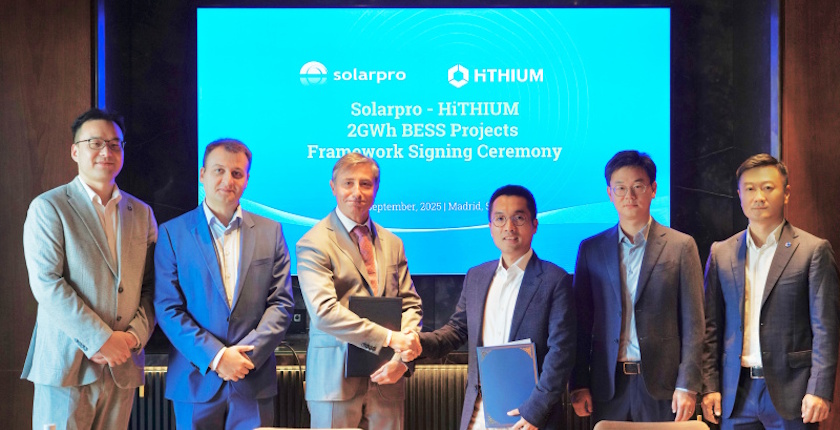
China-based HiTHIUM and Solarpro Holding have signed a 2 GWh master supply agreement for battery energy storage systems.

HiTHIUM is a global provider of long-duration energy storage (LDES) technology, while Solarpro Holding is an EPC provider of photovoltaic and battery energy storage systems (BESS) in Europe.

The agreement will support multiple utility-scale projects across Eastern Europe, including but not limited to Bulgaria, Hungary, Romania, and North Macedonia – which are accelerating renewable deployment as part of their energy transition strategies, according to HiTHIUM.

HiTHIUM will supply its bespoke DC block solutions

Under the agreement, HiTHIUM will supply its bespoke direct current (DC) block solutions, applying the ∞Power 6.25 MWh BESS with high-performance batteries of 1,175 Ah and 587 Ah.

The devices will be deployed exclusively in several utility-scale projects across Europe, HiTHIUM stressed.

DC block is the basic unit of a large BESS and a ready-to-deploy solution.

HiTHIUM expressed the opinion that intraday market volatility and cannibalization of photovoltaics can be addressed mostly by LDES solutions.

Li: We will deliver projects that turn renewables generation into dispatchable, flexible, and reliable resources

According to Kelson Li, HiTHIUM Europe Senior Director of Sales, Eastern Europe’s energy transformation requires energy storage solutions that go beyond short-term balancing.

“By combining HiTHIUM’s industry-leading long-duration energy storage technology with Solarpro’s deep regional experience in large-scale renewable energy integration, we will deliver projects that turn renewable generation into dispatchable, flexible, and reliable resources, advancing the region’s clean energy transition,” he underlined.

Nenov: LDES is a next critical technology upgrade of Europe’s electricity generation mix

Konstantin Nenov, Solarpro Chairman, said his company sees LDES as the next critical technology upgrade of Europe’s electricity generation mix.

“Partnering with HiTHIUM allows us to combine their advanced BESS technology with our proven track record in designing, integration and delivering complex renewable and storage projects across the region,” he stated.

HiTHIUM and Solarpro have already collaborated on landmark projects in Bulgaria and Hungary that were commissioned in 2024 and 2025.

by in News

Enery, Teva sign 15-year virtual PPA for solar, BESS in Bulgaria

Renewable energy firm Enery and Teva Pharmaceutical Industries have signed a 15-year hybrid power purchase agreement.

Under a financial or virtual power purchase agreement (PPA), a future solar power plant with two battery energy storage systems (BESS) will supply 60,000 MWh of electricity annually to Teva’s two plants in Bulgaria.

The landmark agreement is the first of its kind in the region to include green electricity supply from a newly built solar power plant with BESS and the longest one in Bulgaria so far, Enery said.

It is the Austrian company’s 15th PPA signed in the last four years across Central and Eastern Europe and the second one involving a Bulgaria-based offtaker.

The PPA sets a precedent for integrating storage within virtual PPA structures

Over the 15 years, the project is expected to avoid emissions of 15,840 metric tons of CO2 equivalent per year, supporting Teva’s goal to reduce scope 1 and 2 emissions by 46.2% by 2030.

The hybrid PPA also sets a precedent for integrating energy storage within virtual PPA (vPPA) structures, enhancing grid resilience and the value of renewable energy procurement, Enery stressed.

According to the company, the agreement will facilitate the construction of a photovoltaic park of 122 MW in peak capacity, equipped with two BESS installations at the site — one with a capacity of 70 MWh and another of 130 MWh. Located on non-arable land in the villages of Knizhovnik and Dolno Voyvodino in the Haskovo municipality, south Bulgaria, the Knizhovnik solar park is projected to produce 200 GWh of clean electricity per year.

Decktor: Teva is not only securing clean energy but also enhancing grid resilience and flexibility

“This agreement represents another significant step forward in our decarbonization journey,” said Josh Decktor, Teva’s Vice President and Global Head of Environment, Health, Safety and Sustainability.

By investing in a newly built solar asset with integrated storage, Teva is not only securing clean energy but also enhancing grid resilience and flexibility – key components of its strategy to meet its science-based targets, he added.

“We are proud that our projects are being realized thanks to an innovative partnership with companies that are proven leaders in their market niche, such as Teva, and demonstrate a strong commitment to the environment and society,” Enery’s Chief Commercial Officer Severin Vartigov stated.

by in News

Power the Balkans: Optimizing Solar & BESS projects with RatedPower – webinar announcement

RatedPower, a leading provider of software for solar plant design and optimization, is organizing a free webinar to present its solutions that boost the efficiency and profitability of PV and battery storage projects. The online event, to be held on October 13 at 3 pm CEST, comes at a time when renewables are gaining momentum in the Balkans, increasing the need for complex planning and engineering and making digital solutions essential for project optimization.

In the upcoming webinar, which you can register for using the REGISTRATION LINK,  experts will showcase how RatedPower solutions automate and streamline the design of solar power plants and battery energy storage systems (BESS), maximize efficiency and return on investment, provide accurate reports for better decision-making, and enable seamless collaboration across teams, according to an announcement from the company.

“Digital solutions are becoming essential to streamline processes – from design and engineering to operations, reporting, and collaboration. By integrating advanced software tools, developers and engineers can save time, reduce costs, and maximize the efficiency and performance of their assets,” reads the statement.

RatedPower’s advanced software tools save time, reduce costs, and maximize performance

RatedPower, part of Enverus, a global software-as-a-service (SaaS) platform for the energy sector, offers a one-stop cloud-based solution for PV plant and BESS design and engineering as well as hybrid systems. Its end-to-end platform offers integrated services that cover design, engineering, procurement, and even operational optimization, ensuring a seamless lifecycle approach.

According to the statement, users have confirmed to have doubled their portfolio, increased their profitability by over 20%, and reduced the levelized cost of energy (LCOE) by 5%.

RatedPower is not limited to traditional solar. Its model adapts to hybrid renewable energy systems, BESS integration, and smart grid optimization, positioning it as a strategic partner for the next generation of sustainable energy solutions.

By harnessing real-world performance data and predictive analytics, it helps developers, investors, and operators make smarter, more profitable decisions, mitigating risk and maximizing ROI, reads the statement. The platform enables renewable energy professionals to automatically design, simulate, and optimize PV plants and storage systems.

Unlocking the Balkans’ renewables potential with RatedPower solutions

Headquartered in Madrid, Spain, RatedPower has a portfolio of thousands of projects across Europe, the Americas, Asia, and Africa, with a client base that includes leading developers, utilities, EPC (engineering, procurement, and construction) companies, and engineering firms.

Serving more than 480 companies and 5,800 users worldwide, RatedPower has designed over 64,000 projects worldwide and produced simulations for a total of 5.1 TW of capacity. The projects are supplying green energy to 13 million households, mitigating 18 million tons of CO₂ emissions.

RatedPower has a global footprint, but it views the Balkans as a key region for renewable energy growth.

“RatedPower is committed to empowering renewable energy professionals worldwide – and the Balkans represent one of the most exciting regions for renewable growth,” said Emil Trepin, Account Executive at RatedPower.

Photo: Emil Trepin, Account Executive at RatedPower

“Our software provides the precision, efficiency, and collaboration tools needed to take PV and BESS projects from concept to completion, helping to unlock the region’s true potential,” he stressed.

by in News

Zen Energy Group kicks off construction of hybrid PV-BESS project in North Macedonia

Luxembourg-based Zen Energy Group has started the installation of a hybrid energy project in North Macedonia, combining a solar power plant and a battery energy storage system.

A solar power plant with a battery energy storage system (BESS) could become the country’s second hybrid power plant, with Fortis Energy installing energy storage near Oslomej solar park.

Zen Energy Group kicked off the construction of a landmark solar plus storage project in North Macedonia, Yossi Edelstein, Chief Executive Officer of Zen Energy Group, wrote on LinkedIn.

From concept to construction, Zen Energy Group is making the future of energy a reality in the country, he added.

“We are proud to share that our 82 MW utility-scale solar project with 50 MWh BESS in North Macedonia has officially entered the construction phase,” Edelstein stated.

The PV plant will use LONGi bifacial solar panels

The company’s team kicked off earthworks, development of access roada and cut-and-fill activities. The project is scheduled to start delivering green electricity to the national grid by late April 2026 and to achieve full commercial operation date in August 2026, according to Edelstein.

The project marks another significant step toward advancing clean energy generation in the region, he added.

According to the firm’s website, the photovoltaic plant will be located near Negotino. It will use LONGi bifacial solar panels for the expected annual production of 124,198 MWh.

The financing was secured from NLB bank, the website reads.

The developer revealed that it has signed a power purchase agreement (PPA) for 10 years in total, with a six-year fixed price period.

Seven projects in the pipeline

Works near Negotino (photo: Zen Energy Group/LinkedIn)

Zen Energy Group is developing seven energy investments – for three solar parks, two wind farms, a standalone BESS, and a commercial and industrial (C&I) portfolio in the UK.

Wind farms Unirea (102 MW) and Traian (78 MW) are located in Romania, while two PV facilities in North Macedonia would have a total capacity of 137 MW. The Negotino endeavor is for 82 MW and the Armatus investment envisages 55 MW.

Solar project Hajdučica of 125 MW is planned in Serbia. All three PV plants would have BESS. The company is developing the Lacu Sarat standalone battery facility in Romania. If it were in operation now, it would be the largest BESS in Europe.

by in News

Bajramović: Investments of BAM 1.4 billion needed for distribution grids in BiH

Necessary investments in Bosnia and Herzegovina’s electricity distribution grids by 2030 amount to BAM 1.4 billion (EUR 716 million), according to Zijad Bajramović, chairman of the Bosnia and Herzegovina committee of the International Council on Large Electric Systems (CIGRE).

The growing installation of power plants utilizing renewable energy sources is creating congestion in transmission and distribution networks, so the limited available capacity for their connection is an issue across the entire region, Zijad Bajramović told state news agency Fena. Nezavisne Novine republished the report.

An additional burden on the distribution network is expected from the electrification of transportation and increased electricity use for heating and cooling.

Energy storage is a solution for the problems emerging in the grid

Bajramović explained that new 110 kV substations are necessary, as is the completion of the ongoing transition to the 20 kV voltage level. Attention should also be paid to integrating prosumers, especially the households that both produce electricity, with solar panels on their roofs, and consume it.

He highlighted balancing as well as maintaining voltage conditions and supply quality as the main challenges from the rise in renewable electricity capacity on the grid. Energy storage is a solution for the issues.

Batteries can prevent renewables generation curtailments

Bajramović expects battery energy storage systems to play an increasingly significant role in relieving network congestion.

BESS, in his words, are a flexibility tool for absorbing excess generation locally, and temporarily easing the pressure on the transmission grid. They can prevent curtailments of power generation from variable renewable sources, he added.

Bajramović recalled that calculations have showed batteries of 225 MW / 450 MWh in total would be necessary to connect 1,500 MW of solar power capacity and 1,000 MW of wind power to the transmission network.

An increase in distribution network tariffs would provide funds for investment in strengthening and modernizing the distribution network, in his view.

Batteries are being installed at a rapid rate around the world as well as in the region. Not only private companies, but also state-owned utilities such as Romania’s Hidroelectrica and Montenegro’s Elektroprivreda Crne Gore (EPCG) are investing in such projects.

by in News

Serbia’s EPS plans to build 500 MW of wind farms with strategic partner

State-owned power utility Elektroprivreda Srbije (EPS) and the Government of Serbia plan to develop a 500 MW wind farm project with a strategic partner, according to Aleksandar Latinović, Head of Ancillary Services at EPS. He also noted that a 1,000 MW solar power project is expected to be online by 2029.

The Energy Infrastructure Development Plan and Energy Efficiency Measures for the period through 2028 envisage the construction of wind farms with a capacity of up to 500 MW.

The project could be similar to the 1,000 MW solar power project with 200 MW battery energy storage systems (BESS) that Serbia is implementing with strategic partners Hyundai Engineering and UGT Renewables (UGTR).

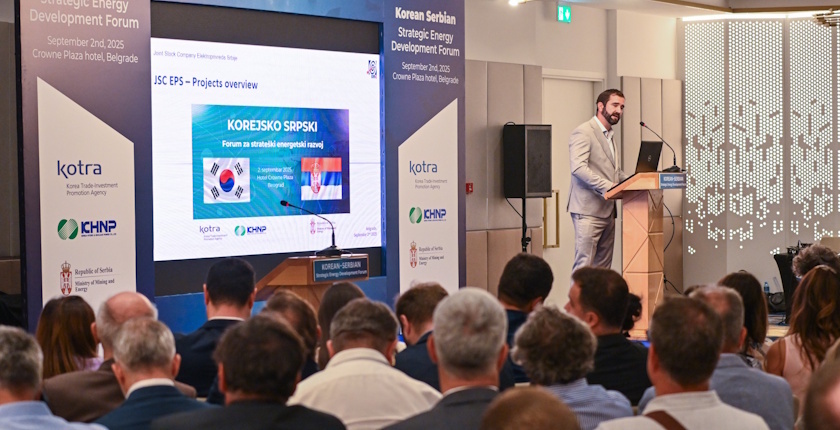
During the presentation of EPS’s development projects at the Korea-Serbia Strategic Energy Development Forum, held in Belgrade, Aleksandar Latinović recalled that the recently built Kostolac B3 power plant, as well as the pumped storage hydropower plant Bistrica, will provide energy to balance the system.

Tenders for two solar power plants are expected next year

Increasing the balancing reserve, in his words, is crucial for integrating new renewable energy sources into the power system. He particularly highlighted the Bistrica project, noting that it will have the same energy storage capacity as all currently existing BESSs in Europe. According to Latinović, the plant is expected to be operational by 2031 or 2032.

Latinović also recalled that EPS recently inaugurated Petka, its first solar power plant on a coal tailings dump. Though a small project, it is significant because EPS owns several thousand hectares of similar tailings and ash dumps.

The solar power plants Kolubara A (78 MW) and Morava (42 MW) are in the development phase, with tenders expected to be announced next year. Meanwhile, the Klenovnik project (110 MW) is undergoing a review of its preliminary feasibility study.

The 1 GW solar project is expected to be connected to the grid by 2029

Regarding wind energy, the 66 MW Kostolac wind farm is scheduled to begin trial operations next month.

For other wind farm projects, EPS and the Serbian government plan a 500 MW project with a strategic partner, he noted, stressing that EPS is willing to acquire already developed, construction-ready projects.

Latinović recalled that the preparation of a spatial plan for the 1 GW solar power project is underway. Strategic partners have already begun preparing investment and technical documentation, and a grid connection agreement with transmission system operator Elektromreža Srbije (EMS) has been signed.

A shortage of balancing energy could be an issue

According to the project timeline, this project will be operational and connected to the grid within four years, Latinović noted.

He stressed that integrating new renewable energy sources into the power system could lead to a shortage of balancing reserves. It is also possible, in his words, that there will be an excess of electricity when a significant amount of renewable energy is produced.

For this reason, EPS has initiated a study to analyze the use of hydrogen and heat storage.

The main focus of this study will be optimizing surplus electricity from intermittent renewable energy sources, increasing the system’s balancing reserve, replacing fuel oil in coal power plants with hydrogen-based fuel, and substituting gas and coal in heat production, Latinović explained.

by in News

Montenegro’s power utility seeks contractor for two battery storage systems

Montenegro’s state-owned power utility, Elektroprivreda Crne Gore, has launched a tender for the procurement and installation of two battery energy storage systems with a total capacity of 60 MW/240 MWh.

Elektroprivreda Crne Gore (EPCG) is seeking a partner for the design, supply, installation, testing, and commissioning of two battery energy storage systems (BESS), each with a capacity of 30 MW and 120 MWh, with an output voltage of 35 kV.

The estimated value of the procurement is EUR 48 million excluding VAT, according to the public call.

The EPC (Engineering, Procurement, and Construction) contract for the batteries is a comprehensive turnkey agreement covering all phases of project development, including design, equipment procurement and delivery, permitting, construction, and commissioning.

The contract also includes training for EPCG personnel

Technical staff training is included to ensure the proper and safe operation of the facilities, as well as to validate their performance in accordance with the contracted terms, which will be mutually confirmed by signing a technical acceptance report.

The EPC covers all technical, engineering, logistical, and construction details, workplace health and safety, environmental protection, and responsibilities for performance guarantees and technical maintenance of the facility, according to the public call.

According to previous announcements, EPCG intends to utilize existing infrastructure for connection to the transmission grid. Potential locations include the 60 MWh hydropower plant Perućica, EPCG’s steel mill Željezara Nikšić with two 60 MWh units, and the 60 MWh Pljevlja thermal power plant.

The first two battery systems will be installed at the Željezara site.

EPCG held talks with several investors

In March, the company announced it had held discussions with several companies and financiers from the region, Europe, and beyond.

EPCG initially announced its intention to install batteries in early September last year. At that time, the EPCG Board of Directors adopted a project task proposal for adding BESS capacities.

According to the project task, EPCG aims to optimize the utilization of all renewable energy sources, alongside numerous new renewable energy projects.

The company plans to secure the flexibility of the power system with energy storage systems based on lithium-ion batteries, according to EPCG.

by in News

Bulgaria opens public consultation on subsidies for 1.9 GWh of battery projects

Bulgaria’s Ministry of Energy has launched a public consultation on a new round of its subsidy program for battery energy storage projects, aimed at facilitating the integration of renewable energy sources. The plan is to support the deployment of 1.9 GWh of new battery capacity with around EUR 118 million.

In the first round of the National Infrastructure for Storage of Electricity from Renewable Sources (RESTORE) program, Bulgaria approved EUR 587 million in subsidies for 82 battery energy storage system (BESS) projects totaling 9.71 GWh, with another 30 applicants falling below the threshold.

Draft application and implementation documents for RESTORE 2 will be available for comments and proposals until September 15, while a tentative date for inviting applications for grants is September 18.

The BESS systems are expected to be deployed throughout the country and connected to the transmission network or the distribution grid. A BESS system must have a minimum nominal AC capacity of 10 MW to qualify for the program.

The minimum required capacity is 10 MW

The maximum support is 50% of the eligible project costs, but not more than BGN 156,466 (EUR 80,000) per 1 MWh of usable energy capacity, according to the documents. In the previous round, the maximum support per 1 MWh was BGN 148,600 (around EUR 76,000), Economic.bg recalled.

The deadline to build and commission the BESS capacities is July 31, 2026. The battery systems selected in the first part of the program must come online by the end of March 2026.

The new round of RESTORE aims to finance projects in more advanced stages

Another difference from the previous call is that proposed projects must be in a much more advanced stage. In addition to a connection agreement, applicants must already have a construction permit or installation permit issued, a signed supply contract or orders and payments made for the equipment for the storage system, as well as secured financing for the investment, according to the draft documents.

by in News

German startup Voltfang turning used EV batteries into energy storage for solar, wind

German startup Voltfang has opened a plant to manufacture energy storage units for solar and wind from used electric vehicle batteries. The company says the facility is the largest of its kind in Europe, with annual output set to reach 250 MWh in 2026.

The plant in Aachen will produce second-life battery storage systems for commercial, industrial, and large-scale applications. Its annual output is planned to rise to 1 GWh by 2030.

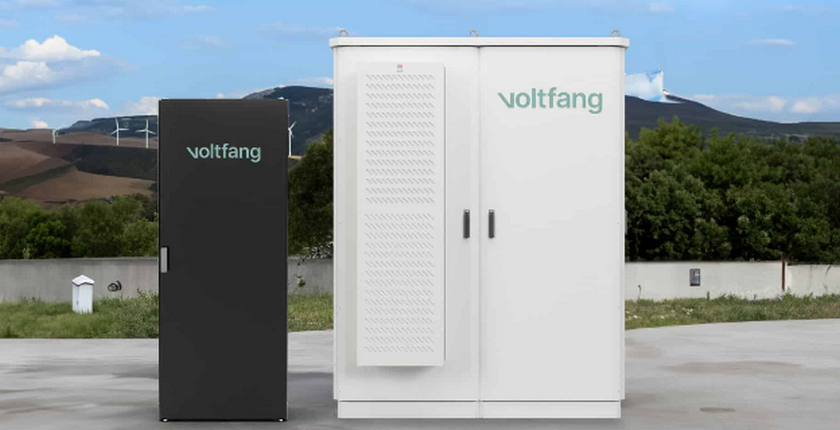
The facility will assemble fridge-sized energy storage units that households and companies can use to store excess electricity generated by solar panels or wind turbines.

Voltfang’s batteries can be used by homes and businesses to store energy from solar or wind facilities

The plant employs around 100 people, and Voltfang claims it is the largest facility in Europe for repurposing lithium-ion batteries.

David Oudsandji, co-founder and managing director of Voltfang, said the company’s goal is to develop high-performance battery storage systems for German and European industry.

Voltfang hopes to turn a profit by next year, but Oudsandji noted that the supply of used EV batteries is still small, as most such vehicles are only a few years old.

The supply of used electric vehicle batteries is still limited

Another obstacle is that new batteries, mainly from China, are becoming increasingly efficient and affordable, while refurbishing old ones is a complex process.

On the other hand, it is more sustainable and helps create a circular economy and ensure energy independence, according to Oudsandji.