by in News

MEMO Analysis Links Solar Output to Lower Day-Ahead Power Prices in North Macedonia

Electricity generation from solar power plants tends to push prices down on the power exchange, while reduced solar output is associated with price increases, according to an analysis by Ana Angelova, a market operations specialist at the National Electricity Market Operator (MEMO).

The analysis aimed to identify seasonal trends and highlight the relationship between photovoltaic (PV) generation, electricity consumption, traded volumes, and day-ahead prices on the North Macedonian power exchange. MEMO noted that the day-ahead market operates in an isolated mode.

Angelova used official power exchange data for 2024, focusing on hours when PV plant efficiency exceeded 30%.

Consumption remains broadly stable across the year

The findings point to a clear seasonal pattern. Electricity consumption stays relatively steady throughout the year, with only minor declines during spring and summer. PV generation, however, shows a pronounced seasonal swing—peaking in summer and reaching its lowest levels in winter.

Angelova also stressed that higher PV output coincides with increased traded volumes on the day-ahead market.

Prices bottom out in April, rise toward winter

According to the analysis, day-ahead prices are lowest in April, a period linked to milder weather, lower demand, and stronger solar production. From summer onward—and particularly during winter—prices trend higher, peaking in November.

The November price peak aligns with a combination of weak PV generation and higher consumption.

“Increased electricity generation from photovoltaic plants is associated with lower prices, while low generation leads to higher market prices, emphasizing the impact of renewable energy availability on price formation. The trend indicates that energy policies should focus on addressing weaknesses during the winter period and harnessing the potential of solar energy in summer,” Angelova wrote.

Proposed measures to strengthen renewables integration
north macedonia solar analysis memo power exchange ana angelova

Photo: MEMO

Angelova outlined several options to improve the integration of renewables—especially solar—into the power system. The proposed mechanisms include:

  • Flexible market mechanisms: introduction of a 15-minute trading interval, creation of an intraday market, dynamic tariffs, and guarantees of origin.

  • Energy storage technologies: battery energy storage systems (BESS) and pumped-storage hydropower plants.

  • Alignment with the European energy framework: adoption of ENTSO-E grid codes, coupling with the single European electricity market, deployment of smart meters, and use of financial instruments such as contracts for difference (CfD) and power purchase agreements (PPA).

by in News

Enery secures EUR 250 million for hybrid power plants in four EU states

Austrian green energy producer Enery has secured financing for hybrid power plants in Czechia, Slovakia, Bulgaria, and Slovenia.

Enery said it has successfully raised more than EUR 250 million in long-term portfolio project financing.

Československá obchodní banka, a. s. (ČSOB) is acting as the sole lender, while United Bulgarian Bank AD and Československá obchodná banka, a.s. Slovakia are subparticipants. The financing has a tenor of 22 years.

The transaction is structured as portfolio project finance, featuring a single borrower and a single lender, and supported by several operating companies as guarantors, Enery explained.

Enery currently operates a portfolio with 566 MW of installed capacity

The financing will be used to support the development and operation of a cross-border renewable energy portfolio in Czechia, Slovakia, Bulgaria, and Slovenia, according to the announcement.

It includes 300 MW of solar capacity and 100 MW / 220 MWh of co-located battery energy storage systems (BESS) assets spanning four countries.

“Securing more than EUR 250 million through this long-term portfolio financing is another strong endorsement of our strategy and execution capabilities,” Enery CEO Richard König underscored.

König: Another strong endorsement of Enery’s strategy and execution capabilities

Teodor Filip, VP Financing at Enery, pointed to this long-term financing as a major milestone for the company. It strengthens its ability to scale renewable generation and storage solutions in the region and supports its contribution to long-term decarbonization goals, he added.

In early January, the company started the construction of one of the largest photovoltaic plants and hybrid power plants in Europe. The Ogrezeni facility will feature an installed peak capacity of 761 MW, coupled with a 1 GWh battery energy storage system.

Enery also intends to commission a four-hour battery storage system of 150 MW in central Bulgaria by the end of the first quarter.

The company currently operates a portfolio of 566 MW in installed capacity, 90% which is solar.

by in News

Sunotec advances Germany’s largest EEG hybrid power plant

Sofia-based solar and battery developer Sunotec announced a key milestone in the construction of the Hybrid Power Plant Zerbst. The company claims it is set to become Germany’s largest solar-battery hybrid power plant under the Renewable Energy Sources Act (EEG).

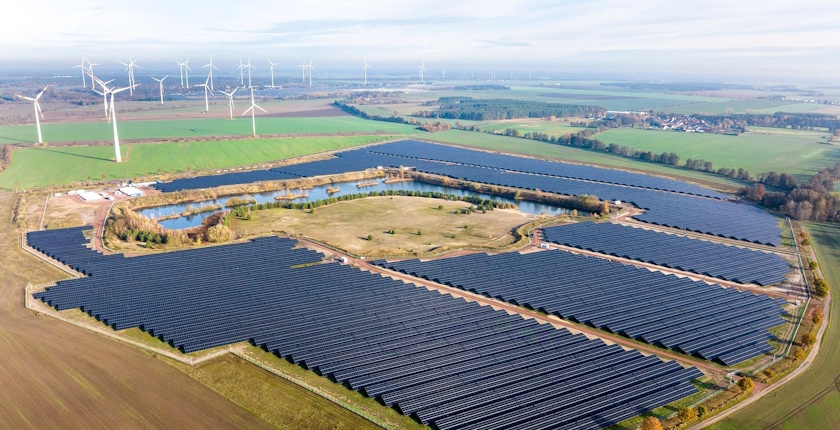
Located on a 41-hectare former gravel pit, the site combines 73,000 solar modules with a capacity of 46.4 MWp and a 57 MWh battery energy storage system (BESS).

The facility is designed and built to operate as a fully co-located hybrid asset, providing grid-supportive, dispatchable renewable power, Sunotec explained.

The project is being developed by Statkraft

The project is being developed by Statkraft. The Hybrid Power Plant Zerbst will deliver 50,000 MWh of renewable electricity per year. It is sufficient for 14,000 households.

This is the company’s first hybrid power plant in Germany and a proof of concept for its fully integrated, beyond-EPC delivery model, according to Sunotec.

The model is different from a traditional EPC contract. Sunotec implemented the core phases of the Zerbst hybrid power plant internally, including engineering, geotechnical assessments, and environmental planning.

Following completion, Sunotec will continue to manage the operations and maintenance of the PV plant.

​Atanasov-Lankes: we demonstrate the strength of Sunotec’s integrated model

This integrated approach reduces interfaces, eliminates fragmentation, and guarantees high-quality delivery, the company said.

“With the Hybrid Power Plant Zerbst, we demonstrate the strength of Sunotec’s integrated model and our ability to deliver complex systems at scale,” Zharin Atanasov-Lankes, Managing Director of Sunotec Germany, stressed.

He underscored that the project reflects the engineering depth and execution capability of the firm’s teams.

Over the last six months, Sunotec has made major steps in developing its operations in Europe.

In November 2025 the company signed an agreement with oil and gas major Shell on the development of battery energy storage systems in Central Eastern Europe. In July it has agreed with China-based Sungrow to install 2.4 GWh of BESSs.

by in News

Sunotec advances Germany’s largest EEG hybrid power plant

Sofia-based solar and battery developer Sunotec announced a key milestone in the construction of the Hybrid Power Plant Zerbst. The company claims it is set to become Germany’s largest solar-battery hybrid power plant under the Renewable Energy Sources Act (EEG).

Located on a 41-hectare former gravel pit, the site combines 73,000 solar modules with a capacity of 46.4 MWp and a 57 MWh battery energy storage system (BESS).

The facility is designed and built to operate as a fully co-located hybrid asset, providing grid-supportive, dispatchable renewable power, Sunotec explained.

The project is being developed by Statkraft

The project is being developed by Statkraft. The Hybrid Power Plant Zerbst will deliver 50,000 MWh of renewable electricity per year. It is sufficient for 14,000 households.

This is the company’s first hybrid power plant in Germany and a proof of concept for its fully integrated, beyond-EPC delivery model, according to Sunotec.

The model is different from a traditional EPC contract. Sunotec implemented the core phases of the Zerbst hybrid power plant internally, including engineering, geotechnical assessments, and environmental planning.

Following completion, Sunotec will continue to manage the operations and maintenance of the PV plant.

​Atanasov-Lankes: we demonstrate the strength of Sunotec’s integrated model

This integrated approach reduces interfaces, eliminates fragmentation, and guarantees high-quality delivery, the company said.

“With the Hybrid Power Plant Zerbst, we demonstrate the strength of Sunotec’s integrated model and our ability to deliver complex systems at scale,” Zharin Atanasov-Lankes, Managing Director of Sunotec Germany, stressed.

He underscored that the project reflects the engineering depth and execution capability of the firm’s teams.

Over the last six months, Sunotec has made major steps in developing its operations in Europe.

In November 2025 the company signed an agreement with oil and gas major Shell on the development of battery energy storage systems in Central Eastern Europe. In July it has agreed with China-based Sungrow to install 2.4 GWh of BESSs.

by in News

Why financial risk is the real challenge for battery storage in Europe

As battery energy storage systems (BESS) move from pilot projects to core infrastructure across Europe, the conversation is changing. Technology and costs still matter, but for investors and lenders the decisive question is increasingly financial: how resilient are BESS projects when revenue is delayed, disrupted, or degraded?

Across Central and Eastern Europe as well as mature Western markets, storage projects are entering a phase of tighter margins, more complex financing structures and lower tolerance for uncertainty. In this environment, insurance is no longer just about protecting equipment; it is becoming a central tool for managing financial risk and preserving bankability.

Financial continuity defines bankability

For storage projects, technical performance is only half the equation. The other half, the one that ultimately determines financing terms, is financial continuity. Every phase of a BESS or hybrid PV+BESS project carries exposure to income loss: during transportation, construction, commissioning, and operation.

Even short disruptions can have disproportionate consequences. A damaged transformer during shipping, a fire incident during testing or a commissioning delay before grid connection can postpone the start of revenues, while debt service, contractual obligations, and operating costs continue to accrue.

This is why Renewable Energy Insurance Broker (REIB) structures insurance programs around financial outcomes, not just physical damage. The objective is simple: ensure that delays or performance issues do not automatically escalate into financial stress.

ALOP: From overlooked add-on to financing safeguard

One of the most underestimated insurance covers in the BESS sector today is Advance Loss of Profit (ALOP). Traditionally seen as optional, ALOP is rapidly becoming essential, particularly for large-scale storage and hybrid projects with tight financing schedules.

ALOP protects expected revenues when construction or commissioning is delayed due to insured physical damage. In practice, it bridges the critical gap between construction risk and future cash flow. In 2025, REIB observed multiple projects where even short delays could have triggered penalty clauses, refinancing pressure, or delayed revenue start.

When structured correctly, ALOP ensures that delays do not automatically translate into financial crises. For lenders, it increasingly functions as a bankability safeguard, providing confidence that revenue projections remain protected even if timelines slip.

DSU and logistics: When delays start before construction

Financial risk does not begin on site. For BESS projects, it often starts much earlier – during transport. Batteries, inverters and transformers travel thousands of kilometers before installation, making logistics one of the most exposed phases of the project lifecycle.

A single cargo incident can delay commissioning by months, increasing financing costs and contractual exposure. REIB addresses this risk through Delay in Start-Up (DSU) insurance combined with Cargo coverage, ensuring that if a critical shipment is damaged, stolen, or delayed, the project is compensated not only for the physical loss but also for the income lost during the resulting downtime.

For investors and lenders, this closes one of the most dangerous financial gaps in project planning: the period before operations even begin.

Construction and commissioning: The most fragile phase

The construction and commissioning stage is where technical and financial risks converge. Fires, installation accidents or testing failures can delay grid connection, pushing revenue timelines back while expenses continue.

Many traditional insurance policies either exclude this phase or cover it only partially. REIB structures construction-phase DSU coverage that runs from installation through commissioning, responding not only with repair costs but also with compensation for lost income.

This transforms insurance from a reactive instrument into a strategic financial stabilizer, keeping debt service, investor expectations, and project schedules aligned even when delays occur.

Business Interruption: Insuring the ability to earn

Once operational, BESS and hybrid projects depend on consistent performance to meet financial models. Yet standard Business Interruption (BI) insurance often fails to reflect the complexity of storage revenues.

REIB structures BI coverage around the project’s actual revenue mechanism – whether tolling, profit-sharing or hybrid arrangements. The focus is on protecting total income, not just net profit, with coverage that includes partial degradation and extended indemnity periods of up to 18 months.

In short, insurance protects the project’s ability to earn, because that is what sustains investor confidence and lender support.

Design decisions are financial decisions

Across Europe, particularly in fast-evolving markets, investors often underestimate how deeply design choices affect bankability. Decisions related to battery suppliers, container layouts, or control-system design can materially influence insurance availability, scope and pricing.

REIB’s role is to ensure these risks are identified and addressed early, when corrections are technically simpler, financially cheaper, and far more effective. Projects that integrate insurance expertise from the outset consistently achieve broader coverage and more favorable financing terms. When insurance input comes too late, exclusions, higher deductibles, or gaps in ALOP protection are far more common.

Conclusion: Financial risk will shape Europe’s storage rollout

Battery storage is no longer a technical experiment; it has become a financial asset class. Its success now depends on how effectively revenue risks are managed across the entire project lifecycle.

As Europe accelerates BESS deployment, insurance is evolving from a compliance requirement into a core element of financial structuring. By focusing on income protection, early risk assessment, and coverage aligned with real revenue models, insurance is increasingly influencing which storage projects move forward, and which stall at the financing stage.

For BESS in Europe, managing financial risk is no longer optional; it is the foundation of bankability. In 2025 alone, REIB insured more than 8 GWh of BESS capacity across Europe, demonstrating how revenue-focused risk management can turn financial uncertainty into long-term resilience.

by in News

Why financial risk is the real challenge for battery storage in Europe

As battery energy storage systems (BESS) move from pilot projects to core infrastructure across Europe, the conversation is changing. Technology and costs still matter, but for investors and lenders the decisive question is increasingly financial: how resilient are BESS projects when revenue is delayed, disrupted, or degraded?

Across Central and Eastern Europe as well as mature Western markets, storage projects are entering a phase of tighter margins, more complex financing structures and lower tolerance for uncertainty. In this environment, insurance is no longer just about protecting equipment; it is becoming a central tool for managing financial risk and preserving bankability.

Financial continuity defines bankability

For storage projects, technical performance is only half the equation. The other half, the one that ultimately determines financing terms, is financial continuity. Every phase of a BESS or hybrid PV+BESS project carries exposure to income loss: during transportation, construction, commissioning, and operation.

Even short disruptions can have disproportionate consequences. A damaged transformer during shipping, a fire incident during testing or a commissioning delay before grid connection can postpone the start of revenues, while debt service, contractual obligations, and operating costs continue to accrue.

This is why Renewable Energy Insurance Broker (REIB) structures insurance programs around financial outcomes, not just physical damage. The objective is simple: ensure that delays or performance issues do not automatically escalate into financial stress.

ALOP: From overlooked add-on to financing safeguard

One of the most underestimated insurance covers in the BESS sector today is Advance Loss of Profit (ALOP). Traditionally seen as optional, ALOP is rapidly becoming essential, particularly for large-scale storage and hybrid projects with tight financing schedules.

ALOP protects expected revenues when construction or commissioning is delayed due to insured physical damage. In practice, it bridges the critical gap between construction risk and future cash flow. In 2025, REIB observed multiple projects where even short delays could have triggered penalty clauses, refinancing pressure, or delayed revenue start.

When structured correctly, ALOP ensures that delays do not automatically translate into financial crises. For lenders, it increasingly functions as a bankability safeguard, providing confidence that revenue projections remain protected even if timelines slip.

DSU and logistics: When delays start before construction

Financial risk does not begin on site. For BESS projects, it often starts much earlier – during transport. Batteries, inverters and transformers travel thousands of kilometers before installation, making logistics one of the most exposed phases of the project lifecycle.

A single cargo incident can delay commissioning by months, increasing financing costs and contractual exposure. REIB addresses this risk through Delay in Start-Up (DSU) insurance combined with Cargo coverage, ensuring that if a critical shipment is damaged, stolen, or delayed, the project is compensated not only for the physical loss but also for the income lost during the resulting downtime.

For investors and lenders, this closes one of the most dangerous financial gaps in project planning: the period before operations even begin.

Construction and commissioning: The most fragile phase

The construction and commissioning stage is where technical and financial risks converge. Fires, installation accidents or testing failures can delay grid connection, pushing revenue timelines back while expenses continue.

Many traditional insurance policies either exclude this phase or cover it only partially. REIB structures construction-phase DSU coverage that runs from installation through commissioning, responding not only with repair costs but also with compensation for lost income.

This transforms insurance from a reactive instrument into a strategic financial stabilizer, keeping debt service, investor expectations, and project schedules aligned even when delays occur.

Business Interruption: Insuring the ability to earn

Once operational, BESS and hybrid projects depend on consistent performance to meet financial models. Yet standard Business Interruption (BI) insurance often fails to reflect the complexity of storage revenues.

REIB structures BI coverage around the project’s actual revenue mechanism – whether tolling, profit-sharing or hybrid arrangements. The focus is on protecting total income, not just net profit, with coverage that includes partial degradation and extended indemnity periods of up to 18 months.

In short, insurance protects the project’s ability to earn, because that is what sustains investor confidence and lender support.

Design decisions are financial decisions

Across Europe, particularly in fast-evolving markets, investors often underestimate how deeply design choices affect bankability. Decisions related to battery suppliers, container layouts, or control-system design can materially influence insurance availability, scope and pricing.

REIB’s role is to ensure these risks are identified and addressed early, when corrections are technically simpler, financially cheaper, and far more effective. Projects that integrate insurance expertise from the outset consistently achieve broader coverage and more favorable financing terms. When insurance input comes too late, exclusions, higher deductibles, or gaps in ALOP protection are far more common.

Conclusion: Financial risk will shape Europe’s storage rollout

Battery storage is no longer a technical experiment; it has become a financial asset class. Its success now depends on how effectively revenue risks are managed across the entire project lifecycle.

As Europe accelerates BESS deployment, insurance is evolving from a compliance requirement into a core element of financial structuring. By focusing on income protection, early risk assessment, and coverage aligned with real revenue models, insurance is increasingly influencing which storage projects move forward, and which stall at the financing stage.

For BESS in Europe, managing financial risk is no longer optional; it is the foundation of bankability. In 2025 alone, REIB insured more than 8 GWh of BESS capacity across Europe, demonstrating how revenue-focused risk management can turn financial uncertainty into long-term resilience.

by in News

Slovenian DSO registers enormous interest in connecting BESS to distribution grid

Applications for 400 MW have been submitted for the connection of battery energy storage systems to the distribution grid, according to Elektro Ljubljana, one of the distribution system operators in Slovenia.

Slovenia’s distribution system operators (DSOs) are getting an increasing number of requests to connect battery storage systems directly to distribution substations. Notably, in early May, the five Slovenian DSOs fed more electricity into the transmission network than they drew from it for the first time, and for two consecutive days.

Matjaž Osvald, Executive Director of Operation and Development of the Distribution Network in DSO Elektro Ljubljana, pointed out that last summer the company observed increased investor interest in directly connecting batteries to distribution substations.

It issued installation terms for 90 MW, and requests for at least as much are waiting to be processed, he added.

Installation terms were issued for batteries with 90 MW in overall capability

However, the company estimated there could be at least 300 MW more in applications. Due to the technical limitations of existing substations, much less could be connected. Substations in the Elektro Ljubljana area are already overloaded and don’t allow additional connections of larger devices, Osvald explained.

Furthermore, upgrading or constructing new facilities is a lengthy process, he pointed out. Current delivery times for transformers alone are longer than two years, with financing also being an issue.

According to Osvald, batteries would be used to store energy from solar power plants, and three types of investors have emerged. One group wants to install batteries to provide system services for system operators on the European market or for electricity trading.

Three types of investors are submitting applications

The second and third batch aim to bring their projects to a certain stage of development and then sell them – either they would purchase land, obtain permits, and install a battery, or only buy land and obtain permits for energy storage.

Osvald expressed concern about the idea of using batteries solely to provide system services in the European market. In that case, there would be no benefits for the Slovenian distribution network, but it could create problems, he stressed.

Such use would occupy all available connection capacity in substations, which, with increasing electrification, could lead to no spare capacity for other grid users, according to Osvald.

He also pointed to the value of BESS for the distribution network in reducing peak loads and consumption.

by in News

Slovenian DSO registers enormous interest in connecting BESS to distribution grid

Applications for 400 MW have been submitted for the connection of battery energy storage systems to the distribution grid, according to Elektro Ljubljana, one of the distribution system operators in Slovenia.

Slovenia’s distribution system operators (DSOs) are getting an increasing number of requests to connect battery storage systems directly to distribution substations. Notably, in early May, the five Slovenian DSOs fed more electricity into the transmission network than they drew from it for the first time, and for two consecutive days.

Matjaž Osvald, Executive Director of Operation and Development of the Distribution Network in DSO Elektro Ljubljana, pointed out that last summer the company observed increased investor interest in directly connecting batteries to distribution substations.

It issued installation terms for 90 MW, and requests for at least as much are waiting to be processed, he added.

Installation terms were issued for batteries with 90 MW in overall capability

However, the company estimated there could be at least 300 MW more in applications. Due to the technical limitations of existing substations, much less could be connected. Substations in the Elektro Ljubljana area are already overloaded and don’t allow additional connections of larger devices, Osvald explained.

Furthermore, upgrading or constructing new facilities is a lengthy process, he pointed out. Current delivery times for transformers alone are longer than two years, with financing also being an issue.

According to Osvald, batteries would be used to store energy from solar power plants, and three types of investors have emerged. One group wants to install batteries to provide system services for system operators on the European market or for electricity trading.

Three types of investors are submitting applications

The second and third batch aim to bring their projects to a certain stage of development and then sell them – either they would purchase land, obtain permits, and install a battery, or only buy land and obtain permits for energy storage.

Osvald expressed concern about the idea of using batteries solely to provide system services in the European market. In that case, there would be no benefits for the Slovenian distribution network, but it could create problems, he stressed.

Such use would occupy all available connection capacity in substations, which, with increasing electrification, could lead to no spare capacity for other grid users, according to Osvald.

He also pointed to the value of BESS for the distribution network in reducing peak loads and consumption.

by in News

EU’s new power pricing interval boosts BESS profit potential – analysis

The rollout of the European Union’s new power pricing system in October, with prices set every 15 minutes, rather than every hour, has increased the profit potential of battery energy storage systems (BESS). In several countries, BESS profits now have the potential to rise by more than 15%, according to an analysis by research and energy intelligence company Rystad Energy.

Thanks to the 15-minute trading interval, arbitrage potential on the EU’s day-ahead power markets has increased by an average of 14%, with some countries, such as Austria and Slovakia, recording gains of over 20%, according to the analysis.

In Germany, quarter-hour arbitrage was 16% more profitable than hourly arbitrage, while in Lithuania, the improvement was 14%.

The new system brings the greatest benefits in countries with less flexibility

The new trading intervals, known as 15-minute Market Time Units (MTUs), bring the greatest benefits in countries with less flexibility in power generation and consumption, where a high share of intermittent renewables can cause large price swings, according to Sepehr Soltani, senior analyst for energy storage at Rystad.

Rystad estimates that if a battery earns around 20% more each year due to these price swings, its total return on investment can increase by about 3% over 20 years.

A 20% annual profit gain could raise return on investment by 3% over 20 years

In contrast, in places with a flexible electricity supply, such as Norway with hydropower and Portugal with hydropower and gas, prices are more stable over an hour, so the difference between profits from 15-minute and hourly trading is much smaller, he explained.

This is why in Portugal, Norway, and Sweden, the new system has brought only minor improvements in BESS profitability potential.

Rystad noted, however, that today’s unusually high arbitrage margins, of over USD 150 per MWh, are not expected to persist over the next 10–20 years. A more realistic long-term average is around USD 60 per MWh, according to the analysis.

by in News

Romania’s biggest battery system put into operation

Nova Power & Gas has commissioned the largest battery energy storage system in Romania, doubling the country’s total capacity. The installation in Florești, Cluj County, has an operating power of 200 MW and a capacity of 400 MWh.

Before the new facility was commissioned, Romania’s overall battery energy storage capacity was 398.8 MWh, according to data from the country’s transmission system operator, Transelectrica. Nova Power & Gas earlier said its own capacity was 240 MWh.

The company was already operating 240 MWh in batteries

The new battery energy storage system (BESS) became operational after Mayor of Florești Bogdan Pivariu signed a certificate of occupancy, Profit.ro reported.

In addition, Nova Power & Gas is building a 150 MW gas-fired power plant in Câmpia Turzii, with the first phase set to come online by December 2026.

Nova Power & Gas is developing further battery systems totaling 1,200 MWh

By 2028, the company plans to install one more gas power plant, of 200 MW, and energy storage systems of another 600 MW / 1,200 MWh overall.

“Through these investments, we aim to maintain and strengthen our leadership in energy storage, while making substantial investments in gas-fired electricity generation to support balance and flexibility in the national energy system,” Septimiu Costea, CTO of Nova Power & Gas, stated in July.

Nova Power & Gas, part of Romania-based E-Infra Group, is active across the Southeast Europe region, with subsidiaries in Bulgaria, Serbia, Hungary, and Moldova.

The company is also a major power and natural gas supplier, with over 4.6 TWh of electricity and gas delivered in 2024 and a turnover of almost RON 3 billion (EUR 589.4 million), according to Profit.ro.