by in News

From Austria to Albania: Verbund, Nordex to deploy 105 wind turbines across Europe

Verbund Green Power has forged a partnership with Nordex Group for the potential procurement of wind turbines.

Verbund Green Power, a subsidiary of Austrian state-owned energy utility Verbund, has entered into a multiyear framework agreement with leading wind turbine producer Nordex Group for the potential procurement of wind turbines of up to 700 MW in total capacity, according to a joint press release.

The agreement runs through 2030.

The power plants are planned in six markets

The agreement was officially signed in Verbund Green Power’s Madrid office by Dietmar Reiner, Managing Director of Verbund Green Power, and José Luis Blanco, CEO of Nordex Group.

They expressed willingness to facilitate the supply and delivery of up to 105 Nordex onshore wind turbines for Verbund Green Power’s wind projects. They are are planned in Austria, Germany, Spain, Italy, Romania and Albania, the update reads.
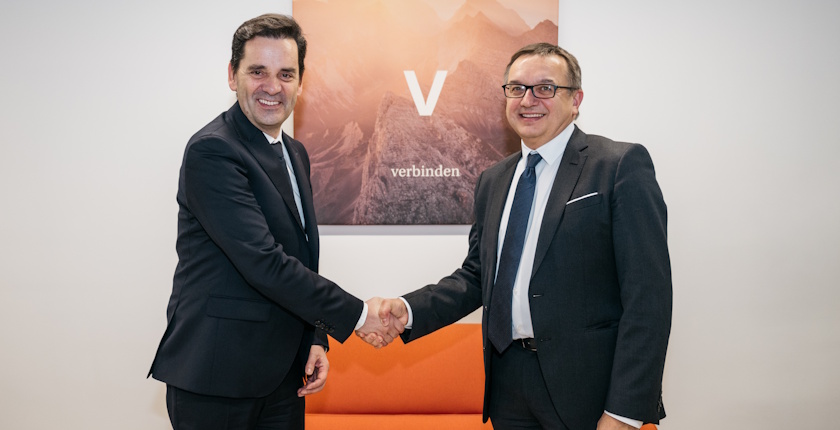
europe verbund nordex Dietmar Reiner José Luis Blanco
José Luis Blanco and Dietmar Reiner (photo: Verbund)

Of note, Christopher Billot, Sales Director for the Mediterranean region of Nordex Group, said at Belgrade Energy Forum 2025 that the Balkans is a key region for his company.

The deal would cover approximately 50% of Verbund Green Power’s wind project pipeline.

Blanco: We’re creating a clear path to deliver reliable, cost-efficient wind energy together with Verbund

Nordex Group CEO José Luis Blanco explained that through this multi‑year framework, the company would provide the turbine capacity to convert an ambitious pipeline into clean generation across six multi‑country markets in Europe.

“With up to 700 MW of our latest 7 MW class onshore turbines slated across Austria, Germany, Spain, Italy, Romania and Albania, we’re creating a clear path to deliver reliable, cost-efficient wind energy together with Verbund through 2030,” he stressed.

Strugl: The collaboration with Nordex strengthens our supply options as our projects mature

Blanco recalled that late last year Nordex received a first order from Verbund for nine N175/6.X turbines for Romania. “We’re expanding our footprint in this country,” he added.

According to Verbund CEO Michael Strugl, the collaboration with Nordex supports his company’s strategic objective of scaling up renewable generation across Europe.

“It strengthens our supply options as our projects mature, allowing us to secure the supply chain in a very competitive environment and deliver on Mission V targets, contributing to a secure and accelerated energy transition in our markets,” Strugl added.

by in News

EU’s amendments to CBAM: possibility of relief, but January 1 brought market uncertainty

Long-awaited implementing acts and amendments to the CBAM Regulation brought only a minor relief for the Western Balkans, investors in renewables, and electricity traders. Balkan Green Energy News has analyzed the documents that the European Commission published in December 2025, and the impact of the proposed measures on Energy Community contracting parties – Albania, BiH, Kosovo*, Montenegro, North Macedonia and Serbia.

From January 1, European firms importing aluminum, cement, electricity, iron and steel, hydrogen and fertilizers are obliged to pay a carbon price within the European Union’s Carbon Border Adjustment Mechanism (CBAM).

Last year, the CBAM Regulation was criticized by experts from the Western Balkans (Ljubo Maćić, Zoran Gjorgjievski), European think-tanks (Bruegel), and organizations (Energy Traders Europe). Even the European Network of Transmission System Operators for Electricity (ENTSO-E) requested that the transitional period be prolonged.

They said charging the tax, which started on January 1 as scheduled, would harm countries outside the EU, but also EU member states, market coupling of Western Balkan countries, and electricity trade.

Uncertainty surrounding electricity transit and trade remains high

The analysis showed that the European Commission is proposing changes to the CBAM regulation that would introduce a more favorable method for calculating the national emissions factor and actual emissions values. This benefits non-EU countries that export electricity to the EU, owners of operational renewable energy power plants in these countries, and future green energy investments.

The proposal foresees amendments to the procedure for market coupling, but it is unclear whether these will bring any concrete changes. The commission didn’t propose changes regarding transit, and consequently, electricity trading.

Provided that the proposal is accepted as proposed, it will bring the said positive changes in calculating the national emissions factor and actual emissions values only by the end of the year, meaning that uncertainty in the market will persist until then.

Uncertainty surrounding electricity transit and trade remains high. The impact on the Western Balkans, as well as on the EU member states Bulgaria, Croatia, Greece, Hungary, Romania, and Slovenia, will become clear in the coming weeks and months.

There are two legislative streams

There are two relevant streams currently ongoing in EU legislation for CBAM for electricity. The first are the so-called implementing acts, which are similar to secondary legislation in national law. They further define the technical details of the CBAM regulation.

The other part is the commission’s proposal to amend the CBAM Regulation itself. It will become part of the law when the other co-legislators in the EU – the Council of the EU, which includes the member states, and the European Parliament – together agree on it.

Nobody can say exactly when that process will be finished, but most likely not before the autumn.

National emissions factors, actual emission values: improvement

eu western balkans cbam electricity market coupling amendments
Photo: iStock

There is a proposal to change the way the national emission factors are calculated in the main CBAM Regulation. Currently it only includes the part of the electricity mix based on fossil fuels, regardless of their share in the country’s power generation mix.

For example, for Serbia, a contracting party of the Energy Community, this factor is 1.04. If the national power mix is taken into account, it would go down to 0.7, making the cost of CBAM about 40% lower.

The commission proposed to replace the electricity mix based on fossil fuels, in its accounting system, with one encompassing all energy sources.

The commission also intends to change the requirements for switching to actual emission values

The commission also intends to change the requirements for switching to actual emission values. These are relevant for the producers of renewable energy in non-EU countries. Current conditions are very strict and, to some stakeholders, not achievable.

For example, if a wind farm in the Western Balkans, owned by a domestic or foreign investor, cannot meet these conditions the CBAM payments for the electricity from the facility exported to the neighboring Croatia would be calculated based on the national emissions factor.

The commission suggested that an importer shouldn’t need to have a power purchase agreement (PPA) with a producer directly, which is one of the conditions, but that it could be done through intermediaries. It also proposed the removal of the requirements related to congestion.

These proposals could remove negative impacts on renewable electricity exports and development in non-EU countries, including contracting parties.

Transit: nothing new

The issue of transit hasn’t been addressed in the acts and amendments.

Under the CBAM Regulation, it is unclear how electricity transit costs would be calculated. For example, from Bulgaria to Hungary via Serbia, and who would be required to cover them.

The commission clarified several times that transit isn’t subject to CBAM. However, the physical, practical implementation is the problem.

For example, a trader buys electricity from Greece, transits it through North Macedonia, and puts it on the Serbian SEEPEX power exchange. Somebody else buys it and sells it in Hungary.

It would be very difficult or impossible to say that electricity from Greece was sold into Hungary.

This is why stakeholders take a conservative approach and say that they cannot prove. So, most likely they wouldn’t opt for these countries – non-EU countries, like contracting parties – for transit.

Retroactivity: possibility for improvement

eu western balkans electricity market cbam amendments
Photo: iStock

One of the provisions in the commission’s proposal to amend the CBAM Regulation is that the changes in the electricity sector could apply retroactively, starting from January 2026.

Just as a reminder, EU firms are obliged since the start of this month to pay a CBAM fee for importing designated goods and raw materials and electricity via purchasing so-called CBAM certificates.

Obviously, an importer will try to pass on this cost partly or fully to its counterparts in the third countries. But, importantly, EU firms won’t be able to purchase CBAM certificates yet this year, but only from February 1, 2027.

If the amendment on national emissions factor is adopted, for example in October, this could mean lower CBAM costs for EU importers of electricity from non-EU countries.

Without details on the path forward, market participants lack certainty about the level of CBAM costs

The commission intended to remedy some of the negative impacts on the electricity markets with amendments with retroactive effect. But without details on the path forward, market participants lack certainty about the level of CBAM costs to be paid for 2026.

Based on the current rules, CBAM costs for countries which have lignite in their generation mix could be EUR 70 per MWh to EUR 80 per MWh if the EU ETS price is around 80 EUR per ton of CO2. In some cases, the fee is almost 100% above the electricity price itself.

It is clear that it would rarely make sense to import electricity to the EU from third countries. The price difference, let’s say between Hungary and Serbia, would need to be more than EUR 70 per MWh to EUR 80 per MWh to make the business case.

Market coupling: nothing new or possibility for improvement

eu cbam western balkans electricity market amendments
Photo: Sergio Cerrato – Italia from Pixabay

There are several references to market coupling in the proposal. Energy Community contracting parties are in different phases of market coupling with EU countries.

The commission has proposed signing memoranda of understanding with third countries. It would set out the timeline and conditions for an exemption from CBAM on electricity.

This could be done after the commission approves the so-called verification process of a contracting party’s transposition of the Electricity Integration Package (EIP). It would be a green light for the next stage, which entails the technical tests, leading up to the completion of market coupling.

The current wording in the proposal leaves room for various interpretations

The current wording in the proposal leaves room for various interpretations, one being that the MoU may open the door for an exemption already when the “point of no return” is reached. It is when the contracting party has done all its homework and only the technical tests remain.

However, the commission didn’t propose the other conditions for CBAM exemption to be changed, such as the development of a roadmap on the introduction of a CO2 price that would be equivalent to the level in the EU’s Emissions Trading System (EU ETS).

The question is what the MoU would exactly be about, and if “equivalent” could be defined more precisely.

Why is this important?

No contracting party has yet met the conditions to receive a CBAM exemption in the electricity sector. A critical requirement is to agree to charge an emissions price from 2030 equivalent to the EU ETS.

The CBAM regulation says that the tax cannot technically be implemented on a market which is coupled with the EU internal energy market

If equivalent means the same price, here is the outcome for Serbia, for example: The current CO2 price in the EU is EUR 80 per ton of CO2 equivalent, but is expected to rise to above EUR 100 by 2030, or even reach EUR 150. It would raise prices to consumers by about EUR 75 per MWh and EUR 110, respectively.

The CBAM regulation says that the tax cannot technically be implemented on a market which is coupled with the EU internal energy market. This is why there is a possibility for an exemption for electricity for imports from those countries which are coupled until a technical solution is found how to implement CBAM.

Starting from January 1, any country that is ready to be coupled would in parallel also need to qualify for and receive an exemption from CBAM for electricity. If you fulfil the conditions, you get coupled and get an exemption and CBAM will disappear.

What next?

It could be said that CBAM implementation as of January 1 will certainly affect market integration in the sense that people, businesses would react to market uncertainty.

Trade will be impacted; imports from contracting parties to the EU will be expected to disappear. Of course, contracting parties will continue to import electricity from the EU member states.

The weeks and months ahead will show to what extent the prices and liquidity would be affected in the contracting parties and neighboring EU member states Bulgaria, Croatia, Greece, Hungary, Romania, Slovenia.

For example, Greece would have only the Bulgaria-Romania route to export electricity, and it is already congested. Greece could face curtailments in renewable electricity.

We will also see what the effect on the renewables deployment in contracting parties will be. Are investors going to postpone investments until they see if the changes proposed by the commission are adopted, or are they going to leave for other markets?


Pozsgai: Amendments point in the right direction

Péter Pozsgai, Lead of the EU Carbon Border Adjustment Mechanism Readiness Task Force in the Energy Community Secretariat:

“The European Commission’s proposed amendments point in the right direction, reflecting a consideration of the progress of contracting parties in electricity market coupling, and better outlining the operational details of an exemption via an MoU. The refinement of the rules on national emission factors and the conditions for using actual emission values also demonstrate the intention to minimize the unintended impacts of CBAM on renewable development in contracting parties”.


by in News

EU’s amendments to CBAM: possibility of relief, but January 1 brought market uncertainty

Long-awaited implementing acts and amendments to the CBAM Regulation brought only a minor relief for the Western Balkans, investors in renewables, and electricity traders. The documents has been analyzed that the European Commission published in December 2025, and the impact of the proposed measures on Energy Community contracting parties – Albania, BiH, Kosovo*, Montenegro, North Macedonia and Serbia.

From January 1, European firms importing aluminum, cement, electricity, iron and steel, hydrogen and fertilizers are obliged to pay a carbon price within the European Union’s Carbon Border Adjustment Mechanism (CBAM).

Last year, the CBAM Regulation was criticized by experts from the Western Balkans (Ljubo Maćić, Zoran Gjorgjievski), European think-tanks (Bruegel), and organizations (Energy Traders Europe). Even the European Network of Transmission System Operators for Electricity (ENTSO-E) requested that the transitional period be prolonged.

They said charging the tax, which started on January 1 as scheduled, would harm countries outside the EU, but also EU member states, market coupling of Western Balkan countries, and electricity trade.

Uncertainty surrounding electricity transit and trade remains high

The analysis showed that the European Commission is proposing changes to the CBAM regulation that would introduce a more favorable method for calculating the national emissions factor and actual emissions values. This benefits non-EU countries that export electricity to the EU, owners of operational renewable energy power plants in these countries, and future green energy investments.

The proposal foresees amendments to the procedure for market coupling, but it is unclear whether these will bring any concrete changes. The commission didn’t propose changes regarding transit, and consequently, electricity trading.

Provided that the proposal is accepted as proposed, it will bring the said positive changes in calculating the national emissions factor and actual emissions values only by the end of the year, meaning that uncertainty in the market will persist until then.

Uncertainty surrounding electricity transit and trade remains high. The impact on the Western Balkans, as well as on the EU member states Bulgaria, Croatia, Greece, Hungary, Romania, and Slovenia, will become clear in the coming weeks and months.

There are two legislative streams

There are two relevant streams currently ongoing in EU legislation for CBAM for electricity. The first are the so-called implementing acts, which are similar to secondary legislation in national law. They further define the technical details of the CBAM regulation.

The other part is the commission’s proposal to amend the CBAM Regulation itself. It will become part of the law when the other co-legislators in the EU – the Council of the EU, which includes the member states, and the European Parliament – together agree on it.

Nobody can say exactly when that process will be finished, but most likely not before the autumn.

National emissions factors, actual emission values: improvement

eu western balkans cbam electricity market coupling amendments
Photo: iStock

There is a proposal to change the way the national emission factors are calculated in the main CBAM Regulation. Currently it only includes the part of the electricity mix based on fossil fuels, regardless of their share in the country’s power generation mix.

For example, for Serbia, a contracting party of the Energy Community, this factor is 1.04. If the national power mix is taken into account, it would go down to 0.7, making the cost of CBAM about 40% lower.

The commission proposed to replace the electricity mix based on fossil fuels, in its accounting system, with one encompassing all energy sources.

The commission also intends to change the requirements for switching to actual emission values

The commission also intends to change the requirements for switching to actual emission values. These are relevant for the producers of renewable energy in non-EU countries. Current conditions are very strict and, to some stakeholders, not achievable.

For example, if a wind farm in the Western Balkans, owned by a domestic or foreign investor, cannot meet these conditions the CBAM payments for the electricity from the facility exported to the neighboring Croatia would be calculated based on the national emissions factor.

The commission suggested that an importer shouldn’t need to have a power purchase agreement (PPA) with a producer directly, which is one of the conditions, but that it could be done through intermediaries. It also proposed the removal of the requirements related to congestion.

These proposals could remove negative impacts on renewable electricity exports and development in non-EU countries, including contracting parties.

Transit: nothing new

The issue of transit hasn’t been addressed in the acts and amendments.

Under the CBAM Regulation, it is unclear how electricity transit costs would be calculated. For example, from Bulgaria to Hungary via Serbia, and who would be required to cover them.

The commission clarified several times that transit isn’t subject to CBAM. However, the physical, practical implementation is the problem.

For example, a trader buys electricity from Greece, transits it through North Macedonia, and puts it on the Serbian SEEPEX power exchange. Somebody else buys it and sells it in Hungary.

It would be very difficult or impossible to say that electricity from Greece was sold into Hungary.

This is why stakeholders take a conservative approach and say that they cannot prove. So, most likely they wouldn’t opt for these countries – non-EU countries, like contracting parties – for transit.

Retroactivity: possibility for improvement

eu western balkans electricity market cbam amendments
Photo: iStock

One of the provisions in the commission’s proposal to amend the CBAM Regulation is that the changes in the electricity sector could apply retroactively, starting from January 2026.

Just as a reminder, EU firms are obliged since the start of this month to pay a CBAM fee for importing designated goods and raw materials and electricity via purchasing so-called CBAM certificates.

Obviously, an importer will try to pass on this cost partly or fully to its counterparts in the third countries. But, importantly, EU firms won’t be able to purchase CBAM certificates yet this year, but only from February 1, 2027.

If the amendment on national emissions factor is adopted, for example in October, this could mean lower CBAM costs for EU importers of electricity from non-EU countries.

Without details on the path forward, market participants lack certainty about the level of CBAM costs

The commission intended to remedy some of the negative impacts on the electricity markets with amendments with retroactive effect. But without details on the path forward, market participants lack certainty about the level of CBAM costs to be paid for 2026.

Based on the current rules, CBAM costs for countries which have lignite in their generation mix could be EUR 70 per MWh to EUR 80 per MWh if the EU ETS price is around 80 EUR per ton of CO2. In some cases, the fee is almost 100% above the electricity price itself.

It is clear that it would rarely make sense to import electricity to the EU from third countries. The price difference, let’s say between Hungary and Serbia, would need to be more than EUR 70 per MWh to EUR 80 per MWh to make the business case.

Market coupling: nothing new or possibility for improvement

eu cbam western balkans electricity market amendments
Photo: Sergio Cerrato – Italia from Pixabay

There are several references to market coupling in the proposal. Energy Community contracting parties are in different phases of market coupling with EU countries.

The commission has proposed signing memoranda of understanding with third countries. It would set out the timeline and conditions for an exemption from CBAM on electricity.

This could be done after the commission approves the so-called verification process of a contracting party’s transposition of the Electricity Integration Package (EIP). It would be a green light for the next stage, which entails the technical tests, leading up to the completion of market coupling.

The current wording in the proposal leaves room for various interpretations

The current wording in the proposal leaves room for various interpretations, one being that the MoU may open the door for an exemption already when the “point of no return” is reached. It is when the contracting party has done all its homework and only the technical tests remain.

However, the commission didn’t propose the other conditions for CBAM exemption to be changed, such as the development of a roadmap on the introduction of a CO2 price that would be equivalent to the level in the EU’s Emissions Trading System (EU ETS).

The question is what the MoU would exactly be about, and if “equivalent” could be defined more precisely.

Why is this important?

No contracting party has yet met the conditions to receive a CBAM exemption in the electricity sector. A critical requirement is to agree to charge an emissions price from 2030 equivalent to the EU ETS.

The CBAM regulation says that the tax cannot technically be implemented on a market which is coupled with the EU internal energy market

If equivalent means the same price, here is the outcome for Serbia, for example: The current CO2 price in the EU is EUR 80 per ton of CO2 equivalent, but is expected to rise to above EUR 100 by 2030, or even reach EUR 150. It would raise prices to consumers by about EUR 75 per MWh and EUR 110, respectively.

The CBAM regulation says that the tax cannot technically be implemented on a market which is coupled with the EU internal energy market. This is why there is a possibility for an exemption for electricity for imports from those countries which are coupled until a technical solution is found how to implement CBAM.

Starting from January 1, any country that is ready to be coupled would in parallel also need to qualify for and receive an exemption from CBAM for electricity. If you fulfil the conditions, you get coupled and get an exemption and CBAM will disappear.

What next?

It could be said that CBAM implementation as of January 1 will certainly affect market integration in the sense that people, businesses would react to market uncertainty.

Trade will be impacted; imports from contracting parties to the EU will be expected to disappear. Of course, contracting parties will continue to import electricity from the EU member states.

The weeks and months ahead will show to what extent the prices and liquidity would be affected in the contracting parties and neighboring EU member states Bulgaria, Croatia, Greece, Hungary, Romania, Slovenia.

For example, Greece would have only the Bulgaria-Romania route to export electricity, and it is already congested. Greece could face curtailments in renewable electricity.

We will also see what the effect on the renewables deployment in contracting parties will be. Are investors going to postpone investments until they see if the changes proposed by the commission are adopted, or are they going to leave for other markets?


Pozsgai: Amendments point in the right direction

Péter Pozsgai, Lead of the EU Carbon Border Adjustment Mechanism Readiness Task Force in the Energy Community Secretariat:

“The European Commission’s proposed amendments point in the right direction, reflecting a consideration of the progress of contracting parties in electricity market coupling, and better outlining the operational details of an exemption via an MoU. The refinement of the rules on national emission factors and the conditions for using actual emission values also demonstrate the intention to minimize the unintended impacts of CBAM on renewable development in contracting parties”.


by in News

Workplace Safety Under Scrutiny After Years of Fatal Accidents in Albania’s Energy Sector

A spate of workplace accidents over the past decade has claimed dozens of lives in Albania’s energy and natural resources industries, highlighting persistent safety shortcomings. From high-voltage electrical lines to deep chrome mines, workers have faced deadly hazards with distressing regularity. Recent incidents – including a landslide that killed two hydropower construction workers in May 2025 and a string of mining accidents in Bulqizë – underscore the ongoing risks and have prompted calls for stronger safety enforcement.

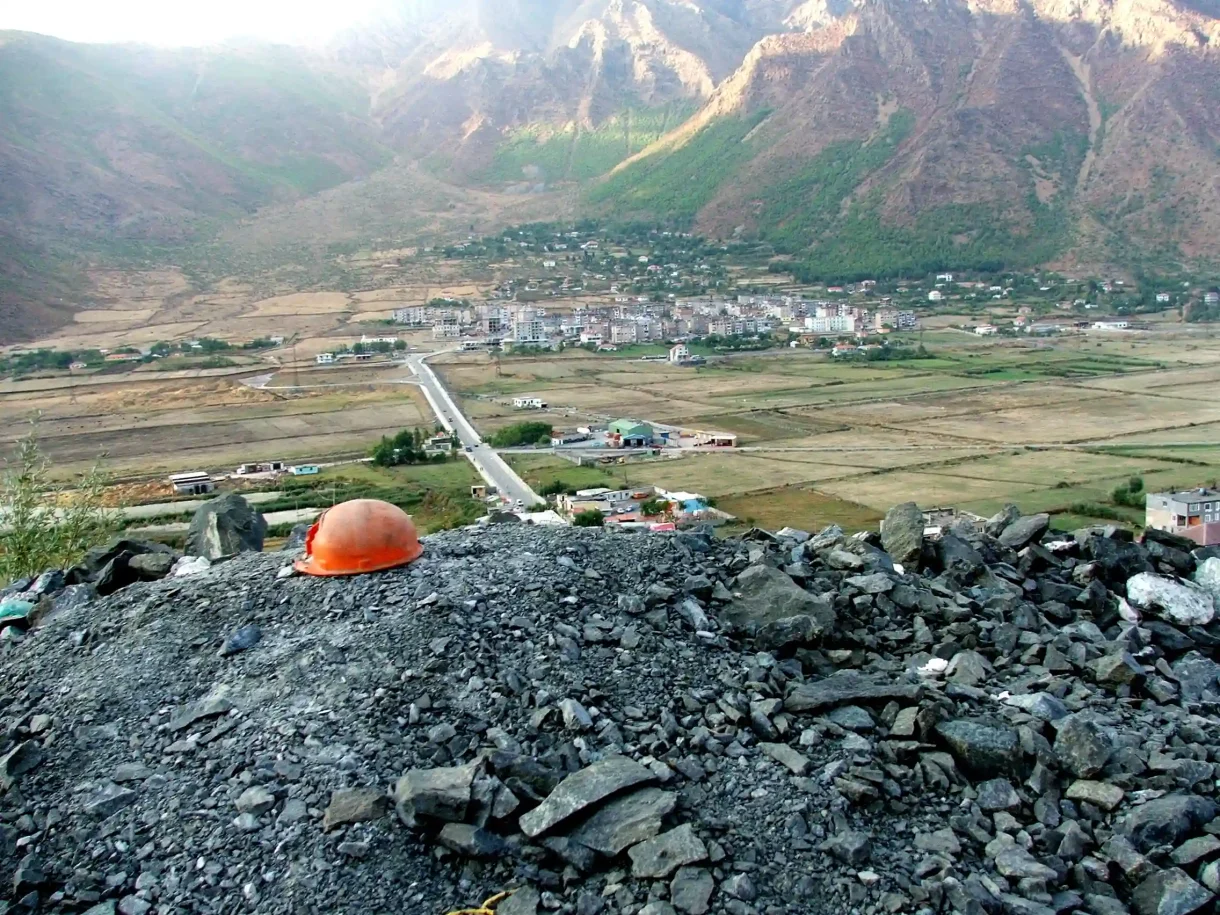
In the chrome mining hub of Bulqizë, northeastern Albania, fatal accidents have become tragically routine. Miners working in unstable underground galleries have been victims of rock falls and gas explosions. In one concession alone, six miners died within a seven-month period (2017–2018) due to collapsing rock or asphyxiating blast. More recently, in September 2025, a 38-year-old miner was killed in Bulqizë’s Zone D galleries while working for a private chrome company. Such incidents illustrate what union leaders call chronic neglect of safety standards in the mining sector. Although police often arrest lower-level supervisors after deadly incidents, higher-level accountability is rare – no mine owners were prosecuted in the last three years despite numerous deaths.

The energy sector has seen its own share of tragedy. HV line workers with Albania’s public power company (OSHEE) regularly perform perilous maintenance on the country’s aging electrical grid. In one case, a 23-year-old electrician fell to his death from a power pole in 2016. During 2024 another foreign Egyptian worker, working for DOKO shpk died during construction of 400kV transmission line Fier-Elbasan-Qafe Thane.  During half of 2021 six electrical workers died during their work where two OST workers died in Roskovec HV tower demolition, and in April–May 2025, two OSHEE technicians were fatally electrocuted in separate incidents (in Mirditë and Divjakë) while attempting to restore electricity. Two other crew members were injured in the Mirditë accident, which occurred as they worked on a high-voltage line to supply a voting center. Investigations blamed lapses in safety protocols and protective equipment, pointing to the need for better training and oversight for electrical workers. OSHEE currently tops the list for workplace accidents among Albanian companies, according to official data.

Industrial projects backed by foreign investors have not been immune either. In 2014, three workers (two Albanians and an Italian) died when a rockslide struck the Moglicë hydropower project site in southern Albania. The project’s Norwegian developer, Statkraft, halted work to review safety after the incidents. Likewise, at the Ballsh oil refinery  a major energy installation a massive explosion in November 2016 killed one operator and badly burned five others.  Authorities suspect that inadequate maintenance and a failure to observe safety rules led to the blast in a fuel processing unit. These disasters highlight that even large-scale energy operations, which are expected to follow international standards, can falter on safety measures in Albania.

Despite each tragedy, systemic improvements have lagged. Over the five years alone (2016–2021), 133 people lost their lives to workplace accidents in Albania,  roughly half of them in construction, mining, or energy jobs. Government inspectors have handed out fines to companies for more than 600 penalties in that period and in some cases police have detained site managers after fatal accidents. Yet enforcement is widely seen as ineffective. Observers point to political connections and economic pressures that lead to corners being cut. For example, a 2019 accident in which an 18-year-old off-the-books worker was electrocuted at a small hydropower plant in Tamara was initially covered up as a “natural death”, allegedly to protect the concession owner. Such cases fuel public skepticism about regulators’ commitment to worker safety.

An electrical lineman in Albania working on power lines. OSHEE and OST field workers face high risks from falls and electrocution if safety protocols are not strictly followed.

Officials acknowledge the problem: The State Labour Inspectorate cites poor safety culture and lack of training as major issues, and only specific high-risk professions (miners, oil drillers) are required by law to carry life insurance. In response to recent accidents, the Ministry of Energy and infrastructure companies have promised new measures ranging from better protective gear for workers at height, to stricter monitoring of mining operations. There are some signs of progress: major foreign-led projects like the Trans-Adriatic Gas Pipeline were completed in 2020 without publicized fatalities, and Albania’s onshore oilfields have ramped up safety drills after the 2016 refinery blast.

However, critics say these efforts remain piecemeal.

Worker advocates and unions are urging a comprehensive overhaul of workplace safety enforcement. They want more surprise inspections, tougher fines and legal consequences for negligent executives, and greater empowerment of workers to refuse unsafe work. “Every Albanian who leaves for work in the morning deserves to come home safely,” one miners’ representative said at a recent vigil in Bulqizë. As Albania continues to develop its energy and mining resources  building roads, dams, power lines, and extracting minerals  the stakes are high. The country’s ambitious economic plans depend on these sectors, but each incident erodes public trust and devastates families.

For now, the rash of accidents has cast a spotlight on an uncomfortable reality: economic growth in Albania has been built on risky, sometimes deadly labor. The challenge ahead is translating the lessons of each tragedy into preventive action. Observers note that 2025, marked by multiple high-profile accidents, could be a turning point. The government has pledged to bolster the Work Inspectorate and update safety regulations in line with EU standards. Albania’s workforce, meanwhile, is watching closely to see if those promises result in safer conditions on the ground  in the mines, on the power lines, and at all hazardous job sites  so that such workplace tragedies become a thing of the past.

by in News

Fortis kicks off construction of solar power plant in Albania

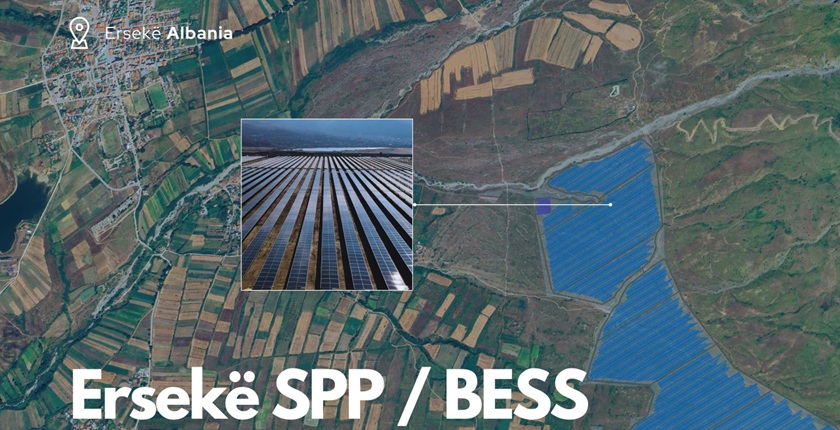
Fortis Energy has started the construction of solar power plant Ersekë with a capacity of 75 MW.

The Ersekë Solar Power Plant project in Albania has transitioned to the construction phase, featuring a total peak capacity of 75 MW, and it will be integrated with a 25 MWh battery energy storage system (BESS), Turkey-based Fortis Energy said.

Following the formal approval, the company moved to the execution stage in the village of Taç-Lartë, in the municipality of Kolonja in the country’s southeast.

Of note, in June Fortis Energy received approval from the Albanian government for the construction of a photovoltaic plant. The company is allowed to operate the facility for 49 years from the entry of the decision into force.

The PV project is set to generate 135 GWh per year

Now the company recalled that the PV facility is set to generate 135 GWh per year of clean energy. It would mark a major milestone in Albania’s green energy transition by combining solar generation with advanced storage capabilities, it added.

Fortis, which was a bronze sponsor this year at Belgrade Energy Forum 2025 (BEF 2025), organized by Balkan Green Energy News, has also invited qualified suppliers and contractors to submit their inquiries for upcoming construction and procurement packages.

“We are looking for partners who share our commitment to health, safety & environment (HSE) excellence, technical precision, timely delivery,” the company stressed.

Fortis Energy is working on renewable energy projects totaling 2 GW

The facility must be built within 36 months from the entry of the decision into force, according to the government’s approval.

The 36 months for construction, ancillary works and commissioning are included in the said 49 years of the operation of the facility.

Of note, Fortis Energy is working on renewable energy projects of 2 GW altogether in Southeast Europe. One half of the planned capacity is for solar and wind power plants in Serbia.

Three months ago the company obtained a construction permit for a solar park of 270 MW on the territory of the city of Sremska Mitrovica in Serbia. The project includes a BESS of 36 MWh.

by in News

Fortis kicks off construction of solar power plant in Albania

Fortis Energy has started the construction of solar power plant Ersekë with a capacity of 75 MW.

The Ersekë Solar Power Plant project in Albania has transitioned to the construction phase, featuring a total peak capacity of 75 MW, and it will be integrated with a 25 MWh battery energy storage system (BESS), Turkey-based Fortis Energy said.

Following the formal approval, the company moved to the execution stage in the village of Taç-Lartë, in the municipality of Kolonja in the country’s southeast.

Of note, in June Fortis Energy received approval from the Albanian government for the construction of a photovoltaic plant. The company is allowed to operate the facility for 49 years from the entry of the decision into force.

The PV project is set to generate 135 GWh per year

Now the company recalled that the PV facility is set to generate 135 GWh per year of clean energy. It would mark a major milestone in Albania’s green energy transition by combining solar generation with advanced storage capabilities, it added.

Fortis, which was a bronze sponsor this year at Belgrade Energy Forum 2025 (BEF 2025), organized by Balkan Green Energy News, has also invited qualified suppliers and contractors to submit their inquiries for upcoming construction and procurement packages.

“We are looking for partners who share our commitment to health, safety & environment (HSE) excellence, technical precision, timely delivery,” the company stressed.

Fortis Energy is working on renewable energy projects totaling 2 GW

The facility must be built within 36 months from the entry of the decision into force, according to the government’s approval.

The 36 months for construction, ancillary works and commissioning are included in the said 49 years of the operation of the facility.

Of note, Fortis Energy is working on renewable energy projects of 2 GW altogether in Southeast Europe. One half of the planned capacity is for solar and wind power plants in Serbia.

Three months ago the company obtained a construction permit for a solar park of 270 MW on the territory of the city of Sremska Mitrovica in Serbia. The project includes a BESS of 36 MWh.

by in News

All medium, large businesses in Albania are now in free electricity market

Consumers connected to the 6 kV electricity network in Albania are legally obligated to find a private supplier on the free market by January 1, 2026. The move represents the completion of a multi-year transition for industrial and commercial users.

On January 1, 2026, all medium and large businesses in Albania will be part of the liberalized electricity market.

Scheduled to join are 2,300 firms and institutions.

The newcomers in the market must find a supplier from the list of licensed entities, Albania’s Energy Regulatory Authority (ERE) said.

The liberalization process began in 2018

Those who fail to secure a contract by the deadline will be covered by the supplier of last resort for a maximum of 60 days under regulated conditions to prevent power cuts, according to the update.

The 6 kV level is the final stage of the liberalization process, which began in 2018. It started with 35 kV, followed by 20 kV in 2024 and 10 kV in 2025.

Only small businesses and households remain under regulated supply. Regulated prices are set by ERE.

There are about 40 licensed suppliers in Albania

Small businesses, connected to the 0.4 kV grid, are still the responsibility of the universal supplier. This service is provided by Furnizuesi i Shërbimit Universal, a subsidiary of OSHEE, the state-owned power distribution operator.

ERE recently confirmed that electricity prices for universal service customers would remain unchanged until December 31, 2026.

Of note, there are about 40 licensed suppliers in Albania. Businesses can compare offers using ERE’s online platform. Of note, the Albanian Power Exchange (ALPEX) started its operations in April 2023.

Energy Community Secretariat: Complete liberalization is behind schedule

In its latest Annual Implementation Report, from November, the Energy Community Secretariat said that the complete liberalization of the retail electricity market remains behind schedule.

Households and small businesses connected to the 0.4 kV network continue to be supplied under regulated tariffs by the universal supplier, the report reads.

Consumers connected to the 6 kV network are covered by the supplier of last resort (SLR), and this regime was extended until December 31, 2025, the secretariat pointed out.

by in News

Tax-Free for a Decade: Albania’s Mountain Incentives Raise EU Red Flags

Albania’s new Law No. 20/2025, popularly branded the “Mountain Package,” is being sold as a long-overdue fix for one of the country’s most stubborn problems: vast stretches of mountainous land occupied for decades without formal title. The state’s answer is dramatic. If you can prove at least 10 years of continuous “non-owner” possession in a designated mountain zone—and you commit to a “sustainable” investment project—the government can transfer state-owned land to you for a symbolic €1, paired with sweeping tax exemptions for up to 10 years. The promise is rural revival. The risk is that Albania may be institutionalizing a legal bargain that rewards whoever gets there first, and whoever knows how to work the system best.

From a formal standpoint, the law is not a legislative accident. It was adopted through parliament under constitutional provisions governing lawmaking and fiscal measures, including the constitutional requirement that taxes and exemptions must be established by law. In other words, the state has tried to give the incentives a proper legal foundation, especially because the benefits are unusually generous.

But legality on paper is not the same as legitimacy in practice—and this law will live or die in the gap between the two.

A law built on a simple trade: title for investment

The law’s engine is straightforward: convert informal possession into formal ownership, but only if it produces development. That development is meant to boost tourism and other economic activity in highland areas and, politically, to signal that the state is finally willing to recognize realities that have existed for generations.

The safeguards look reasonable at first glance. The land must be verified as state property. Parcels with private ownership claims or pending restitution processes are supposed to be excluded. Municipalities and the cadastre are tasked with confirming status, and there is a 45-day public notice period during which third parties can object and present ownership documentation. If a valid claim appears, the transfer should be rejected.

That’s the theory. The real-world question is whether Albania’s institutions—especially at the local level—can enforce these checks consistently, or whether the process becomes another high-value distribution scheme vulnerable to political pressure, nepotism, and quiet dealmaking.

The hidden legal trap: what happens to the “real” owner who shows up late?

The most sensitive weakness is also the most predictable: what happens when a rightful owner (or heirs) surfaces after the 45-day notice window, after a transfer has already been completed? The law leans heavily on notice-and-challenge as its due process firewall. Yet Albania knows its own reality: heirs live abroad, property files are fragmented, and public notices can be easy to miss in practice. A diaspora family might learn years later that land tied to their history was treated as “state land,” sold for €1, and folded into an investment plan.

The law does not clearly spell out a compensation pathway for these post-factum claims. That silence matters because property rights are not only constitutional; they are also protected by the European human-rights framework that Albania is expected to respect. Adverse-possession-type systems can be lawful if they serve a legitimate public interest and follow fair procedures. But the fairness test collapses if the process is realistic only for those who are physically present, locally connected, and able to monitor municipal notices.

If the state transfers land on the assumption it owns it, and later turns out to be wrong, the legal conflict doesn’t evaporate—it shifts into years of litigation, compensation demands, and distrust. The law’s “certainty” could end up creating a new category of uncertainty.

A second legal fault line: bypassing local planning, centralizing power

The law also accelerates development permissions by empowering the National Council of Territory and Water (KKTU) to approve projects even where local spatial plans are missing—or would ordinarily block development. That is not a technical tweak; it is a political reallocation of power from local planning to a centralized body.

Supporters will argue this is necessary because local planning is uneven and often paralyzed. Critics will counter that Albania is substituting one dysfunction for another: replacing local bottlenecks with a national gatekeeper that can override community-level land-use priorities. The more exceptions a system allows, the more valuable the exceptions become—and the more tempting it is to sell influence around them.

The EU problem hiding in plain sight: state aid by another name

Even though Albania is not an EU member, it is trying to align with EU standards. This law is a stress test. The incentives are not modest: land transferred for €1 plus broad tax holidays that reportedly include relief from taxes such as profit tax and even VAT for a decade, capped to a limited pool of beneficiaries.

In EU terms, transferring public assets below market value and granting selective tax advantages is the classic shape of state aid. In an EU member state, measures like these would normally trigger scrutiny, notification requirements, and legal constraints designed to prevent unfair market distortion. Albania may frame the package as regional development—and that objective is common across Europe—but the method is exceptionally blunt. It risks locking Albania into an incentive model that becomes harder to defend the closer accession gets, especially if beneficiaries include large projects or politically exposed investors.

Corruption and financial crime risks: the “perfect storm” combination

Land allocation, construction permitting, and tax breaks in one package is the kind of governance cocktail that invites abuse. The law relies on municipalities to verify who truly qualifies as a long-term possessor. Evidence may include utility bills, tax records, witness statements, and photos; the law even suggests the absence of documentation is not automatically disqualifying if no competing claim emerges. That flexibility is humane in remote areas with weak records—but it is also an open door for fabrication, collusion, and “professional” claims-building.

Then comes the permitting phase, where KKTU approvals can unlock projects that might otherwise be blocked. Any system that can override normal planning rules creates a premium on access.

Finally, there is the money problem. Real estate and construction are globally recognized as high-risk sectors for money laundering. A scheme that enables rapid land regularization, development approvals, and generous tax exemptions can become attractive not just to investors but to capital looking for a clean narrative. The fact that foreign legal entities can participate adds another layer of complexity if beneficial ownership is opaque or due diligence is weak.

Environment: the law says “sustainable,” but the incentives say “build”

The law speaks the language of ecosystem protection and sustainable development, yet it also opens the door to construction on land categories like forests, pastures, and meadows by treating them as transferable under this scheme. If implementation is aggressive, Albania could end up trading its most valuable long-term asset—intact mountain landscapes—for short-term investment headlines.

The law does not explicitly waive environmental assessments, so in principle environmental impact assessments should still apply. But fast-track political projects have a habit of turning legal requirements into box-ticking exercises. Mountain rivers, biodiversity corridors, and protected landscapes are not easily restored once damaged. If Albania is serious about EU alignment, it cannot afford a “development first, assessment later” culture—especially in its most sensitive territories.

What this law really tests

The Mountain Package is not just a development policy; it is a rule-of-law test. It asks whether Albania can run a high-value program transparently, fairly, and cleanly in regions where records are weak and governance is often personal rather than institutional.

If implemented with rigorous verification, public transparency, meaningful avenues for appeal, and strong anti-corruption and AML scrutiny, the law could finally bring order to a chaotic property reality and unlock legitimate investment.

If implemented in the familiar Albanian way—quiet decisions, selective enforcement, and political favoritism—it risks becoming a state-backed mechanism for legalizing land capture, laundering reputations along with money, and permanently scarring the very mountain regions it claims to revive.

by in Events, News

Energy transition and future challenges for a liberalised and integrated electrical market: the case of Albania

On February 20th 2019, the second phase of the KEP / CEI technical assistance program “Central European Initiative Support for Strengthening Energy Regulatory Authorities in the Western Balkans” will be formally launched, benefiting from the financial support of the CEI fund, totally financed by the Italian government, through the European Bank for Reconstruction and Development (EBRD). The initiative, led by the Regulation Authority for Energy, Networks and Environment (ARERA) with the support of TERNA and GME, is focused on the transfer of knowledge to the regulatory Authorities of Albania (ERE), Montenegro (RAE) and Serbia (AERS) in relation to market coupling mechanisms. The aim is to promote the harmonization and integration of Regional energy markets in order to establish a safe, efficient and integrated European electricity market starting from a correct implementation of the new regulatory framework of the European electricity and gas markets in line with the so-called. Third, Package (European network codes).

The Italian Embassy in Albania – in collaboration with the Italian Trade Agency, the Italian Chamber of Commerce in Albania and Confindustria Albania will take this opportunity to restart, five years after the last edition, the “Energy Table”.

The aim is to establish a permanent forum of dialogue with Italian private companies active in the various energy sectors in Albania, with the dual aim of addressing both the issues of the current Albanian business and regulatory context, and an evaluation of the main opportunities for future investments.

In this framework, on February 21st we will organize, in cooperation with the Development and Cooperation Institute the workshop ” Energy transition and future challenges for a liberalized and integrated electrical market: the case of Albania” so to present the main outcomes of the Energy Table and to foster a constructive dialogue between Italian, Albanian and International Authorities and stakeholders. The workshop will be focused on the upcoming challenges and opportunities of Albania to strengthen regional energy connectivity, in line with the guidelines set by the European Union and the conclusions of the Trieste Summit of July 2017, in the context of the Western Balkans process.

FEBRUARY 21ST 2019 – ROGNER HOTEL, SALA ANTIGONEA II

Më datë 20 shkurt 2019 do të nis zyrtarisht faza e dytë e programit të asistencës teknike të KEP/CEI “Përkrahje e Nismës së Evropës Qendrore për Fuqizimin e Autoriteteve Rregullatore të Energjisë në Ballkanin Perëndimor”, në kuadër të fondit CEI, të financuar plotësisht nga Qeveria italiane, nëpërmjet Bankës Evropiane për Rindërtim dhe Zhvillim (BERZH). Iniciativa, e udhëhequr nga Autoriteti Rregullator për Energjinë, Rrjetin dhe Mjedisin (ARERA) në bashkëpunim me shoqëritë TERNA dhe GME, është përqendruar në transferimin e njohurive tek Autoritetet Rregullatore të Shqipërisë (ERE), Malit të Zi (RAE) dhe Serbisë (AERS) në lidhje me mekanizmat e integrimit drejt një tregu të përbashkët. Qëllimi është të promovohet harmonizimi dhe fuqizimi i tregjeve rajonale të energjisë në mënyrë që të krijohet një treg i sigurtë, efikas dhe i integruar evropian i energjisë elektrike duke filluar nga zbatimi korrekt i kuadrit të ri rregullator të tregjeve evropiane të energjisë dhe gazit në përputhje me të ashtuquajturën “Paketa e Tretë” (Rrjeti i Kodeve Europiane).


Ambasada e Italiasë në Shqipëri – në bashkëpunim me Agjencinë Italiane të Tregtisë, Dhomën Italiane të Tregtisë në Shqipëri dhe Confindustria Albania – do të shfrytëzojnë këtë mundësi për të rifilluar, pesë vjet pas edicionit të fundit, “Tryezën e Energjisë”. Qëllimi është krijimi i një forumi të përhershëm të dialogut mes kompanive private italiane, aktive në sektorët e ndryshëm të energjisë në Shqipëri, me synimin e dyfishtë të adresimit të çështjeve të kontekstit aktual të biznesit dhe kornizës rregullatore shqiptare, si dhe vlerësimit mbi oportunitetet kryesore për investime në të ardhmen.


Në këtë kuader, më datë 21 shkurt ne do të organizojmë në bashkëpunim me institutin Cooperation Develeopment Institute workshopin “Tranzicioni energjetik dhe sfidat e ardhshme për një treg të liberalizuar dhe të integruar elektrik: rasti i Shqipërisë”, për të paraqitur rezultatet kryesore të Tryezës së Energjisë dhe për të nxitur një dialog konstruktiv mes autoriteteve italiane, shqiptare dhe ndërkombëtare si dhe grupeve të interesit. Seminari do të fokusohet në sfidat dhe mundësitë e ardhshme të Shqipërisë për të forcuar ndërlidhjen rajonale të energjisë, në përputhje me udhëzimet e vendosura nga Bashkimi Evropian dhe përfundimet e Samitit të Triestes, në korrik 2017, në kontekstin e Procesit të Berlinit mbi Ballkanin Perëndimor.

– Workshop –

21 Shkurt 2019 – HOTEL ROGNER, SALLA ANTIGONEA II
“Tranzicioni energjetik dhe sfidat e ardhshme për një treg të liberalizuar dhe të integruar elektrik: rasti i Shqipërisë”

by in News, Publication

Albania an important energy hub for the Southern Gas Corridor

Topics in this presentation :

  • Existing and planned import pipelines to Europe
  • Natural gas demand on the Balkans is expected to grow by 24.9 bcm/a (+ 68 %) to reach 61.3 bcm/a in 2035
  • The Balkan Gas Hub/ East and West connects all major gas supply projects
  • The Albania/Balkan region and Europe as a whole would strongly benefit from a realization of the Balkan Gas Hub East/West concept
  • Regional primary energy production in the WB
  • First natural gas discovery and production in Albania dates 1960.
  • Natural Gas Role in the Albanian Energy Balance
  • Ionian – Adriatic Pipeline
  • Albania Natural Gas  Forecast
  • Realistic potential area for developing the gas transmission and distribution pipeline
  • Underground Gas Storage potentials of Albania.

[pdfjs-viewer url=”https%3A%2F%2Finfo.aea-al.org%2Fwp-content%2Fuploads%2F2018%2F02%2FAlbania-an-important-energy-hub-for-the-Southern-Gas-Corridor_web.pdf” viewer_width=100% viewer_height=1360px fullscreen=true download=true print=true]