AEA-Albania Energy Association
  • Main
  • About Us
  • Services
  • Sectors
  • News
  • EventsEvents
  • PublicationPublication
  • Contact Us
AEA-Albania Energy Association
  • Main
  • About Us
  • Services
  • Sectors
  • News
  • EventsEvents
  • PublicationPublication
  • Contact Us
AEA-Albania Energy Association
  • Home Page
  • About Us
  • Sectors
  • Our Services
  • News
  • Contact Us
July 4, 2025
by AEA in News

YEO’s Defic Globe buys projects for 219 MW in Romania amid rebranding

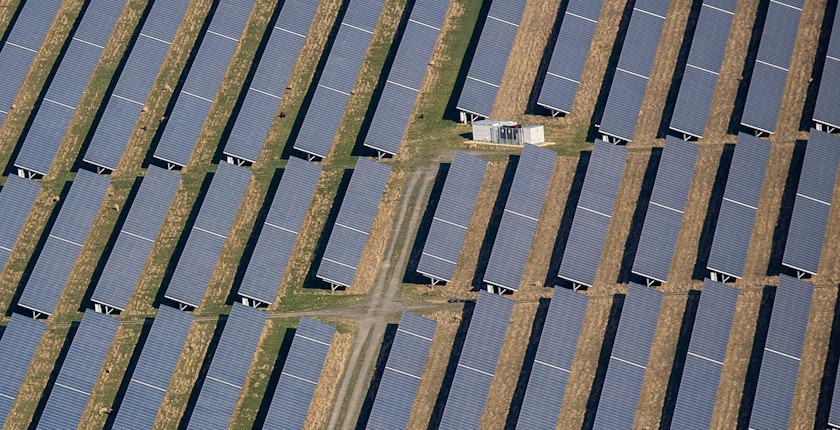
Defic Globe, YEO’s Istanbul-based joint venture with Emsolt Investments, acquired 15 project firms developing plans for power plants of 219 MW in total. The portfolio also brings a potential 320 MWh in battery energy storage systems (BESS). Separately, YEO launched its CALL Energy brand, which aims to build 1 GW in capacity by 2030.

Through its subsidiary Defic Globe, YEO Technology (YEO Teknoloji Enerji ve Endüstri) is continuing its expansion in Romania. The Istanbul-based joint venture with Emsolt Investments took over 15 special purpose vehicles (SPVs) or firms for particular investments. They are developing projects for power plants of 218.7 MW in overall peak capacity.

The facilities would be of different sizes and in various locations around Romania, the company said. In addition, the new portfolio brings the possibility for building BESS units with a combined capacity of 320 MWh, according to the update.

YEO, which holds 51% of Defic Globe, estimated the total investment at EUR 220 million. It said the acquisition grows its project portfolio in Romania to 590 MW in peak capacity. Some facilities are operational or under construction, and the others are in the planning phase.

The group comprises direct investments and joint endeavors with Shanghai Electric Power, Scatec and other international companies.

New brand CALL Energy investing up to USD 1 billion

YEO is active in more than 30 countries, delivering turnkey solutions in energy and industrial systems. In the Balkans, in addition to its energy expertise role, it invests in renewable energy projects.

The company carries out projects in areas from advanced energy storage solutions to power grids, high voltage transformer centers, renewable energy plants, industrial, commercial facilities and household energy conversion to hydrogen. YEO was a friend of this year’s edition of Belgrade Energy Forum, organized by Balkan Green Energy News.

Separately, the company launched its CALL Energy brand, formerly YEO Energy (YEO Enerji), and appointed Sacit Akbaş as the subsidiary’s chief executive officer. It aims to invest between USD 750 million and USD 1 billion, of which up to 70% abroad, to build 1 GW in capacity by 2030.

Projects for 1.5 GW in ten countries

Under the slogan CALL to Renewable Energy, the firm intends to develop large-scale projects, especially in Europe. The target growth markets are the eastern part of Europe and the Sub-Saharan regions of Africa, it revealed.

YEO Technology’s renewable energy arm operates 32.6 MW in peak capacity in Romania and Italy. It is about to boost the Romanian part to over 190 MW in peak capacity this year, with two power plants under construction. The project portfolio amounts to 1.5 GW.

YEO Technology’s renewable energy arm counts on growth through EPC services as well

CEO Akbaş came from Enerjisa, where he was the energy solutions director for more than two years. He said more than 30 projects are underway in ten countries on three continents.

CALL Energy also sees growth opportunities in contracting engineering, procurement and construction (EPC) services through the said endeavors. It added that it would engage in asset management as well.

The firm highlighted its preliminary licenses for nine battery-backed solar power projects in Turkey, of 346 MW in total connection capacity. It slated two of them for the start of construction next year. Furthermore, permitting is nearly complete for four hydropower projects of 32 MW altogether. The sites are on the Aras river in eastern Turkey.
Post Views:17
July 4, 2025
by AEA in News

HELLENiQ Energy buys ABO Energy Hellas, adding 1.5 GW in renewables projects

With the acquisition of ABO Energy Hellas, HELLENiQ Energy strengthened its project pipeline for renewables and energy storage by a third, to 6 GW.

Amid a consolidation in the renewables sector in Greece, HELLENiQ Energy Holdings said it completed, through its HELLENiQ Renewables subsidiary, the acquisition of ABO Energy Hellas. The transaction includes six affiliated entities with a portfolio of 22 renewable energy project clusters.

Total capacity under development in Greece amounts to 1.5 GW. ABO Energy Hellas, part of Germany-based ABO Energy, also brings its renewable energy project development and construction platform, according to the update. HELLENiQ Energy pointed out that the portfolio comprises all renewables technologies.

It includes 340 MW of photovoltaic projects under development, classified under priority category B, and 550 MW in projects for battery energy storage systems (BESS) eligible for participation in the process of obtaining priority connection terms.

At the end of March, HELLENiQ Energy operated renewable electricity plants of an overall 494 MW

With ABO Energy Hellas, the company expanded its renewables pipeline to more than 6 GW. It accelerates the strategic objective to achieve at least 2 GW of installed renewable energy capacity by 2030, it said.

Purchase price to grow if projects reach milestones

The two sides didn’t disclose the purchase price. If projects from the 1.5 gigawatt pipeline achieve certain milestones, additional consideration will become due, ABO Energy revealed.  “The sale of the Greek subsidiary improves our chances of success, reduces complexity of the ABO Energy group, and helps to further focus our business,” said Managing Director Karsten Schlageter.

Between 2019 and 2023, ABO Energy developed and sold five solar parks in Greece with a total capacity of more than 100 MW. The largest one is Margariti in Epirus, of 50 MW. The company connected four of them to the grid on a turnkey basis.

ABO Energy stressed it would remain active in Greece as a service provider and continue to provide commercial and technical management for the solar parks already built.

Photo: Margariti solar park (ABO Energy)

HELLENiQ Energy had almost 500 MW in operation at end of March alongside just as much in mature projects

HELLENiQ Energy, formerly Hellenic Petroleum, produces fossil fuels and petrochemicals and operates service stations. The company is rapidly expanding in the green energy segment as well. Notably, it won state support for its projects at Greece’s BESS auctions.

At the end of March, HELLENiQ Energy operated renewable electricity plants of 494 MW altogether. Photovoltaics made up 59%, while the rest was in wind turbines. At the time, the company had half a gigawatt under construction or in the ready-to-build stage.

It is about to complete the purchase of the remaining 50% of Elpedison, its joint venture in Greece with Italy-based Edison. They operate two gas-fired combined cycle power plants.

Post Views:32
July 3, 2025
by AEA in News

EU outlines measures for 90% emissions cut by 2040

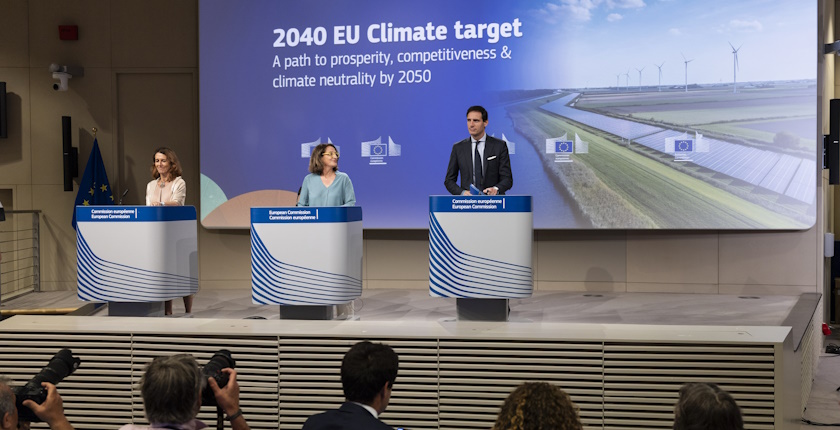
The European Commission proposed an amendment to the European Climate Law, setting a 2040 target of a 90% reduction in net greenhouse gas emissions from the 1990 level. The outlined measures would give certainty to investors, promote innovation and business competitiveness and increase energy security, according to the European Union’s executive body.

The EU is closing in on its 2030 goal to slash annual net emissions by 55% from the 1990 baseline, according to the European Commission’s recent report on national energy and climate plans (NECPs). It is part of the efforts to reach climate neutrality by mid-century. Today the EU’s top executive body formally outlined the proposal for the next intermediate target – 90% by 2040.

It is in the form of an amendment to the European Climate Law, which entered into force in July 2021. In the meantime, the 27-member bloc adopted a 2030 legislative package known as Fit for 55.

The European Parliament and the Council of the EU now need to discuss and adopt the amendment.

Nature-based and industrial carbon removals will play an increasingly important role in reaching the targets, the European Commission pointed out. It implies domestic permanent carbon removals within the Emissions Trading System (EU ETS) to compensate for residual emissions from hard-to-abate sectors. Such systems need to scale up significantly by 2040, the commissioners said.

More pragmatic, flexible trajectory toward 90% reduction in emissions by 2040

The proposal sets out a more pragmatic and flexible way to reach the milestone, the European Commission claimed.

“Aligned with the EU Competitiveness Compass, Clean Industrial Deal and Affordable Energy Action Plan, the proposed 2040 climate target takes fully into account the current economic, security and geopolitical landscape and gives investors and businesses the predictability and stability they need in the EU’s clean energy transition. By staying the course on decarbonisation, the EU will drive investment in innovation, create more jobs, growth, increase our resilience to impacts of climate change and become more energy independent,” the statement adds.

Von der Leyen said industry and investors require a predictable direction on the path to the climate goal

“As European citizens increasingly feel the impact of climate change, they expect Europe to act. Industry and investors look to us to set a predictable direction of travel,” said European Commission President Ursula von der Leyen.

Today’s proposal is based on an impact assessment and advice from the Intergovernmental Panel on Climate Change (IPCC) and the European Scientific Advisory Board on Climate Change. The adoption follows engagement with member states, the European Parliament, stakeholders, civil society and citizens since the commission’s recommendation in February 2024.

EU eyeing international carbon credits

The commission vowed to consider a limited role for high-quality international carbon credits, starting in 2036, and greater flexibility across sectors to help achieve targets in a cost-effective and socially fair way. For instance, a member state would have the possibility to compensate for a struggling land use sector with an overachievement in reducing emissions from waste and transportation.

Emphasis is also on the competitiveness of the European industry and a level playing field with international partners. Among the guidelines is technological neutrality.

Fiscal incentives are under consideration for clean tech and industrial decarbonization projects.

The commission highlighted its Clean Industrial Deal State Aid Framework, adopted last week, and the simplification of the Carbon Border Adjustment Mechanism (CBAM). It also issued a recommendation on tax incentives for investments in clean technologies and industrial decarbonization.

Measures on affordable energy to scale up manufacturing of grid components and support power purchase agreements, the pilot for the upcoming Industrial Decarbonisation Bank, the forthcoming Chemicals Industry Action Plan and the sectorial dialogues with stakeholders are among the actions that will help deliver the Clean Industrial Deal, the commissioners explained. Their draft seven-year budget, officially called Multiannual Financial Framework, is due to be unveiled next month.

WindEurope urges for annual targets for renewables

Reacting to the announcement, WindEurope said EU member states would need to translate the 90% ambition into clear annual goals for the deployment of wind and other renewables for the period 2031-40.

“Otherwise the 2040 target will remain academic,” the organization underscored.

Post Views:53
July 3, 2025
by AEA in News

SolarPower Europe: EU needs ten times more battery storage by 2030 to meet renewables targets

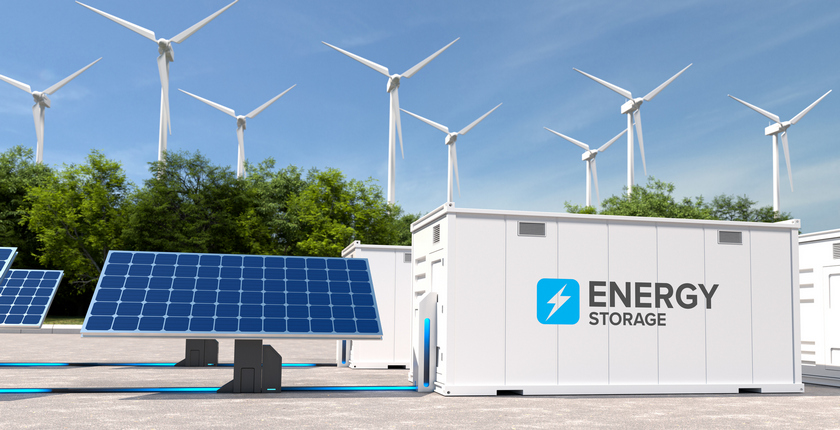
SolarPower Europe believes that the European Union needs ten times more battery storage by 2030 to support the growth of solar and other renewable energy capacities and maintain the pace of the energy transition. To promote battery growth across the EU, SolarPower Europe has launched an initiative called the Battery Storage Europe Platform.

“Battery storage is no longer optional – it is essential. Without urgent action, the EU risks stalling its energy transition,” stated Juhi Dion Sud, the newly appointed Head of the Battery Storage Europe Platform. She added that a tenfold increase in battery storage by 2030 is vital to sustain the rapid growth of solar and other renewables, and to ensure the EU’s energy security, resilience and competitiveness.

Dion Sud: The EU needs to boost BESS capacities from 50 GWh to at least 500 GWh

The EU currently has just over 50 GWh of battery energy storage systems (BESS), but to stay on track for the 2030 renewables targets, the level must increase to between 500 GWh and 780 GWh, explained Dion Sud.

Walburga Hemetsberger, CEO of SolarPower Europe, described solar and storage as “the perfect pair,” adding that battery storage must grow at the same pace as solar installations across Europe.

The platform’s founding partners include REIB, Statkraft and Sunotec

The Battery Storage Europe Platform was launched with support from founding strategic partners, including Renewable Energy Insurance Broker (REIB), Statkraft, and Sunotec. Over 50 representatives from leading battery storage companies joined the kick-off day in Brussels.

The platform will represent the interests of the sector at the EU level, facilitating engagement with policymakers and delivering constructive legislative trade and investment frameworks for battery storage manufacturing and deployment, according to a press release from SolarPower Europe.

Participation in the platform is open to members of SolarPower Europe, with strategic partnership opportunities available for organizations interested in taking a leading role in the work of the platform, it added.

Post Views:35
July 3, 2025
by AEA in News

Solaris Holding launches production at large hybrid renewable energy park in Bulgaria

The new Selanovtsi solar farm of 59.8 MW in peak capacity near Vratsa was installed alongside a battery energy storage system of 107.3 MWh in capacity. The hybrid energy park, owned by Solaris Holding, is now accumulating the midday output and releasing it into the grid at hours of increased demand.

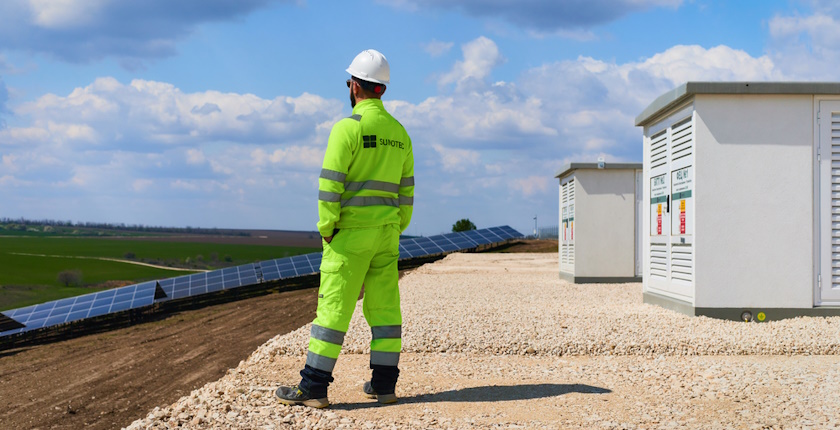
Engineering, supply and construction company Solaris Holding, a joint venture of the Bulgarian-German Sunotec and the main shareholders of Eurohold Bulgaria (Evrohold), launched the operation of a hybrid power plant in the municipality of Oryahovo in Vratsa district. The project in the country’s northwest is financed by United Bulgarian Bank (UBB or OBB) and the German Varengold Bank.

The Selanovtsi solar power plant’s peak capacity is 59.8 MW. It is integrated with a new battery energy storage system (BESS) of 107.3 MWh. Annual output is estimated at 79.9 GWh. It is equivalent to the energy needs of more than 22,000 households and it saves more than a million tons of carbon dioxide emissions, according to the developer.

Electrohold Trade, part of Electrohold Group and Eurohold, is responsible for the sale of electricity.

Hybrid power plant generating 79.9 GWh per year

The Selanovtsi facility, located near an eponymous village, spans 37.9 hectares. It consists of 103,116 solar modules. A team of 250 people built the hybrid renewable energy park, which features lithium-ion-phosphate (LFP) batteries, according to the update.

During the hours of lower consumption, the integrated system stores the green energy and delivers it to the grid around the daily demand peaks. It ensures a more balanced load on the electricity system, increases its stability and efficiency, and contributes to a more reliable integration of renewable sources into the national grid, the statement adds.

Solaris has four even larger projects underway

Solaris plans to commission four more battery-powered photovoltaic plants, even larger in size. In September, it inaugurated a hybrid solar power and storage facility in Pernik.

BESS has become a standard element of PV projects in Bulgaria. In addition, the country’s battery manufacturing capacity is growing and the government has completed its tenders for state support to BESS combined with renewable energy plants, and for standalone units. But even before the subsidies, there are facilities under construction.

Post Views:34
July 2, 2025
by AEA in News

Clean energy, grid upgrade projects in Western Balkans to be backed under EU’s Growth Plan

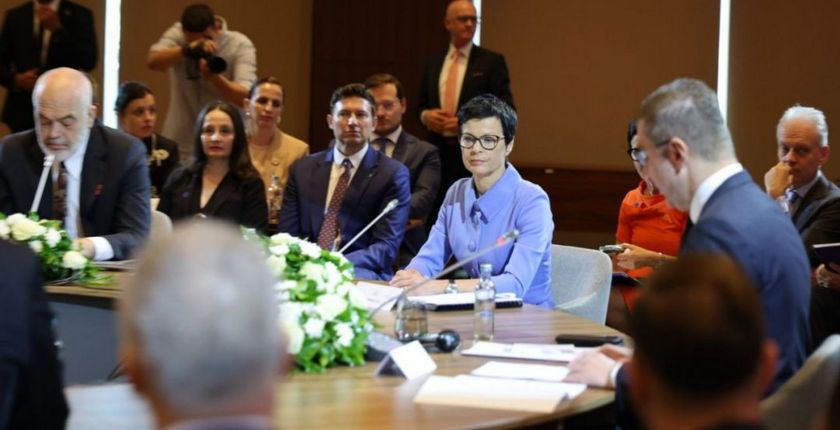
The European Commission has proposed the first support package, of EUR 87.7 million, under the European Union’s Growth Plan for the Western Balkans, to help implement EUR 487.3 million worth of hydropower, solar district heating, and grid modernization projects in Albania, Montenegro, and Serbia. The package was announced following a high-level meeting between European Commissioner for Enlargement Marta Kos and Western Balkan partners in North Macedonia’s capital, Skopje.

The package, funded from the EUR 6 billion Reform and Growth Facility (RGF), set up under the Growth Plan, will be rolled out through the Western Balkans Investment Framework (WBIF). The proposal was made to the WBIF Operational Board, according to a press release from the commission.

The eight proposed projects include building a new generation unit and upgrading existing ones at Serbia’s Potpeć hydropower plant, which would increase its annual production to 236 GWh while reducing CO2 emissions. The investment is valued at EUR 72.1 million, with the RGF support amounting to EUR 15.8 million. The project is targeted for completion in 2030, according to the commission’s fact sheet.

Serbia could get support for introducing solar energy in district heating

The other project in Serbia is the construction of a 31 MW solar-thermal plant and 17 MW heat pump in Novi Sad, which will introduce renewable energy sources to the district heating system. The project would cost a total of EUR 114.3 million, with the RGF support at EUR 25 million. The targeted completion date is 2028.

In Montenegro, the package would support three projects. The first is an EUR 18.3 million investment in building a 38-kilometer 110kV overhead transmission line between Vilusi and Herceg Novi, aimed at increasing transmission capacity and reducing energy losses. It would receive EUR 3.1 million from the RGF.

The EU plans to back Montenegro’s SCADA roll-out

The second project in Montenegro is the introduction of SCADA in the power distribution system, estimated at EUR 26.5 million, with the proposed RGF support of EUR 5 million. The third one is a planned upgrade of the Brezna substation on the Trans-Balkan Electricity Corridor. The EUR 35.6 million investment would be backed with EUR 6.3 million from the RGF.

Albania plans to digitalize its transmission network in EUR 64.2 million project

The support package also includes Albania’s EUR 95.3 million investment in upgrading the Fierza hydropower plant, aimed at increasing its capacity by 10% and extending its lifespan by at least 30 years. The support from the RGF would amount to EUR 10.5 million. The other project to be supported in Albania is the EUR 64.2 million digitalization of the transmission network, which would receive 13.6 million from the RGF.

Post Views:14
July 2, 2025
by AEA in News

Slovenia launches public consultation on spatial plan for second unit at Krško nuclear plant

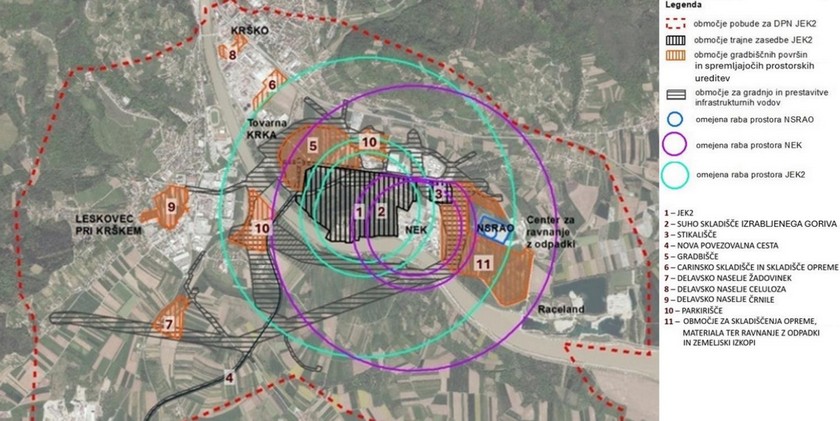
The Slovenian Ministry of Natural Resources and Spatial Planning initiated the development of a spatial plan on the country level for the second unit of nuclear power plant Krško. It invited the public to submit comments and suggestions.

The initiative was announced at a press conference last week by representatives of GEN energija, the state-owned company developing the Krško 2 (NEK 2) project. The document has now been made public and will remain available for comments until the end of September.

The initiative will be available for comments until the end of September

To keep the public informed, GEN energija will open information offices in several locations across Slovenia – Krško, Ljubljana, Maribor, and Nova Gorica.

At the press conference, State Secretary at the Ministry of the Environment, Climate and Energy Tina Sršen described the document as a “milestone,” adding that the project was now moving into broader social and professional coordination.

Final decision on capacity and technology expected in 2028

GEN energija’s chief operating officer, Bruno Glaser, said the capacity of the proposed second unit and the technology to be used have yet to be determined, but that the initiative envisages a capacity of 1,000 MW to 1,650 MW.

He also said that the final investment decision should be made in 2028, along with decisions on the reactor’s capacity and the supplier.

Croatia is willing to participate in the Krško 2 project

Another issue to be resolved before a final investment decision is made is the possible participation of other investors. Croatia has repeatedly expressed its interest in taking part in the project, recalled Gen Energija CEO Dejan Paravan, noting that Croatia’s state-owned power utility Hrvatska Elektroprivreda (HEP) co-owns the existing power plant in Krško.

Slovenian Prime Minister Robert Golob and his Croatian counterpart, Andrej Plenkovič, discussed the topic at a recent meeting, according to Paravan.

Post Views:37
July 2, 2025
by AEA in News

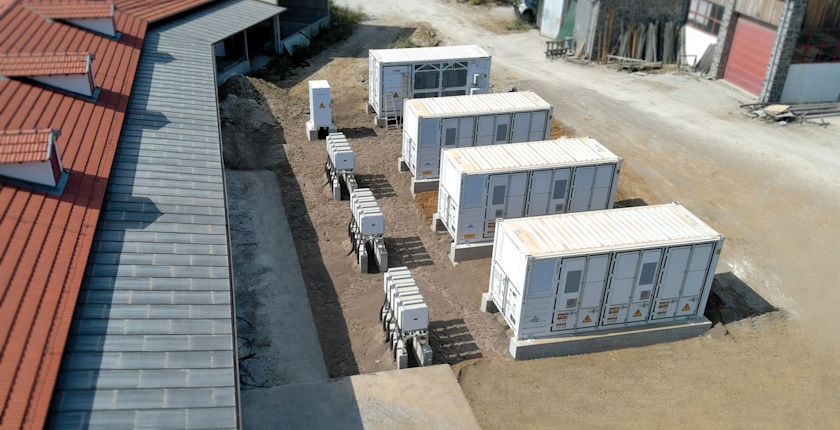
Vatopedi monastery on Mt. Athos gets largest grid-forming BESS in Greece

A grid-forming battery energy storage system of 3 MW was put into trial operation at the Vatopedi monastery on Mount Athos. The project is part of the green energy transition of the monastic republic in northern Greece.

The Sacred Patriarchal and Stavopegial Monastery of Vatopedi, founded in the 10th century, has a microgrid. Engineering, procurement and construction (EPC) contractor ENGAIA said it installed the largest grid-forming battery energy storage system (BESS) in Greece at the site. The facility with 3 MW in operating power and a capacity of 6 MWh is also the largest in the country, according to the company.

The Monastic Republic of Mount Athos of 20 monasteries in the Chalkidiki peninsula in northern Greece isn’t connected to the national electricity network. Reliant until recently only on diesel-fired generators and solid fuel, the self-governing area is shifting to solar power with storage.

Not long ago, Mount Athos relied on diesel-fired generators and solid fuel for its energy needs

ENGAIA, a Greek member of the London-based ECOERA group of companies, is also adding a 1.1 MW photovoltaic unit. It said it would enable it to commission the battery facility fully.

The company stressed that the independent microgrid with a virtual synchronous generator (VSG) at Vatopedi, enabling energy autonomy, is also the largest in the country and one of the largest in Europe. The new BESS is the first large-scale deployment of Huawei’s equipment in the sector in Greece.

Mount Athos is also known as Agion Oros – Holy Mountain. Three years ago, European funds were approved for 21 autonomous photovoltaic stations, with a total capacity of 2.64 MW, in combination with energy storage systems. Mytilineos, now called Metlen, won the contract for the installation of the facilities.

Post Views:32
July 2, 2025
by AEA in News

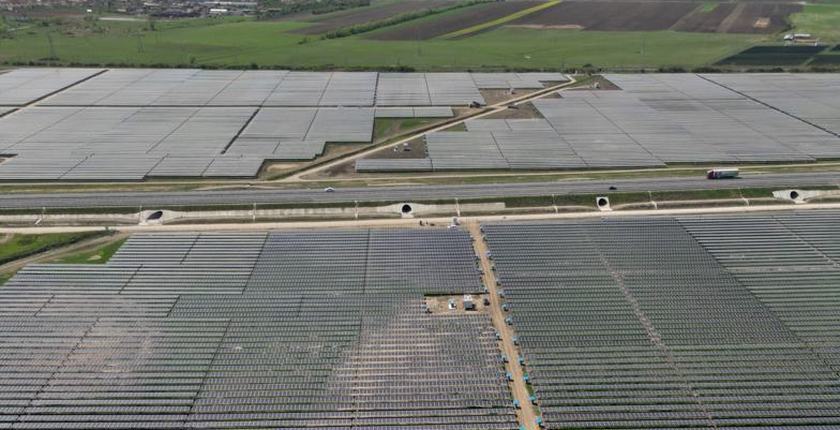
Danish Eurowind Energy to build 220 MW solar park in Romania

Denmark-based renewable energy company Eurowind Energy has announced plans to develop a 220 MW solar park in Romania in an investment valued at EUR 174.8 million. It would be its largest solar park in Romania and one of the biggest in the country. In addition, the company ordered wind turbines from Vestas for its three projects in Romania.

Eurowind’s future solar park, located in Vișina in Dâmbovița County, will span 345 hectares, comprising over 400,000 photovoltaic panels. Its projected annual electricity output is 400 GWh, equivalent to the consumption of around 150,000 Romanian households.

The Vișina solar park is the fifth photovoltaic project developed by Eurowind in Romania, following those in Hălchiu, Măgurele, Pufești, and Teiuș. By the end of 2025, the company plans to operate a local portfolio of 124 MW, alongside a pipeline of about 7.5 GW of solar, wind, hybrid, and storage solutions, according to its website.

Vișina is Eurowind’s fifth solar project in Romania

The Teiuș Solar Park, with a capacity of 60.2 MW, was commissioned in April this year. The EUR 55 million project was developed in collaboration with local firm Teiuș Solar. Its planned annual production is 103.59 GWh of electricity.

Also in April, Eurowind signed a 12-year virtual power purchase agreement (PPA) in Romania for the supply of electricity from its Pecineaga wind park. The contract was signed with Sweden-based automotive manufacturer Autoliv.

Eurowind has ordered 143 MW of Vestas wind turbines for its wind farms in Romania

Wind turbine manufacturer Vestas said yesterday that Eurowind Energy has placed a 143 MW order for its Frumușița, Vector, and Pecineaga Northeast (NordEst) wind power projects in Romania. The contract includes the supply and installation of 23 wind turbines from the EnVentus platform, Vestas added.

In addition to wind and solar, Eurowind Energy’s portfolio includes hydrogen, biogas, power-to-heat, and battery storage projects. It operates in 16 markets across Europe and the United States, according to the Danish company’s website.

Post Views:36
July 2, 2025
by AEA in News

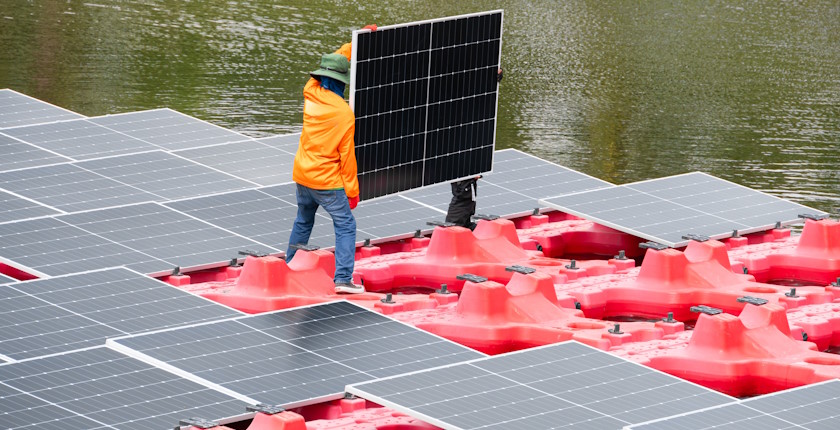
Turkey selects first hydropower reservoir for YEKA floating solar power auction

The reservoir of state-owned Electricity Generation Corp.’s Demirköprü hydropower plant is the first proposed area for Turkey’s planned floating solar power auction. The YEKA support mechanism provides grid permits for several decades and a period with guaranteed prices.

Within its ambition to grow the solar and wind power capacity to 120 GW in total by 2035, the Turkish government is counting on floating photovoltaics as well. The Ministry of Energy and Natural Resources proposed the reservoir of the Demirköprü hydropower plant for the first dedicated auction for the technology.

Detailed studies of the area are underway under the framework for the Renewable Energy Zones (REZ) state support mechanism, the announcement revealed. The scheme is better known by its Turkish acronym YEKA.

Demirköprü is on the Gediz river, east of Izmir, in Manisa province. Its owner is state-owned Electricity Generation Corp. (Elektrik Üretim A.Ş. – EÜAŞ). The 69 MW hydropower plant’s dam holds a reservoir with a regular surface of just under 48 square kilometers.

The Demirköprü hydropower plant’s reservoir spans almost 48 square kilometers under regular conditions

The country’s second floating solar power plant came online early this year. The only other such facilities in the region that Balkan Green Energy News covers are in Romania and Albania.

Turkey held auctions for 7.85 GW in total for wind and solar power, of which 3.8 GW for PV projects. Winners get grid permits for several decades and a period with guaranteed prices.

The country’s total electricity production capacity reached 119.3 GW by the end of May, of which 72.5 GW ran on renewable sources. Solar power accounted for 22.6 GW, compared to 20.4 GW in mid-February.

The ministry selected the first offshore wind power zones in August 2023.

Post Views:31
  • 1
  • …
  • 79
  • 80
  • 81
  • 82
  • 83
  • …
  • 140

AEA – Albania Energy Association is a industry association dedicated to representing the interests of Albanian and West Balkan for energy producers and consumers. AEA works to advance the development and adoption of sustainable energy solutions in Albania and the Western Balkans, supporting the region’s transition toward a cleaner, more secure, and more competitive energy future. AEA is registered by decision of the Court of Tirana, DECISION NO. 3032, (VAT:L11827451K).

[email protected]

Address
Blv Zogu 1
Tirana
1057
ALBANIA

LinkedIn  |  Facebook
Events
May 25, 2022 Connecting Green Hydrogen Europe 2022
May 25, 2022 Energy Week Western Balkans 2022
Copyright © Albania Energy Association