AEA-Albania Energy Association
  • Main
  • About Us
  • Services
  • Sectors
  • News
  • EventsEvents
  • PublicationPublication
  • Contact Us
AEA-Albania Energy Association
  • Main
  • About Us
  • Services
  • Sectors
  • News
  • EventsEvents
  • PublicationPublication
  • Contact Us
AEA-Albania Energy Association
  • Home Page
  • About Us
  • Sectors
  • Our Services
  • News
  • Contact Us
July 11, 2025
by AEA in News

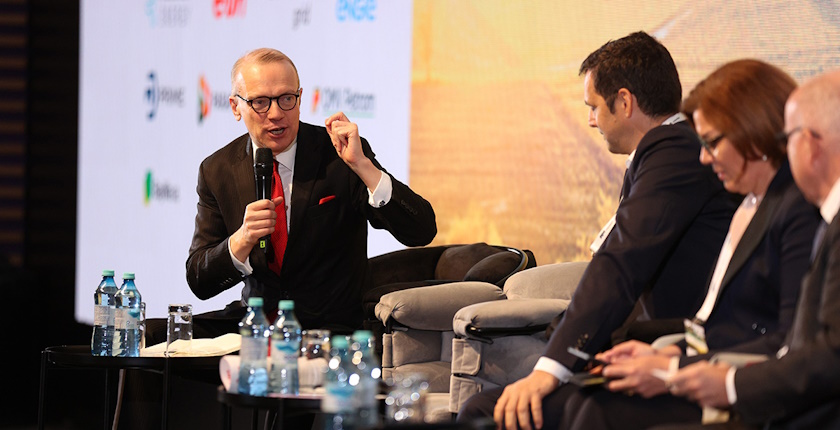
Director Christian Zinglersen is leaving ACER

The European Union Agency for the Cooperation of Energy Regulators (ACER) needs to appoint a new director as Christian Pilgaard Zinglersen is becoming deputy secretary general of the European Investment Bank (EIB) Group.

ACER’s current chief is leaving in the autumn. Outgoing Director Christian Pilgaard Zinglersen says he is carrying on his duties until then under a business-as-usual approach. His leadership spanned a defining period of intense, significant turmoil and pressures on EU energy markets, policy and regulation, ACER pointed out.

EU Agency for the Cooperation of Energy Regulators underwent an organisational reset, doubled its human and tripled its financial resources, reflecting the increasing number of tasks from EU co-legislators and the European Commission, according to the update.

Zinglersen has served for the past five and a half years. His initial five-year mandate was renewed at the end of 2024.

Zinglersen served for five and a half years

It’s been an honour to lead ACER as its only second director after Alberto Pototschnig, who, alongside the other pioneers, built the agency from scratch, Zinglersen stressed.,

“Let’s not sugarcoat it: It has been a challenging, yet also exciting time for more or less everything ACER has had its hands on over these last five-and-a-half years. With the EU going from demand shock to supply shock to … (well, let’s see what the next shock is); with our energy system facing new demands, whether induced by rapid technological or systemic change; with geopolitics rearing its often-ugly head, most significantly via Russia’s aggressive war waged on Ukraine. Never a dull moment, they say,” he wrote.

At ACER, everybody is somebody, and it remains the benchmark, Zinglersen underscored. He praised collegiality, inclusiveness and the “low on hierarchy, high on impact” approaches.

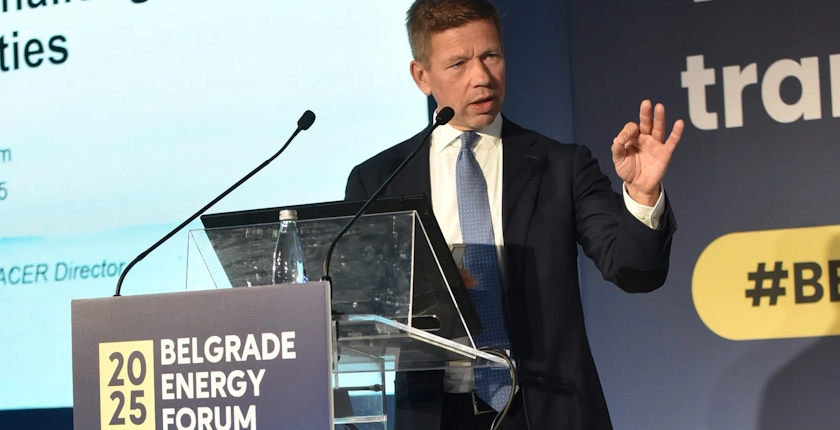
Zinglersen was one of the keynote speakers at this year’s edition of Belgrade Energy Forum, organized by Balkan Green Energy News.
Post Views:41
July 11, 2025
by AEA in News

Cyprus curtails as much renewable electricity in first half of 2025 as whole last year

According to data compiled by the CyprusGrid tracking platform, the island country curtailed more than 167 GWh of renewable electricity in the first six months of 2025. It was equivalent to last year’s entire cuts. On average, two thirds of the potential green energy production was lost per day in March.

In addition to being the only European Union member state without an interconnection with another power system, Cyprus only has oil-fired generators, a surging solar power capacity, wind parks and some biomass-fired facilities. Other countries, like Greece, also must curtail renewable electricity units, but maintaining system stability requires more drastic cuts in the isolated island nation. Notably, it still lacks energy storage, while the conventional power plants lack flexibility.

According to a statistical report from a few months ago, Cyprus hosted almost 850 MW of solar power, of which less than 400 MW was in commercial photovoltaic plants. Prosumers operated the rest. Licensed projects amounted to 2.8 GW. Wind power amounts to 155 MW.

Rapid growth of solar power capacity brings more episodes of overloads, when grid operators have to curtail photovoltaic and wind power production. At the same time, sudden weather changes can push production to a critically low level, which can also cause outages before conventional facilities step in to cover the deficit.

Curtailments to double this year

Founder of the CyprusGrid tracking platform Andreas Procopiou said on LinkedIn that more than 167 GWh of renewable energy was curtailed in the first half of the year. It’s how much was lost whole last year, he pointed out.

The conventional power plants in Cyprus aren’t able to lower or boost production fast enough to balance the changes in renewables

The cuts will almost certainly exceed 300 GWh in 2025, doubling the all-time high in just one year, Procopiou estimated. The average monthly growth rate has actually more than doubled from 2024, according to the developer of the electricity generation tracker.

Cuts boost emission costs by EUR 8 million

Curtailments erased 20.8 GWh in June alone. The daily average was 29.3% of total renewables output. It compares to May’s 33.9 GWh and 50.3%, respectively, after 37.9 GWh and 61.4% in April. March was the worst, with 38.2 GWh lost, or a whopping 67.9% of potential production, CyprusGrid data shows.

“Solar energy that could reduce costs and pollutants ends up being lost. For 2025 alone, the cuts already amount to more than 100,000 tons of additional CO₂ emissions and an additional burden of around EUR 8 million for emission allowances. A cost that we all ultimately pay,” Procopiou stressed.

Without storage, flexibility and serious planning, the energy transition remains just an empty slogan, the renewable energy expert pointed out.

Nevertheless, French giant TotalEnergies isn’t intimidated by the curtailments. It won the environmental approval a month ago for a photovoltaic park of 100 MW in peak capacity. But the company is planning to include energy storage.

Post Views:46
July 10, 2025
by AEA in News

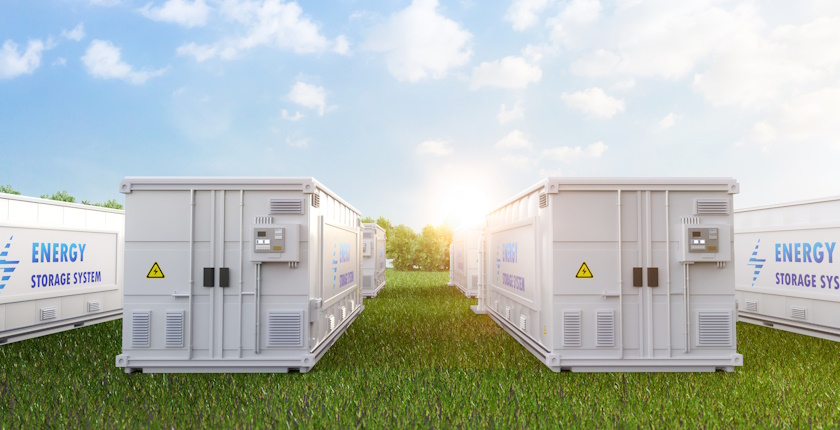
Romania ends double taxation of energy storage

The National Energy Regulatory Authority of Romania has approved a regulation eliminating double taxation of energy storage, to allow for faster deployment of solutions for storing electricity.

The National Energy Regulatory Authority (ANRE) announced that it has approved an order on methodological norms exempting electricity that is stored and reintroduced into the grid from the payment of regulated tariffs.

The main goal is to eliminate double taxation of stored energy, as it was a significant obstacle to the development of storage technologies, essential for balancing the energy system and integrating production from renewable sources, ANRE said.

The regulation introduces three changes. It abolishes the extraction tariff – one of the two components of the transmission tariff – as well as the distribution tariff and system services tariff.

The decision introduces three novelties

The second novelty is the exemption from paying green certificates, and the last one is a unified procedure, applicable to both concessionaire and non-concessionaire operators.

The exemption applies strictly to energy stored and reintroduced into the grid, while for the storage facility’s consumption, including technological losses, grid tariffs remain applicable, ANRE stressed.

“We cannot build a balanced and resilient energy system with rules that penalize innovation. Through this regulation, we send a clear signal to investors: Romania supports energy storage, not just as a technological option, but as a pillar of the energy transition,” said George Niculescu, ANRE President.

The regulation is aligned with ACER recommendations

According to ANRE, the regulation is aligned with European best practices and ACER recommendations, which encourage differentiated tariff treatments and incentives for network flexibility.

The ANRE decision follows the amendments introduced by Government Emergency Ordinance (GEO) 134/2024 in November 2024.

A few days ago, Romanian engineering and technology company Simtel said the current total battery energy storage capacity in Romania is 398.8 MWh.

Post Views:46
July 10, 2025
by AEA in News

Serbia’s power demand soars 20%

Electricity consumption in Serbia has increased by 15% to 20% over the past three weeks compared to the same period last year, according to Dragan Rakić, the head dispatcher of Serbia’s transmission system operator Elektromreža Srbije.

The main reason for the rise in electricity consumption is the increased use of air conditioning units due to the heat wave, which began as early as mid-June this summer.

Dragan Rakić, the head dispatcher of TSO Elektromreža Srbije (EMS), told public broadcaster RTS that the system remains stable despite high temperatures and the reduction of electricity production in hydropower plants.

The record high for summer electricity consumption was set on July 17 last year

Daily consumption in recent days has been 92 GWh to 95 GWh, with the peak of 98.5 GWh reached on June 26. Rakić recalled that the all-time summer consumption record was 105.8 GWh on July 17 last year.

The highest consumption occurs in major cities such as Belgrade, Novi Sad, and Niš. Air conditioners are on even at night, both at home and at work, he added.

Rakić stressed that the electricity supply situation is stable, although hydrological conditions are negatively affecting electricity production in hydropower plants, and partially coal-fired power plants, which require water for cooling.

He added that much of Europe was affected by the dry spell.

EMS is also prepared for extreme weather events

Meanwhile, European think tank Ember noted that record solar power production, backed by energy storage capacity, helped maintain the stability of the electricity system in Europe during the latest heatwave.

Temperatures across Europe jumped to more than 40 degrees Celsius, triggering an increase in electricity demand as the use of air conditioners soared. Daily electricity demand on July 1 was up to 6% higher in Germany, 9% in France, and 14% in Spain than on June 24.

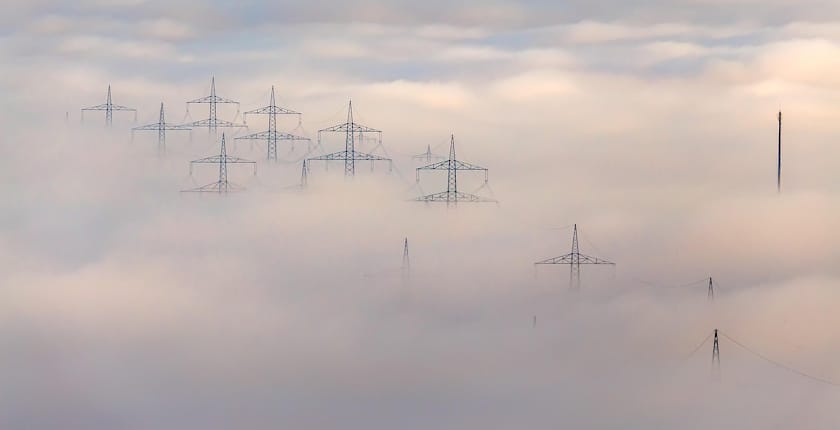
Rakić claimed EMS is ready for extreme weather conditions as well as other emergencies. The company has emergency power line towers and crews on standby when a red weather alert is issued, he explained.

Post Views:35
July 9, 2025
by AEA in News

Germany, Netherlands emerging as BESS optimization, offtake deal hotspots

The BESS dealmaking landscape in Europe has evolved dramatically over the past four to five years, driven by diminishing battery pack costs and the emergence of stackable revenue streams in mature markets, Pexapark said in a new brief. Germany and Netherlands have emerged as hotspots for optimization and offtake, after Great Britain’s convincing lead for several years.

Navigating the fast-paced battery energy storage system (BESS) optimization market is a new challenge for the industry, given the growing number of players, the lack of standardization, and the speed of contractual innovation, Pexapark said in its BESS Brief. To support market participants, the firm has launched the BESS Deal Tracker, which captures the vast majority of publicly disclosed optimisation and offtake deals across European markets.

The first optimization agreements emerged five to six years ago in Great Britain – the maiden European country to develop an advanced utility-scale BESS market. Of note, the electricity systems of Great Britain and Northern Ireland are separate.

Spurred by multiple revenue stacking opportunities available to BESS – from the dynamic frequency response product suite to wholesale arbitrage, the balancing mechanism, imbalance, and inertia services – Great Britain has led the way in deal activity. As of May 26, it accounted for nearly 45% of contracted capability, with almost 2.7 GW signed and 35 out of 63 deals captured by the said Deal Tracker.

Austria, Denmark, Greece, Bulgaria join market with first deals

However, driven by strong fundamentals and a sheer need for flexibility, Germany is emerging as a dealmaking hotspot. In the first five months of 2025 alone, 11 BESS deals were announced in Germany, totaling 540 MWh.

“With ancillary services defying saturation predictions, and new revenue streams – such as inertia – coming up, we expect continued momentum in Europe’s largest and most liquid power market. That said, the German optimisation market is still at an early development stage. Lenders are not yet fully comfortable, and most deals have been merchant-based and short-term,” said the brief’s author and the organization’s Senior Analyst and BESS Lead Apostolis Valassas.

Beyond GB and Germany, the Netherlands stands out with four large-scale agreements announced in the past year. In another sign of the market’s move out of infancy, several markets – including Austria, Denmark, Greece and Bulgaria – recently recorded their first-ever BESS optimisation deals.

Evolving BESS duration, size

Most BESS offtake deals announced in 2020-2022 were predominantly for one-hour assets in Great Britain. At the time, frequency response – where shorter-duration batteries excel – dominated the revenue stack and shaped asset design.

A lot has changed since then. Rising wholesale market volatility driven by increasing renewable penetration, the decline in required capital expenditures (capex), and ongoing improvements in battery energy density have driven a transition toward longer-duration systems.

More megawatts were contracted in the first five months of this year than in 2024 in total

Indeed, the average battery duration in deals tracked by Pexapark has increased from just one hour in 2020 to 2.3 hours in 2025, signalling a broader strategic shift from solely focusing on ancillaries to trading across the whole stack.

Deal sizes are also growing exponentially, from an average 75 MW across 20 deals with disclosed operating power in 2024 to 138 MW across 24 deals in 2025, as of May. It is again a function of falling capex requirements, the strategies to deploy more megawatts to capture multi-market value, and growing lender appetite to finance larger-scale BESS assets, according to the report.

Pexapark, which provides of price data, market intelligence, and advisory services for renewable energy, was one of the knowledge partners at this year’s edition of Belgrade Energy Forum, organized by Balkan Green Energy News.
Post Views:21
July 9, 2025
by AEA in News

WindEurope seeks next CEO as Giles Dickson to depart

Chief Executive Officer of WindEurope Giles Dickson has decided to step down after 10 years, to become a school teacher. The Board of Directors of WindEurope has initiated the process of finding his successor.

Giles Dickson has been instrumental in the expansion of wind energy in Europe – onshore and offshore – and played a key role in the development of Europe’s ambitious renewable energy plans, the organization said. The board established a nomination committee to find the new CEO. The current chief executive of WindEurope is remaining in his post throughout this process, until he steps down during the second half of 2025, the update adds.

“I’m incredibly proud of the progress wind energy has made in Europe in the past 10 years. I thank everyone at WindEurope for their engagement and support and the many people who have helped take wind energy forward during my tenure. Having spent most of my working life outside the UK, I look forward to going home and trying to put something back into the society I came from. But wind is a fantastic industry that it is a privilege to serve,” Giles Dickson said.

The number of jobs in the wind industry is expected to reach 600,000 in 2030

Chair of the Board of Directors Henrik Andersen praised the outgoing CEO for his contribution to WindEurope and the expansion of wind across the continent.

“It is a testament to Giles’ passion for and dedication to the energy transition that he will now help ensure a smooth succession and leave a stronger WindEurope than when he arrived. Europe is facing a generational challenge of becoming competitive and secure again, which wind energy plays a key role in, and I’m therefore very pleased we’ll have a wind energy champion like Giles to educate our future generations,” he stated.

Wind energy accounts for 20% of the electricity Europe consumes, and thanks to wind, the European Union avoids 100 billion cubic meters of fossil fuel imports, WindEurope pointed out.

The industry provides 370,000 jobs and the number is projected to reach 600,000 in 2030. The wind power sector contributes EUR 52 billion to Europe’s gross domestic product, the organization added. On average, each new wind turbine adds EUR 16 million to the European economy and the industry’s 250+ factories are all over Europe, including in economically-deprived regions, it stressed.

Post Views:33
July 9, 2025
by AEA in News

Market assessment underway for expansion of gas Interconnector Greece-Bulgaria

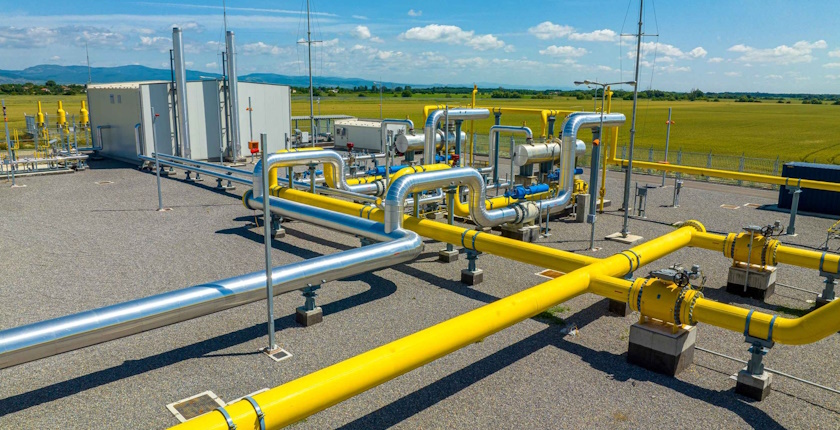
The Interconnector Greece-Bulgaria (IGB) natural gas pipeline is planned to be expanded to five billion cubic meters per year from three billion. The non-binding assessment phase is underway.

ICGB, the operator of the IGB interconnection, targets an expansion in technical annual capacity to five billion cubic meters per year from the current three billion. The company launched the non-binding phase of a process to assess market interest.

The procedure is conducted under Regulation (EU) 2017/459 (NC CAM), the network code on capacity allocation mechanisms for the sector. It marks a key step toward reinforcing long-term energy security in the region, ICGB pointed out.

Interested market participants are invited to submit their non-binding demand indications by September 1. All relevant documents and participation guidelines are available at ICGB’s public consultations page.

The market demand assessment also includes a binding phase, to determine the feasibility of the potential capacity increase. The process is being carried out in close coordination with adjacent gas transmission system operators (TSOs), according to the company.

Expanding IGB’s capacity is a strategic move for the entire region, the heads of ICGB pointed out

Expanding IGB’s capacity is a strategic move for the entire region, said ICGB’s executive officers George Satlas and Teodora Georgieva. “As the first route for diversified natural gas supplies to Bulgaria, IGB plays a critical role in ensuring secure, sustainable energy for Southeast Europe. We remain firmly committed to this process and to delivering enhanced connectivity and resilience across the region with our partners,” they added.

Following the current phase, ICGB and adjacent TSOs need to compile demand assessment reports for each interconnection point. They would form the basis for possible future steps, including project proposals, consultations and regulatory approval, the announcement reads.

Serbia, Hungary, Bosnia and Herzegovina and North Macedonia largely depend on Russian gas, delivered through the TurkStream and Balkan Stream pipeline corridor. IGB and the Serbia-Bulgaria interconnector enable access to Azerbaijani gas and Greece’s liquefied natural gas (LNG) terminals.

Post Views:95
July 9, 2025
by AEA in News

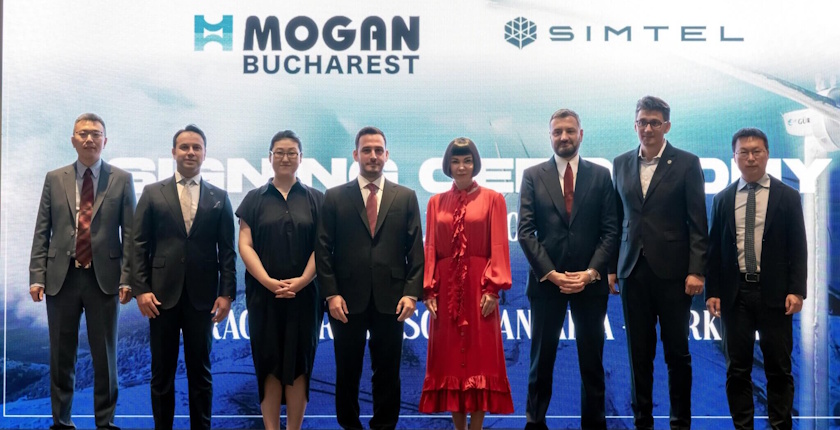
Simtel to install BESS for Güriş in Romania

Romanian engineering and technology company Simtel will install a battery energy storage system in Romania for Turkey-based Güriş.

With a storage capacity of up to 196.4 MWh and an installed power of up to 98.6 MW, it would be one of the largest battery energy storage systems (BESS) in Romania.

Simtel said it signed an engineering, procurement, and construction contract with Energy Capital Group, owned by Mogan Bucharest SRL, part of the Güriş Group from Turkey.

The contract is worth RON 168.9 million (EUR 33.3 million), and the deadline is nine months.

The contract includes the supply of a BESS, the design, construction, installation, commissioning, completion, and testing of the facility. The project will be implemented in the village of Iaz, Obreja commune, Caraș-Severin county.

Energy Capital Group obtained support via the National Recovery and Resilience Plan

Energy Capital Group received support via the National Recovery and Resilience Plan (NRRP) for its project. It is part of the pillar dedicated to the green transition. Romania approved a grant of over RON 50 million (EUR 9.86 million) for the implementation of the battery energy storage project.

With the investment, Romania is taking a significant step towards strengthening its energy infrastructure and increasing flexibility in consumption and production, according to Simtel COE Mihai Tudor. Storage systems are an essential pillar of the energy transition process and in the sustainable development of power grids, he added.

Director of Mogan Bucharest SRL Kaan Yamantürk said the company sees “a great future and opportunity” in Romania.

Güriş is active elsewhere in Southeastern Europe as well.

Simtel: The largest storage project has a capacity of 72 MWh

Simtel pointed out that the size of the facility is significant, considering that, according to the latest data published by Transelectrica, the current total battery energy storage capacity in Romania is 398.8 MWh.

Moreover, the largest storage project completed so far has a maximum capacity of 72 MWh, the firm added.

Of note, in October last year, Monsson said it was completing the second phase of a battery energy storage system within a hybrid power plant project in Constanța. The first phase was inaugurated in April and, with 24 MWh, it was the largest BESS unit in Romania at the time.

A subsidiary of Monsson has submitted a battery storage project of just over 2 GWh in capacity for an environmental permit in Romania. Simtel and Monsson have signed a strategic partnership on the development of solar and energy storage projects in Romania.

Post Views:64
July 9, 2025
by AEA in News

Serbia’s electricity imports up 15% in 2024

Electricity consumption by end consumers in Serbia increased 2.7% last year, while production decreased 6.7%, according to the 2024 annual report of the Energy Agency of the Republic of Serbia. Higher consumption and lower production led to a 15% rise in imports.

Excluding the use of electricity in power plants for production purposes, consumption by end consumers in 2024 amounted to 30.8 TWh or 0.8 TWh more than in the previous year.

Household consumption increased by 1.7%, while the other consumers connected to the low-voltage system added 2.4%. The medium-voltage segment grew 5% year on year, and the growth among high-voltage customers was 1.6%, the Energy Agency of the Republic of Serbia, or AERS, said.

Hydropower production dropped nearly 17%

Total production in all power plants in Serbia in 2024 was 35,171 GWh. Coal-fired facilities accounted for 60.49%, compared to the 29.74% share of hydropower plants. Combined heat and power plants participated with 4.75%. Wind farms attributed 3.8%, followed by solar power plants, 0.25%, and biomass and biogas plants, 0.86%.

Coal power plants generated 1.2% less electricity than in 2023. The CHP item decreased by 7.6%, and output by hydropower plants connected to the transmission system dropped by 16.8%. Wind farms on the high-voltage network produced 26.3% more on an annual basis.

EPS’s production decreased while wind power output surged

In 2024, the facilities of state-owned power utility Elektroprivreda Srbije (EPS) generated 32.9 TWh or 2.7 TWh less than in 2023. AERS noted EPS’s peak production in the past ten-year period was 35.5 TWh, in 2023. Put together, all others are increasing output year after year.

They include power plants connected to the distribution grid. There were 413 of them in total in 2024 and they produced around 991 GWh of electricity.

Wind farms increased production by a quarter

There are six wind farms connected to the transmission network, and two cogeneration or CHP plants: Pančevo and Vinča.

The wind segment contributed 1,243 GWh, about 26% more than in 2023. The Pančevo gas-fired CHP and Vinča waste-to-energy CHP together generated 1,116 GWh in 2024, the report reads.

Rise in imports and decline in exports

In 2024, electricity imports were 8.5% or 563 GWh higher than exports.

Imports totaled 7.2 TWh, which is 15% or 1.1 TWh more than the year before. Exports were 6.6 TWh or 1.4 TWh less than in 2023.

Exporting in the winter, importing in the summer

According to AERS, both exports and imports were significant throughout the year. Favorable hydrological conditions and a relatively mild winter allowed exports to exceed imports in the first quarter.

However, an exceptionally hot summer led to substantial imports, with monthly quantities exceeding 0.8 TWh both in July and August.

The highest monthly electricity imports, over 0.9 TWh, were registered in December 2024, according to the AERS report.

Post Views:39
July 8, 2025
by AEA in News

Montenegro’s EPCG to take out EUR 50 million loan

Montenegro’s power utility Elektroprivreda Crne Gore will take out a loan of EUR 50 million to purchase electricity to supply consumers in the country.

The Government of Montenegro, upon the proposal of the Ministry of Finance, has issued an approval for Elektroprivreda Crne Gore (EPCG) to borrow EUR 50 million from Erste Bank to finance the purchase of the lacking quantities of electricity.

The loan is necessary to ensure the continuity of electricity supply while the Pljevlja thermal power plant is offline due to the ongoing ecological reconstruction project, the government said.

The investment aims to bring the power plant’s operation in line with EU emission standards

The works at Montenegro’s only coal-fired facility began in April 2022, and it has been offline since the end of March this year. The plant, which accounts for 40% of domestic electricity production, is scheduled to return to operations after seven and a half months. The investment is intended to reduce its emissions to align them with the European Union’s standards.

EPCG previously announced that it had already purchased about 75% of the electricity it required – 600 GWh, for which it paid around EUR 60 million. The remaining quantities needed for the third quarter, approximately 200 GWh, are planned to be purchased during the second quarter, the company said.

The company’s request was supported by the Ministry of Finance

According to the government’s new decision, the Ministry of Finance supported EPCG’s request.

It noted that EPCG achieved a net profit of EUR 10.2 million in 2024, which is 80.51%, or EUR 42.2 million, lower than in 2023, when it amounted to EUR 52.5 million. The projected profit for 2024 was EUR 3.4 million, the ministry recalled.

Of note, the company recently said it planned to take out a EUR 25.6 million loan from the European Bank for Reconstruction and Development (EBRD) to finance the second phase of the Gvozd wind farm project.

Post Views:34
  • 1
  • …
  • 77
  • 78
  • 79
  • 80
  • 81
  • …
  • 140

AEA – Albania Energy Association is a industry association dedicated to representing the interests of Albanian and West Balkan for energy producers and consumers. AEA works to advance the development and adoption of sustainable energy solutions in Albania and the Western Balkans, supporting the region’s transition toward a cleaner, more secure, and more competitive energy future. AEA is registered by decision of the Court of Tirana, DECISION NO. 3032, (VAT:L11827451K).

[email protected]

Address
Blv Zogu 1
Tirana
1057
ALBANIA

LinkedIn  |  Facebook
Events
May 25, 2022 Connecting Green Hydrogen Europe 2022
May 25, 2022 Energy Week Western Balkans 2022
Copyright © Albania Energy Association