AEA-Albania Energy Association
  • Main
  • About Us
  • Services
  • Sectors
  • News
  • EventsEvents
  • PublicationPublication
  • Contact Us
AEA-Albania Energy Association
  • Main
  • About Us
  • Services
  • Sectors
  • News
  • EventsEvents
  • PublicationPublication
  • Contact Us
AEA-Albania Energy Association
  • Home Page
  • About Us
  • Sectors
  • Our Services
  • News
  • Contact Us
July 18, 2025
by AEA in News

Google signs world’s largest corporate power purchase agreement for hydropower

Global investment firm Brookfield and tech giant Google signed an agreement to deliver up to 3,000 MW of carbon-free hydropower capacity in the United States.

Brookfield said the Hydro Framework Agreement (HFA) is the first of its kind and “the world’s largest corporate clean power deal for hydroelectricity.”

Brookfield Asset Management, together with Brookfield Renewable, and Google said the deal is for 3,000 MW of carbon-free hydroelectric capacity across the US.

Fast development of AI and digitalization is making power supply crucial for tech companies. Goldman Sachs Research forecasted that global power demand from data centers would increase 165% by 2030 from the 2023 level.

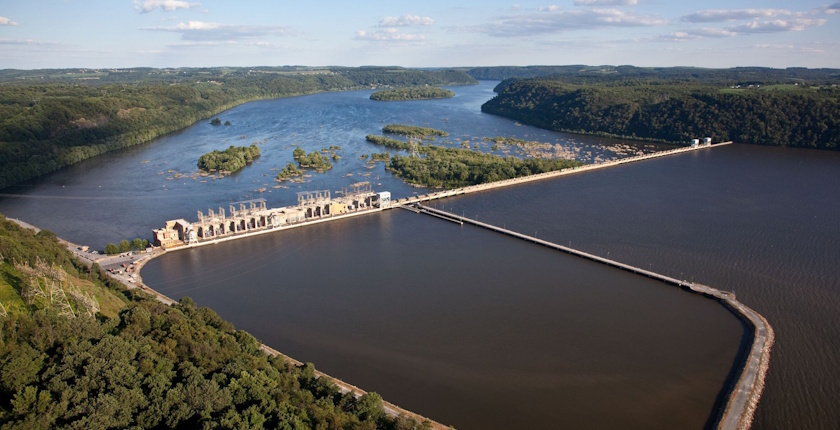
The first contracts include Brookfield’s Holtwood and Safe Harbor hydropower plants in Pennsylvania

Google has recently signed similar first-of-kind agreements for advanced nuclear and next-generation geothermal energy as well as for fusion energy.

Under HFA, the first contracts are for Brookfield’s Holtwood and Safe Harbor hydropower plants in Pennsylvania, representing more than USD 3 billion of power and 670 MW of capacity.

The 20-year power purchase agreements (PPAs) for the two facilities will support Google’s operations across PJM. The transaction structure allows Brookfield to maintain existing commitments to power consumers, such as Amtrak, from the Safe Harbor facility.

Brookfield said HFA is a significant step forward in its strategy to deliver flexible, dispatchable clean energy solutions to the technology sector and that the deal supports Google’s ambition to power its operations with 24/7 carbon-free energy.

Google can procure carbon-free electricity from up to 3,000 MW of HPPs

According to Brookfield, under the HFA, Google can procure electricity from up to 3,000 MW of hydropower assets that will be relicensed, overhauled, or upgraded to extend their useful life and continue adding power to the grid.

Amanda Peterson Corio, Google’s Head of Data Center Energy, said the collaboration with Brookfield is a significant step forward, ensuring clean energy supply in the PJM region (parts of 13 states and the District of Columbia) where her company operates. Hydropower is a proven low-cost technology, offering dependable, homegrown, carbon-free electricity that creates jobs and builds a stronger grid for all, she added.

According to Connor Teskey, President of Brookfield Asset Management, the partnership with Google demonstrates the critical role that hydropower can play in helping hyperscale customers meet their energy goals.

Delivering power at scale and from a range of sources will be required to meet the growing electricity demands from digitalization and artificial intelligence, he pointed out.

Of note, Brookfield owns power plants with a combined capacity of almost 46,000 MW.

Google to invest over USD 25 billion in data center and AI infrastructure

The deal is part of Google’s planned investments in the area in data center and artificial intelligence (AI) infrastructure. At the Pennsylvania Energy & Innovation Summit in Pittsburgh, the company revealed that it earmarked more than USD 25 billion for the next two years.

President and Chief Investment Officer of Alphabet and Google Ruth Porat joined President Donald Trump, Senator Dave McCormick and government and business leaders at the summit.

To support the investment, Google is expanding energy capacity and innovation in three ways, the company said.
Post Views:45
July 18, 2025
by AEA in News

Clean transition, decarbonization among priorities in EU’s draft budget

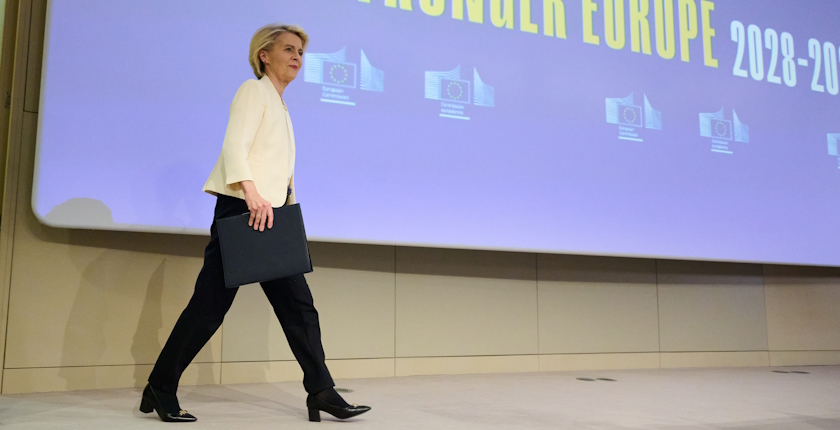
Within the European Union’s proposed budget for the period from 2028 to 2034, the EUR 409 billion European Competitiveness Fund is for investments in strategic technologies, including for the clean transition and decarbonization. The new Connecting Europe Facility (CEF), worth EUR 81.4 billion, would finance the completion of Trans-European Networks and foster the EU’s green and clean transition in energy and transportation.

The European Commission proposed the next long-term budget of almost EUR 2 trillion, of which 35% would be earmarked for climate and environment. Energy infrastructure spending in the so-called Multiannual Financial Framework (MFF) for 2028-2034 will be EUR 29.5 billion, five times higher than in the previous seven-year period, it said, arguing it would reinforce energy independence and accelerate the clean transition.

The entire proposed sum amounts to 1.26% of the expected gross national income, on average. The framework is aimed at an independent, prosperous, secure, and thriving society and economy, the update adds.

“Europe faces an increasing number of challenges in numerous areas such as security, defence, competitiveness, migration, energy and climate resilience. These are not temporary but reflect systemic geopolitical and economic shifts that require a strong and forward-looking response,” the EU’s top executive body said.

Adapting to local needs

The European Commission pointed out that the budget would be tailored to local needs. National and regional partnership plans based on investments and reforms would be introduced, for targeted impact where it matters most and ensuring a faster and more flexible support for more economic, social and territorial cohesion across the union, according to the outlined measures.

“Our new long-term budget will help protect European citizens, strengthen Europe’s social model and make our European industry thrive,” European Commission President Ursula von der Leyen stated.

For the first time, the spending plan would enable member states to invest more in the EU objectives, with loans of up to 150 billion EUR altogether. “We will call it Catalyst Europe. The loans are backed by the EU budget. It targets common European priorities. You can invest it – for example in defence industry or energy infrastructure or strategic technologies,” Von der Leyen said.

The budget plan includes a European Competitiveness Fund, worth EUR 409 billion, for investment in strategic technologies. Operating under one rulebook, and offering a single gateway to funding applicants, it aims to simplify and accelerate EU funding and catalyse private and public investment. The focus is on four areas:

  • clean transition and decarbonization,
  • digital transition,
  • health, biotech, agriculture and bioeconomy,
  • defense and space.

In close connection with the European Competitiveness Fund, the EU research framework, with its flagship Horizon Europe worth EUR 175 billion, will continue to finance world-class innovation, the commissioners revealed.

Commissioners line up EUR 81.4 billion in budget for next Connecting Europe Facility

The next Connecting Europe Facility (CEF), worth EUR 81.4 billion, would finance the completion of Trans-European Networks and foster the EU’s green and clean transition in energy and transportation. It covers cross-border projects for energy, transportation and military mobility that are essential for competitiveness and security and reducing strategic dependencies.

To simplify external action financing, the EU’s top executive body envisaged an item called Global Europe, of EUR 200 billion, to maximise impact on the ground and improve visibility of EU external action in partner countries. It would allow the EU budget to step up support to candidate countries and prepare for their accession.

Among other segments, the European Commission said it plans to direct 75% of revenues from the Carbon Border Adjustment Mechanism (CBAM) to the EU budget. It expects the resource to generate EUR 1.4 billion per year.

Post Views:54
July 17, 2025
by AEA in News

Bulgarian firm to install pilot hydropower plant on pontoon on Danube

With the ambition to build several hydroelectric plants on pontoons on the Danube river in Bulgaria, a local company intends to install a 20 kW pilot facility in Vidin.

An initiative is underway for the deployment of an environmentally friendly energy production technology on Europe’s second-largest river. Vidin-based company Tyfun intends to build a pontoon hydroelectric plant near the Telegraph kapia (Telegraph Gate) of the town’s Kaleto (Baba Vida) fortress.

It is the first phase of its ambition to install several such facilities in the Bulgarian section of the Danube river, according to an investment proposal that it submitted to the Regional Inspectorate for Environmental Protection of Montana.

The firm said the 20 kW micro hydropower plant would not affect any area of ​​the Danube in ​​Bulgaria or its coast.

The construction of the prototype will allow testing of the new source of renewable energy, using a significantly more efficient technology and ensuring a continuous supply of clean energy, Tyfun added. In addition, it will demonstrate the viability of hydrokinetic technology as a reliable renewable energy source from the Danube river, with significant benefits, due to the low cost of energy and minimal adverse environmental impacts, the company said.

The facility would be operational 24 hours a day, all year round. During the first month after commissioning, the efficiency of the technology will be analyzed, as well as its volume, productivity and scope, the project shows.

The machine would be three meters long and 1.5 meters wide, placed on a pontoon of 20 times ten meters.

Post Views:38
July 17, 2025
by AEA in News

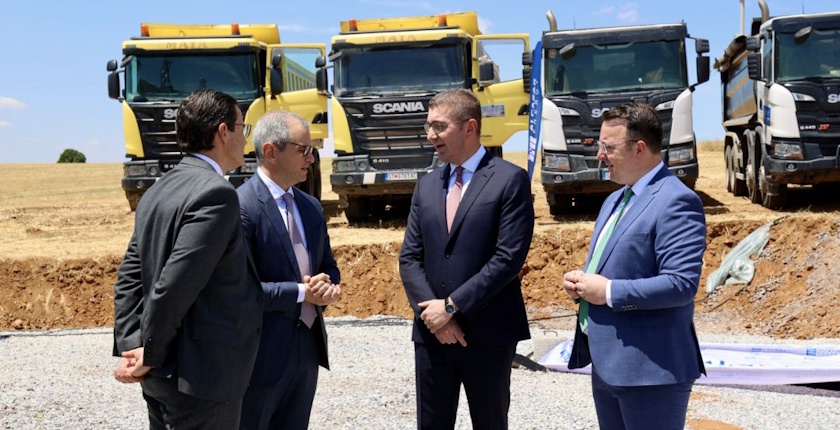
Construction of largest wind farm in Western Balkans kicks off in Štip in North Macedonia

The construction of the largest wind farm in the Western Balkans region has begun in North Macedonia. The Government of North Macedonia and investor Alcazar Energy Partners held a groundbreaking ceremony near the city of Štip for the 400 MW facility.

The Štip wind farm will cover an area of 326 hectares in the municipalities of Karbinci, Radoviš, and Štip, southeast of the capital city of Skopje. Alcazar Energy Partners, which is developing the largest renewable energy platform in the Western Balkans, plans to invest USD 500 million and install 55 wind turbines, which would generate electricity equivalent to the needs of 100,000 households.

The largest operational wind farm in the Western Balkans is Čibuk 1, with a capacity of 158 MW, while the largest project in the pipeline is Maestrale Ring, also in Serbia, for 854 MW.

Co-Founder and Managing Partner of Alcazar Energy Daniel Calderon praised North Macedonia’s readiness to launch such a large-scale project.

The investment will create 600 jobs

The foundation is being laid for a project worth over USD 500 million, which will create 600 jobs, provide clean energy, and reduce carbon dioxide emissions, he stated.

Photo: Government of North Macedonia

Calderon also recalled that in a Bloomberg analysis, investments in renewable energy in the Western Balkans were estimated at USD 11 billion. Due to its advantages, including location, North Macedonia can expect to receive 30% to 40% of it.

North Macedonia’s Prime Minister Hristijan Mickoski noted that the ceremony represents the fulfillment of what the newly formed government promised and agreed with the investor a year ago. He added it is only the first phase.

The power plant will produce 1 TWh of electricity per year

There are many more ideas on how the investment can add even greater value and be more significant both for the investor and for North Macedonia, but it will be discussed at a later stage, according to Mickoski.

He added that the power plant would generate 1 TWh of electricity per year.

North Macedonia currently has two wind farms – Bogdanci, with a capacity of 36.8 MW and a 15 MW expansion underway, and Bogoslovec, of 36 MW, in which the Green Growth Fund (GGF) is a minority shareholder.

The largest wind farm in Europe has a capacity of 2,000 MW

In mid-April, Alcazar Energy Partners signed a development support agreement for the Štip project with the International Finance Corporation, a member of the World Bank Group. The company has a 1.6 GW pipeline of greenfield onshore wind and solar assets,

Of note, the largest operational wind farm in Europe is Markbygden in Sweden, with a capacity of 2,000 MW. Among the top ten, there is another wind farm in Sweden and one in Norway, while the others are in the United Kingdom. The list also includes the 600 MW Fântânele-Cogealac-Gradina wind park in Romania.

Post Views:98
July 17, 2025
by AEA in News

Elektrohertz gets concession for solar project in Republic of Srpska

Republic of Srpska, one of the two entities constituting Bosnia and Herzegovina, is set to host another solar power plant. It would be one of the largest ones, with a capacity of 150 MW.

In late May, construction began on Bosnia and Herzegovina’s largest solar power plant so far, with a capacity of 125 MW. The most recently inaugurated large photovoltaic facility was Stolac, with a capacity of 64 MW.

Now the Ministry of Energy and Mining of the Republic of Srpska signed a concession agreement for the construction and operation of the Javor photovoltaic plant in the municipality of Rogatica.

In May, the entity government granted the concession to Elektrohertz, based in the same town in the country’s east, for the construction and operation of the facility, of 150 MW.

The concession has been granted for 30 years

The estimated annual production of the solar park is 197 GWh, and the concession was granted for a period of 30 years. The total investment value is BAM 194.4 million (EUR 99.4 million). It is scheduled to go online within the next four years, the ministry said.

Before finalizing the concession contract, the concessionaire, private developer Elektrohertz, delivered a one-off payment to the budget of the Republic of Srpska, of BAM 971,932 (EUR 497,000).

The Rogatica municipal budget is entitled to 95% of the concession fee

When the facility becomes operational, the concessionaire will be obligated to pay a fee of BAM 0.0055 (EUR 0.0028) per kWh of generated electricity to the budget of the Republic of Srpska. A 95% share is allocated for the Rogatica municipal budget.

The most recent concession granted by the entity Ministry of Energy and Mining went to state-owned power utility Elektroprivreda Republike Srpske (ERS) for the proposed Trebinje 3 solar power plant. It was in late April.

It is ERS’s third concession for photovoltaic plants.

Post Views:1
July 17, 2025
by AEA in News

Bulgarian battery factory Exeron X-BESS gets EU strategic status

Bulgaria-based International Power Supply (IPS) is opening a factory for battery energy storage systems using proprietary technology. The Exeron X-BESS is one of only six strategic projects in the European Union with a designation under the Net Zero Industry Act.

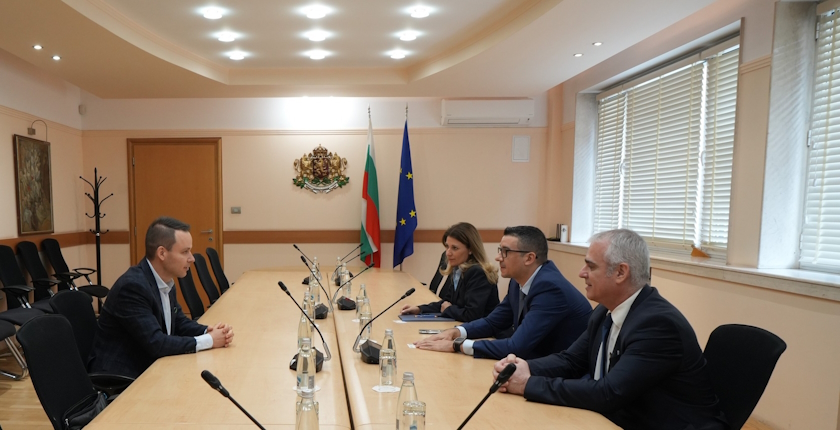
Minister of Economy and Industry of Bulgaria Petar Dilov met with Chief Executive Officer of International Power Supply (IPS) Alexander Rangelov, as the company’s investment in the production of BESS entered the EU’s public registry of strategic projects under NZIA. It is one of only six endeavors that made it to the list so far.

The Exeron X-BESS factory will put Bulgaria on the world map for the production of battery energy storage technologies, the ministry said. It is fully aligned with the NZIA goals for secure and sustainable supply of net zero emission technologies and the expansion of production capacities and supply chains, it added.

Exeron X-BESS to become key factor in EU’s clean technology chain

The government is promoting energy efficiency and the security of supply for industrial production in Bulgaria, especially in the segment of zero emission technologies, Dilov stresed. “The project is an important step towards including Bulgaria among European producers of environmental technologies and the implementation of high-tech solutions to mitigate climate change,” the minister stated.

He expressed the belief that the project would become a key factor in the clean technology chain. It is a step forward for Bulgaria’s participation in the European and global industry that is transforming the energy sector, Dilov pointed out.

The X-BESS line includes a battery management system developed by IPS

IPS has patented the entire Exeron X-BESS technology. Production should begin in the autumn. The facility is in the Hemus high-tech industrial park in Kremikovtzi (Kremikovtsi) near Sofia.

The project entails the creation of 65 jobs by the end of the year, of which a quarter would be in development and engineering. Two thirds of the employees would be technical specialists.

The majority owner of IPS, with 65.5%, is Power Technology Investment Group. It is controlled by the family of the founder Stoil Rangelov Trifonov. SIL Energy Invest has 31.5%. The Capital Investments Fund (CIFund) of the Bulgarian Development Bank holds the remaining 3%.

The company mainly uses European parts and the lithium-iron-phosphate (LFP) battery cells are from China. IPS has a proprietary battery management system (BMS) for the X-BESS line.

NZIA is fast-tracking permits for strategic projects

The NZIA designation secures a priority status at the national level for all administrative processes, faster permitting including environmental approvals, and advice on financing.

Of the six projects in the list, three are in Germany. Carbon2Business and MoReTec are for the decarbonization of a cement plant and chemicals production, respectively, while the one branded Resilience develops renewable energy technologies.

The remaining two are located in Sweden. NKT HV Cables AB is an endeavor for new electricity grid technologies including electric charging for transportation and grid digitalization solutions. The Talga Battery ANODE Refinery ONE is the only other project in the battery and energy storage segment.

Post Views:18
July 16, 2025
by AEA in News

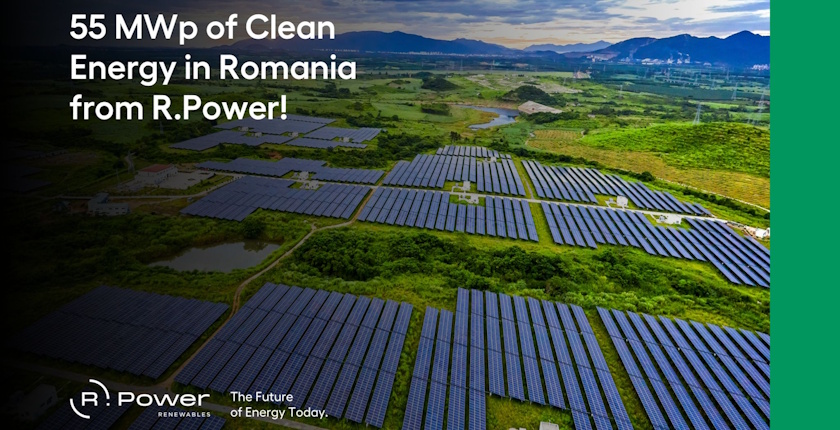
R. Power Renewables to start construction of 55 MW PV project in Romania

Polish company R. Power Renewables is about to build a solar power plant in Romania of 55 MW in peak capacity.

R. Power Renewables published the main details ahead of the start of construction of its Lazuri Solar Park, located in Satu Mare county in Romania.

The company said it is a major step forward in its commitment to expanding sustainable energy infrastructure in Central and Eastern Europe.

The works are set to begin before the end of September, according to the update. The facility is scheduled to come online in the third quarter of 2026.

The Lazuri Solar Park will be connected to the national grid through a newly constructed 110 kV switching station

The Lazuri Solar Park will be connected to the national grid through a newly constructed 110 kV switching station, implementing a loop-in/loop-out connection on the existing Vetiș–Abator 110 kV overhead transmission line, according to R. Power Renewables.

The project will not only contribute to Romania’s renewable energy targets but also strengthen local energy security and grid resilience, the Warsaw-based company underlined.

The solar farm of 55 MW in peak terms would generate approximately 70 GWh of clean electricity per year — enough to meet the annual needs of over 48,000 households and avoid nearly 17,000 tonnes of CO2 emissions.

Lazuri is one of five R. Power’s solar farms in Romania that secured a 15-year power purchase contract

Lazuri is one of five R. Power’s solar power projects in Romania that secured 15-year contracts-for-difference (CfDs) through the national auction scheme, the firm said and added that in total, it won support for 85 MW of installed capacity.

In December 2024, after years of delays, the Ministry of Energy finally selected projects of an overall 1.53 GW, slightly more than the quota, in the first round of auctions.

Wind and solar power projects are eligible for subsidies under the CfD scheme. The first round of auctions resulted with ten and eleven winning bids, respectively.

Post Views:33
July 16, 2025
by AEA in News

Slovenia publishes call for incentives for wind, solar power projects

Solar and wind power projects with or without energy storage that are on Slovenia’s priority list can be submitted for grants from the European Union’s Modernisation Fund. The round is worth EUR 29.5 million and the deadline is January 7. Notably, of the 1,117 projects for renewables and cogeneration approved for state support so far, only 254 were completed by the end of 2024.

The Ministry of the Environment, Climate and Energy launched a public call for cofunding under a mechanism for the modernization of energy systems in Slovenia and improvement of energy efficiency. It is for projects for solar and wind power plants, with or without storage, from the so-called A list of indicative, priority investments.

Eligible companies can receive support from the EU’s Modernisation Fund under the RES Scheme (Part A). It was approved by the European Investment Bank. The list was published in March of last year.

Total planned support amounts to over EUR 84 million and the selected projects must be completed by the end of September 2030. The deadline for submissions in the current round is January 7, 2026.

The grants can cover up to 45% of the costs for photovoltaic and wind power systems and a maximum of 30% of the electricity storage segment, the documentation shows. Storage capacity must be at least 0.75 kWh per kW of the nominal capacity of the power plant.

All five eligible projects are within state-owned HSE Group

There are 21 items on the A list and most are power grid investments. Only five are for renewables, of which Dravske elektrarne Maribor (DEM) is present with its controversial Ojstrica wind farm project, the proposed expansion of the Zlatoličje-Formin solar park, and the ZOOP photovoltaic project for 9.9 MW in peak capacity on the former Pobrežje waste landfill.

The largest priority investment among the ones that can apply in the current round is HSE’s proposed floating PV plant with batteries

The company is part of state-owned Holding Slovenske elektrarne – HSE. Another subsidiary on the list, Soške elektrarne Nova Gorica (SENG), intends to expand its recently commissioned Kanalski Vrh solar power plant.

HSE itself has the largest project – for the Družmirje floating solar power plant, which would include storage. It also plans to produce green hydrogen using electricity from the facility.

Few completed energy production projects among ones selected through public calls

The Energy Agency of Slovenia has so far approved 1,117 renewables and cogeneration projects to enter the support scheme, selected through 13 public calls. The combined planned capacity is 794 MW, of which there were 996 renewable energy projects, for 682 MW.

However, only 254 endeavors, with 112.6 MW altogether, were completed by the end of last year. In the previous round, the agency selected 507 projects, for a total nominal capacity of just over 259 MW, mostly for PV plants.

Of note, lengthy procedures, strict environmental rules and local opposition are keeping Slovenia at the bottom of the European Union’s wind power capacity chart in the European Union. The country hosts just three standalone wind turbines and DEM has contracted the fourth one.

Post Views:20
July 16, 2025
by AEA in News

Electrica sells green bonds for EUR 500 million amid record demand

Electricity supplier and distributor Electrica listed its first green bonds on the Luxembourg Stock Exchange. It was the largest issuance of its kind among Romanian companies, excluding financials.

Electrica, in which the Romanian Government controls a stake of just under 50%, issued green bonds worth up to EUR 500 million. It is using the proceeds to finance and refinance its projects, mainly for green energy production and energy storage.

The senior unsecured green bonds, maturing in five years, are now listed on the Luxembourg Stock Exchange. Admission to trading on the Bucharest Stock Exchange is estimated to take place at the beginning of August, Electrica said.

The company’s core activities are electricity distribution and supply and energy services, but it is expanding into renewables and battery storage.

Pricing reaches 2.3 percentage points above benchmark rate

Credit appraisal agency Fitch has assigned the 4.375% senior unsecured green notes a BBB- rating. It is the lowest investment grade. The projects will have a limited connection to Electrica’s 100%-owned distribution and supply subsidiaries Distribuție Energie Electrică Romania (DEER) and Electrica Furnizare, the note adds.

Electrica targets 1 GW of installed renewable energy capacity by 2030 alongside the deployment of 900 MWh of energy storage

The company’s inaugural debt securities were priced at a yield of 4.566%, according to a regulatory filing. It was 2.3 percentage points above the benchmark mid-interest rate swap. The demand from investors at the final price exceeded the supply by more than 11.5 times, marking a record oversubscription in bond issuances of Romanian companies, Electrica pointed out.

Moreover, it was the largest green bond issuance in Romania excluding financial institutions. Electrica targets 1 GW of installed capacity by 2030 alongside the deployment of 900 MWh of energy storage.

Electrica grows market capitalization by one fifth this year

Banca Comercială Română (member of Erste Group), BNP Paribas, Citi, ING, J.P. Morgan and Raiffeisen Bank International were the joint global coordinators and joint bookrunners in the transaction, while BT Capital Partners, IMI-Intesa Sanpaolo, Société Générale and UniCredit were joint bookrunners.

Electrica has EUR 1.06 billion in market capitalization. Its shares surged 21.1% since the end of last year.

Post Views:40
July 16, 2025
by AEA in News

Montenegro sets November 10 deadline for first solar power auction

Legal entities and entrepreneurs in Montenegro are preparing to compete for market premiums with their solar power projects. The quota for the first such auction in the country is 250 MW, and applications close on November 10.

Following the completion of the legal framework with laws and decrees, the Montenegrin Ministry of Energy and Mining issued a public call for investors to participate in an auction for market premiums with their solar power projects. The government would provide support for 12 years.

Legal entities and entrepreneurs have until November 10 to send the envelopes with bank guarantees, documents proving that they are qualified, and their financial bids. The address is: Ministarstvo energetike i rudarstva, Rimski trg 46, 81000 Podgorica. The first such auction in Montenegro will be held for “unspecified locations,” which means that the planned photovoltaic systems can be located in any area in the country.

The available capacity is 250 MW, and eligible projects are for at least 400 kW each. There is no nominal upper limit for project capacity for which a potential participant bids, except the total quota itself.

However, the quota can be extended, by a maximum of 20%. The government said there is an extra 50 MW available for the inclusion of an entire eligible project that entered the quota only partially, or more such projects, in case the bids for them were equal. But if the part of the capacity that surpassed the quota is larger than the possible extension, the commission would award a market premium only for the part that did fit the quota.

Price to be adjusted for inflation every year

The accepted price, from the financial offer of a participant that obtained the status of a temporarily privileged producer through the auction, will be adjusted for the Eurozone inflation rate once per year.

Some of the qualification conditions are that the project didn’t or doesn’t benefit from government incentives, that construction works haven’t begun and that the developer hasn’t secured financing for their completion.

The lowest bids win, and the maximum allowed price is EUR 65 per MWh. The market premium is awarded via a contract for difference (CfD).

Namely, the operator of a renewable electricity plant has a guaranteed price, approved through the auction. When the firm sells electricity in the market at a higher price, it must return the difference. And vice versa: when the beneficiary gets less per megawatt-hour than the contract price, they are reimbursed.

Bank guarantees are EUR 20 per kW or EUR 40 per kW

As for the bank guarantees, they are determined at EUR 20 per kW (EUR 20,000 per MW) of the offered capacity for participants that have signed a contract for the construction of the infrastructure for a grid connection and for connecting the facility, or EUR 40 per kW for ones that have at least obtained an analysis of the possibility for a grid connection, from the transmission or distribution system operator, according to the documentation.

Upon the expiration of the deadline, the commission conducts the process of determining the eligibility of the bidders and projects, after which it opens and ranks the financial bids.

Minister of Energy and Mining Admir Šahmanović said the competitive bidding process is in the public interest: for the security of supply, opening the way for investments in other sectors and for investor confidence. He told the Mina-business news agency that the auction would bring more stable prices in the long run.

Conducting renewable electricity auctions is one of the commitments toward the European Union that were defined by the Reform Agenda of Montenegro 2024-2027. It contains the conditions for the approval of up to EUR 383 million from the Growth Plan for the Western Balkans and the Reform and Growth Facility (RGF).

Post Views:37
  • 1
  • …
  • 75
  • 76
  • 77
  • 78
  • 79
  • …
  • 140

AEA – Albania Energy Association is a industry association dedicated to representing the interests of Albanian and West Balkan for energy producers and consumers. AEA works to advance the development and adoption of sustainable energy solutions in Albania and the Western Balkans, supporting the region’s transition toward a cleaner, more secure, and more competitive energy future. AEA is registered by decision of the Court of Tirana, DECISION NO. 3032, (VAT:L11827451K).

[email protected]

Address
Blv Zogu 1
Tirana
1057
ALBANIA

LinkedIn  |  Facebook
Events
May 25, 2022 Connecting Green Hydrogen Europe 2022
May 25, 2022 Energy Week Western Balkans 2022
Copyright © Albania Energy Association