AEA-Albania Energy Association
  • Main
  • About Us
  • Services
  • Sectors
  • News
  • EventsEvents
  • PublicationPublication
  • Contact Us
AEA-Albania Energy Association
  • Main
  • About Us
  • Services
  • Sectors
  • News
  • EventsEvents
  • PublicationPublication
  • Contact Us
AEA-Albania Energy Association
  • Home Page
  • About Us
  • Sectors
  • Our Services
  • News
  • Contact Us
July 11, 2016
by AEA in News

New study: Nord Stream 2 will benefit security of gas supply in Europe

agata-mapNord Stream 2 is likely to benefit rather than hurt energy security in Central and Eastern Europe and in the UK and Germany. The gas pipeline, which Gazprom and five major Western European energy companies want to build from Russia to Germany through the Baltic Sea, can only be credibly stopped by the EU if the European Commission decides to transform itself from a “powerful competition watchdog” to a “political actor. Those are some of the main conclusions of a new study written by Andreas Goldthau for the European Centre for Energy and Resource Security (EUCERS) and the Russia Institute of King’s College London published today.

“Nord Stream 2 will enhance the liquidity of Central European gas hubs in EU gas trading and pricing, and strengthen their role as continental price markers.” This is one of the key conclusions Dr Andreas Goldthau, a Fellow with King’s Russia Institute and Professor of Public Policy at Central European University, draws in the EUCERS report, “Assessing Nord Stream 2: regulation, geopolitics and energy security in the EU, Central Eastern Europe and the UK” (11 July).

Both the European Commission and Central and Eastern European countries strongly resist the pipeline project precisely because they argue it will undermine energy security in their region. Nord Stream 2 is intended by Gazprom to bypass Eastern Europe to end Russian dependence on transit through the region, in particular through Ukraine. This will lessen the importance of Eastern Europe in the European gas market and make it even more dependent on Russian gas than is currently the case, so opponents of the pipeline argue.

Prime ministers

Goldthau takes a different perspective. It should be mentioned at the outset that Goldthau’s report was financed by the five Western European partners – Shell, BASF/Wintershall, Uniper, OMV and Engie – that each hold 10% in the project. His analysis may be said to reflect at least implicitly the vision of these companies, which have been strongly criticized by Nord Stream 2’s opponents for supporting a project that they say undermines solidarity in the EU energy market.

In October last year, Miguel Arias Cañete, Commissioner of Climate Action and Energy, said there were were “serious doubts” whether Nord Stream 2 was compatible with the EU’s “strategy of security of supply”, one the main pillars of the Energy Union. Diversification of routes and sources is key to this strategy and “Nord Stream 2 does not follow this core policy objective”, said Cañete.

Nord Stream 2 “might in fact end up making Russian gas compete with Russian gas … The overall net effect might therefore be consumer benefit.”

On 17 March 2016, Prime Ministers and leaders of 9 EU member states (Czech Republic, Hungary, Poland, Slovak Republic, Romania, Estonia, Latvia, Lithuania, Croatia) sent a letter to Jean-Claude Juncker, President of the European Commission, arguing that Nord Stream 2 poses “risks for energy security in the region of Central and Eastern Europe, which is still highly dependent on a single source of energy”.

At an event on 6 April in Brussels, Maros Šefčovič, Vice-President of the European Commission in charge of the Energy Union, said that “Nord Stream 2 could alter the landscape of the EU’s gas market while not giving access to a new source of supply or a new supplier, and further increasing excess capacity from Russia to the EU.” MEP and former Polish Prime Minister Jerzy Buzek of the European People’s Party (Christian-Democrats), said at the same event that “Nord Stream 2 and Energy Union cannot co-exist”.

Lowest prices

Goldthau puts forward a very different view. First of all he points out that the first Nord Stream pipeline, built in 2011 – it runs along the same route  and is owned by Gazprom (51%), Gasunie, Eon, Wintershall and Engie – was resisted for the same reasons, but it had an opposite effect than what had been expected: “particularly in Central Eastern European markets (…) significant shifts happened in the aftermath of Nord Stream coming online. (…) gas flows started to reverse (see figure 6). While traditional gas would travel from East (Russia) to West (transiting Ukraine / Belarus and feeding Slovakia /Poland), West-to-East trade picked up.”

EUCERS-east-west-cross-border-gas-flows

The additional volumes brought by Nord Stream in combination with enhanced reverse flow infrastructure capacity between Germany and Austria and its Eastern neighbors, contractual changes and “the Commission putting an end on market barriers such as destination clauses” led to these shifts in European gas trade. These “regional markets [in Central and Eastern Europe] were not only connected physically, but arguably also linked to more liquid market areas in North-Western Europe”, writes Goldthau.

“Energy sector governance in South Eastern Europe remains poor. Regulatory uncertainty is high, transparency in policy making remains low, and so is capacity in public administration”

The EU, writes Goldthau, with its three energy market packages, especially the Third Energy Package (2009), which enforced third-party access provisions on pipeline infrastructure through ownership unbundling and established independent regulator, created liberalised gas markets. It further integrated these markets by building pipeline interconnections and reverse flow capacity, a process that is still going on. According to Goldthau, gas supplied through Nord Stream enters this market and thereby increases liquidity rather than dependence on a single supplier.

He notes that gas prices in Central and Eastern Europe (CEE) “started to align with German prices. (…) Compared to the ‘traditional’ situation in which prices of gas tended to be higher in Eastern Europe than in Western Europe, a function of rigid long-term contract structures and a lack of optionality, this amounts to a qualitative shift in CEE gas prices. This ties into the more general finding that competitive, integrated and hub based markets tend to have the lowest gas sourcing prices in the EU, notably the UK, the Netherlands, Belgium and Germany. By contrast, countries lacking the physical interconnection and lagging behind in implementing pertinent EU regulation, tend to have persistently high import prices in the EU, notably in South Eastern Europe and in the past also the Baltics.”

Consumer benefit

Goldthau writes that Nord Stream 2 may be expected to further reinforce this effect on the gas market: “Nord Stream 2 stands the chance of enhancing the liquidity of regional hubs in which the additional volumes of 55 bcm will be primarily absorbed. This includes GASPOOL [in Germany] and by extension the Central European Gas Hub (CEGH) [in Austria] via EUGAL [the proposed online extension of Nord Stream 2 to the German-Czech border] and the Czech and Slovak grids, but also NetConnect Germany (NCG).”

This, adds, Goldthau “will strengthen the role of regional Central European gas hubs in EU gas trading and pricing. Current ‘transit hubs’ such as CEGH will be upgraded to become (…) full-fledged ‘trading hubs’ such as TTF [in the Netherlands] and NBP [in the UK].”

“It is particularly East European member states that have been most reluctant to embrace cross-country gas market integration as a means to enhance European supply security and overall market resilience against supply shocks”

As happened with the first Nord Stream, Nord Stream 2 “might in fact end up making Russian gas compete with Russian gas”, i.e. with gas that comes from Russia via Ukraine and Eastern Europe. “The overall net effect might therefore be consumer benefit. To be sure, as the example of the UK demonstrates, the development of an integrated (regional) market and a functioning and liquid hub is a matter of decades rather than years. Moreover, its precondition is physical infrastructure, transparency and political willingness, which clearly is not present among some CEE countries and their political leadership. But the main point is that contrary to the prevalent debate about Nord Stream 2 putting in question CEE energy security, chances are that it might have the opposite effect.”

Reforms rolled back

Goldthau admits that further on into South Eastern Europe (SEE) problems of security of supply do persist. But the main reason for this is “slow progress in energy sector reform coupled with lagging infrastructure development. This is, per se, not a problem linked to Nord Stream 2, nor caused by Nord Stream 2.”

The author points out that “energy sector governance in SEE remains poor. Regulatory uncertainty is high, transparency in policy making remains low, and so is capacity in public administration. Various infringement procedures in SEE EU-member states drive home the point that European policy frameworks are not properly implemented, if at all. Incumbent monopoly companies – (…) a case in point being Bulgaria’s Bulgargaz – tend to defend the status quo and prevent competition from emerging, while regulated prices prevent market signals from exerting effects. In some instances, market reforms are even rolled back, such as in Hungary where the energy sector was recently re-nationalized.”

He concludes that overall for Europe supply security is not at stake, unless it is interpreted only in terms of “diversified routes and suppliers”, which is the lens through which Eastern European leaders and the European Commission tend to use when they look at dependency on Russia. According to Goldthau, this is not a reasonable view to take: “if market logic is applied, which is exactly what the EU energy market project is all about, then energy security is primarily enhanced through competition policy and structural market changes as they help keeping dominant market players such as Gazprom in check and foster price competition.”

“Put in simple terms: the Commission’s job is not the choose pipeline routes, but to ensure they are operated in a way that is compatible with market principles”

According to Goldthau, the EU’s “primary policy objective” should be “harmonizing market rules and functioning, liberalizing and connecting so far still scattered national markets, in addition to fostering diversification of sources to enhance choice.” Yet, “it is particularly East European member states that have been most reluctant to embrace cross-country gas market integration as a means to enhance European supply security and overall market resilience against supply shocks.”

Goldthau thus puts the ball back in the court of the Eastern Europen countries, which he says do not do enough to foster competition and would like to retain the ‘easy money’ they earn by Russian gas transit: “While some countries such as Poland carefully safeguard the prerogatives of state-owned corporations, others such as Hungary recently re-nationalized the gas sector altogether. This ties into material interests of some incumbent East European (state) companies to keep the status quo, and the revenue streams from existing long-term contracts – in addition to Slovak or Polish governments remaining naturally interested in additional state revenue in the shape of transit fees. The result is an incentive to keep the status quo, i.e. Yamal Europe and the Ukrainian transmission system in operation.”

Pivotal supplier

Goldthau does concede that although Nord Stream 2 may increase liquidity, the source of the gas that will enter the market will still be Russia. “Gazprom will be the pivotal supplier on CEE regional gas hubs, which – depending on the strategy Gazprom adopts – may translate into market power. The concern here is if Gazprom decides to play the market game, this could give the company market leverage in the shape of volume management. Indeed, its market share of presently a good third of European gas demand – which in Central Eastern Europe is significantly higher – coupled with its control over gas storage facilities, might hand Gazprom an opportunity to tinker with supply volumes in order to influence prices.”

But he argues that this kind of threat should be addressed through competition regulation: “The primary argument against such concerns is that the idea of gas market integration is precisely to deprive dominant suppliers of their ability to leverage their position on consumers. Moreover, it is somewhat ironic to warn against Gazprom’s strategic positioning in a market environment as ‘playing by EU market rules’ is exactly what has been demanded of Gazprom for years.”

The Energy Union clearly represents an attempt to react to geopolitical shifts in the European neighborhood and a more assertive Russia … It certainly envisages the use of the entire regulatory toolbox at EU level in a more strategic and more targeted way

As to Ukraine, it is true that this will country will lose some €2 billion in transit fees per year, but it will also benefit from lower gas prices. “Put simply, Ukraine might essentially trade a situation in which it accrues high transit fees but pays high prices for Russian gas for a situation in which transit revenues are small but coupled with lower expenses for gas imports.13 Because the trade-off primarily benefits households and industry, financial benefits are in the long run shifted to consumers.”

The last point is important, since the transit fees in the past tended to benefit a small group of corrupt stakeholders in Ukraine. According to Goldthau, “a back on the envelope calculation suggests that while the net effect for Ukraine might not be neutral it still looks far better than what the commonly cited figure of as loss of $2 billion a year suggests. In fact, based on 2015 numbers, the country might have already saved up to roughly $ 1.15 billion due to competitive pricing pressures.”

Political aims

Goldthau notes that “it is the declared intention of EU leaders to keep Ukraine a transit state for Russian gas”, but that this “is an EU policy goal whose primary motivation is stabilize the Ukrainian leadership’s domestic and foreign policy position, and to tie the country more closely to the EU through a strategic energy partnership. Achieving this policy goal, however, also implies that it is politics, not regulation or EU infrastructure policy that needs to drive the process.”

This relates to a key question Goldthau throws up, based on his analysis. Should the EU confine its role to ensuring that the energy market functions well or should it pursue political aims throug the energy market?  Goldthau believes the EU’s role should be limited: “Put in simple terms: the Commission’s job is not the choose pipeline routes, but to ensure they are operated in a way that is compatible with market principles. Politics, by contrast, defines policy preferences. If Nord Stream 2 is politically too contested or found as undesirable, then it also falls on the political domain – the EU heads of states – to act.”

“Whilst the objectives of the Energy Union do not have legal character, the European Council decision suggests that they now define the broader political context in which EU regulation should be put to operation”

In this context, Goldthau raises another key issue – about the idea of Energy Union itself. Is this an economic or primarily political concept? How does it relate to the idea of a liberal integrated energy market? “To be sure, it is unlikely that the EU will develop a monopsony in natural gas which at the very end runs counter to EU market principles. Nor will the Energy Union do away with the liberal market paradigm the EU is built on. Yet the Energy Union clearly represents an attempt to react to geopolitical shifts in the European neighborhood and a more assertive Russia, the bloc’s key energy suppliers. It certainly envisages the use of the entire regulatory toolbox at EU level in a more strategic and more targeted way, toward external actors, with a view to serving the goal of ensuring ‘energy security, solidarity and trust’.”

He adds that “in this context it is worth noting that the European Council – the EU heads of states – in their December 2015 declaration clearly stated that ‘Any new infrastructure should entirely comply with the Third Energy Package and other applicable EU legislation as well as the objectives of the Energy Union’. This not only signals support for a potentially tough stance adopted by the Commission. It also elevates the Energy Union objectives to political guidelines for regulation as applied. The Energy Union (…) defines energy security and a Strategic Partnership on energy with Ukraine as key goals for the EU. Whilst the objectives of the Energy Union do not have legal character, the European Council decision suggests that they now define the broader political context in which EU regulation should be put to operation.”

Goldthau calls on EU actors to make a clear choice. If they are opposed to Nord Stream 2 and want to stop it entirely, they can only do so credibly on geopolitical grounds. If they merely object to Nord Stream 2 because of the effects it might have on the gas market, they should address those market imperfections, not to try to stop the pipeline.

June 30, 2016
by AEA in News

World Bank set to finance criticised mega gas pipeline from Azerbaijan to Europe

tanap-nabucco-660x330-620x330SUMMARY

  • World Bank set to fund Azerbaijan and Turkey part of Southern Gas Corridor to Europe
  • Concerns raised over significant risks due to geopolitical context, fossil fuel dependency

Defined as “the biggest infrastructure project of our times“ by the European Commission and a priority for the European Union, the Southern Gas Corridor was always going to attract the attention of the World Bank. As part of Turkey‘s Country Partnership Strategy (CPS), the Bank has announced its intention to finance the project through a double loan to Azerbaijan and Turkey. In addition, in June the World Bank’s Azerbaijan office announcedpossible loan guarantees for the construction of the Trans-Anatolian section of the corridor (TANAP) through the Bank’s Multilateral Investment Guarantee Agency.

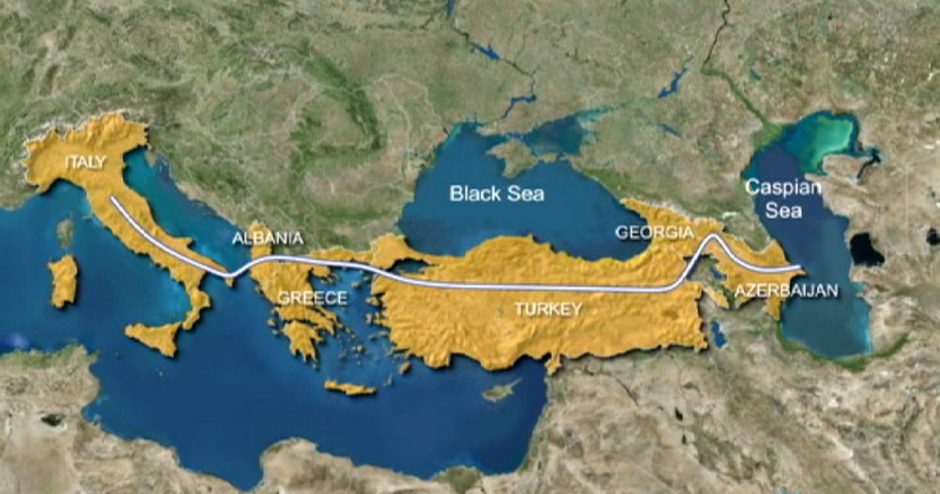
Tapping gas from the Shaz Deniz II field in Azerbaijan, TANAP stretches for 1,820 km from Georgia to Greece and will cross Turkey. TANAP is expected to bring 16 billion cubic metres of gas per year to Turkey by 2018, subsequently increasing capacity with the construction of the western section of the Southern Gas Corridor, running to Italy through Greece and Albania.

The Southern Gas Corridor is a priority for the European institutions as part of their Energy Union strategy to secure alternatives to gas imports from Russia. According to press reports by Reuters, the World Bank loans – scheduled for approval in 2017 – would amount to $500 million for Azerbaijan and $1 billion for Turkey and would help cover the overall $45 billion project cost. Other funders include the European Investment Bank. The World Bank’s principal proposed development objective is the enhancement of Azerbaijan’s gas exports up to three times the current volumes and the improvement of “the security and diversity of Turkey’s and Europe’s energy supply.“

It is concerning that the World Bank risks ruining its reputation for a project that will contravene the Bank’s safeguard standards, while harming the environment and supporting controversial regimes.

The wide range of risks and consequences associated with the construction of this megapipeline has provoked a heated debate. Concerned about the support that such a controversial project has received from public international financial institutions, civil society across Europe has mobilised to raise awareness among citizens and decision makers about the project‘s environmental and geopolitical implications and to prevent its funding, arguing that the project contradicts with the climate goals that the World Bank and the European public banks committed to in Paris last December.  By considering financing the Southern Gas Corridor, yet another mega fossil fuel project, the World Bank is contradicting its commitment to integrate climate risks and opportunities into all of its development work and is disregarding the agreed upon urgency to shift to a different energy model based on renewables and energy efficiency. Furthermore, it means that the Bank is ignoring calls by the scientific community to leave the majority of remaining fossil fuels reserves in the ground. As the world’s leading development finance institution and self-professed advocate of environmental sustainability, it should set an example and stop supporting such emblematic fossil fuel projects.

The geopolitical context surrounding the  Southern Gas Corridor is just as worrisome. Neither the autocratic regime of Ilham Aliyev in Azerbaijan nor the increasingly repressive rule of Recep Tayyip Erdoğan in Turkey are ideal partners for such an enormous project. Ilham Aliyev, who has ruled the country for decades, has attracted international attention following a severecrackdown on dissent in 2014 that resulted in mass jailings of journalists, intellectuals, human rights activists and lawyers. The unacceptable human rights situation in Azerbaijan has been repeatedly denounced by governments and media worldwide. This led to offical warnings by theEuropean Parliament, the Organisation for Cooperation and Security in Europe and the Council of Europe throughout autumn 2015, all overtly discouraging Europe from directly financing the regime, let alone sealing a historic business deal worth billions of dollars.

Moreover, this project would not bring major development improvements to Azerbaijan. Heavily dependent on fossil fuel exports, the Azeri economy has recently faced a deep crisis due to the fall in oil prices which led to the devaluation of the national currency. Instead of diversifying the sources of revenue in Azerbaijan and promoting its sustainable development, the Southern Gas Corridor would exacerbate this dependence, consolidating the hold of the existing ruling elite while bringing little or no benefit to the Azeri people.

The World Bank can also not turn a blind eye to the current situation in Turkey. While Erdoğan’s control of the press increasingly limits citizens‘ freedom of speech and opinion, the pipeline would cross Kurdish regions that are currently affected by an escalation of  violence following the breakdown of peace talks in July 2015.

Civil society organisations have highlighted these concerns and challenged the public financing of the Southern Gas Corridor. It is concerning that the World Bank risks ruining its reputation for a project that will contravene the Bank’s safeguard standards, while harming the environment and supporting controversial regimes. If the Bank does not want to bear this responsibility, it should not be part of the Southern Gas Corridor deal.

Guest analysis by Xavier Sol, Counter Balance

June 30, 2016
by AEA in News

SOCAR names Azerbaijan’s investments volume in TANAP construction

Socar_Botas_BP_Trans-Anatolian-Natural-Gas-Pipeline_TANAP_ProjectExpenditures of the Southern Gas Corridor CJSC within the framework of the Trans Anatolian Natural Gas Pipeline (TANAP) construction project will exceed $6 billion, a senior official of the Azerbaijan’s state oil company SOCAR told Trend.

“Expenditures of the Southern Gas Corridor CJSC, the main share in which belongs to the government of Azerbaijan will amount to $6.2 billion by 2020,” said the representative of SOCAR, which owns the remaining 49 percent in this company.

The Southern Gas Corridor CJSC acts as an operator of the project, which includes, in particular, the TANAP project worth $9.2 billion.

“Nearly a quarter of the planned investments – more than $2 billion – has been already spent during the TANAP construction,” SOCAR representative said. “The project is running according to schedule.”

TANAP project envisages transporting gas from Azerbaijani Shah Deniz field from the Georgian-Turkish border to the western border of Turkey. The gas will reach Turkey in 2018, and after the completion of the TAP construction, the gas will reach Europe around early 2020. Currently, the shareholders of TANAP are: SOCAR (State Oil Company of Azerbaijan) – 58 percent, Botas – 30 percent and BP – 12 percent.

June 23, 2016
by AEA in News

IFC Supports Albania as it Increases Security of Energy Supplies

albaniaIFC, a member of the World Bank Group, and the Albanian Ministry of Energy and Industry have signed a Memorandum of Understanding designed to establish the day-ahead electricity market in Albania, bolster country’s electricity supplies and better connect it to the rest of Europe. 

IFC will advise the Albanian government on the creation of the day-ahead electricity market. The market will become the main arena for trading power, allowing Albania to buy electricity from and sell electricity to its neighbours quickly and easily. The day-ahead market is expected to help promote the integration of Albania’s electric grid with the rest of Europe, including neighboring Kosovo. It will also increase price transparency, and improve the investment climate for new power projects, according to IFC.

“Albania is committed to the liberalization of its power market, and we have recently adopted new energy laws,” said Damian Gjiknuri, Albanian Minister of Energy and Industry. “The establishment of the day-ahead electricity market is an important step in that process.” 

Albania is a candidate to join the European Union and has recently joined the Energy Community, a multi-national body, with the EU and other Balkan countries. 

“IFC is supporting the establishment of the electricity market in Albania through a combination of advisory and investment services,” said Thomas Lubeck, IFC Manager for the Western Balkans. “We are looking forward to working with our partners on the establishment of the day-ahead electricity market, which is going to benefit producers, traders, and customers in Albania.” 

This project is implemented by IFC’s public-private partnerships transaction advisory unit, supported by the Ministry of Foreign Affairs of Norway, the Swiss State Secretariat for Economic Affairs (SECO) and the Ministry of Finance of Austria. 

Albania became a shareholder and member of IFC in 1991. Since then, IFC has invested $762.3 million in the country, including $279 million mobilized from our partners, in 24 projects across a variety of sectors. In addition, IFC has supported trade flows of $6 million through its trade finance program. 

Currently, IFC’s committed investment portfolio in Albania is $187 million.  IFC’s advisory services in Albania, some offered in partnership with the World Bank, aim to improve the investment climate, boost the performance of private sector companies, increase access to finance, and help attract private sector participation in development of infrastructure projects.

June 16, 2016
by AEA in News

China set to do deals in Poland and Serbia

downloadA series of agreements in areas ranging from trade to civil aviation will be on the table during President Xi Jinping’s upcoming visit to Serbia and Poland, diplomats said yesterday.

Central and east European countries are competing for Chinese investment in everything from banking to beer, looking to lure firms in need of new markets while securing a foothold for their own products in China.

Chinese authorities are expected to sign agreements in education, finance and technology, among other fields.

Chinese foreign direct investment to Europe hit a record high last year of around 20 billion euros (US$22.45 billion), a 44 percent annual rise.

Germany, Britain and France accounted for almost half the total, according to a report by Germany’s Mercator Institute for China Studies and the US-based Rhodium Group.

Only snippets of investment went to central and eastern Europe, but as Chinese firms look to diversify, volumes are growing, thanks to deals in infrastructure, energy, finance, real estate and travel.

Chinese firms are finding a warm welcome in central and east Europe.

There is a currency clearing center in Hungary, and Hungary and Serbia have signed a deal with China to build a high-speed railway from Belgrade to Budapest. Hungary has also issued bonds in the yuan.

In April, China’s Hebei Iron and Steel Group signed a deal worth 46 million euros to buy a Serbian steel plant. Also in April, China Everbright Group, a state-backed financial firm, bought into Albania’s international airport.

In Germany, however, there are concerns about losing key expertise to China as a growing number of companies seek to buy German industrial technology.

“This (visit) shows the great importance China’s leaders and government place on the development of China-Europe relations,” said Assistant Foreign Minister Liu Haixing. “We believe this visit will push forward the development of China-European relations to a great extent.”

China has created a “16+1” forum as a way of communicating with multiple central and east European states.

June 13, 2016
by AEA in News

Azerbaijan is knocking strongly on Europe’s doors..

azerbaijan-gas-deal-intended-to-reduc
Azerbaijan is enhancing its role in improving the energy security of Europe and strengthening its position in the European energy markets. Azerbaijan hosted the 23rd International Oil and Gas Exhibition titled “Caspian Oil and Gas 2016” from June 1-4, when more than 400 participants from 30 countries took part in the event held in Bakuunder the auspices of Ilham Aliyev, the president of Azerbaijan. 

Unlike other energy-rich countries in the region, Azerbaijan has been following a proactive policy in developing its resources and delivering oil and gas to international energy markets. In fact, Azerbaijan has undertaken an active role in both upstream and downstream industries. Azerbaijan not only invests in the development of its hydrocarbon resources, but in the transmission network for delivering gas to European markets as well. Azerbaijan together with Turkey initiated the Trans Anatolian Natural Gas Pipeline (TANAP), which will deliver gas produced in the giant Shah Deniz and other gas fields in the Caspian Sea. In addition, through state-owned oil giant SOCAR, Azerbaijan holds a share in the South Caucasus Pipeline (SCP) as well as in the Trans Adriatic Pipeline (TAP) which will connect to TANAP at the Turkish-Greek border and transport natural gas to Italy passing from Greece, Albania and the Adriatic Sea. Furthermore, SOCAR is about to acquire a controlling share in Greek gas transmission system operator DESFA, implying that Azerbaijan will be active in all segments of the European gas markets. 

These three pipelines, SCP, TANAP and TAP, together will constitute a milestone in the opening of the Southern Gas Corridor (SGC), which is considered a project of common European interest. The European Union has long been seeking to develop the fourth gas corridor, i.e. the SGC corridor, to diversify gas supply resources and reduce its dependency on supplies from Russia, thus bolstering its energy security. The SGC will enable the EU to gain access to new sources of supply in the Caspian Basin and the Middle East. At the moment only Azerbaijan has committed to supply gas to Europethrough this corridor. However, it is expected that other gas-rich countries in the region will also supply gas to the European markets through the SGC, once this corridor becomes operational. Günther Oettinger, then-EU energy commissioner, once pointed out that this corridor would have the potential to meet up to 20 percent, or about 100 billion cubic meters (bcm) per year, of the EU’s gas needs in the long-term. 

Officials from both the U.S. and the EU have repeatedly acknowledged their reliance on Azerbaijan for energy diversification and achieving common goals to improve energy security. In their letters addressed to the participants of the “Caspian Oil and Gas 2016” exhibition, U.S. President Barack Obama and U.K. Prime Minister David Cameron stressed the importance of the SGC in improving Europe’s energy security and the leading role of Azerbaijan in the development of this corridor.    

Nowadays all relevant parties recognize the importance of Azerbaijan in improving the EU’s energy security. As mentioned above, through state-owned SOCAR, Azerbaijan will be active in all segments of markets and play a significant role in the European energy markets. This proactive energy policy, a logical extension of oil and gas strategy laid down by former Azerbaijani President Heydar Aliyev, will enhance Azerbaijan’s role in global energy markets and will bring huge economic benefits to the country. 

June 13, 2016
by AEA in News

Time period for TAP construction revealed

Onshore construction activities within the Trans Adriaric Pipeline (TAP) project will commence in parallel in all the host countries during the summer of 2016, while offshore construction will take place in the winter of 2017/2018.

gas-pipelineThe source said that TAP’s construction activities are progressing in line with the project schedule.

“Following TAP’s construction inauguration ceremony (17 May 2016 in Thessaloniki) the project contractors have been mobilized. TAP’s main marshalling yards have been prepared and batches of line pipes and bends continue to arrive in the ports of Thessaloniki and Kavala (Greece) as well as Durres (Albania),” the source said.

“Also, the construction and rehabilitation of access roads and bridges (combined progress) in Albania is over 65 percent complete,” the source added.

The overall construction phase will take approximately three years and will be completed in 2019, according to the source.

TAP project envisages transportation of gas from the Stage 2 of development of Azerbaijan’s Shah Deniz gas and condensate field to the EU countries.

The 870-kilometer pipeline will be connected to the Trans Anatolian Pipeline (TANAP) on the Turkish-Greek border, run through Greece, Albania and the Adriatic Sea, before coming ashore in Italy’s south.

TAP’s shareholding is comprised of BP (20 percent), SOCAR (20 percent), Snam S.p.A. (20 percent), Fluxys (19 percent), Enagás (16 percent) and Axpo (5 percent).

Last week the Greek Ministry of Environment and Energy has granted TAP its Installation Permit for Greece.

Together with the Installation Act, secured in January 2016, the Installation Permit allows the pipeline construction activities in Greece to start in line with the project schedule.

June 13, 2016
by AEA in Events, News

Bioenergy integrated in the bio-based economy crucial to meet climate targets

Eubce 2016Amsterdam, 9 June – The 24th European Biomass Conference and Exhibition in Amsterdam has provided a unique overview of the state of play of the sector and a much clearer view than before of the role biomass can play in achieving the transition to a low carbon economy.

After the historical Climate agreement at COP 21, international institutions and scientific organizations agree that biomass and the bio-based economy are crucial to meet the 2 degrees target of climate change.

Scientific evidence indicates that 730 Gt (billion tonnes) out of the 1,000 Gt of carbon budget available to keep global temperatures below this threshold were already consumed, therefore the time we have to put in place effective measures is limited. We need low carbon solutions that deliver now and the sustainable use of biomass is undoubtedly included. Bioenergy itself can provide 10%-30% of all total CO2 emission reductions needed and this should be achieved by putting bioenergy in the integrated context of the bio-based economy, in order to maximize the efficiency of how we use this resource, to produce renewable energy, food and materials.

A careful review of the available scientific literature indicates that mobilizing one billion dry tons of ligno-cellulosic biomass by 2030 in Europe is possible and this can be done sustainably. This would mean doubling the current use of biomass and would be sufficient to meet the expected demand both for carbon neutral fuels and materials, without competing with food production.

Unsustainable displacement of food and loss of forest cover can be readily avoided by means of higher resource efficiency in agriculture, livestock management and by restoration of degraded lands. This can also provide major synergies between sustainable Bio-based economy and sustainable, resource efficient food production. State-of-the-art analysis shows that when agriculture and livestock are modernized over time, exploiting yield gaps and efficiency improvements in management, there is both enough food production capacity to feed the world with less land and to produce bioenergy on the surplus land. This can also lead to considerable improvements in carbon stocks on that same land, reduced water use per unit of output, lower GHG emissions and more efficient use of nutrients. Such necessary improvements are also highly desirable from a food security perspective, alleviating poverty, enhancing rural development and making agriculture more resilient to climate change. Similar reasoning holds for forest management, where integrated strategies can enhance forest productivity, maintain or improve carbon stocks, protect biodiversity and maintain the vitality of forest.One of the biggest opportunities lies in the revitalization of marginal and degraded lands by (re-)planting them with trees and grasses. Permanent vegetation cover can over time restore soil structure, water retention functions, minimise soild erosion and improve overall productivity. This changes the perspective on bioenergy from hedging problems to achieving synergies with better agriculture.

After decades of continuous research and technological development, a number of large scale demonstration plants is proving that biomass can be effectively converted into energy, advanced biofuels and bio-based products. Recognizing the value of those good examples is fundamental to build the consensus needed for finally setting a clear, stable European policy framework, which is still lacking, but is essential to enable the widespread development of the bio-based economy. The attention of policy makers and media has been focussed too much on possible negative effects of bioenergy. Attention needs to shift to the positive results that the bio-based economy can deliver in achieving the low carbon economy.

This conference demonstrated that there are high level talents working on these issues, said Prof. André Faaij, conference general chairman in his concluding remarks. It is now about how do we link all this good work to the right arena. Now we need to ensure close interplay and engagement of the research community, the industry and the governance arena. I would like to call upon all the key players in the field, especially international bodies such as UN, FAO, IRENA, IEA, EC, to organize the debate and to give it the focus it needs to solve the problems to progress, he said. He also launched the idea to form a coalition among the GBEP, the Global Environment Facility, the European Commission and the Energy Coalition of the world billionaires, to discuss how to support a series of large scale demonstrations of sustainable biomass production in different settings, integrating biorefineries, BECCS (bioenergy with carbon capture and storage), and bio-chemicals.

More information on www.eubce.com

June 8, 2016
by AEA in News

Greece to launch tender for power grid operator end June

Lower_provisions_and_energy_costs_boost_Greeces_PPC_Q3_profit_1Greece’s main power utility will formally launch the sale of a stake in its power grid operator ADMIE in June, a step towards opening up its electricity market and complying with the terms of its international bailout.

PPC controls almost 95 percent of the Greek retail market and must reduce this to below 50 percent by 2020 under its third bailout.

Greece has also promised to sell up to 24 percent in ADMIE, a grid of more than 11,000 km of high-voltage power cables which is fully owned by PPC.

PPC’s Chairman and Chief Executive Manolis Panagiotakis said on Wednesday the tender process is expected to start at the end of the month and conclude in October. He said however that it was important that it remained under state control.

“The launch of the tender will be approved by the general assembly (on June 30) and will be published a few days later,” Panagiotakis told Reuters on the sidelines of a press briefing.

“We hope that it will be concluded by mid-October and that there will be interest from investors.”

Earlier, he said that it was important that PPC received ‘just compensation’.

Greece has tried to sell PPC before. Soon after winning parliamentary elections, Greece’s leftist Syriza government froze the process, but later pledged that to keep the asset at least partly state-controlled.

Panagiotakis called conditions “adverse and unprecedented”.

Owed about 2.5 billion euros ($2.8 billion) in unpaid bills after Greece’s deep recession, the company has announced a 15 percent tariff cut for customers who pay consistently on time, a move which may crimp revenues.

Panagiotakis could not estimate the exact impact and said it could be ‘negligible’.

However the company was optimistic that collection of overdue payments would improve overall and that state arrears would be settled after the disbursement of fresh bailout loans expected this month.

ADMIE planned to invest in Albania’s electricity market, he said, and would also revise costs and take investment and business initiatives.

PPC reported a 10 percent rise in first-quarter core profit, helped by energy savings from declining oil prices and lower provisions for unpaid bills. It plunged into loss last year as it set aside hundreds of millions of euros to cover the unpaid bills. ($1 = 0.8793 euros)

June 3, 2016
by AEA in News

IENE workshop 2nd : Developing Albania’s Hydroelectricity Potential

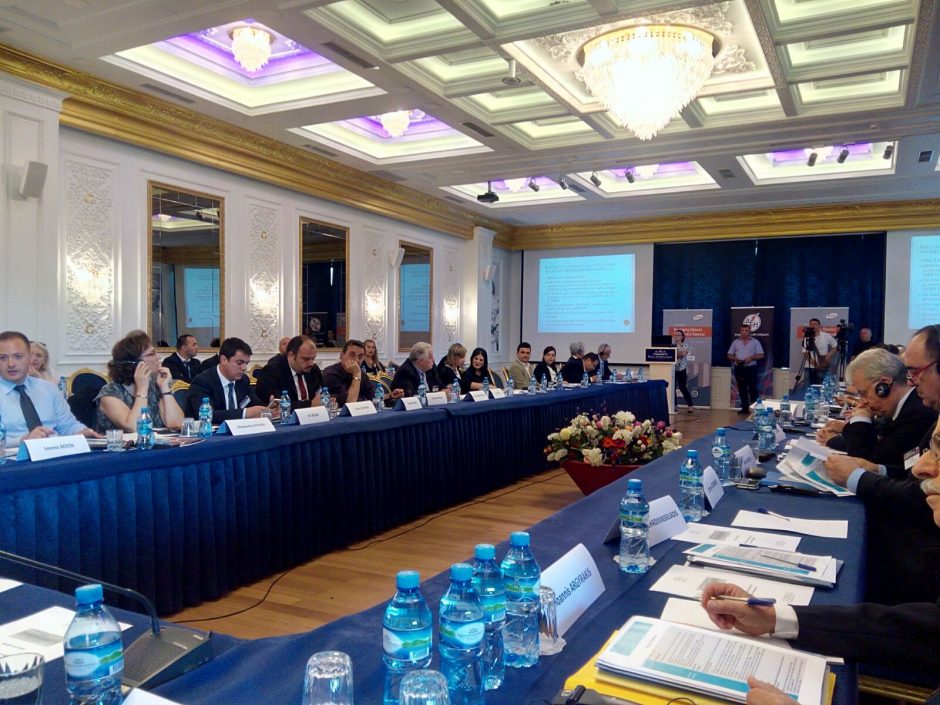
IENE WorkshopSpeaking at the second session of the workshop IENE to exploit the hydroelectric potential of Albania, Executive Director of IENE Mr. Kostis Stambolis alleged a position that as it further develops the electric system of the country, mainly based on hydropower, will need the support of the Greek electrical system in order to achieve uninterrupted operation. A support will be based both on bilateral electricity exchanges and technical assistance and investment assistance can offer PPC.

Based on data presented by the Executive Director of IENE, and based on wide reference study has been prepared, the SE Europe Energy Outlook 2016, the total output of Albania electricity will double by 2030, from current levels of 4200 GWh in more from 8,100 GWh .With the vast majority of this electricity production come from hydropower projects by exploiting the confirmed potential of 4500 MW compared to 1460 MW currently in use.

Through presentations and speeches of representatives of the state-owned electricity corporate KESH, the Albanian energy regulator, Dr. Abaz Aliko, as Director of the Energy Department’s Energy Ministry of Policy, Agim Bregasi and Mr. Lorenz Kosta, Director of Transmission of Electricity OST and Mr. Perparim Kalo, Director known legal office Kalo & Partners gave dynamic course and very substantial investment potential of hydropower sector in Albania.

The director of the address hydroelectric PPC Mr. John Argirakis made a comprehensive presentation and valuation of the Company’s activities including large and small hydroelectric projects.

A series of presentations by PPC executives but also by the company TERNA ENERGY by Mrs. Yulia Tsiknakis and from the company Aktor from Mr. John Lefas. The workshop IENE completed with an extensive panel discussion which was coordinated by Mr. Perparim Kalo.

Source: AEA

  • 1
  • …
  • 124
  • 125
  • 126
  • 127
  • 128
  • …
  • 140

AEA – Albania Energy Association is a industry association dedicated to representing the interests of Albanian and West Balkan for energy producers and consumers. AEA works to advance the development and adoption of sustainable energy solutions in Albania and the Western Balkans, supporting the region’s transition toward a cleaner, more secure, and more competitive energy future. AEA is registered by decision of the Court of Tirana, DECISION NO. 3032, (VAT:L11827451K).

[email protected]

Address
Blv Zogu 1
Tirana
1057
ALBANIA

LinkedIn  |  Facebook
Events
May 25, 2022 Connecting Green Hydrogen Europe 2022
May 25, 2022 Energy Week Western Balkans 2022
Copyright © Albania Energy Association