AEA-Albania Energy Association
  • Main
  • About Us
  • Services
  • Sectors
  • News
  • EventsEvents
  • PublicationPublication
  • Contact Us
AEA-Albania Energy Association
  • Main
  • About Us
  • Services
  • Sectors
  • News
  • EventsEvents
  • PublicationPublication
  • Contact Us
AEA-Albania Energy Association
  • Home Page
  • About Us
  • Sectors
  • Our Services
  • News
  • Contact Us
June 17, 2017
by AEA in News

Balkan leaders have to realise new coal plants are a liability, not a gold mine?

Author:  Pippa Gallop, Research Co-ordinator, CEE Bankwatch Network

In April this year, the EU proved that whatever difficulties it might be going through, it can still make momentous decisions. It approved new pollution control standards for power stations, entitled the LCP BREF (1) The name might sound obscure, but the results should be concrete: The new standards are projected to save up to 20 000 lives annually across the EU.

On the EU’s doorstep in the Western Balkans, however, you would hardly know the LCP BREF existed. Almost all the countries in the region are planning to build new coal power plants, and there has been virtually no mention of the need for them to comply with the new standards.

This is strange, because not only is compliance with the new LCP BREF necessary for EU accession, but most Western Balkans already stipulate it as part of their domestic pollution control legislation (2). This means that as soon as the standards enter force in the EU this year, they also enter into force in most of the region.

CO2 remains an unsolvable problem with coal

Let’s be clear here: the LCP BREF is not a panacea. It limits emissions of SO2, NOx, PM10, HCl, HF and mercury, so it makes a great contribution to reducing coal’s health impacts. But it can’t do anything about the biggest problem with coal: CO2 and its contribution to climate change. There is no filter that can stop CO2 emissions, and if we are to limit climate change to 1.5-2 degrees, no new coal plants can be built. Unlike climate science, BREF is legally binding, and attempts to ignore it will likely backfire even sooner than attempts to ignore climate science.

Legislative changes need to be anticipated

Whether you have to comply with the LCP BREF right now or in a few years, it’s not something you want to ignore. With power stations lasting 40 years and more, they need to be designed in line with the very latest technical and environmental standards, and their promoters need to anticipate the rules coming up within the next few years. Failure to do so means additional and potentially expensive retrofits just a couple of years after a plant has opened.

With the chances of new coal plants being viable already at rock bottom, such additional costs could easily increase the risk of stranded assets. Only very few EU countries are planning new coal plants, because of low electricity prices, the growth of renewable energy, CO2 costs, and pollution control legislation that is gradually making polluters, instead of the public, pay the health costs of coal.

Yet governments and utilities in the Western Balkans are not doing their homework about recent trends and new legislation that awaits them in the next few years, with the result that their planned projects are dangerously out of date.

Earlier this year we revealed that none of the planned coal power plants seem to have properly taken the costs of CO2 into account in their financial planning. Now we’ve crunched the numbers for the LCP BREF and found that none of the plants has proven compliance with the new standards either.

Planned Balkan coal plants not in compliance with new BREF

There are eight units currently being actively planned in the region. Out of these, five would violate the new standards while for three there is insufficient information available. Kostolac B3 in Serbia, Pljevlja II in Montenegro, and the Oslomej reconstruction in Macedonia have been designed in line with the older Industrial Emissions Directive (IED) Annex V standards, but not the new BREF. Tuzla 7 and Banovići in Bosnia-Herzegovina don’t even go this far: Tuzla 7 is bound only by the even more outdated local legislation while the environmental permit for Banovići is unclear about what standards are relevant. For the remaining three units, Ugljevik III units 1 and 2, and Kosova e Re, the information about likely emissions is still unclear.

Kostolac B3 in Serbia is the only plant for which the new BREF has even been mentioned in its official documentation. It is currently undergoing an environmental impact assessment process, in which local groups have commented on the need for the plant to comply with the BREF. The only reaction so far is an amendment in the study stating that the plant would be an existing plant under the BREF and thus allowed to pollute more than new plants. Even if some retrofits are necessary, the study argues, this is a normal procedure after running a plant for a few years, and thus nothing to worry about.

Neither of these claims is true: Any plant receiving its integrated environmental permit after the LCP BREF enters force in the EU is a new one, according to the BREF definitions, and has to stick to the highest standards. As for undertaking retrofits, the study authors should really check the plant’s feasibility assessment, which shows that the plant will be unviable even with a low CO2 price.

The story is not dissimilar with Pljevlja II in Montenegro. Despite being hailed – like all the plants – as being in line with EU standards, it turns out that it is in line only with outdated ones. Local NGOs pointed out during the environmental assessment process that the plant must comply with the new LCP BREF, but they have received no reaction from the authorities as yet.

Montenegro and Serbia may seem like the most alarming cases due to being ahead of others in EU accession, but Bosnia-Herzegovina is if anything a more worrying case, due to the number of projects planned. The Stanari lignite power plant which started commercial operation last September is already out of date compared to the Industrial Emissions Directive and will now be out of line with the BREF as well. If Ugljevik III, Tuzla  7, and Banovići are all completed and all out of line with the BREF, the country will end up with a significant burden on its hands.

If the Balkans electricity utilities really ran on commercial lines, as they are bound by the Energy Community Treaty to do, they would never risk these projects. The new LCP BREF is but one more indicator that coal is an increasing liability, and the Balkan countries should be looking much more carefully at what’s going on around them. After all, the region has ample potential for wind, solar and energy savings combined with a relatively small population, so if this region can’t make a transition to sustainable energy, who can?

NOTES:

  1. Large Combustion Plants Best Available Techniques Reference Document
  2. Albania, the Federation entity of Bosnia-Herzegovina, Kosovo Macedonia and Montenegro. Serbia and Republika Srpska both require the application of best available techniques but do not specify that the EU reference document should be used.
March 24, 2017
by AEA in News

Albania: “Changes To Hydrocarbons Law To Enhance Operations In The Upstream Sector”

Albania is the largest exporter of crude oil in the Energy Community and is home to the largest onshore oil field in Europe (i.e. Patos Marinza). A number of foreign investors have already entered this market, yet regulation of the upstream sector is based on old and not comprehensive legislation from 1993 (amended several times), which does not reflect the latest development of the sector related to exploration and production of hydrocarbons in Albania.

In respect to this oil and gas sector, regulatory and policy developments have long been underway and discussed with relevant stakeholders as part of the overall state energy strategy. However, new amendments to the existing law no. 7746 / 1993 “On Hydrocarbons” (exploration and production), as amended (the “Hydrocarbons Law“) have only been adopted on 2 Feb 2017, striving to regulate the activity of exploration and production of hydrocarbons in Albania.

The governmental objective introduced in these latest amendments, is to negotiate the terms of the Petroleum Agreements in the oil industry [the most common type of which used in Albania is a Production Sharing Agreement (“PSA“)] in a fair, transparent and competitive manner, to protect Albanian natural resources (inland and offshore) which are state owned, by guaranteeing the country’ national security, in line with the principles of Directive 94/22/EC of the European Parliament and of the Council “On the conditions for granting and using authorizations for the prospection, exploration and production of hydrocarbons”. Based on this principles, the execution of new PSAs or share transfers in existing Petroleum Agreements can be rejected by the relevant authorities in case there is any indication of Albanian national security infringement.

Whilst the right of explorations have remained unchanged, that means that can be conducted for a period of 5 years (subject to further extension up to the utmost period of 7 years), exclusive rights to exploit hydrocarbons now can be extended up to 5 years in maximum following the initial period of 25 years. Appraisal period has been definitely separated from the exploration period.

New changes give the possibility to contractor to benefit from fiscal stability clauses, up to 12 years from production of hydrocarbons, by keeping tax liabilities at same level during the 12 years’ period.

Along with the Natural Agency for Natural Resources (“AKBN“) which was created back in 2006 to deal, inter alia, with hydrocarbon activities on behalf of the Albanian state and operating as a specialized institution dealing with the negotiations of the PSA, the monitoring of petroleum activities and policy-making, the new legislative amendments aim to establish a new authority in charge of all technical consultancy services, scientifically speaking. The Scientific Hydrocarbon Institute will be responsible for conducting all studies, analysis, providing consultancy services and acting as a technical opponent of proposed projects in this sector, monitoring the implementation of relevant production sharing agreements during the exploration and development of hydrocarbons in Albania, on behalf of relevant state authorities (not only in the hydrocarbon sector but also in relation to the refining, transport and trade of hydrocarbons and its by-products). In light of above changes, the competences of AKBN will be revisited and a new agency responsible for hydrocarbons (currently operating as a department of the AKBN) will be in charge of some of competences performed currently by AKBN.

While this amendments have been introduced to facilitate incoming foreign direct investment in the hydrocarbon sector, it remains to be seen whether the new rules and newly established structures will contribute to promote more exploration opportunities in Albania during 2017.

February 15, 2017
by AEA in News

Pennine signs Velca Block PSA, anticipates into Albania’s energy industry.

 “Pennine” is pleased to announce that it has signed a Production Sharing Agreement (“PSA”) with Albpetrol Sh.A (“Albpetrol”) for the exploration and development of the Velca Block in Albania.

The finalized PSA contains a license agreement signed by Pennine, Albania’s Ministry of Energy and Industry, and Albpetrol, the country’s state-owned energy firm, for a six(6)-year exploratory lease-convertible to a 25-year production lease, upon discovery of oil and/or natural gas accumulations.

“This is a very exciting day for Pennine. Albania has a long history of oil and gas development dating back nearly a century, and Pennine is excited to bring its expertise to this region” says Chief Executive Officer N. Desmond Smith.

“Albania has mature energy infrastructure, established legislation and regulations, and a recent history of significant foreign investment for the development of its energy sector,” adds Mr. Smith. “We look forward to working in the Republic of Albania, providing value to Pennine shareholders, and bringing prosperity to the people of Albania.”

Pennine intends to initiate a Technical Report in the next 60 days, and with existing data, identify potential drilling targets within the Velca Block.

Pennine is currently working with industry experts from Albpetrol and the Ministry of Energy and Industry in an advisory committee, with Pennine acting as operator.

“Our understanding and experience with Albania has enabled us to develop a partnership with the Albanian government and Albpetrol through a new production sharing agreement. We believe this agreement provides a balanced risk-and-reward contract for the exploration and development of the Velca Block-and, we hope, many other opportunities in Albania,” says Pennine chairman Richard Wadsworth, who led Bankers Petroleum Ltd. in re-developing the Patos Marinza oilfield as its president from 2004 through 2008.

“We look forward to a seamless integration of Pennine into Albania’s oil and gas exploration and development landscape.”

The PSA consists of an Exploration Phase and a Drilling Phase. Under the Exploration Phase, Pennine and Albpetrol will conduct an examination of all currently existing geological, geophysical and well data on the Velca Block, and conduct any processing or re-processing of data to select drilling targets. The Drilling Phase will consist of a commitment to drill a minimum of two (2) wells, to a minimum depth of 2,500 metres.

Pennine will recover all exploration and development costs from 90% of the net operating revenue, after the state’s 10% royalty tax, then subject to an R-factor revenue sharing with Albpetrol, ranging from 2% to 15% of net operating revenue, depending on the multiple of cost recovery to the project. After payout of all costs, the interest in the revenue stream is shared, with 50% earmarked for the Albania Ministry of Energy and Industry and 50% for the participants of the PSA (a 100% working interest before payout and a 50% working interest after payout).

Main terms and conditions of the Velca Block PSA were signed in February 2016. Pennine and Albpetrol agreed in April 2016 to the terms of the PSA and submitted the document to Albania’s Ministry of Energy and Industry for approval. Pennine reviewed the License Agreement, an integral component of the PSA, in December 2016.

In connection with this transaction, Pennine will pay a finder’s fee to an arm’s-length entity through the issuance of up to 7,000,000 common shares subject to TSX Venture Exchange policy.

February 12, 2017
by AEA in News

Albania’s Gas Master Plan sets out an Exciting Future

Interestingly enough, the gas sector once played an important role in Albania and the country was a relatively large gas producer. In 1982, gas production amounted to one billion cubic metres but has now dropped to mere 0.01 billion cubic metres. It is worth noting that Albania and Kosovo are the only countries in the Western Balkan region which are not connected to international natural gas networks.

The existing oil network, which is 498 km long, is not in a good shape, either. It connects all the existing sources of oil, with the exception of the pipeline that connects the natural oil wells in Delvina with the Ballsh pipeline (the latest one being renovated), but it is no longer functional. Most of it is corroded and defective which makes its use unviable. Consequently, a new oil transmission and supplying system is needed.

Continue reading
January 16, 2017
by AEA in News

Strategic International Cooperation on Science and Technology Innovation: R&D on Low-head SHP packaged units

International Center on Small Hydro Power, an international organization co-funded by the UN devoted to the promotion and development of small hydro power globally. The organization is constantly searching for ways to increase cooperation projects with countries also devoted to renewable energy projects, in particular small hydro, for which reason we contact you in this instance. We are glad to announce that the Ministry of Science and Technology of the People’s Republic of China has recently approved a program aimed at expanding cooperation with fellow countries involved in the One Belt One Road initiative with a focus on small hydro power.

Attached you may find the notice originally issued by the Chinese Ministry of Science and Technology. We welcome the submission of projects on “Research & Development on Low-head SHP packaged units”. Seeing the relevant role placed by Albania on the development of SHP initiatives, we welcome your applications. Additionally, provided there were any other private initiatives, academic and scientific research institutions interested in participating, we would appreciate the sharing of this information.

Please note that the deadline for the application by foreign agencies is next Friday January 20, 2017.

[embeddoc url=”https://aea-al.org/wp-content/uploads/2017/01/MST-2017_OBOR-Innovation-Notice.pdf” download=”all” viewer=”google”]

December 21, 2016
by AEA in News

Intesa Sanpaolo increases 2016 GDP growth forecast for Albania to 3%

Intesa Sanpaolo said on Wednesday it has lifted its 2016 economic growth estimate for Albania to 3.0% from 2.8% forecast earlier.

“GDP is forecast to grow by 3% (with possible upside to 3.3%) in 2016, and to further increase by 3.5% (with possible upside to 3.7%) in 2017, which compare to a growth rate of 2.6% in 2015,” Intesa Sanpaolo said in its December forecast note which considers the countries where ISP has subsidiaries.

Albania’s growth will be driven by investments in large FDI-financed energy projects, such as the Trans Adriatic Pipeline (TAP), higher private consumption, and higher revenues in the tourism sector, according to Intesa Sanpaolo.

“The TAP construction project is fully in process in 2016-2017, with a total investment of about 1.5% of GDP per year in each of the two years,” Intesa said.

The bank mentioned the positive trend of decreased unemployment. According to the latest data from the Albanian statistical office, INSTAT, quoted by the bank, the jobless rate in Albania dropped to 14.7% in the third quarter of the year from 15.5% in the second quarter.

Consumer prices, which are the main focus of the monetary policy, are returning to an upward trajectory, the lender said. Inflation is expected to progressively approach the central bank’s target of 3% by 2018.

In November, consumer prices in Albania increased by 1.9% on the year. Intesa Sanpaolo projects an annual average inflation of 1.3% in 2016 and 2.0% in 2017.

The level of public debt is expected at 71.4% of the country’s gross domestic product (GDP) in 2016, and 69.1% of the GDP in 2017, Intesa Sanpaolo said.

Bank lending in Albania has gathered pace, supported mainly by domestic currency lending, though non-performing loans, 21.4% of all credits as of end-October, continue to be a drag on credit growth, Intesa Sanpaolo noted.

The bank also said that the increased NPLs and the environment of near-zero interest rates are the main reason for the decrease of the Albanian banking sector’s net profit.

Intesa Sanpaolo Bank Albania was the country’s fourth largest lender by assets at the end of the third quarter. It had a net profit of 1.9 billion leks (14.6 million euro) in the January-September period.


December 21, 2016
by AEA in News

A little-known Chinese group has emerged as the mystery party behind a £485m takeover bid for San Leon Energy, a London-listed oil explorer.

Sky News understands that Geron Energy Investment lodged an 80p-a-share indicative offer for San Leon in recent weeks.

Talks about the bid from Geron Energy are ongoing, prompting a statement on Monday from the board of San Leon which confirmed that it had “received an approach from a possible offeror, which may or may not lead to an offer being made for San Leon”. 

The interest from the Chinese bidders came months after San Leon raised money through a share placing at 45p, slightly below the level at which the shares were trading on Wednesday.

Investors in San Leon would welcome a bid at the indicative level of 80p, given that it is at a substantial premium to a share price which has already risen by 45% this year.

San Leon’s operations are focused on oil and gas development in Africa and Europe, including a near-10% stake in a major oil-producing asset in Nigeria.

Earlier this year, the company announced the appointment of Mutiu Sunmonu, the former head of Shell Nigeria, as its new non-executive chairman.

San Leon said the completion of the Nigerian deal will result in it returning 50% of free cashflow to investors over the next five years, with sources previously suggesting this distribution policy could involve as much as $260m (£200m) being handed over in the form of dividends and a share buyback.

Headquartered in Ireland, it also has operations in Albania, France, Morocco, Poland and Spain.

A San Leon spokesman declined to comment on Wednesday.

December 21, 2016
by AEA in News

World Bank Agrees $800 mln loan for Turkey, Azerbaijan gas pipeline

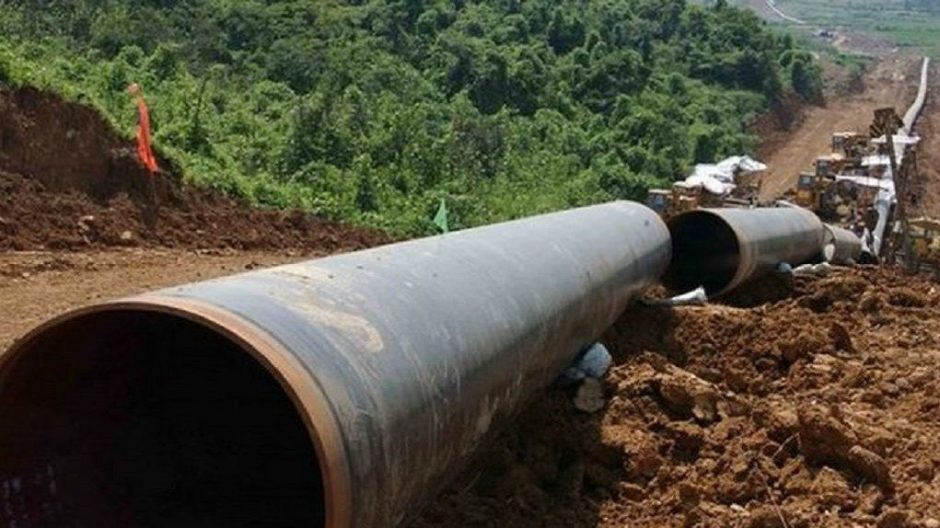
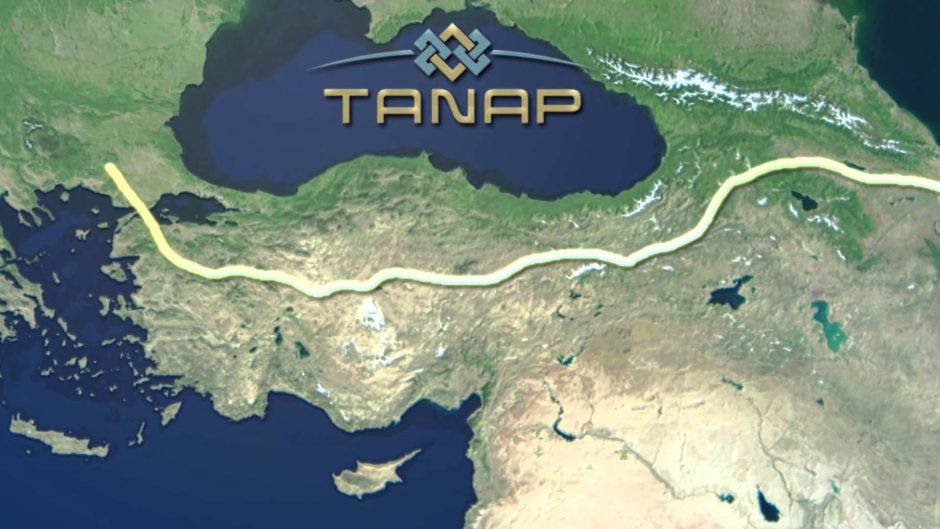
The World Bank’s board of directors approved loans of $400 million each for Turkey and Azerbaijan, for the Trans-Anatolian Natural Gas Pipeline (TANAP) project late Tuesday, December 20, Anadolu Agency reports.

The loans will be supplied through the World Bank’s subsidiary, the International Bank for Reconstruction and Development (IBRD).

Turkey’s Petroleum Pipeline Corporation (BOTAS) will be in receipt of the loan in Turkey guaranteed by the Republic of Turkey with a maturity of 24 years.

In Azerbaijan, the Southern Gas Corridor (SGC) closed Joint Stock Company will obtain the loan with a guarantee from the Republic of Azerbaijan based on a 30 year maturity period.

Around $4 billion in external financing is anticipated for the $8.5 billion project, SOCAR’s President Rovnaq Abdullayev said in previous interview with Anadolu Agency.

In addition to the World Bank, the Multilateral Investment Guarantee Agency, Asian Infrastructure and Investment Bank, European Investment Bank and European Bank for Reconstruction and Development are among the proposed supporters of the project.

“The slump in global oil prices and low commodity prices also gives the TANAP project an opportunity to shrink its budget and save up to $3.2 billion. Initially, the investment budget for TANAP was estimated at $11.7 billion, but with the help of low oil prices, we reduced our budget to $8.5 billion,” TANAP General Manager Saltuk Duzyol said in an interview with journalists last week.

The TANAP project plans to be operational in 2018 with an initial capacity to carry 16 billion cubic meters (bcm) of Azeri gas through Georgia to Turkey. While 6 bcm will be for Turkey’s domestic gas consumption, the rest is destined for transfer to Greece, Albania, and Italy and further into Europe.

Azeri energy giant State Oil Company of Azerbaijan (SOCAR) holds a 58 percent interest in TANAP, Turkey’s BOTAS has a 30 percent share while BP owns a 12 percent stake.

August 29, 2016
by AEA in News

SOCAR JOINS NEW ADRIATIC PIPE PROJECT

P-H20160826000549 1_f960x260
Four western Balkans nations signed a memorandum of understanding with Azerbaijan state Socar on co-operation on building the Ionian Adriatic pipeline (IAP) on the sidelines of a Dubrovnik forum 25-26 August.

The declaration of intent to develop the 5bn m³/year line was originally signed in 2007 by Croatia, Montenegro and Albania. The length of the line from Split in Croatia to Fier in  Albania will be around 530 km and cost around €610mn ($683mn).

Socar will join Croatia, Albania, Bosnia & Herzegovina and Montenegro in the project which will include a section of the Trans-Adriatic-Pipeline (TAP) designed to bring gas from Shah Deniz 2 field in the Caspian Sea to EU through the so-called Southern Gas Corridor (SGC) after 2020.

Socar’s goal is to connect the Caspian Sea and the Adriatic Sea, the head of Socar Balkans, Murad Heydarov, said after the signing ceremony. “The SGC, which includes the Ionian-Adriatic gas pipeline is an important part of our plans, we have good co-operation with the countries involved in this project,” he said, according to Socar sources.

Croatia’s economy minister Tomislav Panenic said that the future pipeline would provide gas supplies for southeastern Europe. “We have defined our joint initiative for the development of the Ionian-Adriatic gas pipeline as a route that will make sure that these markets are provided with gas. We hope that this route will be a connection between the north and the south and that this may pave the way for a full liberalisation of the gas market in Europe,” he said, Croatian news agency Hina reported.

Montenegro’s economy minister Vladimir Kavaric said that IAP was the only opportunity for the gasification of Montenegro and “the government is ready to do everything to accelerate and successfully implement the project.”

According to Bosnia & Herzegovina’s foreign trade minister Mirko Sarovic, “Bosnia & Herzegovina supports this regional project and approach and ask the partners to ensure that a section of the route goes through Bosnia & Herzegovina.”

Dubrovnik Forum. From left: Presidents of Hungary Janos Ader, Lithuania Dalia Grybauskaite, Poland Andrzej Duda, Croatia Kolinda Grabar-Kitarovic, Bulgaria Rosen Plevneliev and Slovenia Borut Pahor.

Dubrovnik Forum. From left: Presidents of Hungary Janos Ader, Lithuania Dalia Grybauskaite, Poland Andrzej Duda, Croatia Kolinda Grabar-Kitarovic, Bulgaria Rosen Plevneliev and Slovenia Borut Pahor.

According to preliminary design IAP aims to connect existing transmission system of Croatia via Bosnia & Herzegovina (offshore), Montenegro and Albania to the TAP.

The Baltic-Adriatic-Black Sea (BABS) forum brought together six presidents and high-ranking government officials from 12 EU countries and Albania on  August 25-26 in Dubrovnik, Croatia. A panel discussion at the “Strengthening European energy security” looked at the benefits of energy cooperation in BABS and the role of LNG terminals linking north and south Europe.

Connecting the LNG terminal in Poland with one planned on the island of Krk in Croatia is among the energy projects that BABS region countries want to implement in order to boost competitiveness and development, Croatia’s president Kolinda Grabar-Kitarovic and Poland’s president, Andrzej Duda, said addressing  forum at the opening ceremony August 25. 

President Duda pointed out the importance of energy connections.“The dominance of a single supplier for the region is harmful and dangerous”, he said adding that development of the gas corridor between the north and the south, as well as the LNG terminal on the island of Krk are important.  

The next meeting of BABS will take place in Wroclaw in June 2017.

August 29, 2016
by AEA in News

Azerbaijan to enhance its role in forming energy corridors

eurasian_conference
The Southern Gas Corridor (SGC) project will enhance Azerbaijan’s role in forming eastern and western energy corridors.

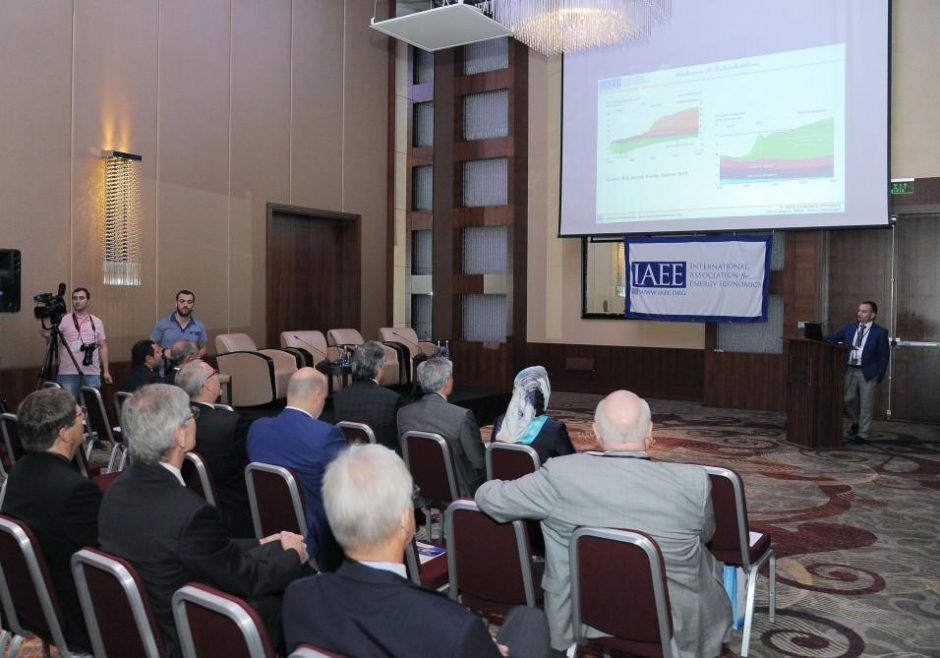
Deputy Energy Minister Natig Abbasov made the remarks at the first Eurasian Conference of the International Association for Energy Economics (IAEE) in Baku on August 29.

Despite the decline in oil prices, Azerbaijan continues to realize big transnational projects, said the deputy minister.

As a country located at the intersection of Europe and Asia, Azerbaijan has exceptional opportunities for transportation of energy resources, he noted adding that the SGC is one of the biggest infrastructure and energy projects of Europe.

“As an energy security project, the SGC will bring benefit to all of us – producers, transit countries and consumers – for years to come,” added Abbasov.

The Southern Gas Corridor is one of the priority energy projects for the EU. It envisages the transportation of 10 billion cubic meters of Azerbaijani gas from the Caspian Sea region to the European countries through Georgia and Turkey.

At the initial stage, the gas to be produced as part of the Stage 2 of development of Azerbaijan’s Shah Deniz field is considered as the main source for the Southern Gas Corridor project. Other sources can also connect to this project at a later stage.

He also noted that Azerbaijan made a new contribution to Europe’s energy security with the SGC project.

“TANAP (Trans-Anatolian Natural Gas Pipeline), which will be laid from the Georgian-Turkish border to the Turkish-Greek border, is a very important project in the context of ensuring the regional, particularly European security,” said the deputy minister. “The creation of the energy corridor will be completed by laying the TAP (Trans Adriatic Pipeline), from the Turkish-Greek border to Italy’s south.”

TAP has enough capacity to transport Azerbaijani gas to Europe and will allow creating a complex network of gas pipelines in Europe, said Abbasov.

“Moreover, the construction of the planned Ionian Adriatic Pipeline (IAP) will allow delivering Azerbaijani gas to Bulgaria, Montenegro, Croatia, Bosnia and Herzegovina,” he added.

Currently, Azerbaijan produces 82-88 million cubic meters of gas and 115,000-120,000 tons of oil per day, noted the deputy minister, adding that proved gas reserves of the country amounted to 2.6 trillion cubic meters, oil reserves – two billion tons.

The IAP pipeline is planned to be connected to the TAP pipeline in the Albanian city of Fier.

Azerbaijani gas will be delivered to a number of countries of the southeastern Europe via the IAP pipeline. The pipeline’s capacity will be five billion cubic meters per year.

Organizers of the TAP pipeline have already signed a corresponding memorandum with builders of the IAP, in particular, with Plinacto Ltd. (Croatia), BH-Gas (Bosnia and Herzegovina), Geoplin plinovodi (Slovenia), as well as with governments of Montenegro and Albania.

Abbasov further said that Azerbaijan is considering the possibility to transport Iranian gas through its territory to Europe. He noted that it will be possible through Iran’s joining the TANAP project.

Abbasov didn’t also exclude possibility of transporting Iraqi gas through Azerbaijan to Europe.

TANAP project envisages transportation of gas from Azerbaijan’s Shah Deniz field to the western borders of Turkey. The gas will be delivered to Turkey in 2018, and after completion of the Trans Adriatic Pipeline’s construction, the gas will be delivered to Europe in early 2020.

The First Eurasian Conference organized by the International Association for Energy Economics (IAEE) to focus on the energy economics emerging from the Caspian region. The members of the Council of the International Association for Energy Economics approved the decision on the 39th IAEE Conference in Baku.

The conference to be end on August 31 is attended by 56 speakers from 24 world countries.

  • 1
  • …
  • 122
  • 123
  • 124
  • 125
  • 126
  • …
  • 140

AEA – Albania Energy Association is a industry association dedicated to representing the interests of Albanian and West Balkan for energy producers and consumers. AEA works to advance the development and adoption of sustainable energy solutions in Albania and the Western Balkans, supporting the region’s transition toward a cleaner, more secure, and more competitive energy future. AEA is registered by decision of the Court of Tirana, DECISION NO. 3032, (VAT:L11827451K).

[email protected]

Address
Blv Zogu 1
Tirana
1057
ALBANIA

LinkedIn  |  Facebook
Events
May 25, 2022 Connecting Green Hydrogen Europe 2022
May 25, 2022 Energy Week Western Balkans 2022
Copyright © Albania Energy Association