AEA-Albania Energy Association
  • Main
  • About Us
  • Services
  • Sectors
  • News
  • EventsEvents
  • PublicationPublication
  • Contact Us
AEA-Albania Energy Association
  • Main
  • About Us
  • Services
  • Sectors
  • News
  • EventsEvents
  • PublicationPublication
  • Contact Us
AEA-Albania Energy Association
  • Home Page
  • About Us
  • Sectors
  • Our Services
  • News
  • Contact Us
August 29, 2016
by AEA in News

Wang Yi Holds Talks with Foreign Minister Ditmir Bushati of Albania

W020160829348307513871On August 25, 2016, Foreign Minister Wang Yi held talks in Beijing with visiting Foreign Minister Ditmir Bushati of Albania.

Wang Yi expressed that Albania is a traditional friend of China. It made historic contributions to recovering the lawful seat of the People’s Republic of China in the United Nations back in the days, which the Chinese government and people bear deeply in mind. China and Albania have built a profound friendship featuring mutual trust and mutual support since the establishment of diplomatic relations 67 years ago. In recent years, the two sides have conducted close high-level exchanges and enjoyed firm political mutual trust. China is willing to work with Albania to earnestly implement the important consensus reached by leaders of both countries, give full play to bilateral cooperation mechanisms in related areas, advance the in-depth and substantial development of bilateral relations, and benefit the two peoples.

Wang Yi noted that both sides should boost high-level exchanges and consolidate political mutual trust. China appreciates Albania for its long-term and valuable support on issues related to China’s core interests and major concerns, and respects Albania’s choice of development path that is based on its national conditions and people’s will. Both sides should deepen practical cooperation and enrich the connotation of bilateral relations. China is willing to speed up the docking of national development strategies with Albania, substantially push forward practical cooperation in various areas including infrastructure construction, energy, industrial parks, agriculture and others, and strive for new breakthroughs in major project cooperation between the two countries. It is hoped that the Albanian side can provide convenience for Chinese enterprises to participate in Albania’s construction. The two sides should intensify people-to-people and cultural exchanges, advance cooperation in such areas as culture, education, tourism and local affairs, and offer more convenience for personnel exchanges, so as to facilitate the connection of the two peoples’ hearts.

Wang Yi stated that cooperation between China and 16 countries in Central and Eastern Europe (CEE) including Albania has grew out of nothing and expanded from small to large, setting a model for sub-regional cooperation. As the “16+1 cooperation” gradually enters into the mature period and the harvest time, China is ready to, together with the 16 CEE countries, push the “16+1 cooperation” for more tangible results, assist the European integration process, and play a constructive role in the development and prosperity of Europe.

Ditmir Bushati said that China has rendered precious support and assistance to the economic construction and social development of Albania for a long time, to which Albania offers deep gratitude. Albania treasures the traditional friendship with China, and always firmly adheres to the One-China policy. Cooperation in various fields between the two countries in recent years has achieved positive outcomes, presenting huge development space in the future. Albania is willing to deepen cooperation with China in such areas as transportation, tourism, education and people-to-people and cultural exchanges, support the “Belt and Road” initiative proposed by President Xi Jinping, and provide favorable conditions and convenience for Chinese enterprises to enter Albania. China, as an important cooperative partner of the “16+1 cooperation”, has played a significant role in regional integration process. Albania is willing to enhance coordination and cooperation with China in international and regional affairs. It is hoped that both sides can join efforts to advance bilateral friendly relations to continuously achieve more outcomes.

Both sides also exchanged views on international and regional issues of common concern.

Bankers Petroleum - An Overlooked Gem In An Otherwise Floundering Industry
August 29, 2016
by AEA in News

Audit finds in favour of Bankers Petroleum in tax dispute with Albanian government

Canada-based Bankers Petroleum said on August 29 it has finally resolved a tax dispute with the Albanian government and it will be reimbursed for “excessive payments” made to the Albanian tax authorities. The binding third-party audit report on the 2011 tax dispute said that Bankers “correctly stated its 2011 expenses as cost recoverable”, Bankers said in a statement.

In February Bankers, which is mainly active in Albania, suspended its arbitration procedure against Tirana after reaching an agreement with the country’s energy ministry on the appointment of an international expert audit team to resolve the $75mn tax dispute. China’s Geo-Jade Petroleum Corporation is in the process of acquiring Bankers in a deal due to close at the end of September. 

The third-party audit was conducted by a joint panel of individuals from PricewaterhouseCoopers and Navigant Consulting Company. Its decision is a final resolution, as previously agreed to by the Albanian National Agency for Natural Resources (AKBN), the ministry of energy and industry and Bankers.

The audit obliges the Albanian tax authority to recalculate Bankers’ tax obligations for 2011 and determine the appropriate mechanism to settle or reimburse Bankers for the payments made to date, said the statement.

Bankers said it had paid a total of $37mn to the Albania tax authorities as deposits for the 2011 profit tax assessment as of June 30. 

Bankers operates the Patos-Marinza oilfield and has a 100% interest in both the Kucova oilfield and in Exploration Block F in Albania.

August 9, 2016
by AEA in News, Uncategorized

Erdogan, Putin and the touchy Turkish Stream

0,,16429774_303,00The presidents of Russia and Turkey are expected to repair relations and revive a gas pipeline project at a meeting in St. Petersburg on Tuesday. There is, however, one key issue on the table, DW’s Andrey Gurkov writes.

The revival of the Turkish Stream pipeline project is expected to be the concrete outcome of the meeting between Russian President Vladimir Putin and his Turkish counterpart, Recep Tayyip Erdogan, in St. Petersburg on Tuesday. The presidents will also recommit to the construction of Turkey’s first nuclear power station, in Akkuyu, which is now severely behind schedule.

The main aim of this meeting, which was called at short notice, is to signal a thaw in relations betweenRussia and Turkey. In November 2015, there was a row over conflicting interests in Syria and the shooting down of a Russian bomber by Turkey’s air force. Putin and Erdogan will now be anxious to show their nations, the world and especially the European Union that their quarrel is over. They intend to send a message to Brussels, Berlin, Paris and, of course, Washington: We can be friends without you – and even against you.

The exchange of opinion and declarations of friendship will not be taking place on neutral terrain – on the fringe of a G20 meeting, for example. Erdogan, who apologized in June for the shooting down of the plane and the death of two airmen, will be meeting Putin in the city where the Russian president was born. This reinforces the impression that Putin has emerged from their short-lived conflict as the victor, both politically and economically. He wanted the Turkish Stream gas pipeline, and he’s going to get it.

But in what form? And at what price? This is where Erdogan could prove the victor. If the presidents decide to build only one pipeline along the route rather than two, it would be to Ankara’s advantage. Or to be precise: Moscow, and Gazprom in particular, would be at a disadvantage.

Substitute for another pipeline

For years, the Kremlin has made it a priority to put an end to the transit of Russian gas through Ukraine, from where it flows west to the European Union. But there is also a line that branches off southward. This line passes through Moldova, Romania and Bulgaria, and also supplies Turkey with Russian energy.

Initially, the pipeline through Ukraine was to be replaced by the South Stream, which consists of four strings with a total capacity of 63 billion cubic meters (82 billion cubic yards) per year. It was to run from the Russian port of Anapa along the floor of the Black Sea to Bulgaria and from there to Austria. However, the project contravened EU regulations.

And so, after a meeting with Erdogan in Ankara in December 2014, Putin suddenly announced that the Black Sea pipeline would be diverted toward western Turkey, where three of the four strings would continue on to the Greek border – the border with the main consumer of Russian gas: the European Union. This was the birth of the Turkish Stream.

Soon afterward, however, the project ground to a halt. All of a sudden Turkey wasn’t interested in the transit of large quantities of Russian gas anymore, and officials wanted only one string to cover domestic requirements. Then the jet was shot down, and for over half a year the project seemed to be dead in the water.

At Ankara’s insistence

No one is speaking of four strings anymore. But a single line with a capacity of 15.75 billion cubic meters would be the most expensive option for Gazprom – and therefore the least advantageous. The state-owned Russian company would have to spend several billion credit-financed dollars to lay a relatively small pipeline in the depths of the Black Sea and build all of the necessary infrastructure on the Turkish coast. And the sole purpose of this would be to replace an overland pipeline that already works perfectly well.

A second string would not, of course, make Turkish Stream cost-effective, but at least it would increase the turnover. Gazprom could then supply Greece and Italy via the planned Poseidon pipeline. However, during his recent visit to Moscow, Turkish Deputy Prime Minister Mehmet Simsek spoke only of a single string. It doesn’t sound like Ankara is in the mood for compromise.

So, it may well be that, by being totally focused on the geopolitical goal of taking the transit of gas away from Ukraine, Putin is imposing a burden on Gazprom that will stretch the state-owned company to the absolute limit – and at a time of empty coffers. Gazprom would have to invest a disproportionate amount of money into the Black Sea for a single Turkish Stream pipeline and potentially delay the Nord Stream 2 pipeline across the Baltic, which would have an annual capacity of 55 billion cubic meters.

At Russia’s expense, Erdogan would get a brand new underwater pipeline that is not subject to any transit risk – and thus, in the long term, Turkey would get even cheaper gas, as the transit costs currently imposed by several countries along the route would no longer apply.

Furthermore, Erdogan would be assured enduring gratitude from Azerbaijan. The close regional ally is already laying the TANAP pipeline to Greece via Turkey, and it has absolutely no interest in a competing Russian project to supply the southern European Union.

August 9, 2016
by AEA in News

TAP says construction of pipeline’s Albanian section on track

tap_080816__(1)
The Trans Adriatic Pipeline (TAP) AG has announced that the construction of the pipeline on the territory of Albania is progressing without delays.

TAP AG tweeted that 87.5 percent of access roads and bridges in Albania have already been upgraded.

TAP’s route through Albania is approximately 215 kilometers onshore and 37 km offshore in the Albanian section of the Adriatic Sea. It starts at Bilisht Qendër in the Korça region at the Albanian border with Greece, and arrives at the Adriatic coast 17 km north-west of Fier, 400 meters inland from the shoreline.

In the summer of 2015, TAP started the construction and rehabilitation of access roads and bridges along the pipeline’s route in Albania. The work is expected to be completed during 2016.

tap_080816__(2)TAP project envisages transportation of gas from the Stage 2 of development of Azerbaijan’s Shah Deniz gas and condensate field to the EU countries.

The 870-kilometer pipeline will be connected to the Trans Anatolian Pipeline (TANAP) on the Turkish-Greek border, run through Greece, Albania and the Adriatic Sea, before coming ashore in Italy’s south.

TAP’s shareholding is comprised of BP (20 percent), SOCAR (20 percent), Snam S.p.A. (20 percent), Fluxys (19 percent), Enagás (16 percent) and Axpo (5 percent).

August 4, 2016
by AEA in News

GETTING GAS OUT OF IRAN – NEW TRADING PATTERNS

Iran’s gas plans for Caucasus

Iran says it is preparing to triple gas exports to Armenia, start exports to Georgia and store its gas in Azerbaijan’s underground facilities.

For now, Iran barters about 1mn m3/d of gas with Armenian power at 1 m3 per 3kWh. Iran said this week that the volume of the gas-to-power deal would reach 3mn m³/d by late 2018 at the improved rate of 1m3 per 3.2kWh.

On the other hand, the managing director of the National Iranian Gas Company (NIGC) Ali Reza Kameli said August 1 that Iran has signed a deal with the Georgian International Energy Corporation to export 40mn m³ over a four-month period to test the feasibility of sealing a long term gas export agreement.

caucasus-railway-road-map-2_0He added that that the deal becomes operational once Armenia has issued the needed permissions by late 2016.

Georgia’s deputy energy minister Mariam Valishvili told Trend that the ministry has no information on the conclusion of contracts for the import of Iranian gas to the country. Valishvili added that the Georgian government has not concluded the contracts for such gas supply. “Theoretically, private companies can sign a contract like that,” she said.

For now, Georgia receives more than 87% of its 2.5bn m3/yr demands from  Azerbaijan (1.36bn m3/yr as commercial imports plus 5% of Azerbaijani gas transit to Turkey as fee) and takes 10% of Russian gas deliveries to Armenia as fee.

Iran also announced August 2 that it is willing to store its gas in Azerbaijan’s underground gas facilities. Azerbaijan has two gas storage facilities that can hold 5bn m3, of which a third is idle.

For now, two countries swap about 1mn m3/d of gas, while Iran has a 10% share in Azerbaijan’s Shah Deniz gas field.

Iran’s sole commercial buyer is Turkey. According to official statistics, Iran increased deliveries to Turkey in five months of 2016, while Azerbaijan and Russia cut gas deliveries to this country.

Iran aims to export 68bn m3/yr of gas by 2021 and is preparing to announce a joint tender with Oman for choosing a contractor to build a $1.5bn pipeline project in the Gulf of Oman, aimed to transit 10bn m3/yr of Iranian gas to Oman. Some of that gas could be liquefied as the Oman LNG terminal is not fully used.

Kameli said August 2 that “activities related to the gas pipeline project are being carried out rapidly as the marine survey has been completed and evaluation of the obtained information is being undertaken. After receiving the results of studies, we will decide with the Omani side who will be the contractor for the 200-km undersea pipeline.”

Iran is also preparing to start a restricted amount of gas supply to Baghdad this month at 5-7mn m3/d. This figure is to reach 25mn m3/d, based on agreements, in the coming years.

Iran has two agreements with Iraq to export 50mn m3/d of gas to Baghdad and Basra in total.

Iran also has a 22mn m3/d gas export agreement with Pakistan, projected to become operational in early 2015, but the pipelines are not completed in either country yet.

1-52

Iran is also looking for a contractor to resume building the Iran LNG project, which was half complete when it was hit by western sanctions. Gazprom is one of the companies to express an interest in taking part but it said August 2 that Iran hadn’t responded to its request yet.

Tehran has invested $2.5bn in this project which is hoped will produce 10.4mn mt/yr of LNG by late 2018.

Gazprom does not need extra gas but the Russian company most likely would like to suspend the growth of Iran’s gas exports,” said Mikhail Korchemkin, head of East European Gas Analysis. There is a threat of competition facing Iranian LNG projects, not from Russia but other players in the gas market although Iran’s LNG would have one of the world’s lowest feedstock prices.

Iran and Turkmenistan have also expanded their gas deals. Last year, Turkmenistan doubled deliveries to Iran to above 9bn m3/yr. Iran said June 27 that it will import gas worth $30bn from Turkmenistan over the next ten years and export engineering goods and services to Turkmenistan to an equivalent value.

TAP in progress

Turkmen gas is recognized as a potential source for feeding the Southern Gas Corridor (SGC), aimed to deliver 16bn m3/d of Azerbaijani gas to Turkey and EU by 2021. The volume would increase to 25bn m3/yr by 2025 and 31bn m3/yr in early 2030s.

The part from Azerbaijan to west Turkey is being built, while the European part of the SGC, Trans Adriatic Pipelinem (TAP), is being progressed. TAP said July 29 that 14,000 pipes have already been delivered to Greece and Albania for it. This amount accounts for about 30% of all pipes that will be used for the pipeline.

The 870-km TAP will be connected to the Trans Anatolian Pipeline (Tanap) on the Turkish-Greek border, run through Greece, Albania and the Adriatic Sea, before coming ashore in southern Italy. The Initial capacity will be 10bn m3/yr in 2021. The European Bank for Reconstruction and Development (EBRD) confirmed earlier that it started talks to provide direct financing of €500mn and attract €1bn from banks.

The current cost of the SGC from the Shah Deniz 2 reservoir to landfall in southern Italy, is now estimated at around $40bn, comprising $9.3bn for Tanap, $6bn for TAP and $23.8bn for developing SD2 as well as the expansion of the South Caucasus line (SCPX).

August 3, 2016
by AEA in News

Greece, Bulgaria ink IGB gas pipeline, LNG terminal agreements

Athens is turning to Sofia in an attempt to re-establish its position in the region, top policy expert tells New Europe.

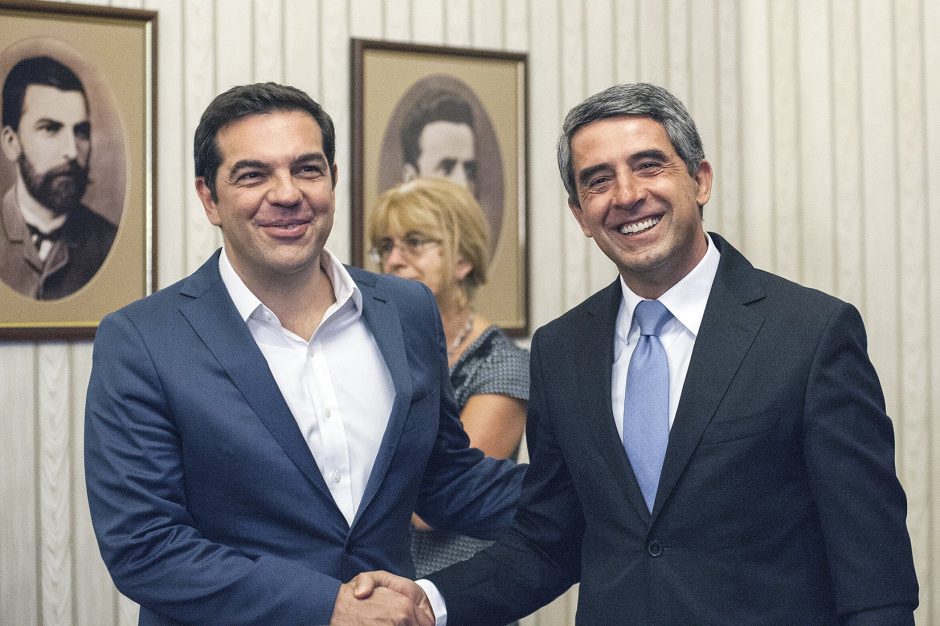
Greece and Bulgaria agreed to boost energy security in the Balkans in the framework of the European Union, during Greek Prime Minister Alexis Tsipras’ visit to Sofia on August 1.

Tsipras met with his Bulgarian counterpart Boiko Borisov and President Rosen Plevnelev. Within the context of the third high-level cooperation council between

Greece and Bulgaria, they signed a series of bilateral agreements, including the construction of the Interconnector Greece-Bulgaria (IGB) gas pipeline and the creation of a liquefied natural gas (LNG) terminal near the northern Greek city of Alexandroupolis.

“Bulgaria is probably Greece’s closest partner in the Balkans, but more by reflection and less as a result of a strategic plan. There is potential in bilateral relations, especially given the ‘energy connection’, but till nowadays we haven’t seen anything substantive,” Constantinos Filis, director of research at Institute of International Relations, told New Europe on August 2.

“But given the difficulties with Albania, FYROM and the problematic environment with other Balkan states of the Balkan corridor – as they agreed to isolate Athens in cooperation with Vienna – Athens is turning to Sofia in an attempt to re-establish its position in the region. But the Bulgarian government due to its bureaucracy and corrupted mechanisms cannot be trusted in full,” Filis said, adding that in the past, decisions have been overturned without any justification and consultations are usually complicated.

Meanwhile, following the rapprochement between Russia and Turkish, the Turkish Stream gas pipeline, which would transport gas from Russia to Turkey and Greece via the Black Sea, could be revived. Asked if Turkish Stream, which is also now called South European Pipeline, would have a landfall in Bulgaria, Filis told New Europe that Bulgaria is very much attached to the West and especially the United States and therefore it will be Russia’s last resort if the latter chooses to proceed with this project.

“In the case of Turkey, it seems that both states attempt a restoration of ties, which is a positive sign for energy cooperation. But again, SEP’s fate will be defined by other factors like: securing markets, funding and EU’s political consent and making sure that Russian economy can cope with it,” Filis said.

In addition to energy, Tsipras and Borisov also stressed the need to accelerate construction of a railway link from Alexandroupolis to the Black Sea resort of Burgas as a way to boost trade between the two EU member states.

Tsipras said relations between Athens and Sofia are “a model of constructive cooperation for the promotion of peace and stability in the broader region”.

The Greek premier also said that the two Balkan countries remain pillars of security and stability despite the challenges facing the two countries on the EU’s external border.

August 3, 2016
by AEA in News

Turkey’s energy role to continue after coup attempt

thumbs_b_c_0e3f0b6ee15b18bd8b4db41129eab952
Turkey’s role as a key strategic energy actor in its region is expected to continue without much negative impact from July 15 failed coup, experts told Anadolu Agency Wednesday.

“Turkey’s regional energy role remains a key element of Turkey’s economic dynamism,” said David Merkel, a senior fellow at Dinu Patriciu Eurasia Center of the Washington-based Atlantic Council.

“If Turkey returns to stability and has competent officials in energy-related agencies and ministries, I suspect the impact [of the coup attempt] will be minor,” he added.

The coup attempt on July 15 has brought questions to ongoing energy projects in the country which acts as a strategic bridge between the gas-rich Caucasus and energy-hungry Europe.

Experts said that Turkey’s key position in between these two regions will not be affected by the failed coup attempt.

“Turkey’s importance for European energy security will not be significantly reduced,” Merkel said.

“I think Turkey is too critical to European energy security, especially in efforts to reduce dependency on Russia for Europe,” he added.

Around 30 percent of Europe’s annual natural gas consumption is dependent on Russian supplies. Europe has been trying to lower that dependency through diversification, and Azerbaijan’s gas resources in the Shah Deniz field as a major supply source have contributed to this aim.

Turkey’s Trans Anatolian Natural Gas Pipeline Project (TANAP) is an integral part of the Southern Gas Corridor that plans to carry Azeri gas via Georgia, Turkey, Greece, and Albania through to Italy. TANAP is planned to become operational in 2018 with an initial capacity to carry 16 billion cubic meters (bcm) of gas. Total capacity is planned to increase to 23 bcm by 2023 and to 31 bcm by 2026.

Volkan Ozdemir, head of the Institute for Energy Markets and Policies (EPPEN) said TANAP will continue as planned, and added that most of its investment comes from Azerbaijan.

“Investments in Turkey’s energy sector have not come from Europe in recent years. It is mostly foreign investors outside Europe that finance it,” he said. 

 Rapprochement with Russia

Although Merkel said Turkey’s key regional position would help European energy security by lowering its dependence on Russian gas, Ozdemir highlighted the fact that Turkey and Russia’s recent attempt at reconciliation after relations soured last November, could indirectly affect Europe.

“If the Turkish Stream gas pipeline project comes back on the agenda, this could have an indirect impact on Europe,” Ozdemir said.

He added that there are two conditions for the Turkish Stream project being taken off the shelf — the rapprochement between Turkey and Russia, and the impact of the Nord Stream II pipeline project coming online.

The Nord Stream II project plans to deliver 55 bcm of Russian gas under the Baltic Sea to Germany, and further into France, the U.K., the Netherlands and Denmark.

The Turkish Stream, which was initially planned to carry 63 bcm of gas to Europe via Turkey, had its project capacity trimmed down to 31 bcm later on. However, the project was shelved after Russia and Turkey failed to agree on the existing gas price discount which Russia was due to apply on Turkey’s gas imports. Turkey’s downing of the Russian jet last November, worsened bilateral relations leaving a stalemate in talks on the project between both sides.

“If a decision to build the Nord Stream II is taken, Russia will scrap the Turkish Stream,” Ozdemir warned, adding that “relations between Russia and Europe remain uncertain.”

“I believe, Turkey and Russia will get closer again after the failed coup attempt. And if the two countries can agree on building the Turkish Stream, Russia will be able to have another gas route to Europe through a southern corridor. That is something Europe would not want,” he explained.

Ozdemir asserted that relations between Turkey and Europe are uneasy. He added that with a potential Ankara Moscow reconciliation on the agenda, the realization of the Turkish Stream project is more likely than the Nord Stream II.

“I think a period has begun that will benefit Turkey, but will be unfavorable for Europe,” he concluded.

By Ovunc Kutlu and Ebru Sengul

August 1, 2016
by AEA in News

TAP criticises recent report and announces pipeline delivery

On 29 July, the Trans Adriatic pipeline (TAP) consortium announced that 14 000 pipes have already been delivered to Greece and Albania for the construction of the Trans Adriatic gas pipeline.

This figure amounts to approximately 30% of all of the pipes that will be used on the construction project.

However, according to UPI, a recent report from Re: Common and Counter Balance has “called on European financial organisations to avoid writing blank checks to the companies working on the TAP project.”

“There is a worrying overlap between the public and private interests involved in the pipeline,” Elena Gerebizza of Re:Common said.

In contrast, a report from the Organisation of Economic Cooperation and Development has found that Albania is ‘largely compliant’ with international financial standards.

The TAP consortium has criticised the report from Re: Common and Counter Balance, pointing to shoddy reporting and ‘several inaccuracies.’

TAP spokesperson Lisa Givert responded: “To begin with, TAP is a highly strategic project for Europe and for its host countries in particular.” The TAP consortium has stated that over 900 Albanians are working on pipeline construction. The pipeline could position the country as a regional gas hub, while also adding diversity to the energy sector.

The 870 km TAP will be connected to the Trans Anatolian Pipeline (TANAP) on the Turkish-Greek border. It is planned to run through Greece, Albania and the Adriatic Sea, before coming ashore in Italy. The TAP will begin delivering gas from the Shah Deniz gas project off the coast of Azerbaijan to European consumers in 2019.

July 26, 2016
by AEA in News

New Power Line to Link Albania to Macedonia

eulineA German bank loan of 50 million euros opens the way for the construction of 126km high voltage 400kV line from Elbasan in Albania to Bitola in Macedonia, designed to integrate the energy trade in the region. 

Albania’s government on Tuesday will sign an agreement for a loan of 50 million euros with the German state-owned development bank KfW, that will open the way for the construction of a high-voltage 400kV interconnection line with Macedonia.

The project that in Albania will start in Elbasan and will end in Bitola in Macedonia has been mulled for a long time between the two governments.

The total cost is estimated at 70 million euros. Besides the loan from KfW, funds will come from the Albanian Transmission System Operator, OST, and from the EU.

Once financial cover for the project is arranged, work in the field is expected to start at the beginning of 2017 and finish in 2018.

The new energy line with Macedonia comes after Kosovo and Albanbia finished another high-voltage 400kV power line that will enable higher levels of energy exchange between mostly lignite-powered generation capacities in Kosovo and the hydro-generation capacities of Albania.

Pajtim Bello, chairman of the Supervisory Board of OST, told BIRN that the construction of the line with Macedonia will complete Albania’s plan to connect itself with its neighbours by land.

“After the high inter-connection voltage lines that we built with Montenegro, Greece, and Kosovo, Macedonia is the last one. After that, Albania will finally able to transmit and receive energy from all over the region,” he stated.

Bello said the the project was important in terms of integrating regional systems of electricity, increasing energy security and enabling Albania and Macedonia to develop an energy market.

The project also creates new energy opportunities for the south of Albania. “We aim to stimulate the Fieri region – a big local energy consuming area – to returning to an energy production region. The interconnection line will enable access for energy production through gas, wind, and sun,” he said.

In December 2015, when the project was first floated at a roundtable of officials of the two countries, the Albanian Energy Minister, Damian Gjiknuri, said the high-voltage line with Macedonia would not only connect up the regional energy market but create opportunities for energy transmission to Italy as well.

“The line will open up an opportunity for a connection by an underwater cable with Italy and the European Union,” he stated.

July 26, 2016
by AEA in News

Socar is running into problems concerning Desfa

socar-desfaAzerbaijan’s state energy company Socar is running into problems concerning its stake in Greece’s natural gas grid operator, Desfa, with the Greek parliament expected to vote imminently for a crucial change concerning the value of Desfa.

As a result, Socar is expected to send a delegation of senior officials to hold talks in Athens this week. They will address two main problems. The first concerns the size of Socar’s stake in Desfa. The second – which is both far more important and far more complex – concerns the methodology of accounting within Desfa.

The first point is relatively straightforward. When Socar won the tender to acquire a 66% stake in Desfa for €400mn in June 2013, purchasing a 35% stake from Hellenic Petroleum and a 31% stake from Greek government, it had strong EU backing, not least because the leading alternative bidder was a Russian company, Sintez. At the time, the EU was also worried that Gazprom would seek to purchase Desfa’s parent company, Depa, the Greek natural gas supply company. In the event, however, nobody bid for Depa and only Socar bid for Desfa.

But in late 2013, Socar was a party to the final investment decisions which secured the development of the cluster of projects known as the Southern Gas Corridor, which included development of the giant Shah Deniz Phase Two project and the associated Trans-Adriatic Pipeline. This potentially put Socar in conflict with EU regulations since Socar would be a shareholder in TAP – it subsequently took a 20% stake in the pipeline – and because the line would be used to carry SD2 gas that was partially owned by Socar to market in Greece, Albania and Italy – and probably Bulgaria as well.

Socar therefore agreed to reduce its stake in Desfa to 49%. A senior Socar official, contacted by NGE in Baku recently, said that Italy’s Snam-Rete has agreed to take up part of this 17% and that discussions are continuing with other prospective buyers. Socar’s president Rovnag Abdullayev has previously mentioned Spain’s Enagas as a possible buyer. This issue may take time to solve but, the official said, the company is confident that it will be resolved satisfactorily.

It is the second issue that is truly troublesome. Greek energy minister Panos Skourletis recently submitted an amendment current regulations intended to reduce Desfa’s regulatory asset base, apparently from around the €1bn figure assumed by Socar to around €800mn. This would be accomplished by taking out some €200mn in government funds that Desfa had included in the regulated asset base in the initial three-year period. The ministry is asserting that this €200mn should not have been included in the original methodology.

However, a €200mn reduction would radically change the basis on which Socar would be able to secure a return on its initial investment. According to Greek regulations, Desfa is guaranteed to secure an 11.5% return upon its regulatory asset base. And if it does not get the money in the first three years, the guarantee is that it will be able to make up the difference in the second three-year period. This would be achieved by increasing tariffs.

The problem is that if the value of the regulated asset base is reduced in the manner proposed by Skourletis, tariffs would have to be increased by around 80% in order to ensure Socar received a full 11.5% return over both the initial three-year period from 2013-16 and the following three-year period from 2016-19.

And such an increase would be intolerable for Greece’s gas consumers at a time of continued severe economic constraint. Moreover, reducing the value of the regulated asset base could reduce the prospect that Snam-Rete and other companies might be willing to invest in Desfa.

From Socar’s perspective, there are two main problems in this dispute. The first is one of perception, that there has been a lack of government communication with Socar about the issue. What’s happening, one senior Socar executive commented privately, is “government by press release.”

The more substantive problem is how to square the dilemma that Socar should receive its promised internal rate of return without Greek natural gas customers having to pay far more than they can afford.

One possible solution is that the shortfall in payments from the first three-year period may be amortised. But other alternatives are also being explored. At this stage, no-one is sure just how the situation will develop.

  • 1
  • …
  • 123
  • 124
  • 125
  • 126
  • 127
  • …
  • 140

AEA – Albania Energy Association is a industry association dedicated to representing the interests of Albanian and West Balkan for energy producers and consumers. AEA works to advance the development and adoption of sustainable energy solutions in Albania and the Western Balkans, supporting the region’s transition toward a cleaner, more secure, and more competitive energy future. AEA is registered by decision of the Court of Tirana, DECISION NO. 3032, (VAT:L11827451K).

[email protected]

Address
Blv Zogu 1
Tirana
1057
ALBANIA

LinkedIn  |  Facebook
Events
May 25, 2022 Connecting Green Hydrogen Europe 2022
May 25, 2022 Energy Week Western Balkans 2022
Copyright © Albania Energy Association