by in News

WindEurope: EU must boost investment in ports, ships to meet offshore wind targets

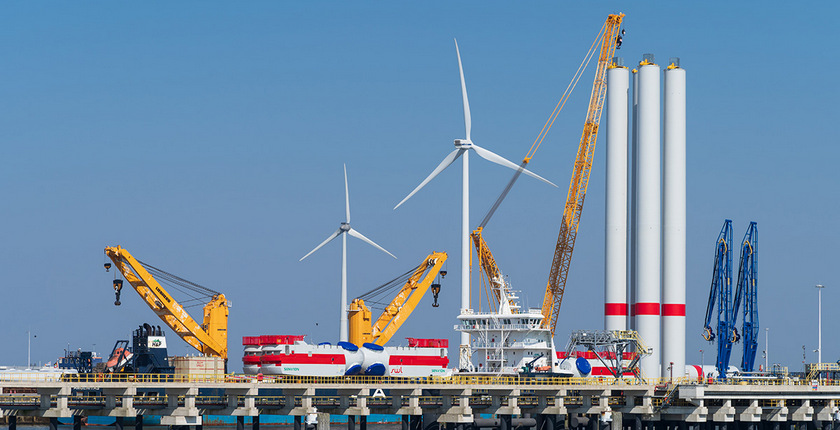
Europe needs to increase investment in ports and shipbuilding, which play a crucial role in offshore wind development, to achieve its goals in this energy segment, according to wind industry association WindEurope. The European Commission’s upcoming strategies for ports and the maritime industry are expected to create conditions for the necessary investment.

The European Union aims to increase its offshore wind capacity from 36.6 GW to 84 GW by 2030, but one of the most pressing challenges it faces is the lack of timely investment in vessel manufacturing and port infrastructure, WindEurope warns.

To meet its 2030 energy security targets, the EU must install at least 10 GW of offshore wind each year. After 2030, this figure will have to increase to 15 GW a year, says WindEurope, noting that robust and resilient port infrastructure and supply chain are key for the achievement of the offshore goals.

After 2030, the EU will have to install 15 GW of offshore wind a year

Over the past three years, over EUR 6.7 billion has been invested in port infrastructure and new vessels across the EU, but a further EUR 6.4 billion is required, the association explains, noting that the European Commission is now working on its EU Ports Strategy.

All offshore wind equipment is transported through ports, and they often serve as bases for the operation and maintenance of offshore wind farms. Ports also host local wind energy supply chains and offer space to store and, in the case of floating turbines, assemble large components, the association notes.

Investment in port infrastructure over the past three years has amounted to EUR 4.4 billion, which can ensure that the EU meets its offshore wind targets, but an additional EUR 2.4 billion is needed to put the bloc on track to achieve post-2030 offshore deployment goals, according to WindEurope.

To make this happen, the EU’s strategy must seek to mobilize additional funding, streamline permitting, and establish planning at the EU level, the association recommends.

A further EUR 4 billion in investment is needed for new ships to handle next-generation wind turbines

When it comes to vessels, they should be a key area of focus in the EU Industrial Maritime Strategy, which aims to enhance the competitiveness, sustainability, and resilience of Europe’s maritime manufacturing sector, WindEurope says.

In the past three years, the EU has invested at least EUR 2.3 billion in new vessels, but it will have to spend a further EUR 4 billion to keep pace with wind turbine technology innovation and handle the upcoming generation of turbines with capacities exceeding 15 MW, it explains.

The strategy should also enable the decarbonization of maritime operations by supporting the shift to clean fuels, such as electricity, ammonia, and hydrogen, and by providing funding for retrofitting vessels and building new zero-emission ships, according to WindEurope.
by in News

WindEurope seeks next CEO as Giles Dickson to depart

Chief Executive Officer of WindEurope Giles Dickson has decided to step down after 10 years, to become a school teacher. The Board of Directors of WindEurope has initiated the process of finding his successor.

Giles Dickson has been instrumental in the expansion of wind energy in Europe – onshore and offshore – and played a key role in the development of Europe’s ambitious renewable energy plans, the organization said. The board established a nomination committee to find the new CEO. The current chief executive of WindEurope is remaining in his post throughout this process, until he steps down during the second half of 2025, the update adds.

“I’m incredibly proud of the progress wind energy has made in Europe in the past 10 years. I thank everyone at WindEurope for their engagement and support and the many people who have helped take wind energy forward during my tenure. Having spent most of my working life outside the UK, I look forward to going home and trying to put something back into the society I came from. But wind is a fantastic industry that it is a privilege to serve,” Giles Dickson said.

The number of jobs in the wind industry is expected to reach 600,000 in 2030

Chair of the Board of Directors Henrik Andersen praised the outgoing CEO for his contribution to WindEurope and the expansion of wind across the continent.

“It is a testament to Giles’ passion for and dedication to the energy transition that he will now help ensure a smooth succession and leave a stronger WindEurope than when he arrived. Europe is facing a generational challenge of becoming competitive and secure again, which wind energy plays a key role in, and I’m therefore very pleased we’ll have a wind energy champion like Giles to educate our future generations,” he stated.

Wind energy accounts for 20% of the electricity Europe consumes, and thanks to wind, the European Union avoids 100 billion cubic meters of fossil fuel imports, WindEurope pointed out.

The industry provides 370,000 jobs and the number is projected to reach 600,000 in 2030. The wind power sector contributes EUR 52 billion to Europe’s gross domestic product, the organization added. On average, each new wind turbine adds EUR 16 million to the European economy and the industry’s 250+ factories are all over Europe, including in economically-deprived regions, it stressed.

by in News

EU outlines measures for 90% emissions cut by 2040

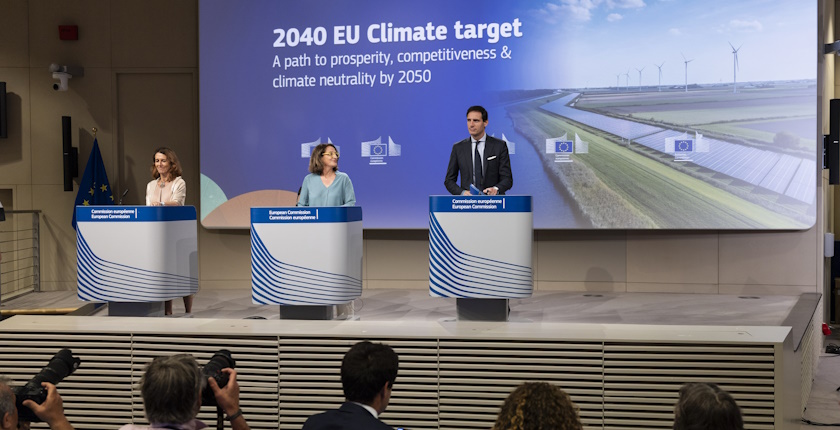
The European Commission proposed an amendment to the European Climate Law, setting a 2040 target of a 90% reduction in net greenhouse gas emissions from the 1990 level. The outlined measures would give certainty to investors, promote innovation and business competitiveness and increase energy security, according to the European Union’s executive body.

The EU is closing in on its 2030 goal to slash annual net emissions by 55% from the 1990 baseline, according to the European Commission’s recent report on national energy and climate plans (NECPs). It is part of the efforts to reach climate neutrality by mid-century. Today the EU’s top executive body formally outlined the proposal for the next intermediate target – 90% by 2040.

It is in the form of an amendment to the European Climate Law, which entered into force in July 2021. In the meantime, the 27-member bloc adopted a 2030 legislative package known as Fit for 55.

The European Parliament and the Council of the EU now need to discuss and adopt the amendment.

Nature-based and industrial carbon removals will play an increasingly important role in reaching the targets, the European Commission pointed out. It implies domestic permanent carbon removals within the Emissions Trading System (EU ETS) to compensate for residual emissions from hard-to-abate sectors. Such systems need to scale up significantly by 2040, the commissioners said.

More pragmatic, flexible trajectory toward 90% reduction in emissions by 2040

The proposal sets out a more pragmatic and flexible way to reach the milestone, the European Commission claimed.

“Aligned with the EU Competitiveness Compass, Clean Industrial Deal and Affordable Energy Action Plan, the proposed 2040 climate target takes fully into account the current economic, security and geopolitical landscape and gives investors and businesses the predictability and stability they need in the EU’s clean energy transition. By staying the course on decarbonisation, the EU will drive investment in innovation, create more jobs, growth, increase our resilience to impacts of climate change and become more energy independent,” the statement adds.

Von der Leyen said industry and investors require a predictable direction on the path to the climate goal

“As European citizens increasingly feel the impact of climate change, they expect Europe to act. Industry and investors look to us to set a predictable direction of travel,” said European Commission President Ursula von der Leyen.

Today’s proposal is based on an impact assessment and advice from the Intergovernmental Panel on Climate Change (IPCC) and the European Scientific Advisory Board on Climate Change. The adoption follows engagement with member states, the European Parliament, stakeholders, civil society and citizens since the commission’s recommendation in February 2024.

EU eyeing international carbon credits

The commission vowed to consider a limited role for high-quality international carbon credits, starting in 2036, and greater flexibility across sectors to help achieve targets in a cost-effective and socially fair way. For instance, a member state would have the possibility to compensate for a struggling land use sector with an overachievement in reducing emissions from waste and transportation.

Emphasis is also on the competitiveness of the European industry and a level playing field with international partners. Among the guidelines is technological neutrality.

Fiscal incentives are under consideration for clean tech and industrial decarbonization projects.

The commission highlighted its Clean Industrial Deal State Aid Framework, adopted last week, and the simplification of the Carbon Border Adjustment Mechanism (CBAM). It also issued a recommendation on tax incentives for investments in clean technologies and industrial decarbonization.

Measures on affordable energy to scale up manufacturing of grid components and support power purchase agreements, the pilot for the upcoming Industrial Decarbonisation Bank, the forthcoming Chemicals Industry Action Plan and the sectorial dialogues with stakeholders are among the actions that will help deliver the Clean Industrial Deal, the commissioners explained. Their draft seven-year budget, officially called Multiannual Financial Framework, is due to be unveiled next month.

WindEurope urges for annual targets for renewables

Reacting to the announcement, WindEurope said EU member states would need to translate the 90% ambition into clear annual goals for the deployment of wind and other renewables for the period 2031-40.

“Otherwise the 2040 target will remain academic,” the organization underscored.

  • 1
  • 2