by in News

Billot: Balkans is key region for Nordex

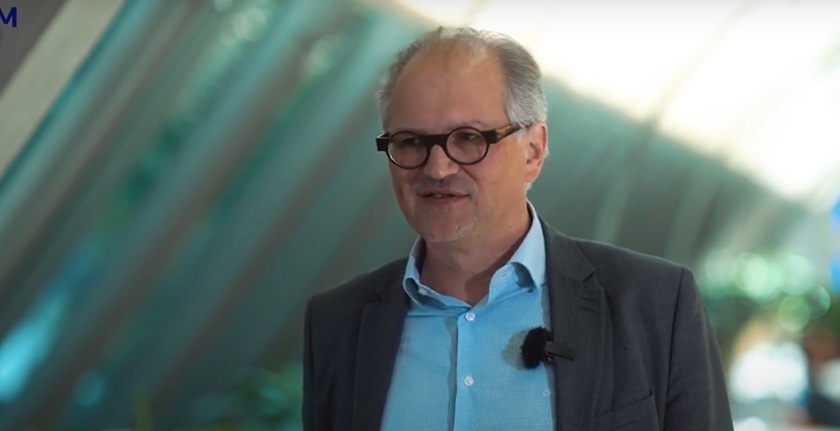
This year Nordex Group is celebrating its 40th anniversary as one of the largest wind turbine manufacturers in the world. “We’re number one in Europe and the Balkans is actually a key region for us,” Christopher Billot, Sales Director for the Mediterranean region of Nordex Group, said at Belgrade Energy Forum 2025.

Nordex installed its first N27 turbine with a capacity of 250 kW in 1986, just one year after the company was founded. In 1995, it became the first in the world to start serial production of a megawatt-class turbine. Today, the capacity of its units ranges from 4 MW to 7 MW.

Christopher Billot noted that the company has been manufacturing wind turbines for the last 40 years.

Nordex entered the Balkans 10 years ago

“We’re number one in Europe and the Balkans is actually a key region for us where we focus intensively. We’ve been there for the last 10 years, and so far we have achieved up to 1 GW of wind turbine installation but also construction across Croatia, Montenegro, and Serbia,” Billot stated.

Nordex is spreading within the region and that’s key, in his words, for the company and its future in the region and overall.

[wpcc-iframe title=”Christopher Billot, Director Sales Region Mediterranean, Nordex Group at Belgrade Energy Forum 2025″ width=”500″ height=”281″ src=”https://www.youtube.com/embed/rUDrekSnYGI?feature=oembed” frameborder=”0″ allow=”accelerometer; autoplay; clipboard-write; encrypted-media; gyroscope; picture-in-picture; web-share” referrerpolicy=”strict-origin-when-cross-origin” allowfullscreen=””]

“We’re happy to be a silver sponsor of the Belgrade Energy Forum. This is for us a great opportunity to network and to basically partner with all the institutions, clients, and continue to grow and build the network for growth in the Balkans,” Billot stressed.

The global company has marked its 40th anniversary at the recently held Belgrade Energy Forum 2025 (BEF 2025), affirming its commitment to the region.

Helping the pioneering steps in renewables development

Nordex installed and contracted an overall 1 GW in Croatia, Montenegro, and Serbia, encompassing 222 wind turbines across 16 wind farms. Looking at the company’s portfolio, it can be said that it plays a pioneering role in the development of renewable energy sources in the region.

Here are a few examples.

In November last year, it signed an agreement with Montenegro’s state-owned power utility Elektroprivreda Crne Gore (EPCG) for its first wind farm, Gvozd, with a capacity of 54.6 MW. The contract is worth EUR 46.4 million.

A few months earlier, it was announced that Nordex would participate in the expansion of the largest wind farm in Serbia. It received an order for 22 turbines with a total capacity of 154 MW for the Čibuk 2 project. The investors are Masdar and Taaleri SolarWind III Fund.

Nordex was also a partner to Croatian state-owned Hrvatska Elektroprivreda (HEP) in building its first wind power plant. The contract for the delivery of 18 wind turbines with a total capacity of 58 MW for the Korlat wind farm was signed in July 2019.
by in News

Interenergo launches its first wind farm in Bosnia and Herzegovina

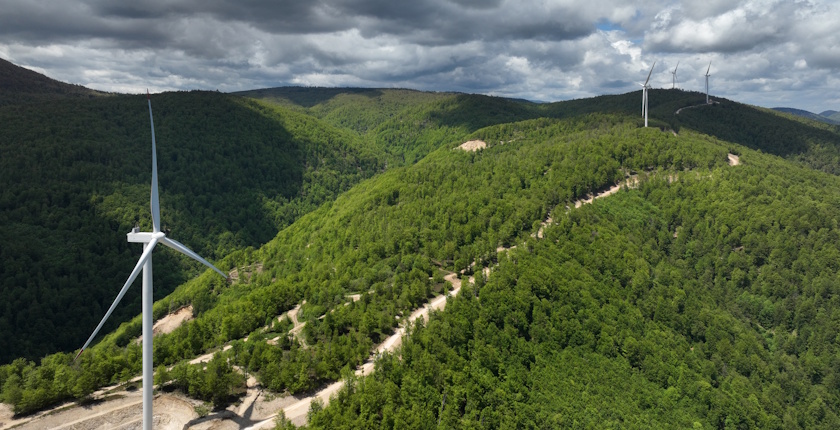
The Ivan Sedlo wind farm, located on the mountain of the same name in the municipality of Hadžići, is the first power-generating wind facility in Sarajevo Canton. The project was developed by Slovenian company Interenergo, owned by Austria-based energy group Kelag. It is it’s first wind power plant in Bosnia and Herzegovina.

With a total installed capacity of 25 MW, the wind farm is equipped with five Siemens Gamesa 5.0 turbines. According to the company’s update, the wind farm will generate enough green electricity to power approximately 11,000 households in Bosnia and Herzegovina and prevent over 32,000 tons of CO2 emissions annually.

The construction of the Ivan Sedlo wind farm began in late September 2022, following more than six years of preparation. Interenergo acquired the project from the previous investor, Suzlon Energy BH, a company owned by Danish firm Suzlon Wind Energy.

“We’re proud to launch our first wind project in Bosnia and Herzegovina. Despite challenging site conditions, the project was delivered without major delays or compromises in quality. This achievement reflects the strong cooperation we’ve built with the Municipality of Hadžići and the surrounding communities, whose support was vital throughout the development process”, stated David Huber, Director of Interenergo.

According to him, the wind farm is expected to generate over 65 GWh annually, marking a significant milestone in the development of clean energy for Hadžići, Bosnia and Herzegovina, and the wider Balkan region.

Photo: Interenergo

“The importance of the investment for the local community is diverse — from a cleaner environment and new jobs to additional funds for the Municipality of Hadžići’s budget. I believe this is just the beginning, as we have a clear goal: the development of environmentally sustainable, long-term profitable, and socially responsible energy solutions. We also have the potential and the will to continue in that direction,” said Eldar Čomor, Mayor of Hadžići.

Nihad Uk, the prime minister of Sarajevo Canton, emphasized at the inauguration that projects like this are becoming increasingly important because, as he said, it’s not a question of years, but months before the European Union introduces so-called carbon taxes.

Interenergo has been active in the Bosnia and Herzegovina market since 2007.  Today, in addition to the wind park, the company operates eight hydropower plants with a total capacity of 43 MW and an average annual production of over 125 GWh — enough to supply more than 31,000 households and avoid 61,500 tons of CO2 emissions each year.

By 2032, Interenergo plans to develop new renewable energy projects across the region, aiming to add more than 300 MW of new capacity.

by in News

SANY Renewable Energy makes successful breakthrough in European market

SANY Renewable Energy, one of the world’s top five onshore wind turbine manufacturers, made its debut at Belgrade Energy Forum 2025 (BEF 2025) on May 14-15, showcasing its cutting-edge wind power technology and integrated solutions to the European market.

At BEF 2025, SANY attracted significant interest from various stakeholders thanks to the Alibunar 1 and Alibunar 2 wind farm projects, the company’s first investments in Serbia, which is one of the key markets for SANY in Europe.

SANY’s attendance at BEF 2025 not only demonstrates its competitiveness in the global clean energy industry but also lays a solid foundation for further expansion in the European market.

Innovative technology attracts attention as SANY gains broad interest from developers

As the most influential energy event in Serbia and the Balkans, BEF 2025 brought together government agencies, energy companies, and industry experts to discuss Europe’s energy transformation and sustainable development. At the event’s exhibition area, SANY focused on showcasing its large-megawatt smart wind turbines, smart wind farm management systems, and energy storage solutions. Its high power generation efficiency, low levelized cost of electricity (LCOE), and intelligent operation and maintenance drew the attention of numerous participants.

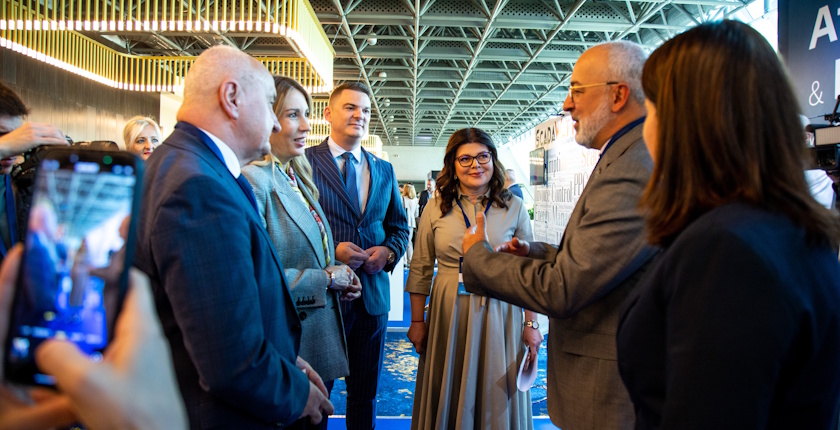
Serbian Minister of Mining and Energy Dubravka Đedović Handanović said during her visit to the SANY booth that the company’s wind power technology is impressive and highly consistent with Serbia’s renewable energy development goals.

“We look forward to working with such leading international companies to accelerate the country’s green energy transformation,” stated Đedović Handanović.

Deepening European presence and supporting carbon-neutrality goals

In recent years, SANY has continued to increase its development and growth in the European market. This high-profile appearance at BEF 2025 sends a clear signal of strengthening regional cooperation. During the forum, company representatives held multiple rounds of negotiations with energy companies and investment institutions in Serbia and neighboring countries to discuss planning and possible project and technical cooperation.

“Europe is a key market for the development of renewable energy. SANY Renewable Energy’s goal is to help customers achieve economic feasibility while increasing efficiency with its high-quality products and customized services,” said Paulo Soares, Managing Director of SANY Renewable Energy Europe.

“We are looking forward to working with all stakeholders in Serbia to jointly promote the global carbon neutrality concept,” he stressed.

Industry analysts believe that as the demand for renewable energy in Europe continues to grow, SANY is expected to capture a larger market share in Europe with its high-reliability wind turbines, intelligent operation and maintenance, and localization strategy, and become an important promoter of the global green energy transformation.

by in News

Citizens, activists in Bulgaria oppose wind farm project that would destroy forest

In the municipality of Avren in Bulgaria, citizens and activists will gather on May 18 to express their opposition to a plan to build a wind farm with 29 turbines, which implies the clearing of 30 hectares of forest.

The eastern Bulgarian municipality of Avren is home to valuable forest ecosystems and it lies along one of the most important bird migration routes in Europe – the Via Pontica. A local forest protection initiative, which is organizing a protest on May 18 against a wind farm project, said the decision to change the forest land designation was made without public consultation or an environmental impact assessment, arguing it was against the law.

The said natural resources are of both national and international importance for biodiversity conservation and maintaining the ecological balance of the Black Sea region, protest organizers claim. Although the wind farm project may appear green at first glance, the construction of 29 turbines would require cutting down 30 hectares of forest, they warned. Moreover, the project is located near protected areas within the Natura 2000 network and intersects a key migratory route for birds.

Nearly 9,000 citizens have signed a petition calling for a moratorium on projects affecting forests

Almost 9,000 citizens have signed a petition demanding a moratorium on all projects affecting forests in the area until a comprehensive assessment of cumulative environmental impacts is conducted. They are calling for the suspension of the procedure to amend the general urban development plan and for halting the project, which they deem illegal and harmful to both nature and people.

They are demanding a full and independent environmental impact assessment, including a compatibility evaluation with Natura 2000, the organization of a transparent public debate involving the local community, scientists, and environmentalists, as well as to consider alternative locations outside of sensitive ecological zones.

On the other hand, the company developing the project claims the turbines would be equipped with thermal cameras and sensors to detect approaching birds, and that the wind turbines would automatically shut down if necessary. It added that the minimum distance from residential areas would be between 850 and 1,200 meters, in line with regulations.

The local authority supports the wind farm project. Mayor Emanuel Manolov said about fifty jobs would be created and that the local budget would receive between EUR 1 million and EUR 1.5 million annually.

A protest was also held in Kyustendil against wind and solar projects in nearby mountain areas

Citizens of the Kyustendil municipality have also voiced their opposition to wind turbines. On April 30, a protest was held in Kyustendil against the construction of a wind farm on Osogovo mountain and the expansion of a solar power plant on the Konjavska mountain. The municipal leadership and assembly have supported the citizens’ demands.

Bulgarian citizens have been fighting wind turbines for over a decade

Since 2012, no new wind farms have been put into operation in Bulgaria, mainly due to administrative barriers and legal uncertainty. Late last year, citizens from four districts – Dobrich, Silistra, Shumen, and Varna – protested in Varna, demanding a referendum on the construction of solar and wind power plants on agricultural land.

Earlier, the municipal assembly of Dobrichka (also known as Dobrich-selska – Dobrich rural) voted to ban the conversion of agricultural land into construction land for wind farms. A similar decision was made by the local parliament in General Toshevo. German company wpd plans to install wind turbines in both municipalities.

In 2023, authorities in Vetrino blocked CWP’s massive wind energy project. That same year, a draft law on offshore wind power in Bulgaria sparked opposition from fishermen, the tourism industry, nongovernmental organizations, and local authorities in the coastal city of Varna and its surroundings. It contributed to the fall of the government at the time, and the legislative process didn’t get far.

Citizens in other countries covered by Balkan Green Energy News are also resisting wind power projects. Last year, residents of several villages near Livno in Bosnia and Herzegovina managed to halt the planned construction of the Orlovača wind farm. Around the same time in Serbia, the Ministry of Environmental Protection issued nature protection conditions that prevented the construction of the Čestobrodica wind farm.

by in News

Nordex Group – from a sketch on the wall to a leading Western wind turbines developer

Nordex Group, one of the largest wind turbine manufacturers in the world, is celebrating its 40th anniversary. The company’s portfolio in Croatia, Serbia and Montenegro recently reached a total of 1 GW in installed capacity and projects under development, underscoring Nordex’s strong commitment to supporting Southeastern Europe’s energy transition goals.

Nordex will participate in the leading regional conference, the Belgrade Energy Forum, and take this opportunity to mark this milestone. At the event, Anne-Catherine de Tourtier, Vice-President Mediterranean, will contribute to discussions as a panelist, and the company will host an anniversary celebration.

It was back in the early eighties, in Denmark, that Flemming Pedersen and his two sons, Carsten and Jens, had a vision: develop innovative products that could generate electricity in a cost-effective way while protecting environment. To put this idea into practice, they devised a wind turbine which they first sketched on a wall.

They built the first 65 kW turbine, installed on the family property and made it work.

This was the starting signal ; in 1985, Carsten and Jens Pedersen founded Nordex A/S in Give, laying the foundations for Nordex as a company.

The founders had a vision to generate cost-effective power with no impact on the environment

A lot has changed in 40 years. Nordex Group has become one of the world’s leading Western manufacturers of wind turbines, successful around the globe and the market leader in Europe. Technology and the industry have been developed at an impressive pace.

Electricity from wind power has become cost competitive. A strong focus on innovation and cost of energy (COE) has significantly reduced the cost per kilowatt-hour, turning wind into the cheapest source of electricity in many regions.

A crucial role in protecting the planet from climate change

One thing has not changed in the four decades of the Nordex story: Developing and delivering clean power plants that make 100% renewable energy a reality for the world, is still the shared mission and driver of today’s more than 10,900 Nordex Group employees, and its valued partners and clients around the globe.

The company kicked off the 40th anniversary series by thanking its customers, suppliers, colleagues and friends who have made its journey of innovation and growth possible.

“A special thank you to the Pedersen family for following a vision and believing in a technology that was once perceived by many as an utopian dream, and today recognized as playing a crucial role in protecting our planet from climate change, safeguarding it for generations to come!” said Vice-President Mediterranean Anne-Catherine de Tourtier, who will participate at Belgrade Energy Forum next month.

The first Nordex-branded wind turbine

In 1986, just one year after the company was founded, the first Nordex-branded wind turbine started to produce energy. Developed by the visionary Pedersen brothers and Nordex’s inaugural employee, Knud Buhl Nielsen, the N27 marked the beginning of a groundbreaking journey towards sustainable energy production.

The firm rented the tallest crane in Denmark to lift the first N27 turbine in 1986

Looking back on this milestone, Carsten Pedersen fondly recalls“The first real Nordex turbine was the N27 with a rotor diameter of 27 meters, on a 30-meter tubular tower which we erected at our factory in 1986. At that time, it was one of the biggest turbines on the market and we thought that it was really big. We had to rent the tallest crane in Denmark to erect it.”

From today’s perspective, the whole development process in the early stages of Nordex seems truly adventurous. In the absence of a computer, the design was done by hand, and the loads were calculated using a pocket calculator.

However, it’s safe to say that both processes were conducted thoroughly and expertly. “The turbine actually kept running for 30 years, as we did not dismantle it until 2016,” remembers Jens Pedersen.

Three decades since the company’s first 1 MW wind turbine

Looking back, based on the first steps with the N27, it seems that “thinking big” was the beginning of the Nordex Group natural approach. A further humble milestone was accomplished today: 30 years of producing turbines of the megawatt class. In 1995, Nordex introduced the worldwide first series-produced megawatt turbine, the N52, with 1 MW.

Today, Nordex’s Delta4000 series boasts a rated power more than 45 times that of the N27, showcasing the remarkable advancements in technology and engineering expertise. Over the past 40 years, the rotor diameter has increased 6.5-fold, reaching an impressive 175 meters, with its swept area increasing accordingly by a factor of 42. Today, Nordex wind turbines are manufactured with capacities ranging from 4 MW to 7 MW.

Anniversary celebration at BEF 2025 is affirming Nordex’s commitment to the Balkans

The global company is marking its 40th anniversary at the upcoming Belgrade Energy Forum, affirming its commitment to the Balkans.

Vice-President Mediterranean Anne-Catherine de Tourtier is one of the speakers in the panel discussion ‘Energy revolution underway – uniting efforts to deliver green, intelligent and sustainable energy solutions’.

Organized by Balkan Green Energy News, BEF 2025 will be held on May 14 and 15 in Serbia’s capital city.

Belgrade Energy Forum is a central meeting point for representatives of regional and international institutions, organizations and the business community from the region, Europe, and beyond.

Make sure you register on time via this link.

In the evening on May 14, Nordex is organizing its anniversary celebration party for all the participants at the conference.

The group is actively focusing on the Balkan market, with a robust presence across the region, currently involved in six projects in Croatia, three in Serbia, and one in Montenegro.

“We have successfully contracted 1 GW in Serbia, Croatia, and Montenegro, encompassing 222 wind turbines across 16 wind farms. Our team in the Balkans region has grown to over 30 employees, reflecting our significant investment in local talent and development,” said Managing Director for Serbia Vladimir Kolarević.

Nordex highlighted the Balkans as one of its key growth areas, with several ongoing projects in other countries within the region as well. As a crucial partner in the energy transition, the wind turbine manufacturer leverages its footprint and network in Croatia, Serbia, and Montenegro to enter new markets and drive sustainable development, according to the update.

The company is listed on the Frankfurt Stock Exchange, and has installed so far 57 GW of wind power capacity in over 40 markets.

In Turkey, one of its manufacturing hubs, Nordex received orders for more than 1 GW in 2024. And then 750 MW was booked in the country just in the first quarter of this year.

As for the other markets tracked by Balkan Green Energy News, a notable example is Greece, where Nordex surpassed 1 GW.

by in News

Turkey to manufacture green hydrogen, nuclear, CCS equipment

The 2030 Industry and Technology Strategy includes setting up industrial facilities in Turkey for nuclear energy, green hydrogen, battery storage and carbon capture and storage (CCS). The country is planning to establish a value chain for critical raw materials. The government vowed to support the development of semiconductor technology, autonomous and flying vehicles and cybersecurity solutions, alongside innovations for electric vehicles and solar and wind power.

With its recently unveiled 2030 Industry and Technology Strategy, Turkey announced the ambition to upgrade its industrial production to one of the most advanced in the world. As Russia’s Rosatom is completing the country’s first nuclear reactor in Akkuyu, the government is planning to develop its own technology in the segment.

The strategy involves setting up industrial clusters for equipment and infrastructure. Among the possible technologies are molten salt reactors. The Scientific and Technological Research Council of Türkiye (TÜBİTAK), Turkish Energy, Nuclear and Mineral Research Agency (TENMAK) and Istanbul Technical University (İTÜ) are tasked with establishing a nuclear tech park.

Green hydrogen mostly needed for decarbonizing hard-to-abate industrial production

TÜBİTAK is responsible for developing domestic electrolyzers as well. The national hydrogen program is set to bring support for integrating the production of green hydrogen, storage, transportation and consumption. The last of the four is especially focused on energy-intensive industries such as steel, petrochemicals and fertilizers.

Another segment that would get incentives is the use of hydrogen in fuel cell vehicles including heavy vehicles. The strategy envisages setting up pilot zones for green hydrogen production, with electrolyzers powered by wind and solar energy.

Turkey has high ambitions for high-tech exports

Turkey has revealed the goal of tripling its high-tech exports to USD 30 billion by the end of the decade. It is part of an ambition to lift industrial exports to USD 400 billion from last year’s USD 247 billion. At the same time, the government’s target for the overall valuation of domestic tech startups is USD 100 billion.

The 2030 Industry and Technology Strategy has other chapters, too, like carbon capture, utilization and storage (CCUS or just CCS), access to critical raw materials, semiconductor and battery manufacturing and cybersecurity. Officials vowed to continue prioritizing domestic electric vehicles, but with investments in autonomous operation systems and even flying cars.

Cybersecurity solar and wind turbine technologies. Turkey apparently remains dedicated to expanding the industrial base for solar panels and wind turbines as well.

by in News

GWEC: Record wind power capacity was installed globally in 2024

New wind turbine installations reached an all-time high 117 GW last year, slightly above the 2023 level, Global Wind Energy Council (GWEC) revealed in its annual report. According to its calculations, China’s share in the additions was 68.2%. At the end of December, the country hosted 45.8% of all wind power capacity, which climbed to 1.14 TW.

The Global Wind Energy Council’s flagship Global Wind Report showed that new capacity hit a record in 2024 for the second time in a row, following two years of declines. The additions came in at 117 GW, compared to 116.6 GW in 2023. Global wind power capacity grew to 1.14 TW, GWEC found.

On the other hand, new offshore wind, 8 GW, was down from the previous 10.8 GW. The segment amounted to 8.8 GW in 2022 and the record 21.1 GW was achieved one year earlier.

In the new outlook, this year’s total new capacities are seen at 138.2 GW, climbing each year to hit a whopping 194.1 GW in 2030.

The new capacities in the update for 2024 are slightly different than in the statistics that the International Renewable Energy Agency (IRENA) published a month ago. Namely, it deducts decommissioned facilities from the additions, while GWEC doesn’t. Still, IRENA’s total offshore wind capacity is 3.8 GW lower than GWEC’s 83.2 GW. The onshore figure is negligibly higher, by 1.1 GW – GWEC measured 1.05 TW.

Photo: GWEC

GWEC warns of from tariffs risk, ideologically driven attacks on wind and renewables

GWEC warned of increasing policy instability in some markets, and pointed to the need to improve permitting, grid transmission and auctioning mechanisms to keep pace with the global trend for electrification, meet countries’ energy and climate targets and lessen reliance on volatile fossil fuels, while fulfilling globally agreed ambitions to triple renewable energy capacity by 2030.

The council pointed out that the headline numbers mask big disparities, with the lion’s share of installations taking place in a small number of key mature markets, including China and Europe.

Blackwell: Halting projects that are under construction threatens investment certainty

“While wind energy continues to drive investment and jobs, improve energy security and lower consumer costs, we are seeing a more volatile policy environment in some parts of the world, including ideologically driven attacks on wind and renewables and the halting of under construction projects, threatening investment certainty,” said GWEC’s Chief Executive Officer Ben Backwell.

He stressed that the impact of the tariff wars has yet to be calculated, and urged decision makers to ensure a stable market and free and fair trade.

China’s share of global capacity nearing 50%

New installations were registered in 55 countries. China maintained its absolute dominance: it added 79.8 GW, translating to 68.2% of the total. Moreover, at the end of December it hosted 521 GW of wind power or a stunning 45.8% of global capacity. IRENA’s data shows the shares at 70.5% and 46.1%, respectively.

On the global scale, the United States is a distant second in wind power additions, at 4.1 GW, as well as the overall capacity: 154.3 GW. The following three are Germany (4 GW), India (3.4 GW) and Brazil (3.3 GW), which surpassed Spain.

The United States is a distant second in both wind power additions and overall capacity

Europe’s new installations in 2024 were 13.8 GW, after 14.5 GW in the previous year. The overall capacity advanced to 251 GW. The region includes Turkey, which surged by 1.31 GW to 13.7 GW. The country accounted for 1.1% of all new capacity last year, earning it a spot in the top ten in the category.

Excluding China, onshore wind volume awarded in auctions and other procurement mechanisms doubled in 2024 to a record 53.5 GW, GWEC said. In Europe, it jumped 24% to 17 GW. Germany accounted for 11 GW. The offshore segment also hit an all-time high, 56.3 GW. Europe led the way with 23.2 GW, against 17.4 GW in China.

Photo: GWEC

Last year’s auctions may boost dormant floating wind power market

The rise of the floating wind turbine technology is stalling, as only 41.8 MW was installed. The level is similar to the previous year.

However, floaters accounted for 1.9 GW of the awarded capacity, of which 750 MW for three projects in France, 750 MW in South Korea and 400 MW in the United Kingdom, for Green Volt. It is the world’s largest proposed floating wind power investment, at up to 560 MW.

The 25.2 MW Provence Grand Large facility of three SGRE turbines was commissioned offshore France. Mingyang installed its 16.6 MW V-shaped floating turbine OceanX near Guangdong. After that, early this year, China Railway Rolling Stock Corp. (CRRC) installed a 20 MW floating turbine at a testing site offshore Shandong.

One technological breakthrough after another in China

GWEC highlighted other technological breakthroughs in China as well. Some new offshore turbines of 18 MW to 20 MW were first deployed while a batch of 16 MW machines also came online.

Dongfang Electric presented the largest (offshore) wind turbine, of 26 MW, while Goldwind manufactured the first 22 MW unit in December. Onshore, 10 MW models are scaling up, and SANY installed a 15 MW prototype. Of note, the Chinese company is participating at the upcoming Belgrade Energy Forum (BEF) in Serbia, on May 14 and 15, where it will have a stand.

The world’s highest wind farm, at an altitude of 5,200 meters, was commissioned in Tibet.

CRRC started testing a 20 MW floating wind turbine early this year

Mingyang (also known as Ming Yang) introduced wind blades of 143 meters in February 2024. Next, Goldwind and Sinoma Blades passed the static load test with 147-meter pieces.

SANY commissioned the world’s largest wind turbine test bench, for 35 MW. A 40 MW platform is under construction in Shantou, Guangdong.