by in News

Enercon inks first delivery of its 7 MW wind turbines to Turkey

Enercon received the first order from Turkey for its latest, 7 MW wind turbines, from Reges Elektrik.

The agreement with Reges Elektrik is for the first deployment of Enercon’s 7 MW onshore turbine in Turkey, according to the German wind turbine producer. At the same time, it is the Turkish company’s first wind energy investment.

Enercon and Reges Elektrik have launched a strategic partnership by signing a turbine supply agreement for the Demirli wind farm to be constructed in Kırşehir.

Under the deal, Enercon will supply ten of its new E‑175 EP5 E2 wind turbines, totaling 70 MW of installed capacity.

The new top model is among the highest yielding onshore wind turbines in Europe

It is the first collaboration between the two companies. The agreement was signed at Reges Elektrik’s headquarters in Istanbul.

According to Enercon, featuring a large rotor diameter of 175 meters, advanced engineering solutions, and high energy yield, the E‑175 EP5 E2 stands as its most powerful and efficient onshore turbine to date.
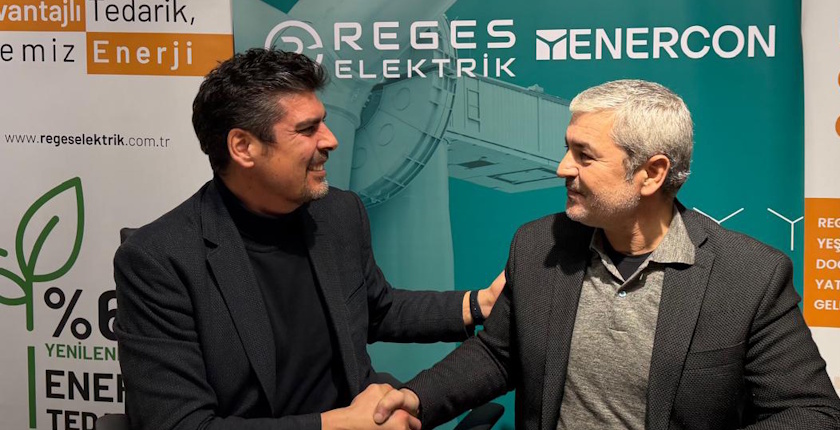
turkey enercon reges elektrik contract Arif Günyar Mustafa Ünal
Arif Günyar and Mustafa Ünal (photo: Enercon)

It is among the highest-yielding onshore wind turbines in Europe, the German company claimed.

Ünal: The agreement represents a significant milestone for Reges Elektrik as it makes its first investment in wind energy

Arif Günyar, Enercon Regional Head for Central Asia, the Middle East and Africa (CAMEA), thanked Reges Elektrik for its trust in his company’s technology.

“We look forward to strengthening our cooperation through future projects,” he added.

According to Mustafa Ünal, Chairman of the Board of Reges Elektrik, the agreement represents a significant milestone for his firm as it makes its first investment in wind energy.

“Partnering with Enercon and deploying the E-175 EP5 E2 turbines aligns perfectly with our long-term vision to expand our renewable energy portfolio with high-efficiency, future-proof technologies,” he stressed.

Of note, Enercon has installed wind turbines with a total capacity of 60 GW in more than 50 countries around the world.
by in News

From Austria to Albania: Verbund, Nordex to deploy 105 wind turbines across Europe

Verbund Green Power has forged a partnership with Nordex Group for the potential procurement of wind turbines.

Verbund Green Power, a subsidiary of Austrian state-owned energy utility Verbund, has entered into a multiyear framework agreement with leading wind turbine producer Nordex Group for the potential procurement of wind turbines of up to 700 MW in total capacity, according to a joint press release.

The agreement runs through 2030.

The power plants are planned in six markets

The agreement was officially signed in Verbund Green Power’s Madrid office by Dietmar Reiner, Managing Director of Verbund Green Power, and José Luis Blanco, CEO of Nordex Group.

They expressed willingness to facilitate the supply and delivery of up to 105 Nordex onshore wind turbines for Verbund Green Power’s wind projects. They are are planned in Austria, Germany, Spain, Italy, Romania and Albania, the update reads.

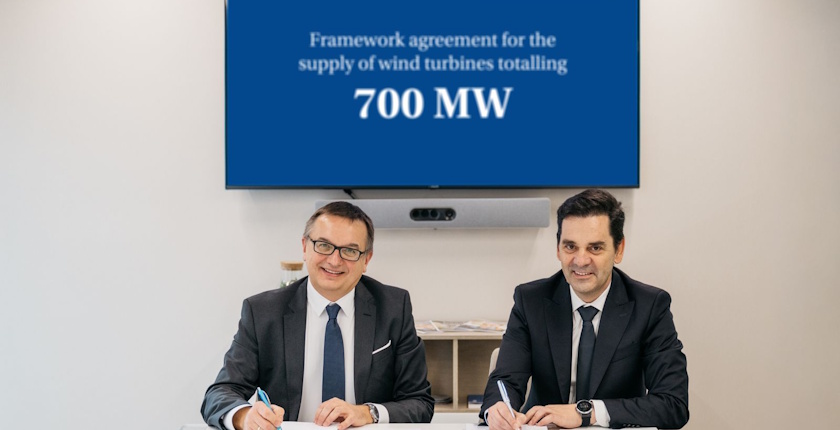
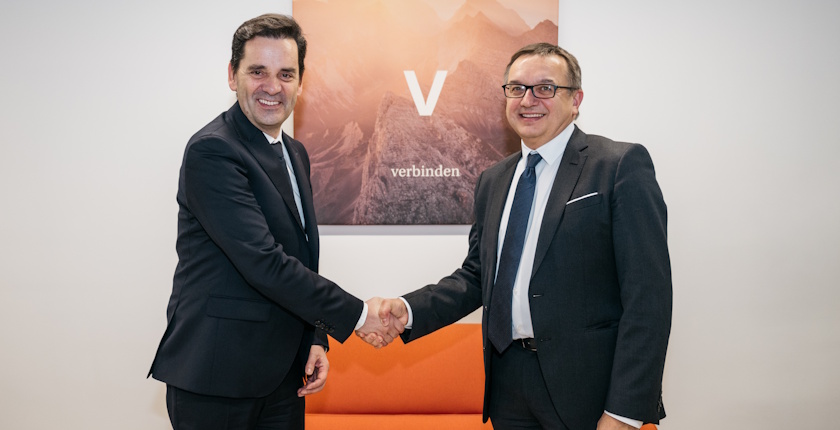
europe verbund nordex Dietmar Reiner José Luis Blanco
José Luis Blanco and Dietmar Reiner (photo: Verbund)

Of note, Christopher Billot, Sales Director for the Mediterranean region of Nordex Group, said at Belgrade Energy Forum 2025 that the Balkans is a key region for his company.

The deal would cover approximately 50% of Verbund Green Power’s wind project pipeline.

Blanco: We’re creating a clear path to deliver reliable, cost-efficient wind energy together with Verbund

Nordex Group CEO José Luis Blanco explained that through this multi‑year framework, the company would provide the turbine capacity to convert an ambitious pipeline into clean generation across six multi‑country markets in Europe.

“With up to 700 MW of our latest 7 MW class onshore turbines slated across Austria, Germany, Spain, Italy, Romania and Albania, we’re creating a clear path to deliver reliable, cost-efficient wind energy together with Verbund through 2030,” he stressed.

Strugl: The collaboration with Nordex strengthens our supply options as our projects mature

Blanco recalled that late last year Nordex received a first order from Verbund for nine N175/6.X turbines for Romania. “We’re expanding our footprint in this country,” he added.

According to Verbund CEO Michael Strugl, the collaboration with Nordex supports his company’s strategic objective of scaling up renewable generation across Europe.

“It strengthens our supply options as our projects mature, allowing us to secure the supply chain in a very competitive environment and deliver on Mission V targets, contributing to a secure and accelerated energy transition in our markets,” Strugl added.

by in News

From Austria to Albania: Verbund, Nordex to deploy 105 wind turbines across Europe

Verbund Green Power has forged a partnership with Nordex Group for the potential procurement of wind turbines.

Verbund Green Power, a subsidiary of Austrian state-owned energy utility Verbund, has entered into a multiyear framework agreement with leading wind turbine producer Nordex Group for the potential procurement of wind turbines of up to 700 MW in total capacity, according to a joint press release.

The agreement runs through 2030.

The power plants are planned in six markets

The agreement was officially signed in Verbund Green Power’s Madrid office by Dietmar Reiner, Managing Director of Verbund Green Power, and José Luis Blanco, CEO of Nordex Group.

They expressed willingness to facilitate the supply and delivery of up to 105 Nordex onshore wind turbines for Verbund Green Power’s wind projects. They are are planned in Austria, Germany, Spain, Italy, Romania and Albania, the update reads.

europe verbund nordex Dietmar Reiner José Luis Blanco
José Luis Blanco and Dietmar Reiner (photo: Verbund)

Of note, Christopher Billot, Sales Director for the Mediterranean region of Nordex Group, said at Belgrade Energy Forum 2025 that the Balkans is a key region for his company.

The deal would cover approximately 50% of Verbund Green Power’s wind project pipeline.

Blanco: We’re creating a clear path to deliver reliable, cost-efficient wind energy together with Verbund

Nordex Group CEO José Luis Blanco explained that through this multi‑year framework, the company would provide the turbine capacity to convert an ambitious pipeline into clean generation across six multi‑country markets in Europe.

“With up to 700 MW of our latest 7 MW class onshore turbines slated across Austria, Germany, Spain, Italy, Romania and Albania, we’re creating a clear path to deliver reliable, cost-efficient wind energy together with Verbund through 2030,” he stressed.

Strugl: The collaboration with Nordex strengthens our supply options as our projects mature

Blanco recalled that late last year Nordex received a first order from Verbund for nine N175/6.X turbines for Romania. “We’re expanding our footprint in this country,” he added.

According to Verbund CEO Michael Strugl, the collaboration with Nordex supports his company’s strategic objective of scaling up renewable generation across Europe.

“It strengthens our supply options as our projects mature, allowing us to secure the supply chain in a very competitive environment and deliver on Mission V targets, contributing to a secure and accelerated energy transition in our markets,” Strugl added.

by in News

Leitwind drives energy independence across Balkans

Leitwind makes wind turbines from 250 kW to 3 MW, engineered to perform efficiently under the full range of wind conditions in Southeastern Europe, from the calm Aegean islands to the stronger continental winds of Serbia, Thrace, or the Danube basin.

The Balkans are entering a new phase of wind energy development — one defined not by the largest turbines, but by smart, flexible, medium-scale solutions. Countries including Greece, Romania, Bulgaria, Serbia, Montenegro, Albania, Bosnia Herzegovina and North Macedonia are rapidly expanding their renewable portfolios while facing grid constraints, curtailment risks, and the growing need for decentralized energy supply.

Industrial zones, coastal communities, and remote mountainous regions increasingly require reliable, locally controlled generation that fits their terrain, their infrastructure, and their energy autonomy goals.

As the only Italian manufacturer of megawatt-class wind turbines, Leitwind offers an engineering approach tailor-made for this landscape — delivering advanced Direct-Drive turbines that combine efficiency, durability, and resilience in even the most demanding environments.

Smarter engineering for tougher terrains

At the center of Leitwind’s technology is its Direct-Drive generator, which eliminates the gearbox entirely — removing the single most failure-prone component in conventional wind turbines.

With fewer mechanical parts, Leitwind turbines ensure:

  • Lower energy losses
  • Minimal maintenance requirements
  • Higher availability and longer operating life

These advantages are especially important in the Balkans, where wind projects often sit atop mountain ridges, on isolated plateaus, or along rugged coastlines. Leitwind’s portfolio — from 250 kW to 3 MW — is engineered to perform efficiently under the full range of regional wind conditions, from the calm Aegean islands to the stronger continental winds of Serbia, Thrace, or the Danube basin.

Leitwind’s engineering philosophy is simple and powerful: Simplify the mechanics. Strengthen performance. Maximize lifetime.

Empowering energy autonomy in industry

A new trend is emerging across the Balkans: industrial self-generation.

Manufacturers, logistics hubs, agricultural units, and food-processing facilities are increasingly adopting on-site energy production to protect against volatile energy prices and grid interruptions.

Leitwind’s medium-scale turbines (250 kW – 2.0 MW):

  • Enable self-generation directly at the point of consumption
  • Integrate seamlessly into microgrids
  • Support both grid-connected and stand-alone operation
  • Require low maintenance, an essential benefit for industrial sites
  • Offer compact footprints suitable for constrained areas

The result is a new level of operational resilience: companies produce clean, stable, low-cost electricity while simultaneously enhancing their environmental credentials.

Leitwind2025@michaelschweigkofler-104
Photo: Leitwind2025 @michaelschweigkofler-104


Hybrid and island systems: independence by design

In island regions, remote communities, and areas with weak grid infrastructure — found in Greece, Cyprus, Croatia, and Montenegro — Leitwind turbines are increasingly deployed within hybrid systems combining wind, solar, and storage.

These systems:

  • Create independent renewable microgrids
  • Stabilize energy supply, even under poor grid conditions
  • Reduce or eliminate diesel dependency
  • Lower curtailment by absorbing excess production
  • Ensure 24-hour renewable availability

Leitwind’s modular architecture allows easy transportation, installation, and maintenance — even in locations where access is limited or environmental conditions are harsh.

Revitalizing the Balkan wind fleet: a regional repowering imperative

Across the Balkans — including Greece — a substantial portion of the wind fleet consists of early-generation turbines, typically 500 kW to 1 MW, installed between the late 1990s and mid-2000s. After 20+ years of operation, these machines face escalating maintenance needs, reduced availability, and outdated control systems. Yet the sites they occupy remain among the most promising wind locations in the region, with valuable existing grid connections.

This landscape creates one of the most attractive repowering opportunities in Europe.

Leitwind’s Direct-Drive portfolio (250 kW – 3 MW) is engineered specifically to unlock this potential:

  • Higher AEP through optimized aerodynamics
  • Superior durability thanks to gearbox-free design
  • Reduced O&M costs and fewer mechanical interventions
  • Compliance with modern Balkan grid codes, including demanding voltage-ride-through and frequency-support functions
  • Re-use of existing infrastructure, where applicable, reducing investment costs and permitting complexity

At many Balkan sites, replacing a cluster of old 660 kW–900 kW turbines with one or two modern Leitwind units can double the energy yield, significantly improve local grid stability, and extend the lifetime of the park by 20–25 years.

For developers, EPCs, and investors, modernizing these sites is not simply a technical improvement — it is a strategic and highly profitable modernization step.

With its proven direct-drive technology, adaptable tower configurations, and strong field presence across Southeastern Europe, Leitwind stands as the ideal partner for repowering projects that deliver greater performance with far fewer turbines.

Powering a regional wind renaissance

From industrial microgrids to island hybrid systems and fleet-wide repowering, Leitwind is redefining how wind energy supports energy independence across the Balkans. Its technology directly addresses the region’s three critical energy pillars:

  • Efficiency, driven by Direct-Drive simplicity and aerodynamic optimization
  • Autonomy, through on-site energy generation and decentralized solutions
  • Resilience, enabled by hybrid integration and robust engineering

As the Balkans transition toward a cleaner, more decentralized, and more self-reliant energy landscape, Leitwind stands as a strategic partner and technology enabler — not merely supplying turbines, but powering long-term independence, reliability, and economic growth.

In a region where every kilowatt counts, Leitwind delivers not just wind turbines — but energy freedom.

For further inquiries, technical information, or commercial cooperation, write to [email protected] or call +39 0472 722 000.

Leitwind is part of HTI Group.

by in News

Greenvolt orders GE Vernova wind turbines for its 250 MW project in Romania

GE Vernova said it would start the delivery in 2026 of 42 of its 6.1 MW-158m wind turbines to Greenvolt for the Gurbănești project near Bucharest. Together with the recent order for the nearby Ialomiţa wind farm, the Portugal-based firm secured half a gigawatt in capacity.

Greenvolt is nearing the launch of construction of two wind farms in Romania. Soon after acknowledging an order for 42 of its 6.1 MW-158m wind turbines, GE Vernova said it would deliver another identical batch for the Gurbănești project.

The site is just east from Bucharest, in Călărași county. Domestic company Renovatio developed the project through special purpose vehicle Gura Ialomiței Solar, backed by Portuguese investment fund RNVQ FCR.

Greenvolt is a subsidiary of KKR. In Southeastern Europe, it is also active in Greece, Croatia, Bulgaria and Serbia.

As for the wind turbine model, its nameplate capacity is 4.8 MW to 6.1 MW, and the 158 meters is the rotor diameter.

The previous order, in October, was for Greenvolt’s Ialomița Nord project. It received final authorization in June from the National Energy Regulatory Authority (ANRE) of Romania for 246.4 MW. Notably, GE Vernova said the capacity of its turbines would be 252 MW.

Located in neighboring Ialomița county, the wind turbines would be in three groups in the communities of Țăndărei, Gheorghe Lazăr, Grivița and Ograda. The project firm is called Țăndărei Solar.

Both wind farms will benefit from state support for 125 MW each. The developers won contracts for difference at Romania’s first wind power auction, a year ago. Gurbănești has a contract for EUR 64.98 per MWh, compared to Ialomița Nord’s EUR 67.89 per MWh.

GE Vernova has agreed to supply and install all units and commission both wind parks. It said they would amount to 500 MW in total. Deliveries are set to begin next year, for completion in 2027.

The wind turbine manufacturer said the annual output would be sufficient for more than 110,000 Romanian households.

by in News

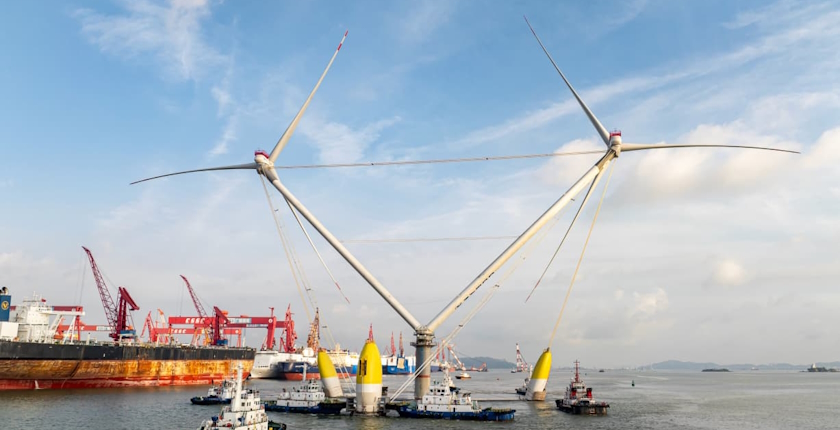
Mingyang presents ultralarge floating twin wind turbine concept

Within its OceanX platform for dual floating wind turbines, Ming Yang Smart Energy is designing a machine for 50 MW. It would be almost two times more than the currently strongest wind turbine.

Manufacturers in China keep pushing the limits in renewable energy technology. Dongfang Electric installed the world’s largest wind turbine for testing just two months ago, and Ming Yang Smart Energy already revealed that it is developing a floating machine that would be almost two times stronger. The company, also known as Mingyang, presented the concept for a 50 MW unit, though it is actually a double turbine.

It is designing it within its OceanX platform for V-shaped floaters. The foundation for the dual rotor will be engineered for waters deeper than 40 meters, according to Mingyang.

Twin floating turbines could turn out to be the new frontier in renewable energy technology

The company said it would provide typhoon resistance, for up to 260 kilometers per hour, and open an entirely new solution for tapping deep sea wind potential. The ultralarge twin turbine is envisaged with 290-meter rotors.

Targeted cost is below USD 1,300 per kW, or almost five time less than the European average. It compares to between USD 3,000 per kW and USD 4,300 per kW in China. OceanX is currently available at 16.6 MW at most.

Mingyang recently said it would build a manufacturing facility in Scotland for floating technology. It valued the project at GBP 1.5 billion.

The largest floating wind power turbine so far has 20 MW. It was manufactured by China Railway Rolling Stock Corp. (CRRC).

by in News

Second phase of Gvozd wind farm gets green light from environment agency

The Environmental Protection Agency of Montenegro has determined there is no need for an environmental impact assessment report for the second phase of the Gvozd wind farm, and allowed the project to proceed. It is for three additional wind turbines with a total capacity of 21 MW, bringing the wind farm’s overall capacity to 75.6 MW.

Within the same decision, the firm implementing the Gvozd 2 project is instructed to conduct a one-year survey of birds and bats at the project site by November 1, 2026, and to submit the findings to the Environmental Protection Agency, which reserves the right to order additional measures if necessary.

During construction, the project developers must take steps to reduce noise and use the existing road network to avoid the destruction of bird and bat habitats. It is also necessary to monitor bird nesting and take measures to protect nesting sites, while minimizing forest clearance and reducing the risk of vehicle collisions, according to the agency’s decision.

Special attention must be paid to bird and bat habitats

The second phase of the Gvozd wind farm project is financed by a EUR 25 million loan from the European Bank for Reconstruction and Development (EBRD), signed with Montenegro’s state-owned power utility Elektroprivreda Crne Gore (EPCG). Its subsidiary in charge of the project, Green Gvozd WPP Second Phase, is registered in Podgorica.

Once completed, Gvozd will be the largest of Montenegro’s three wind farms, with a capacity to generate over 210 GWh of electricity annually. It would be enough to supply around 36,000 households, with CO₂ emissions expected to be reduced by nearly 137,000 tons per year, EPCG said after signing the loan agreement.

The first phase should be completed by the end of this year, and the entire project before the end of 2026

The first phase of Gvozd will have eight wind turbines with a total capacity of 54.6 MW. Construction began in November 2024. EPCG expects the plant to be put into trial operation by the end of this year. Its annual electricity output is estimated at 150 GWh.

EBRD financed the first phase as well, with an EUR 82 million loan. Gvozd will be EPCG’s first large-scale power generation facility built in more than 40 years.

The EBRD previously announced that all 75.6 MW should be online before the end of 2026.

by in News

Montenegro’s EPCG to develop floating solar, thermal batteries, high-altitude wind turbines

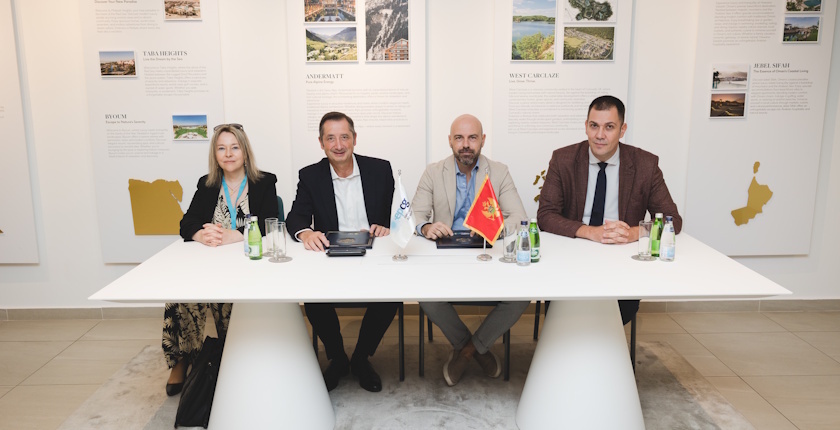
Montenegrin state-owned power utility Elektroprivreda Crne Gore has signed memoranda of understanding with Akuo, E2S Power AG, and wind fisher for a floating solar power plant, thermal batteries, and a pilot project for high-altitude wind turbines, respectively.

Memoranda of understanding (MoUs) were signed within the framework of the European Union – Montenegro Investment Conference. Domestic and European companies initiated 14 projects, including for wind and solar power, energy storage, and the electricity grid.

The two-day conference Smart Growth, Green Future: Accelerating Investment in Montenegro, held earlier this week in Luštica, near Tivat, was opened by European Commission President Ursula von der Leyen and Prime Minister of Montenegro Milojko Spajić.

Bulatović: We will develop three projects with Akuo

Ivan Bulatović, CEO of government-controlled Elektroprivreda Crne Gore (EPCG), told Balkan Green Energy News that the memorandum with French renewable energy company Akuo includes a 36 MW floating solar power plant on Slano lake.

The investment is estimated at EUR 60 million.

It is an innovative technology and it helps the environment by reducing water evaporation, Bulatović explained.

Scotto: Montenegro has everything it needs for the development of renewables

Another project within the deal is for a solar power plant, and the third one is for energy storage. On behalf of Akuo Energy, the memorandum was signed by CEO Eric Scotto.

He stressed that floating solar saves water and space while providing energy. Scotto revealed the possibility for the proposed onshore photovoltaic plant to be agrisolar.

Montenegro has everything it needs for the development of renewable energy sources – sun, wind and space, Scotto stressed.

Thermal batteries at TE Pljevlja

Photo: EPCG

EPCG signed its second memorandum with E2S Power AG, based in Switzerland, for the joint development, production, and application of thermal energy storage. The ceremony was attended by Montenegrin Prime Minister Milojko Spajić.

The aim of the project is to lower the domestic utility’s CO2 emissions, primarily from the Pljevlja coal power plant.

Electricity would be purchased on the market when it’s cheap, to charge the energy storage facility and later produce steam to drive the turbine and generate electricity, Bulatović explained.

He stressed that the cooperation opens up the possibility for the application of advanced technologies enabling more efficient energy use and a reduction in CO2 emissions.

Wind fisher is developing innovative high-altitude wind turbines

“Our thermal energy storage technology, TWEST, provides concrete solutions for decarbonizing thermal power plants and stabilizing power systems that are increasingly reliant on renewable sources,” E2S Power AG CEO Saša Savić said.

The memorandum with French innovative solutions firm wind fisher envisages the development of a joint pilot project for high-altitude wind turbines. Bulatović signed it with the company’s CEO Stéphane Vidaillet.

It is an innovative idea that should take off in the future, and this is a pilot project in the testing phase, Bulatović revealed.

The company, in his words, has the technology, and Montenegro has the space where it can be tested.

Photo: EPCG
by in News

Croatian company Brodosplit delivers equipment for French floating wind farm pilot project

Croatian shipbuilding company Brodosplit has manufactured steel structures for the floating foundations of an offshore wind farm in one of the first such pilot projects in France.

The site for the EolMed project is approximately 18 kilometers from the coastal town of Gruissan in the Occitanie region of southern France.

Qair is leading the consortium, which includes oil and gas giant Total Energies and floating platform provider BW Ideol as its partners. The three 10 MW wind turbines, supplied by Vestas, are about to be installed at a spot where the sea is 55 meters deep.

According to Brodosplit, the project has entered its final phase after the successful launch of the three floating platforms in September.

It isn’t Brodosplit’s first floating wind farm project

The Croatian firm said it manufactured and delivered the metal structures for the floating foundations, in line with the highest quality and safety standards.

Before joining the EolMed project, it entered the floating wind farm segment through cooperation with Ocergie. Brodosplit has created an innovative measuring buoy, OCG-Data, for the France-based company’s Blue Oracle project.

The EolMed project received state support as part of the investments for the future program

The buoy is equipped with a LiDAR (light detection and ranging) system and advanced sensors for monitoring wind, waves, currents, and sea biodiversity, enabling the collection of crucial data for the development of floating wind farms and the preservation of the marine environment, Brodosplit pointed out.

Since EolMed’s initial design in 2016, it has been adjusted and adapted to incorporate the latest technologies. Initially comprising four wind turbines, the number has since been reduced to three for equivalent capacity.

The change also affected the choice of material for the floats – now steel instead of concrete. Construction began in April 2023, and completion is planned for this year.

The project received state support through the Investments for the Future Programme (Programme d’Investissements d’Avenir – PIA). The goal is to demonstrate the economic viability of floating wind farm technology.

Photo: Brodosplit
by in News

Bayraktar: Dongfang plans 2 GW wind turbine factory in Turkey

China-based Dongfang Electric plans to build a wind turbine production facility in Turkey, said Minister of Energy and Natural Resources Alparslan Bayraktar. It would have an annual capacity of 2 GW.

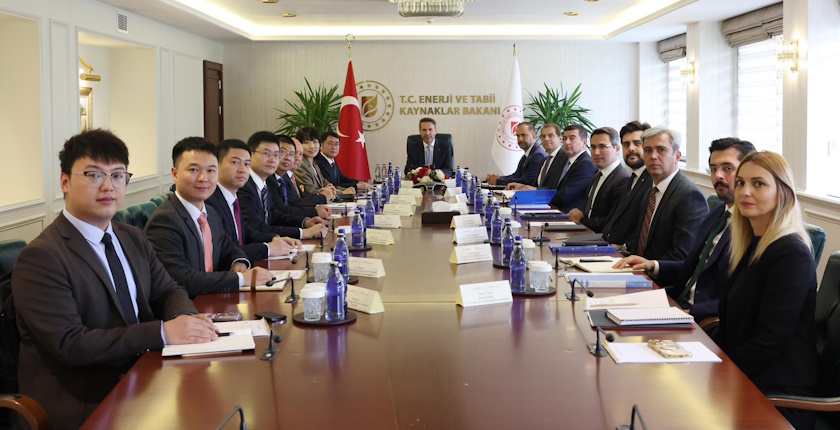
Turkey is pushing ahead with its ambition to reach 120 GW in combined solar and wind power capacity by 2035. Following a meeting with the top executives of Dongfang Electric Corp., Minister of Energy and Natural Resources Alparslan Bayraktar pointed out that, at the same time, the domestic manufacturing potential in the two segments needs to be increased.

“We evaluated the Chinese company’s plan to establish a wind turbine production facility with an annual capacity of 2,000 MW in our country, with an initial investment of approximately USD 250 million,” he revealed.

Dongfang Electric installed the world’s largest wind turbine last month for testing. The 26 MW behemoth is on the Bohai Sea at the coast of Shandong province in China’s east.

The company is also active in the Western Balkans. Dongfang Electric is leading the consortium reconstructing the Pljevlja coal power plant in Montenegro. In Bosnia and Herzegovina, it has built solar power plant Bileća, of 60 MW in peak capacity, and the Stanari coal plant, both for EFT.

Dongfang Electric could cover Turkey’s annual wind power capacity additions by itself with future factory

At the end of July, electricity capacity in Turkey totaled 120.2 GW. Hydropower accounted for 26.9% or 32.3 GW, compared to 23.4 GW of photovoltaics (19.5%) and 13.7 GW of wind power, translating to 11.4%.

There are 150 manufacturers of wind turbine components and accompanying gear in the country, covering 65% of the technology, according to a recent report. Data from early this year showed there were seven production facilities for towers, four plants were making blades, and another four were manufacturing generators and gearboxes.

Wind power plants of 1.3 GW in total were installed last year. The annual expansion could top 2 GW in 2026.

Government conditions renewable energy auction participants with high domestic sourcing rates

While awarding large wind and PV capacities through renewable energy auctions, the Ministry of Energy and Natural Resources requires high domestic content rates from the bidders.

As for PV panels, there were 75 active manufacturers at the beginning of 2025. Put together, their annual capacity was 44.5 GW. Three were making solar cells and their overall capacity was 6.1 GW per year.

The country is also strong in other technologies, like for geothermal power plants.