by in News

Zhongbo Group to install wind farm near Trebinje

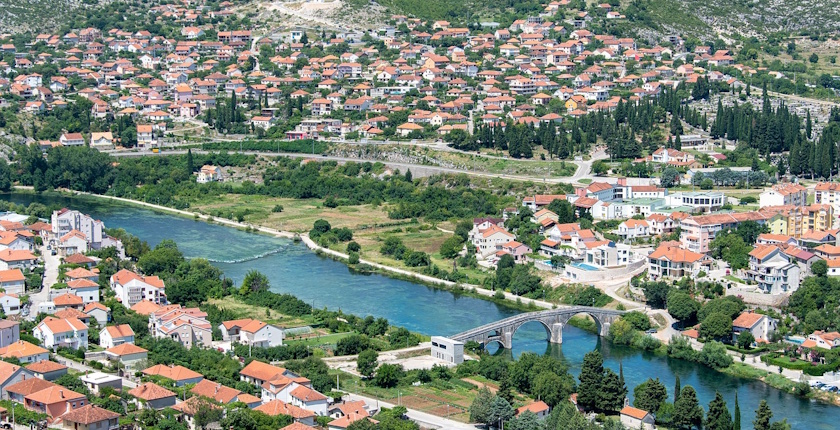
In addition to the plans for several solar power plants in Trebinje, the city in the far south of the Republic of Srpska is paving the way for a wind farm. Chinese company Zhongbo Group is interested in investing in the project.

The Assembly of the City of Trebinje has approved the proposition to develop a zoning plan, the first step in the Trebinje 1 wind farm project, according to local news website Trebinje danas.

The owner of Zhongbo Group, registered in Banja Luka, is Everest Power Pte. Ltd., headquartered in Singapore.

The company has conducted research and preparatory works on the site and obtained approval from electricity transmission company Elektroprenos BiH.

The city authorities will monitor the development of the plan to protect the local population

According to Siniša Vučurević, head of the capital investments department of the City of Trebinje, the zoning plan covers three locations. The first is for the areas of Domaševo, Ždrijelovići, Ugarci, Čvarići, and Vrpolje. The second part are the villages Bodiroge, Vladušići, Turani, and Grkavci, and the third one entails Staro Slano, Tulje, and Dobromani.

He stressed that the department would oversee the preparation of the planning document to ensure the protection of the local population living in the area.

Vučurević added it is in the city’s interest to obtain revenue from concession fees. According to the regulations in the Republic of Srpska, one of the two entities making up Bosnia and Herzegovina, 95% of the fee belongs to the local authority.

Power utility Elektroprivreda Republike Srpske holds three concessions

As for solar power plants, state-owned power utility Elektroprivreda Republike Srpske (ERS) has been awarded the three concessions for photovoltaic plants – Trebinje 1, Trebinje 2 and Trebinje 3. The company Modul Energy holds the concession for the Čičevo PV plant on city territory.

In September last year, the Government of the Republic of Srpska signed an agreement on strategic cooperation in the field of renewable energy sources with two China-based companies. One of them was Zhongbo Group.

The first project envisaged by the agreement is a wind farm. A few months earlier, Zhongbo Group was mentioned as a potential investor in the Hrgud wind farm project.

by in News

2-in-1: carbon footprint as a quality criterion in the NZIA – solving sustainability and resilience together

By Heike Winkler,EUSEW’s digital ambassador on how fair tendering and sustainability in offshore wind can drive competitiveness and a just energy transition.

We are transitioning from an economy based on fossil energy to an economy based on renewable resources. What could be more obvious than for us to support this development and strengthen our renewable industries, the maritime industry, the circular economy, and the green steel industry? The motto of EUSEW 2025, ‘Powering a fair and competitive green transition’, fits perfectly with the European offshore wind industry.

The motto of this year’s WindEurope Annual Event 2025, which has just taken place in Copenhagen, was ‘Scale up, Electrify, Deliver – Putting wind at the heart of Europe’s competitiveness.’ At the recent WindEurope conference, the offshore wind industry jointly proposed a new Offshore Wind Deal to European governments in order to achieve Europe’s ambitious expansion targets. Resilience and sustainability require close cooperation between business and politics to successfully meet the challenges of the ongoing transformation. Sufficient volume and stable supply chain expansion paths are crucial.

Sustainability requires resilience

For more than two decades, the offshore wind industry has been characterised by an impressively fast-growing know-how, a strong resilience, remarkable innovative power and harmonious synergies from various European industries.

A considerable reduction in the levelised cost of energy (LCOE) of offshore wind energy has been achieved to date, more than the fossil industry has ever had to achieve. This development resulted in permanent cost pressure, which harms the sector.

Decarbonisation of the offshore wind industry itself has been part of the industrialisation process from the very beginning. A current example is the Nordlicht 1 and 2 project in the German North Sea, where a major reduction in CO2 steel emissions is expected to be realised (i.e. by using steel towers).

Level playing field and competitiveness

The level playing field has been repeatedly called into question in recent years due to competitive distortions and discontinuities, e.g. with the thread break (‘Fadenriss’) in Germany starting in 2016, when no more new offshore wind projects were put out to tender, or more recently with the construction stop in the USA. In Germany, many companies went out of business, a lot of experience was lost, thousands of employees lost their jobs and their experience was also lost to the industry. With the current geopolitical uncertainties, particularly regarding energy supply, the sector’s resilience is crucial.

With a level playing field and a robust expansion path, the wind industry would have grown significantly faster.

Net Zero Industry Act and qualitative criteria in tendering processes

At the same time, in line with the Draghi Report on EU competitiveness, the Clean Industrial Deal, together with the Net Zero Industry Act, European competitiveness requires accelerating re-industrialisation and the transformation of energy-intensive companies.

Industrial resilience and sustainability require close cooperation between business and policy, where better procurement practices can advance European interests in the wind sector. For example, the carbon footprint tender criterion should be applied in more than 50% of the coming renewable energy tenders. This is critically important, as it could increase the likelihood of realisation, resilience, while at the same time enhancing the market readiness of European renewable energy industries and thus Europe’s competitiveness.

Every long transport route increases the carbon footprint and reduces the added value of the project in general and where it is to be installed. The EU developed a consultation process to strengthen the net-zero industries, which includes auctions for renewable energies and an implementing law on non-price criteria. The results are currently eagerly awaited.

‘In order to reach a sustainable energy transition that creates added value for European industry, there is no alternative to a sustainable, resilient (2in1) domestic offshore wind supply chain. The carbon footprint criterion in offshore wind tenders is crucial if the transformation of the energy-intensive industry is to deliver climate protection, energy sovereignty and industrial growth at the same time.’ There will be no cost-efficient sustainable energy system in Europe without offshore wind energy.

This opinion editorial is produced in co-operation with the European Sustainable Energy Week (EUSEW) 2025. See ec.europa.eu/eusew for more details.

by in News

Austria’s Verbund acquires 272 MW wind project in Romania

Verbund Wind Power Romania, a subsidiary of Austria’s Verbund, has acquired a 272 MW wind project from Monsson, a Sweden-based renewable energy group. The project, taken over at a ready-to-build stage, is expected to enter the construction phase in 2026.

The planned wind farm in Caraș-Severin county in Romania is expected to produce 569 GWh of electricity annually, Verbund said in a press release.

Verbund has been present in the Romanian renewables market since 2012, operating the 226 MW Casimcea wind farm in Tulcea county. It also has a portfolio of wind and photovoltaic projects under development.

Verbund already operates a 226 MW wind farm in Romania

Adrian Borotea, General Manager of Verbund Wind Power Romania, said the company looks forward to future opportunities that can help speed up the country’s energy transition. “In Verbund, we continuously seek to stimulate the growth of the clean energy sector in Romania, in line with our sustainable approach to business,” he stressed.

Sebastian Enache, Head of Mergers and Acquisitions and member of the Board of Directors of Monsson, said the need for clean energy as a central point of the energy sector development in Romania and Europe is growing, adding that the company is proud to have started this cooperation with Verbund, one of the largest producers of electricity from renewable sources in Europe.

The Austrian utility expects 25% of its overall electricity output to be generated from solar and wind energy by 2030, with Romania seen as one of the strategic target markets to achieve the objective.

Monsson has over 5 GW of solar and wind projects in Romania

Monsson has a portfolio of more than 5 GW of wind and solar projects in Romania. It offers a full range of services, including the design, development, construction, and operation of renewable energy power plants, as well as the construction and operation of battery-based energy storage solutions.

The company recently said it was preparing to build a manufacturing facility in the Romanian town of Petrila to produce renewable energy equipment, including robots that clean solar panels.

by in News

Alcazar Energy, EPCG open talks on PPA for Montenegro’s biggest wind farm

Renewable energy investor Alcazar Energy Partners has signed a memorandum of understanding with Montenegrin state power utility Elektroprivreda Crne Gore (EPCG), initiating negotiations on a power purchase agreement (PPA) for electricity that will be produced by Alcazar’s future 118.8 MW Bijela wind farm.

Alcazar Energy acquired the rights to the Bijela wind farm project in September 2023. A year later, it signed a contract for the construction of infrastructure for connecting the facility to the grid.

A key component of the government’s 2040 National Development Strategy, Bijela will support Montenegro’s commitment to reducing greenhouse gas emissions, Alcazar said in a press release. The largest wind farm in Montenegro will provide clean energy to more than 16,000 households while preventing the release of up to 230,000 tons of CO2 annually, according to the statement.

The wind farm will provide green energy to more than 16,000 homes

The development of Bijela, backed by the European Bank of Reconstruction and Development (EBRD), will support Alcazar’s strategic expansion in the Western Balkans and it target of developing 1GW of renewable energy in the region, according to the statement.

“This partnership is continued evidence of our commitment to developing the largest renewable energy platform in the Western Balkans,” said Daniel Calderon, Co-Founder and Managing Partner of Alcazar Energy Partners.

The Bijela project supports Alcazar’s ambition to develop 1 GW of renewables in the Western Balkans

Ivan Bulatović, the executive director of EPCG, described the memorandum of understanding as “a crucial step in strengthening Montenegro’s energy stability.”

“Cooperation with renowned international partners, such as Alcazar Energy Partners, not only enables the modernization of the sector but also accelerates the transition to cleaner and more sustainable energy sources,” he added.

Alcazar Energy Partners is an independent sustainable investment manager with a strong track record in developing utility-scale renewable energy projects in emerging and growth markets since 2014, reads the press release.