by in News

Second phase of Gvozd wind farm gets green light from environment agency

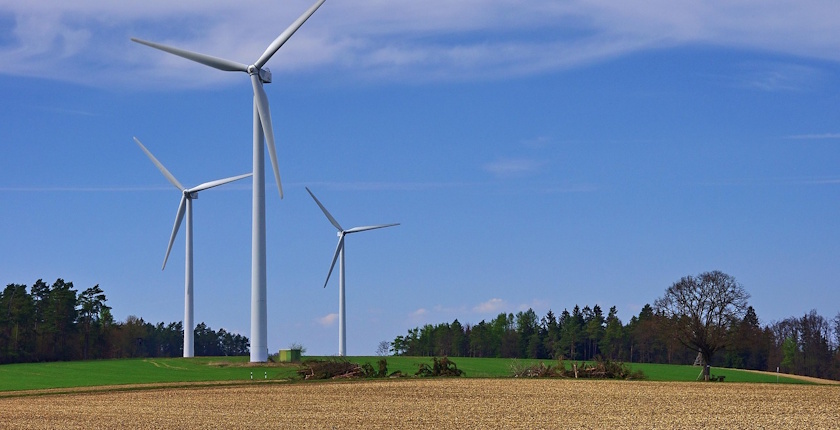
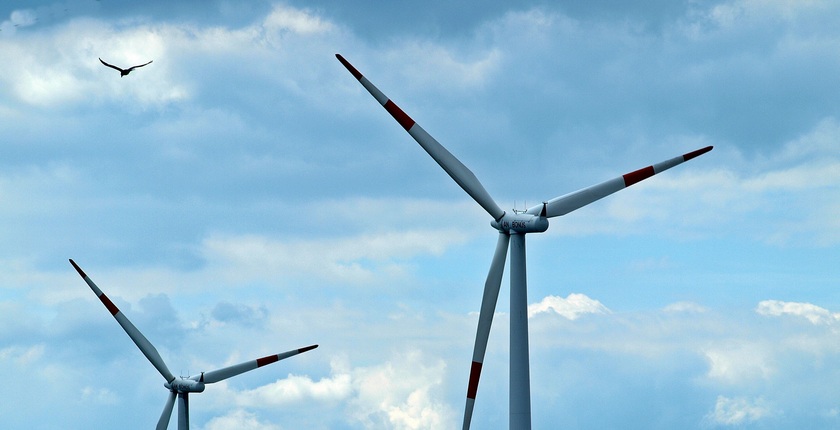
The Environmental Protection Agency of Montenegro has determined there is no need for an environmental impact assessment report for the second phase of the Gvozd wind farm, and allowed the project to proceed. It is for three additional wind turbines with a total capacity of 21 MW, bringing the wind farm’s overall capacity to 75.6 MW.

Within the same decision, the firm implementing the Gvozd 2 project is instructed to conduct a one-year survey of birds and bats at the project site by November 1, 2026, and to submit the findings to the Environmental Protection Agency, which reserves the right to order additional measures if necessary.

During construction, the project developers must take steps to reduce noise and use the existing road network to avoid the destruction of bird and bat habitats. It is also necessary to monitor bird nesting and take measures to protect nesting sites, while minimizing forest clearance and reducing the risk of vehicle collisions, according to the agency’s decision.

Special attention must be paid to bird and bat habitats

The second phase of the Gvozd wind farm project is financed by a EUR 25 million loan from the European Bank for Reconstruction and Development (EBRD), signed with Montenegro’s state-owned power utility Elektroprivreda Crne Gore (EPCG). Its subsidiary in charge of the project, Green Gvozd WPP Second Phase, is registered in Podgorica.

Once completed, Gvozd will be the largest of Montenegro’s three wind farms, with a capacity to generate over 210 GWh of electricity annually. It would be enough to supply around 36,000 households, with CO₂ emissions expected to be reduced by nearly 137,000 tons per year, EPCG said after signing the loan agreement.

The first phase should be completed by the end of this year, and the entire project before the end of 2026

The first phase of Gvozd will have eight wind turbines with a total capacity of 54.6 MW. Construction began in November 2024. EPCG expects the plant to be put into trial operation by the end of this year. Its annual electricity output is estimated at 150 GWh.

EBRD financed the first phase as well, with an EUR 82 million loan. Gvozd will be EPCG’s first large-scale power generation facility built in more than 40 years.

The EBRD previously announced that all 75.6 MW should be online before the end of 2026.
by in News

50 MW Trusina wind project in BiH gets fresh start

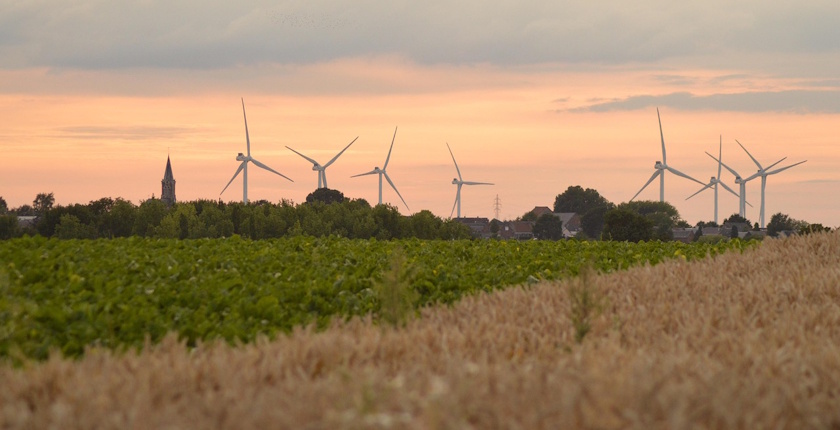
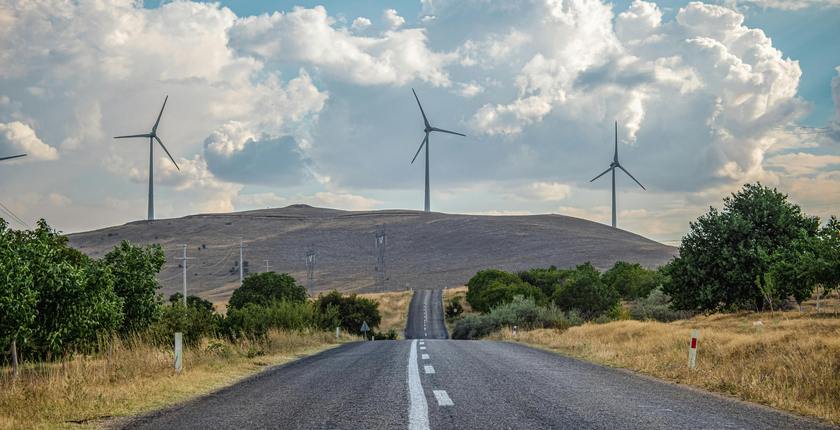
The Ministry of Energy and Mining of the Republic of Srpska has issued a public call for a concession to build and operate the Trusina wind farm in the municipality of Nevesinje, with an installed capacity of up to 50 MW. The move paves the way for reviving one of the largest wind projects in the Republic of Srpska, which has been stalled for years.

The investment is valued at BAM 130 million (EUR 66.5 million), with a projected annual electricity output of about 160 GWh. The new concession procedure was initiated by Sarajevo-based SDL Energy Company.

Wind farm Trusina would generate 160 GWh of electricity per year

The concession can be granted for a period of up to 50 years, and the produced electricity would be sold on the market, according to the public call. If awarded, the contract will include a one-time concession fee of BAM 650,000 (EUR 332,000), as well as BAM 0.0055 (EUR 0.0028) per kWh of electricity produced.

The deadline to submit bids is 30 days from the publication of the call.

The Republic of Srpska is one of the two entities comprising Bosnia and Herzegovina. The other one is called the Federation of BiH.

Challenges from the very beginning

The first concession agreement for the construction of the Trusina wind farm was signed back in 2012. The firm that was granted the concession, called Eol prvi, was founded by Serbia-based Omega plus, but Croatian firm Kermas energija joined the project and subsequently acquired a majority stake in Eol prvi.

However, the concession agreement was terminated in 2019 due to Kermas’ failure to provide a bank guarantee or make any significant progress in implementing the project.

The first concession was scrapped in 2019

Kermas reportedly threatened arbitration against Bosnia and Herzegovina, claiming BAM 200 million (EUR 102.3 million) in damages. However, in May this year, it expressed willingness to resolve the matter amicably, eKapija reported, citing information from the Office of the Attorney General of BiH.

Another dispute involved a EUR 38.2 million lawsuit filed by Omega plus against Kermas. The lawsuit concerned lost profits from the unrealized project, as well as issues related to the transfer of ownership in Eol prvi.

Initially, Omega was awarded BAM 21.1 million (EUR 10.8 million), but the ruling was later overturned.

by in News

CWP Europe gets European Commission’s backing for renewables projects in Albania, Montenegro

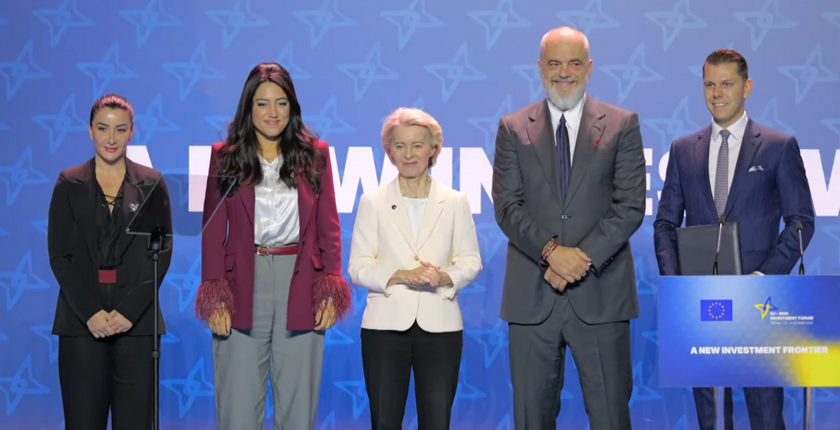
CWP Europe has signed a joint declaration with the European Commission, the Albanian Investment Development Agency, and the Montenegrin Investment Agency in support of its two landmark renewable energy projects – the Tropoja wind farm in Albania and the Montechevo solar farm with battery storage in Montenegro.

The declaration of support for CWP Europe’s projects was signed during the EU-Western Balkans Investment Forum in Albania’s capital, Tirana, in the presence of Albanian Prime Minister Edi Rama and European Commission President Ursula von der Leyen, according to a press release from CWP Europe, a leading renewable energy project developer in Southeast Europe.

The 600 MW Tropoja wind farm will advance Albania’s energy independence by providing clean, affordable electricity, supporting the country’s energy strategy, the company stressed.

The 600 MW Tropoja wind farm will boost Albania’s energy independence

In Montenegro, the 400 MW Montechevo solar farm will combine solar generation with battery storage directly connected to the country’s new 400 kV transmission grid. It will leverage Montenegro’s strategic interconnections – including the undersea power cable to Italy – to maximize the export of clean electricity and its integration into the European energy market.

A new energy backbone for the Western Balkans and Europe

Speaking at the signing ceremony, von der Leyen emphasized the Western Balkans’ increasing role in Europe’s clean energy transition.

“Today you are signing several investments that will do just that. From clean energy production in all six Western Balkan partners to energy storage in Montenegro. They will bring the cost of electricity down. And they will also contribute to our collective energy independence. You are building a new energy backbone not only for the Western Balkans. But for all of Europe,” said von der Leyen.

CWP Europe CEO Dimitar Enchev signed the declaration on behalf of the company, alongside Executive Vice Presidents Maja Turković and Viktor Garbev.

Enchev: We are unlocking the region’s immense renewable energy potential

“With Tropoja and Montechevo, we are unlocking the region’s immense renewable energy potential and strengthening cooperation across the Western Balkans. We greatly appreciate the support of the European Commission, the Albanian Investment Development Agency, and the Montenegro Investment Promotion Agency in advancing this shared vision for a clean, economically competitive and secure energy future of the region and Europe as a whole,” said Enchev.

Over the past 17 years, CWP has invested in sustainable development and the energy transition, successfully developing the largest wind farms in the region, including the largest one in Europe – the 600 MW Fântânele-Cogealac project in Romania. It is currently developing over 7 GW of renewable energy capacity, according to the statement.

by in News

Hydropower plant Dabar to be completed by end-2027

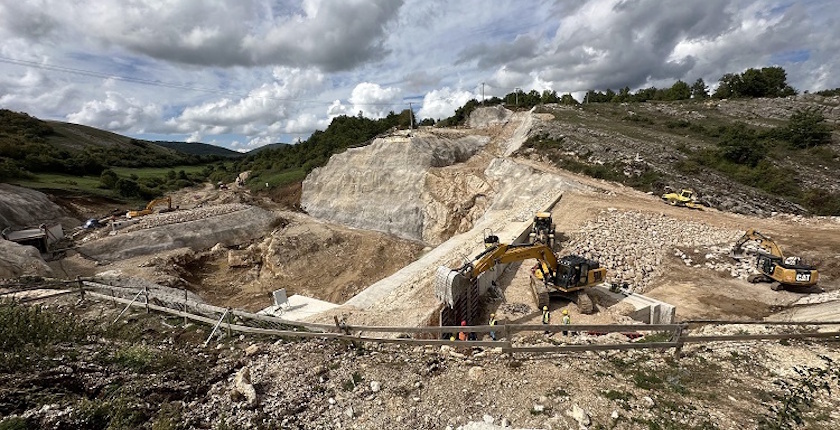
The Dabar hydropower plant is expected to be completed by the end of 2027, according to Petar Đokić, Minister of Energy and Mining of the Republic of Srpska.

The operation of the Dabar hydropower plant, the most complex hydropower facility, in which EUR 339.5 million has been invested, will bring benefits for the entire eastern Herzegovina area, Petar Đokić said during a visit to the construction site, Srna reported.

The works on the 160 MW hydropower plant, with an expected annual production of 500 GWh, began in June 2023.

Đokić noted that the project is located in four municipalities – Nevesinje, Bileća, Berkovići, and Ljubinje – spanning 40 kilometers. As a key part of the project, Đokić highlighted a 12-kilometer tunnel, which is nearly finished.

Đokić: It is an exceptional construction undertaking, the first of its kind in the world in the 21st century

It is an exceptional construction undertaking, the first of its kind in the world in the 21st century, the minister said and added that he is proud to be part of the project from the beginning of its implementation.

Photo: Ministry of Energy and Mining

He spoke with the representatives of China-based Gezhouba Group Co., the main contractor, and Integral and Elnos, its domestic subcontractors.

Đokić stressed that some issues regarding the construction were discussed. HPP Dabar is a financially demanding project, he noted.

Photo: Ministry of Energy and Mining

Wind farm Grebak will be completed by 2027

Minister Đokić recalled that projects for solar power plants and wind farms with a capacity of 680 MW are under development in the territory of Nevesinje municipality, with investments estimated at an overall EUR 409 million.

He underlined that one of the projects, the Grebak wind farm, has experienced delays. Numerous companies, including the investor in the Grebak project, are hostages to the European policies mistrustful of Bosnia and Herzegovina, Đokić claimed.

Of note, the Republic of Srpska is one of the two political entities of BiH. The concession for the Grebak wind farm was granted in April 2019.

The minister expressed hope that the investor would overcome the challenges, conclude a financing agreement, secure equipment, and start construction work, expected to be finished by late 2026 or early 2027.

Investors in solar projects in Nevesinje are currently preparing documentation and purchasing equipment, Đokić said.

by in News

Serbia’s EPS plans to build 500 MW of wind farms with strategic partner

State-owned power utility Elektroprivreda Srbije (EPS) and the Government of Serbia plan to develop a 500 MW wind farm project with a strategic partner, according to Aleksandar Latinović, Head of Ancillary Services at EPS. He also noted that a 1,000 MW solar power project is expected to be online by 2029.

The Energy Infrastructure Development Plan and Energy Efficiency Measures for the period through 2028 envisage the construction of wind farms with a capacity of up to 500 MW.

The project could be similar to the 1,000 MW solar power project with 200 MW battery energy storage systems (BESS) that Serbia is implementing with strategic partners Hyundai Engineering and UGT Renewables (UGTR).

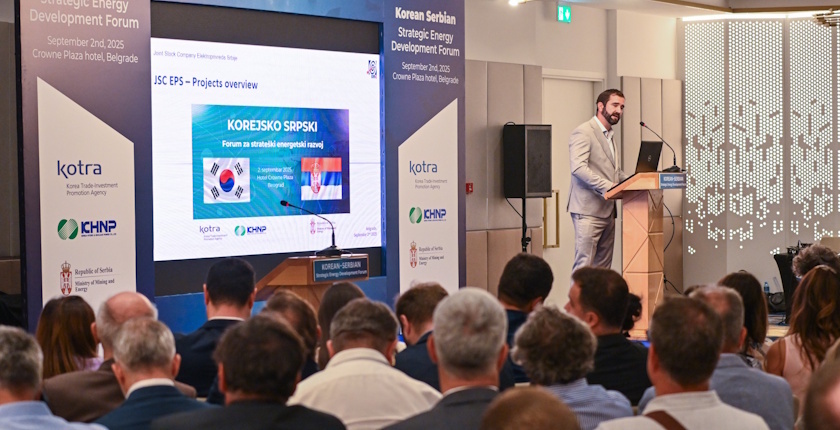
During the presentation of EPS’s development projects at the Korea-Serbia Strategic Energy Development Forum, held in Belgrade, Aleksandar Latinović recalled that the recently built Kostolac B3 power plant, as well as the pumped storage hydropower plant Bistrica, will provide energy to balance the system.

Tenders for two solar power plants are expected next year

Increasing the balancing reserve, in his words, is crucial for integrating new renewable energy sources into the power system. He particularly highlighted the Bistrica project, noting that it will have the same energy storage capacity as all currently existing BESSs in Europe. According to Latinović, the plant is expected to be operational by 2031 or 2032.

Latinović also recalled that EPS recently inaugurated Petka, its first solar power plant on a coal tailings dump. Though a small project, it is significant because EPS owns several thousand hectares of similar tailings and ash dumps.

The solar power plants Kolubara A (78 MW) and Morava (42 MW) are in the development phase, with tenders expected to be announced next year. Meanwhile, the Klenovnik project (110 MW) is undergoing a review of its preliminary feasibility study.

The 1 GW solar project is expected to be connected to the grid by 2029

Regarding wind energy, the 66 MW Kostolac wind farm is scheduled to begin trial operations next month.

For other wind farm projects, EPS and the Serbian government plan a 500 MW project with a strategic partner, he noted, stressing that EPS is willing to acquire already developed, construction-ready projects.

Latinović recalled that the preparation of a spatial plan for the 1 GW solar power project is underway. Strategic partners have already begun preparing investment and technical documentation, and a grid connection agreement with transmission system operator Elektromreža Srbije (EMS) has been signed.

A shortage of balancing energy could be an issue

According to the project timeline, this project will be operational and connected to the grid within four years, Latinović noted.

He stressed that integrating new renewable energy sources into the power system could lead to a shortage of balancing reserves. It is also possible, in his words, that there will be an excess of electricity when a significant amount of renewable energy is produced.

For this reason, EPS has initiated a study to analyze the use of hydrogen and heat storage.

The main focus of this study will be optimizing surplus electricity from intermittent renewable energy sources, increasing the system’s balancing reserve, replacing fuel oil in coal power plants with hydrogen-based fuel, and substituting gas and coal in heat production, Latinović explained.

by in News

Serbia’s power utility to take no loans in 2025, fund coal projects on its own

For the first time, Elektroprivreda Srbije (EPS) will not take out loans this year, but will finance all investments from its own resources, according to General Manager Dušan Živković. However, it has affected the financial performance of Serbia’s state-owned power utility, with profit in the first half of 2025 coming in lower than in the same period last year.

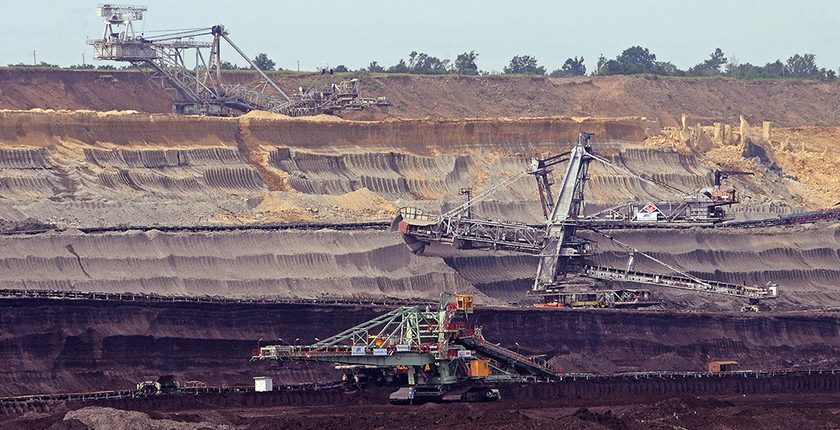
One of the major investments underway is in coal mining, including the construction of several systems needed to enable the opening of the Radljevo open pit mine in the Kolubara mining basin. However, since financial institutions are unwilling to finance fossil fuels, EPS must rely entirely on its own funds, Živković told national broadcaster RTS.

EPS is financing the coal mine on its own, as financial institutions are unwilling to invest in fossil fuels

To ensure sufficient coal supplies, EPS has contracted imports from Indonesia, which Živković explained as a strategy to diversify sources. He described it as the best way to ensure the security of supply.

He said that the installation of machinery at Radljevo is underway and that EPS expects the mine to start producing overburden and coal early next year.

EPS posted a RSD 27.4 billion (EUR 233.8 million) profit in the first half of 2025, compared to RSD 32.8 billion (EUR 280.3 million) in the same period last year.

Kostolac wind farm set to begin operation

Speaking about other key projects, Živković revealed that the commissioning of the 66 MW Kostolac wind power plant is in the final phase and expressed hope that electricity production would begin within a month. He also recalled that the 10 MW Petka solar power plant, built at the tailings dump in the Kostolac coal complex, was put into trial operation about a month ago.

He also said pumped storage hydropower plant Bistrica and the planned 1 GW of solar facilities could come online in the medium term.

Commenting on the announced 7% electricity price increase in October, Živković stressed the process has been initiated and that he expects it to be completed within one to one-and-a-half months.

Electricity consumption during the summer is lower than last year

On the surge in electricity consumption during the summer months, he said the situation this year has been “calmer” than in 2024, with consumption at around 90 GWh, compared to 114 GWh in 2024. It means total demand can be covered from EPS’s own capacities, according to him.

by in News

Serbia launches construction of two transmission lines as part of BeoGrid 2025 project

Serbia has launched works as part of the BeoGrid 2025 project, aimed at improving the power transmission infrastructure in Serbia, the region, and Europe, as well as facilitating electricity offtake from renewable energy power plants in the South Banat region of Vojvodina.

The BeoGrid 2025 project, worth EUR 205 million, comprises six distinct components, according to Radoš Popadić, Assistant Minister of Mining and Energy in charge of the power engineering sector. He attended the start of works in Belgrade’s Surčin suburb together with Jelena Matejić, the general manager of Serbia’s transmission system operator, Elektromreža Srbije (EMS).

“Construction is being launched today on two new high-voltage transmission lines that will connect Belgrade and Novi Sad, with a total value of around EUR 22 million,” he said, adding that work on a substation in Belgrade is also expected to begin soon.

The project is valued at EUR 205 million

The substation will be connected to the Čibuk 1 substation [wind farm Čibuk 1] by a new 83-kilometer transmission line, ensuring a stable transmission of electricity produced from renewable energy sources in South Banat, as well as reducing strain on the existing network, Popadić explained.

Radoš Popadić and Jelena Matejić (photo: Ministry of Mining and Energy/Danilo Mijatović)

Two single-circuit 400 kV transmission lines, intended for connecting transmission line 450 (switching station Mladost – substation Novi Sad 3) to the future 400/110 kV substation Beograd 50, will have a total length of 25.5 kilometers.

EMS General Manager Jelena Matejić said that BeoGrid 2025 is of particular importance for Serbia, but also part of the broader North Continental South East (CSE) Corridor project, which includes doubling the existing 400 kV interconnection between hydropower plant Đerdap 1 and Portile de Fier in Romania.

Matejić: The North CSE Corridor is part of the European ten-year network development plan, TYNDP 2020

The North CSE Corridor project is part of the European ten-year network development plan (TYNDP 2020) and the regional investment plan (RgIP 2020). It is supported by the Romanian transmission system operator, Transelectrica, as well as the German development bank KfW, with a feasibility study.

The North CSE Corridor is of regional importance as it increases the transmission capacity between Serbia and Romania, helping create an integrated European electricity market, Matejić pointed out, adding that BeoGrid 2025 is also important for additional backup power supply for the EXPO 2027 project.

The project aims to enable the transmission of electricity generated from renewable sources in the South Banat region and to ease the load on the 220/110/35 kV Beograd 5 substation, which supplies a large part of Belgrade, particularly parts of New Belgrade and Zemun, EMS stated.

Popadić: The total value of all planned projects is EUR 1 billion

Photo: Ministry of Mining and Energy/Danilo Mijatović

Radoš Popadić recalled that large investments in the transmission network are underway.

“Serbia has recognized the importance of investing in the power transmission system to enable the integration of more renewable energy capacity, increase the exchange of electricity with neighbors, and ensure a secure, stable, and efficient supply to consumers. That is why we launched investments in interconnection with the transmission systems of eight neighboring countries, with EUR 500 million to be invested in priority projects by the end of the decade. The total value of all planned projects will amount to around one billion euros,” said Popadić.

BeoGrid 2025 is financed partly from the Serbian budget, as well as from EMS’ own funds. The project consists of six distinct components, or investments:

  • 400/110 kV substation Beograd 50;
  • Two-circuit 400 kV transmission line between substation Beograd 50 and Čibuk 1, including the installation of a 400 kV bay at switching station Čibuk 1;
  • Single-circuit 400 kV transmission lines for the integration of transmission line 450 (switching station Mladost – substation Novi Sad 3) into substation Beograd 50;
  • Two double-circuit 110 kV transmission lines for the integration of transmission line 104/8 (substation Stara Pazova – substation Inđija 2) into substation Beograd 50;
  • two double-circuit 110 kV transmission lines for the integration of transmission line 1178 AB (substation Beograd 5 – substation Beograd 9) into substation Beograd 50;
  • Double-circuit 110 kV cable between substation Beograd 50 and substation Beograd 49 (Airport).

Photo: Ministry of Mining and Energy/Danilo Mijatović

by in News

Serbia’s EPS reports EUR 234 million profit for first half of 2025

Elektroprivreda Srbije achieved a profit of RSD 27.4 billion (EUR 233.8 million) in the first half of 2025.

The financial result of the state-owned Elektroprivreda Srbije (EPS) is lower than in the same period of 2024, when profit amounted to RSD 32.8 billion (EUR 280.3 million). The company posted RSD 26.1 billion (EUR 222.8 million) in net income for the entire year.

The Ministry of Mining and Energy said the shareholder assembly of the Serbian joint stock company EPS has adopted the report on the implementation of its three-year business plan for the first six months of 2025, declaring a profit of RSD 27.4 billion (EUR 233.8 million).

Minister of Mining and Energy Dubravka Đedović Handanović, the sole shareholder assembly member, noted that the trend of continuous production and financial stability of the company has continued, and highlighted the importance of the results achieved in the mining sector.

The priority is to prepare machinery for the new Radljevo mine in the Kolubara basin

Coal production exceeded the plan by 8%, but more importantly, the year-over-year rise in coal production was 7%, according to Đedović Handanović.

However, in her words, it is crucial to continue the same pace, which is why great effort must be put into completing the machinery preparation project for the new Radljevo mine in Kolubara, so that overburden production can begin next year.

Reduced costs for coal procurement from outside the company

She said that through careful management of the electricity portfolio, coal stocks in depots have been maintained at a high level, around 1.68 million tons. The costs of purchasing coal from third parties are RSD 1.35 billion (EUR 11.5 million) lower than planned and significantly lower than in the past three years, Đedović Handanović said.

The minister highlighted the fact that hydrology has been unfavorable for the second consecutive year, affecting electricity production.

She recalled that in the first quarter of this year, the Petka solar power plant in Kostolac was put into trial operation. Soon, the blades of EPS’s first wind farm will be spun for testing, she Đedović Handanović added.

EPS investing in a subsidiary in Kosovo and Metohija

“It is essential to improve the management of investment activities, especially considering that work is underway on the most significant energy project – the construction of the Bistrica pumped storage hydropower plant. At the same time, it is important to continue efforts to reduce operational costs and improve customer relations,” the minister stressed.

She revealed that as part of the company’s transformation process, key performance indicators (KPIs) were introduced for executive and middle management.

The EPS assembly also approved the decision to invest in the capital of Elektrosever, the company’s subsidiary in Kosovo and Metohija.

That way it enables supplying Serbia’s citizens in four municipalities in the province’s north, she explained. More than 45% of consumers got smart meters by now from Elektrosever, the ministry stressed.

by in News

Bulgaria, Romania offer much higher renewable energy project returns than Greece – HELLENiQ Energy

The newly purchased wind and solar projects in Romania and Bulgaria will bring much higher returns than ones in the Greek market, claims George Alexopoulos, Deputy Chief Executive Officer of HELLENiQ Energy.

HELLENiQ Renewables Romania, operating under Greece-based HELLENiQ Energy, bought a wind project in Scânteiesti in Galaţi in eastern Romania, with a licensed capacity of 96 MW, and a wind project in the Vaslui region, with a licensed capacity of 186 MW.

In addition, HELLENiQ Energy completed the purchase of a photovoltaic project of 123 MW in Haskovo region in southern Bulgaria, which marks the company’s entry into the country.

The company is facing delays in the Greek renewables market

“We achieved deals on three new projects at a ready-to-build phase in Romania and Bulgaria, which are effectively consistent with our announced strategy and they allow us to have better visibility of the achievement of the interim target of 1.5 GW in operation in the next few years,” the company’s CEO Andreas Shiamishis stressed at the presentation of the financial results from the second quarter and first half of 2025.

Unfortunately, he added, when it comes to the Greek renewables market, the company is facing delays, primarily because of Greek connection terms clarity.

The three new projects are much less susceptible to future curtailment

In the view of George Alexopoulos, Deputy CEO and GM Group Strategic Planning & New Activities, the three said projects are much less susceptible to future curtailment. They also bring notably much higher financial returns than what the company is observing in the Greek market, he said.

Alexopoulos stressed the construction of one project in Romania is starting immediately and that the company expects all the assets to be operational by 2028.

“We expect returns of 10% to 12%, which is considerably higher than Greece, and capex of approximately EUR 0.5 billion, which will be financed on a project finance basis, for the most part,” Alexopoulos explained.

by in News

Government of Serbia interested in taking over Plandište wind project

The Government of Serbia is interested in taking over the Plandište wind farm project from oil and gas company Naftna Industrija Srbije and renewable energy firm MET Renewables. They have been jointly developing the project for over ten years.

The Plandište project, with a capacity of 102 MW, was a topic at the latest meeting of the Board of Directors of Naftna Industrija Srbije (NIS), attended by Minister of Mining and Energy Dubravka Đedović Handanović and Chairman of Gazprom Neft’s Executive Board Alexander Dyukov.

Gazprom Neft holds a 44.85% share in NIS, while its parent company Gazprom has another 11.3%.

Alexey Urusov was elected as the new chairman of the NIS Board of Directors, while Dragutin Matanović was appointed vice chairman.

Serbia aims to increase its renewable energy capacity

During the meeting it was noted that there is interest by the state of Serbia in taking over the construction of the Plandište wind park together with Hungarian company MET, thereby increasing the capacities from renewable sources in line with the strategic energy transition goals, the ministry said.

It revealed no further details. The current owners of the project are NIS and Switzerland-based MET Renewables.

The Plandište wind farm was one of the projects that obtained feed-in tariffs from the ministry under the first quota of 500 MW for wind power plants in Serbia. All other projects, totaling 397 MW, have long been completed –  Čibuk 1, Kovačica, Košava 1, Alibunar, Kula, Malibunar, and La Piccolina.

The wind farm was initially scheduled for completion in 2014, then postponed to 2019

The project was originally owned by Energowind, a company founded in 2005 by private investors. In late 2012, NIS bought a 50% share, and the firm was renamed NIS Energowind. Energowind’s CEO Goran Novaković, who was earlier Serbia’s energy minister, has signed the contract with NIS’s then-CEO Kirill Kravchenko.

At the time, the wind farm was scheduled to be completed in 2014, and construction formally began in September 2013. However, there was no progress until March 2019, when MET Renewables, owned by Hungarian private investors, purchased the other 50% stake from the initial owners. The joint firm was named NIS MET Energowind.

The building permit was amended in 2023

Shortly afterward, it was announced that the wind farm would be completed by 2021.

Project firm Wind Park Plandište received the status of privileged renewable energy producer in 2015. It is a right to feed-in premiums, a fixed price for electricity, over a 12-year period. The status has been extended multiple times, most recently in 2018 until 2020, according to the registry of privileged producers on the ministry’s website.

The project firm said that the building permit, amended in 2023, envisages the construction of 17 wind turbines, each with a capacity of 6 MW. The detailed regulation plan, revised in 2022, enables the construction of up to 20 wind turbines with a capacity of up to 7 MW each, according to the firm’s website.