by in News

Zhongbo group advances in preparation for construction of Leotar wind park

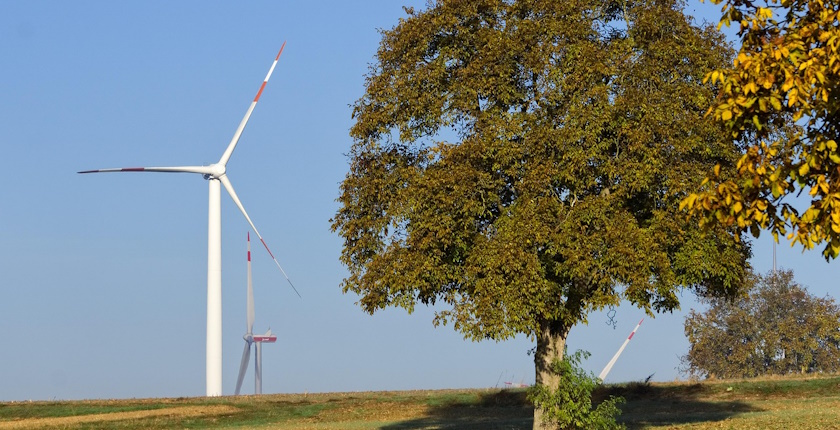
Zhongbo Group has taken another step in preparing for the construction of its Leotar wind farm near Trebinje, in the southeastern part of Bosnia and Herzegovina (BiH). It would be the largest wind power plant in the Western Balkans by capacity and one of the largest in Southeast Europe.

Zhogbo Group has conducted research and preparatory works on the site and obtained approval from electricity transmission company Elektroprenos BiH. In June last year, the Assembly of the City of Trebinje approved the proposition to develop a zoning plan.

The company has now submitted a request to the Ministry of Spatial Planning, Construction, and Ecology of the Republic of Srpska, one of the two entities in BiH, to determine whether an environmental impact assessment (EIA) will be required.

“We are informing the public and interested parties that the project developer Zhogbo Group, Banja Luka, has submitted a request to the ministry for a preliminary environmental impact assessment for the Leotar wind farm project, with an installed capacity of 537.5 MW,” the ministry said.

The deadline for comments is 15 days

The public can review and send suggestions within 15 days from January 12, when the notice was published.

The construction of the Leotar wind farm is planned on Leotar mountain. The facility would consist of 86 wind turbines, each with a capacity of 6.25 MW, which will be placed on sites that depend on the terrain configuration and main wind directions, the accompanying document reads.

The expected annual production of the wind farm is 1.5 TWh per year. The plant’s utilization factor is 32.4%.

Of note, last year the owner of Zhongbo Group, registered in Banja Luka, was Everest Power Pte. Ltd., headquartered in Singapore, according to the business registry. Now, according to the registry, the owner is Zodic Energy PTE LTD, headquartered in Singapore.

The company is expected to obtain a concession for the wind farm

Back in September 2024, the Republic of Srpska signed an agreement on strategic cooperation in the field of renewable energy sources with Zhongbo Group and China Power. Zhongbo Group is expected to be awarded a concession for the Leotar project.

The largest wind farm in the Western Balkans is Čibuk 1 in Serbia, with a capacity of 158 MW. However, it won’t hold that title for long, as Alcazar Energy Partners began the construction of its Štip wind power plant, of 400 MW, in July last year in North Macedonia.

In the wider region of Southeast Europe, the largest is Romania’s Fântânele-Cogealac-Gradina, with 600 MW. In Europe, the top spot is held by Markbygden in Sweden, with a capacity of 2,000 MW.

by in News

Zhongbo group advances in preparation for construction of Leotar wind park

Zhongbo Group has taken another step in preparing for the construction of its Leotar wind farm near Trebinje, in the southeastern part of Bosnia and Herzegovina (BiH). It would be the largest wind power plant in the Western Balkans by capacity and one of the largest in Southeast Europe.

Zhogbo Group has conducted research and preparatory works on the site and obtained approval from electricity transmission company Elektroprenos BiH. In June last year, the Assembly of the City of Trebinje approved the proposition to develop a zoning plan.

The company has now submitted a request to the Ministry of Spatial Planning, Construction, and Ecology of the Republic of Srpska, one of the two entities in BiH, to determine whether an environmental impact assessment (EIA) will be required.

“We are informing the public and interested parties that the project developer Zhogbo Group, Banja Luka, has submitted a request to the ministry for a preliminary environmental impact assessment for the Leotar wind farm project, with an installed capacity of 537.5 MW,” the ministry said.

The deadline for comments is 15 days

The public can review and send suggestions within 15 days from January 12, when the notice was published.

The construction of the Leotar wind farm is planned on Leotar mountain. The facility would consist of 86 wind turbines, each with a capacity of 6.25 MW, which will be placed on sites that depend on the terrain configuration and main wind directions, the accompanying document reads.

The expected annual production of the wind farm is 1.5 TWh per year. The plant’s utilization factor is 32.4%.

Of note, last year the owner of Zhongbo Group, registered in Banja Luka, was Everest Power Pte. Ltd., headquartered in Singapore, according to the business registry. Now, according to the registry, the owner is Zodic Energy PTE LTD, headquartered in Singapore.

The company is expected to obtain a concession for the wind farm

Back in September 2024, the Republic of Srpska signed an agreement on strategic cooperation in the field of renewable energy sources with Zhongbo Group and China Power. Zhongbo Group is expected to be awarded a concession for the Leotar project.

The largest wind farm in the Western Balkans is Čibuk 1 in Serbia, with a capacity of 158 MW. However, it won’t hold that title for long, as Alcazar Energy Partners began the construction of its Štip wind power plant, of 400 MW, in July last year in North Macedonia.

In the wider region of Southeast Europe, the largest is Romania’s Fântânele-Cogealac-Gradina, with 600 MW. In Europe, the top spot is held by Markbygden in Sweden, with a capacity of 2,000 MW.

by in News

Energy Community Secretariat sets up renewables support hub for contracting parties

The Energy Community Secretariat has established a hub to speed up the deployment of renewables in contracting parties with a focus on transforming coal mines.

With the exception of Albania, members of the Energy Community in the Western Balkans generate electricity predominantly by burning coal from domestic mines.

Locations of depleted mines are suitable for renewable electricity plants.

The new Centre for Renewables Acceleration is a regional hub designed to provide technical support to all Energy Community contracting parties in accelerating renewable energy deployment through improved planning and coordination, according to the Energy Community Secretariat.

The center will especially help support the rollout of renewables acceleration areas (RAA) in brownfields, including coal mines.

Strengthening public trust in the energy transition is essential

In these locations, renewable energy projects can move forward more quickly through streamlined procedures grounded in strategic spatial planning that protects sensitive ecosystems, in the secretariat’s view.

It sees strengthening public trust in the energy transition as key to this mission, particularly in regions affected by coal phase-out and undergoing broader structural changes.

In the Western Balkans, the center will be supported through a partnership with the Open Society Foundations – Western Balkans (OSF-WB). The two sides recently formalized cooperation through a memorandum of understanding.

Work is complemented by the secretariat’s cooperation with The Nature Conservancy

Their activities in supporting the region include pilot interventions in contracting parties, expert exchanges, capacity-building initiatives and regional workshops.

The partnership with OSF-WB builds on the secretariat’s ongoing work in Ukraine, supported by the European Climate Foundation, which focuses on developing cross-border renewables acceleration areas in five regions bordering the EU and Moldova.

This work is further complemented by the secretariat’s cooperation with international environmental organization The Nature Conservancy (TNC), whose EU-recognized methodology for designating renewables acceleration areas informed the development of the Operational Blueprint for the Designation of RAAs in the Energy Community region and now serves as a best practice, the update reads.

Back in 2023, the secretariat and TNC formed a partnership to improve the planning and permitting procedures for renewable energy projects. TNC has implemented projects on RAAs in Serbia, Montenegro.

by in News

Energy Community Secretariat sets up renewables support hub for contracting parties

The Energy Community Secretariat has established a hub to speed up the deployment of renewables in contracting parties with a focus on transforming coal mines.

With the exception of Albania, members of the Energy Community in the Western Balkans generate electricity predominantly by burning coal from domestic mines.

Locations of depleted mines are suitable for renewable electricity plants.

The new Centre for Renewables Acceleration is a regional hub designed to provide technical support to all Energy Community contracting parties in accelerating renewable energy deployment through improved planning and coordination, according to the Energy Community Secretariat.

The center will especially help support the rollout of renewables acceleration areas (RAA) in brownfields, including coal mines.

Strengthening public trust in the energy transition is essential

In these locations, renewable energy projects can move forward more quickly through streamlined procedures grounded in strategic spatial planning that protects sensitive ecosystems, in the secretariat’s view.

It sees strengthening public trust in the energy transition as key to this mission, particularly in regions affected by coal phase-out and undergoing broader structural changes.

In the Western Balkans, the center will be supported through a partnership with the Open Society Foundations – Western Balkans (OSF-WB). The two sides recently formalized cooperation through a memorandum of understanding.

Work is complemented by the secretariat’s cooperation with The Nature Conservancy

Their activities in supporting the region include pilot interventions in contracting parties, expert exchanges, capacity-building initiatives and regional workshops.

The partnership with OSF-WB builds on the secretariat’s ongoing work in Ukraine, supported by the European Climate Foundation, which focuses on developing cross-border renewables acceleration areas in five regions bordering the EU and Moldova.

This work is further complemented by the secretariat’s cooperation with international environmental organization The Nature Conservancy (TNC), whose EU-recognized methodology for designating renewables acceleration areas informed the development of the Operational Blueprint for the Designation of RAAs in the Energy Community region and now serves as a best practice, the update reads.

Back in 2023, the secretariat and TNC formed a partnership to improve the planning and permitting procedures for renewable energy projects. TNC has implemented projects on RAAs in Serbia, Montenegro.

by in News

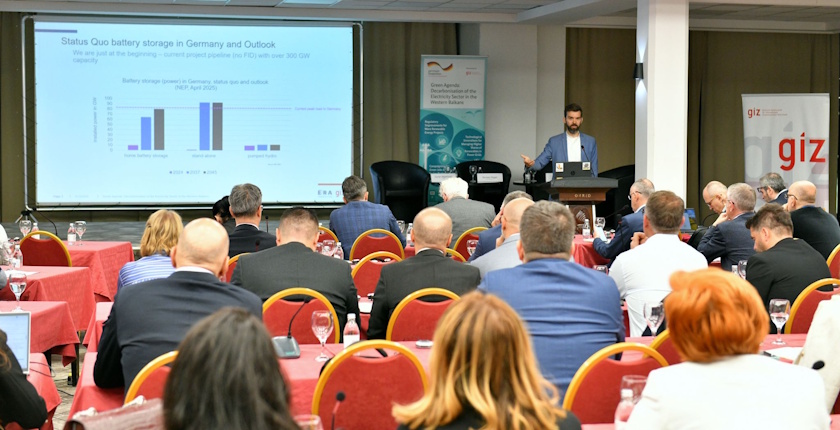
Third Regional Power Sector Exchange in Ohrid: Power grids at core of energy transition

The third Regional Power Sector Exchange of the Western Balkans in Ohrid in North Macedonia gathered over 80 energy professionals from the region to discuss the future of electricity decarbonization and the urgent need to modernize power infrastructure.

Organised under the framework of the Regional Climate Partnership between Germany and the Western Balkans, the conference brought together representatives of transmission and distribution system operators, energy regulators, and energy ministries to accelerate coordinated action toward a greener, more resilient power system.

“No grids, no glory. This slogan captures the challenge in front of us. Without investment in power grids, adaptable regulation, and skilled professionals, the renewable energy transition cannot succeed,” Project Manager at GIZ Nicolas Heger said in his welcoming remarks.

Oberhuber: The Western Balkans have the potential to become a major exporter of clean electricity

Opening addresses were delivered by David Oberhuber, GIZ Country Director in North Macedonia, Anca-Iulia Cimpeanu, European Commission (DG ENER), and Davor Bajs, Energy Community Secretariat.

In his keynote speech, Oberhuber stressed the region’s strategic importance in the Regional Climate Partnership.

The Western Balkans has the potential to become a major exporter of clean electricity to Western Europe and a hub for investment and innovation in renewable energy, he said.

North Macedonia is advancing its energy transition by expanding renewables – solar power capacity reached 506 MW in 2023 – and reducing coal dependency, although thermal power plants still accounted for 47.3% of total electricity production in early 2024.

In 2023, renewables made up 33.15% of electricity generation, with households, transport, and industry as the top energy consumers.

To accelerate the shift, tailored support projects were launched. The Energy, Water Services and Municipal Waste Management Services Regulatory Commission is tackling the surge in renewables applications. Distribution system operator (DSO) EVN is focusing on smart grids and energy quality, and transmission system operator (TSO) MEPSO is exploring options to reduce balancing costs through regional market mechanisms.

Six tailored support projects presented

The event included three sessions on tailored support projects.

Professor Nermin Suljanović presented the project Concept on Data Exchange Between System Operators in Bosnia and Herzegovina.

The data platform enables automatic data exchange among all actors in the electricity market in Bosnia and Herzegovina, ensuring data interoperability and harmonized communication interfaces, according to Suljanović.

He also outlined the project Technical Specification and Requirements for Integration of Renewables into DSO Telecommunication Network.

E-mobility is not only related to energy but also to transportation, telecommunication, data security

A project titled Procedure for Handling RES Connection Requests to the Grid – Queue Management was presented by expert Miltos Aslanoglou, and the Roadmap for Creating a Legal and Regulatory Framework for EV Charging by expert Dejan Stojadinović.

“EU legislation on this matter is a good base for the Western Balkan countries to prepare relevant legal and regulatory frameworks. E-mobility is not only related to energy but also to transportation, telecommunication, data security, and other issues,” Stojadinović said.

Goran Majstrović, Deputy Director and Head of the Energy Transmission and Distribution Department at Energy Institute Hrvoje Požar (EIHP), gave an insight into the project Feasibility Analysis and Funding Assessment for using Dynamic Line Rating (DLR) on the Kosovo* Transmission Grid.

Simplification of Procedures for Prosumer Connection to the Distribution Network in the Federation of BiH was the name of the project introduced by expert Goran Dobrić.

The need for regionally integrated networks has never been greater

Blackouts in both Southern and Southeastern Europe have highlighted vulnerabilities in grid infrastructure amidst growing shares of renewable energy. The need for modern, flexible, and regionally integrated networks has never been greater.

The event was part of a wider regional project implemented by GIZ on behalf of the German government, supporting the integration of renewables and enhancing energy security across the WB6.

In just two years, the project has supported over 30 institutions, trained more than 135 energy professionals, and facilitated the development of the Action Plan for Power Grids in the Western Balkans, in cooperation with the Energy Community Secretariat.

Network redesigns are lagging behind renewables by seven to ten years

Goran Majstrović from Energy Institute Hrvoje Požar presented the Action Plan for Power Grids in the Western Balkans.

“The path to integration of renewables is not just replacing power plants but redesigning the entire system to accommodate them. Network redesigns are lagging behind renewables by seven to ten years,” he asserted.

In the plan, the required grid investments by 2030 in the six countries of the Western Balkans (WB6) are estimated at EUR 10 billion to EUR 14 billion. Investments in primary equipment are seen at EUR 6 billion to EUR 8 billion. As for secondary equipment (digitalization), the forecasted tally is EUR 4 billion to EUR 6 billion.

Phase 2 of the project Green Agenda: Decarbonisation of the Electricity Sector in the Western Balkans is scheduled for completion in 2028. The Regional Power Sector Exchange will remain a key platform for cooperation, helping ensure the energy transition in the region is just and inclusive.

* This designation is without prejudice to positions onstatus and is in line with UNSCR 1244/99 and the ICJ Opinion on the Kosovo declaration of independence.
by in News

EU urged to help Western Balkans phase out coal

kosovo-a-600x337As leaders meet in Vienna to discuss closer cooperation, they must address the energy transition, argues CAN Europe 

The EU should use its influence with Western Balkan states to wean them off coal.

That was the message of Climate Action Network Europe in a report issued to coincide with a summit in Vienna on Thursday.

German chancellor Angela Merkel and EU foreign affairs chief Federica Mogherini assured leaders of the six countries of their commitment to closer integration.

“I see strong political will, both in the region and in Europe, to make this happen,” Mogherini said at the summit.

Coming as at least 20 migrants were found dead in a lorry in Austria, the meeting prioritised efforts to manage the flows of people escaping conflict-hit states in the Middle East and Africa.

But Maros Sefcovic, vice president of “energy union” at the European Commission, was also there to promote cooperation on energy matters.

Membership conditions

Albania, Bosnia and Herzegovina, Kosovo, Macedonia, Montenegro and Serbia are home to 20 million people and have relatively carbon-intensive economies.

All are seeking EU membership, but first they must meet economic and political conditions, including cleaning up their act on human rights.

Brussels should make sure climate action is on the list, CAN argued, to make sure Western Balkan states do not stay locked into polluting coal-based energy systems.

“Recent lack of tangible progress in the accession talks results in the Western Balkan countries losing appetite for much needed energy system reforms,” said Dragana Mileusnic, the NGO’s energy policy coordinator for South East Europe.

“They are locking their dirty energy systems into outdated and heavily polluting coal infrastructure for decades to come.

“Moreover, the EU’s influence in the region is taken over by Chinese investors, participating in nearly every new coal project planned.”

Coal’s share of energy and electricity production in the Western Balkans, EU and OECD (Source: IEA)

Coal’s share of energy and electricity production in the Western Balkans, EU and OECD (Source: IEA)

All the states except Albania depend on coal for more than half of their electricity generation, with stark health, economic and climate consequences.

Air pollution knocks a third off Serbia’s GDP, according to the World Health Organization, based on the cost of related death and disease.

Yet the country is planning 2.5 gigawatts of coal power plants, more than half its electricity generation pipeline. Across the region, 6GW of power stations are due to be built by 2030.

Many have attracted Chinese investment, while the World Bank is reportedly backing a plant in Kosovo, despite its policy of phasing out coal support. 

Share of coal in planned electricity generation capacity (Source: Energy Community, CEE Bankwatch)

Share of coal in planned electricity generation capacity (Source: Energy Community, CEE Bankwatch)

As part of its energy union strategy, Brussels is seeking to coordinate with neighbouring states.

While it is supposed to line up with the bloc’s climate policy, the focus has been on energy security and reducing reliance on Russian gas.

On Poland’s insistence, this included a push for “indigenous fuel” such as coal and gas, as well as diversifying gas supply routes.

That dismayed environmentalists, who argued energy efficiency and renewables were the way to go.

Mileusnic of CAN Europe called on Sefcovic to use the Vienna summit to make “more than a cosmetic change” to energy systems in the region.

Report: Europe’s “energy union” leader talks tough on Russia

It should also be pressing Western Balkan states to commit to greenhouse gas emissions cuts in line with EU ambition, CAN said.

National contributions are to form the backbone of a global carbon-cutting deal due in Paris this December.

To date, only Serbia has submitted a climate pledge to the UN, promising to cut emissions 9.8% by 2030 on 1990 levels.

Sefcovic hailed the move as “an exemplary step” on the path to EU membership.

But CAN said the figure was “far too low” and not compatible with the rest of the continent.

The EU is committed to 40% cuts, with even the poorest member states targeting at least 25% as their share.

By Megan Darby

  • 1
  • 2