by in News

Google reveals Gemini AI’s energy and water consumption

Artificial intelligence (AI) is becoming increasingly important in our daily lives, but its rapid expansion is raising concerns about how much energy it consumes. Google has become the first tech company to publish a report on the energy consumption, emissions, and water use of its AI software, Gemini.

Google estimates that the median Gemini text prompt uses 0.24 watt-hours (Wh) of energy, emits 0.03 grams of CO2 equivalent, and consumes 0.26 milliliters (or about five drops) of water. “The per-prompt energy impact is equivalent to watching TV for less than nine seconds,” according to a press release from the company.

When applying a non-comprehensive methodology, which only considers the consumption of active TPU and GPU chips, the median Gemini text prompt uses 0.10 Wh of energy, emits 0.02 gCO2e, and consumes 0.12 mL of water.

On the other hand, Google’s comprehensive methodology includes the energy and water consumption of the software itself, the operation of IT equipment in data centers, the energy used by chips while idle, as well as the amount of water used to cool the equipment.

It should be noted, however, that energy consumption depends on multiple factors, including prompt length, the number of users, and the model’s efficiency.

Google’s AI is becoming increasingly efficient thanks to innovations

Google claims that its consumption of energy and water for AI is “substantially lower than many public estimates.” It also stresses that its AI systems are becoming more efficient through research innovations and software and hardware efficiency improvements.

Over a recent 12-month period, the energy and total carbon footprint of the median Gemini Apps text prompt dropped by 33 times and 44 times, respectively, while delivering higher-quality responses, the company claims.

Google has announced that it will continue investing in technologies that reduce per-prompt energy and water use, as well as emissions associated with AI systems. By 2030, the company aims to achieve net-zero emissions and to replenish 120% of the freshwater consumed in its data centers and offices.

However, despite Google’s efforts to reduce emissions, they have soared 51% compared to 2019, driven by the expansion of data center capacities needed for training and running AI models.

By 2030, data centers could be consuming 4.5% of global electricity generation

Data centers are essential for the operation of AI systems, and the International Energy Agency (IEA) estimates that their total electricity consumption could double by 2026, reaching 1,000 TWh per year, equivalent to Japan’s entire annual electricity use.

According to research firm SemiAnalysis, the expansion of AI could lead to data centers using 4.5% of total global electricity generation by 2030.
by in News

University in Antalya signs deal for 50.4 MW solar power plant

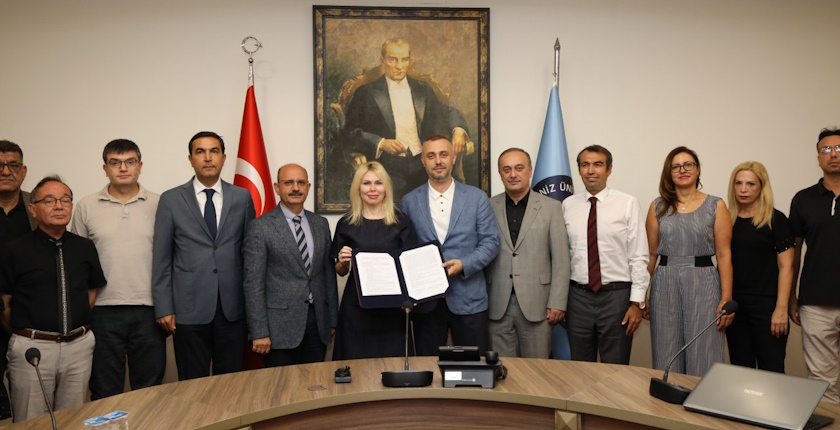
Akdeniz University in Antalya established a partnership with Kopuz Group, which will build and operate a solar power plant of 50.4 MW in peak capacity. The company is completely covering the cost for the facility, which they expect to meet the university’s entire electricity needs.

Municipal authorities in Turkey are emerging as a pillar of the country’s energy transition. They are not only covering public buildings with solar panels, but also investing in larger ground-mounted photovoltaic systems. The trend has also spread to sports venues, particularly football stadiums, alongside educational institutions, infrastructure and transportation including railways, and a range of other social, industrial and commercial activities. Akdeniz University in Antalya particularly stands out with its new deal.

Rector Özlenen Özkan said the aim of the project for a solar power plant of 50.4 MW is to meet the entire electricity demand at the complex home to some 100,000 people. Antalya, located on the Mediterranean coast, was one of the first cities in Turkey that introduced solar power for their own needs.

Akdeniz University to offtake 24% of PV plant’s output

A partnership was launched with Kopuz Group and Kopuz Energy, selected through a tender. The company will build the facility in Yeşiloba in the Korkuteli district. The cooperation works under a build-operate-transfer model, for 25 years.

The private partner bears all the costs of construction and commissioning, estimated at EUR 52.6 million. The company has two years to complete the PV plant, by far the biggest among all universities in Turkey. It is also the largest public-private partnership involving a university, in the solar power segment, Rector Özkan stressed.

The solar power plant will save EUR 2.3 million in electricity costs

In her words, the facility will generate 100 GWh per year, of which Akdeniz University would offtake 24%. The deal will lower its electricity costs by 31%, Özkan added and pointed out that it translates to EUR 2.3 million. The electricity bill of the university hospital in July amounted to almost EUR 650,000, she revealed.

The site for the PV plant is in a mountainous area and on non-agricultural land, Özkan pointed out.

Antalya is in Turkey’s top league in energy transition

As for the Antalya Metropolitan Municipality, it has almost 15 MW in peak capacity in 22 PV units in operation or under construction. They include a 5 MW ground-mounted solar farm.

The facilities cover more than half of the electricity needs of the local authority. Notably, it uses solar power to assist farmers, produce drinking water and treat wastewater.

According to the city government, Antalya is the first in Turkey to generate and store its own electricity. Moreover, it produces energy from waste and biomass.

A major solar cell factory located just outside the city is undergoing expansion and the complex will also make PV panels. Turkey hosts more than 23 GW of solar power capacity.

by in News

Water shortages in Southeastern Europe point to desalination as strategic approach

Former Minister of Environment and Water of Bulgaria Borislav Sandov is urging the country’s authorities to deploy alternative water supply solutions, including desalination, to counter shortages. Greece is preparing a radical change in its water management model. Turkey got its first floating seawater purification platform, running on solar and wind power.

Southeastern Europe is among the most jeopardized regions in the world in the context of global warming. The lack of water has the most drastic effect on everything from wildlife to food production, energy and public health. Bulgaria’s former Minister of Environment and Water Borislav Sandov warned that over half a million people in the country are at risk of water shortages.

Eastern and northeastern Bulgaria have a persistent issue with droughts and lack of water, necessitating a switch toward alternative forms of supply in the next five to 10 years, including seawater desalination plants, he recently told bTV.

In addition to climatic factors, there are serious shortcomings in water management, together with theft and corruption, Sandov claimed. He pointed to an example where drastically undersized pipes of poor quality were installed in one area, resulting in constant breakdowns and supply interruptions.

Sandov attributed some of the water stress to fragmented management between different local, regional and national institutions. In his words, as much as 10% of all settlements in Bulgaria, though mostly small ones, aren’t covered by waterworks and sewerage systems. Moreover, 44% of the water in the network isn’t measured in volume terms at the entry point and 50% of the water sources don’t have a valid permit from the competent authority, he added.

Notably, a quarter of the population in neighboring Serbia occasionally or permanently lacks safe drinking water from waterworks systems.

Greece to radically change its water management system

Greece decided to get ahead of the droughts and heatwaves. The government has promised radical change in water management: a more functional system with more investments and new technologies, including desalination, but also recycling.

Tourism in the summer months exacerbates the water stress. On some islands, demand surges by up to 30 times. It creates conflict with the needs for irrigation for food production. Greek islands mostly use underground aquifers with easily exhaustible capacity.

Rainfall and snowfall in the country are gradually decreasing.

Similar to Bulgaria, water management is spread across hundreds of operators and institutions, lacking coordination. Losses in drinking water supply amount to as much as 40%, in comparison with up to a staggering 60% in irrigation.

The government in Athens promised water would remain a public good

According to a study by Deloitte with data from 2022, more than EUR 10 billion is necessary for investments in the two segments, excluding Attica. It is where Athens is located. Another EUR 500 million to EUR 700 million is needed for the peninsula.

Government-controlled power utility Public Power Corp. (PPC) will reportedly enter the game, not least because municipal water and sewerage firms owe it more than EUR 400 million. The company would convert debts into minority stakes in three centralized entities: for the regions of Athens and Thessaloniki and the rest of the country, the media learned.

PPC can contribute with its knowhow and experience in the construction and operation of dams and hydropower plants.

Importantly, the government vowed to keep water a public good.

Floating desalination platform with hybrid power plant put into operation in western Turkey

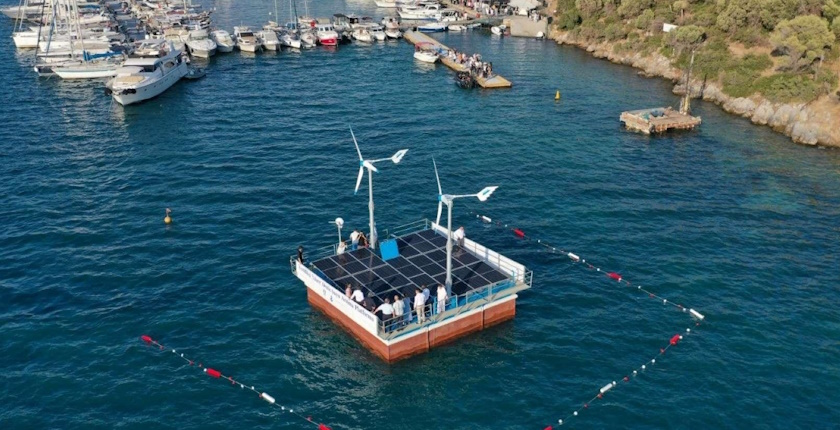
Right opposite the Greek island of Kos, offshore Bitez Marina, the Bodrum Municipality inaugurated Turkey’s first floating seawater purification platform. It runs entirely on renewable energy, producing 20 cubic metres of clean, non-potable water every day.

The project was developed in partnership with Istanbul-based company Blue Hybrid Solutions. The facility is powered by solar panels and two small wind turbines. It delivers water to an onshore tank for irrigation, emergency needs and, when required, public consumption, the local authority said.

Greece is already conducting a massive project for energy independence of numerous non-interconnected islands, including investments in desalination powered by renewables. It is also working to link other islands to the mainland grid.

[wpcc-iframe title=”BODRUM BELEDİYESİNDEN BİR İLK YÜZER DENİZ SUYU ARITMA PLATFORMU TANITILDI” width=”500″ height=”281″ src=”https://www.youtube.com/embed/KApvKHO8OS4?feature=oembed” frameborder=”0″ allow=”accelerometer; autoplay; clipboard-write; encrypted-media; gyroscope; picture-in-picture; web-share” referrerpolicy=”strict-origin-when-cross-origin” allowfullscreen=””]

by in News

EU donates EUR 240 million to Serbia for environment, energy efficiency

The European Union approved EUR 240 million in non-repayable assistance to Serbia from pre-accession funds for projects worth an overall EUR 325.2 million. The investments, intended for the period through 2032, are for waste and wastewater management, energy efficiency improvement and the transition to renewable energy sources.

Serbia and the European Union signed a financing agreement for the Multiannual Operational Programme on Environment and Energy, worth EUR 325.2 million. It includes EUR 240 million in non-repayable funds from the Instrument for Pre-accession Assistance, and Serbia is providing the rest.

State institutions will run the mechanism under an indirect management system, in accordance with the way that EU member states conduct programs within the cohesion and regional development funds. The agreement is another type of support in EU accession, the Ministry of European Integration said.

Grants also intended for green energy, waterworks

Serbia’s National IPA Coordinator and State Secretary at the Ministry of European Integration Mira Radenović Bojić said the agreement enables significant financial support for improving environmental protection and further developing the energy sector.

“This way we secured support for sustainable waste management, improvement of wastewater treatment infrastructure and the promotion of energy efficiency measures in public buildings and households,” she stressed. Radenović Bojić added that the assistance package also covers the development of capacities for the transition to renewable energy sources as well as the improvement of public waterworks and sewerage systems.

The program involves measures to protect air quality, aiming to lower harmful emissions and improve public health.

“In addition to renewing or building infrastructure, the program will support the development of strategic documents and plans for the harmonization with European Union standards. We will invest in capacity building of local and national institutions and in the development of technical documentation. Ultimately, the program will enable better cooperation with the relevant national and international stakeholders including civil society organizations and the private sector, in order to secure integrated implementation and improvement of the sustainable development policy,” Mira Radenović Bojić pointed out.

Von Beckerath: Our joint future depends on green, just transition

The agreement is another example of the EU’s strong and long-standing commitment to supporting Serbia on its path toward the EU, said the new Ambassador of the EU in Serbia Andreas von Beckerath.

“Environmental protection and sustainable energy are not only the core of the European Green Deal, but they are key to improving the quality of life of all citizens. With this significant investment, in synergy with the new Growth Plan for the Western Balkans, our goal is to accelerate Serbia’s alignment with EU standards and help the materialization of tangible benefits for citizens and the environment. Our joint future depends on this green and just transition, and we are delighted that we will go down that path together,” the chief of the Delegation of the EU stated.

The plan includes EUR 141.9 million for waste and wastewater and EUR 140 million for air quality and energy efficiency

The program, which covers the programming years 2024-2027, will be implemented from 2025 to 2032. It consists of EUR 141.9 million for waste and wastewater management and waterworks, EUR 140 million for air quality and energy efficiency and EUR 43.3 million for technical support.

There is EUR 44.9 million in the program earmarked for 2024, followed by EUR 108 million for the current year and EUR 76.8 million and EUR 95.5 million for the next two.

by in News

Council of Europe urges North Macedonia to improve environment, protect Romas from disproportionate risks

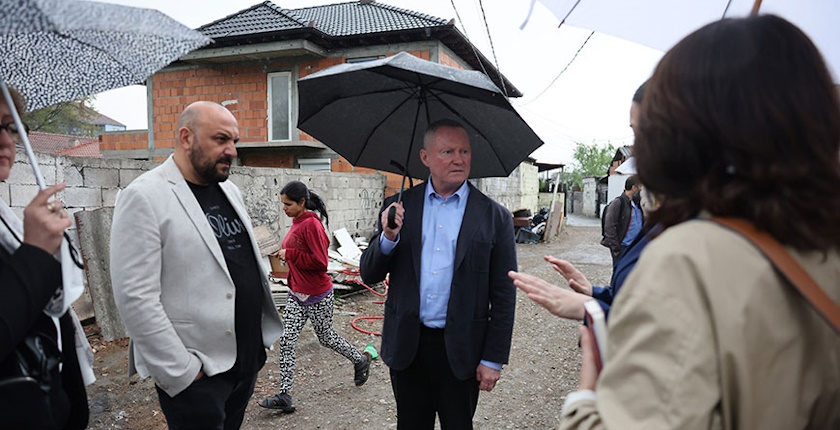
North Macedonia should bridge the gap between commitments and reality on human rights of Romas and environmental protection, the Council of Europe said. In his new memorandum, the organization’s Commissioner for Human Rights Michael O’Flaherty raised concerns about environmental risks disproportionately affecting Romas, including air and waste pollution, lack of sanitation and exclusion from public services.

As for broader environmental issues, the official noted that poor implementation of laws negatively impacts health and human rights, with cities like Skopje, Bitola, and Tetovo among the most polluted in Europe. O’Flaherty also warned of pressure on journalists and activists.

The Council of Europe Commissioner for Human Rights Michael O’Flaherty published a Memorandum on the Human Rights of Roma and on Issues Related to the Right to a Clean and Healthy Environment in North Macedonia, following his visit in April. He acknowledged the country’s significant efforts and political will to address human rights challenges faced by the Roma community.

Nevertheless, the official observed a gap between the policy framework and its implementation. O’Flaherty expressed concern that Romas continue to face discrimination, poverty and social exclusion. The government responded that relevant authorities would give careful attention to his recommendations.

The commissioner pointed to environmental risks disproportionately affecting Romas, including air and waste pollution, lack of sanitation and exclusion from public services.

Turning to broader environmental issues, he noted North Macedonia’s strong legal and policy framework and international commitments, including constitutional recognition of the right to a healthy environment, criminalizing ecocide and pledging to phase out coal. “Yet, poor implementation negatively impacts health and human rights, with cities like Skopje, Bitola, and Tetovo among the most polluted in Europe. Challenges remain in waste management, pollution control, and public access to environmental information,” the Council of Europe said.

Marginalized Roma communities disproportionately exposed to environmental hazards

O’Flaherty was informed that marginalized Roma communities experience disproportionate exposure to environmental hazards due to poverty and their living conditions. He visited a settlement in Skopje that has not been legalized in Skopje.

In such settlements, Romas often live in precarious conditions, with dwellings prone to mould and lacking access to services that are essential for living in a healthy environment, including sanitation facilities, sewage systems and clean running water, the memorandum reads.

Air quality meters have been installed in other parts of the city of Skopje, but not in the Roma-dominated Šuto Orizari

“The commissioner is concerned that vulnerable Roma communities are overexposed to air pollution because of poor quality housing and because they burn wood, plastic and waste for heating, due to poverty and a lack of access to safe energy sources. This increases the risk of respiratory illnesses, chronic diseases and reduces life expectancy. In this regard, the commissioner notes that air quality meters, designed to measure spikes in pollution levels and warn the inhabitants, have been installed in other parts of the city of Skopje, but not in the municipality of Šuto Orizari,” mostly inhabited by Roma, the report adds.

The official was informed that areas inhabited by Romas are sometimes excluded from public garbage collection, exposing them to waste pollution and further health risks.

Efforts underway to provide jobs, equipment to informal waste recyclers

O’Flaherty highlighted the recent efforts to equip a local kindergarten in Šuto Orizari with solar panels for heating and to increase the number of parks. In addition, he said he was impressed by a social enterprise that works for the recognition of the contribution of informal waste recyclers to environmental protection and supports them by providing formal employment and electric tricycles for the transport of waste.

The commissioner recommended that the authorities design and implement measures to uphold the community’s right to a healthy environment, as enshrined in the constitution. It includes access to adequate housing, notably as regards the requirements of adequate location and access to public services like clean water, sanitation and the removal of waste and toxic waste.

Persistent challenges in waste management including illegal landfills

The Council of Europe’s Commissioner for Human Rights acknowledged that North Macedonia has ratified multiple international and regional conventions and agreements related to the protection of nature, the atmosphere, tackling climate change, and dealing with chemicals, waste, soil and industrial accidents. It is one of the few member states of the Council of Europe to have introduced the crime of ecocide.

On the other hand, O’Flaherty raised the issue of the lack of implementation of laws and strategic objectives. He is concerned about negative impacts on people’s health of high levels of air pollution, with three cities in the country – Skopje, Bitola and Tetovo – regularly exceeding safe levels of polluting particles and ranking among the 10 most polluted cities in Europe, and sometimes the world, according to the memorandum.

O’Flaherty acknowledged that serious environmental issues cannot be resolved overnight and praised North Macedonia for numerous efforts

The official wrote about the negative impacts on human rights and the environment posed by persistent challenges in waste management and the proliferation of illegal landfills, disproportionately affecting vulnerable communities including Romas.

Serious environmental problems cannot be resolved overnight, he underscored. The commissioner praised the government for efforts that include increasing the number of electric buses, tax reduction on other electric vehicles, work toward an energy system based on gas and the phasing out of coal, as well as ongoing projects to address toxic sites and illegal landfills.

Access to justice largely absent

O’Flaherty learned that access to justice in cases of environmental human rights violations, including the right to a healthy environment, has been largely absent in North Macedonia.

Individuals supported by nongovernmental organizations working on human rights and the environment were unsuccessful in several environmental court cases. The Macedonian Young Lawyers Association (MYLA or MZMP) reported having brought six cases since 2019 concerning air pollution, waste management and water pollution. They were dismissed, with courts arguing they do not have the competence to deal with such matters.

NGOs also report that in some cases the Aarhus Convention and international law are incorrectly interpreted by domestic courts.

The commissioner observed that environmental activists are generally free to carry out their work in North Macedonia. However, he expressed concern about an increase in the use of vexatious lawsuits or so-called strategic lawsuits against public participation (SLAPPs) to silence investigative journalists and activists.

One example is Investigative Reporting Lab Macedonia (IRL), a journalistic NGO. It was ordered to pay thousands of euros of legal costs in the context of a defamation complaint about its documentary entitled Conspiracy Against the Air. Threats of the use of legal defamation and smear campaigns online are also used to silence activists, the Council of Europe added in the memorandum.

[wpcc-iframe title=”Редакција | Заговор против воздухот | Eпизода 1 | ИРЛ” width=”500″ height=”281″ src=”https://www.youtube.com/embed/asdHr27RgqI?feature=oembed” frameborder=”0″ allow=”accelerometer; autoplay; clipboard-write; encrypted-media; gyroscope; picture-in-picture; web-share” referrerpolicy=”strict-origin-when-cross-origin” allowfullscreen=””]

by in News

Two small hydropower turbines to be integrated into Sofia water supply lines

Veolia received a green light from Bulgaria’s capital city to install two hydropower generators within the city’s major water supply lines. The system is envisaged to generate 12 GWh of electricity per year.

Mostly owned by local authorities and underfunded, water and sewerage utilities in Southeastern Europe are struggling to provide enough drinking water and even to remain financially stable. They are under pressure from the effects of global warming and volatile electricity costs. After a water supply firm in Bansko in southwestern Bulgaria installed a miniature in-pipe hydropower generator, the solution sparked interest throughout the country.

Sofiyska voda, Veolia’s subsidiary that produces drinking water and manages wastewater for the capital city, is about to deploy the technology. In-pipe hydropower systems could play a part in decarbonization and energy efficiency as they are simple and don’t harm the environment. Such devices utilize the flowing water’s kinetic and potential energy and excess pressure – otherwise it would be released in the form of heat through a valve and wasted.

Making Sofia sustainable, energy-efficient, modern European city

Sofia Mayor Vasil Terziev and Country Director of Veolia for Bulgaria, Greece and Albania Francois Debergh signed a memorandum of cooperation for the construction of two small hydropower plants along the city’s trunk water mains.

Earlier, the Sofia Municipal Council approved the findings of a joint working group that explored the possibilities for the investment.

“Our goal is to work consistently for making Sofia a sustainable, energy-efficient and modern European city. One of the key priorities in our vision for development is the use of renewable energy sources. Therefore, among the important fields in which we are working is the construction of small hydropower plants that will allow our city to generate clean electricity locally – with care for nature,” said Mayor Vasil Terziev.

Sofia has been planning in-pipe hydroelectric systems for more than two decades

Such facilities will help reduce the carbon footprint of the capital city and improve the management of water resources, according to the company and the Sofia Municipality, also known as Stolichna (capital) Municipality. They added that renewable energy investments are contributing to the city’s efforts toward energy independence and climate neutrality.

“The project is an example of how the existing infrastructure can be best utilized for clean energy production. After commissioning, the plants will produce approximately 12 GWh of renewable energy per year, which will account for additional annual savings of over 8,000 tonnes of CO2 emissions. The memorandum is fully aligned with Sofia’s commitments to climate neutrality and Veolia’s participation in the NetZeroCities initiative,” Debergh stated.

Sofiyska voda utility striving for energy independence

Sofiyska voda’s wastewater treatment plant in Kubratovo has been energy independent since 2015. It produces biogas from the sludge separated in the process. The parent company stressed that a pending solar power project would make Sofiyska voda the first energy-neutral water supply and sewerage operator in the region, among only a few on the global scale.

The local authority in Sofia recalled there was an idea already in 2003 for eight hydropower facilities on the water supply lines.

Another alternative hydroelectric project was recently unveiled in northwestern Bulgaria. With the ambition to build several hydroelectric plants on pontoons on the Danube river, a local company intends to install a 20 kW pilot facility in Vidin.

by in News

Ex-Yugoslav hydrogen scientists call for funding research with real-world applications

A team of scientists from Slovenia, Serbia, and Bosnia and Herzegovina is working on a hydrogen project based on seawater electrolysis. Dalibor Karačić, Nejc Hodnik, Igor Pašti, and Sanjin Gutić believe their research can deliver a solution fit for commercial use, unlike many hydrogen technologies in development around the world. To unlock the sector’s potential, hydrogen funding schemes must shift the focus from complex and “elegant” solutions to those that can be applied outside the lab, according to the scientists.

Investment in hydrogen technologies worldwide exceeded USD 200 billion in 2023, but most of the research might never produce scalable solutions due to over-complexity and impracticability, according to the four scientists.

Investment in hydrogen research exceeded USD 200 billion in 2023

Karačić, Hodnik, Pašti, and Gutić are working on a NATO-funded project that integrates membrane technology with seawater electrolysis. They claim they are not chasing novelty but “building something that can leave the lab.”

In theory, producing one kilogram of hydrogen requires nine liters of water, and even more in fossil-based hydrogen extraction. On the other hand, their research is based on the assumption that electrolysis from seawater and even wastewater could deliver hydrogen with lower water intensity and without ultrapure inputs, offering significant infrastructure savings.

This is especially relevant for countries like Bosnia and Herzegovina and Serbia, which lack industrial hydrogen infrastructure but possess abundant natural water sources and technical talent, they claim.

Karačić: Balkan countries lack the political will to implement hydrogen solutions

Dalibor Karačić, lead researcher for energy conversion and storage systems at Sarajevo’s Center for Advanced Technologies (CNT), believes that the group’s project can deliver, but warns the region lacks the political will to implement the solution.

“We can deliver, but I don’t know who’s willing to receive it. Political will is lagging behind technical capability,” Karačić said in an interview with Energy News.

Some hydrogen uses do not require expensive high-pressure storage

When it comes to the issue of storage, Igor Pašti, Professor of Electrochemistry at the Faculty of Physical Chemistry of the University of Belgrade, claims that some industrial applications of hydrogen, such as ammonia production or steel processing, do not require expensive high-pressure storage. Tanks at 200 bars can hold hydrogen safely for two years, he explains.

One of the most cited barriers to turning lab success into industrial viability is the fact that many catalyst systems used in lab settings rely on rare metals or unrealistic environmental conditions. According to Nejc Hodnik, Head of Laboratory for Electrocatalysis at the National Institute of Chemistry in Ljubljana, Slovenia, 99% of existing research cannot be scaled because either the material is too unstable or the process cannot work outside the laboratory.

by in News

Impact Report 2024: GGF grows direct lending, committed to energy transition, energy security

In its Impact Report 2024, the Green for Growth Fund outlined how it powers the green transition across Southeast Europe, the Caucasus and beyond – from repurposing coal sites and decarbonizing industries to strengthening energy security and building climate resilience. It ended last year with EUR 1.09 billion in assets under management and an outstanding investment portfolio of EUR 1.03 billion.

Luxembourg-based GGF has become one of the largest green blended-finance funds. It marked its 15th anniversary in 2024 by passing the EUR 1 billion mark in its portfolio.

“To date, we have delivered over EUR 2 billion in green finance through 70+ active financial institutions, companies, and infrastructure projects. This is impact on a systematic level and reflects the dedication of our partners, teams, and investors. We delivered many landmark projects as we continue to grow our direct lending,” the fund said in its 2024 Impact Report: Breaking the billion for lasting green impact.

GGF highlighted its role in transforming legacy energy systems into clean energy sites in North Macedonia. “We are also investing in corporate decarbonization across resource-intensive sectors in Turkey, including the country’s second-largest retail chain. Working with our financial institution partners, Ukraine’s energy security – and the security of the wider region – remains our focus,” the update reads.

Driving the energy transition and strengthening energy security is an urgent task, the fund said and stressed that its commitment remains strong. It ended 2024 with EUR 1.09 billion in assets under management and an outstanding investment portfolio of EUR 1.03 billion.

Energy-intensive sectors in region can decarbonize

The cumulative volume invested in partner lending institutions has reached EUR 2 billion. GGF is active in 18 countries.

“Passing the EUR 1 billion mark brings greater responsibility. We must continue to show the world that energy-intensive sectors in the region can decarbonize and renewables can lead to energy stability and security,” Chairperson of the Board of Directors Simon Gupta stated.

Headline figures include 1.4 million tons of carbon dioxide emission savings per year, which is the equivalent of taking 949,000 cars off the road. GGF supported 1.76 GW of renewable energy capacity through 2024, which is a whopping 36.4% more than one year before. Its activity resulted in 2.16 million cubic meters of water saved or treated per annum, which translates to 865 swimming pools.

GGF strategically manages impact through supporting measures that mitigate climate change and promote sustainable economic growth in Southeast Europe including Turkey, the European Eastern Neighborhood Region, and the Middle East and North Africa.

From coal pit to solar plant

Recognizing the need for energy independence, the Western Balkans are prioritizing projects that support the green energy transition, GGF pointed out.

“But financing is essential to help countries shift to domestic and clean renewable power. We arranged EUR 25.7 million in project financing for a 50 MW solar power generation project on the site of the former Oslomej coal mine in Kičevo, North Macedonia,” it added.

GGF arranged a EUR 25.7 million package for a PV plant on former coal mining land in the REK Oslomej complex in North Macedonia

The region’s reliance on legacy coal-fired power plants has resulted in outages, shortfalls, closures and volatile energy costs, GGF warned. “Governments recognize this and are increasingly prioritizing sustainable power projects aimed at reducing fossil fuel imports, lowering costs and stabilizing energy supply. To fulfill this ambitious agenda, they need support,” the fund stressed.

Oslomej is GGF’s second project finance transaction in North Macedonia, following its investment as a minority shareholder in the 36 MW Bogoslovec wind farm in 2021.

“Our investment in the Oslomej solar project underscores our commitment to North Macedonia’s green energy transition. By reducing reliance on fossil fuels and enhancing energy security, this project aligns with our mission to mitigate climate change and promote sustainable energy solutions,” said Fund Director for GGF at Finance in Motion Borislav Kostadinov.

Of note, he was one of the keynote speakers at this year’s edition of Belgrade Energy Forum (BEF 2025), organized by Balkan Green Energy News. Finance in Motion is GGF’s advisor.

Future-proofing Turkish businesses

The fund provided USD 26 million to Sanko Tekstil, one of the largest yarn producers in Turkey. It financed the full cost of a 20 MW rooftop photovoltaic system and partially covered the construction of a fiber recycling facility in Gaziantep.

Meanwhile, a USD 18 million investment into A101, the country’s second-largest retail chain, is decarbonizing store operations across 81 cities via a large-scale solar installation. It supported a 30 MW solar power project, expected to meet 10% of the company’s electricity needs.

Embedding sustainability

GGF complements its financing with advisory and capacity-building services, and risk-management support. It includes environmental and social due diligence, as well as monitoring, to keep projects aligned with international best practices.

The advisory and capacity-building activities in 2024 focused on embedding sustainability and advancing green finance across partner institutions.

A key highlight was the completion of four Deep Greening Mainstreaming projects, which supported financial institutions in developing strategies in the environmental, social, and governance (ESG) sector, green products, and internal sustainability structures.

by in News

GGF grows direct lending, committed to energy transition, energy security

In its Impact Report 2024, Green for Growth Fund outlined how it powers the green transition across Southeast Europe, the Caucasus and beyond – from repurposing coal sites and decarbonizing industries to strengthening energy security and building climate resilience. It ended last year with EUR 1.09 billion in assets under management and an outstanding investment portfolio of EUR 1.03 billion.

Luxembourg-based GGF has become one of the largest green blended-finance funds. It marked its 15th anniversary in 2024 by passing the EUR 1 billion mark in its portfolio.

“To date, we have delivered over EUR 2 billion in green finance through 70+ active financial institutions, companies, and infrastructure projects. This is impact on a systematic level and reflects the dedication of our partners, teams, and investors. We delivered many landmark projects as we continue to grow our direct lending,” the fund said in its 2024 Impact Report: Breaking the billion for lasting green impact.

GGF highlighted its role in transforming legacy energy systems into clean energy sites in North Macedonia. “We are also investing in corporate decarbonization across resource-intensive sectors in Turkey, including the country’s second-largest retail chain. Working with our financial institution partners, Ukraine’s energy security – and the security of the wider region – remains our focus,” the update reads.

Driving the energy transition and strengthening energy security is an urgent task, the fund said and stressed that its commitment remains strong. It ended 2024 with EUR 1.09 billion in assets under management and an outstanding investment portfolio of EUR 1.03 billion.

Energy-intensive sectors in region can decarbonize

The cumulative volume invested in partner lending institutions has reached EUR 2 billion. GGF is active in 18 countries.

“Passing the EUR 1 billion mark brings greater responsibility. We must continue to show the world that energy-intensive sectors in the region can decarbonize and renewables can lead to energy stability and security,” Chairperson of the Board of Directors Simon Gupta stated.

Headline figures include 1.4 million tons of carbon dioxide emission savings per year, which is the equivalent of taking 949,000 cars off the road. GGF supported 1.76 GW of renewable energy capacity through 2024, which is a whopping 36.4% more than one year before. Its activity resulted in 2.16 million cubic meters of water saved or treated per annum, which translates to 865 swimming pools.

GGF strategically manages impact through supporting measures that mitigate climate change and promote sustainable economic growth in Southeast Europe including Turkey, the European Eastern Neighborhood Region, and the Middle East and North Africa.

From coal pit to solar plant

Recognizing the need for energy independence, the Western Balkans are prioritizing projects that support the green energy transition, GGF pointed out.

“But financing is essential to help countries shift to domestic and clean renewable power. We arranged EUR 25.7 million in project financing for a 50 MW solar power generation project on the site of the former Oslomej coal mine in Kičevo, North Macedonia,” it added.

GGF arranged a EUR 25.7 million package for a PV plant on former coal mining land in the REK Oslomej complex in North Macedonia

The region’s reliance on legacy coal-fired power plants has resulted in outages, shortfalls, closures and volatile energy costs, GGF warned. “Governments recognize this and are increasingly prioritizing sustainable power projects aimed at reducing fossil fuel imports, lowering costs and stabilizing energy supply. To fulfill this ambitious agenda, they need support,” the fund stressed.

Oslomej is GGF’s second project finance transaction in North Macedonia, following its investment as a minority shareholder in the 36 MW Bogoslovec wind farm in 2021.

“Our investment in the Oslomej solar project underscores our commitment to North Macedonia’s green energy transition. By reducing reliance on fossil fuels and enhancing energy security, this project aligns with our mission to mitigate climate change and promote sustainable energy solutions,” said Fund Director for GGF at Finance in Motion Borislav Kostadinov.

Of note, he was one of the keynote speakers at this year’s edition of Belgrade Energy Forum (BEF 2025), organized by Balkan Green Energy News. Finance in Motion is GGF’s advisor.

Future-proofing Turkish businesses

The fund provided USD 26 million to Sanko Tekstil, one of the largest yarn producers in Turkey. It financed the full cost of a 20 MW rooftop photovoltaic system and partially covered the construction of a fiber recycling facility in Gaziantep.

Meanwhile, a USD 18 million investment into A101, the country’s second-largest retail chain, is decarbonizing store operations across 81 cities via a large-scale solar installation. It supported a 30 MW solar power project, expected to meet 10% of the company’s electricity needs.

Embedding sustainability

GGF complements its financing with advisory and capacity-building services, and risk-management support. It includes environmental and social due diligence, as well as monitoring, to keep projects aligned with international best practices.

The advisory and capacity-building activities in 2024 focused on embedding sustainability and advancing green finance across partner institutions.

A key highlight was the completion of four Deep Greening Mainstreaming projects, which supported financial institutions in developing strategies in the environmental, social, and governance (ESG) sector, green products, and internal sustainability structures.

by in News

Alarming rise in unpaid bills from electricity consumers in Greece

A steep rise in arrears was recorded last year in the Greek electricity supply market.

According to the latest report from the Regulatory Authority for Energy, Waste and Water (RAAEY or RAEWW), total debt for electricity rose by EUR 1 billion to EUR 3.4 billion in 2024.

It occurred despite a 10% reduction in retail electricity prices last year in the country.

Out of the total sum, existing customers owe EUR 1.74 billion to their suppliers. Another EUR 1.65 billion is debt by customers that have switched suppliers, leaving unpaid bills behind.

As for the EUR 1 billion of new debt, consumers in the mid-voltage account for EUR 400 million. They are large businesses and small industries. Another EUR 440 million is owed by various water utilities.

In December 2024, the Ministry of Environment and Energy passed a regulation subsidizing water utilities for EUR 200 million of their total debt. It means actual arrears in the segment were smaller, at EUR 240 million, but still sizeable.

Measures to reduce power theft

On top of increasing debt, the Greek market is also faced with a rise in electricity theft. In recent years, the phenomenon has worsened and is estimated to cost law-abiding consumers EUR 400 million per year.

The government and the regulator recently enacted strict fines to reduce theft. Offenders pay more than 100% over the normal power price for stolen quantities. The gradual installation of smart meters starting this year is also expected to help.

Suppliers warn of consequences

Power utilities must handle all the said liabilities. The Greek Energy Suppliers Association (ESPEN) has said that the issues indirectly increase power prices, as companies need to balance their budget through additional hedging and careful positioning.

ESPEN: Suffocating pressure as a result of high arrears

“The accumulation of large arrears causes suffocating pressure to the supply sector, raising prices and leading to negative effects for consumers,” it said.

Furthermore, suppliers asked the Hellenic Electricity Distribution Network Operator (HEDNO or DEDDIE) to waste no time in disconnecting consumers who owe money, in line with guidelines from the network code.

  • 1
  • 2