by in News

Montenegro’s landfill gas power plant entering electricity market

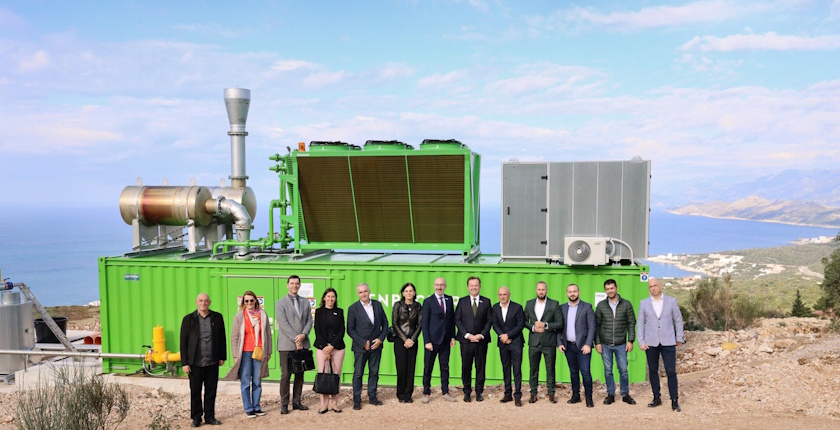
The first landfill gas power plant in the Western Balkans is in test operation, at the Možura landfill in Montenegro. The eponymous, municipally-owned operator has issued calls for maintenance and the selection of an intermediary for the sale of electricity.

The project in the Možura regional landfill for the power plant utilizing biogas from waste is worth EUR 1.8 million. Montenegro is conducting the investment in cooperation with the Centre for International Cooperation and Development (CMSR) of Slovenia. The 0.99 MW facility was built last year and put into trial operation in December. It is the first in the Western Balkans.

Municipal utility Možura has issued public calls for the maintenance of the power plant and the selection of an intermediary for the sale of electricity. The firm estimates annual output of 7.5 GWh and envisages a 95% uptime. The landfill is near the Adriatic coast in the country’s far south.

Deadline for maintenance tender expires on February 6

The maintenance tender is open until February 6. The public enterprise intends to sign a four-year framework agreement with the selected bidder. The first contract, lasting one year, is valued at EUR 149,900, with another EUR 31,479 for value-added tax. The entire allocated sum then translates to EUR 599,600 alongside EUR 125,916 in VAT.

The eligible applicant has built and commissioned at least one system for the production of electricity from landfill gas of at least 500 kW.

As for the entry into the market, the selected company will be an intermediary in the placement of the produced electricity at the organized market – the power exchange. The contract will last until the end of the year.

Every bidder must be a member of the exchange and have at least three active contracts of the same kind with renewable energy producers, according to the documentation. The conditions include a minimum income of EUR 800,000 in the previous business year. The intermediary assumes the balancing responsibility.

Bids will be received by January 26 at noon, when they will be opened, Možura said.

Slovenia covered third of expenses

The Slovenian Environmental Public Fund (Eco Fund or Eko sklad) has donated EUR 681,800 for the landfill gas power plant. The Environmental Protection Fund (Eco Fund) of Montenegro has paid EUR 50,000 for the project design and its revision.

Landfill gas is extracted from waste in so-called sanitary tubs. An earlier study showed that methane accounts for 50%. Austrian company Jenbacher supplied the equipment.

The power plant is connected to the power distribution system. Možura is the destination for municipal waste from Montenegro’s entire coastal area except for the city of Herceg Novi. Next to the landfill is an eponymous wind power plant.

Montenegrin Prime Minister Milojko Spajić said two weeks ago that Itochu from Japan was interested in the project for a municipal waste incinerator in the capital Podgorica, of up to 50 MW.

In the territory of Belgrade, the capital city of neighboring Serbia, concessionaire Beo čista energija is building a landfill gas power plant. According to the project, the facility in the Vinča complex will consist of two equal units totaling 3.2 MW in electricity capacity and 5.8 MW for thermal energy.

by in News

Croatia prepares first bioeconomy strategy

The Government of Croatia has adopted the Draft Bioeconomy Strategy until 2035, which foresees investments of EUR 200 million.

The draft bioeconomy strategy until 2035 will provide a strategic planning framework for intensive sector development and contribute to the economic and social development of the country, according to the Government of Croatia.

The strategy defines the bioeconomy as all sectors and systems that rely on biological resources – animals, plants, microorganisms, and biomass from these sources, including organic waste.

The sectors of agriculture, forestry, fisheries, aquaculture, and the production of food, beverages, and tobacco are fully included in the bioeconomy, the document reads.

Of note, back in 2018 the European Commission has put forward an action plan to develop a sustainable and circular bioeconomy.

The strategy has two goals

Deputy Prime Minister and Minister of Agriculture, Forestry, and Fisheries David Vlajčić pointed out that the strategy defines the vision for the development of the bioeconomy. It will be achieved by 2035 through interventions, strategic projects, and activities, he explained.

The strategy has two strategic goals – the development of sustainable production and raw material markets and the increase of added value in the bioeconomy, the government said.

The achievement of the strategic goals will be financed by funds from European financial programs, co-financed by the state budget, Vlajčić added.

According to the minister, EUR 199 million is envisaged for the implementation of the strategy for the period from 2025 to 2027. For the period from 2028 to 2035, the financial framework would be defined later.

The draft envisages the construction of biomass distribution centers

To achieve the strategic goals, various mechanisms would be used, Vlajčić stressed.

These include the construction of biomass distribution centers, regulating the use of waste sludge, encouraging the construction and modernization of capacities in bioeconomy sectors, promoting the production of packaging from recycled materials, bio-based and biodegradable plastics, and conducting research and innovation related to the bioeconomy.

The strategy should also increase the utilization of by-products, residues, and waste from production and processing in the agriculture, forestry, and fisheries sectors and stimulate the biomass market.

The government adopted a decision on October 13 to initiate the development of the bioeconomy strategy by 2035. The Ministry of Agriculture, the Ministry of Economy and Sustainable Development, the Ministry of Science and Education, and the Ministry of Regional Development and European Union Funds have cooperated in the production of the draft.

by in News

Spajić: Japanese company Itochu eyes Montenegro’s waste-to-energy project

Prime Minister of Montenegro Milojko Spajić said an incinerator of up to 50 MW is about to be built, resolving the municipal waste management issue. He added that Itochu from Japan is interested in the investment.

Following a public call for a feasibility study for a waste-to-energy facility in Podgorica, Prime Minister Milojko Spajić said Montenegro would soon build the first incineration plant. It will enable up to 50 MW of renewable energy from waste, sorting out the matter of municipal waste management in accordance with the European Union’s directives and in an environmentally friendly way, in his words.

The public-private partnership will facilitate the construction of an incinerator for the capital city, but it would also be an option for other municipalities, according to Spajić. The prime minister revealed that Japan-based engineering giant Itochu is among the companies interested in the project.

Deponija, the utility in charge of waste management in Podgorica, launched the public call in September. The contract was awarded last month to a consortium of local firms Vatreks Rescue CG and Medix, and Slovenia-based GP sistemi.

A consortium has won the contract for the feasibility study for the incineration facility in Podgorica

They are due to deliver the documentation within two months. The job is worth EUR 435,600 including value-added tax.

There was no indication in the project task about the preferred technology for the incinerator. Such facilities are usually cogeneration plants, combined heat and power (CHP).

In the Western Balkans, there is only one municipal waste incinerator that recovers energy. It is located in Belgrade, the capital of Serbia. Utilizing waste to generate energy is a component of the waste management hierarchy. Incinerators are present all over Europe.

Podgorica’s waste utility Deponija runs the city’s landfill. It already captures biogas, but it flares it without utilizing the energy.

Executive director Aleksandar Božović said the firm would soon obtain the licenses and documentation to build a biogas power plant. The study has been completed, and Deponija is working to secure a grant from an international financial institution, he asserted.

by in News

Spajić: Japanese company Itochu eyes Montenegro’s waste-to-energy project

Prime Minister of Montenegro Milojko Spajić said an incinerator of up to 50 MW is about to be built, resolving the municipal waste management issue. He added that Itochu from Japan is interested in the investment.

Following a public call for a feasibility study for a waste-to-energy facility in Podgorica, Prime Minister Milojko Spajić said Montenegro would soon build the first incineration plant. It will enable up to 50 MW of renewable energy from waste, sorting out the matter of municipal waste management in accordance with the European Union’s directives and in an environmentally friendly way, in his words.

The public-private partnership will facilitate the construction of an incinerator for the capital city, but it would also be an option for other municipalities, according to Spajić. The prime minister revealed that Japan-based engineering giant Itochu is among the companies interested in the project.

Deponija, the utility in charge of waste management in Podgorica, launched the public call in September. The contract was awarded last month to a consortium of local firms Vatreks Rescue CG and Medix, and Slovenia-based GP sistemi.

A consortium has won the contract for the feasibility study for the incineration facility in Podgorica

They are due to deliver the documentation within two months. The job is worth EUR 435,600 including value-added tax.

There was no indication in the project task about the preferred technology for the incinerator. Such facilities are usually cogeneration plants, combined heat and power (CHP).

In the Western Balkans, there is only one municipal waste incinerator that recovers energy. It is located in Belgrade, the capital of Serbia. Utilizing waste to generate energy is a component of the waste management hierarchy. Incinerators are present all over Europe.

Podgorica’s waste utility Deponija runs the city’s landfill. It already captures biogas, but it flares it without utilizing the energy.

Executive director Aleksandar Božović said the firm would soon obtain the licenses and documentation to build a biogas power plant. The study has been completed, and Deponija is working to secure a grant from an international financial institution, he asserted.

by in News

Slovenian company Talum to install solar power plants on waste landfills

Aluminium producer Talum plans to install solar power plants of up to 60 MW overall. The project could boost utility-scale solar in Slovenia, where small PV facilities installed by firms and households account for almost the entire operating capacity of 1.5 GW.

Currently the largest solar power plant in Slovenia has a capacity of 7.1 MW. Located near the village of Krvavi Potok, it started operating in July.

Notably, the expansion of the Prapretno photovoltaic plant is underway – from 6 MW to 9.8 MW. The largest project is for the Družmirje floating solar plant, for 140 MW.

Talum told state news agency STA it is developing a project to install large solar power plants on the area of its two closed waste landfills in Kidričevo that have valid environmental permits, public broadcaster RTV SLO reported. The endeavor is in accordance with the Law on the Introduction of Devices for the Production of Electricity from Renewable Energy Sources as well as with sustainable policies, it added.

Talum is awaiting response from the Ministry of Natural Resources and Spatial Planning

The company’s project design envisages the installation of solar power plants with a total capacity of up to 60 MW at the landfills.

The company initiated a project approval procedure in July at the Ministry of Natural Resources and Spatial Planning, including additional studies. It said it would proceed with preparing the necessary documentation and other activities for the construction, after receiving a response.

It isn’t the first solar project for Talum. In 2023, it installed solar panels of 3.78 MW altogether on five buildings. Additionally, the company hosts two battery energy storage systems (BESS) on its land. NGEN commissioned a 15 MW / 30 MWh unit in 2020, and GEN-I inaugurated a 12 MW / 24 MWh facility a month ago. NGEN has also announced it would install a 70 MW BESS on the site.

Red sludge danger

Local NGO Gibanje za Kidričevo has objected to the project in a letter to Prime Minister Robert Golob and the European Commission.

Solar power plants shouldn’t be built on such sites, according to the group.

It recalled that in 2014, the European Commission classified red mud as hazardous mining waste, following an accident in Hungary four years earlier.

Talum responded that the red mud landfill has a valid environmental permit as a non-hazardous waste landfill.

The project design for the solar power plants envisages the implementation of additional measures on the closed landfills aimed at improving the state of the environment, the company explained.

Of note, Talum used to produce aluminum, but after closing its electrolysis facility, it switched to recycled aluminum products.

by in News

Nearly 9 in 10 citizens in Serbia call for deposit return system – survey

Almost 90% of citizens in Serbia support the introduction of a deposit return scheme, according to a survey conducted by Every Can Counts. It is also the highest level of support among all 16 countries where the poll was conducted.

The report titled Global Recycling Habits and Attitudes 2025, based on the survey’s results, represents another confirmation that citizens in Serbia support the introduction of a deposit return scheme (DRS). Similar survey results were published in 2021 and 2022.

Despite officially planning it for many years, the authorities in Serbia haven’t rolled out such a deposit mechanism yet. According to one of the latest announcements, from October 2023, the introduction is set for 2027.

The benefits of a deposit system are well known. Romania is among the countries that introduced it relatively recently.

Following its 2020 and 2022 campaigns, Every Can Counts (ECC) commissioned another global research in 2025 into people’s recycling behaviours and attitudes. The study was designed and analysed by Made with Insight.

It covered 16 countries: Belgium, Brazil, the Czech Republic, France, Greece, Hungary, Ireland, Italy, the Netherlands, Poland, Romania, Serbia, Spain, the United Arab Emirates, the United Kingdom and the United States.

Plastic pollution tops global concerns

world Every Can Counts report 2025 serbia drs plastic pollution

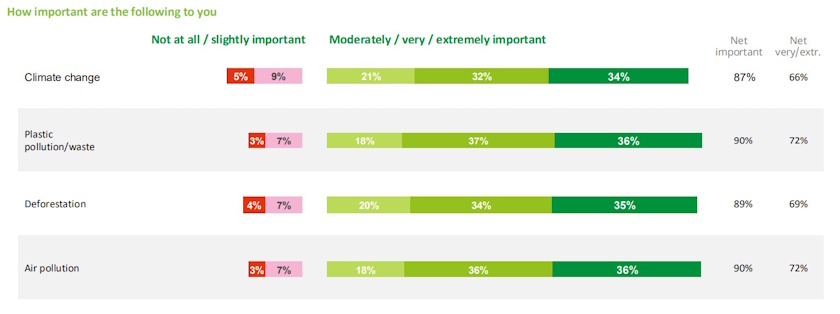
Plastic pollution tops global concerns, matching climate change, deforestation, and air pollution in public priority. Nearly 9 in 10 people worldwide see plastic waste as an important issue and 72% say it is very/extremely important.

The strong consensus highlights growing public demand for action to reduce plastic waste alongside broader climate and environmental goals, according to ECC.

Perceptions of drink cans vary notably by market but remain relatively low across all measures. For recyclability, the highest scores come from the USA (25%), Serbia (24%), and Greece (23%). Sustainability perceptions peak in the UAE (22%) while circularity scores are highest in Greece (23%) and Serbia (22%).

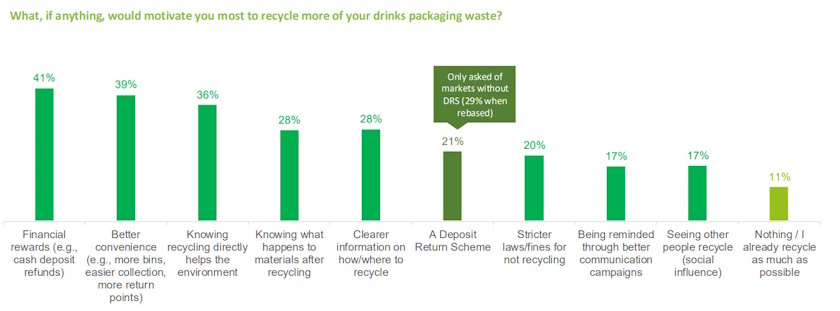
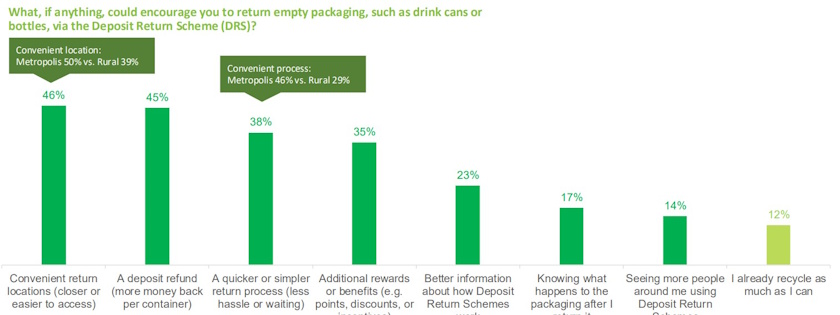
While there is no silver bullet, the strongest motivators for recycling are financial rewards such as deposit refunds (41%) and better convenience (39%), the report reads.

world Every Can Counts report 2025 serbia drs recyclng motivation

Financial incentives resonate most in Romania (53%), and convenience is the strongest in Greece. Brazil is exceptional for environmental impact (55%), followed by Romania, Serbia and the UAE – all with 46%.

Attitudes towards recycling show two clear patterns, according to the report. First, making recycling more engaging through rewards, games or interactive apps could boost participation, particularly in Brazil (83%), Greece (81%) and Serbia (88%), while interest is lower in markets such as the Netherlands (53%) and Belgium (60%).

Second, there is near universal agreement that manufacturers and brands should be required to use fully recyclable or recycled materials, the report underlines.

DRS is less supported in the USA

world Every Can Counts report 2025 serbia drs support

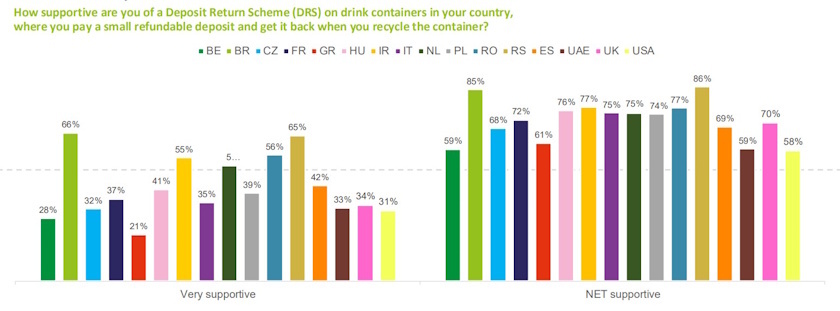
A majority supports DRS in all markets, but the intensity of support varies considerably. Net support ranges from 58% in the USA to 86% in Serbia.

Levels of strong, “very supportive” sentiment show sharper contrasts. Brazil (66%), Serbia (65%), Romania (56%), Ireland (55%) and the Netherlands (51%) stand out as markets with a majority of strong supporters.

At the other end of the spectrum, Greece (21%), Belgium (28%), the USA (31%), the Czech Republic (32%) and the UK (34%) record the lowest intensity.

Convenience and incentives are the top drivers overall while information is generally a weaker motivator, but the mix differs by market, the report reads.


world Every Can Counts 2025 report serbia drs recyclng motivation

Higher deposit refunds are most influential in the Czech Republic and Spain, while Serbia and Greece balance convenience and refunds more evenly.

When looking only at those who “strongly agree,” support levels show sharper contrasts.

Romania and Serbia stand out with strong calls for all one-way packaging to be included (67%). Brazil scores high across most categories but is weaker on personal responsibility for returning cans.

Hungary, Ireland, Romania and Serbia show high trust that returned containers are recycled, while trust is lower in the Czech Republic, Belgium, France or Greece, ECC concluded.

by in News

Green resilience: How Kyiv is shaping a sustainable future amid crisis

Balkan Green Energy News, the media partner of the 2025 Just Transition Young Voices Awards, is publishing the three winning articles. The Energy Community Secretariat organized the contest in collaboration with Bankwatch, CAN Europe, the CLEW Network, and the Regional Youth Cooperation Office. The aim is to promote young adults set to shape the climate, energy, and social landscape in the years ahead in the Energy Community region. 

Author: Kateryna Pereloma

Kyiv, the heart of Ukraine, is a city renowned for its golden domes, cultural depth, and enduring spirit. In recent years, especially since the full-scale invasion of Ukraine in 2022, the people of Kyiv have faced extraordinary challenges. But amid the destruction and uncertainty, a new kind of rebuilding has taken root – one that is greener, smarter, and focused on long-term sustainability.

When the war disrupted supply chains, energy infrastructure, and food systems, communities across Kyiv were forced to adapt quickly. What began as survival soon evolved into innovation. As energy security became a national priority, citizens and officials in Ukraine’s capital started reimagining what a more self-reliant and sustainable city could look like.

One of the most visible changes has been the rise of solar energy. While Ukraine had been developing renewables before the war as well, the conflict accelerated the adoption of decentralized energy sources.

In many neighborhoods, especially those affected by blackouts and grid instability, residents pooled resources to install rooftop solar panels, solar-powered water heaters, and even small-scale battery storage systems. Tenants’ associations in apartment buildings began using crowdfunding platforms to raise money for green energy upgrades. My neighbor, for example, spearheaded a project in our building to install solar panels that now help power our elevator and joint lighting systems.

Solar energy became lifeline for schools, hospitals, critical infrastructure

Schools and hospitals also embraced solar as a lifeline. Through international aid and local initiatives, dozens of Kyiv’s critical infrastructure facilities have been outfitted with renewable energy systems.

This isn’t just about environmentalism – it’s about resilience. When the power goes out during missile attacks or rolling blackouts, these systems keep vital services running. The city’s shift to green energy has become a form of defense as much as it is a commitment to sustainability.

Waste management has also undergone a transformation. Before 2022, recycling in Kyiv was limited and often inconsistent. But since the war began, grassroots recycling programs have surged. Volunteer-led sorting centers appeared in districts like Obolon, Podil, and Solomianskyi, where residents bring plastics, paper, electronics, and batteries.

These centers often operate out of garages, schoolyards, or community centers – and they’re staffed by locals determined to reduce waste and pollution. The Zero Waste Alliance Ukraine, a nonprofit that started as a small awareness campaign, has grown into a national network promoting sustainable consumption and waste reduction in cities like Kyiv.

Modernizing Kyiv’s subway system is priority

Public transportation is another area where the city has made strides. Although metro stations are damaged and they doubled as bomb shelters during attacks, Kyiv’s subway system remains one of the greenest forms of transport in the region. The city government, recognizing its importance, has prioritized its modernization.

The number of cyclists is rising, and so is the length of bike lines

Electric buses are being introduced, and there are pilot projects for low-emission zones in the city center.

The number of bicycle commuters has also increased significantly since fuel prices soared and road conditions became more unpredictable. I started biking to work last year, and I’ve noticed more bike lanes being marked, as well as more people making the same choice – not only for convenience but for the environment.

Local communities farming strawberries between buildings

Food systems are shifting, too. With imports disrupted and many large-scale farms in occupied or war-damaged areas, Kyiv residents began to grow food in unexpected places. Urban gardening took off in parks, on balconies, and even in underground shelters.

In our district, we turned a neglected courtyard into a communal garden with tomatoes, herbs, and strawberries. It’s not a large-scale solution, but it brings people together, reduces dependence on long supply chains, and fosters a deeper connection to the land.

Green startups popping up throughout Ukraine’s capital city

Crucially, these changes are being supported by a growing culture of green entrepreneurship.

Startups focused on eco-construction, sustainable packaging, and electric mobility are popping up throughout the city. One standout example is a Kyiv-based company that makes biodegradable packaging from hemp – a plant widely grown in Ukraine.

Another startup, EcoFactor, retrofits older buildings to improve their energy efficiency, employing many internally displaced people in the process. These green businesses don’t just support the environment; they offer livelihoods and hope amid uncertainty.

Youth and students are looking toward a sustainable post-war future

Perhaps most inspiring is the role of young people in this transition. Ukrainian youth have always been politically and socially active, but the war has heightened their sense of responsibility.

Environmental clubs in Kyiv universities are organizing climate literacy workshops, cleanup events, and public advocacy campaigns – even during air raid alerts. I recently attended a student-led event called Green Rebuild, where architecture and engineering students presented ideas for post-war reconstruction using sustainable materials and passive design principles.

It struck me that the generation growing up during war is also the one leading us toward a cleaner, more conscious future.

Even amid destruction, there can be creation

Our shift toward a green local economy isn’t linear or perfect. There are still challenges with funding, access to technology, and bureaucratic delays. And yet, what’s happening here is remarkable: a city under siege is laying the foundations for a sustainable future. We are proving that even amid destruction, there can be creation – that rebuilding a nation can also mean rethinking how we live, produce, and share.

In Kyiv today, sustainability is not just a political goal or a global trend – it’s a grassroots reality. It’s neighbors coming together to plant gardens, fix solar panels, sort recyclables, and imagine better ways of living. It’s resilience not only in the face of war, but in the face of climate change, inequality, and old ways of doing things.

The capital city’s story is still unfolding. But as we rebuild, we are building green – not because it’s fashionable, but because it’s essential. And in doing so, we’re showing the world that even in the darkest moments, there is light – and sometimes, that light comes from solar panels on a Kyiv rooftop.

by in News

City of Osijek has highest waste separation rate in Croatia

Osijek has reached a 57.92% waste separation rate in 2024, the highest score among the four largest cities in the country.

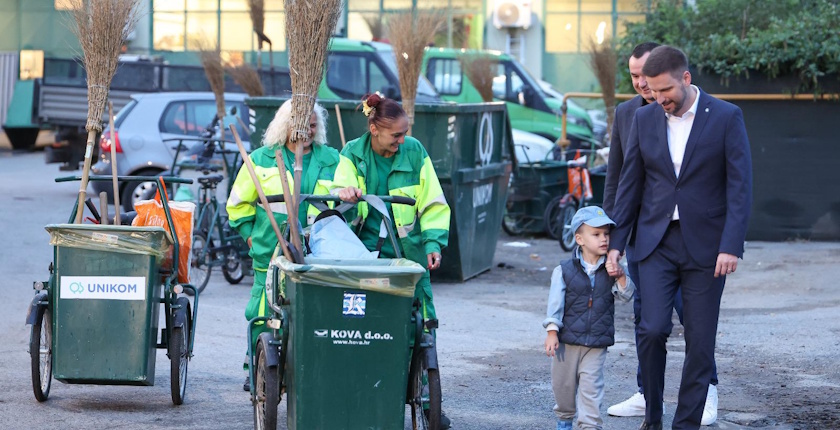
Osijek, with a share of 57.92% of separately collected waste, is again the best among large cities in Croatia, according to Mayor Ivan Radić. Because of the achievement, he visited the employees of the city’s waste utility Unikom in the early morning hours.

He stressed that the success is the result of responsible citizens who separate waste, the dedicated work of Unikom employees, and ongoing investments in infrastructure.

Osijek has four recycling yards, including a mobile one. They are able to separate 52 types of waste. There is also a composting facility. As the mayor pointed out, the local authority invests in consumer education, from kindergartens to its Eco City Waste Fest, because it aims to maintain and improve the achieved results.

Osijek is the only major Croatian city that doesn’t pay penalties for not achieving waste separation targets

Radić underlined that Osijek is the only large Croatian city that, thanks to waste separation above 50%, doesn’t pay penalties.

Municipal authorities in Croatia pay fines per ton of landfilled waste that was supposed to be separated and properly processed in line with waste management rules. The fine for 2025 was set at EUR 30 per ton. The obligatory separation rate for 2025 is 50%.

Unikom CEO Igor Pandžić highlighted that in 2024, a total of 36,000 tons of municipal waste were collected, of which nearly 21,000 tons were recyclable waste. The largest portion was biodegradable waste, thanks to the composting unit, into which the city continues to invest.

Osijek has maintained a waste separation rate above 57% for two consecutive years

Paper, plastic, glass, and metal accounted for over 9,000 tons, Pandžić said, and recalled that Osijek achieved a waste separation rate above 57% for two consecutive years.

He said more projects are underway, including the expansion of the composting facility and the establishment of a center for recycling bulky waste, which would further reduce the quantities ending up at the Lončarica Velika landfill.

In Pandžić’s words, they are important steps in terms of the circular economy. “What our fellow citizens separate, we process into a new product like compost, which then goes back into gardens and yards,” he explained.

At the meeting with the workers, the mayor and the CEO announced a 10% salary bonus as a reward for their work.

by in News

Race against time to secure EU funding for waste-to-energy plants in Greece

Hostile reactions from citizens and the opposition by municipal authorities threaten to derail Greece’s efforts to build six waste-to-energy plants. Moreover, time is running out to secure EUR 800 million in European funding.

The Ministry of Environment and Energy is expected to publish a call for waste-to-energy projects planned in Attica, Western Macedonia, Rodopi, Peloponnese, Boeotia (Viotia) and Crete. Total investment would amount to EUR 1 billion, for 1.19 million tons in capacity. However, time is running out to secure EUR 800 million in European funding set aside for them and the accompanying recycling plants.

Greece has been warned several times by the European Commission and fined for failing to fulfil its obligations in waste management. The country still relies mostly on landfills to handle municipal waste, instead of modern solutions. Ideally, useful materials should be sorted for recycling before the waste gets burned in incinerators to produce energy.

Two of the proposed units, the ones in Rodopi and Western Macedonia, are expected to provide district heating. The Ptolemaida 5 lignite-fired plant supplies district heating in the coal region of Western Macedonia in the country’s north, but it is scheduled to be decommissioned by 2028 at the latest.

Its owner, Public Power Corporation (PPC or DEI) aims to complete a waste-to-energy plant by then. Other prospective investors include GEK Terna, Metlen, Aktor and Motor Oil Hellas, all big players in the country’s energy market.

High fees and pollution worry municipalities

Many local authorities have expressed their objections to hosting these plants, fearing a rise in municipal fees and pollution. A discussion is underway in numerous municipal councils. They could lodge appeals to the Supreme Court and delay the process.

Amanatidis: Cancel all waste-to-energy plans

The regional council of Western Macedonia recently voted overwhelmingly to reject the plan for PPC’s planned unit from the ministry’s strategic environmental assessment (SEA). Governor Giorgos Amanatidis called on the government to withdraw the study and cancel the project. Municipalities in the same region and other institutions are also against an incinerator.

European funding through the National Strategic Reference Framework (NSRF) ends in 2027. The government and investors have until mid-2026 for implementation, Newmoney reported, adding that waste-to-energy projects take two to three years to complete.

Recently, another initiative, the Apollo program, for investments in renewable energy to lower energy costs for vulnerable consumers, lost EUR 100 million from the EU’s Recovery and Resilience Facility (RRF).

by in News

Researchers from Denmark, Serbia, Slovenia creating carbon footprint calculator for glass products

A group of researchers from Serbia, Slovenia, and Denmark is creating a completely new, scientifically based tool for assessing environmental impact – a carbon footprint calculator for glass products. The calculator can contribute to reducing the total greenhouse gas emissions in the sector to zero.

The project Glassmaking Tradition Meets Innovation is implemented by Slovenian organization Kreativno središče Center Rog, three entities in Serbia – Foundation Institute for Creative Entrepreneurship and Innovation, the Creative Glass Serbia initiative, and the Foundation for the Advancement of Economics (FREN) – and the Museum Sydøstdanmark from Denmark.

The calculator is based on an original and innovative methodology that will conduct an interdisciplinary analysis of different types of glass materials, especially glass waste, and the ways they can be creatively processed, according to Creative Glass Serbia.

Molnar: Glass practically never has to become waste

The tool will enable artists and creative entrepreneurs across Europe who work with glass to calculate the carbon footprint of various handcrafted glass items. With the help of the calculator, they will be able to reevaluate their materials, techniques, tools, designs, and ideas to develop more sustainable practices and create new values that are in line with modern ecological standards in an era when humanity is struggling with the consequences of climate change.

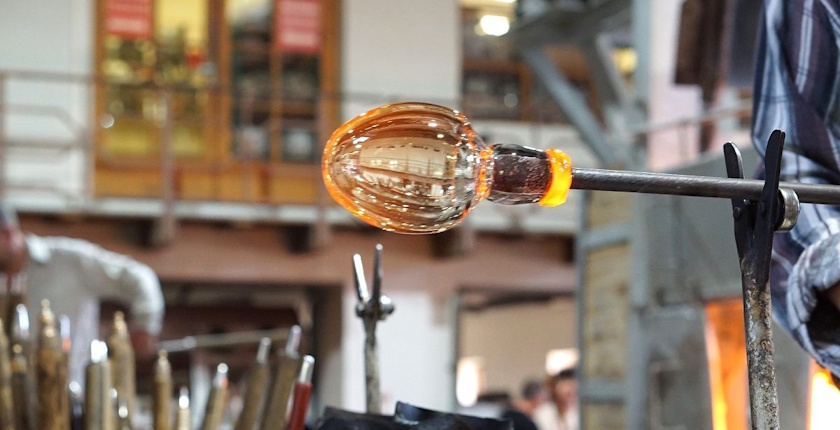
Photo: Creative Glass Serbia

Dejan Molnar from the Faculty of Economics at the University of Belgrade, a member of the project team, noted that glass is one of the most recyclable materials. Unlike, for example, plastic and metals, during recycling it doesn’t lose quality and it has a lower carbon footprint.

If used and recycled properly, glass practically never has to be considered waste, he pointed out.

In his words, the European Union recycles nearly 80% of glass packaging, with even more ambitious goals aiming to increase the recycled glass packaging rate to 90% by 2030.

In Serbia, 45% to 50% of glass packaging is recycled

“Unfortunately, the situation in this area is not as ‘bright’ in the Western Balkans region, nor in Serbia. In our country, recycling ranges between 45% and 50%,” said Molnar, who is also a member of FREN.

He recalled that currently there is no tool that assesses environmental standards during the production of glass products, and that buyers of artistic glass pieces are paying more attention to how green the products are.

Therefore, one of the most important results of the carbon footprint calculator will be very useful in a broader sense – to raise public awareness about environmentally sustainable and circular business models and ideas in glassmaking practices, he explained.

The calculator will be introduced in Serbia and Europe by the end of November. The project is co-financed by the European Union. It lasts from 2024 to 2027.