by in News

Western Balkans power markets: hope for coupling with EU, concerns about CBAM

Energy Community contracting parties are doing their best to meet the challenging requirements and use the opportunity to couple their electricity markets with the European Union in Q4 2026 or Q1 2027. Apart from other benefits, coupling could represent a strong incentive for investment in renewables. However, the introduction of CBAM could be a step back for electricity markets, investments and energy transition in the region, according to representatives of transmission system operators, regulators, and power exchanges who spoke at Belgrade Energy Forum 2025.

The third Belgrade Energy Forum, BEF 2025, organized by Balkan Green Energy News, welcomed four hundred participants from more than 30 countries from the region, Europe, and beyond.

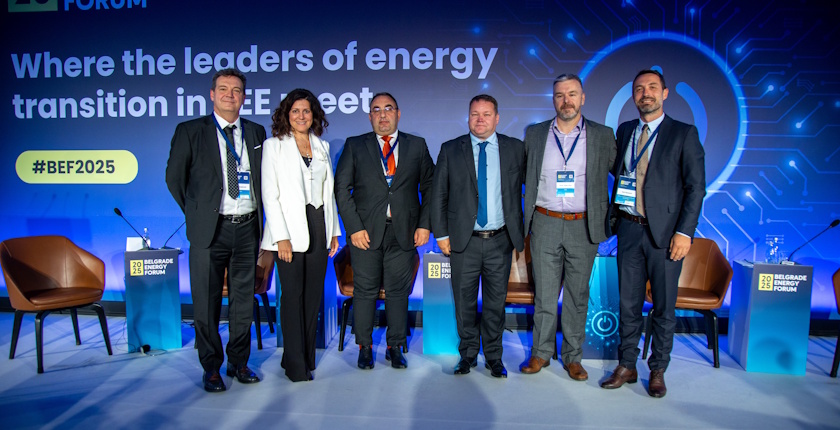
Participants in the panel called Integration of Western Balkans electricity markets into internal European market through market coupling were:

  • Anže Predovnik, ADEX Group, CEO,
  • Jasmina Trhulj, Energy Community Secretariat, Head of Electricity Unit,
  • Ivan Asanović, TSO Crnogorski Elektroprenosni Sistem (CGES), CEO,
  • Marko Bislimoski, Energy, Water Services and Municipal Waste Management Services Regulatory Commission of the Republic of North Macedonia (RKE or ERC), President,
  • Zoran Vujasinović, EU Agency for the Cooperation of Energy Regulators (ACER), Policy Officer.

They discussed very hot topics including market coupling, the Carbon Border Adjustment Mechanism (CBAM), and blackouts.

Market coupling: The first go-live window scheduled for Q4 2026 or Q1 2027

Dejan Stojčevski and Jasmina Trhulj (photo: Balkan Green Energy News)

In his opening remarks, panel moderator Dejan Stojčevski, CTO of the SEEPEX power exchange, emphasized the importance of integrating the electricity markets of the Energy Community contracting parties (EnC CPs) with the EU internal electricity market as a key element in the energy transition process.

“Market coupling, which is a prerequisite for a successful energy transition, brings about greater transparency, increased competition, the establishment of a unified regional reference price, and stronger incentives for investment in renewable energy sources,” he stressed.

However, in his words, the integration is not without challenges. Countries in the region must address several issues, including the transposition of relevant regulations, the designation of nominated electricity market operators (NEMOs), and the operational connection process through the implementation of local projects, Stojčevski underlined.

Trhulj: The transposition of EIP enables accelerated electricity market integration into the single EU electricity market

The most important regulation is the Energy Integration Package (EIP). Jasmina Trhulj, Head of Electricity Unit of the Energy Community Secretariat, recalled that the transposition of EIP by the contracting parties enables their accelerated electricity market integration into the single EU electricity market before accession into the EU takes place.

To achieve that, EnC CPs have to adopt and implement the laws in a compliant manner, including extending ACER’s jurisdiction to the cross-border issues between EU member states and EnC CPs, she noted.

With regard to regional methodologies, ACER is competent to the extent that neighboring EU countries are involved, which is most often the case.

The preparation of the Market Coupling Operator Integration Plan is underway

Another important piece of the puzzle is the Market Coupling Operator Integration Plan (MCO IP), which will set guidelines and timelines for the implementation of the day-ahead and intraday market coupling of EnC CPs. Trhulj confirmed that the preparation is currently underway.

According to the draft MCO IP, the first go-live window is scheduled for Q4 2026 or potentially by Q1 2027, provided that the following prerequisites are met, she revealed.

The prerequisites are the transposition of the EIHP completed and its compliance verified; NEMO designated in a compliant manner; operational readiness of transmission system operators (TSOs) and NEMOs confirmed; and full contractual adherence completed.

“Provided that the legislation is transposed and its compliance verified and MCO IP approved by ACER, a NEMO may submit requests for accession to market coupling. This is followed by an accession process lasting up to 18 months,” Trhulj explained.

Serbia, Montenegro “locked and ready” for the first go-live window

Anže Predovnik and Zoran Vujasinović (photo: Balkan Green Energy News)

ADEX Group CEO Anže Predovnik shared Slovenia’s experience in various market coupling processes within the internal European electricity market, including different products such as day-ahead, intraday continuous, and intraday auction market coupling.

He particularly emphasized the importance of market coupling and its impact on liquidity, transparency, competition, and increased investments in renewable energy sources.

Predovnik presented HUPX’s integration into the ADEX Group, which was completed in late 2024, and highlighted the benefits ADEX brings to the market and its participants through the unification of the power exchanges of Slovenia, Serbia, and Hungary.

Enhanced transparency, the use of a unified trading and clearing technology, a single market operation, a harmonized market access process across the ADEX markets, alignment of rules, and improved client services are just some of the advantages offered by the formation of ADEX Group, he pointed out.

One immediate benefit already implemented is that market participants active in one ADEX market do not pay entry fees when accessing another market within the group.

Predovnik: Market participants active in one ADEX market don’t pay entry fees when accessing another market within the group

“Additionally, all resources within the group are contributing to the implementation of the local project for coupling the Serbian and Hungarian day-ahead markets, with the project expected to be completed at the first available slot, anticipated for Q4 2026 or Q1 2027,” Predovnik noted.

CEO of Montenegro’s TSO Crnogorski Elektroprenosni Sistem (CGES) Ivan Asanović also spoke about the market coupling project timeframe.

After compliance of the transposition of EIP is verified and provided that the necessary adaptations of the Day-ahead Operations Agreement (DAOA) and the Intraday Operations Agreement (IDOA) regarding the extension to the price zones of EnC CPs are adopted at the Market Coupling Steering Committee (MCSC) level, CGES and power exchange BELEN could sign these contracts, becoming non-operating parties in the MCSC, he revealed.

According to Asanović, obtaining the status in MCSC is a precondition for the submission of a request for change, and it is extremely important to carry it out in a timely manner, to complete the process, which lasts 18 months, until Q4 2026 or Q1 2027.

Of note, a week ago, North Macedonia’s Minister of Energy, Mining and Mineral Resources Sanja Božinovska said it is realistic to aim for coupling in the fourth quarter of 2026 or the first quarter of 2027.

CBAM and blackouts are looming

Anže Predovnik, Zoran Vujasinović and Ivan Asanović (photo: Balkan Green Energy News)

Apart from market coupling, the stakeholders in the region are also concerned about the developments regarding the Carbon Border Adjustment Mechanism (CBAM) as well as about blackouts.

Dejan Stojčevski (SEEPEX) sees the potential effect of CBAM on the electricity sector, starting on January 1, 2026, as a major issue.

The mechanism could pose a serious threat to the overall energy transition in the region, he added.

In addition, it is crucial to discuss system security and the root causes of the blackouts that recently occurred across Europe, Stojčevski pointed out.

“As there was no announcement that the application of CBAM will be postponed, we are operating under the assumption that it will apply to electricity as of January 1, 2026, given that the contracting parties will not be ready for market coupling by that date,” Jasmina Trhulj (Energy Community Secretariat) underlined.

Trhulj: There is a risk that certain stakeholders may shift their trading activities and renewable investments away from the region

In her words, it creates a number of risks to the functioning of the regional electricity market and the energy transition process that the secretariat has been raising on behalf of the contracting parties, electricity traders, power utilities, renewable energy developers, and other stakeholders.

She warned of a risk that certain stakeholders shift their trading activities and investments in renewables away from the region, thereby potentially undermining integration and decarbonization efforts.

Dejan Stojčevski, Jasmina Trhulj and Marko Bislimoski (photo: Balkan Green Energy News)

In addition, market participants are raising the issue of the considerable uncertainty regarding the exact technical implementation of CBAM for electricity – inherently unique within a group of goods, Trhulj recalled.

It is crucial for the countries in the region to speak openly with Brussels, said Marko Bislimoski, president of the Energy, Water Services and Municipal Waste Management Services Regulatory Commission of the Republic of North Macedonia. In addition, they need to come up with an action plan, together with the Energy Community Secretariat, defining the phases for the introduction of carbon pricing, in his view.

Bislimoski: We need to define the items for which we need financial assistance from the EU

“We need a serious approach and to say what we can do ourselves, and then immediately make it happen. At the same time, we need to define the items for which we will need financial assistance from the EU,” Bislimoski asserted.

The panelists agreed the region needs to present a single coordinated position on CBAM at an upcoming meeting on July 1 in Brussels.

Bislimoski recalled that North Macedonia recently adopted the new Law on Energy and added that bylaws would follow. The end goal is to provide security and stability in the transmission and distribution of electricity like in the EU, but also to lower the prices of electricity for consumers, he added.

Asanović: It is necessary to take urgent measures to improve coordination in the region

Regarding the issue of blackouts, Ivan Asanović (CGES) emphasized the importance of coordinating transmission capacities and maintenance plans for transmission lines across the wider Balkan region.

He recalled the challenging operational conditions experienced last winter, when exchanges planned along the Greece-Bulgaria-Romania-Hungary corridor were largely physically realized via the southwestern Balkans, leading to significant network stress. Such situations must be avoided through more comprehensive coordination, he warned.

It is necessary, in his words, to take urgent measures to improve coordination in the region to alleviate the current problems until the establishment of the mechanisms and structures prescribed in the CACM and SOGL regulations.

“These rules will fully harmonize the operation of the system in the region with the rest of Europe and significantly improve the security of functioning and create the necessary preconditions for connecting the markets of the WB6 countries with the single European market,” Asanović stressed.

Vujasinović (ACER): Full operational readiness of CCRs is not a prerequisite for market coupling

Zoran Vujasinović and Ivan Asanović

TSOs made a breakthrough in December. They agreed on a Joint Declaration on Regional Coordination. The declaration, facilitated by ENTSO-E, outlined a new comprehensive cooperation framework for the Western Balkans TSOs within South-East Europe.

Zoran Vujasinović, Policy Officer at the EU Agency for the Cooperation of Energy Regulators (ACER), mentioned that in January the body submitted a request to the TSOs to propose the configuration of capacity calculation regions (CCRs), incorporating the bidding zone borders of EnC CPs within the framework of the EU CCR methodology.

The TSOs’ proposal is expected by the end of July, after which ACER will issue a decision within six months, he said.

The current TSO proposal envisions:

  • the inclusion of the southeastern bidding zone borders in the Balkans into the South East Europe (SEE) region, which already includes the borders between Romania, Bulgaria, and Greece.
  • the formation of a separate region in the northwestern part (covering the mutual borders of bidding zones of Serbia, Bosnia and Herzegovina, and Montenegro, as well as their bidding zone borders with the EU), with a perspective of integration into the Central Europe region.
  • the Italy-Montenegro region and the Eastern Europe region (including Ukraine, Moldova, Poland, Slovakia, Hungary, and Romania) to remain unchanged, as defined by the CACM Regulation of the Energy Community.

According to Vujasaninović, ACER’s position is that the entire region should, over time, transition to flow-based capacity calculation and allocation methodologies. However, the initial step will be participation in market coupling based on Net Transfer Capacity (NTC) values.

“It is important to note that full operational readiness of CCRs is not a prerequisite for market coupling. The coupling can proceed based on existing NTC calculation procedures, provided that regional operational security is not compromised at any time and that maximum coordination in capacity calculation is ensured,” Vujasinović stressed.
by in News

BEF 2025: Digitalization, open markets, time are major preconditions for flexibility services mainstreaming

Digitalization and massive use of data are crucial for providing flexibility services that bring benefits for transmission system operators and renewable energy producers. Aggregators and software firms have developed the technological solutions. However, the process, together with the introduction of flexibility platforms, requires a long time. The reforms also have to be accompanied by market liberalization and end consumers acting as active buyers, according to the participants of Belgrade Energy Forum 2025.

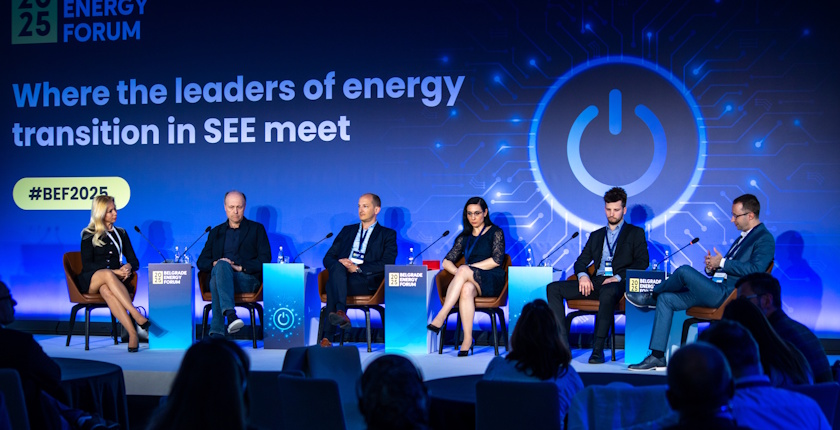
The panel on flexibility services called Market Flexibility: The Backbone of a Resilient Energy System was one of eight that were held at Belgrade Energy Forum 2025 (BEF 2025).

The conference, organized by Balkan Green Energy News, welcomed four hundred participants from more than 30 countries from the region, Europe, and beyond.

“Flexibility has been promoted in Europe as a buzzword, sometimes reflected as demand-side flexibility, but it represents so much more. It includes supply-side flexible assets like hydro, biomass, storage, as well as grid-side flexibility,” according to panel moderator Elena Boškov Kovacs, co-founder and CEO of Blueprint Energy Solutions, and a leading voice on market flexibility in Europe.

Serbia will introduce a flexibility services market

Elena Boškov Kovač and Roman Bernard (photo: Balkan Green Energy News)

Serbia’s transmission system operator (TSO) Elektromreža Srbije (EMS) is preparing to liberalize the ancillary services market. The country adopted the Law on Energy in November and implemented a large proportion of the European Union’s Electricity Integration Package (EIP) while the remaining parts will be transposed through bylaws.

“The balancing capacity market will be liberalized from next year. We will have new participants – active buyers and independent aggregators,” said Marko Zarić, Head of the Market Operations sector of EMS.

He stressed that the TSO is trying to ensure that no market participant is impaired by engaging flexibility resources or demand side response or a balancing service.

“EMS has finished drafting the new market code, which envisages dual balancing responsibility. We will launch a public debate on the act. The TSO estimates that it is the best solution to open the market of flexibility services,” he noted.

Bernard: Technology is on our side

NGEN CEO Roman Bernard expressed the opinion that the region is moving in the right direction, and suggested to regulators to look around and implement best practices. If the participants in the market are motivated, things will go forward, he added.

Back in 2019-2020, when NGEN started its operations in Slovenia, flexibility services were a pioneering job. The Slovenian energy company, the technology sponsor of the BEF 2025 conference, specializes in premium battery energy storage systems (BESS) and smart energy solutions.

According to Bernard, the balancing services market in the EU is well developed thanks to balancing platforms MARI (Manually Activated Reserves Initiative) and PICASSO (Platform for the International Coordination of Automated Frequency Restoration and Stable System Operation).

“We have 150 employees, and we can do everything. Technology is on our side and the sky’s the limit,” he stressed.

For example, NGEN solutions can provide monetization of battery energy storage systems (BESS), and the only thing that is needed is investors in such facilities.

Digitalization is the only way forward

Roman Bernard, Luka Renko and Magdolna Tokai (photo: Balkan Green Energy News)

The representatives of aggregators KOER and Alteo and software company CyberGrid all agreed that digitalization and the use of data are crucial for the energy transition.

Compared to NGEN and its use of BESS, Croatia-based KOER, a pioneer in virtual power plants in the region, is utilizing existing assets, like diesel generators, or employing the flexibility intrinsic to most manufacturing companies; for example, cement factories and wood manufacturers.

Existing assets work well, not just batteries, KOER COO Luka Renko stressed.

The only problem, in his words, is digitalization. The majority of the said firms aren’t ready to connect to the platform to be automatically switched on and off. The markets are getting faster and faster, so digitalization is the only way forward, Renko claimed.

Alteo, a leading Hungarian aggregator, also believes in lots and lots of data, which back up its scheduling and contribute to the security of supply.

Tokai: Alteo is looking for partners in the region

“Our superpower is providing scheduling services with the support of AI, including lots of data,” said Magdolna Tokai, Deputy CEO for International Relations and Corporate Services of Alteo.

Hungary has experienced a photovoltaic boom in the past four or five years, with the installation of almost 8,000 MW. It’s good for greening power production, but not from the perspective of a TSO, and that is where aggregators come into the picture, she added.

Alteo is combining conventional resources like gas-fired power plants with renewables. It currently has 140 MW in renewable resources, it manages 2,000 MW of third-party solar, and operates two virtual power plants. The company is providing the service to small photovoltaic facilities and the TSO.

Alteo is integrating solar energy in a product that is close to baseload, and placing it on the market. It translates to lower balancing costs for solar and a more stable product for the TSO, she explained.

Serbia is facing a challenge from the upcoming 1.2 GW of solar power

Alteo has just started implementing its new strategy for regional growth by exporting know-how on balancing services and providing flexibility to market players.

According to Nikolaj Candellari, Project Manager and Market Intelligence of CyberGrid, real-time data gives a TSO and other market participants the possibility to understand where they are.

He recalled that, over the years, the market went from 15-minute time stamps, down to one minute, and that now it is only two seconds. The improvement helps dealing with challenges, and CyberGrid knows a lot about such issues.

“For Serbia, the challenge comes with 1.2 GW of solar, which will be installed next year. So if you don’t see it as a challenge, ask yourself who needs 1.2 GW of energy at noon on Sunday,” Nikolaj said.

Over its 15 years of existence, CyberGrid developed good examples of how to exchange data with assets and TSOs.

“Assets are always the same, no matter the country, but to have this data exchange with TSOs, or even market platforms, that is something I think we need to do in the future in Southeastern Europe,” he stressed.

How to get to the future: properly liberalize markets

Luka Renko, Magdolna Tokai and Nikolaj Candellari (photo: Balkan Green Energy News)

Elena Boškov Kovač (Blueprint Energy Solutions) asked the panel participants what the solution is for addressing different types of flexibility assets including prosumers.

“How do we avoid getting stuck in the easy-to-commercialize part of the aggregation, and postpone the true demand response, which is needed to avoid the issues with negative pricing and electricity market swings?” she asked.

There is no dilemma for Nikolaj Candellari (CyberGrid): “I think we can connect everything, including households.”

It is something futuristic, he said. “We have to try to go as low as possible and connect everybody because, in the end, it’s not different if you have a 1 MW battery or 100 smaller residential ones” of 1 MW combined, Candellari asserted.

His company is currently implementing a project to integrate 150 batteries of 2 MW overall and put them on the market.

The batteries can drive the prices for end users down by 25% within five years

Candellari and Roman Bernard (NGEN) alike highlighted the factor of market motivation.

Bernard said motivation is created by the market. The imbalance price can go up to EUR 15,000 per MWh, and it is the signal and the motivation to fix everything, in his opinion.

He is convinced that batteries can lower the prices for end users by 25% within five years if dynamic prices are applied.

According to Nikolaj Candellari, participants will come to the market, as long as it’s not too regulated. As an example of a non-functional market, he mentioned Bulgaria, where the capacity price for downward regulation is zero.

“So, why would anybody join the market, if the capacity price is zero? Get the market running and you will get participants and capacity needed to balance it,” he said.

Tokai: We need a proper energy mix

Magdolna Tokai (Alteo) has a slightly different view of the markets. She recalled that episodes of negative prices are happening in Hungary, while that last August and September very high prices were recorded on HUPX, up to EUR 1,000 per MWh, and above EUR 500 per MWh in Croatia and Serbia.

“We have to be prepared for that, which is data, data, data, and the cooperation of all the market players, providing the proper energy mix, and the proper product for the TSO,” she pointed out.

Marko Zarić (EMS) stressed time as a vital ingredient for developing markets. A transition from the regulated market to the truly open market envisages multiple steps that take time, he said.

Flexibility platforms need time for implementation

Nikolaj Candellari and Marko Zarić (photo: Balkan Green Energy News)

Another big change are the balancing platforms developed by aggregators. Traditionally, TSOs were buying the same kind of standardized product, for example, SCADA, EMS, and other market applications, with more or less the same kind of functionalities.

Elena Boškov Kovač (Blueprint Energy Solutions) brought up the question of a more standardized approach. “Before we start talking about interoperability and connecting with everything else, would it be good to at least have platforms with similar kinds of functionalities and services provided?” she asked.

According to Luka Renko (KOER), every platform is structured in line with the needs of the operator. The communication platforms are more or less standardized, but it depends on what one needs in the background and what kind of assets they drive.

Piloting a flexibility platform can take years

The two aggregators, KOER and Alteo, developed their platforms because they couldn’t find a ready-made solution on the market.

A platform must have the ability to communicate with any other solution and to integrate new types of power plants and customers, Magdolna Tokai (Alteo) added.

Elena Boškov Kovač (Blueprint Energy Solutions) recalled that her company has implemented flexibility platforms since 2019, at the dawn of the opening of the flexibility market in Europe, and added that pilot projects for them take a long time.

“They require an immense amount of data. There’s a multitude of different stakeholders that need to support this, unlock the data, provide data resources. Piloting is incredibly important, and it can take years,” she pointed out.

Luka Renko (KOER) added that it took his company three to four years to start working as an aggregator in Croatia.

The future is bright, but we need to work on it

The panelists with Branislava Jovičić, Founder and Editor of Balkan Green Energy News (photo: Balkan Green Energy News)

Summarized, here are the messages of the session’s participants:

Bernard (NGEN): The end consumer will start acting as an active buyer.

Zarić (EMS): We see changes in the future.

Candellari (CyberGrid): Open the markets.

Tokai (Alteo): Give a chance to all market participants and types of production.

Renko (KOER): Digitalization will help.

Elena Boškov Kovač (Blueprint Energy Solutions) praised the companies that had their representatives at the panel for starting to develop solutions ahead of the market reform.

“It’s also a good message to the system of sometimes sleepy energy companies waiting for their proprietary vendors to offer them solutions,” Boškov Kovač stated.

by in News

Greece launches Attica-Crete subsea power interconnector

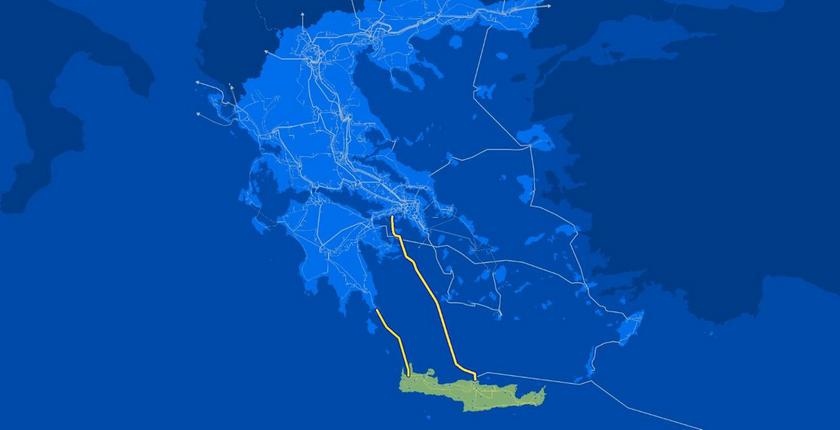
The Attica-Crete subsea power interconnector has been put into trial operation, marking a milestone for Greece’s transmission system. The country now has a high-voltage direct current (HVDC) interconnection, and its largest island is fully integrated into the national electricity system, according to an announcement by the Independent Power Transmission Operator (IPTO or Admie).

The Ariadne subsea power interconnector entered into operation on May 24 with the successful transfer of direct current electricity, said IPTO, whose subsidiary Ariadne implemented the project. The trial operation phase is expected to last throughout the summer, IPTO added.

The two submarine power links have ended Crete’s electrical isolation

Combined with the existing interconnection via the Peloponnese peninsula, the new cable has completely ended Crete’s electrical isolation, making it an energy hub with significant environmental and economic benefits for the country and the local community, according to IPTO.

The first power link between Crete and the mainland is the 174-kilometer alternating current (AC) cable linking the island with the Peloponnese. It was completed in 2021, following an investment of EUR 380 million.

The EUR 1.1 billion Ariadne interconnector is among the deepest in the world

The Ariadne interconnector, which cost over EUR 1.1 billion to build, is one of the deepest subsea power cables in the world. It consists of two 500 kV cables of 500 MW each, laid at depths of up to 1,200 meters. The construction lasted 4.5 years.

Greek Minister of Environment and Energy Stavros Papastavrou stated that the new power link has made Crete a “central pillar in the country’s energy transition,” and IPTO CEO Manos Manousakis claimed it is opening “a new chapter for the island’s energy security.”

The project was co-financed through the National Strategic Reference Framework (NSRF 2014-2020 and NSRF 2021-2027), via the European Union, with up to EUR 535.5 million.

IPTO recalled that the project consisted of many large subprojects, with contractors including Siemens, Terna, Nexans, Prysmian, NKT, and Hellenic Cables.

by in News

Electricity prices for Slovenian firms among highest in EU in 2024

Last year, Slovenian households had cheaper electricity than the European Union average while the tariffs for other categories of consumers, including businesses, were among the highest in the EU, according to an analysis by Slovenia’s transmission system operator ELES.

The analysis, conducted by ELES CEO Aleksander Mervar, also showed network fees are significantly lower than the EU’s average.

Slovenia is in the bottom third of the list of the 27 member countries. As for its neighbors, domestic prices were higher than in Hungary and Croatia, and lower than in Austria and Italy, Naš Stik reported.

Last year, Bulgaria had the lowest prices in the EU, followed by Malta, Luxembourg, Hungary, and Croatia. When measured against purchasing power, prices in Slovenia are in the lower half of the list.

The Government of Slovenia has capped electricity prices for households

The analysis attributes the lower tariffs for households mainly to measures that the Government of Slovenia introduced. The two main interventions were setting a maximum price for 90% of consumption, and freezing the payment of a fee for subsidizing electricity production from renewables and high-efficiency cogeneration.

From January 1 to October 31, the maximum price was 8.2 eurocents per kWh in the lower tariff and 11.8 eurocents per kWh in the higher one. They were the maximum prices for 90% of consumption, while the remainder was set by suppliers in line with the market conditions.

Without government measures, the annual bill of the average Slovenian household, with an annual consumption of 4,000 kWh, would be higher by EUR 345.89 or 45.77%, according to the calculation.

ELES denies network fees impacted competitiveness of firms

The conditions for businesses were different. Prices for commercial and industrial consumers were among the highest in the EU. However, the domestic average was lower than in neighboring countries.

Businesses in Serbia experienced a similar issue last year.

ELES denied the claim by the Chamber of Commerce and Industry of Slovenia that high network fees lowered corporate competitiveness. The company argued they were significantly lower for commercial consumers, by 36.5% to 49%, than the EU average.

In addition, network fees are as much as 53% below the level in the countries surrounding Slovenia, according to the ELES analysis.

Network fees for households in Slovenia are among the lowest in the EU.

by in News

Investors in BiH developing 3,800 MW of wind, 12,500 MW of solar

Wind farms with a capacity of 3,800 MW and solar power plants with a capacity of 12,500 MW are currently in various stages of development in Bosnia and Herzegovina, according to the indicative plan for the development of production  2026-2035, published by the Independent System Operator in Bosnia and Herzegovina.

The goal of the ten-year plan is to provide information on projects initiated for the construction of new production capacities to be connected to the transmission system, according to the transmission system operator (TSO), Independent System Operator in Bosnia and Herzegovina (NOSBiH).

The plan is supposed to prioritize covering domestic consumption and capacity needs with domestic resources.

NOSBiH said investors continued in 2024 to apply with their renewable energy projects. The interest in grid connections wasn’t affected by the significant reduction in electricity purchase prices, especially for the hours when solar power plants typically produce, it added in the plan

A lack of transmission capacities could become an obstacle to the export of electricity

According to the register of the applications for grid connections, which Elektroprenos BiH manages, there are about 3,800 MW of proposed wind farms and 12,500 MW of photovoltaic facilities in various stages of development, NOSBiH underlined.

Results of an adequacy assessment showed that increasing production makes it possible to increase exports. BiH’s TSO warned that in such a scenario, the currently planned transmission capacity expansion wouldn’t be sufficient.

Another 100 MW of solar is seen coming online in BiH by the end of 2025

With the current production development plans, the system could be left without sufficient balancing capacities. NOSBiH therefore called for developing balancing capacities in parallel.

The document shows that four solar power plants of 206 MW in total were added last year to the transmission network in BiH: FNE Zvizdan (28.5 MW), SE Bileća (55 MW), FNE Hodovo (92.47 MW), and FNE Deling invest 1 (29.75 MW), together with one wind farm, VE Ivovik, of 84 MW. In February of this year, the Ivan Sedlo wind farm (25 MW) was also put online.

By the end of 2025, the start of trial operation of another five PV plants is expected, the plan showed. They would have 100 MW altogether: FNE Hodovo F1-F4 (11.96 MW), FNE Brotnjo (9.98 MW), FNE Polog 1-8 (7.99 MW), FNE Plavo Sunce 1-2 (40 MW) and FNE Livno 1-6 (27.6 MW).

Batteries can bridge the period until the transmission grid capacity becomes adequate

The plan anticipates a similar tempo of grid connections for 2026, too.

In that case, along with the integration of renewables into the distribution network and similar power plants coming online in neighboring countries, a congestion can appear in the transmission network, together with complications in operating the country’s transmission system from a regulatory point of view, NOSBiH said.

Battery energy storage systems can solve both potential issues in the medium term, until investments get the transmission grid to an adequate level, it suggested.

BiH needs battery capability of 225 MW and 450 MWh in total capacity

The company recalled that a year ago it produced a study, together with the Deutsche Gesellschaft für Internationale Zusammenarbeit (GIZ), provisionally called Operational Models for Battery Energy Storage Systems in the Balancing Market of NOS BiH.

They estimated the need for additional balancing based on hour-by-hour production profiles for facilities of 1,500 MW in total photovoltaic capacity and 1,000 MW of wind. The authors said a combined 225 MW in battery operating power is required and an overall capacity of 450 MWh.

The study also explored revenue generation opportunities for BESS, particularly through participation in the ancillary services market.

by in News

Montenegro’s EPCG, DSO, TSO to establish Consolidated Data Center

The three key companies in the electricity sector of Montenegro – Elektroprivreda Crne Gore (EPCG), distribution system operator (DSO) CEDIS, and transmission system operator (TSO) CGES – have signed a letter of intent to start strategic cooperation on the installation of the Consolidated Data Center (CDC).

The initiative for the construction of the Consolidated Data Center represents a significant step towards the digital transformation of the Montenegrin power system and the establishment of a modern information hub, according to EPCG, CEDIS, and CGES.

Within the partnership, the three companies are jointly invest resources and know-how to create a technologically advanced data management system and digital services. The Consolidated Data Center will be located in the Željezara Nikšić industrial complex.

CDC’s capacity could be used commercially for the needs of other institutions and businesses

Apart from CDC’s primary role, the modernization of the state-owned power companies, its capacity could offer services to other institutions and companies.

The signatories have already initiated the first step – the preparation of a feasibility study that will define the technical and economic parameters of the project. Based on its results, a special agreement will be adopted to specify the next steps.

EPCG CEO Ivan Bulatović said the Consolidated Data Center isn’t just an infrastructure project.

Bulatović: The goal is to create a system set for the challenges of the future

“It is the foundation of digital transformation that will enable more accurate data analysis, greater efficiency in decision making, and a safer power system. Our goal is to create a system set for future challenges. Digitalization is an inevitable step in the modernization of the sector, and CDC is a key segment of that process,” Bulatović stressed.

According to Vladimir Ivanović, CEDIS CEO, the cooperation of key Montenegrin energy companies is significant, as is providing support to other businesses.

Ivanović: CDC to enable better coordination between companies

“The development of the power system doesn’t only mean investments in the grid and capacities, but also in smart solutions enabling greater flexibility and safety in operations,” Ivanović noted.

He underlined the CDC’s role in improving coordination between companies, reduction of operating costs, and improvement of IT infrastructure.

Asanović: A strong step forward in the modernization of the sector

CGES CEO Ivan Asanović stressed the project’s importance for digitalization and the creation of a system that will enable more efficient management of power resources at the level of the entire country.

CDC represents a strong step forward in upgrading the sector and ensures a better connection between all key participants in the power system, according to Asanović.

by in News

Serbia’s TSO EMS inks contract for Obrenovac – Bajina Bašta power line within Trans-Balkan Corridor

Serbia’s transmission system operator Elektromreža Srbije signed a contract for the construction of a two-system 400 kV transmission line from the Obrenovac substation to the Bajina Bašta substation.

The power line from the Obrenovac substation to the Bajina Bašta substation is part of the third section of the Trans-Balkan Corridor for the transmission of electricity, a project of national and regional significance, TSO Elektromreža Srbija (EMS) said.

The Trans-Balkan Corridor connects Romania, Serbia, Bosnia and Herzegovina, Montenegro and Italy.

Apart from the transmission line, the third section comprises equipping two switchyards in the Obrenovac substation and upgrading the Bajina Bašta substation to 400 kV.

The job was awarded to Kodar Energomotaža at an international tender

The transmission line will be 109 kilometers long. The start of construction is planned for April, while the completion is expected in 2027.

The project is financed by EMS, a donation from the Western Balkans Investment Framework (WBIF), and a loan from Germany’s KfW Development Bank.

The EUR 71 million contract was signed by EMS CEO Jelena Matejić and Mladen Žujković, the representative of Kodar Energomontaža, the contractor. The company was selected after a complex international tender, according to Serbia’s TSO.

The first section of the Trans-Balkan Corridor, from Pančevo to the Romanian border, was completed and put online in December 2017.

The second section was finished in June 2022. It consisted of transmission lines between Kragujevac and Kraljevo and upgrading the substations in the two cities.

Matejić: Serbia is a crucial electricity hub in this part of Europe

The corridor plan also has a fourth section. It envisages a double 400 kV power line between the substations in Bajina Bašta in Serbia, Višegrad in Bosnia and Herzegovina and Pljevlja in Montenegro.

“The Trans-Balkan electricity transmission corridor is certainly one of the most important infrastructure projects to safeguard a stable supply of electricity in our country. It will also enable the integration of the electricity market and position Serbia as a crucial electricity hub in this part of Europe,” Matejić stressed.

The importance of the Trans-Balkan Corridor was demonstrated recently by the commissioning of the second system within the transmission link between Romania and Serbia. It increased the cross-border transmission capacity by 80% – from 500 MW to 900 MW.

by in News

Qair signs grid connection agreement for solar project in Montenegro

Montenegro’s transmission system operator CGES and Qair Montenegro signed a contract for the connection of a 50 MW solar power plant.

An agreement on the construction of infrastructure for the Rudine photovoltaic project was signed by Ivan Asanović, CEO of CGES, and Stefan Klikovac, a representative of Qair Montenegro.

The EUR 40 million Rudine solar power plant will significantly contribute to the increase of the clean energy production and reduce harmful emissions, CGES said.

CGES has so far signed six contracts for the connection of solar and wind projects.

It is expected the project to be online until the end of 2028

Back in September 2024, France-based Qair and Montenegrin state-owned power utility Elektroprivreda Crne Gore (EPCG) signed a memorandum of understanding to enhance the pace of renewable energy project development in Montenegro.

Right after signing a cooperation agreement with Montenegro’s state-owned power utility Elektroprivreda Crne Gore (EPCG), Qair requested from the Environmental Protection Agency (EPA) to determine whether an environmental impact assessment (EIA) is necessary for its Rudine facility.

CGES now said the solar power plant is expected to become operational by the end of 2028, when it would be connected to the transmission system. The connection point is the Vilusi substation.

Qair operates power plants with a capacity of 1,000 MW

Qair Montenegro is part of the Qair company, which has production capacities with an installed capacity of 1,000 MW. The French company has a portfolio with a total planned capacity of 34 GW across 20 countries in Europe, Latin America, and Africa, according to CGES.

On the occasion of the MoU signing with EPCG, CEO of Qair Louis Blanchard said the company is pleased to establish a partnership with EPCG, stressing it is a significant event for Qair in the Montenegrin market.

The signing of the contract with CGES was attended by Aleksa Knežević, head of the CGES CEO office, and investor representatives Magdalena Kolanowska, Krzysztof Wajtysiak and Miloš Jovanović.

by in News

Montenegro’s TSO CGES achieves EUR 25 million profit in 2024

Montenegro’s transmission system operator CGES recorded a profit of EUR 24.8 million last year.

The net income of TSO CGES compares to EUR 35.7 million from 2023. In 2022, the company’s profit amounted to EUR 20.3 million, after EUR 16.9 million in the previous year.

President of the Board of Directors of CGES Aleksandar Mijušković noted in a statement to Mina news agency that the total since his appointment is almost EUR 100 million.

He recalled that the company’s operations are regulated by the Energy and Water Regulatory Agency of Montenegro (REGAGEN), pointing out that the profit is subject to revision, in line with the regulatory mechanism.

Implementation of visionary projects led to income growth

Implementation of crucial infrastructure projects, investments in new technologies, and improvement of work processes were the decisive factors for the success, Mijušković underlined.

In his words, conducting important, visionary projects has led to a significant increase in income from electricity transit. In addition, by applying new technologies and improving work processes, the company achieved a more efficient and reliable system with the lowest grid loss rate so far, despite a much higher transit and flow of energy through the system, Mijušković pointed out.

He added that good business results secure multiple benefits for shareholders and users of the transmission system in Montenegro. CGES’s results have contributed to lowering the transmission tariff paid by citizens and businesses, Mijušković said.

The company plans to continue the investments within its five-year plan, worth EUR 207 million. It envisages significant infrastructure projects.

The Trans-Balkan Corridor will facilitate market coupling with Europe

He singled out the Trans-Balkan Corridor among the largest infrastructure projects. Its completion will significantly increase the capacity for power transit from the Balkans to Italy.

It will enable coupling the Montenegrin electricity market with the Italian one and, with it, the single European electricity market, Mijušković said.

The green transition brought great challenges for the European power system, he stressed. The production of electricity from renewable sources cannot be controlled, so large, uncontrolled electricity flows began appearing in the system, threatening its stability, Mijušković said.

The issues can be effectively solved only by strengthening the internal grid and interconnections with neighbors, which CGES has envisaged in its plans, he asserted.